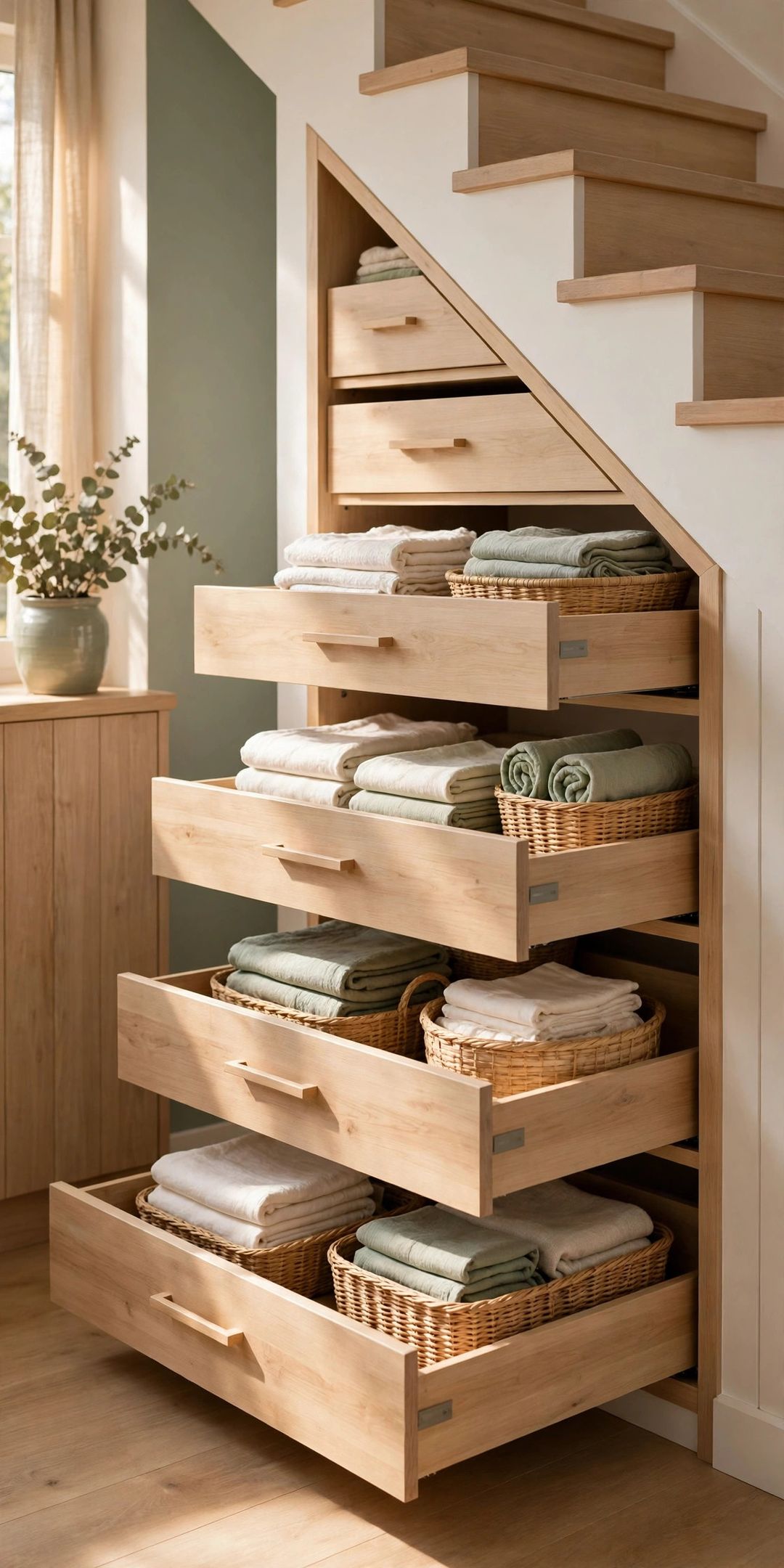
A one-car garage has to do two jobs at once. It is a parking space first, and a storage room, workshop, and entryway second. When storage creeps in from every side, the car stops fitting, doors cannot open fully, and the walkway to the house disappears.
These garage organization ideas one car garage owners can actually use start with that limit. A typical one-car garage is about 12 by 20 feet, so every idea here protects the parking spot while moving storage to zones, walls, and the ceiling.
Work in order: set the floor zones first, then empty the floor onto the walls, then send the least-used items overhead. The car fits at every step.
The Zone Layout
Zones give every category one home, so items stop spreading across the floor. Mark the parking outline first, then assign what is left.
1. Protect the parking zone first. Park the car in its usual spot and note where the doors swing open. Nothing gets stored inside that outline or in the door swing area, ever.
2. Keep a clear walkway lane. Leave one open path from the garage door to the house door, wide enough to carry groceries or a laundry basket without turning sideways.
3. Put a daily entry zone by the house door. Shoes, bags, recycling, and pet supplies belong near the door you use most, in one small bin or shelf unit that stays off the walkway.
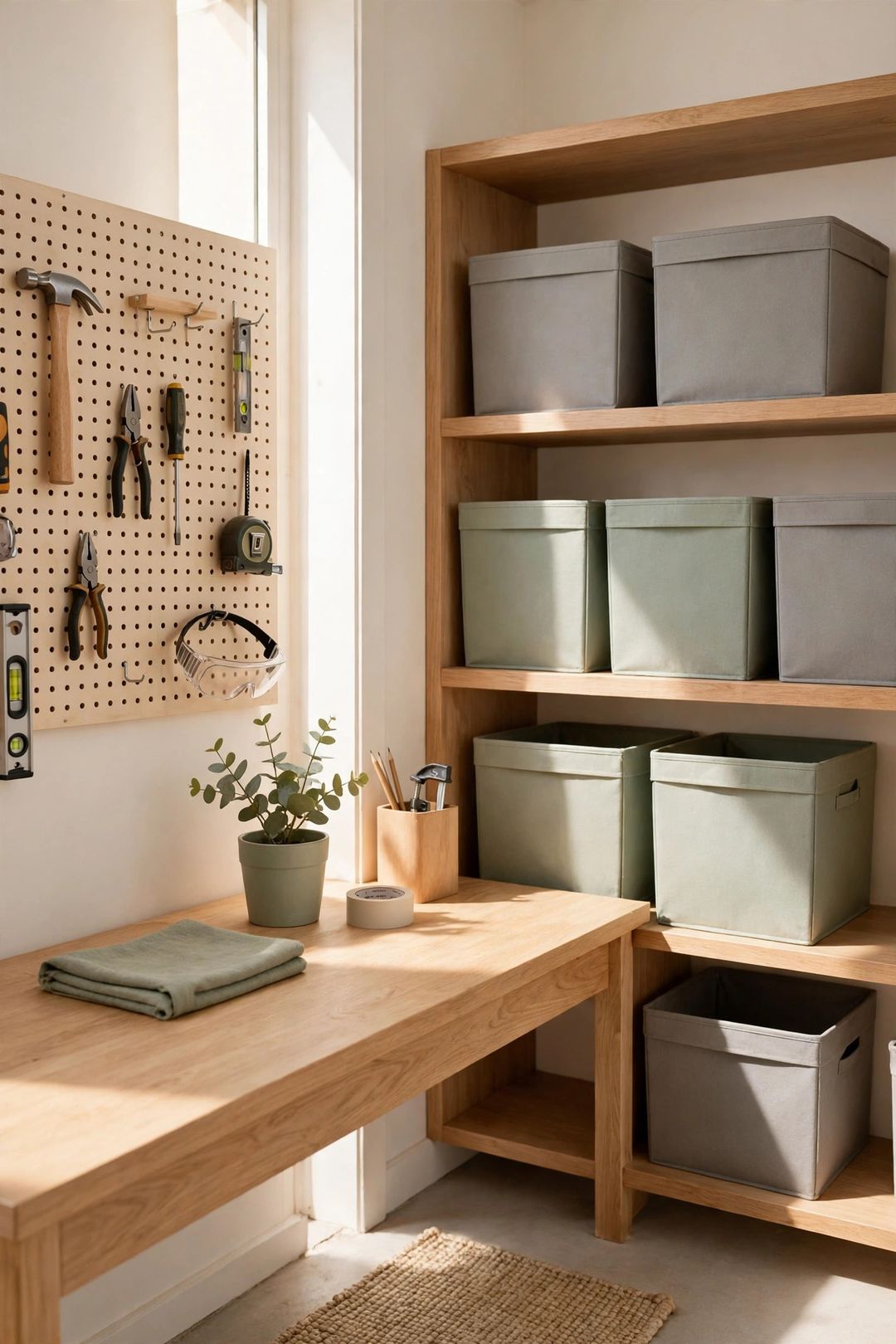
4. Place the work zone on the back wall. A narrow workbench or folding table along the wall opposite the garage door keeps tools and projects behind the car, not beside it.
5. Group garden and yard tools together. One zone for mower supplies, soil, pots, and outdoor tools stops dirt and sharp edges mixing with household storage.
6. Give trash and recycling a front corner. Bins near the main garage door are easy to roll out on collection day and stay clear of car doors and the walkway.
Walls
Walls are the biggest storage gain in a small garage. Every item hung is an item off the floor and out of the parking zone.
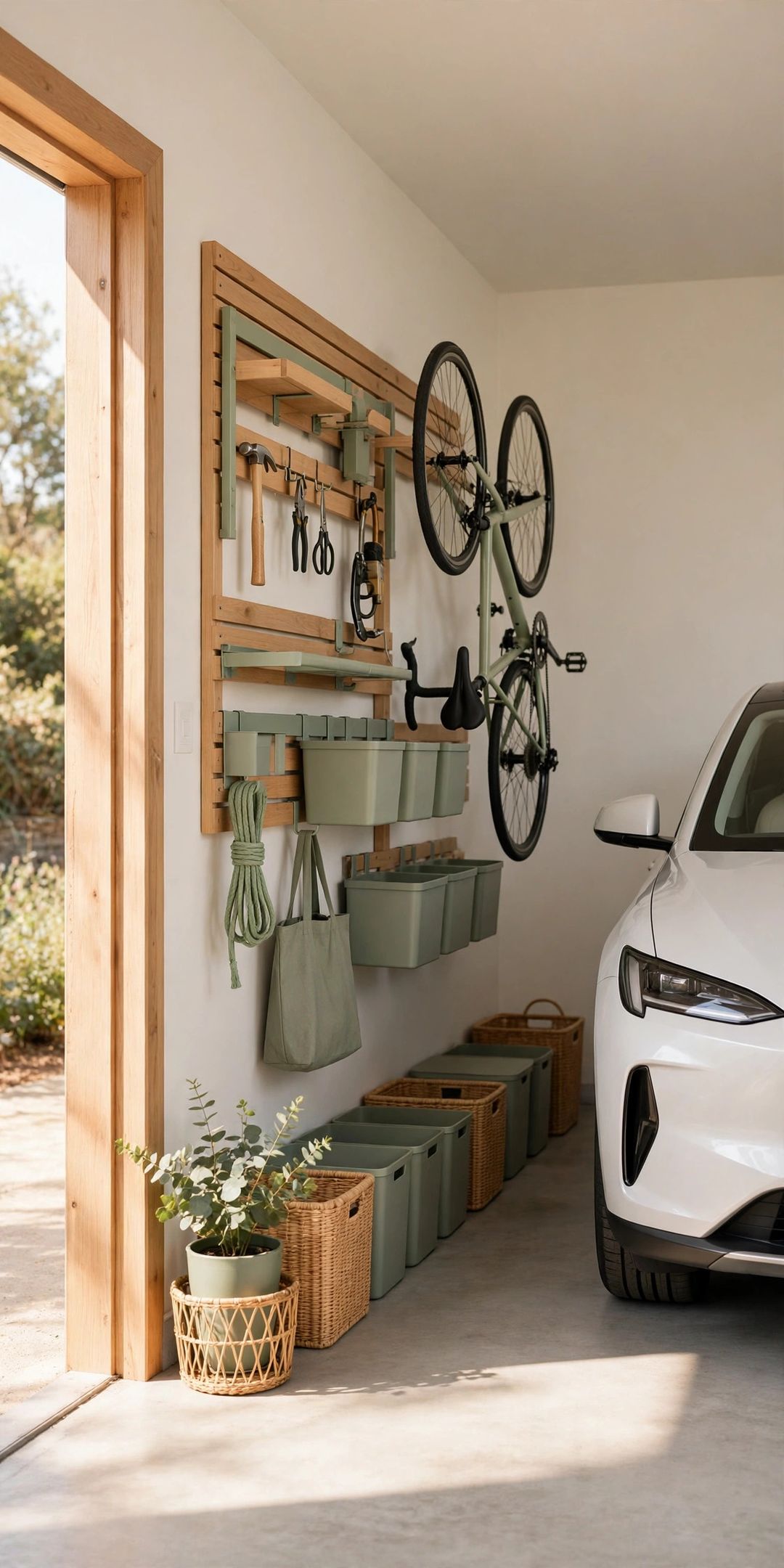
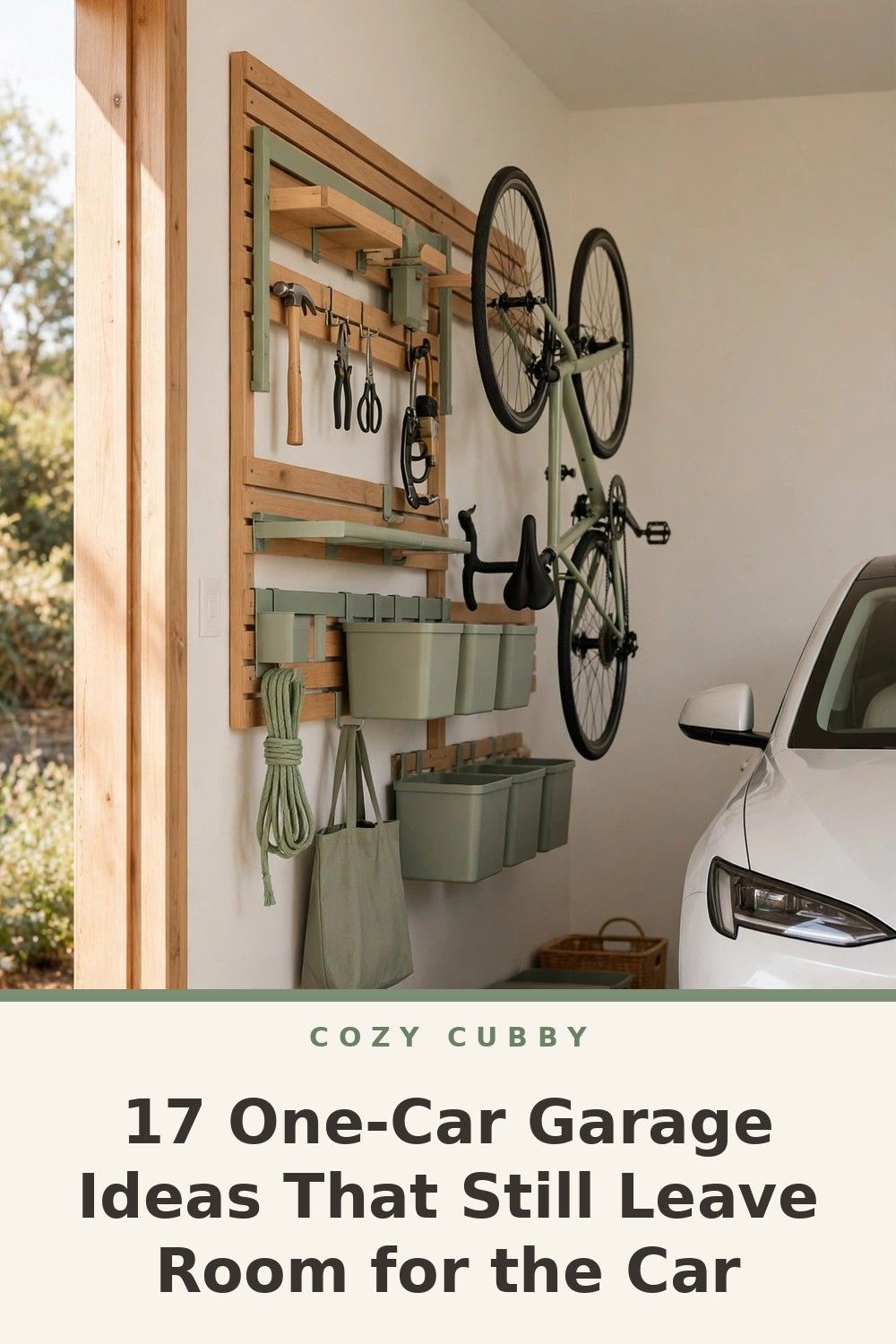
7. Install a wall rail or track system. A horizontal rail with movable hooks holds bikes, ladders, and tools in a flexible row that can shift as your storage changes.
8. Hang bikes vertically by the front wheel. Vertical hooks lift bikes flat against the wall, freeing floor space while keeping them easy to lift down for a ride.
9. Add a pegboard or slat panel for hand tools. Small tools stay visible in one place above the workbench, so drawers and boxes are not searched for a single wrench.
10. Use closed wall cabinets for chemicals and paint. Lockable or high cabinets keep paint, cleaners, and sharp supplies tidy, out of sight, and away from children and pets.
11. Mount a rack for long-handled tools. Brooms, rakes, shovels, and mops stand upright in a clipped wall rack instead of leaning and sliding across a corner.
12. Add shallow wall shelves for everyday items. Narrow shelves hold car supplies, light bulbs, and tapes in a single row, so nothing hides behind a second row.
Ceiling & Corners
What is left after walls still has a home: overhead for the rare items, and corners shaped to fit what is left.
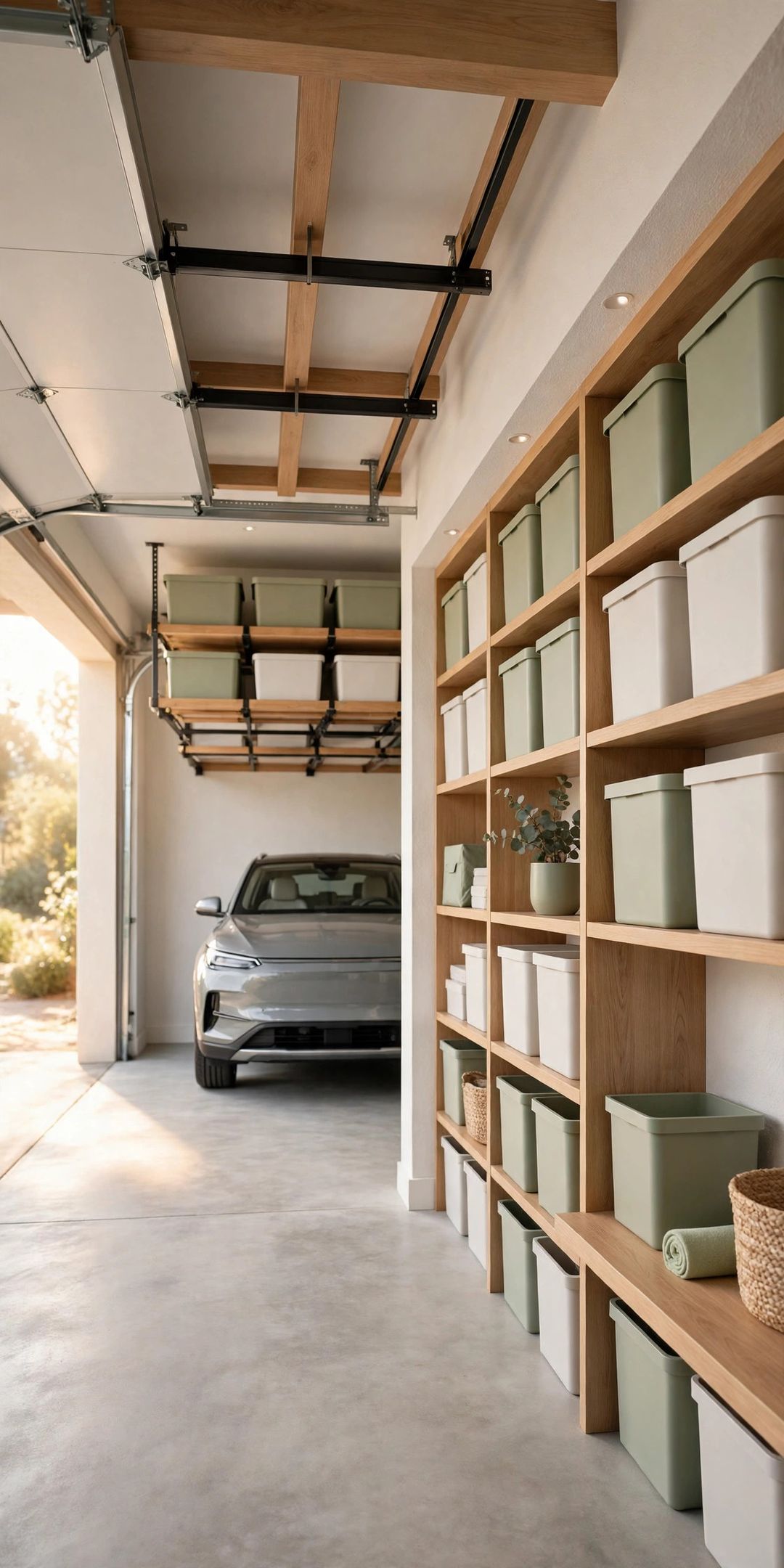
13. Install an overhead ceiling rack. A ceiling-mounted rack above the garage door holds large, light, seasonal bins that you need only a few times a year.
14. Hang ladders and folding chairs from ceiling hooks. Long, flat items store overhead on sturdy hooks, as long as they clear the opening garage door and the parked car roof.
15. Run a high shelf near the ceiling. A shelf along the top of one wall takes labeled bins of decorations and outgrown gear, reached with a step stool on reset days only.
16. Fit a corner shelf unit for awkward shapes. A tall, narrow corner unit uses dead space for sports gear, coolers, and camping supplies that do not stack well elsewhere.
17. Use clear, labeled bins in the remaining corners. Matching clear bins with big labels keep the last category grouped and visible, and lids keep dust off between uses.
What to Buy
A wall rail track kit, typically $40–$90. Pro: Hooks move without new holes, so the layout can change. Con: It needs solid studs or proper anchors to hold weight. Skip if: You only need two or three fixed hooks.
Heavy-duty wall hooks, typically $15–$35 for a multipack. Pro: Cheap, fast storage for bikes, chairs, and cords. Con: Cheap hooks bend under heavy loads. Skip if: Your items are better kept in closed cabinets.
An overhead ceiling storage rack, typically $120–$220. Pro: It uses the emptiest space in the garage. Con: Installation takes time and careful measuring. Skip if: Your ceiling is low or the garage door tracks leave no clear space.
A long-handle tool rack, typically $20–$45. Pro: It ends the leaning-tool pile in one step. Con: Very thick handles may not clip in securely. Skip if: You own only one or two long tools.
Clear storage bins with lids, typically $8–$18 each. Pro: Contents stay visible and stack neatly. Con: Oversized bins get too heavy to lift overhead. Skip if: Open shelving already shows everything you store.
Mistakes to Avoid
- Storing anything in the door swing. A bin that fits beside a closed car door may block it when open. Test every spot with the car parked and doors wide.
- Building deep floor shelving on both sides. Rows on both walls shrink parking width fast. Put floor units on one side only, and hang the rest.
- Putting daily items overhead. Ceiling storage is for seasonal gear. Anything reached weekly belongs on a wall at arm height.
- Skipping labels on bins. Unlabeled bins become mystery boxes that get opened, searched, and left messy again.
- Buying storage before zoning. Containers without a zone plan just organize the clutter in place. Map zones and measure walls first.
Frequently Asked Questions
How much space should stay clear around the car?
Keep the full door swing clear on the driver side at minimum, and ideally on both sides, plus one open walkway from the garage door to the house door. If you cannot open a door fully and walk past carrying a bag, storage has crept too far in.
What should never go on a ceiling rack?
Skip heavy items, anything you use weekly, and liquids that could leak or freeze. Ceiling racks suit light, bulky, seasonal bins that stay closed for months.
Can a workbench fit in a one-car garage?
Yes, if it sits on the back wall, stays narrow, or folds down when not in use. A folding bench gives you a work surface for projects and a flat wall the rest of the week.
Where do bikes go if wall space is full?
Try ceiling hooks above the car hood area, checking door and car clearance carefully, or a vertical floor stand tucked in the back corner zone. The rule stays the same: never inside the parking outline.
A one-car garage works when the car comes first and storage fills the walls and ceiling around it. Save this post to your Garage Organization board on Pinterest so the zone map is handy on your next reset weekend.