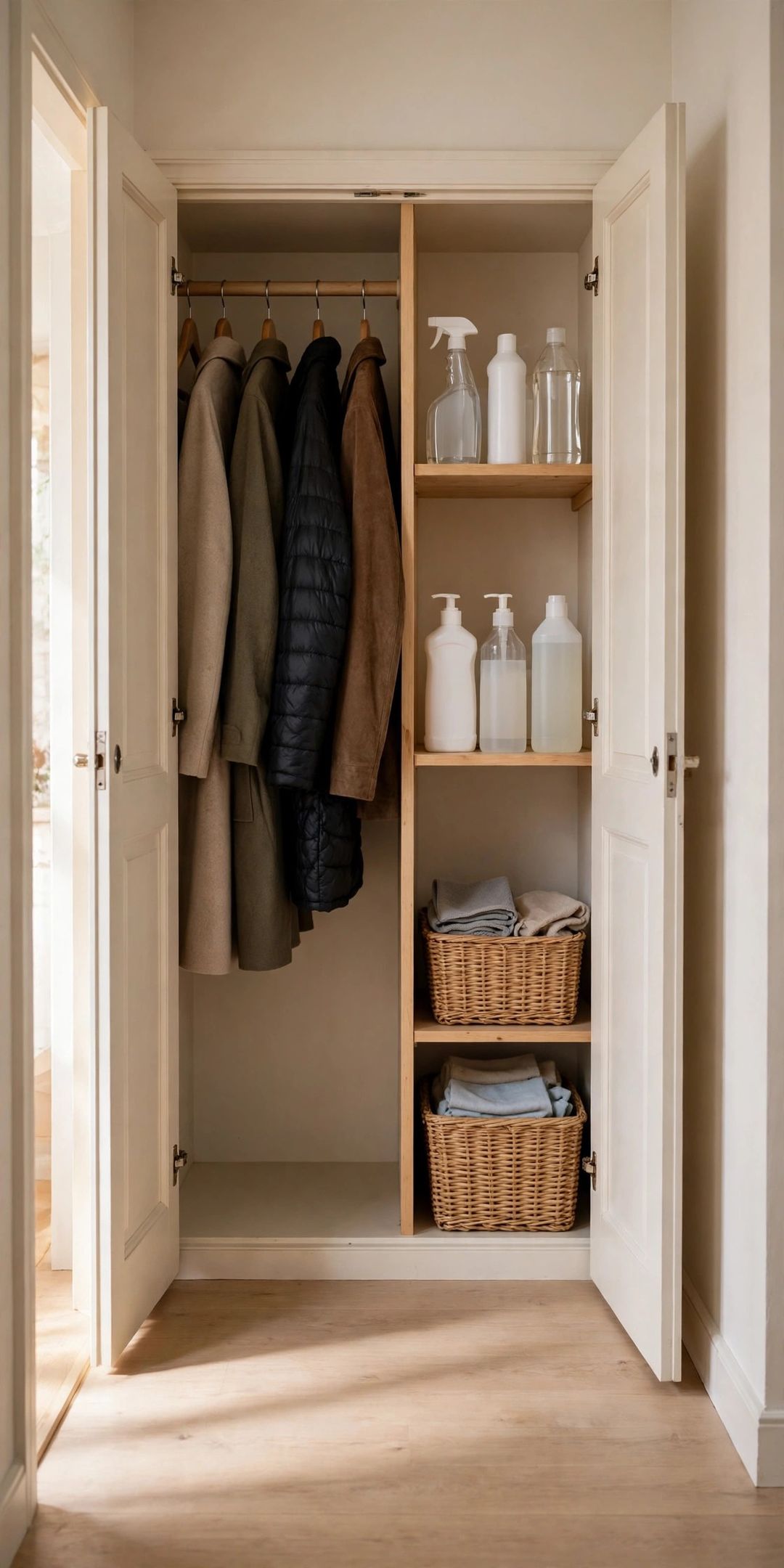
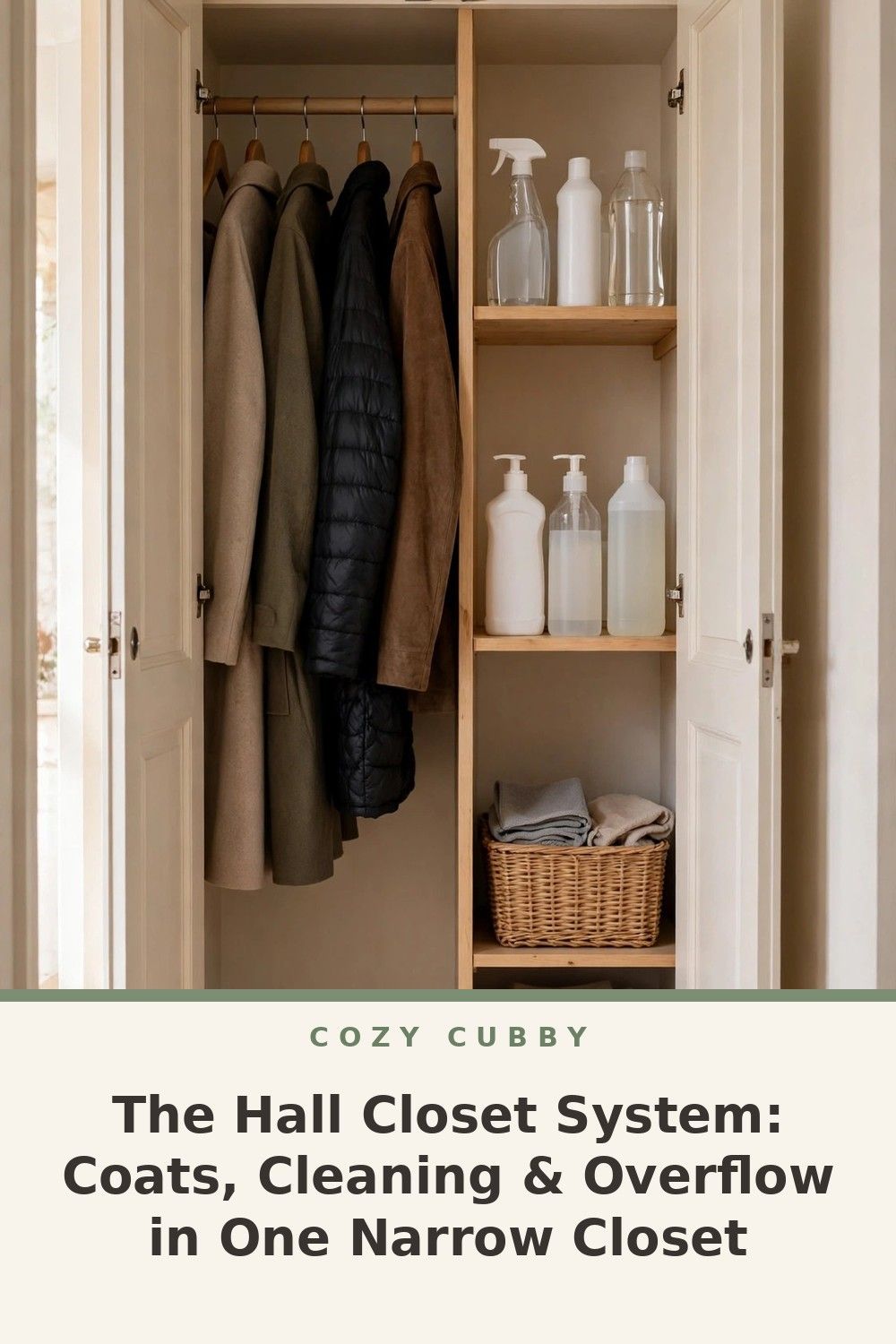
A hall closet often becomes the place where everything lands and nothing can be found. Coats hide behind spray bottles, light bulbs sit next to gloves, and the vacuum has no clear spot. A good hall closet organization system coats cleaning overflow plan fixes that by giving one small closet three clear jobs instead of one messy pile.
The closet in this system is about 24 inches deep, which is common for hall closets. That depth does not forgive clutter. Every item needs a zone, a limit, and an easy way back in.
Start by taking everything out and sorting it into three groups: coats, cleaning tools and supplies, and overflow like batteries, bulbs, and backup paper goods. Anything that fits no group belongs somewhere else.
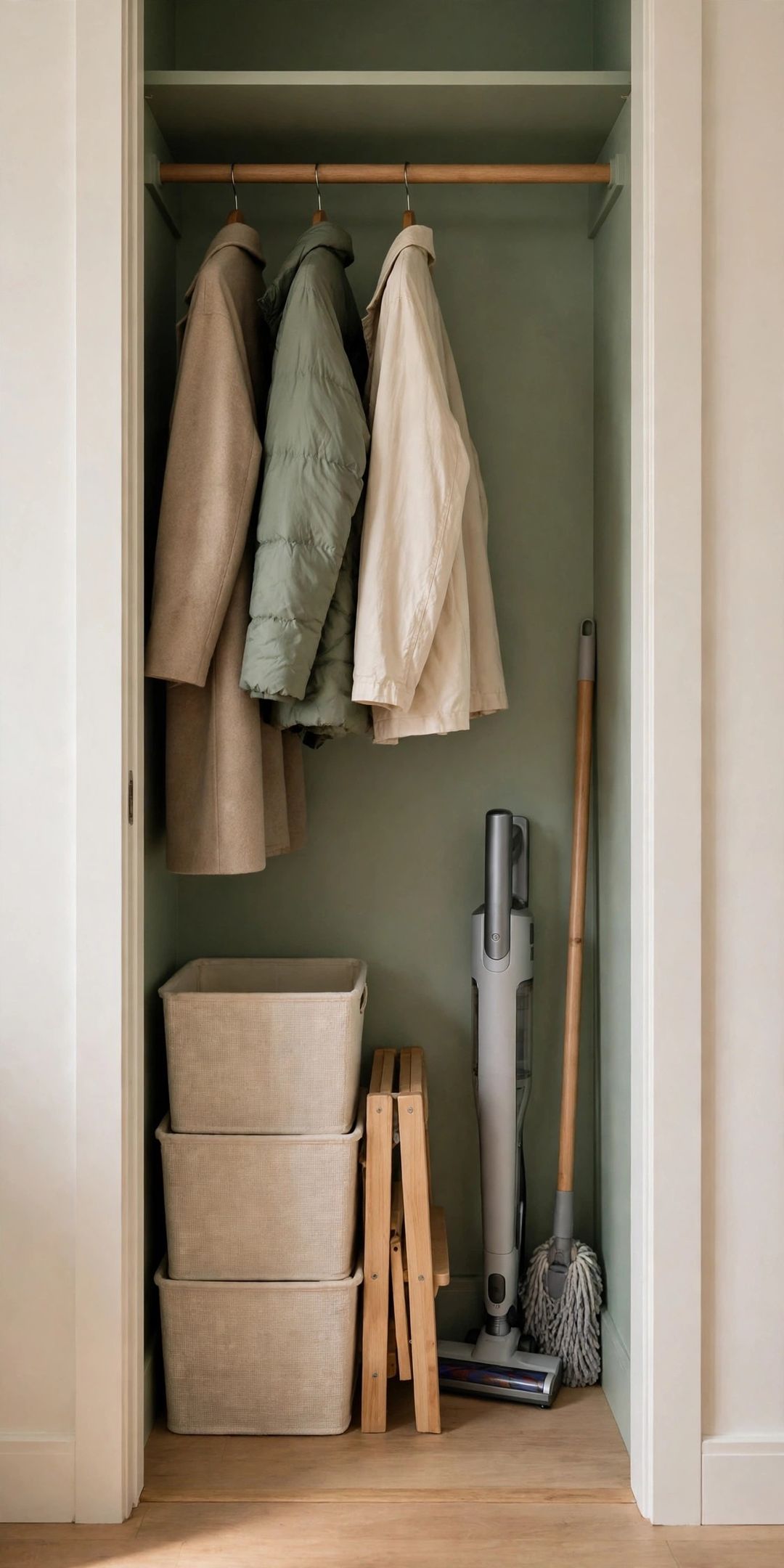
Zone 1: The Coat Zone at the Top and Center
The coat zone gets the best space because it is used the most. Keep the rod for coats worn this season only. Move off-season coats to a bedroom closet or under-bed bin until the weather changes.
Hang coats by length and use. Put daily coats in the middle where the door opens widest, and guest or dress coats at the harder-to-reach end. Leave a few inches of open rod space so hangers slide freely.
Use slim hangers that match. Mixed bulky hangers waste inches and let coats slip. One style of slim hanger keeps shoulders even and helps you see at a glance when too many coats have crept back in.
Add one spot for cold-weather extras. A single bin on the shelf above the rod can hold hats, gloves, and scarves. One shared bin works better than loose items scattered across the shelf, where single gloves disappear.
Zone 2: The Cleaning Zone on One Side
The cleaning zone works best as a narrow vertical strip on one side of the closet, from floor to shelf. Grouping cleaning items together means you can grab what you need without moving coats or digging through bins.
Stand tall tools upright. A broom, mop, and duster fit in a slim holder inside the door or along one side wall. Upright handles stop tools from leaning across clean coats.
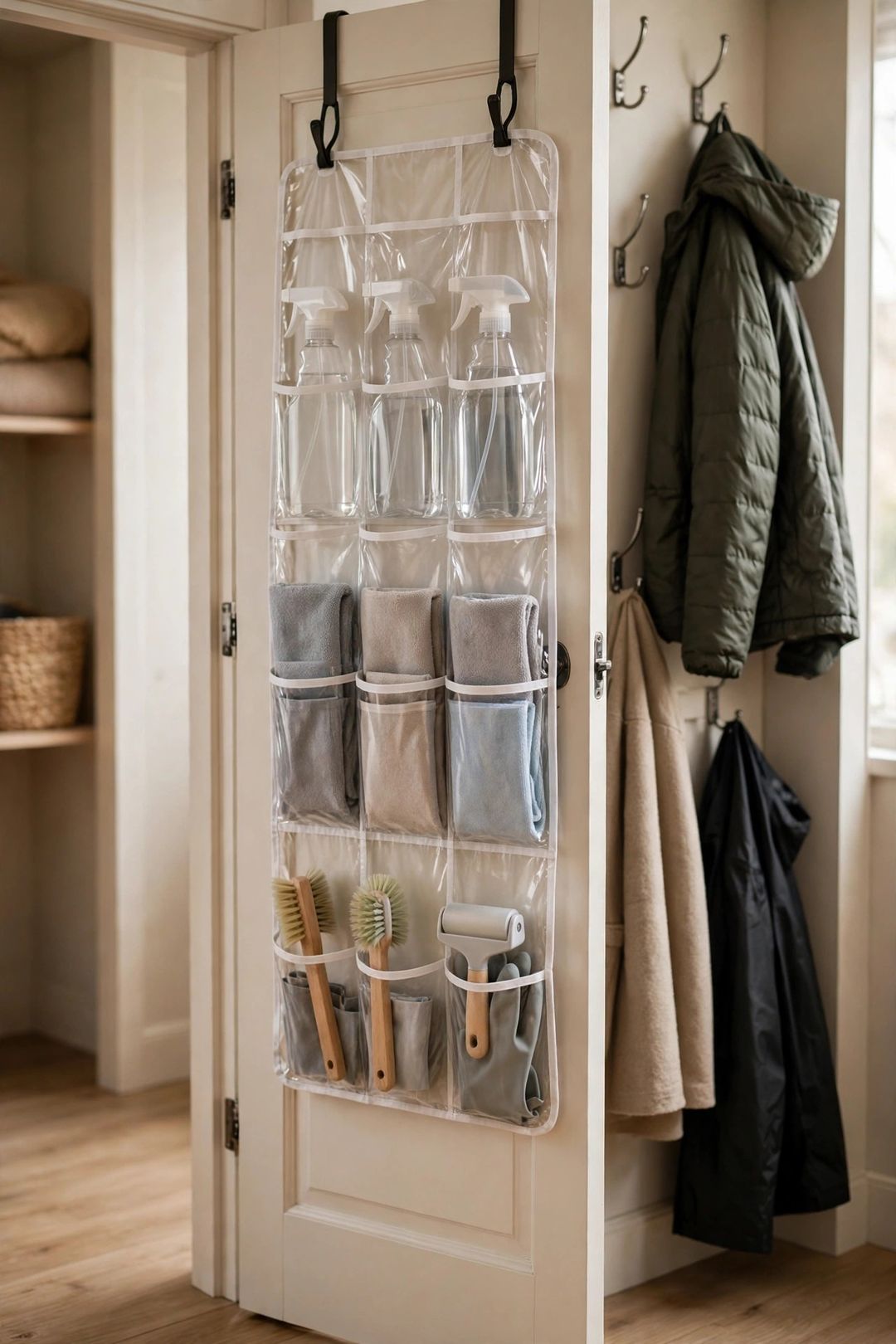
Corral bottles in one caddy. Put daily cleaners in a handled caddy that can be carried room to room. Store backup refills with the overflow instead.
Give the vacuum a parking spot. Mark one floor corner for the vacuum and keep it empty for anything else. A cordless model can hang on a hook, while an upright needs a clear square of floor.
Zone 3: The Overflow Zone on Shelves and the Floor Edge
The overflow zone holds backup extras: light bulbs, batteries, tape, flashlights, and paper goods. Without limits, it expands until it takes over the closet, so containers and labels matter most here.
Use the top shelf for overflow only. The shelf above the rod is hard to reach daily, making it a poor spot for coats but a good spot for backups. Use two or three same-size bins so nothing small gets lost behind boxes.
Sort overflow by task, not by size. One bin can hold bulbs, batteries, and flashlights. Another can hold fix-it basics like tape, picture hooks, and a small tool kit. Sorting by task means you open one bin instead of all of them.
Label every bin on the front. A short label in plain words stops family members from dumping random items into the nearest open box. If an item does not match a label, it does not go here.
Set a hard limit for paper goods. Keep only what fits in the assigned bin or floor corner, and store the rest on a garage or laundry shelf.
The Reset: How to Keep the System Working
A three-zone system stays tidy with a short reset, not a full reorganization. Once a week, take two minutes to hang up any stray coat, return the cleaning caddy to its side, and close any overflow bin left open.
Once a season, do a bigger check: swap seasonal coats, toss empty bottles, test flashlights, and check that bins still match their labels. If one bin is always stuffed, adjust the split instead of buying more containers.
Teach the zones in one sentence: coats in the middle, cleaning on the side, extras up top. When everyone can repeat it, items get put back correctly.
What to Buy
You can set up this system with bins and hangers you already own. If a zone still feels cramped after sorting, these product types help most.
Slim velvet hangers, pack of 20. Pro: They grip shoulders and take up far less rod space than bulky hangers. Con: Velvet can feel slow when sliding heavy coats. Skip if coats already hang well on wood hangers. Typically $12–$20.
Wall-mounted broom and mop holder. Pro: It lifts long handles off the floor and off your coats. Con: It needs a flat stretch of wall or door to mount. Skip if you rent and cannot use screws or adhesive strips. Typically $10–$18.
Clear stackable bins with lids, set of 4. Pro: Clear sides show contents at a glance, and lids let you stack without dust. Con: Lids can crack if bins are overfilled. Skip if your top shelf is too shallow for stacked bins. Typically $18–$30.
Handled cleaning caddy. Pro: One grab carries cleaners room to room, and bottles stay upright. Con: A large caddy may not fit a narrow side zone. Skip if a small bin already fits. Typically $8–$15.
Label maker or blank bin labels. Pro: Labels stop random dumping and help everyone return items correctly. Con: Labels need updating when contents change by season. Skip if you use clear bins and own few overflow items. Typically $10–$22.
Mistakes to Avoid
- Storing all coats all year. Off-season coats steal the best rod space and crowd out the coats you wear daily.
- Letting overflow have no limit. Without a set bin or shelf, backup items spread until coats and cleaners have no room.
- Mixing cleaners in with coats. Bottles can leak or tip onto fabric, and loose tools end up leaning across clean outerwear.
- Blocking the floor completely. A packed floor makes the vacuum hard to return, so it ends up stored in a hallway instead.
- Buying organizers before sorting. Bins bought for unsorted clutter just organize the mess instead of reducing it.
Frequently Asked Questions
How do you organize a hall closet with no shelves?
Use the rod for coats, a tall narrow caddy on the floor for cleaners, and a clear over-door organizer for small overflow like batteries and tape. A freestanding shelf unit also works if the door closes fully.
Where should cleaning supplies go in a small hall closet?
Keep them together on one side, with tall tools upright in a holder and bottles in a single caddy. Place stronger cleaners higher if young kids are in the home.
What counts as overflow in a hall closet?
Overflow means backup, shared items: light bulbs, batteries, flashlights, tape, and extra paper goods. If an item has a home in another room, it does not need a second home here.
How many coats should stay in a 24-inch hall closet?
Keep the coats worn this season by the people who use that door most, plus one or two guest coats. If hangers cannot slide freely, move the least worn coats elsewhere.
A narrow hall closet does not need more space, it needs clear jobs. Set up the three zones once, keep the weekly reset short, and save this post to your Small-Space Storage board on Pinterest so the system is easy to find before your next clean-out.