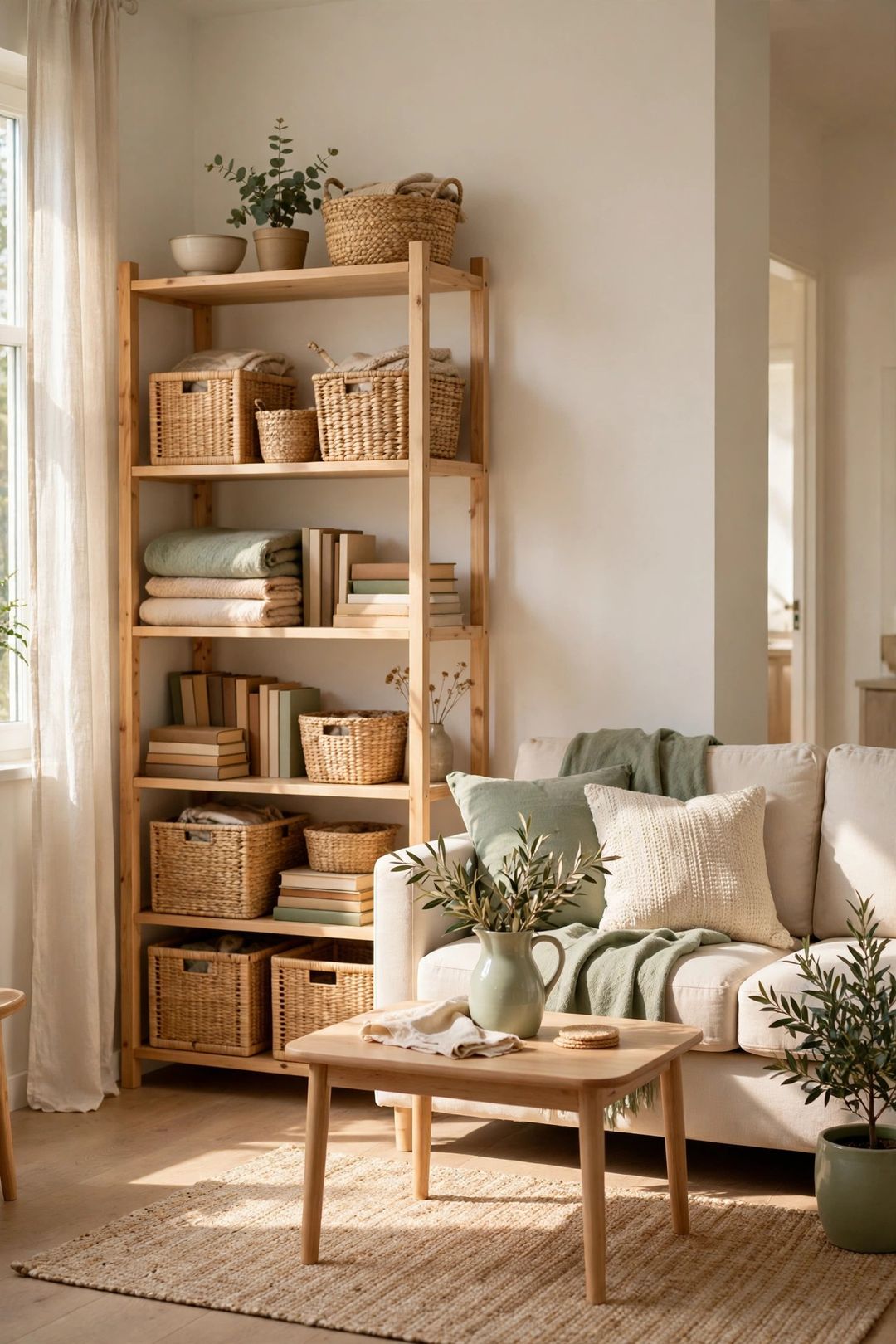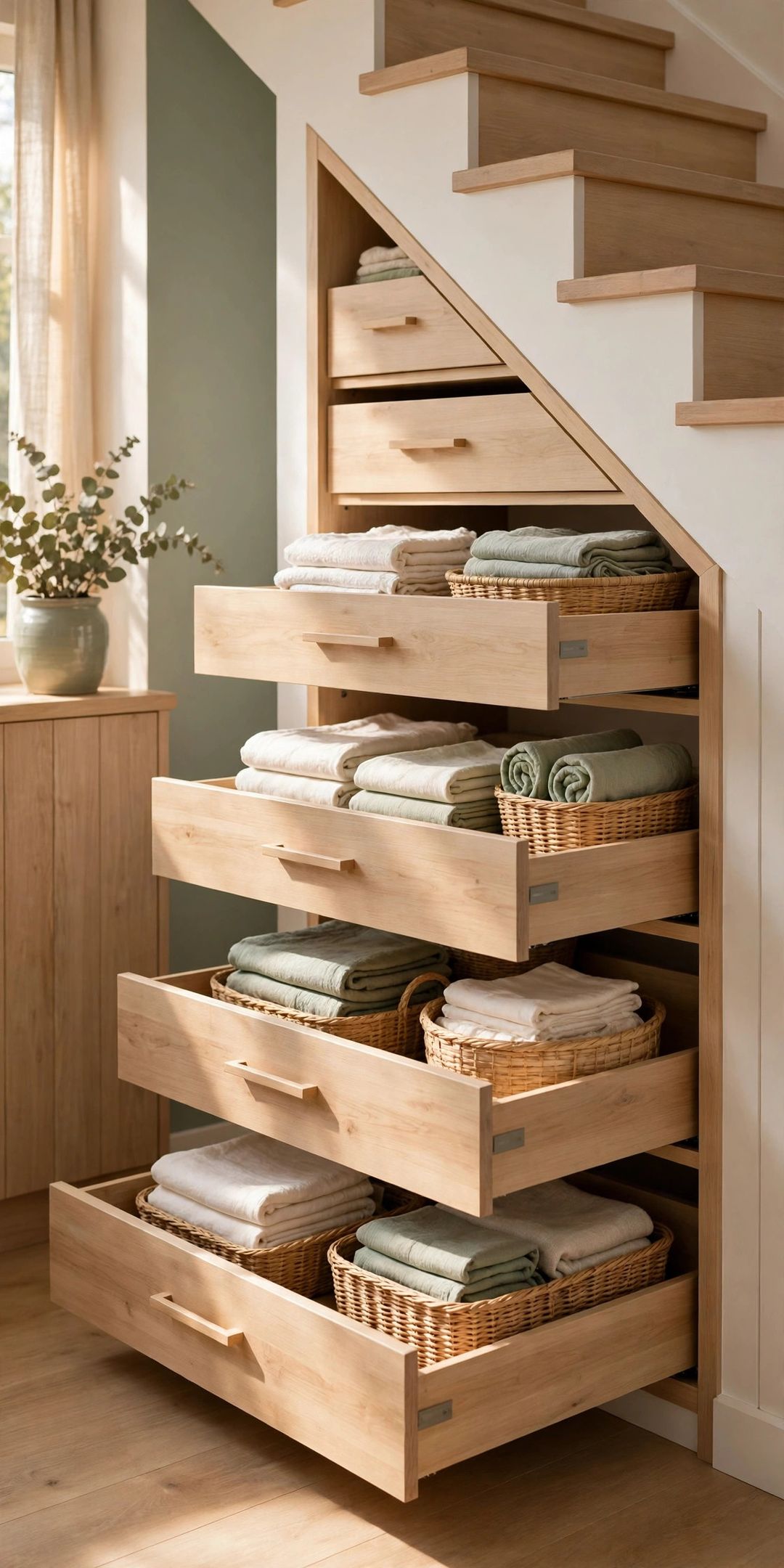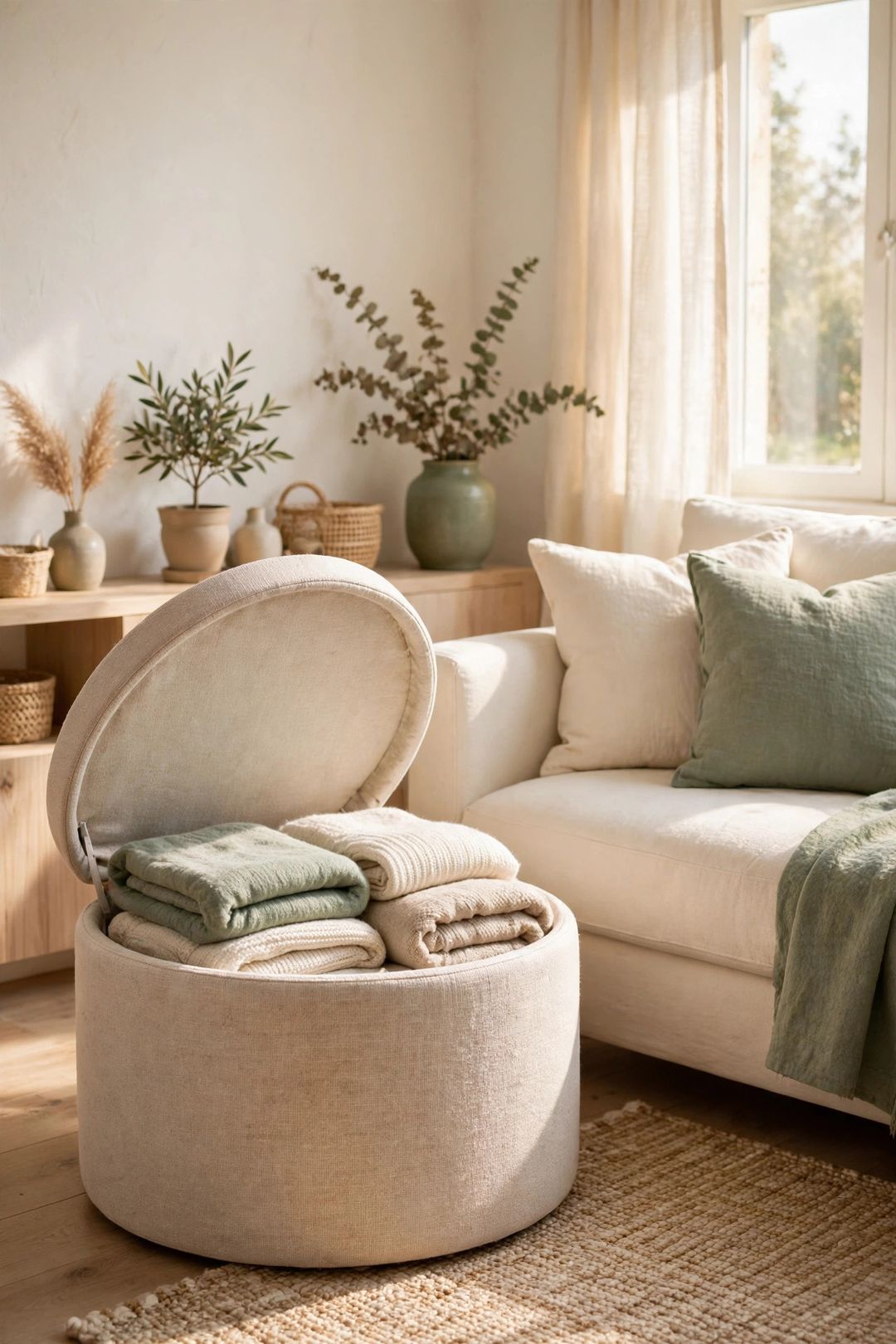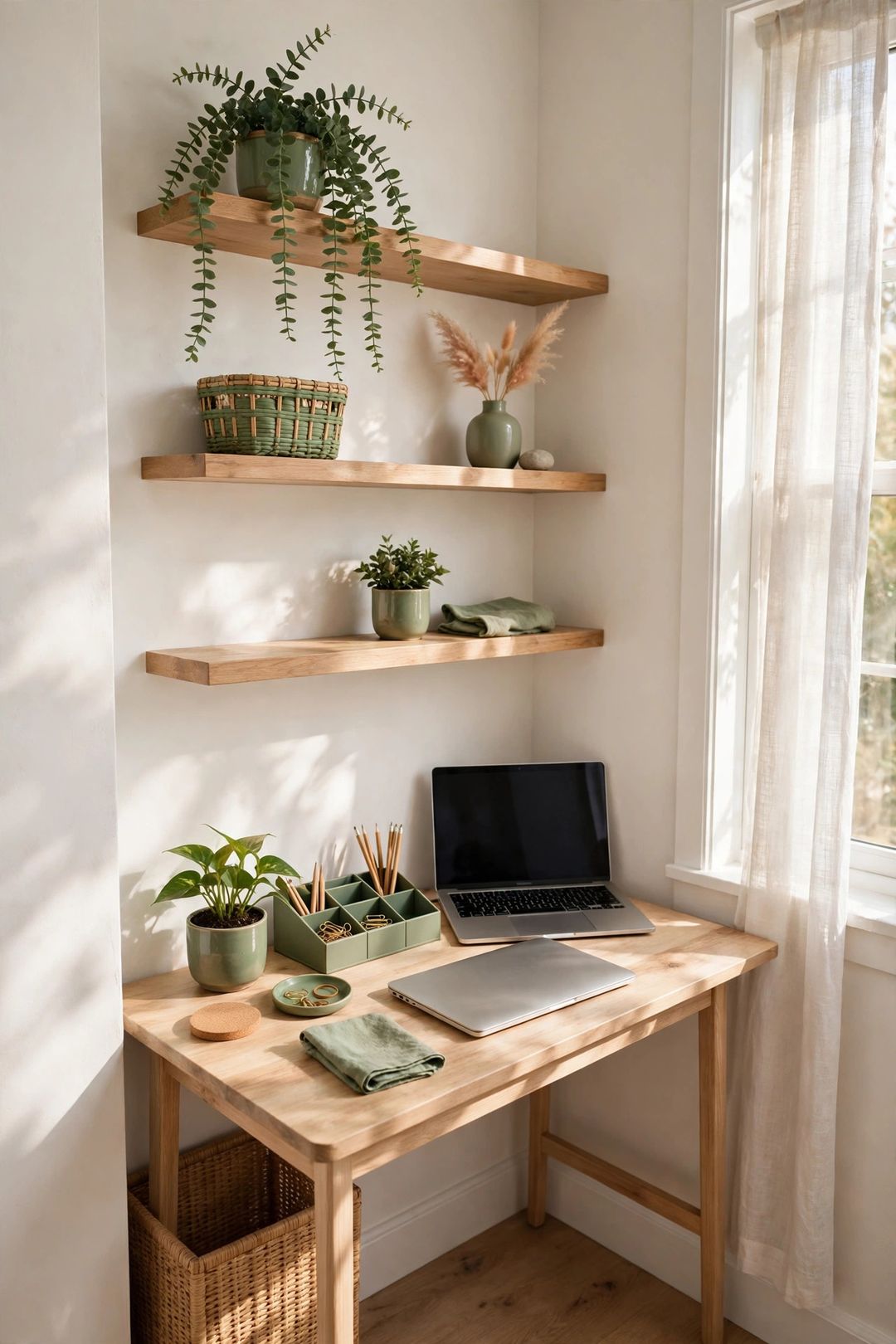
A desk does not need a spare room. A quiet corner, a spare closet, or one end of a kitchen table can hold a full workday if the setup stays small and has a clear place to go at night.
Below are the home office organization ideas small space setups that actually work — a survey, not a single deep system. Compare all three spots, borrow what fits your room, and skip the rest. Each spot lists what to set up, what to skip, and how the space returns to its day job.
Measure before you buy anything: width, depth, and distance to the nearest outlet. Most small setups fail on one of those numbers, not on storage.
Corners: Ideas 1–5
1. Mount a fold-down wall desk. A hinged panel gives a real work surface that folds flat when the day ends. Keep only a laptop and notebook on top. Skip a full-size desk. Reset: fold the panel up and the corner is open floor again.
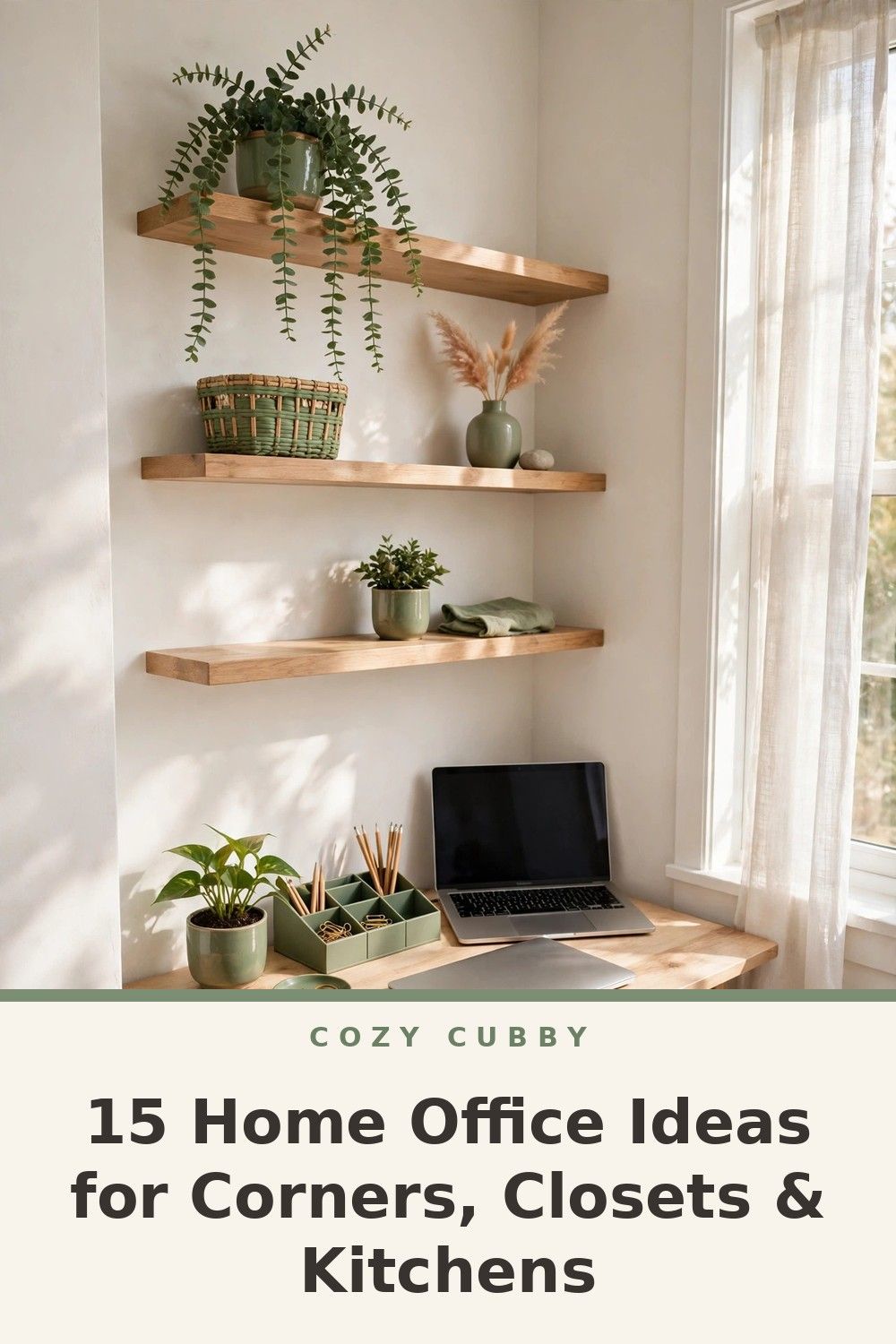
2. Use the wall above the desk, not floor beside it. Add one or two shallow shelves for books and supplies. Keep only daily items within reach. Skip floor-standing shelves and filing cabinets, which crowd your feet and chair.
3. Park supplies on a rolling cart. A slim three-tier cart beside the chair holds chargers, paper, and headphones, then rolls against a wall after work. Skip stacking supplies on the desk. The cart is the storage, so the surface stays clear.
4. Hang a pegboard for small tools. Hooks and small cups hold scissors, tape, pens, and cords off the desk. Limit the board to weekly tools, or it becomes dust-collecting decoration. Skip deep bins; shallow holders keep everything visible.
5. Keep one tray as the daily reset. End the day by placing the laptop, notebook, and papers on a single tray or in a tote. Carry it out or slide it under the desk. If it does not fit on the tray, it does not live in the corner.
Closets and Cloffices: Ideas 6–10
6. Fit the desk to the closet depth. Measure the closet, then choose a desk or board that lets the door or curtain close. A surface 20 to 24 inches deep suits most reach-in closets. Skip forcing in a standard desk that blocks the doors.
7. Keep half the closet as a closet. If clothes still live there, confine work to one side with a clear divider, such as a storage cube. Skip spreading papers across the full rod. A shared closet only works with a hard boundary.
8. Plan light and power first. Closets rarely have outlets or good light. Run one power strip from the nearest outlet without overloading it, and add a slim lamp. Skip closing the doors fully while devices charge and give off heat.
9. Add one shelf above head height for backstock. Store extra paper, ink, and rarely used gear on a high shelf, and keep the desk level for daily work only. Label each box. Skip storing heavy boxes overhead.
10. Use the close-the-door reset. Choose a chair that slides fully inside, coil the cord, and close the door or curtain. Work disappears in under two minutes. Skip leaving the chair in the doorway; if the reset feels like effort, it will stop happening.
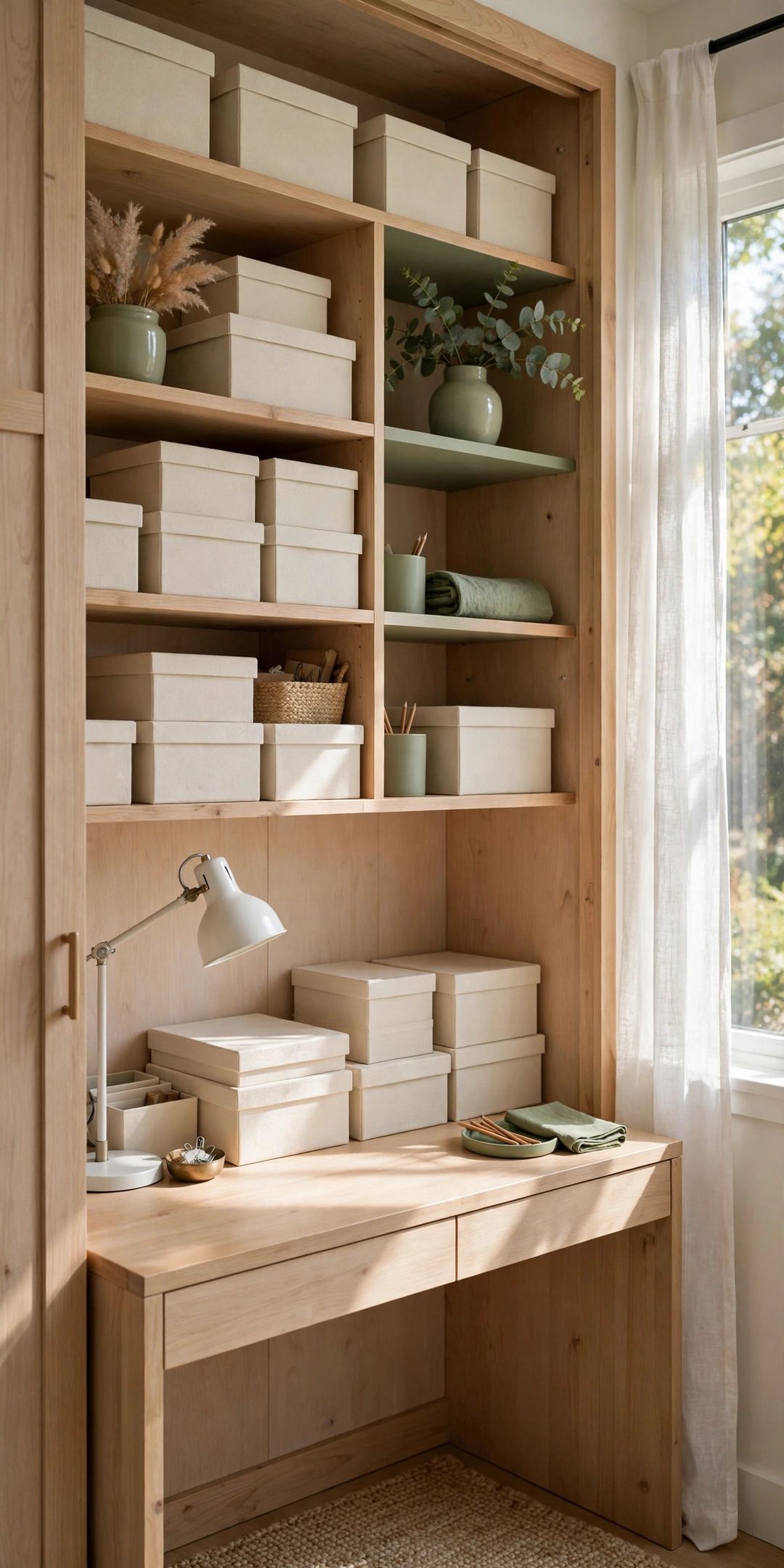
Kitchen Tables and Counters: Ideas 11–15
11. Claim one placemat-sized zone. Mark your work area with a mat or tray about placemat size. Laptop, notebook, and drink stay inside it. Skip using the whole table; work that spreads to every seat is hard to clear before meals.
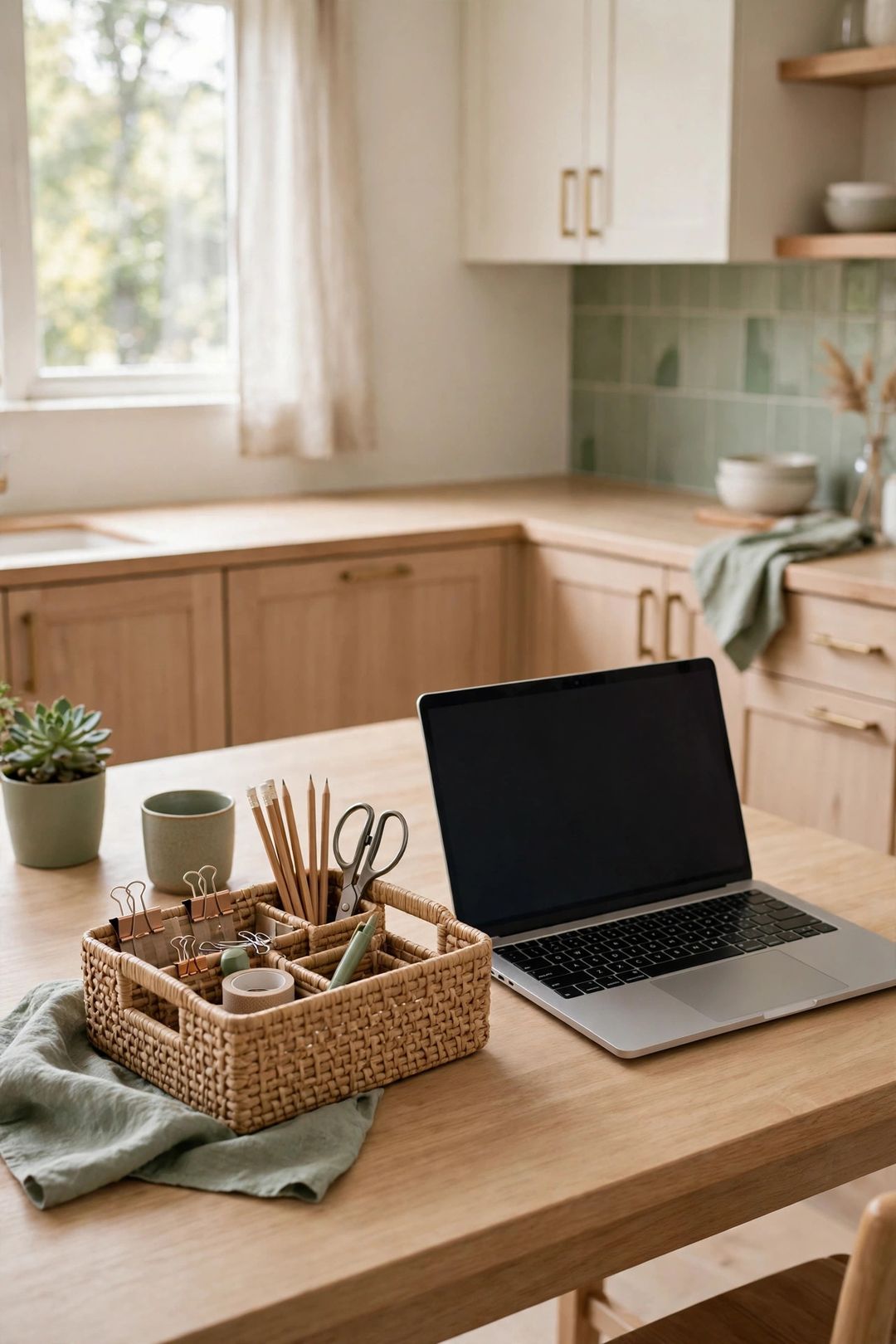
12. Carry everything in one caddy. A handled bin holds the laptop stand, mouse, charger, notebook, and pens, and moves between shelf and table in one trip. Skip making five trips for single items. If the caddy is full, something leaves before anything new joins.
13. Keep one charger kit for the table. Bundle the charger, phone cord, and earbuds in a small pouch that lives in the caddy. Pack it after work instead of leaving cords across the counter. Skip running cords near the sink or leaving them on a damp counter.
14. Make the kitchen chair work-ready, then restore it. Add a seat cushion and a low box or footrest for posture. A flat-packing laptop riser lifts the screen and stores in the caddy. Reset: cushion and footrest return to their spots, and the chair is just a chair again.
15. Run a five-minute meal-time reset. Use a simple order: laptop into the caddy, papers clipped, cords coiled, surface wiped. Do it before cooking starts. Skip leaving “just one” notebook out; that is how the table quietly becomes a permanent desk.
What to Buy
A fold-down wall desk, typically $60–$120. Pro: A full work surface that folds flat. Con: It must anchor into studs or solid wall, and holds less weight than a standard desk. Best for: A corner that must stay clear at night.
A slim rolling cart, typically $20–$35. Pro: Storage moves with you and parks out of the way. Con: Small wheels roll poorly on thick carpet, and open tiers look messy if overloaded. Best for: Setups with no built-in storage.
A handled desk caddy or carry bin, typically $12–$22. Pro: One-trip setup and cleanup for shared tables. Con: It limits how much you can keep, which is the point, but bulky gear will not fit. Best for: Kitchen tables that return to meals daily.
A slim LED desk lamp, typically $18–$30. Pro: It fixes dim light without taking much surface. Con: Cheap models can flicker or run hot. Best for: Cloffices and corners far from a window.
Mistakes to Avoid
- Buying furniture before measuring. Width, depth, and outlet distance decide what fits. A desk that blocks a door or chair creates daily friction.
- Letting work spread past its boundary. Every shared spot needs a hard edge: one tray, one caddy, or one side of a closet.
- Skipping the reset plan. If you cannot picture where each item goes at night, the setup will slowly take over the room.
- Ignoring light, power, and heat. Dim closets strain your eyes, overloaded strips are unsafe, and closed doors trap heat around charging devices.
- Storing everything at desk level. Daily tools belong within reach. Backstock belongs up high, in a cart, or in another room.
Frequently Asked Questions
How much space does a corner desk need?
A workable corner needs about 36 to 48 inches of wall width, a surface 20 to 24 inches deep, and clear floor space for a chair to pull out. Measure the chair space too, not just the desk footprint.
Can a closet office still store clothes?
Yes, if the boundary is firm. Keep work on one side, clothes on the other, with short hanging items above the desk. If the closet is packed full, clear it first or pick another spot.
How do you stop a kitchen desk from spreading?
Use a mat to mark the zone, keep all supplies in one caddy, and run the same short reset before meals. Spreading usually starts with chargers and loose papers, so give both a home inside the caddy from day one.
Where do papers go without a filing cabinet?
Use one slim file box or expanding file with a few labeled sections, stored in the cart, caddy, or closet shelf. Keep only active papers in it, and scan or recycle finished paperwork weekly.
No spare room is required — just one defined spot, a short list of gear, and a reset you will actually do. Save this post to your Small-Space Storage board on Pinterest so all 15 setups are handy when you measure your corner, closet, or kitchen table.