A closet can hold plenty of good clothes and still feel hard to use. Shirts hide behind dark jackets, and a favorite top gets lost in a jumble of prints. Learning how to color code your closet gives every item a clear home, so the eye can scan by shade instead of hunting piece by piece.
Color coding is not about a perfect rainbow photo. The goal is a simple order that still works after laundry day and after new clothes come in. A light-to-dark order inside each clothing type suits small and shared closets alike.
Plan on one focused sort, then small habits to hold the order. Empty one section at a time, group by type, and arrange each group by color.
The Order: Light to Dark
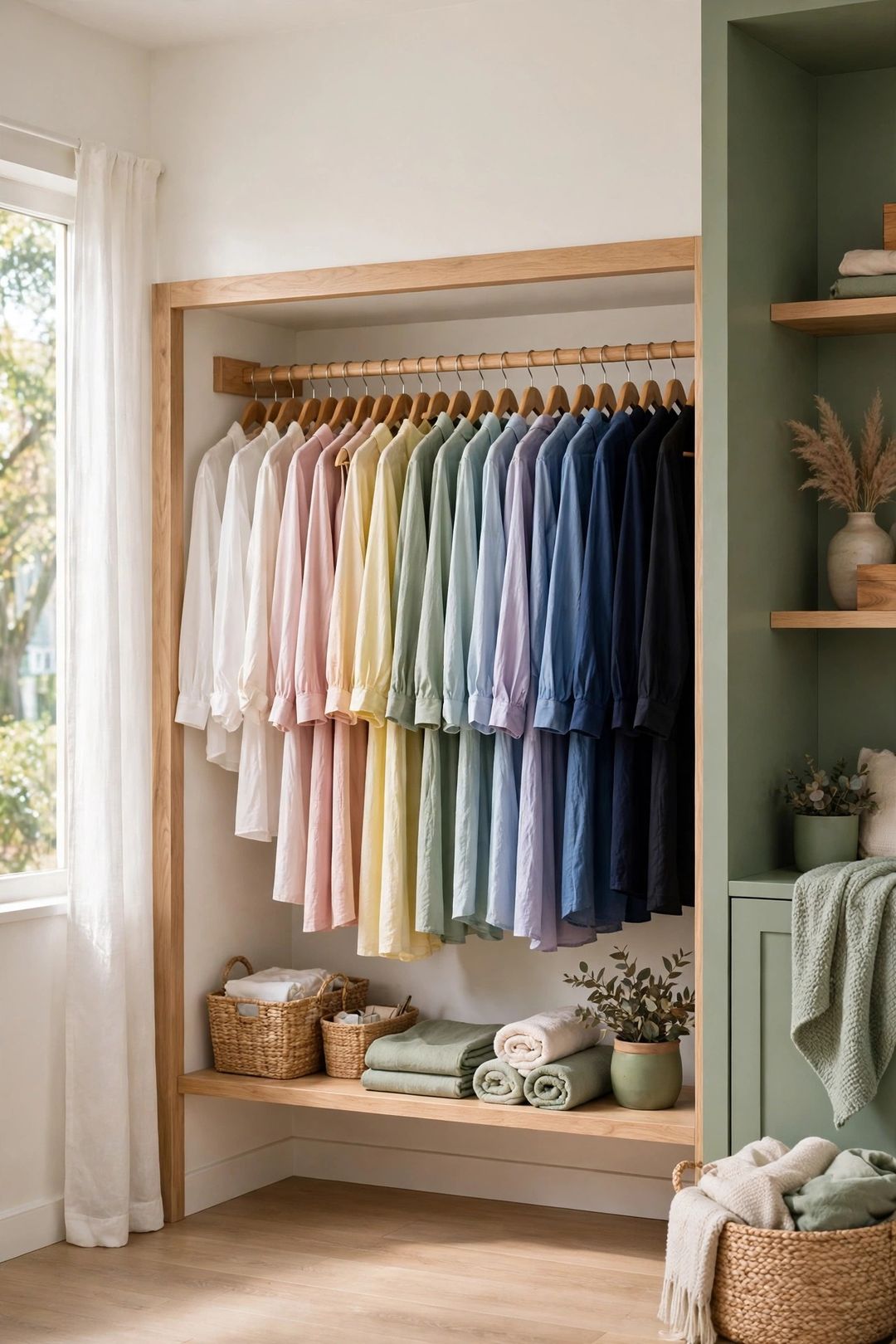
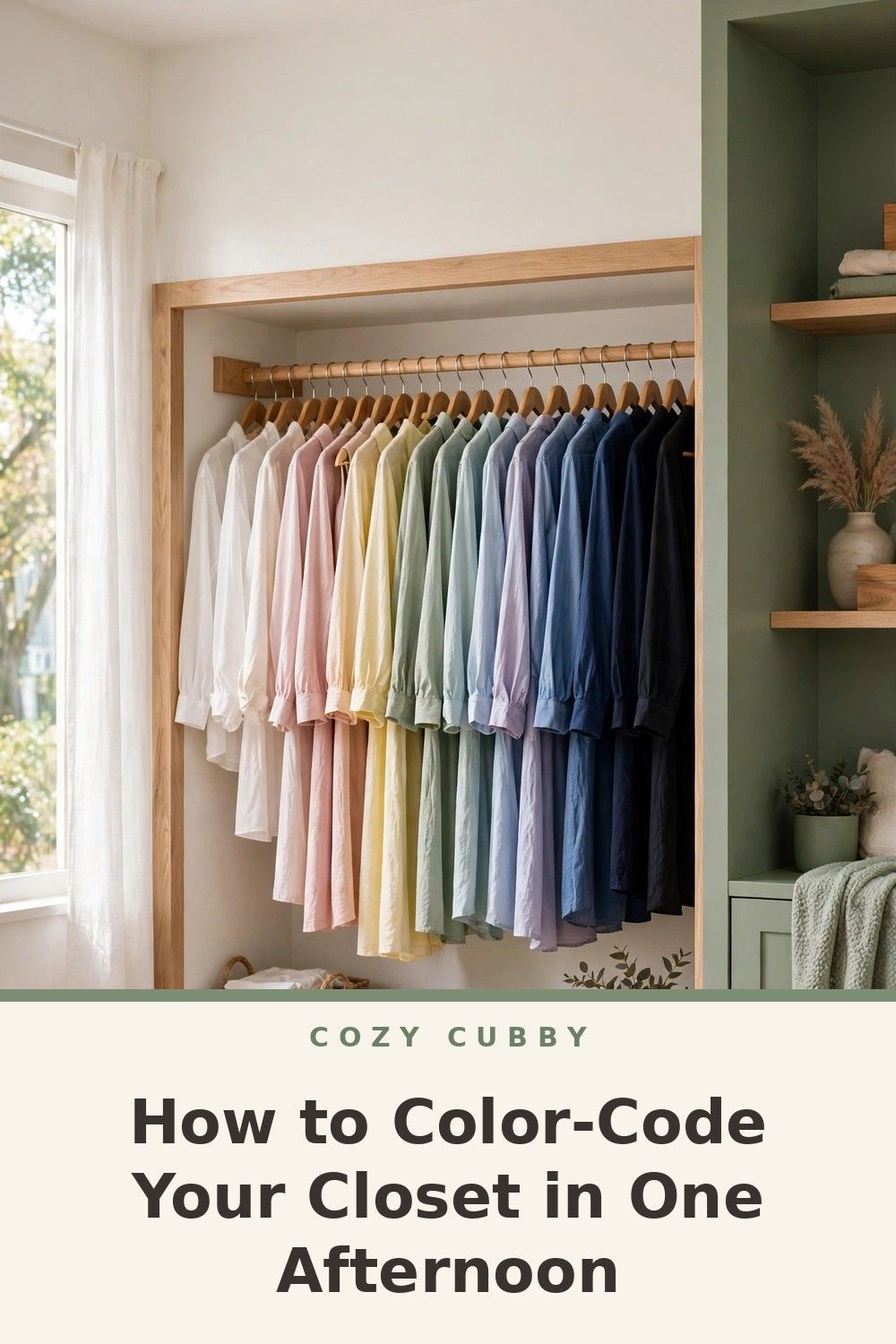
The standard order runs from light to dark, much like paint shades on a store card. Light shades sit at one end, deep shades sit at the other, and bright colors fill the middle.
Step 1: Start with whites and creams. Place pure white tops first, then off-white, cream, and pale beige. These light neutrals set the start of the line and make the next shades easy to spot.
Step 2: Add pastels next. Soft pink, pale blue, mint, lavender, and light yellow come after the neutrals. Keep each pastel shade in a small cluster rather than mixing shades item by item.
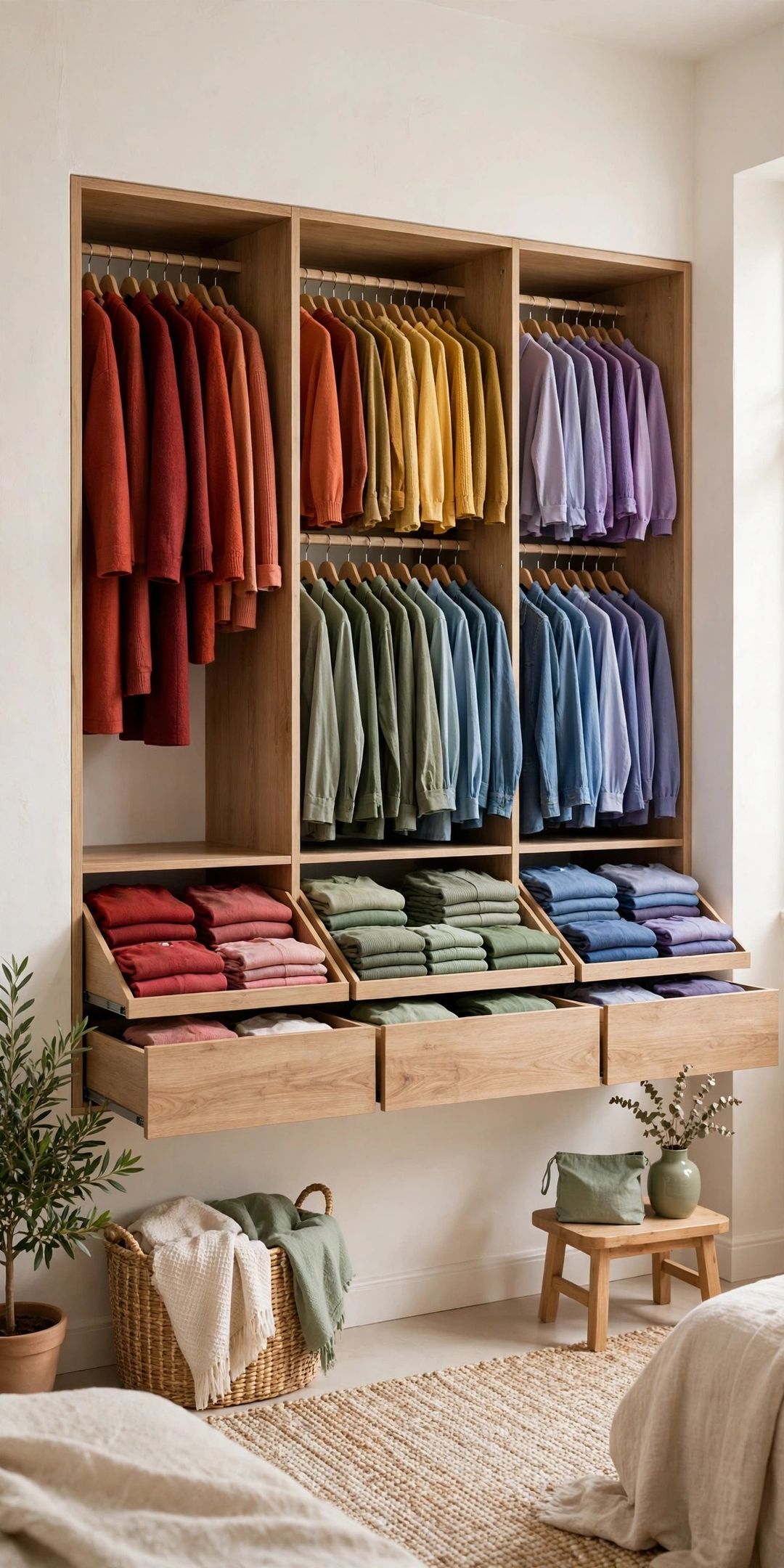
Step 3: Move through rainbow brights. Arrange clear bright colors in rainbow order: red, orange, yellow, green, blue, then purple. Exact order matters less than consistency, so keep the same order in every section.
Step 4: Finish with deep tones, then browns, grays, and black. Navy, burgundy, and forest green follow the brights. Browns and grays come next, and black pieces close the line at the far end.
Step 5: Place patterns by main color. A striped shirt with mostly blue goes in the blue zone. A floral dress with a white base goes near the whites. Judge each print by the color that covers the most fabric.
Sort by Type First, Then Color
One long rainbow across mixed clothes looks neat for a day, then falls apart. Color inside a category works better, because outfit building starts with type: a top, then bottoms, then a layer.
Step 1: Group all shirts together. Pull tees, long-sleeve tops, and blouses into one section. Arrange that section light to dark, using the same order as above.
Step 2: Group pants and skirts next. Hang pants in a separate section, again light to dark: white and khaki first, then denim blues, then gray, then black. Skirts can join this section if rod space allows.
Step 3: Give dresses a clear zone. Dresses and long coats need taller hanging space, often at one end of the rod. Arrange that zone light to dark as well, so pieces never swap places by chance.
Step 4: Keep a small zone for sets and uniforms. Work uniforms and matching sets stay faster to grab when kept together, still in color order inside the zone. Judge a set by the color of the top piece.
Shorter sections also make gaps visible. An empty spot in the blue shirt zone shows that blue shirts sit in the laundry, not lost in the closet.
Hangers and Sections
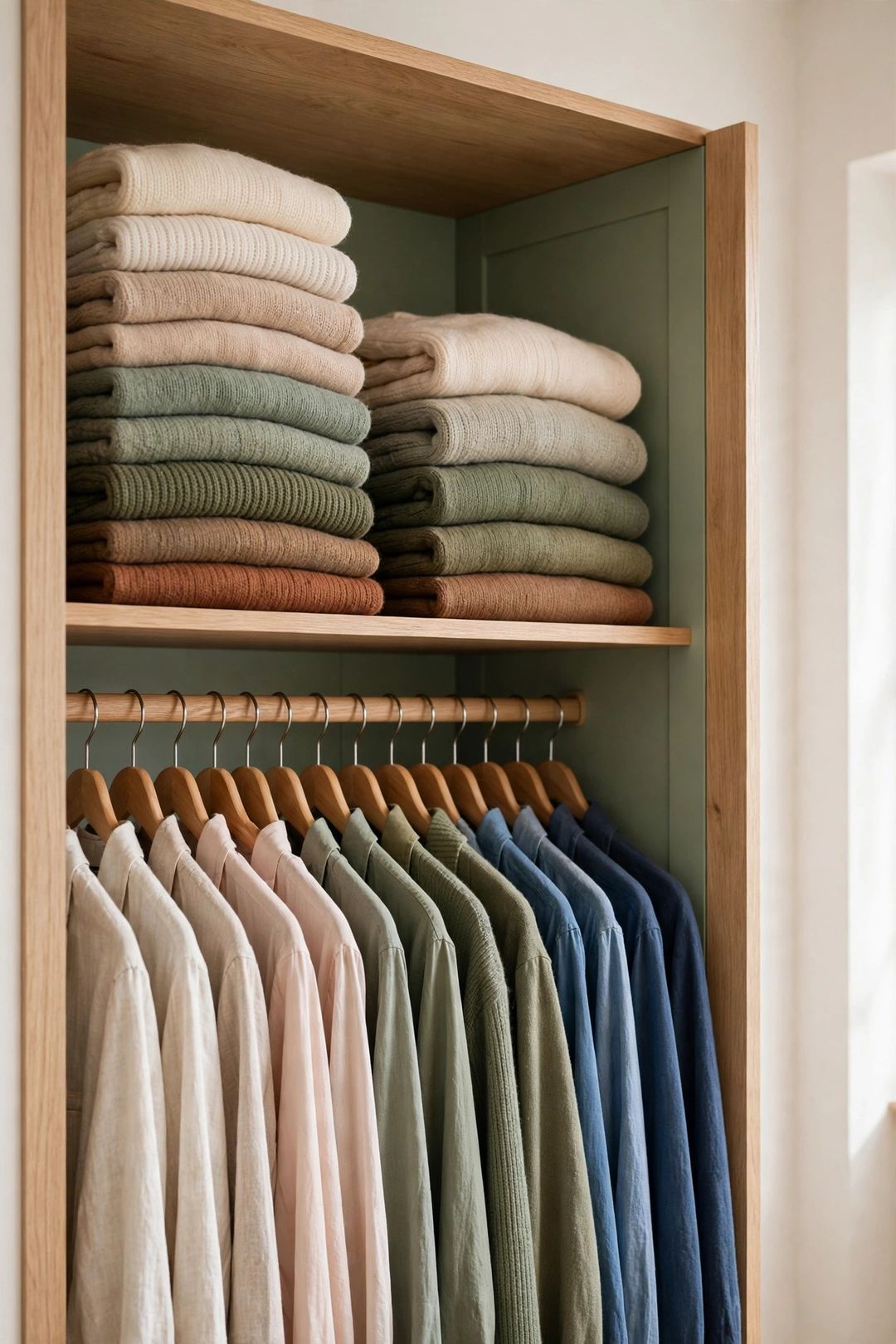
One hanger style makes color the only thing that changes along the rod. Mixed hangers add visual noise and uneven space. Uniform slim hangers sit at even gaps and let the color order stand out.
Match hanger choice to clothing weight. Slim flocked hangers grip blouses and tees well and save rod space. Sturdy hangers suit heavy coats better, since thin hangers can bend. Keep heavy hangers at one end.
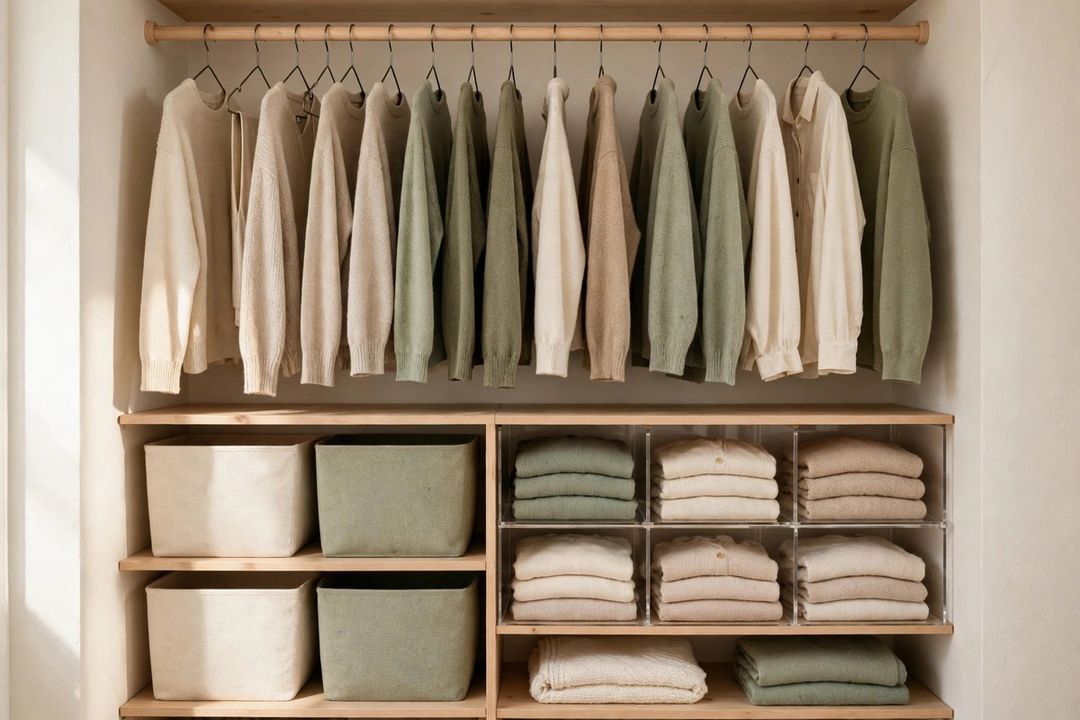
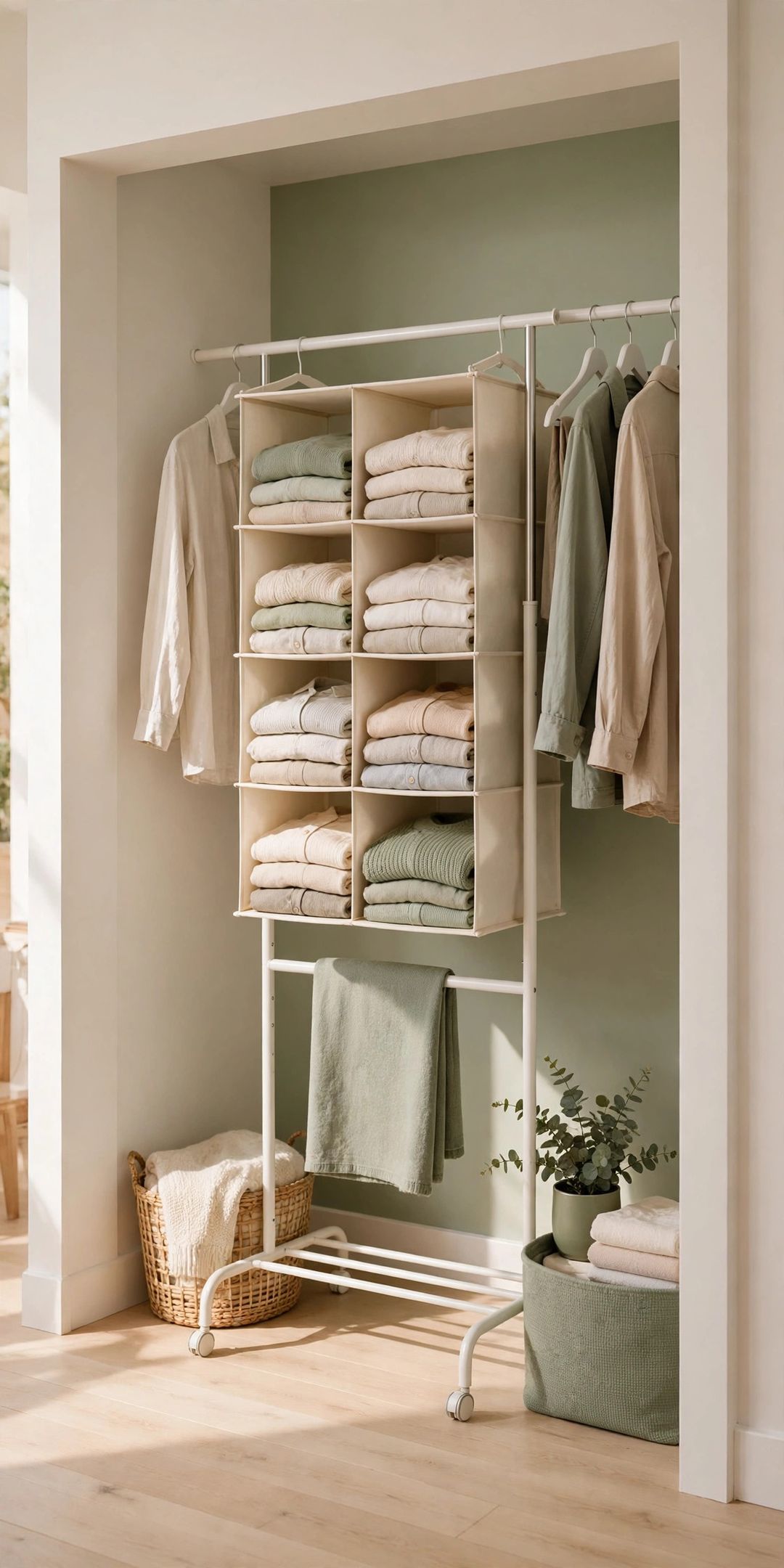
Clear breaks between color groups help the order hold. A divider disc, a small gap of empty rod, or a label can split whites from pastels and brights from deep tones. Folded clothes can follow the same plan: stack sweaters light to dark, with a gap between stacks.
Keeping It Up
The laundry-return rule keeps the system alive: each clean item goes straight back to the color spot for that type. A blue tee returns to the blue part of the shirt section, not to the first empty hanger. The rule takes seconds and prevents drift back to a mixed rod.
A one-in, one-out rule helps when new clothes arrive. A new top enters as a similar top leaves for donation, and the new top goes into the correct color spot on day one.
Set a short monthly drift fix. Once a month, scan each section for items out of order. A 5-minute fix can reset the whole rod, and seasonal swaps offer a natural extra check.
Kids and shared closets need the same rules in simpler form. A photo or color strip taped inside the door shows the order at a glance.
What to Buy
Uniform slim hangers, typically $12–$25. Pro: even spacing makes the color order easy to read, and slim shapes free up rod space. Con: thin hangers can bend under heavy coats, so keep a few sturdy hangers for that zone.
Section divider discs for the closet rod, typically $8–$15. Pro: discs mark where each color group starts, which helps shared closets stay consistent. Skip if the rod already has clear gaps or built-in sections.
Small handheld steamer, typically $20–$40. Pro: a quick steam freshens a top pulled from a tight section, so outfits stay ready without a full iron setup. Con: a steamer needs water refills and an outlet nearby.
Mistakes to Avoid
- Running one rainbow across mixed types. A single color line that mixes shirts, pants, and dresses slows outfit building, since matching types sit far apart.
- Splitting one category across two closets. Shirts stored in two rooms break the color order and cause duplicate buys, since part of the group stays out of sight.
- Giving up after the first laundry day. Clean clothes dumped on any free hanger undo the sort fast. Return each load to color spots right away.
- Placing prints at random. Prints tossed between groups blur the order. Place each print by the main background color, every time.
- Using too many hanger styles. Mixed hangers add clutter and uneven gaps that hide the color line. Stick to one main style, plus sturdy hangers only for heavy coats.
Frequently Asked Questions
Should clothes be sorted by color or by type first?
Type first, then color inside each type. Outfit building starts with a category, such as shirts or pants, and color order inside that category makes the right shade easy to spot.
Where do patterned clothes go in a color-coded closet?
Place each patterned item by the color that covers the most fabric. A mostly blue print goes with blues, and a mostly white print goes near whites.
Does color coding work in a very small closet?
Yes. Use slim hangers, keep only in-season clothes on the rod, and store off-season pieces in a bin or under-bed box.
How often does a color-coded closet need a reset?
A quick scan once a month handles normal drift. A fuller reset at each season change keeps groups aligned with current clothes.
A color-coded closet stays useful when the order stays simple: type first, light to dark, and each item back to the same spot. Save this post to your closet organization board on Pinterest so the color order is handy on sorting day.