A full garage feels like a weekend-long job, but most of the clutter is not hard to sort. It is hard to see. Boxes hide behind bikes, broken tools mix with good ones, and nothing has a clear place to go. Working inside that mess leads to shuffling piles from one corner to another.
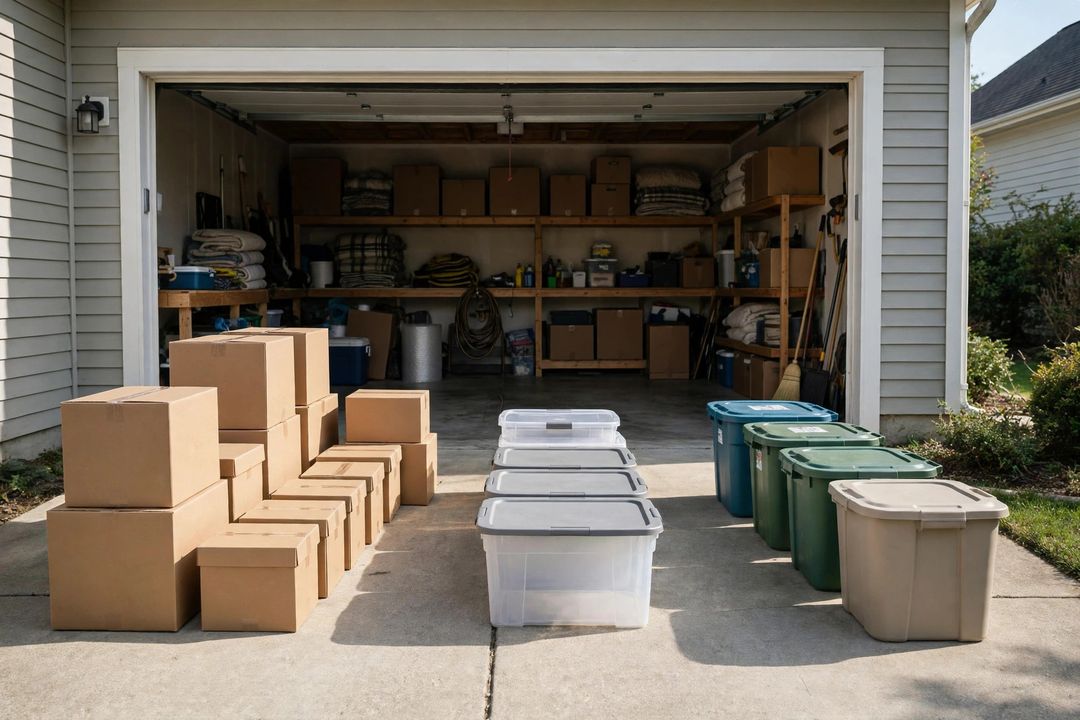
Learning how to declutter a garage in one day works better with one simple shift: take everything out to the driveway, decide in the open, and let only the keepers back in. The driveway sort method below walks through the full day, from prep to the final reset, with fast rules for each decision.
Before You Start: Prep and Empty the Garage
Pick a dry day and start early, because the driveway is the work space for the whole method. Move cars to the street, open the garage door wide, and set out water, gloves, and a phone charger. Tell anyone who shares the garage that nothing goes back in without a decision.
1. Clear the driveway first. A clean, swept driveway gives every item room to be seen. Chalk lines or tape can mark the four station areas before the first box comes out.
2. Carry everything out, category by category. Start with the big, easy items like bikes and bins, then work through boxes, tools, and loose gear. Place each item straight into a rough station area instead of making one giant mixed pile.
3. Leave cleaning for later. Sweeping and washing the empty floor can wait until the end. The goal for the morning is an empty garage and a driveway full of visible decisions.
Set Up Four Sort Stations
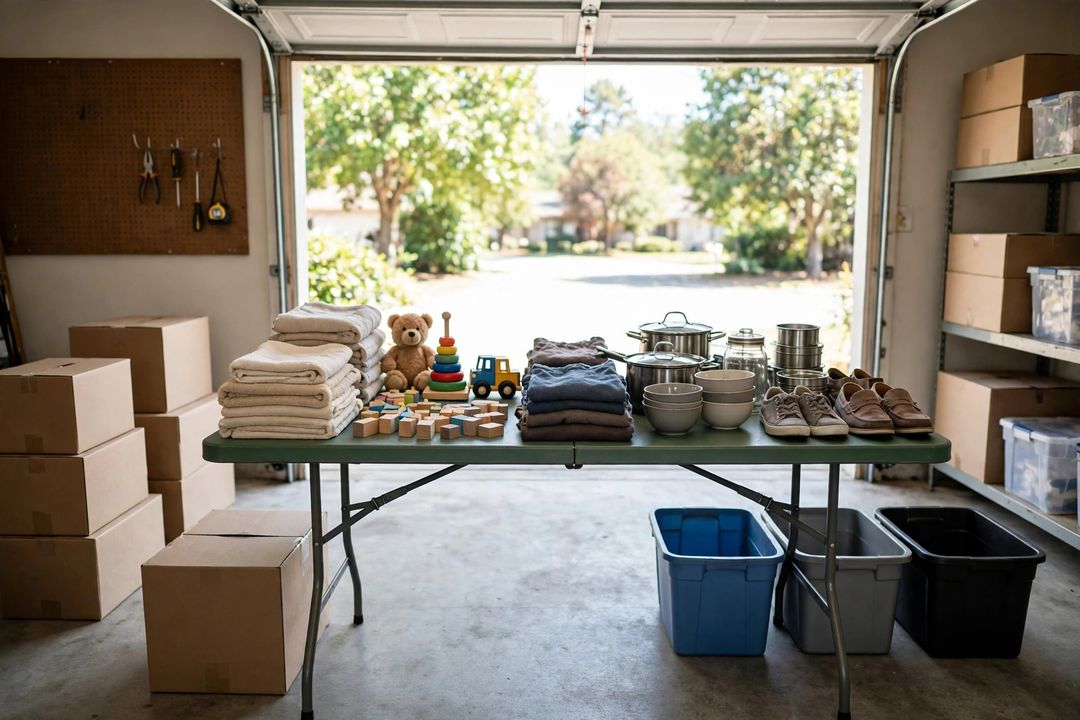
The whole method rests on four stations: keep, donate, toss, and relocate. Keep is for items that belong in the garage and get used. Donate is for usable items that no longer earn the space. Toss is for broken, rusted, dried-out, or incomplete items that cannot be passed on. Relocate is for things that belong somewhere else in the home, like indoor decor or paperwork filed in a closet.
Label each station with a large sign so choices stay fast and clear. Place a heavy-duty bag at the toss station, and line up donation bins at the donate station. When an item feels unclear, ask one question: if this vanished today, would it need replacing? If not, it rarely belongs in keep.
Work Category by Category, Not Box by Box
Sorting box by box is slow, because every box holds a mix of unrelated things. Sorting by category is faster and fairer. All the paint together shows how many half-used cans there really are. All the sports gear together shows which sizes still fit and which sports are long finished.
Move through common garage categories in a steady order: tools, paint and chemicals, garden gear, sports and outdoor gear, seasonal decor, car supplies, and stored household items. For each group, keep the best version, set a sensible limit, and let duplicates go. Two working rakes is plenty for most homes. Three sets of the same Allen keys is not.
Use simple rules for hard groups. Paint that is dried, separated, or an unknown color goes out, following local rules for paint and chemical drop-off. Broken tools that have waited years for repair are toss or donate for parts, not keep. The garage is rarely the right home for photos, papers, or keepsakes that heat and damp can damage.
What Goes Back In: Rough Zones Only
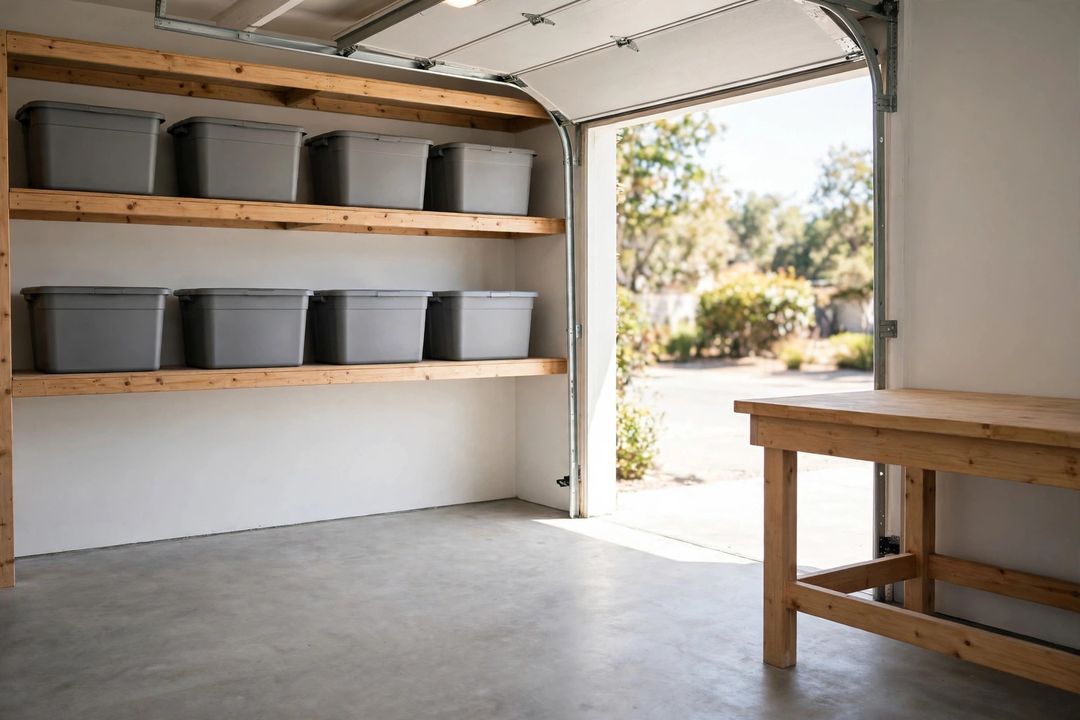
Once sorting ends, the keep pile should look much smaller than the pile that came out. Before anything returns, sweep the empty garage so the reset feels finished. Then put items back by rough zone, not by perfect system: tools near the work area, garden gear near the door, seasonal items at the back, and daily-use items like bikes within easy reach of the entrance.
Rough zones are enough for declutter day. Detailed storage systems can come later, once the smaller keep pile has proved what it really needs. Leave clear floor space in the middle and a walking path to the door. If an item has no zone, it may belong in relocate or donate after all.
The End-of-Day Reset
Close the day by removing every non-keep pile from the driveway. Load donation bins into a car the same day, or move them by the front door with a drop-off plan for the next day. Bag toss items for collection or drop-off, and carry relocate items to their real rooms.
Finish with a quick photo of the cleared floor and open zones. A photo makes the result easy to compare later and helps spot new clutter early, before it spreads.
What to Buy
Heavy-duty trash bags, typically $10–$20 per box. Pro: Thick bags handle sharp, heavy, and dusty toss items without tearing. Con: They add cost compared with thin kitchen bags. Skip if: The toss pile is small and sturdy bags are already on hand.
Clear donation bins or sturdy boxes, typically $8–$18 each. Pro: Clear sides show what is inside, and a lidded bin keeps donations clean until drop-off. Con: Bins cost more than reused boxes. Skip if: Strong moving boxes are already available and drop-off is the same day.
Labels and thick markers, typically $5–$12. Pro: Big station signs and bin labels keep sorting fast and prevent mix-ups. Con: Fancy label systems are easy to overbuy for a one-day job. Skip if: Masking tape and a marker are already in the house.
Mistakes to Avoid
- Sorting inside the garage. Working in place just moves piles around. The driveway gives light, space, and a clear view of every item.
- Keeping items for a someday project. If a project has no date and no space, the supplies are clutter, not a plan.
- Letting donations sit for weeks. Piles left in a corner drift back onto shelves. Load them the same day whenever possible.
- Buying storage before sorting. New bins sized for the old clutter will be the wrong fit for the smaller keep pile.
- Skipping the relocate station. Indoor items stored in the garage get forgotten and damaged. Send them to the right room today.
Frequently Asked Questions
Can a very full garage really be decluttered in one day?
Yes, if the goal is decisions, not a perfect storage system. Emptying everything out, sorting by category, and using rough zones keeps the day moving. Deep cleaning and detailed organizing can happen on a later day.
What should be done with old paint and chemicals?
Keep only paint that is still usable and clearly labeled with the room or color. Dried or unknown paint, expired chemicals, and mystery bottles should go to a local household hazardous waste collection if one is available.
How many items should stay in the garage?
There is no set number. A good test is use and space: an item should be used in the current season or year, and it should fit in a clear zone without blocking the floor, the car, or the door.
What if family members disagree on an item?
Place disputed items in relocate or in one small review box with a clear deadline, such as the end of the week. If no one claims or uses the item by then, donate or toss it as agreed at the start.
An empty driveway and a garage that holds only what earns its space is a reset that lasts, because every item left inside was chosen on purpose. Save this post to your Garage Organization board on Pinterest so the driveway sort method is handy for your next clear-out day.