A garage sale works best as the last step of a declutter, not a shuffle. If the goal is a clearer home, every item on the driveway should already be decided: it leaves this weekend, sold or not.
This guide shows how to hold a declutter garage sale in a simple order: choose what to purge, price with basic rules of thumb, set up tables that are easy to browse, run the day calmly, and finish with a leftover plan so unsold items never creep back inside.
1. Choose What to Purge, Room by Room
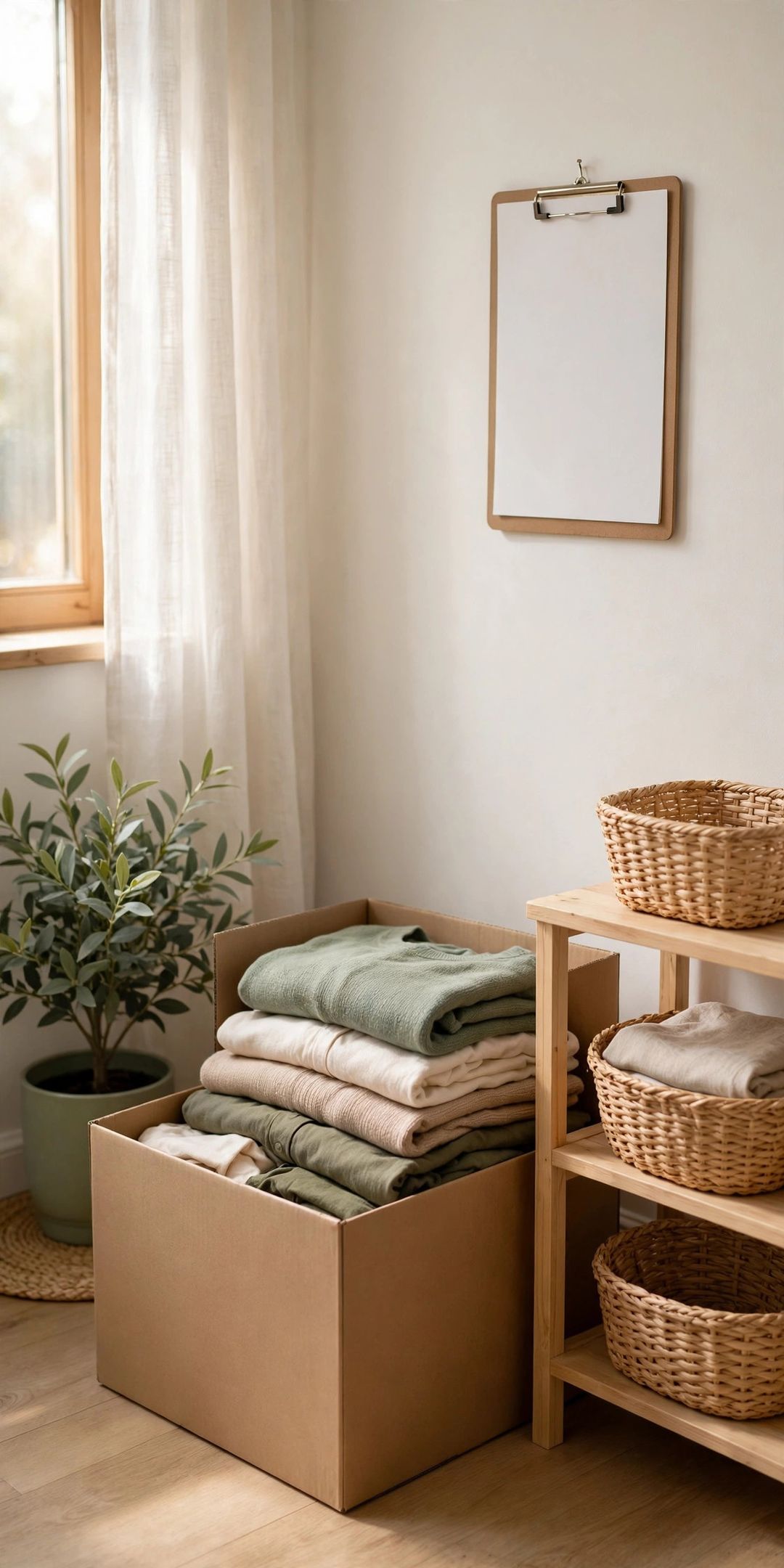
Work one room at a time with three boxes beside you: sell, donate, and recycle or trash. The sell box is only for items that are clean, working, and complete. Anything broken, stained, or missing parts goes straight to donation or recycling, where local rules allow.
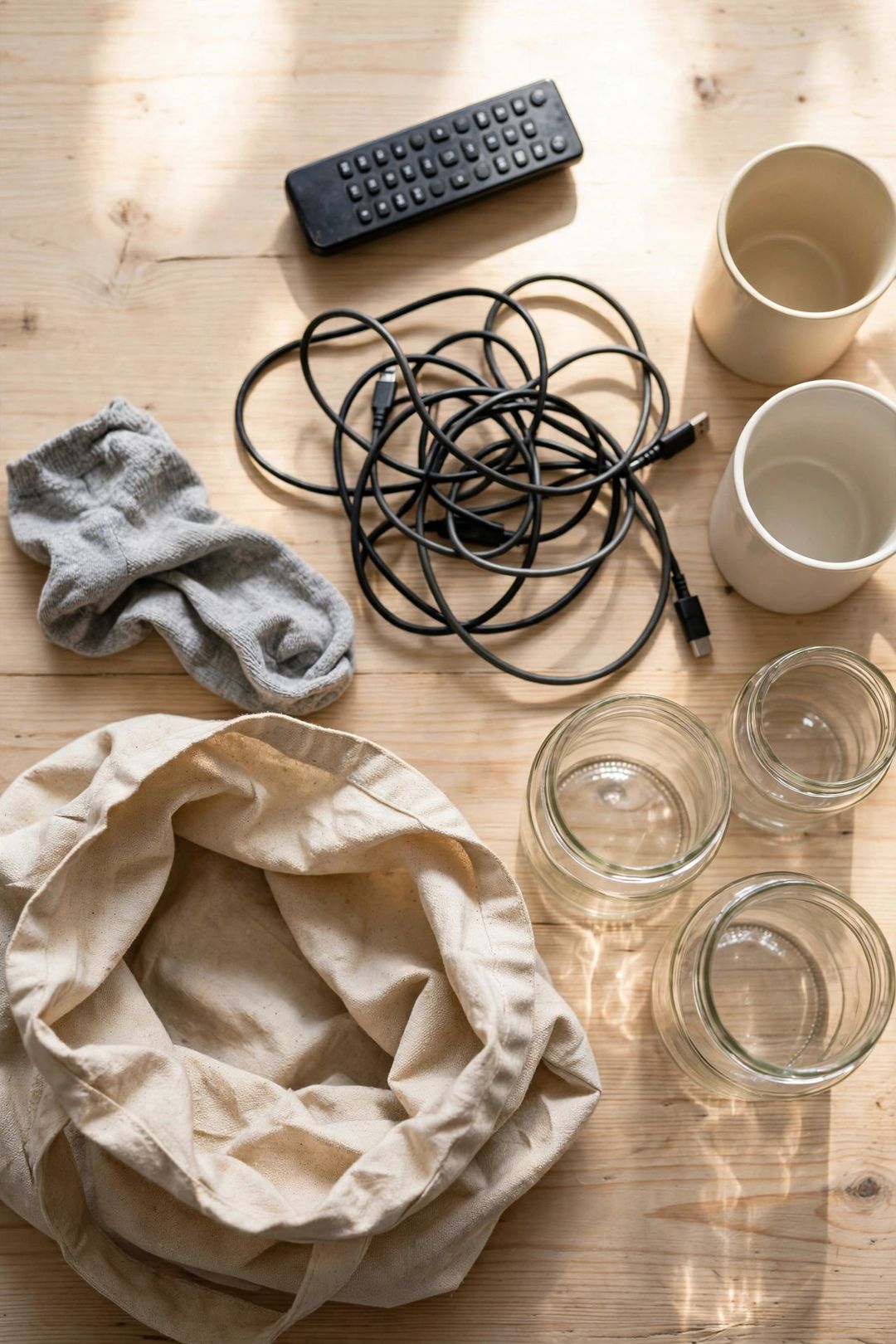
Kitchen: Duplicate tools, single-use gadgets, extra mugs, unmatched containers, and appliances unused for a year. Test anything with a plug first.
Closets: Clothes that no longer fit, shoes worn once, and bags that never leave the shelf. Check pockets, zips, and buttons; price flawed pieces as-is or donate them.
Kids' rooms: Outgrown clothes, complete toys and games, books, and sports gear in the wrong size. Set damaged or recalled items aside for safe disposal.
Garage and storage corners: Tools you own twice, leftover project supplies, and decor boxed up for years. If you forgot you owned it, that is useful information.
2. Price With Simple Rules of Thumb
Garage sale pricing is not shop pricing. Buyers expect used-goods prices, and items priced close to new rarely move. Use these general rules of thumb for typical used household goods, adjusted for condition.
Start with a fraction of the original price. A common rule of thumb is roughly 10 to 30 percent of the new price: everyday items at the low end, well-kept, in-demand items at the high end. Price the object, not the memory.
Use easy numbers. Whole dollars and quarters are simple to add up and make change for. Odd amounts slow every sale down.
Price almost everything. Most buyers will not ask about an unpriced item; they just put it down. Put stickers on top, where they are easy to see.
Plan bundles, and decide flexibility ahead. A set price for an outfit or a stack of dishes encourages buyers to take more. Know which prices are firm and where you will accept less, especially late in the day.
3. Set Up Tables That Are Easy to Browse
Shoppers scan a sale in seconds. A clear layout does most of the selling for you.
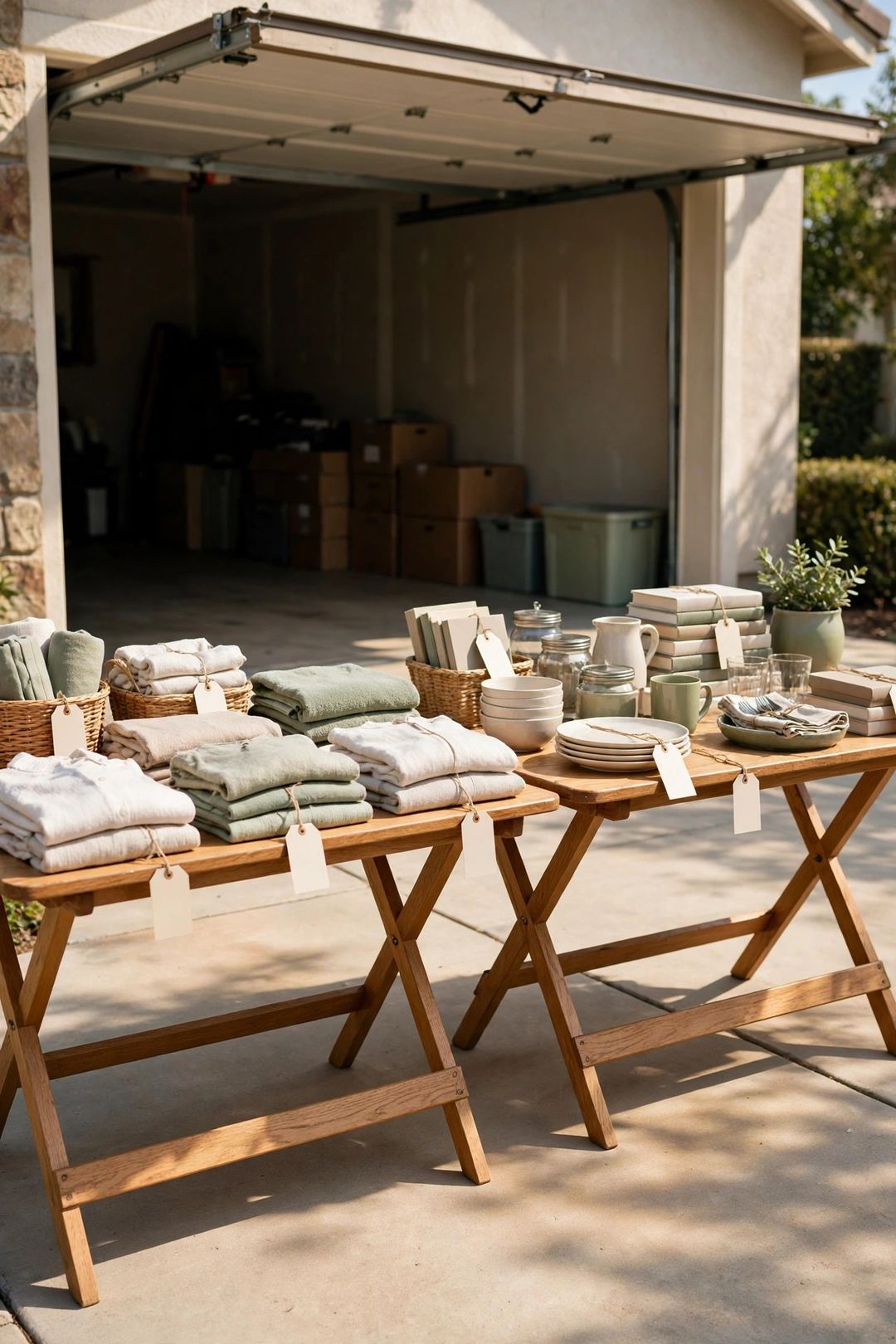
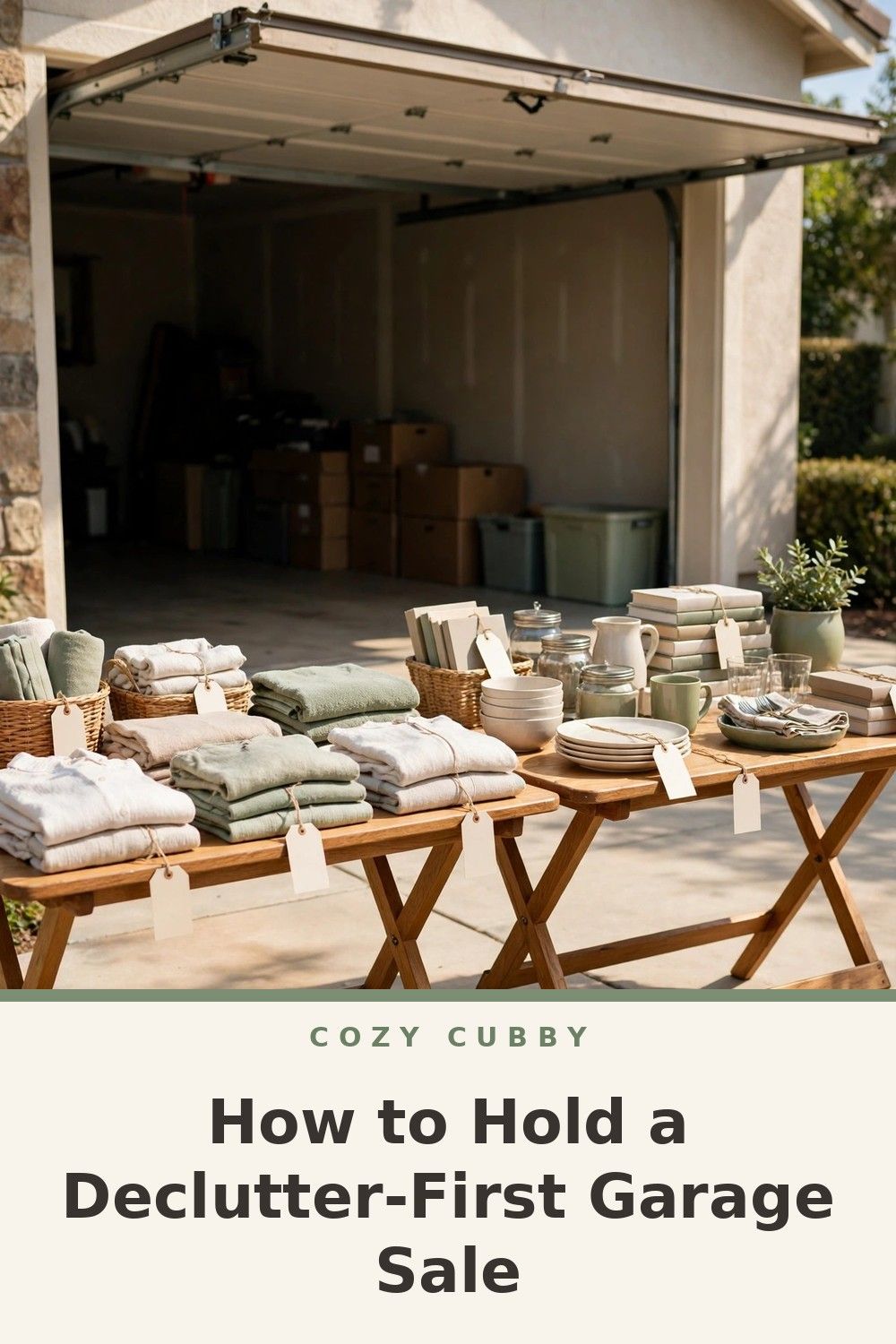
Sort by category, not by room. All clothing together, all kitchen goods together, all toys together. Buyers shop by interest, so let them find their section at a glance.
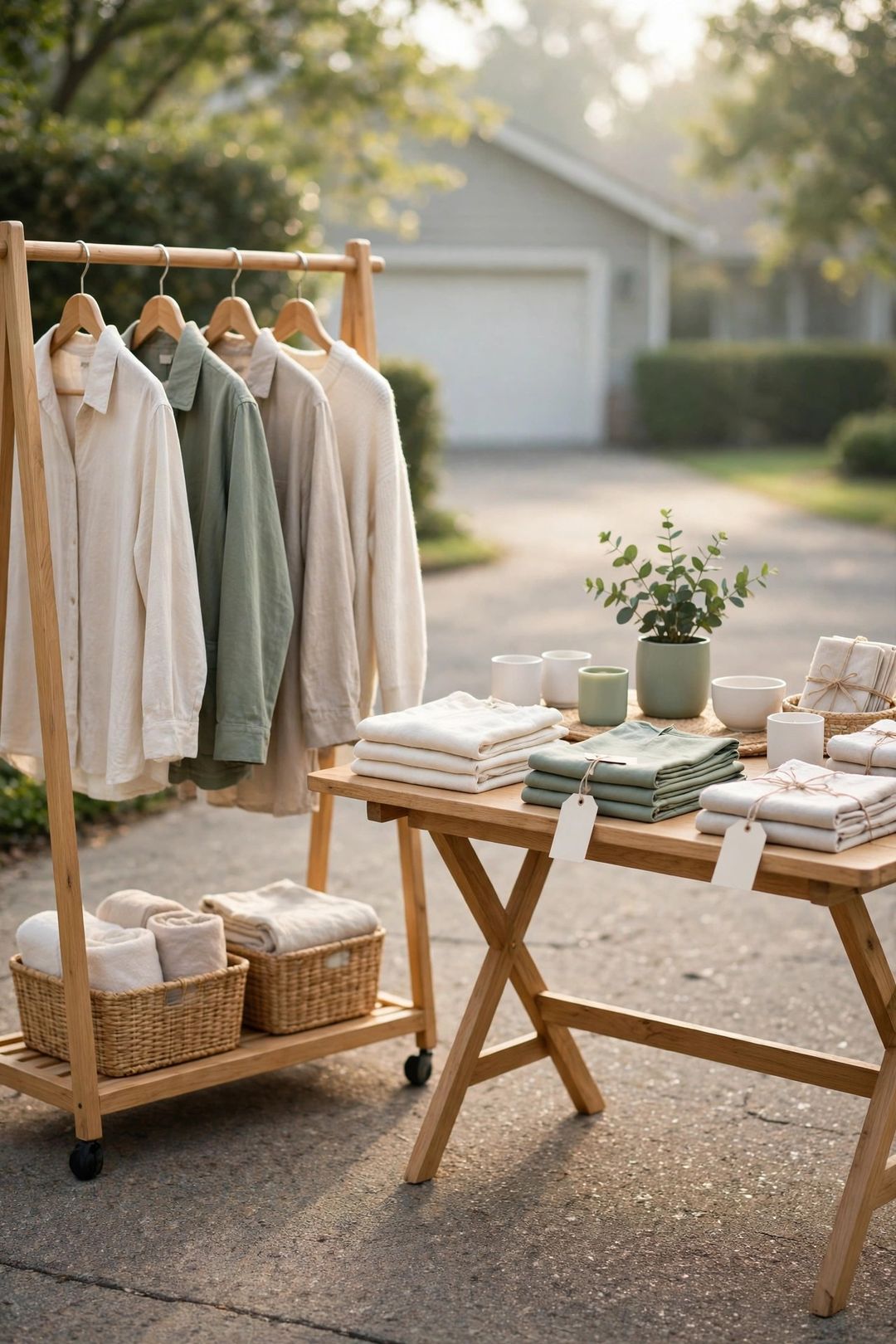
Get items off the ground. Tables, a clothing rack, and flat boxes on crates all work. Items on blankets look picked over before anyone has touched them.
Make prices visible from standing height. One clear sign per table or section, plus stickers on items, answers the most common question without a conversation.
Front the sale well. A few larger, tidy pieces near the street signal a well-kept sale. Post simple signs at nearby corners with the day, time, and a big arrow; check local sign rules, and take signs down when the sale ends.
4. Run Sale Day Smoothly
Open ready, not rushed. Have tables set and priced before the stated start time. Early shoppers are normal, so a finished setup protects your morning.
Keep small bills and coins on hand. A cash box or pouch with small change makes the first sales easy. Keep larger bills separate and out of sight.
Stay near the tables. Greet people, answer questions, and keep an eye on the setup. A friendly host sells more than a closed front door.
Lower friction late in the day. Later hours are the time for bundle offers and simpler prices. Decide your end time and stick to it.
5. The Leftover Plan: Nothing Goes Back Inside
This step makes the sale a declutter instead of a shuffle. Decide where leftovers go before the sale starts, while motivation is high.
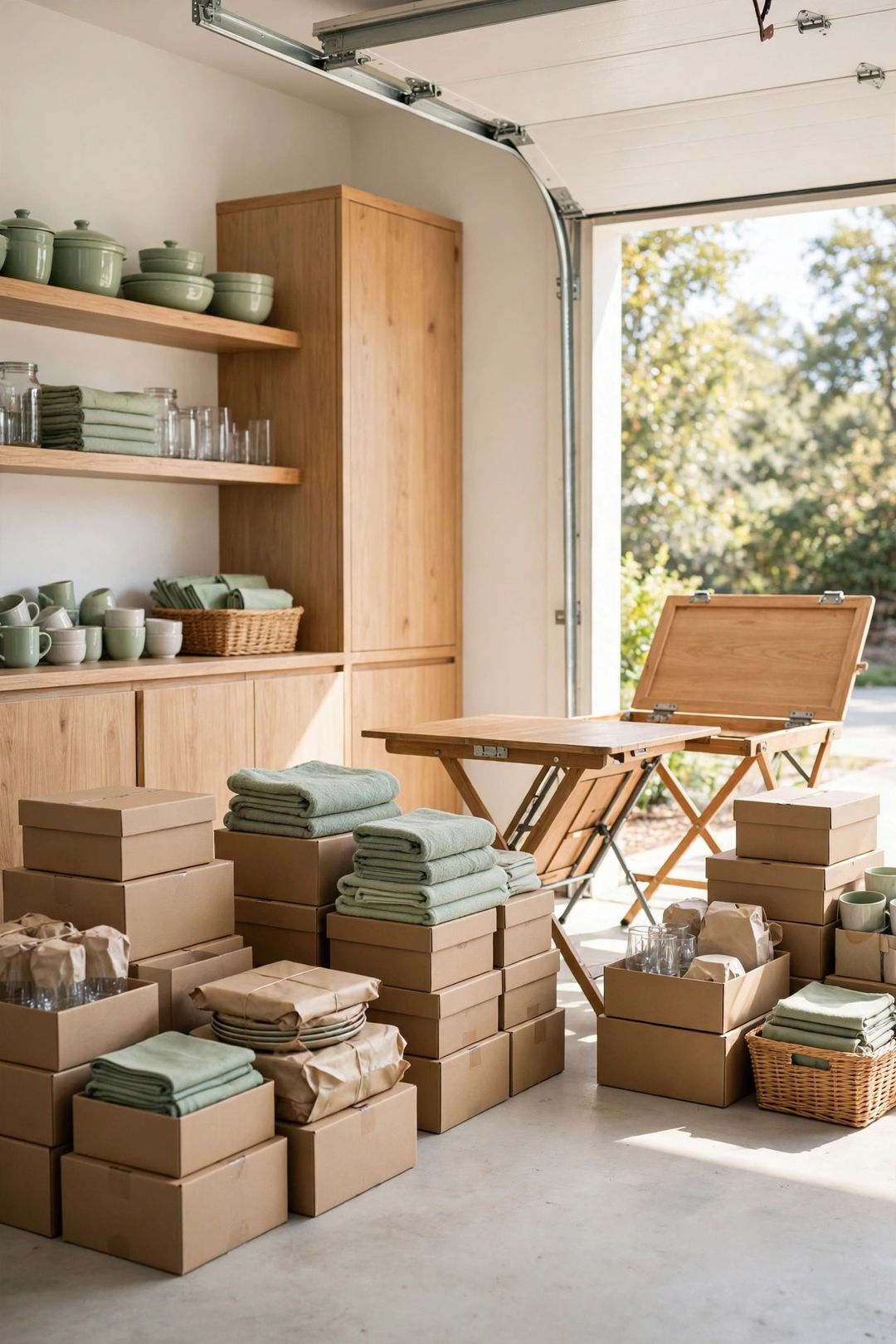
Box leftovers by destination as you pack up. One set of boxes for donation, one for recycling or disposal. Packing into destination boxes removes the "sort it later" pile entirely.
Schedule the donation drop-off for the same weekend. Many charities also offer pickup for larger items, bookable in advance. The key is a set date, not a vague plan.
List the few higher-value items separately, with a deadline. Give them a short, fixed window, such as two weeks. If they have not sold by then, they join the donation boxes.
Sweep the space the same day. Fold the tables, stack the empty bins, and enjoy the clear floor. That finished feeling is the reward.
What to Buy
Removable price stickers, typically $4–$9. Pro: Fast to apply, easy to read, and they come off cleanly. Con: They can fall off fabric. Skip if: Painter's tape and a marker already cover your pricing.
A folding table, typically $30–$60. Pro: Raises goods to browsing height and folds flat for storage. Con: Bulky in a very small home. Skip if: You can borrow tables for the day.
A portable clothing rack, typically $15–$35. Pro: Hanging clothes sell far better than folded piles. Con: Lightweight racks wobble outdoors. Skip if: You are selling almost no clothing.
A cash box or money pouch, typically $10–$22. Pro: Keeps bills, coins, and a phone in one safe spot. Con: One more purchase for a single day. Skip if: A belt bag already works.
Mistakes to Avoid
- Pricing from memory. Sentimental pricing is the main reason items come back inside. Price the used object, not the memory.
- Skipping prices. Unpriced items mostly get put back down. A clear sticker sells; silence does not.
- Selling dirty or untested items. A quick wipe, fresh batteries where needed, and a plug-in test prevent most complaints.
- No leftover plan. Without a donation date set in advance, unsold boxes return to the garage and the declutter never finishes.
- Letting the sale spread indoors. Shoppers stay outside. Keep doors closed and personal items separate from sale stock.
Frequently Asked Questions
How far ahead should the declutter start?
Two to three weekends ahead is comfortable for most homes: one for sorting, one for pricing and signs, then the sale. A single room can often be done in one weekend.
What should never go on the sale table?
Skip anything broken, recalled, stained, or missing key parts, plus personal paperwork, medicines, and opened personal care products. Donate, recycle, or dispose of those through local guidance instead.
Is it better to price every item or use table-wide prices?
A mix works well. Sticker individual prices on larger, better items, and use one per-piece price for bulk groups like books, toys, and basic clothing.
What if rain is forecast on sale day?
Decide the rain plan when you advertise: move under a garage or canopy, or name a backup date on your signs. Wet goods end a sale faster than low turnout.
A declutter-first sale ends with clear shelves and an empty driveway, not boxes creeping back inside. Save this post to your Declutter board on Pinterest so the purge, pricing, and leftover plan are all in one place on sale weekend.