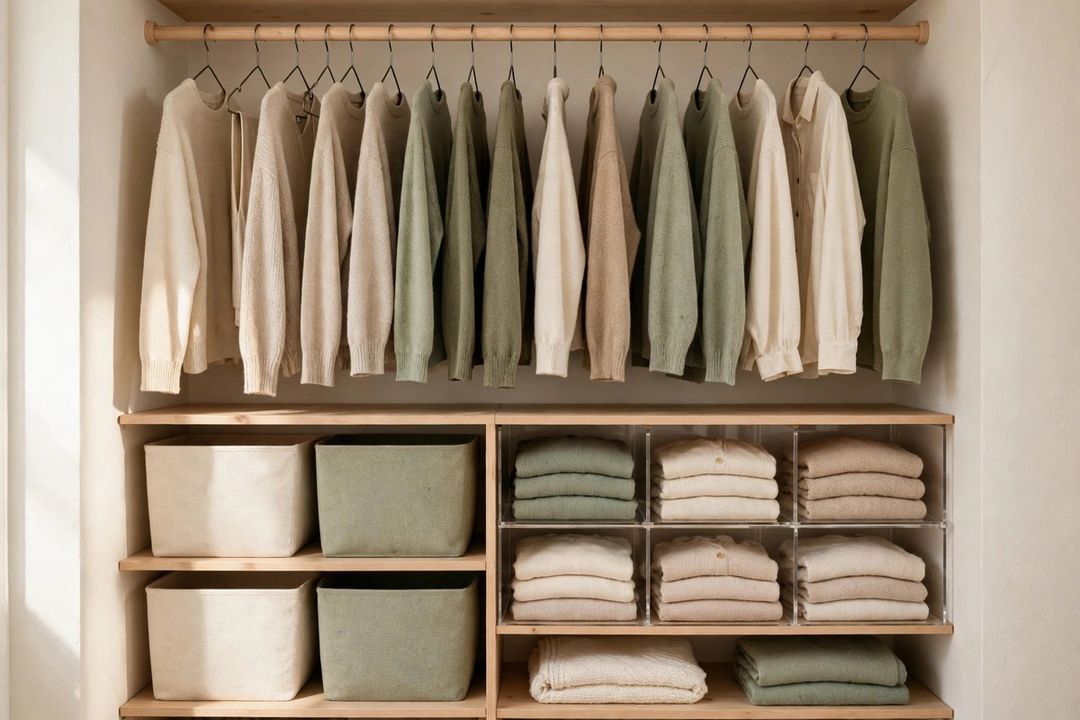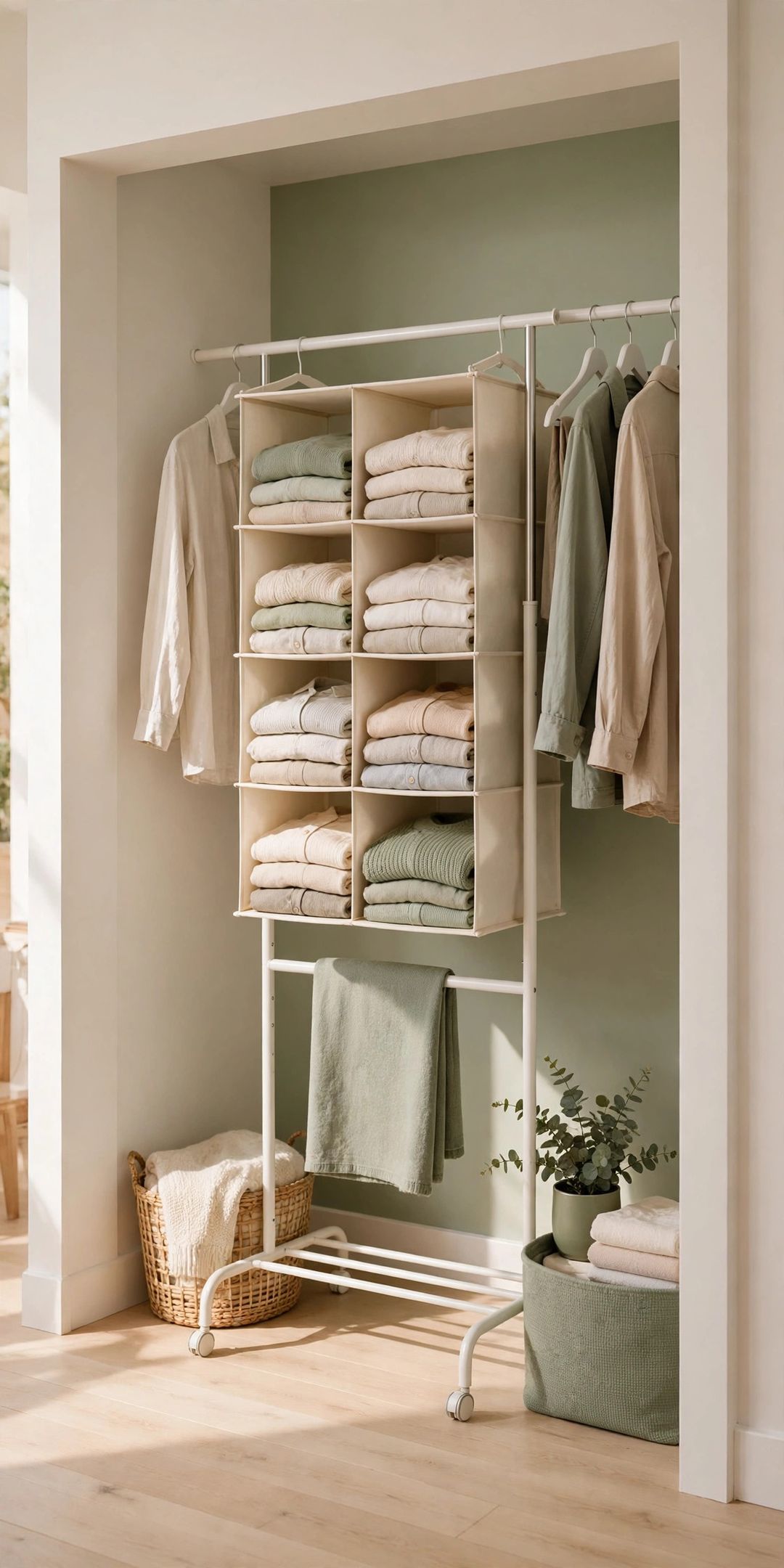
Hanging is the fastest way to ruin a good knit. The weight of the sweater pulls down from the hanger points, so shoulders stretch, hems grow longer, and the shape does not bounce back. Learning how to store sweaters on shelves flat, folded, and in short stacks protects wool, cotton, and cashmere without any special equipment.
The rules are simple: fold instead of hang, keep stacks to 3 or 4 sweaters, and let knits breathe. Tight plastic, tall piles, and wire hangers all cause problems that flat shelf storage avoids.
The 11 systems below range from a plain folded stack to cedar and seasonal bins. Most closets need only two or three of them: one for daily sweaters, one for delicate knits, and one for off-season storage.
1. Fold Sweaters the Right Way First
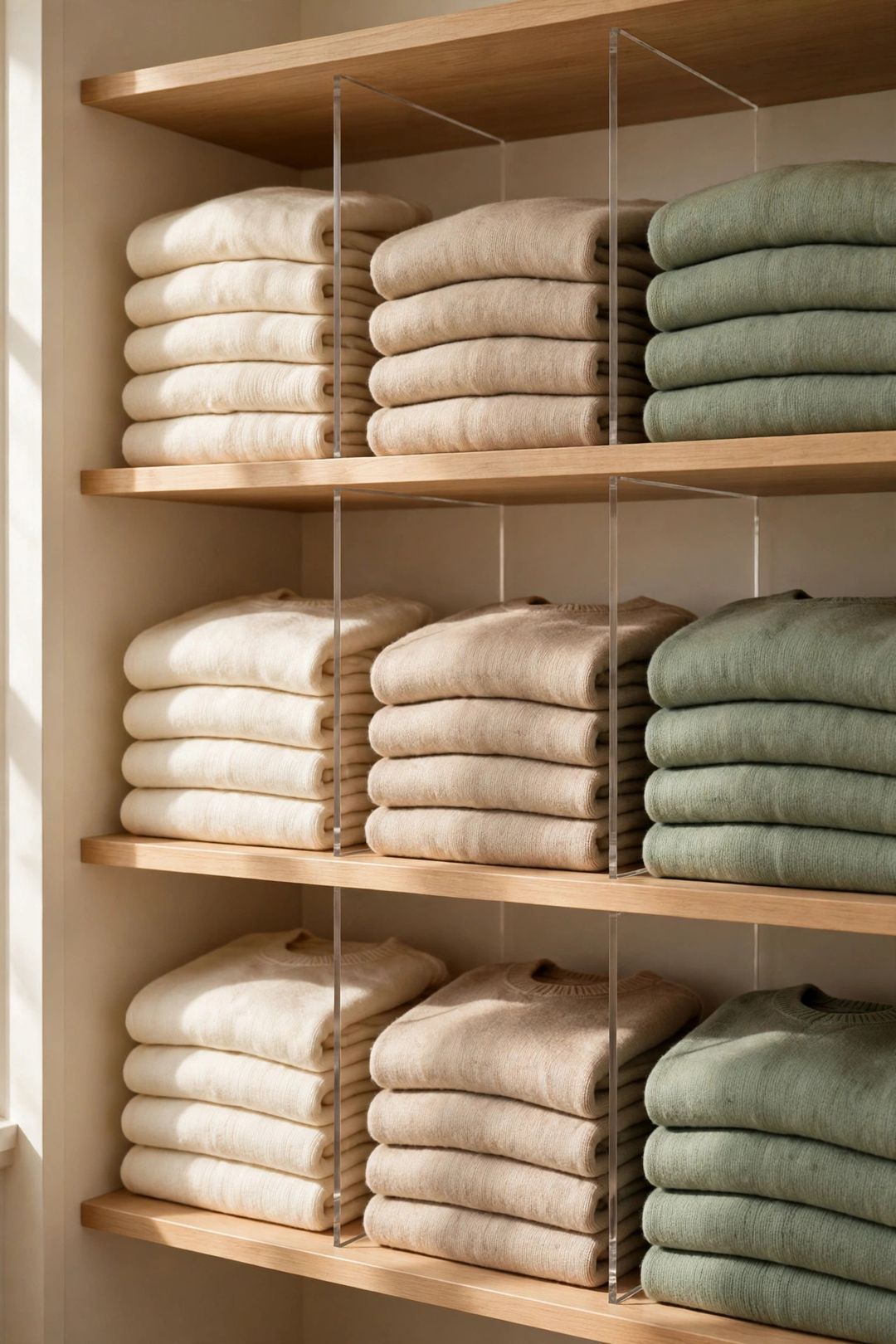
1. Flat fold in short stacks of 3 to 4. Lay the sweater face down, fold each sleeve and side toward the center, then fold the body in half once. Stack no more than 3 or 4 high on a shelf 12 to 16 inches deep. Taller stacks crush the bottom sweater and make the pile tip over.
2. Folding board for even, same-size folds. A folding board, about 9 by 12 inches, gives every sweater the same width so stacks line up neatly and use the full shelf. Even folds also mean less refolding, because each sweater can be lifted out without pulling the whole pile apart.
3. Tissue between delicate layers. Place a sheet of acid-free tissue between cashmere or fine wool sweaters in a stack. Tissue reduces friction, helps keep the fold smooth, and keeps dark dyes from rubbing onto light knits stored directly below them.
2. Keep Stacks Upright and Separated
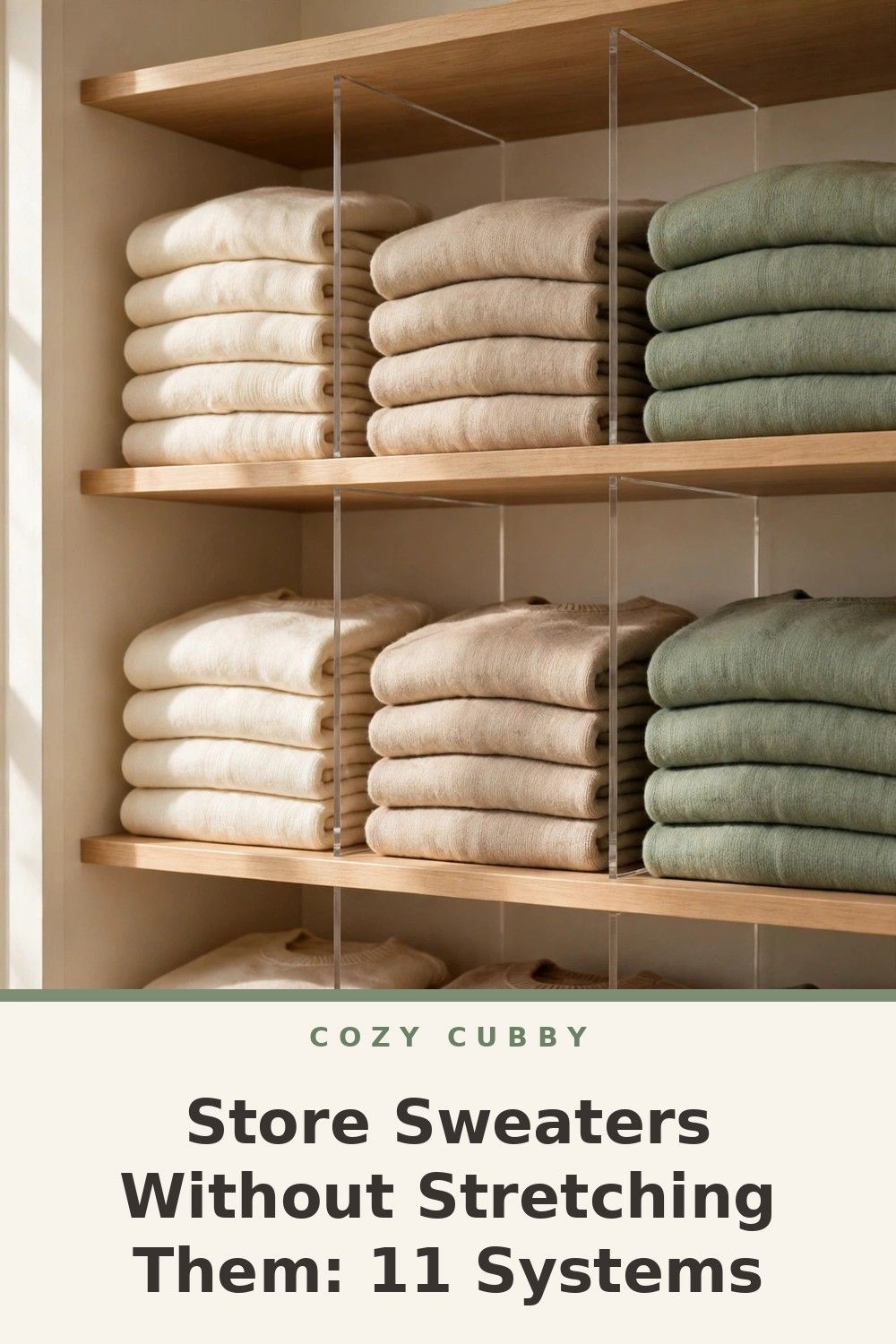
4. Shelf dividers between stacks. Clear dividers that clip onto a shelf, usually fitting shelves about 12 inches deep, keep each stack in its own lane. Set dividers about 10 to 12 inches apart, one stack per section, sorted by weight or color.
5. File-style bins for pull-out access. Place folded sweaters upright, like files, in a low open bin so the edge of each one shows. This works best for medium-weight cotton and acrylic knits. Very soft or slippery sweaters tend to slump, so keep those in flat stacks instead.
3. Use Bins That Let Knits Breathe
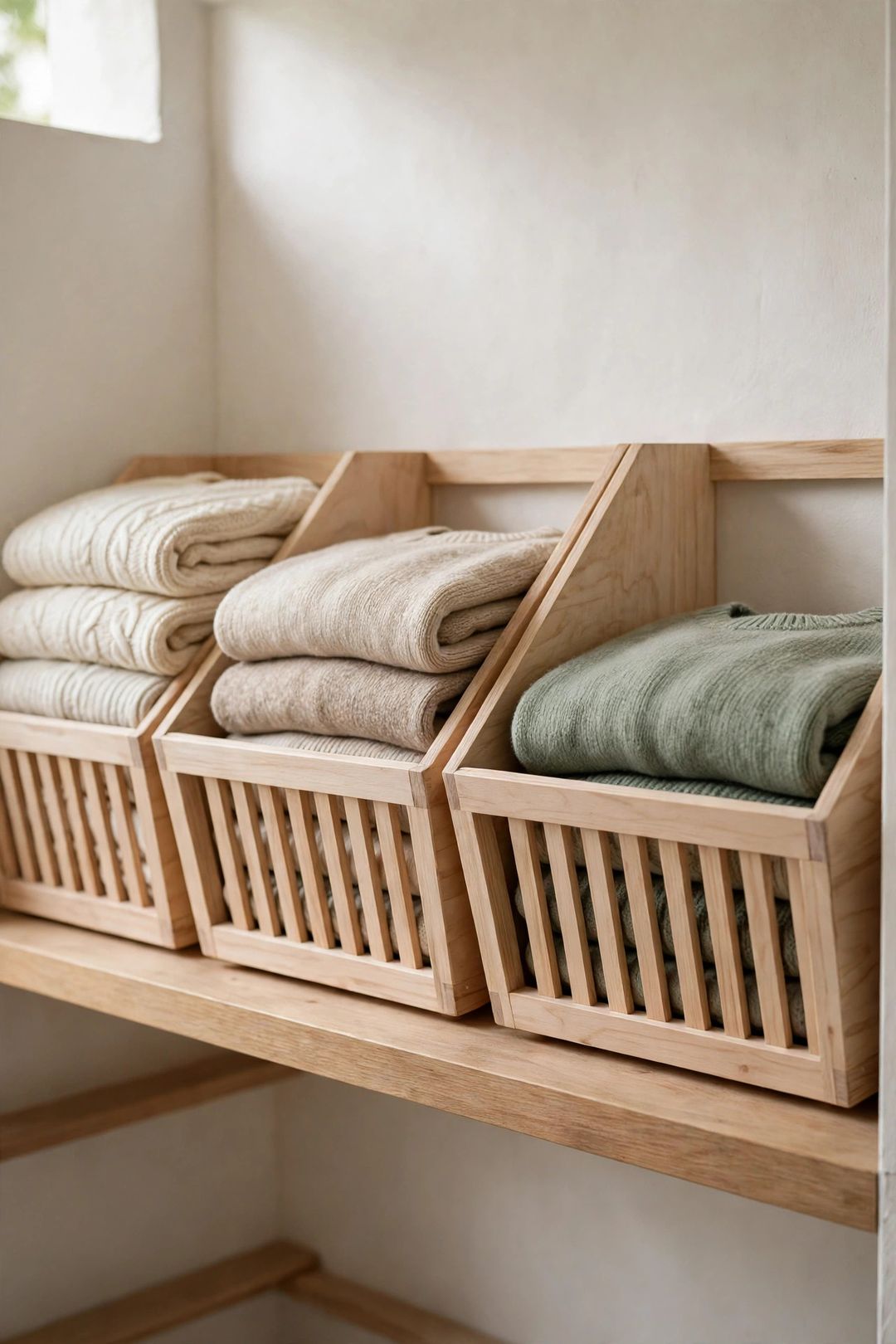
6. Open-front bins on the shelf. An open bin about 12 by 10 by 6 inches holds 3 to 4 folded sweaters and slides out like a drawer. The open front gives airflow and makes the front sweater easy to see and reach without lifting a lid.
7. Breathable fabric cubes. Fabric cubes, commonly about 11 by 11 inches, suit off-season or less-used sweaters on a higher shelf. Fabric sides allow some air movement, unlike sealed plastic. Label the front by size, color, or fiber so the right cube comes down first.
8. Cotton storage bags for single special knits. A breathable cotton bag holds one clean, fully dry sweater for longer storage. This suits a delicate knit worn only a few times a year. Zip or tie the bag closed to keep dust off while still allowing airflow.
4. Protect Knits From Pests and Odor
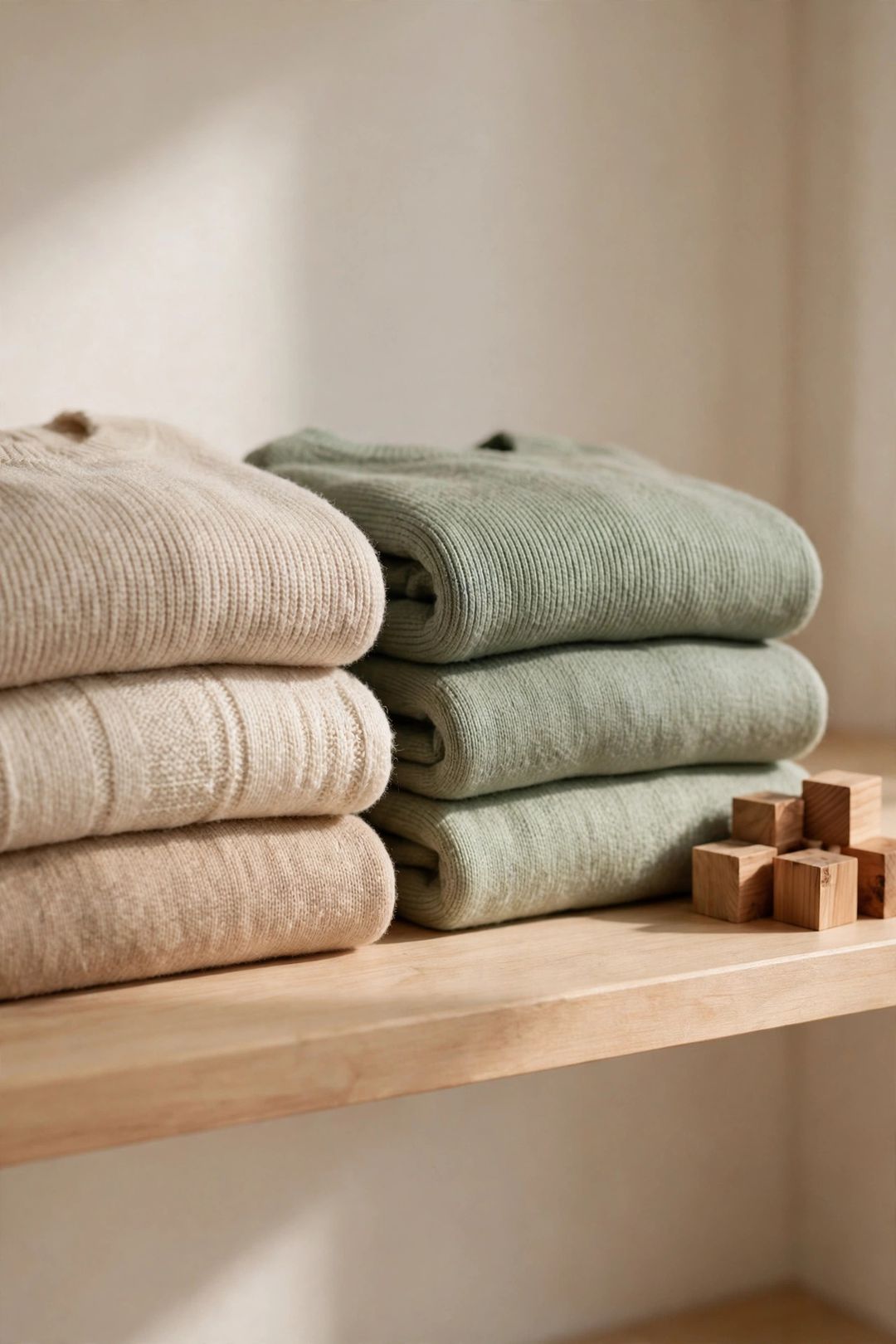
9. Cedar blocks on the shelf, not on the knit. Place cedar blocks or balls at the ends of the shelf and refresh them with a light sanding when the scent fades. Keep cedar from resting directly on light-colored knits for long periods, and always store sweaters clean, since moths are drawn to worn, soiled wool.
10. Clear lidded bins for off-season storage only. A clear bin with a loose-fitting lid works for sturdy cotton and synthetic sweaters stored for a season on a top shelf. Leave delicate wool and cashmere in breathable storage instead, and never store any knit while it is damp or unwashed.
5. Know When Vacuum Bags Help and When They Hurt
11. Vacuum bags only for sturdy, short-term storage. Vacuum bags can shrink bulky synthetic or cotton-blend sweaters when space is very tight, for a short period only. Avoid them for wool, cashmere, and loose knits: strong compression can flatten the fibers, set deep creases, and leave sweaters looking tired after unpacking. Flat, breathable shelf storage is the safer default for most knits.
What to Buy
Sweater folding board, typically $10–$16. Pro: creates even folds about 9 by 12 inches so stacks stay neat. Con: adds a step that feels slow for large loads. Skip if: sweaters already fold evenly by hand into short stacks.
Clear acrylic shelf dividers, 6-pack, typically $15–$22. Pro: keeps stacks separated with no tools and fits most standard shelves. Con: only fits shelves within the stated thickness range. Skip if: shelves are wire racks, where clip dividers often slip.
Open-front storage bins, typically $18–$28. Pro: slide out like drawers and keep 3 to 4 sweaters visible. Con: open fronts collect more dust than lidded bins. Skip if: the closet is very dusty or storage is long term.
Breathable fabric storage cubes, typically $20–$30. Pro: soft sides protect knits and allow airflow on high shelves. Con: sides can slump when cubes are only half full. Skip if: clear visibility matters more than breathability.
Cedar blocks, multi-pack, typically $10–$18. Pro: a simple way to freshen a sweater shelf without sprays. Con: scent fades over time and needs light sanding to refresh. Skip if: anyone in the home is sensitive to cedar scent.
Mistakes to Avoid
- Hanging heavy knits on hangers. Gravity pulls at the shoulders and can stretch a sweater out of shape, especially wool and loose weaves.
- Stacking more than 4 or 5 high. Tall stacks crush the bottom sweaters, wrinkle the folds, and topple when one is pulled from the middle.
- Storing sweaters dirty or damp. Worn wool attracts moths, and trapped moisture can cause odor and mildew in closed bins.
- Sealing delicate knits in vacuum bags long term. Compression flattens fibers and sets creases in cashmere and fine wool; use breathable storage instead.
- Using wire or rough hangers for knit shoulders. Thin edges dig in and leave marks; if a knit must be hung briefly, use a wide padded hanger and fold it over the bar.
Frequently Asked Questions
Why does hanging stretch sweaters?
A knit is made of loops that give under weight. On a hanger, the full weight pulls down from two shoulder points, so the loops slowly lengthen. Folding flat on a shelf spreads the weight evenly and keeps the original shape.
How many sweaters should go in one stack?
Three to four is a practical limit for most shelves. Heavy sweaters do better in stacks of 2 or 3. If the bottom sweater is hard to pull out, the stack is too tall.
Is it better to store sweaters in bins or on open shelves?
Open shelves suit daily sweaters because they are easy to see and reach. Bins suit off-season or delicate knits because they contain the stack and reduce dust. Many closets use both: open stacks for this season, breathable bins up high for the rest.
Can vacuum bags be used for any sweaters?
Only for sturdy cotton or synthetic blends, and only for a short time when space is tight. Keep wool, cashmere, and hand-knit items out of vacuum bags and store them folded in breathable bins or cotton bags instead.
Flat, short, and breathable is the whole system: fold sweaters, stack 3 or 4 high, and give delicate knits room to breathe. Pick one shelf system to start with this week. Save this post to your closet board on Pinterest for later, so the folding and stacking steps are ready at the next season change.