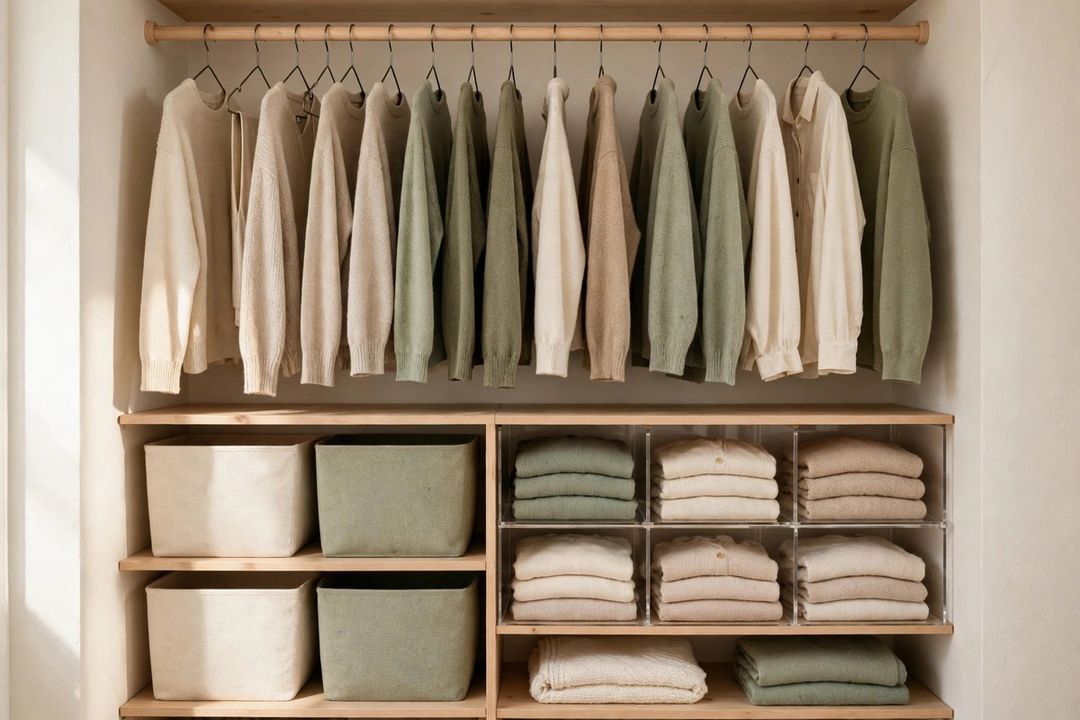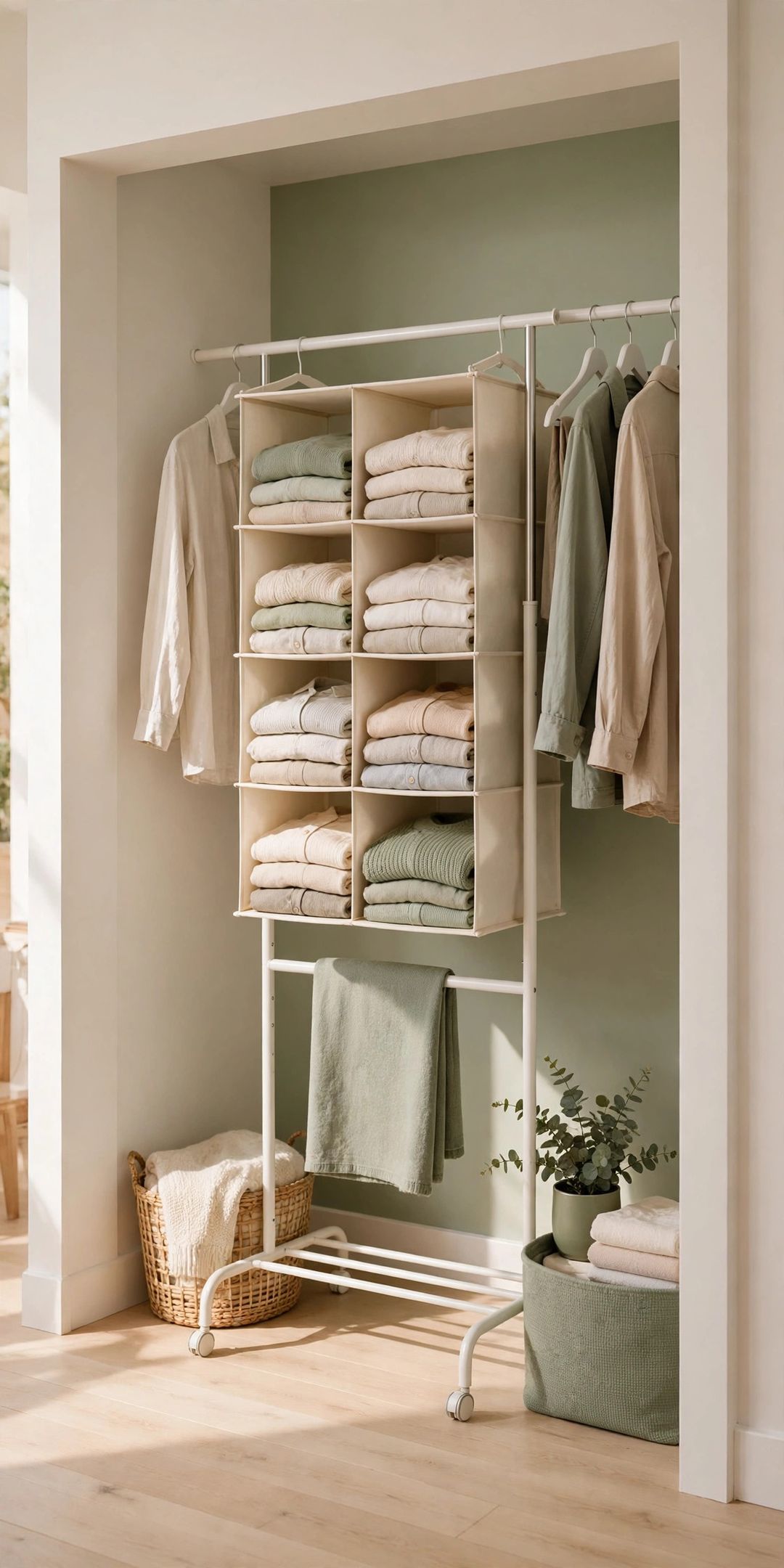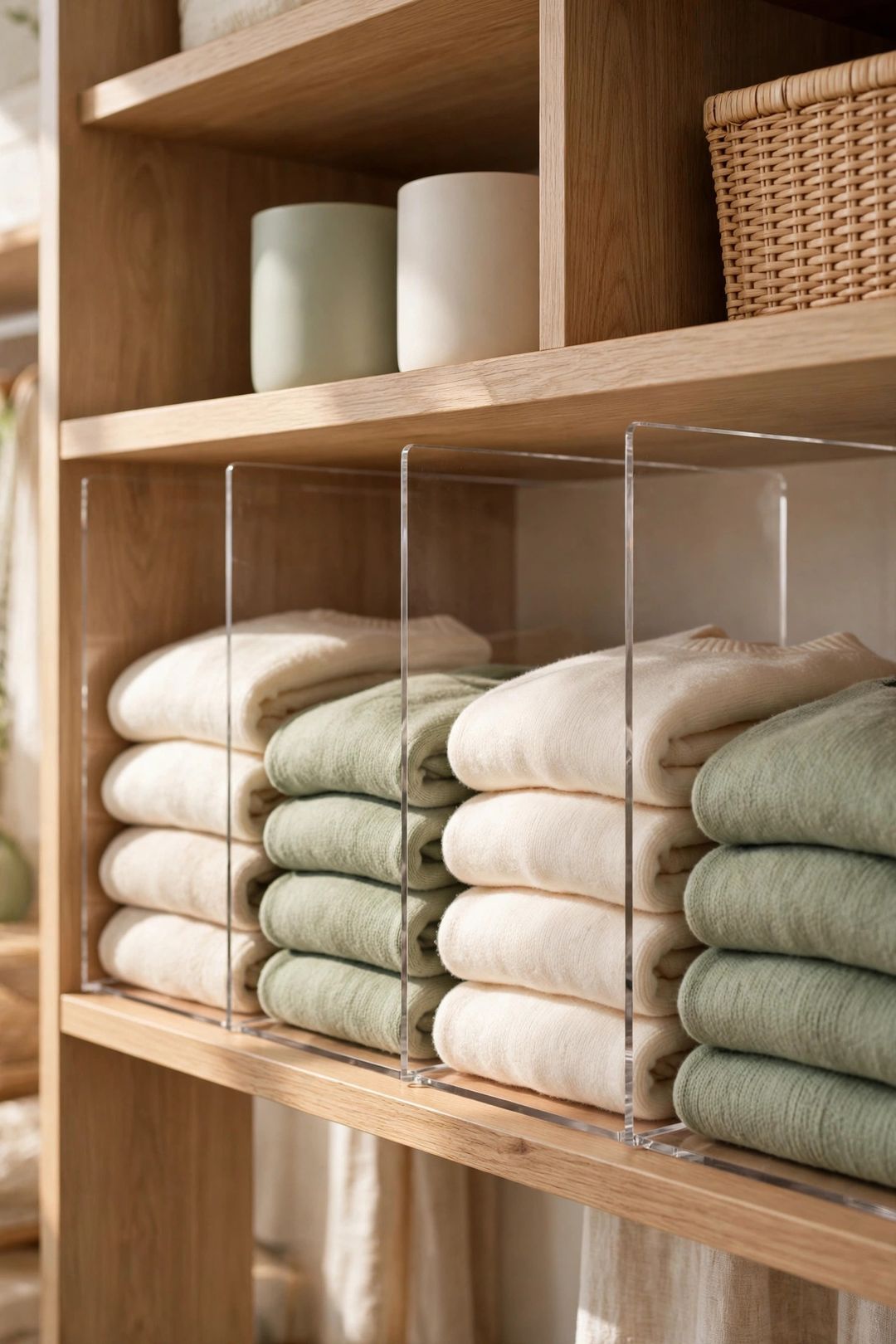
A folded stack of sweaters looks neat for about a day. Then one piece gets pulled from the middle, the pile leans, and the whole shelf turns into a soft landslide of clothes that all need refolding.
Shelf dividers fix that by giving each stack its own walls. This guide covers how to use closet shelf dividers from start to finish: measuring a shelf, how the main types differ, where to place them, and how wide to make each stack.
The details matter. A divider that is too short, loose, or wide-spaced will slide around and do nothing, so start with the shelf itself.
Measure Your Shelf First
Three measurements decide which dividers fit and stay put. Guessing any of them is the most common reason dividers get returned.
1. Depth, front to back. Most closet shelves run about 12 to 16 inches deep. A divider should cover most of that depth, within an inch or two of the full shelf, so stacks cannot slip around its back edge.
2. Clear height. Measure from the shelf surface to the shelf above. Tall dividers, often 10 to 12 inches high, hold sweaters and linens best. Short dividers around 6 to 8 inches suit tees.
3. Shelf thickness. Slide-on and clip-on dividers grip the front edge, and most fit boards about 5/8 to 3/4 inch thick. A much thicker or thinner shelf needs a tension or bookend style instead. Wire shelving needs dividers made to hook onto the wires.
The Main Divider Types
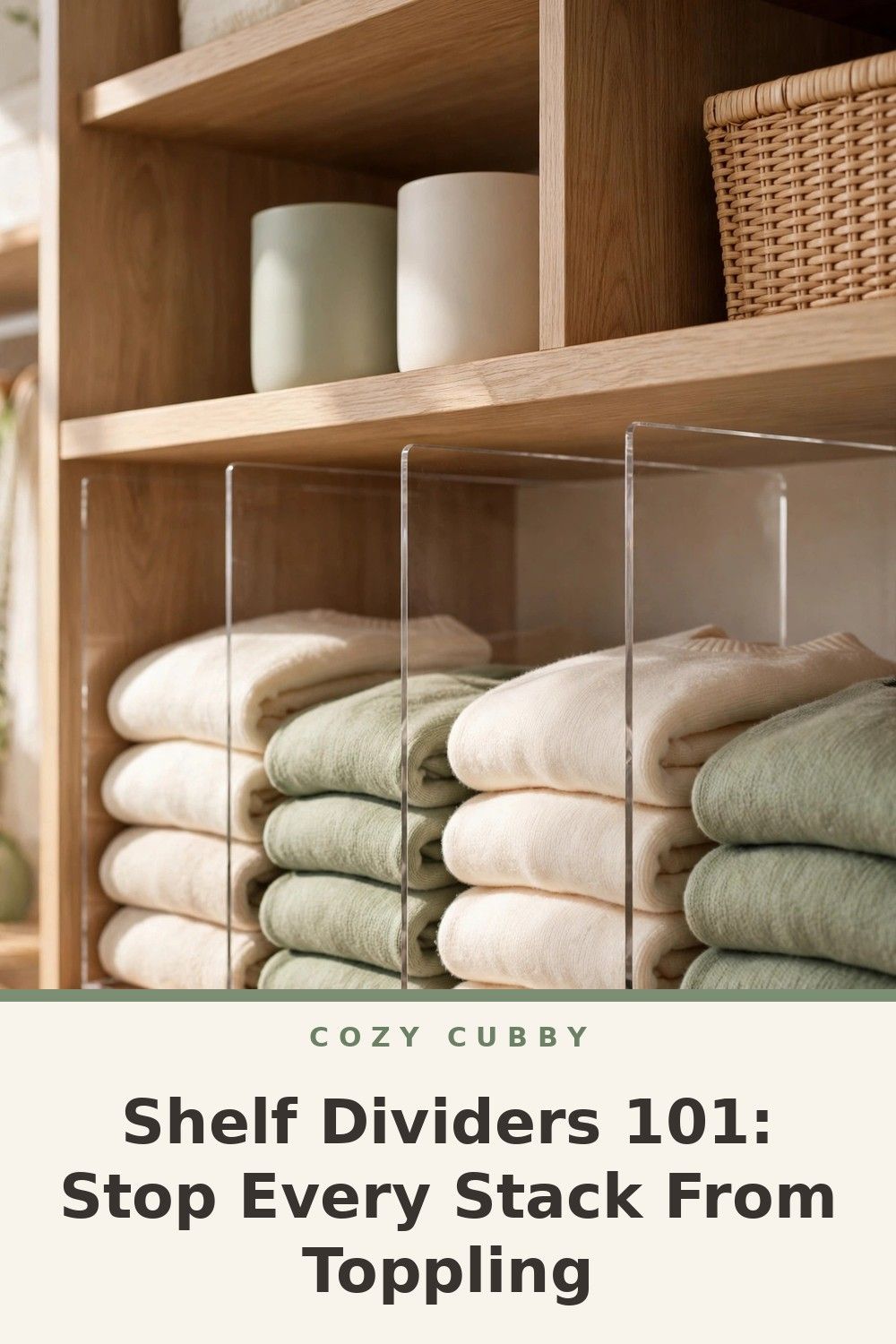
Slide-on acrylic dividers. Clear panels that slide onto the front edge and stand upright. They look clean and give stacks a smooth, solid wall. Best on standard-thickness wood or laminate shelves with a straight edge.
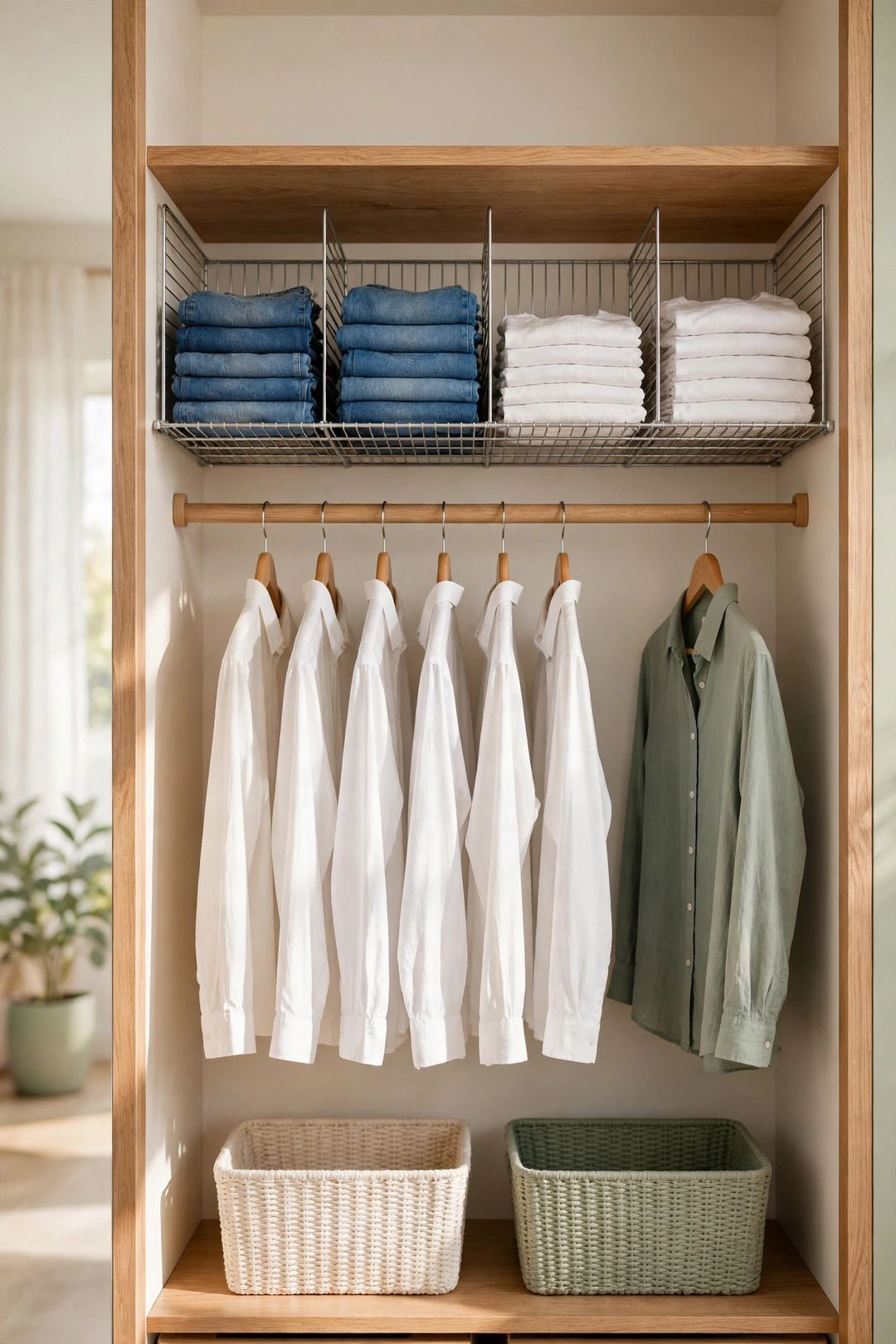
Wire clip-on dividers. Coated wire dividers that clip on, usually the most affordable type. They are light and easy to move, but thin items can poke through the gaps, and the clip can flex under a heavy stack.
Tension dividers. These use a spring-loaded or screw-tightened fit between two surfaces, suiting shelves clip-on styles cannot grip, such as very thick boards. Setup takes more effort, and placement is limited by where they can brace.
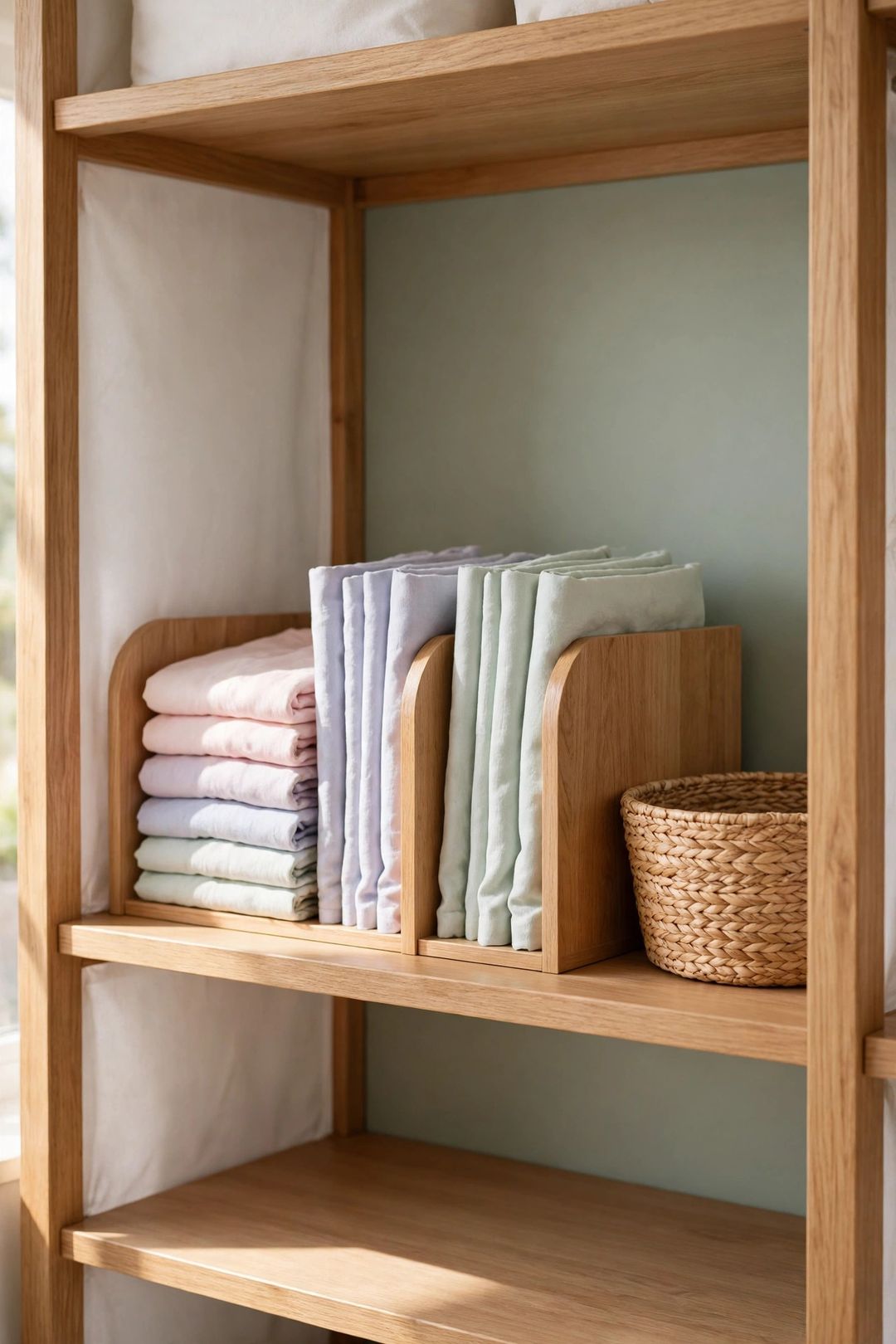
Bookend-style dividers. These sit on the shelf like bookends, with a flat base under the stack. Nothing clips or clamps, so they suit renters. The stack's weight holds them in place, so they shift when a stack is small.
How to Place Dividers, Step by Step
Step 1: Empty and sort the shelf. Take everything off, wipe the surface, and sort clothes into stacks: sweaters together, tees together, jeans together.
Step 2: Fold everything to one width. Fold each category to a consistent width, a few inches narrower than the planned spacing, so pieces slide in and out without catching.
Step 3: Set the outer dividers first. Place one at each end of the run to mark the zone, so end stacks cannot creep sideways.
Step 4: Add dividers stack by stack. Set the first stack against an outer divider, then place the next divider snugly beside it, using the spacing rules below. Work across one stack at a time, not evenly by eye.
Step 5: Test the pull. Pull the middle item from one stack, then a bottom item from another. If a stack leans or a divider slides, narrow the spacing or use a sturdier type.
Spacing Rules for Neat Stacks
Too wide and the stack leans inside its own section. Too narrow and pulling one piece drags the rest out with it.
Sweaters: about 8 to 10 inches per stack. Sweaters are bulky and slippery, so keep stacks short, around four to six pieces, with taller dividers.
T-shirts: about 6 to 8 inches per stack. Tees fold small and stack well, usually eight to ten per pile, at easy reach height.
Jeans: about 8 to 12 inches per stack. Denim is heavy and stiff, so jeans hold their shape well. Stacks of five to seven pairs work.
Linens and towels: about 10 to 12 inches per stack. Keep one type per section, and store a sheet set inside one of its pillowcases so it never separates. Leave about an inch of ease on each side.
Where Dividers Do Not Work
Dividers struggle on very deep shelves, where the back row hides and never gets used; a shallow bin works better there. They also fail with small, loose items. Socks, underwear, and scarves slip through wire gaps and topple acrylic walls, so those belong in drawers or small boxes.
Skip dividers on shelves used for storage boxes or bulky duvets in bags. They earn their place only where folded stacks are the main storage method.
What to Buy
Clear acrylic slide-on dividers, typically $15–$25 for a set. Pro: Solid, smooth walls and a clean look. Con: They only fit shelves in their stated thickness range. Skip if: Your shelves are wire, extra thick, or rounded at the front.
Coated wire clip-on dividers, typically $10–$18 for a set. Pro: Lowest cost per divider and easy to reposition. Con: Gaps let thin fabrics poke through, and clips can flex. Skip if: Your stacks are mostly silky or very heavy items.
Tension shelf dividers, typically $18–$30 for a set. Pro: They fit shelves clip-on styles cannot grip, with no hardware. Con: Setup takes longer and bracing points limit placement. Skip if: A simple slide-on style fits.
Bookend-style shelf dividers, typically $16–$28 for a pair. Pro: Nothing clamps or marks the shelf, so they suit renters. Con: They shift when stacks are small. Skip if: Your stacks change size every laundry day.
Tall dividers for linens and sweaters, typically $20–$32 for a set. Pro: Extra height keeps bulky stacks upright. Con: They can crowd short shelves. Skip if: Your shelf clearance is under about 12 inches.
Mistakes to Avoid
- Spacing dividers evenly by eye. Even spacing ignores stack widths, so wide stacks lean and narrow ones waste room. Space around real folded stacks instead.
- Buying before measuring thickness. A clip made for a 3/4-inch shelf will not grip a much thicker board, no matter how good the divider looks online.
- Stacking too high. A tall stack leans, stretches knits, and buries the bottom pieces. Short stacks stay usable far longer.
- Mixing categories in one section. Tees buried under sweaters get forgotten. One category per section keeps every stack easy to scan.
- Using dividers for small loose items. Socks and scarves slip through and around dividers. Give them a drawer insert or a small box instead.
Frequently Asked Questions
How many dividers does one shelf need?
Plan on one more divider than the number of stacks. Three stacks need four dividers, including one at each end.
Do shelf dividers damage shelves?
Clip-on types grip with pressure, which can mark soft or painted finishes. Felt or shelf liner under the clip helps, and bookend styles are gentler.
Can dividers work on wire closet shelves?
Only types made for wire shelving, which hook around the wires. Standard slide-on dividers will tilt and slide on wire shelves.
What is the best divider height?
Match height to the stack: 6 to 8 inches for tees, and 10 to 12 inches for sweaters, jeans, and linens.
Start with one shelf, measure carefully, and let real stacks set the spacing. Save this post to your Closet Organization board on Pinterest so the measurements and spacing rules are handy on laundry day.