An ironing board is awkward by design: long, flat, and wide enough to catch on door frames. With a utility closet, it disappears. Without one, it leans in a corner or lives in the middle of a bedroom.
These ironing board storage ideas give a full-size board a proper home in small homes and apartments, where the laundry area may be a closet or part of the bedroom. They are grouped into hanging the board, tucking it into gaps, and shrinking the setup.
A standard board is about 54 inches long when folded, so length decides most spots. Measure the gap and door swing first, and store the board near the iron, so neither is carried across the home each time.
Hang It Up and Out of the Way
Hanging uses vertical space and keeps the floor clear. Check that the board hangs flat without stopping the door from closing.
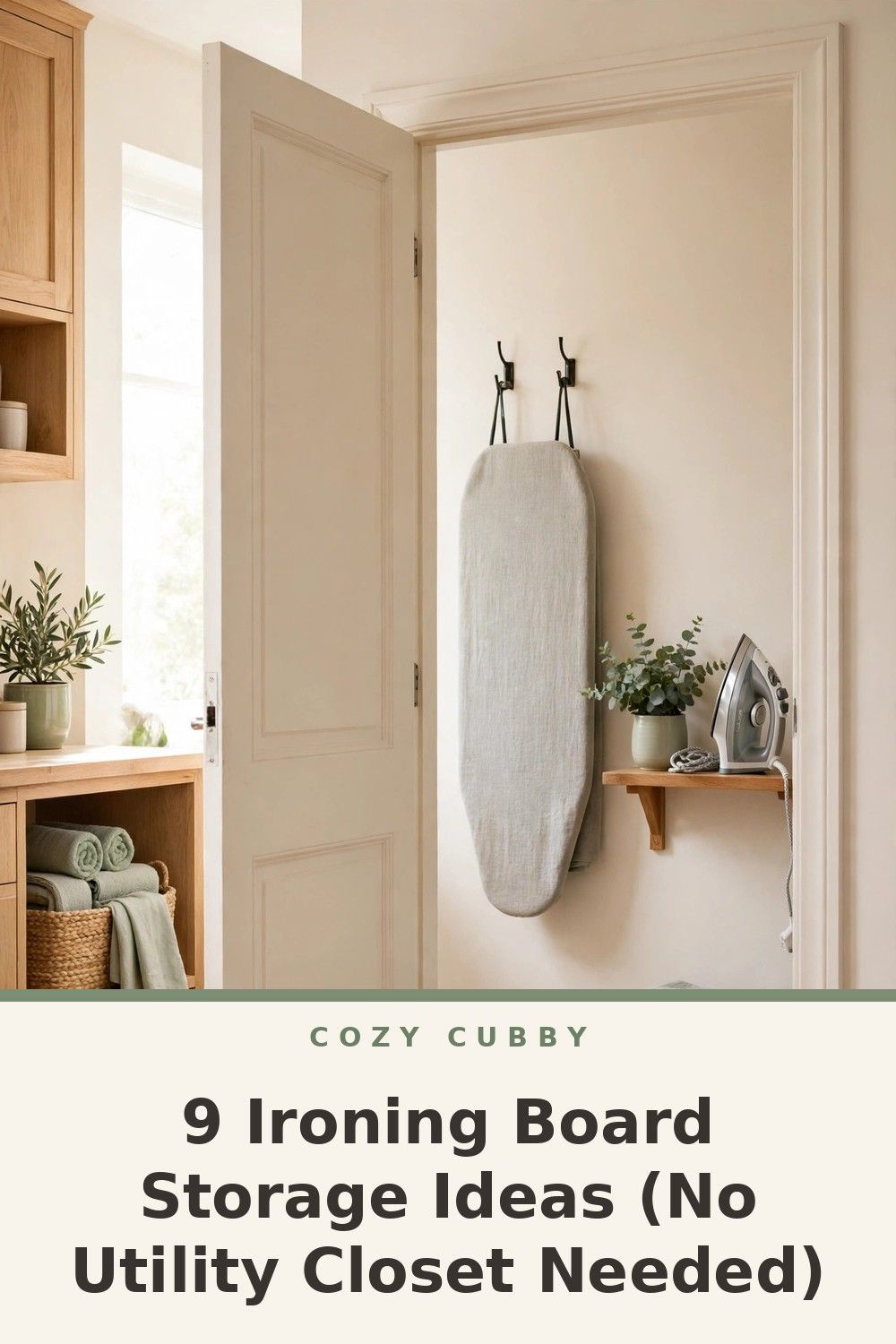
1. Use an over-the-door board holder. A holder that hooks over a bedroom, bathroom, or closet door keeps the folded board flat behind the door, off the floor and out of sight. Some holders also hold the iron, which keeps the pair together. Check the hook fit, and confirm the door still latches.
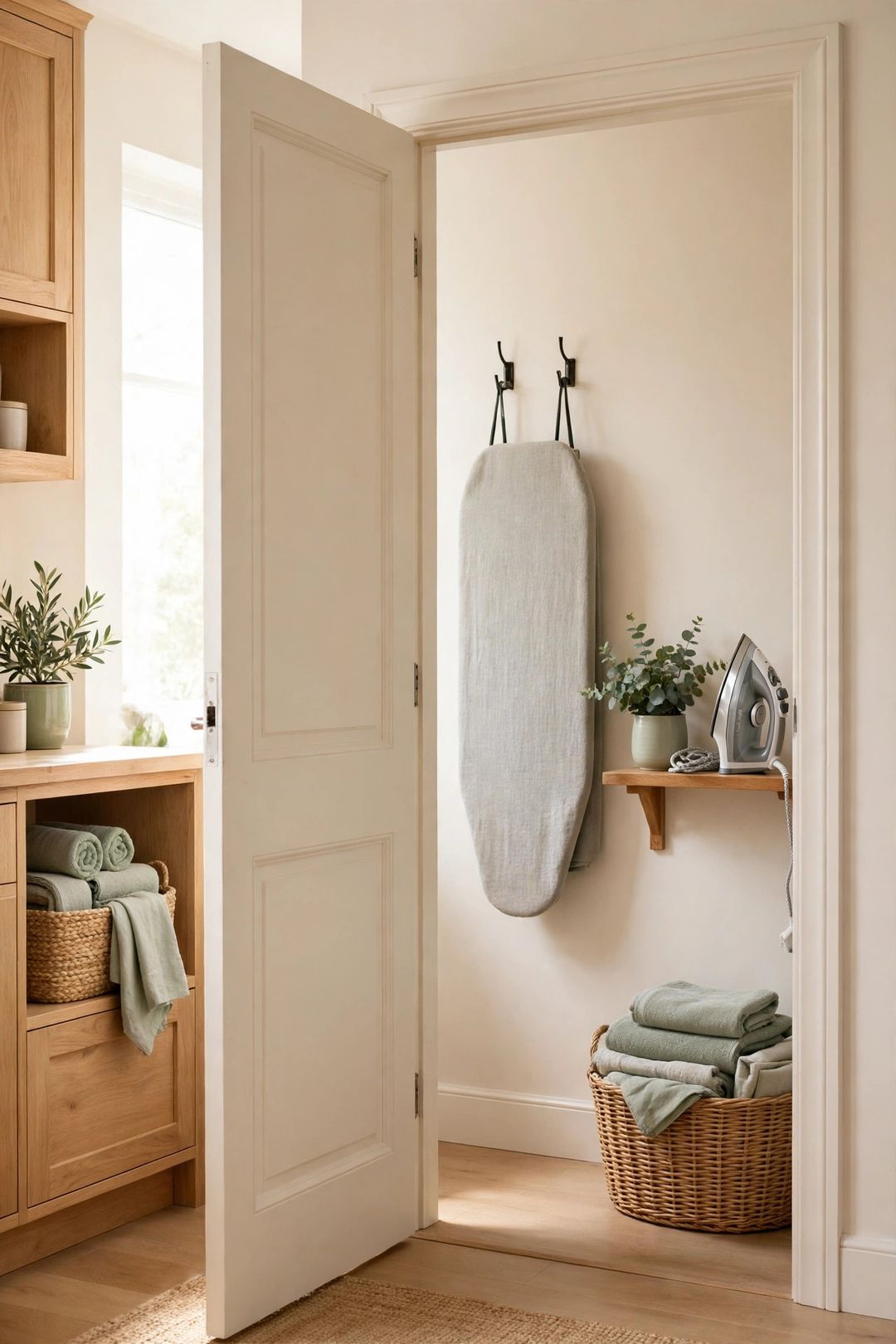
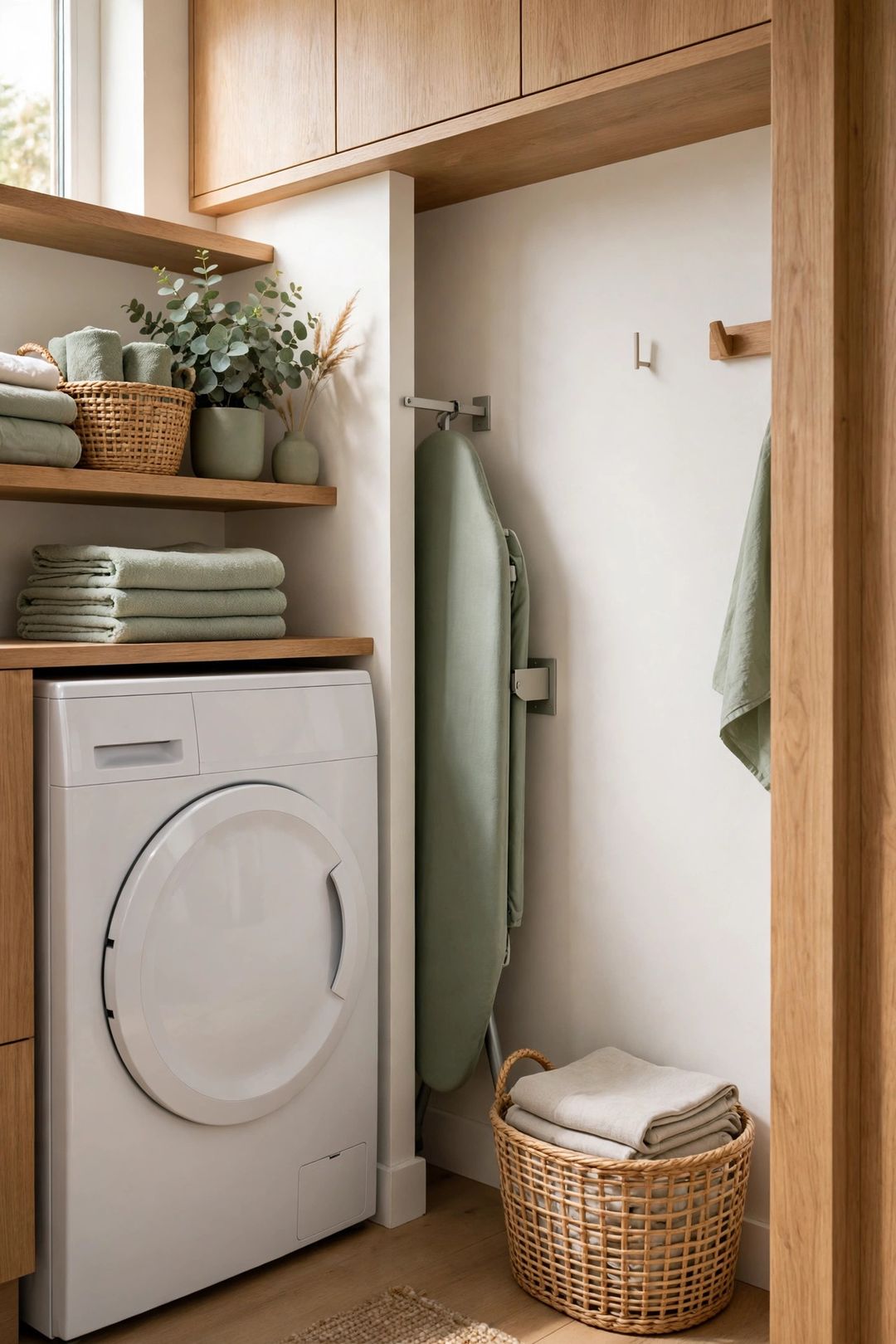
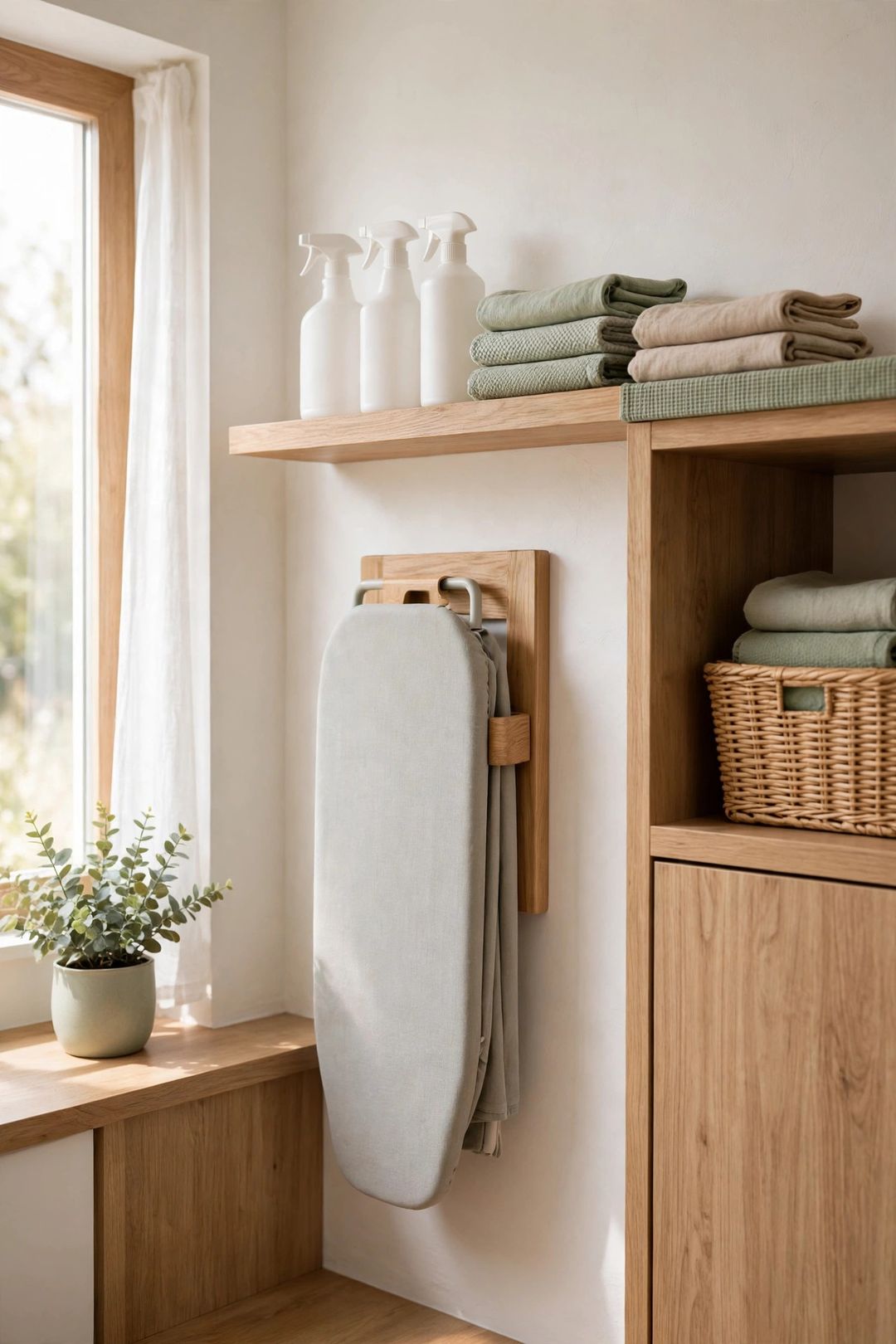
2. Fit a wall-mounted board bracket. A bracket or pair of hooks fixed to a wall in the laundry area or bedroom holds the board flat in one set place. Use sensible anchoring for the wall type, such as fixing into a stud or using hollow-wall fixings, and hang the board as the bracket directs.
3. Hang it inside a closet or tall cabinet. Hooks on the inside wall of a closet, or on the back of a cabinet door, hide the board while keeping it near hanging clothes. It fits beside coats if hooks hold it flat. Measure the inside depth, so the door shuts.
Tuck It Into Gaps You Already Have
A folded board is a few inches thick, so it fits gaps that hold almost nothing else. Measure its folded length and width first.
4. Slide it between the washer and the wall. The narrow space beside a washer, or between a washer and dryer, is often the right width for a folded board. It keeps the board beside the iron and the wash loads. Check that the gap is dry and it clears hoses and outlets.
5. Stand it behind furniture or a door. A folded board can stand flat behind a dresser, a sofa, a headboard, or an open bedroom door, in space too shallow for storage. Pick a spot where it cannot slide and fall, and does not block a vent or a door. It needs no fixings, which suits rentals.
6. Lay it flat under the bed. Under-bed space suits a long, flat board well. Slide it in folded, and protect the cover from dust with a storage bag. Measure the bed length and frame height first, since a board at 54 inches needs clear entry at the side.
Shrink It or Swap the Setup
If no gap fits a full-size board, a smaller board or pressing surface may fit better, at the cost of size or height adjustment.
7. Switch to a tabletop board that lives in a cupboard. A tabletop board sits on a table, counter, or washer top, then stores flat on a cupboard shelf, in a deep drawer, or on a hook. It is shorter than a full-size board and handles everyday clothes well. Working height depends on the surface below.
8. Keep a mini or sleeve board in a drawer. A mini board or narrow sleeve board is made for sleeves, collars, and quick touch-ups, and it is small enough for a drawer or shelf. It will not replace a full board for large items, but it covers quick jobs without unfolding anything big.
9. Replace the board with an ironing mat. A padded, heat-resistant mat turns a table, counter, or washer top into a pressing surface, then rolls or folds into a drawer. It is the smallest option here. It offers no height adjustment, so use it only on a stable, heat-safe surface as directed.
What to Buy
Over-the-door ironing board holder, typically $15–$30. Pro: It needs no drilling and keeps the board flat behind a door. Con: It only fits doors within its hook size. Skip if: Your doors are sliding.
Wall-mounted ironing board bracket, typically $12–$25. Pro: It gives the board a fixed, flat home and frees the floor. Con: It needs proper fixings and a long wall spot. Skip if: You rent and cannot make holes.
Tabletop ironing board, typically $20–$40. Pro: It is short enough for a cupboard or shelf. Con: Height and area depend on the surface below. Skip if: You regularly press large bedding.
Padded ironing mat, typically $15–$30. Pro: It rolls into a drawer and works on a washer top or table. Con: It gives a smaller, lower surface than a board. Skip if: You prefer a firm, raised board.
Mini sleeve ironing board, typically $10–$20. Pro: It stores in a drawer and suits sleeves and collars. Con: It is too small for full garments. Skip if: You need one board for every job.
Mistakes to Avoid
- Guessing the gap will fit. A standard board is about 54 inches long when folded. Measure length, width, and door swing first.
- Storing the board far from the iron. A board in one room and an iron in another adds carrying to every use. Store the pair together.
- Hanging a board on weak fixings. A board is light but long, and it can lever loose hooks out. Use sensible anchoring for the wall.
- Leaning the board where it can fall. A board propped in a walkway or behind a busy door slides and blocks the way. Choose a held spot.
- Putting the board away damp or hot. Let the cover dry and the iron cool before storing, especially in a closet or under a bed.
Frequently Asked Questions
How long is a standard ironing board when folded?
A standard board is about 54 inches long when folded, though sizes vary by style. Measure your board before choosing a gap or bracket, because that length rules out more spots than any other measurement.
Where should an ironing board go in a small apartment?
The most reliable spots are behind a door on a holder, on a wall bracket near the laundry area, or in the gap beside the washer. If none fit, a tabletop board or a mat in a drawer gives up the least space.
Can an ironing board be stored flat or on its side?
Yes. A folded board can stand upright, hang flat on a wall or door, or lie flat under a bed, as long as it is dry and stable. Keep the legs folded fully, and do not stack heavy items on it.
What can replace a full-size ironing board in a small home?
A tabletop board covers everyday clothes and stores on a shelf. An ironing mat covers light pressing and stores in a drawer. A mini board covers quick touch-ups only. Choose by the largest items you press.
Measure your folded board once, pick the nearest spot to where you dress and wash, and the board will have a home. Save this post to your Laundry Room board on Pinterest so these ideas are handy on laundry day.