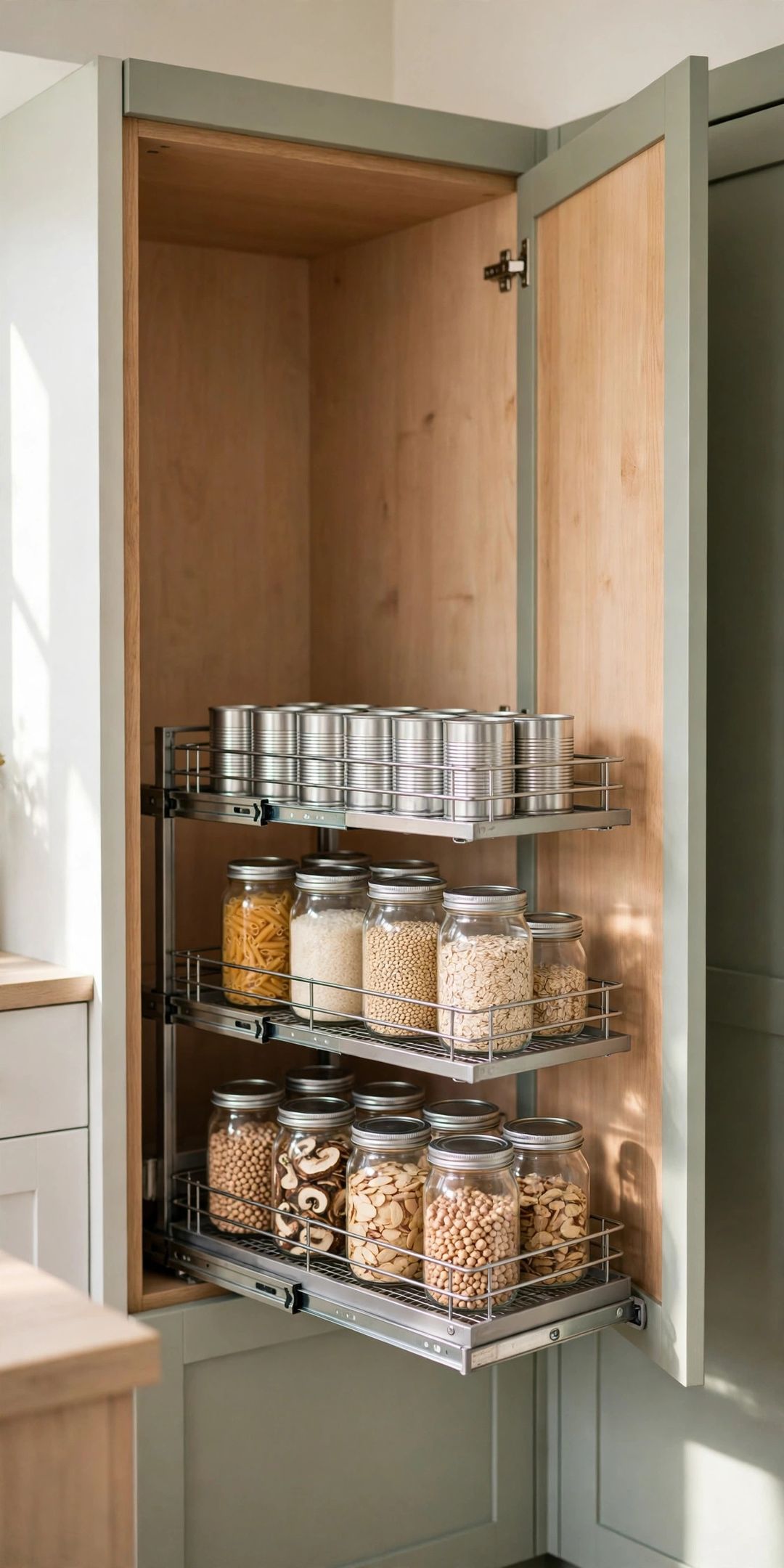
Almost every kitchen has one drawer that sticks, jams, and hides the one thing needed right now. Batteries roll under menus, cords tangle around tape, and the scissors are never where they should be. The fix is rarely more effort. It is a tray that actually fits the drawer.
These junk drawer organizer tray ideas start with measuring, because that step decides everything else. Measure the inside width, depth, and height in inches, then subtract about half an inch for clearance. Note the height too: many kitchen drawers are only 3 to 4 inches deep inside, so a tall tray can block the drawer from closing.
Standard trays fail for predictable reasons. Most are built for one common drawer size, so they leave a dead gap at the back or squeeze at the sides. Fixed compartments rarely match real contents: the tape roll is too wide, the pens are too long, and small items get stacked on top anyway. Grouping trays by style helps, since each style solves a different fit problem.
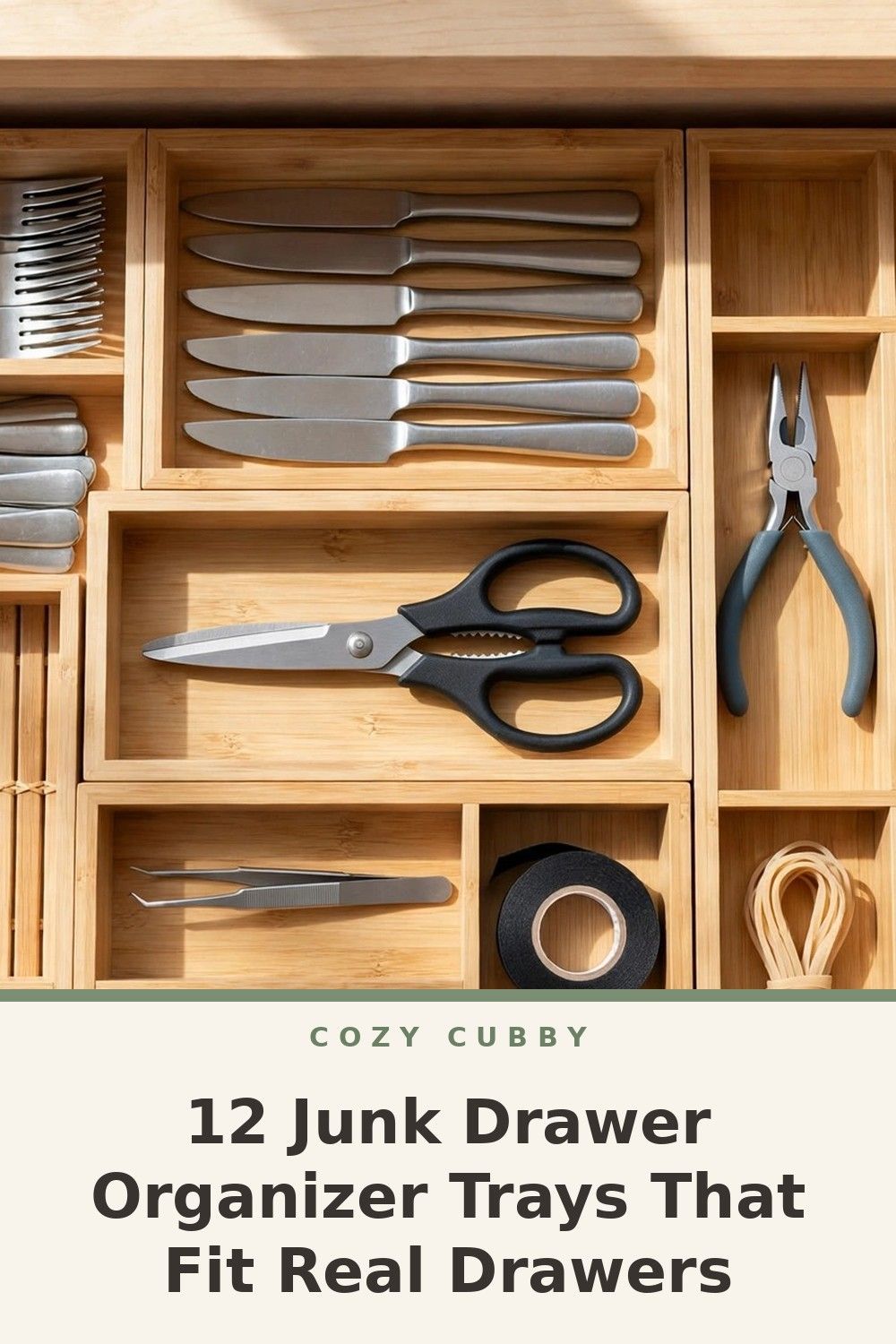
Adjustable and Expandable Trays
1. Expandable two-level tray. Best for wide drawers, this tray slides out from about 12 to 20 inches wide, with a shallow sliding top layer over deeper sections. It suits drawers at least 15 inches deep. The drawback: the top layer covers what sits underneath, so lower sections hold things used less often. Typically $18–$30.
2. Adjustable-width single tray with dividers. Best for narrow drawers, this style expands from roughly 9 to 14 inches wide, with movable dividers that set compartment lengths, in drawers 12 to 17 inches deep. The drawback: dividers can shift when the drawer slams, so heavier items still wander. Typically $12–$22.
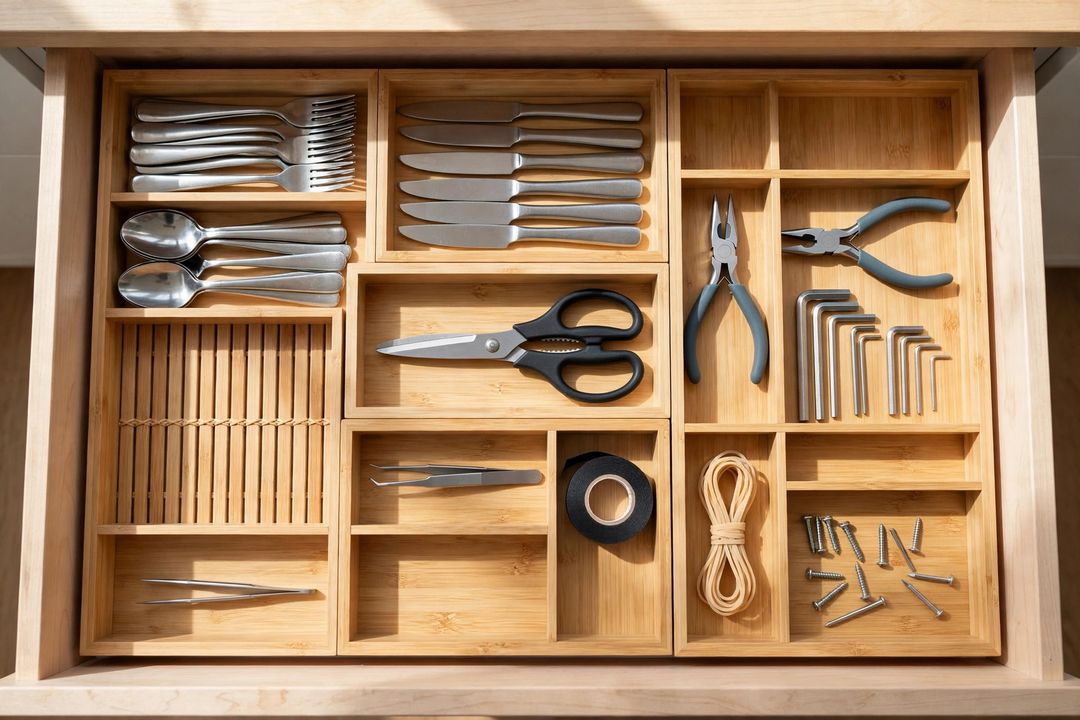
3. Expandable bamboo-style tray. Best for a tidy, visible layout, this tray grows from about 13 to 19 inches wide and needs a drawer at least 17 inches deep to open fully. The drawback: fixed sections cannot adapt, and the material is heavier and hand-wash only. Typically $20–$35.
4. Spring-loaded adjustable divider tray. Best for odd-width drawers, spring tension holds this tray snug between the sides, usually across 11 to 18 inches, with compartments running front to back for long items. The drawback: tension weakens over time, and the tray can pop loose in a shallow drawer. Typically $14–$24.
Modular Individual Bins
5. Mixed-size modular bin set, 8 to 12 pieces. Best for mixed contents, these small bins, about 3 by 3 inches up to 3 by 9 inches, arrange like puzzle pieces to fill the exact space. The drawback: without a non-slip liner, light bins slide every time the drawer opens. Typically $14–$26.
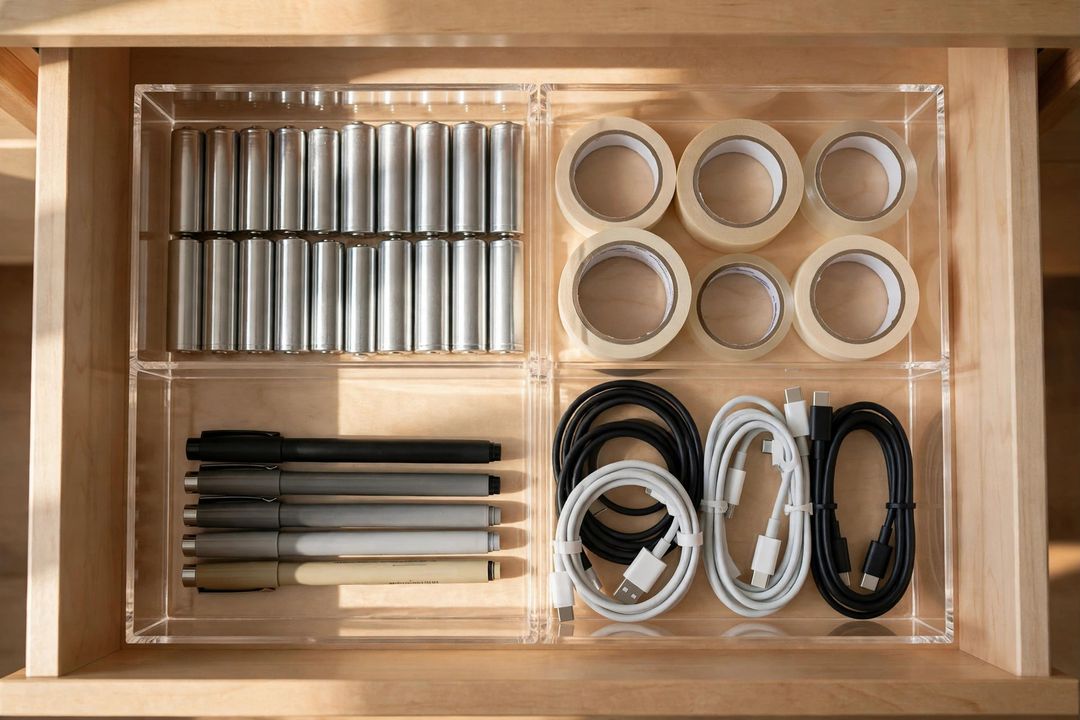
6. Clear interlocking bin set. Best for seeing small items at a glance, these transparent bins, commonly 3 by 6 inches, lock edge to edge so the layout stays put and screws, pins, and spare keys stay visible. The drawback: clear plastic scratches and clouds over time, and interlocks can crack if forced. Typically $12–$20.
7. Stackable two-tier mini bins. Best for shallow drawers with lots of small parts, these bins stack a short upper bin over a lower one, each about 3 by 6 inches and under 2 inches tall. The drawback: stacked bins hide the layer below, so they suit sorted categories, not daily grabs. Typically $10–$18.
8. Long narrow bins for utensils and tools. Best for long items that defeat square trays, these bins run about 3 by 12 inches and hold pens, thermometers, and small tools in one row. The drawback: they only pay off in drawers at least 13 inches deep, and narrow bins tip if overfilled. Typically $9–$16.
Specialty Inserts for Batteries, Cords, and Tools
9. Battery organizer insert with slots. Best for ending the loose-battery roll, this insert holds common sizes in labeled slots, usually 20 to 40 batteries in a footprint near 6 by 9 inches. The drawback: it gives prime space to one category, so it only makes sense if batteries are bought in packs. Typically $10–$18.
10. Cord and charger divider insert. Best for cables, earbuds, and charging bricks, this insert uses short walls or elastic loops to keep each cord in its own channel, roughly 8 by 10 inches overall. The drawback: thick laptop chargers rarely fit, so one bulky cord still needs a home elsewhere. Typically $11–$19.
11. Tool and hardware insert with deep wells. Best for pliers, a tape measure, and screwdrivers, this insert has deeper wells, about 2.5 inches, in a tray near 10 by 14 inches. The drawback: deep wells need a drawer at least 3.5 inches tall inside, which rules out slim drawers. Typically $15–$25.
12. Small-parts insert with lidded compartments. Best for screws, picture hooks, fuses, and spare buttons, this insert has 6 to 10 tiny compartments with snap lids in a base about 8 by 11 inches. The drawback: lids slow down quick grabs, so it suits rarely used hardware more than daily items. Typically $9–$17.
What to Buy
Expandable two-level tray — the best first buy for a wide drawer, because it doubles usable space and the sliding top keeps daily items on show. Typically $18–$30.
Mixed-size modular bin set — the most flexible buy, since bins rearrange as contents change and fill odd gaps fixed trays leave behind. Add a non-slip liner to keep the layout in place. Typically $14–$26.
Battery organizer insert — the smart add-on once the main tray fits, because loose batteries cause a surprising share of drawer mess, and slotted storage ends the rolling. Typically $10–$18.
Mistakes to Avoid
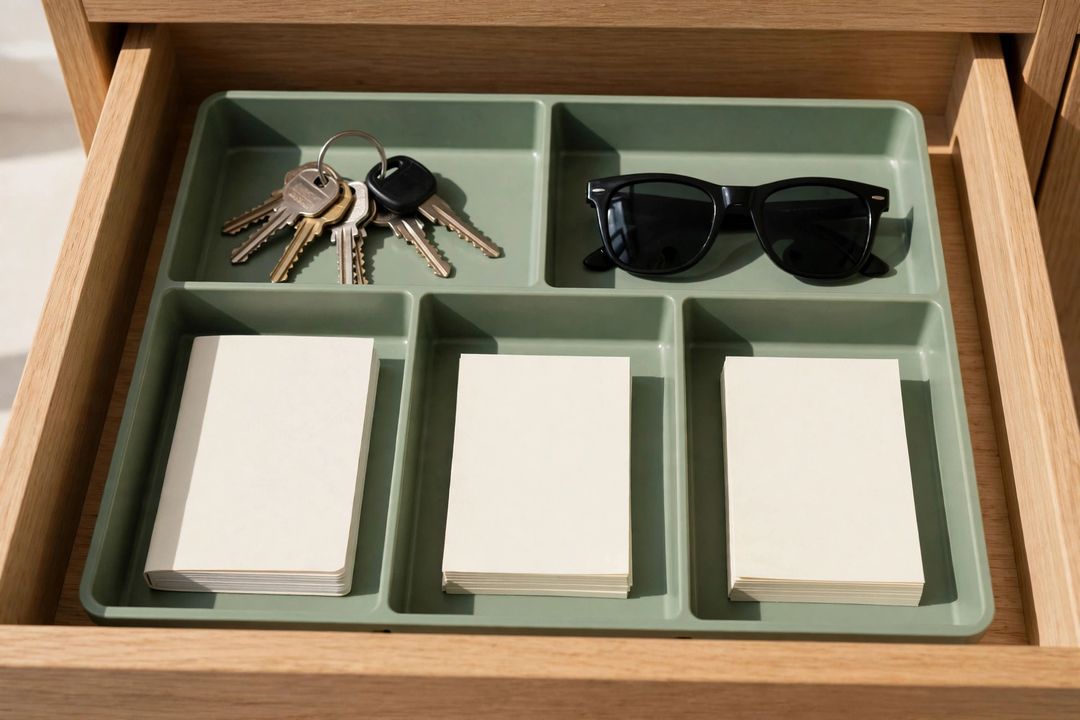
- Guessing the drawer size. Outside dimensions are useless. Measure the inside width, depth, and height, then subtract a little clearance before choosing a tray.
- Buying a tray taller than the drawer. A tray plus tall contents can block closing by a fraction of an inch. Check total height against the inside depth.
- Filling every inch on day one. Leave one section empty at first. New items arrive, and a tray with no spare space overflows fast.
- Mixing too many systems. An expandable tray, loose bins, and two inserts rarely fit together. Pick one main system and one add-on at most.
- Skipping a liner under loose bins. Individual bins drift without grip. A simple non-slip liner keeps the whole layout where it was arranged.
Frequently Asked Questions
How do I know what size tray my drawer needs?
Measure the inside of the empty drawer: width, depth, and height. Subtract about half an inch from width and depth so the tray slides easily, and keep tray height at least half an inch below the inside height.
Are expandable trays better than modular bins?
Expandable trays suit drawers with stable contents and give a clean layout fast. Modular bins suit drawers whose contents change often, because single bins can move, swap, or leave. Many drawers work best with one expandable tray plus two or three bins for overflow.
What should not go in a junk drawer at all?
Old medicines, leaking batteries, mystery keys, and expired coupons only add digging time. A quick sort before the tray goes in — keep, move elsewhere, toss — makes any organizer work better, because the tray then holds only items with a real use.
How often should the drawer be reset?
A fast reset every few months is enough: empty the tray, wipe crumbs and dust, remove anything that drifted in, and check that dividers still sit flat. It takes minutes when the tray fits well.
A junk drawer works when the tray fits the drawer and the sections fit real life. Save this post to your Kitchen Organization board on Pinterest so the measurements and picks are handy before you shop.