Every school week brings home drawings, worksheets, and projects that feel too sweet to toss and too bulky to keep forever. Left alone, they turn into a wobbly pile on a counter or a bin you feel bad about opening.
These kids art and schoolwork storage ideas give you a calmer middle path: keep the pieces that truly mark a stage, photograph the rest before you recycle, and give every keeper a clear, labeled home.
Start with one school year and one child at a time.
1. Keep a Portfolio Case for Each Child
Best for favorite flat artwork. A large portfolio case holds drawings flat, so edges do not curl or tear. Give each child one case, and let it be the limit: when it is full, review before a new keeper goes in.
2. Use Labeled Bins by Child and Year
Best for schoolwork you want to find again. One slim bin or box file per child, labeled by name and school year, keeps report cards, writing samples, and certificates together. A clear label on the front and spine means you can find a piece in seconds, even on a high shelf.
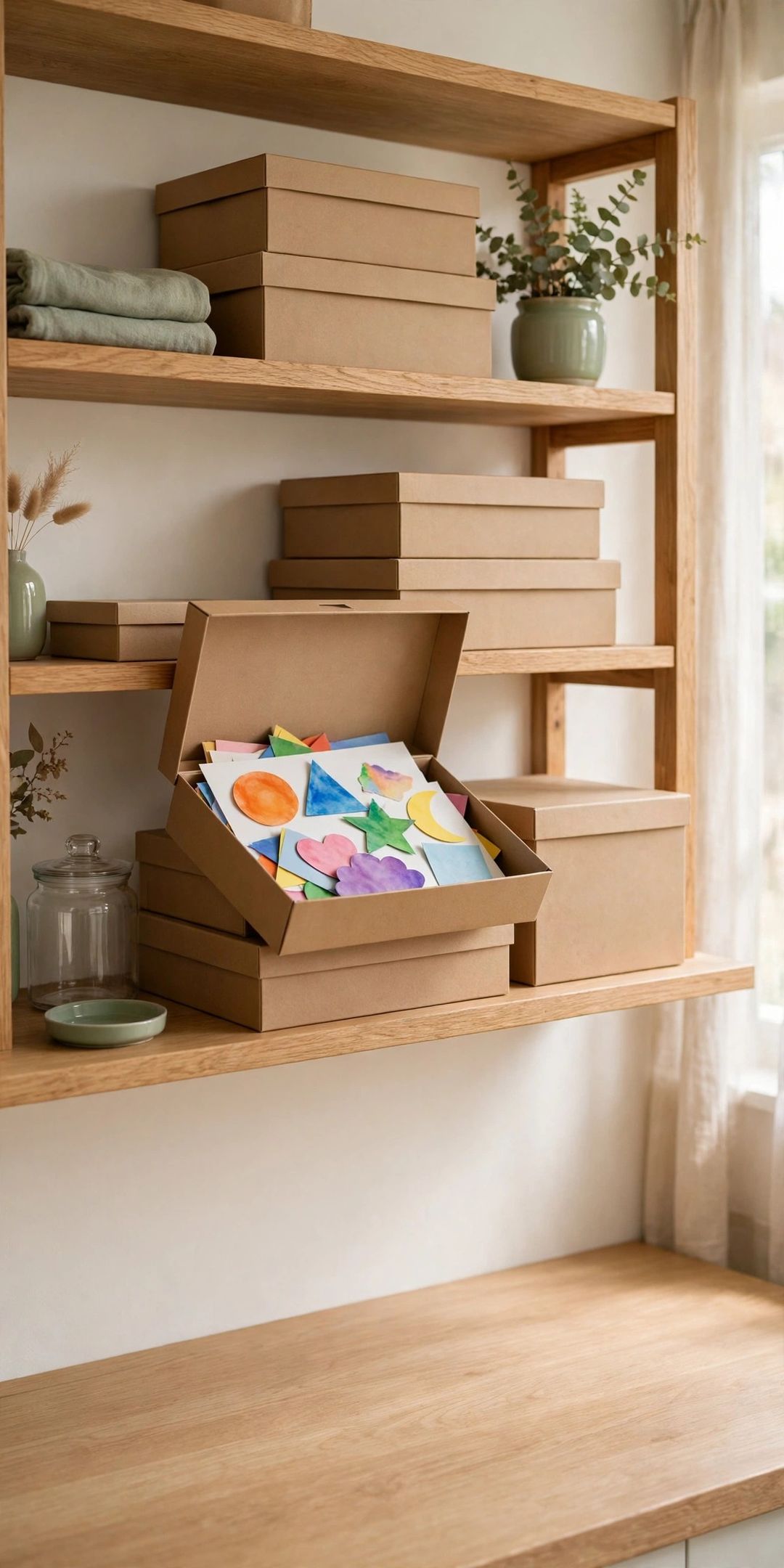
3. Photograph, Then Recycle the Rest
Best for bulky and everyday pieces. Take a clear photo of each drawing or project in good light, then recycle the paper with a clear conscience. Store photos in a folder by child and year, and back them up in a second place so the record lasts even if the paper does not.
4. Save the Best of Each Stage
Best for cutting a big pile down fast. For each stage, keep a small set that shows growth: a first handwriting sample, a self-portrait, a favorite story, and one or two pieces your child loves most. Let the rest be photographed. A few strong keepers tell the story better than a bin of repeats.
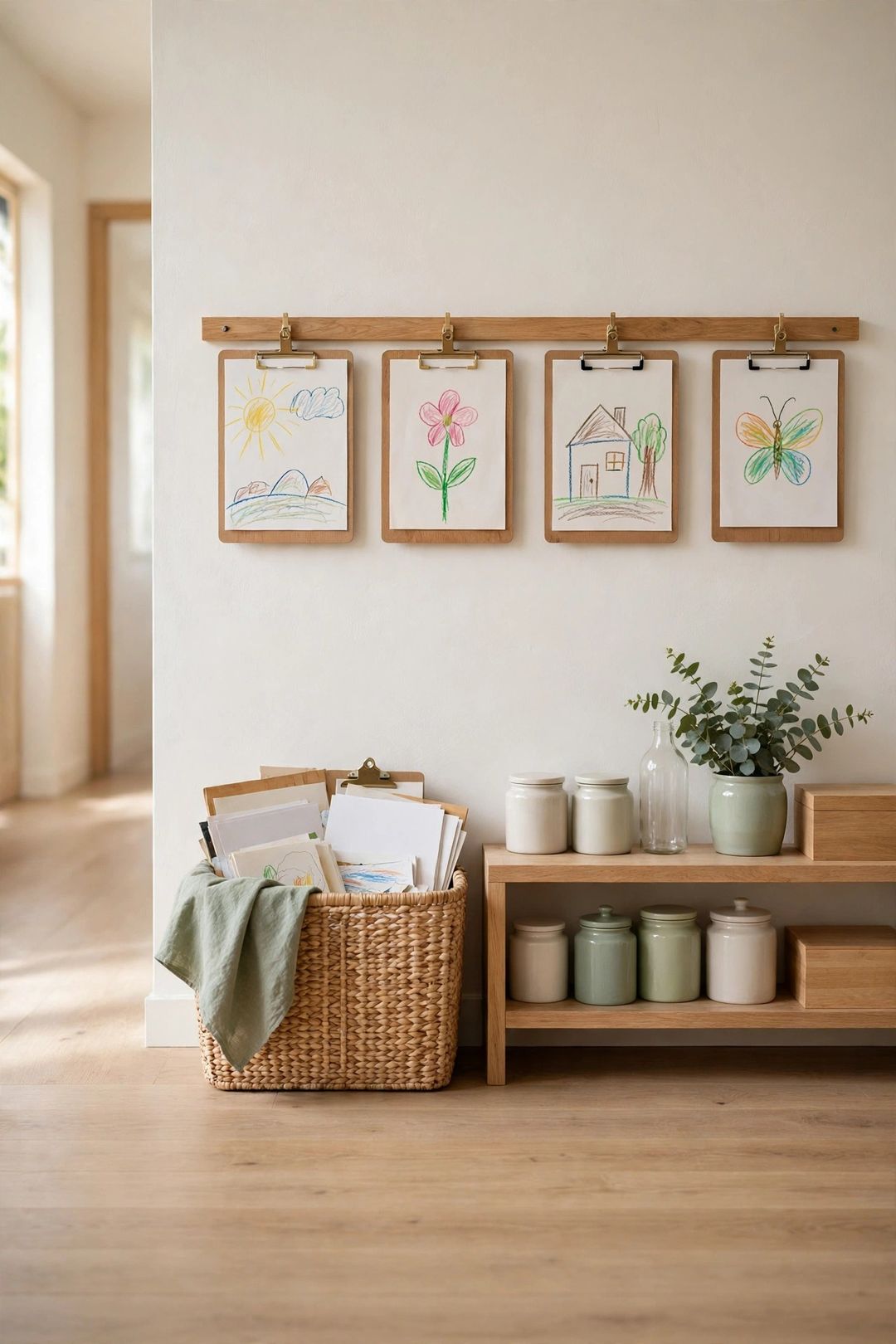
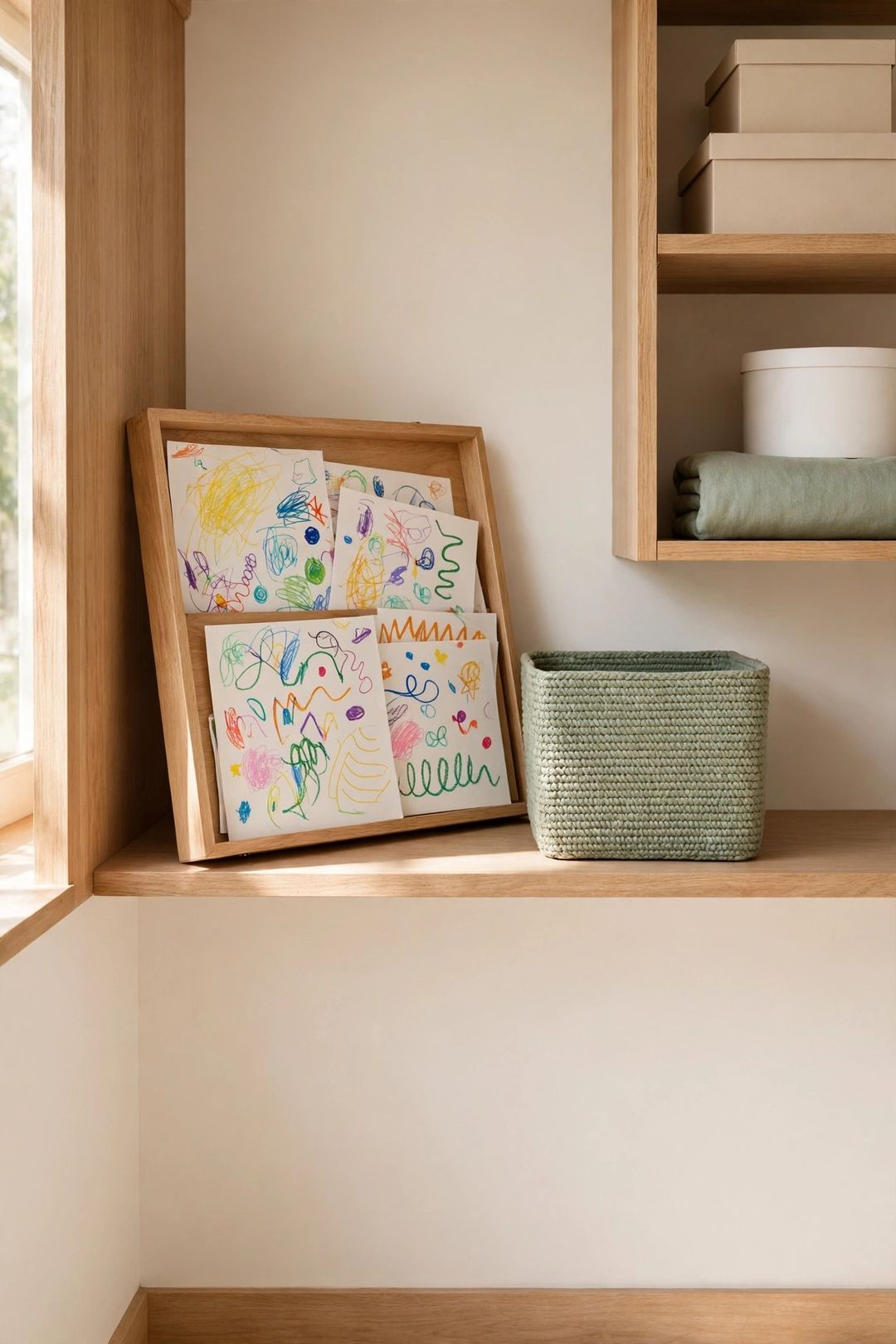
5. Rotate a Small Home Display
Best for enjoying art without keeping it all. A string with clips, a cork board, or one frame with an easy-open front lets you show a few current favorites. When a new piece goes up, the old one moves to the portfolio, the photo folder, or recycling. The display stays fresh, and every piece gets its moment.
6. Use a Flat File or Wide Drawer for Oversize Pieces
Best for posters and large paintings. Big artwork gets ruined when it is folded or rolled for years. A shallow flat file, wide drawer, or large portfolio under a bed keeps oversize pieces flat and protected. Limit this spot to true favorites, since large storage fills up fast.
7. Set Up an In-and-Out Tray for New Papers
Best for stopping piles before they start. Place one tray or folder where backpacks get emptied. New art and schoolwork land there first. Once a week, sort the tray: display, portfolio, photograph, or recycle. Nothing stays in the tray longer than a week, so decisions stay small and easy.
8. Keep a Slim File for Official Papers
Best for records you may need later. Report cards, certificates, health forms, and school letters deserve their own slim file, apart from artwork. They are the papers you are most likely to look up again, and a separate file keeps them clean, flat, and quick to find.
9. Make a Yearly Keepsake Folder
Best for a simple, finished set each year. At the end of the school year, choose a small set for one keepsake folder: a photo from that year, a writing sample, a math page, a favorite drawing, and any awards. Label it and store it with the bins. One folder per year is easy to store and lovely to look back through.
10. Store 3D Projects by Photo and One Small Shelf
Best for models, dioramas, and crafts. Three-dimensional projects rarely survive long in a bin. Photograph each one from a few angles, let your child pick one or two small favorites for a shelf, and let the rest go after their display time. The photos keep the memory without the crushed cardboard.
11. Do a Twice-a-Year Sort With Your Child
Best for keeping the system honest. Sit down together near the end of each school term and review what was saved. Kids often let go of pieces easily once time has passed, and they enjoy choosing their real favorites. Keep the sort short, praise the keepers, and finish by labeling and putting everything away.
What to Buy
Large portfolio case, typically $15–$30. Pro: Keeps favorite artwork flat and protected in one limited space. Con: One size may not fit oversize posters. Skip if: You only save letter-size schoolwork that fits a standard file box.
Labeled storage bin or box file, typically $10–$25. Pro: Holds a full year of papers and stacks neatly on a shelf. Con: Big bins invite saving too much. Skip if: A single portfolio per child already holds everything you keep.
Clip string or cork display board, typically $10–$20. Pro: Shows current favorites and makes rotation simple. Con: Holds only a few pieces at a time. Skip if: You already use an easy-open frame you change often.
Accordion file folder, typically $8–$18. Pro: Keeps official papers, certificates, and yearly keepsakes sorted by section. Con: Pockets can bulge if you add bulky art. Skip if: Your yearly bin already has a clear, separate section for records.
Mistakes to Avoid
- Saving every single worksheet. Daily practice pages rarely show growth. Keep a sample from the start and end of the year and photograph or recycle the rest.
- Storing papers with no labels. An unlabeled bin becomes a mystery box. Add the child's name, school year, and grade to every bin, folder, and photo album.
- Letting art pile up unsorted for years. Big backlogs feel heavy and hard to face. A weekly tray sort and a twice-a-year review keep decisions small.
- Keeping bulky projects in crushable bins. Models and dioramas break and take up prime space. Photograph them well and keep only one or two small favorites.
- Deciding alone what your child values. A piece that looks plain to an adult may be a proud favorite. Ask your child to help choose keepers during each sort.
Frequently Asked Questions
How much kids' art should you actually keep?
A useful guide is one portfolio or one slim bin per child per stage of school. If the keepers show growth, favorites, and milestones, you have saved the story without saving every page.
What is the best way to photograph artwork before recycling?
Place the piece flat in bright, even light, fill the frame, and check that colors and words are clear before you let it go. Save the photo in a folder labeled by child and year, and keep a backup copy in a second location.
How do you store oversize artwork?
Keep true favorites flat in a large portfolio, flat file, or wide shallow drawer. Avoid folding, and avoid rolling pieces you plan to keep for years, since curls and creases are hard to undo later.
What should you do with 3D school projects?
Display them for a short time, photograph them from a few angles, and keep only small, sturdy favorites on a shelf. Most bulky projects can be recycled after they have been enjoyed and photographed.
You do not have to keep every page to honor the work behind it. Keep the best, photograph the rest, and give the keepers a labeled home. Save this post to your Small-Space Storage board on Pinterest so these ideas are handy at your next sort.