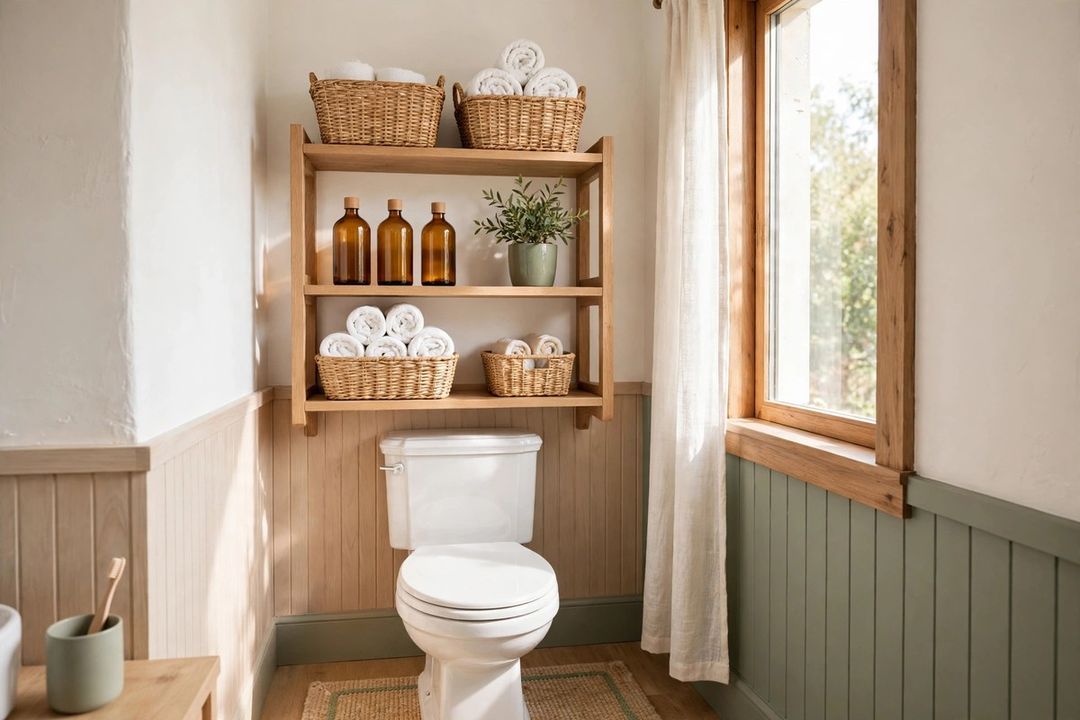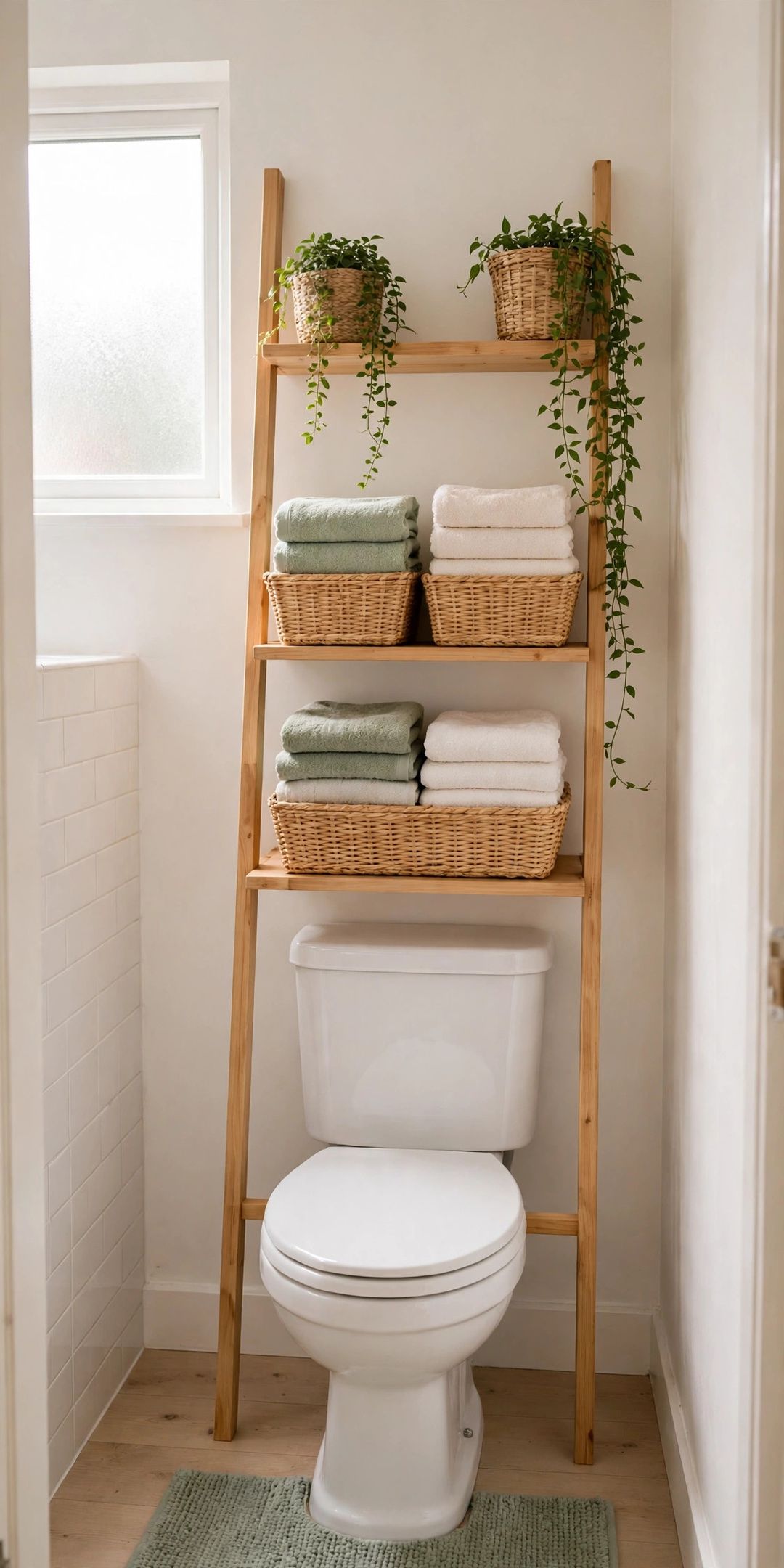
One small bathroom can feel crowded fast when two or more kids share the same sink, towels, and counter. Toothbrushes get mixed up, towels land on the floor, and the youngest cannot reach anything without help.
The fix is sorting by two simple rules: height and color. These kids sharing one bathroom storage systems put each item where the right child can reach it, and give each child one clear color to follow. No guessing, no piles, and no daily hunt for a missing cup.
Start with one color per child and keep it the same across towels, cups, and bins.
1. Two-Row Towel Hooks: Low for Kids, High for Adults
Hang two rows of hooks instead of one high towel bar. The low row sits at kid height, so children can hang towels up without help. The high row holds adult towels and keeps them dry and separate. Add a small color tag or colored hook for each child on the low row, so every towel has an obvious home.
2. Color-Coded Toothbrush and Cup Station
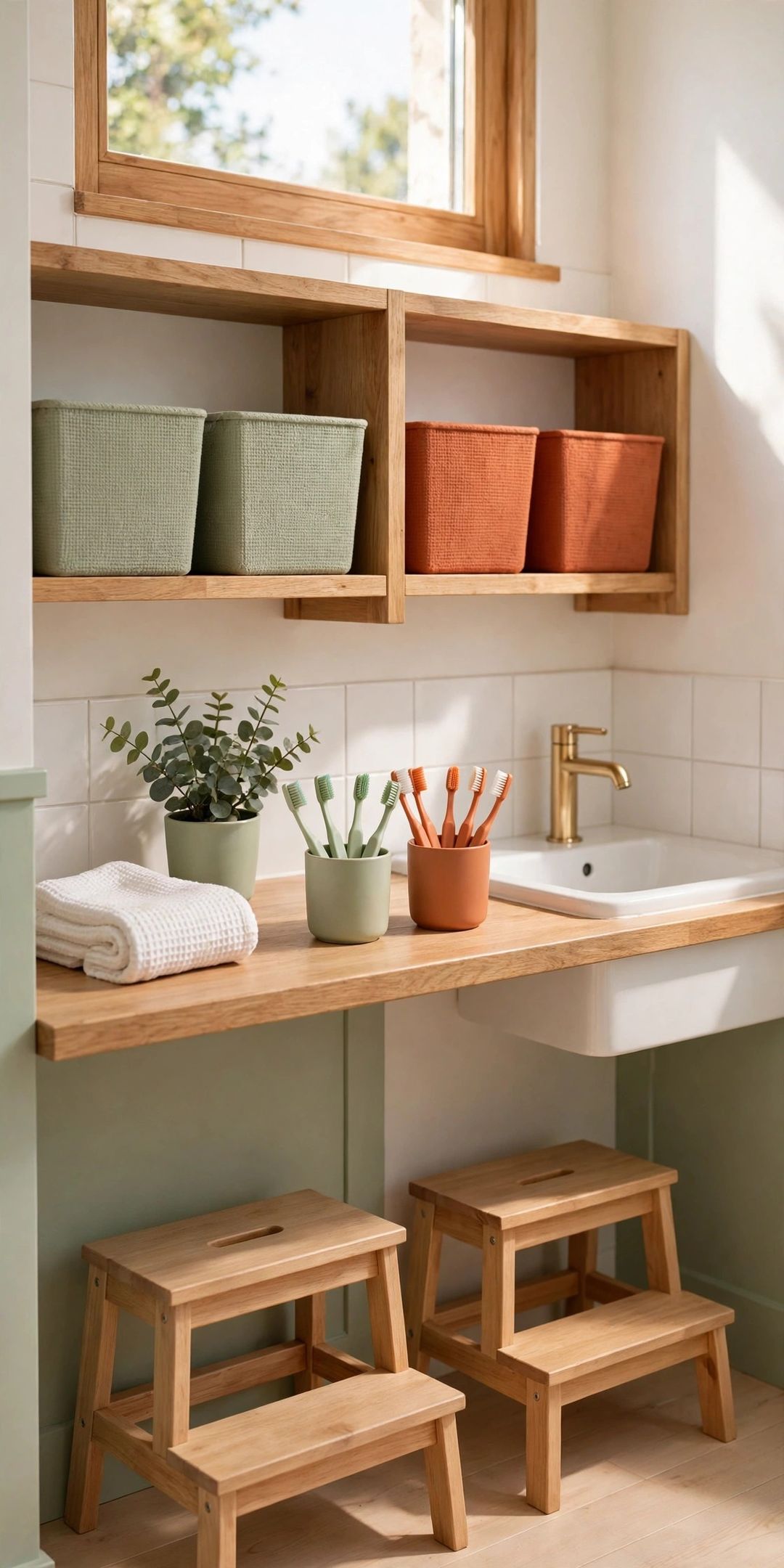
Give each child a toothbrush, cup, and toothpaste spot in their own color. Line the cups up on one narrow tray beside the sink to keep the set contained. When the colors match from cup to brush, even young kids can spot their own set at a glance and put it back in the right place.
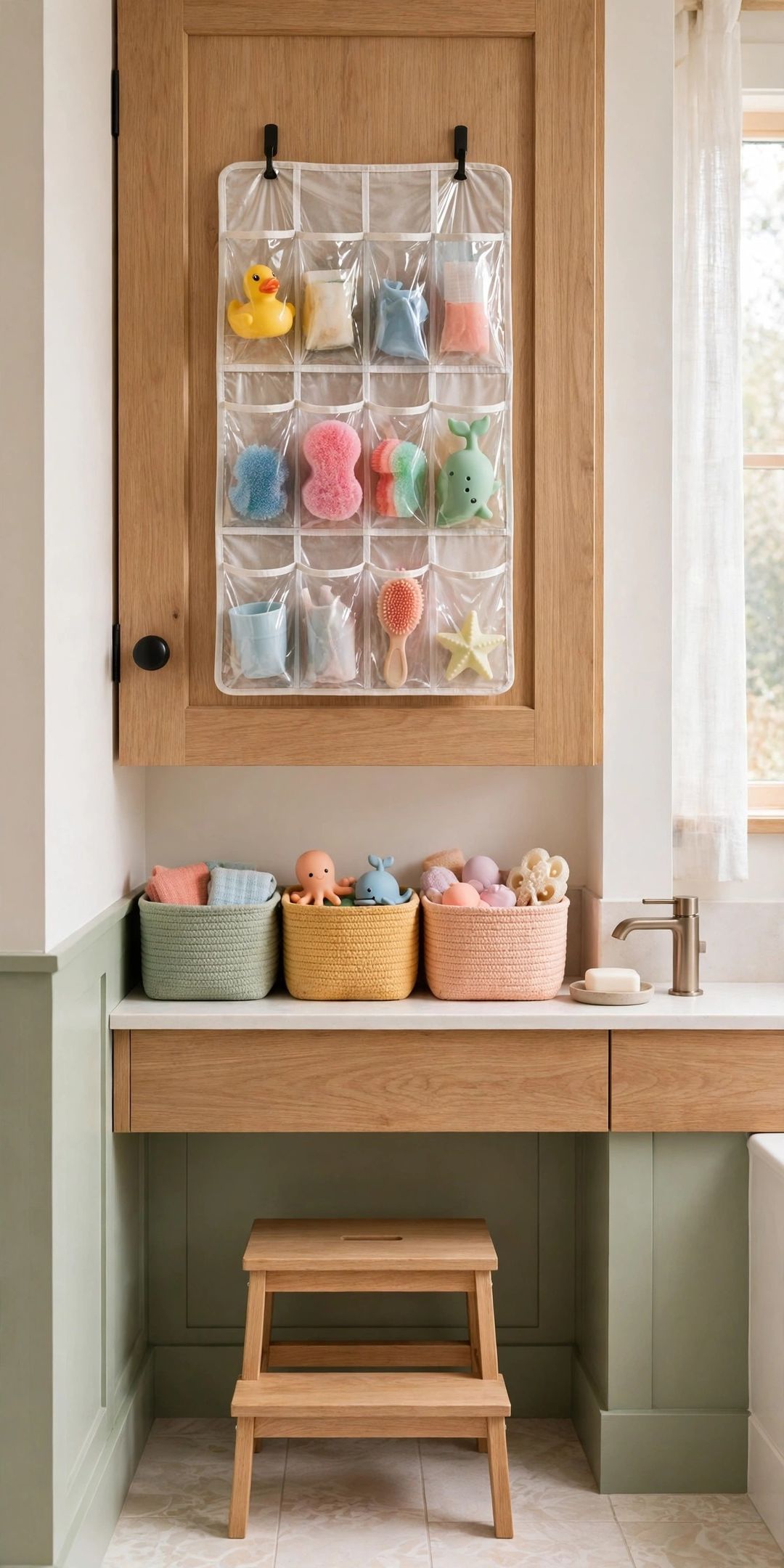
3. Step-Stool Reach Zone at the Sink
Park a sturdy step stool in one fixed spot under or beside the sink. That stool defines the reach zone: soap, cups, and hand towels should all sit within arm's reach from it. Keep heavy or breakable items out of this zone. When the stool always lives in the same place, kids stop climbing on cabinets or dragging chairs in.
4. Low, Middle, and High Shelves Sorted by Reach
Sort open shelves or a small cabinet by height. Low shelves hold daily items for the youngest child. Middle shelves hold items for older kids who can reach higher. High shelves are for adult items, refills, and anything that needs supervision. This one rule keeps the whole bathroom easy to scan and safer to use.
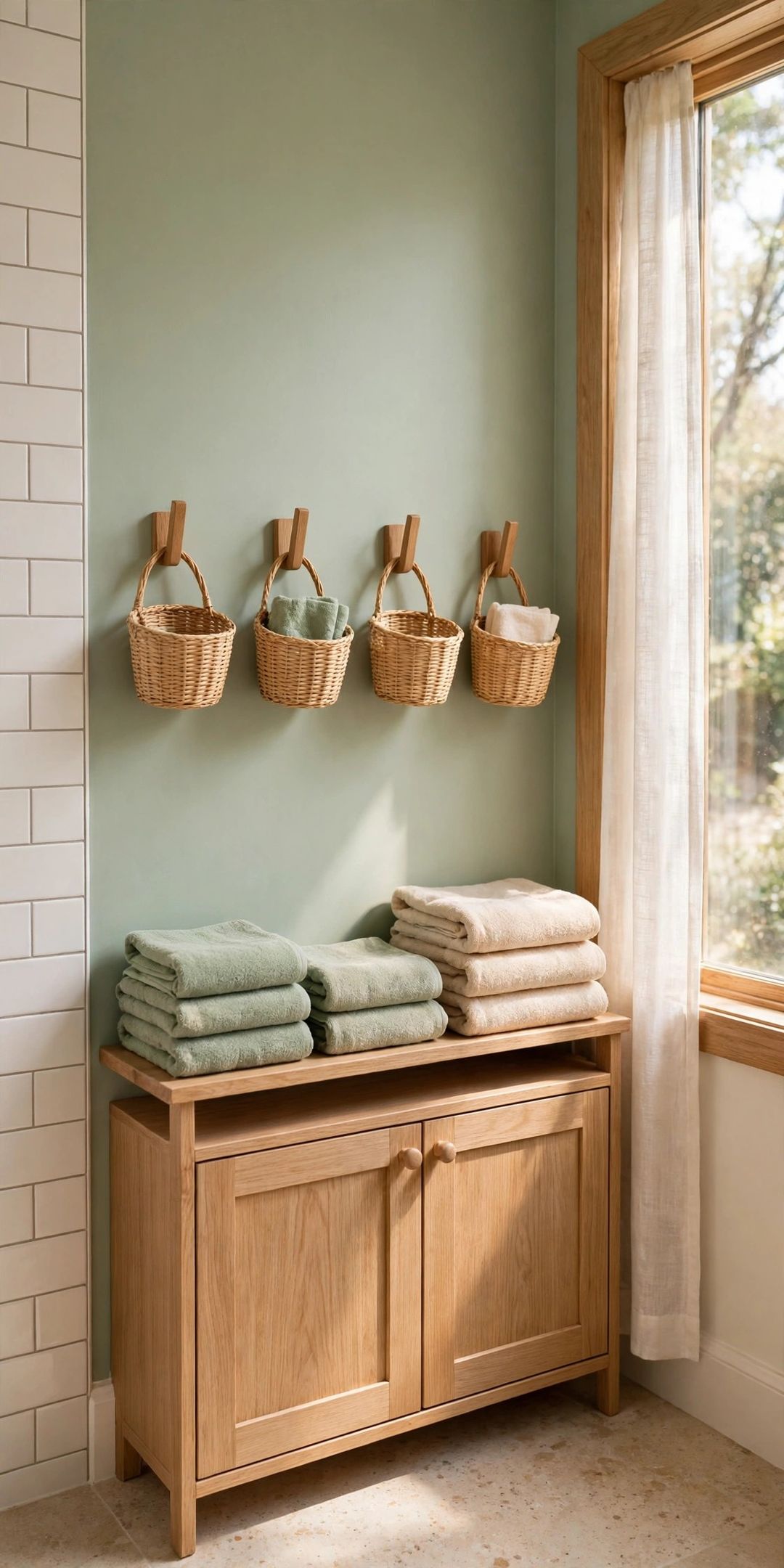
5. Stacked Color Bins for Each Child's Daily Kit
Give each child one small bin in their color for a brush, hair ties, lotion, or other daily items. Stack the bins or line them up on one shelf, lowest bin for the youngest child. A bin acts like a mini drawer, so personal items stay together instead of spreading across the counter.
6. Over-Door Pockets Labeled by Color
A clear over-door pocket organizer adds storage without using floor or counter space. Assign one row per child, marked with a colored label or tape strip in their color. Lower rows suit younger kids, higher rows suit older ones. Use the pockets for light, flat items like combs, headbands, and spare washcloths.
7. Separate Shower Baskets in Each Child's Color
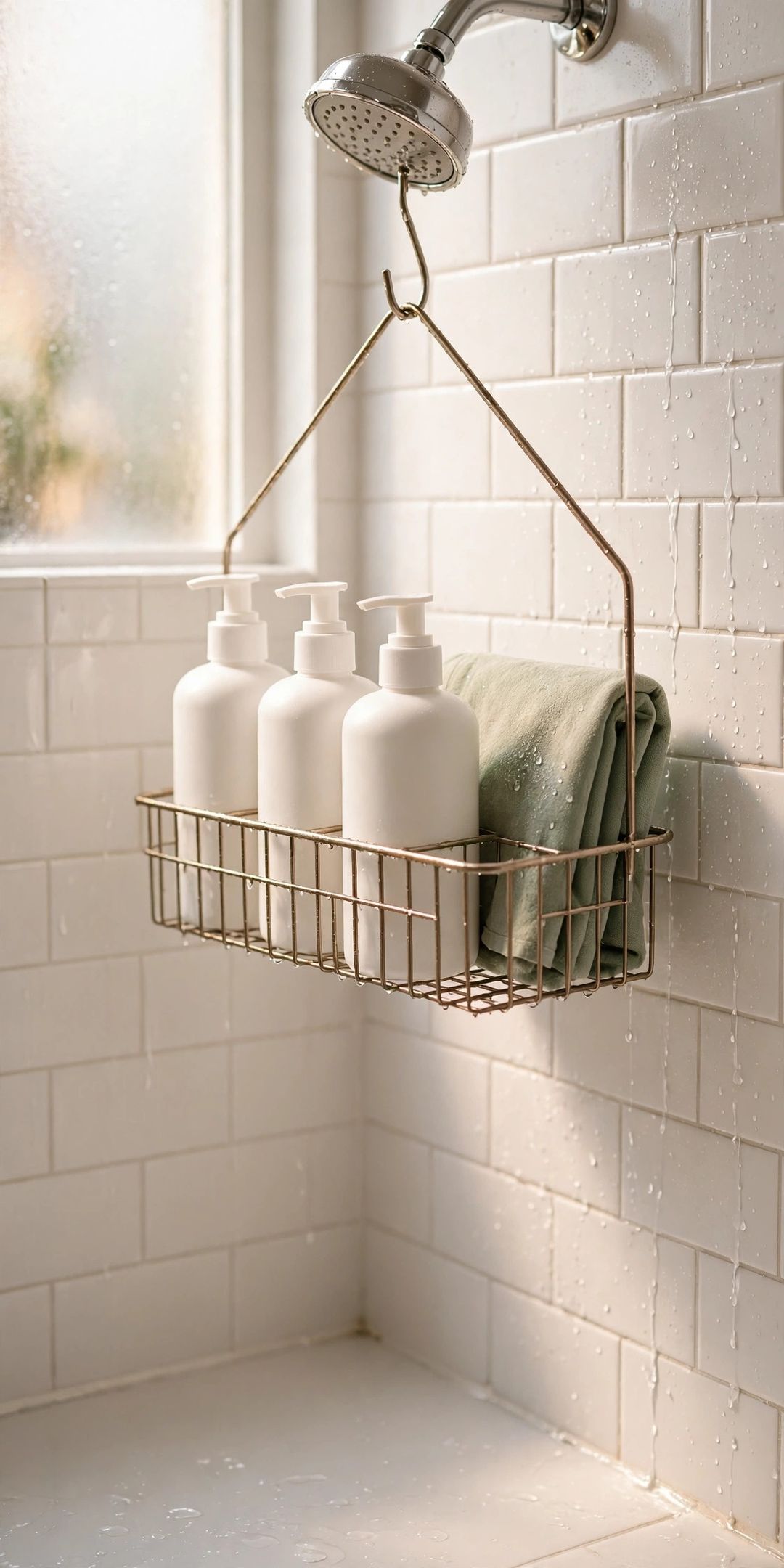
Inside the tub or shower, give each child a small perforated basket in their color for shampoo, soap, and bath items. Baskets with holes drain well and can be lifted out for cleaning. One basket per child stops bottles from mixing into one slippery pile and makes it clear whose items need refilling.
8. Towel and Washcloth Sets Matched to One Color Per Kid
Keep the color rule going with towels and washcloths. If one child is blue and the other is green, their towels, washcloths, and bins all follow that color. Laundry gets simpler, too, because clean sets can be sorted by color at a glance. Keep one spare set per child in the same color to avoid breaking the system on wash day.
9. Under-Sink Storage With a High, Adult-Only Zone
Under the sink, use two levels. The front, low section can hold kid-safe extras like spare washcloths or a step-stool cleaning cloth. Cleaning products, medicines, and sharp items belong in a latched bin or on a high shelf away from kid zones, never loose at kid height. A clear divider keeps the two levels from blending together.
10. Slim Rolling Cart With Three Height Zones
A slim rolling cart can hold overflow when cabinet space is tight. Use the bottom tier for the youngest child's items, the middle tier for older kids, and the top tier for shared or adult items. Roll the cart beside the sink for busy mornings, then tuck it back into a narrow gap when the rush is over.
11. Morning Lineup Tray in Color Order
End the system with one lineup tray on the counter or a low shelf. Each child gets one spot in the same color order used everywhere else, holding only what they need that morning. Limit the tray to daily basics so it stays clear. At night, items return to the tray, ready for the next day.
What to Buy
Adhesive or screw-in hooks, typically $8–$18 per set. Pro: They create a low row kids can reach on their own. Con: Adhesive styles can fail on damp walls if overloaded. Skip if: A low towel bar is already in place.
Colored plastic cups and bins, typically $6–$15 per set. Pro: One color per child makes sorting instant and cheap to expand. Con: Colors must match across items to work well. Skip if: Plain bins plus colored labels give the same result.
A non-slip step stool, typically $12–$25. Pro: It gives younger kids safe, steady reach at the sink. Con: It takes floor space in a very small room. Skip if: A built-in low sink already suits your youngest child.
A clear over-door pocket organizer, typically $10–$20. Pro: It adds rows of storage with no drilling or shelf space. Con: Heavy bottles can stretch the pockets. Skip if: The door is sliding or cannot hold an organizer.
Mistakes to Avoid
- Using one color for everything. Shared colors cause the very mix-ups the system should prevent. Give each child a distinct color and keep it consistent.
- Putting daily items too high. If kids cannot reach a towel or cup, it will end up on the counter or floor instead.
- Storing cleaning products at kid height. Keep cleaners, medicines, and sharp items latched or high, outside every kid zone.
- Changing colors mid-system. A blue cup with a red bin breaks the pattern young kids rely on to tidy up alone.
- Overfilling the counter tray. A tray holding only daily basics stays useful. A tray holding everything becomes another pile.
Frequently Asked Questions
What if the kids are far apart in age?
Use the height zones more strictly. The younger child's items stay on the lowest shelf, hooks, and cart tier, while the older child's items move one level up. Keep adult and supervised items highest of all.
How many colors are needed for three or four kids?
One clear color per child still works. Pick colors that look very different from each other, and add a name label as backup for items like toothbrushes, where a mix-up matters most.
What if there is no room for a rolling cart?
Skip the cart and use the door and wall instead. Over-door pockets and a second row of low hooks add the same per-kid zones without using any floor space.
How often should the system be reset?
A quick reset once a week is enough. Check that towels match their hooks, cups match their colors, and high zones still hold only adult or supervised items.
Sorting one shared bathroom by height and color gives every child a place they can reach and recognize. Save this post to your Bathroom Organization board on Pinterest so the full 11-system setup is ready before your next bathroom reset.