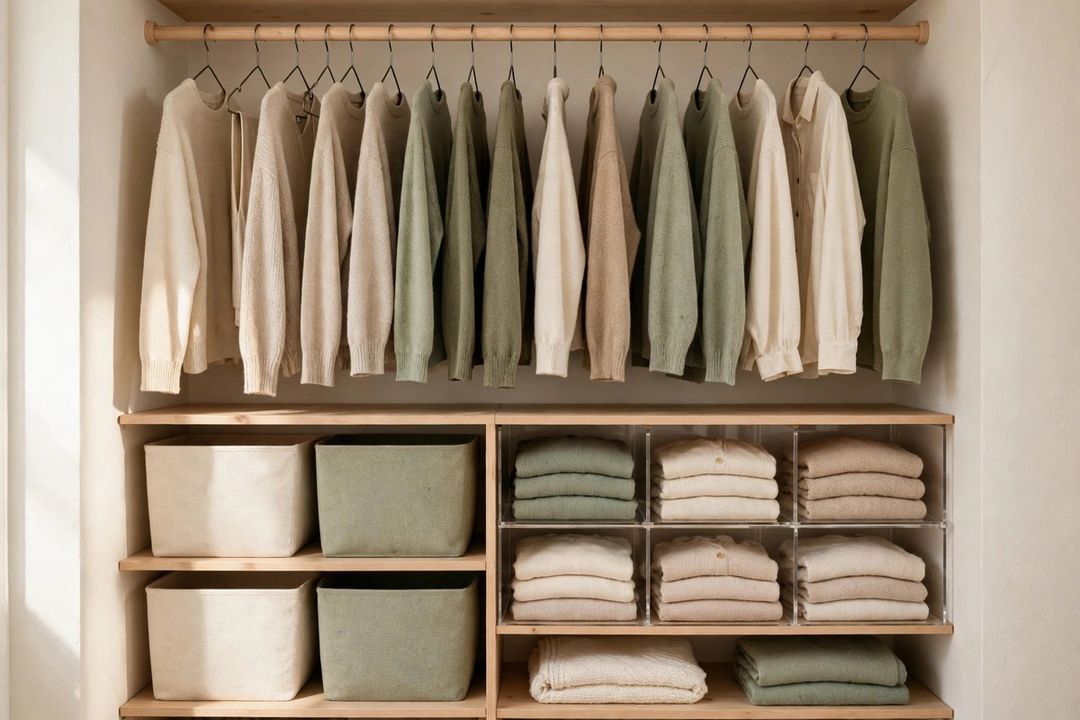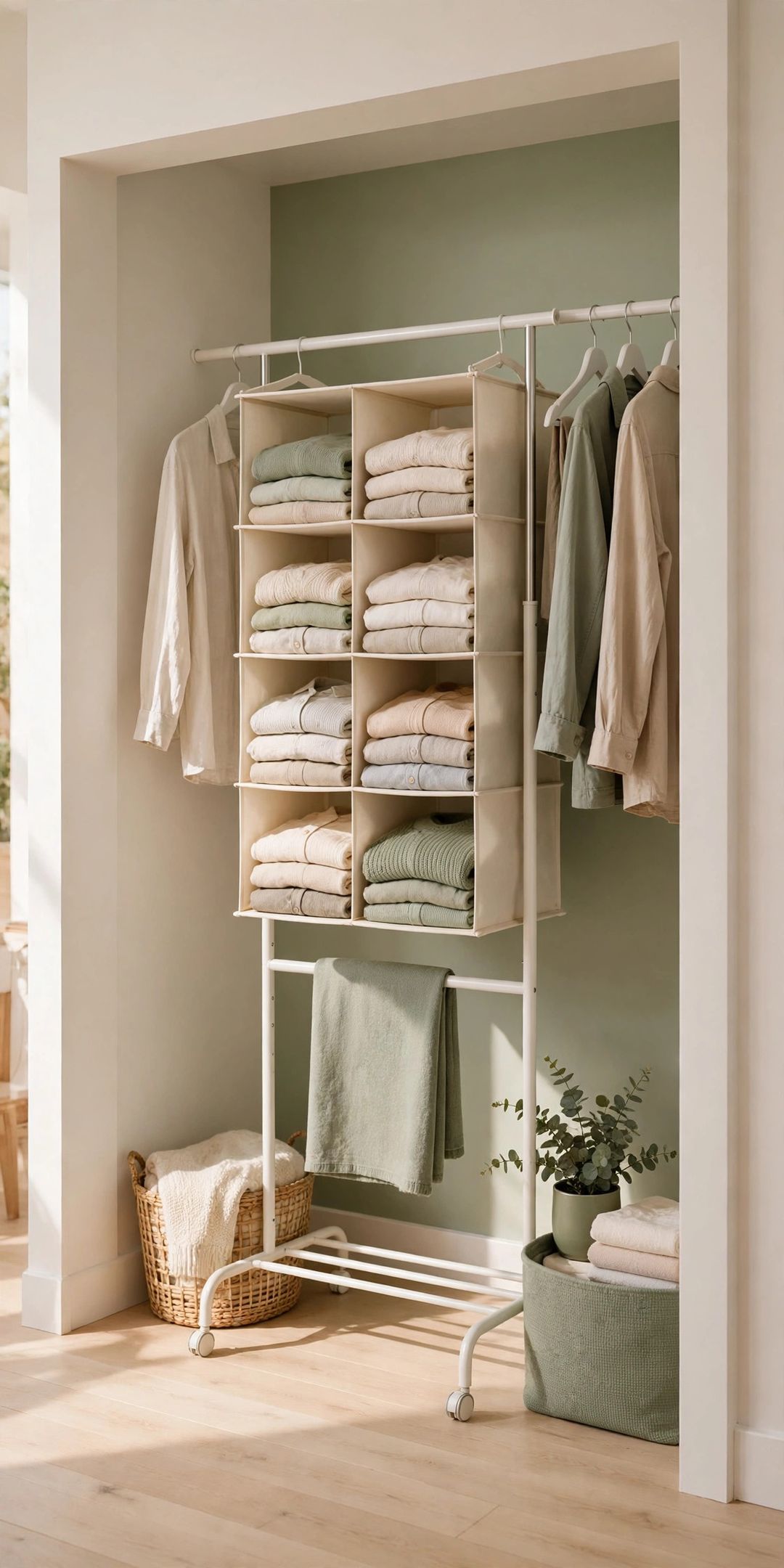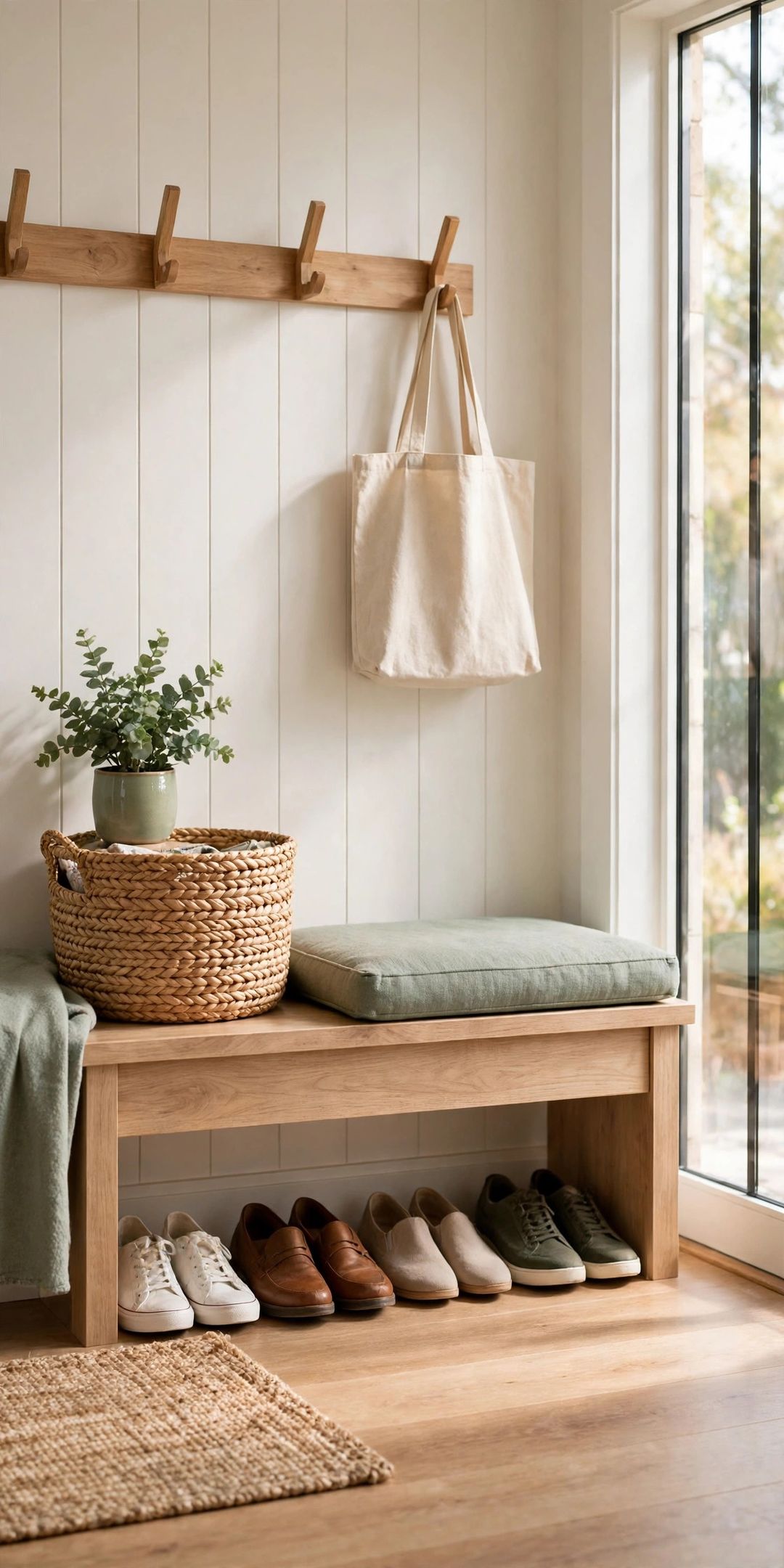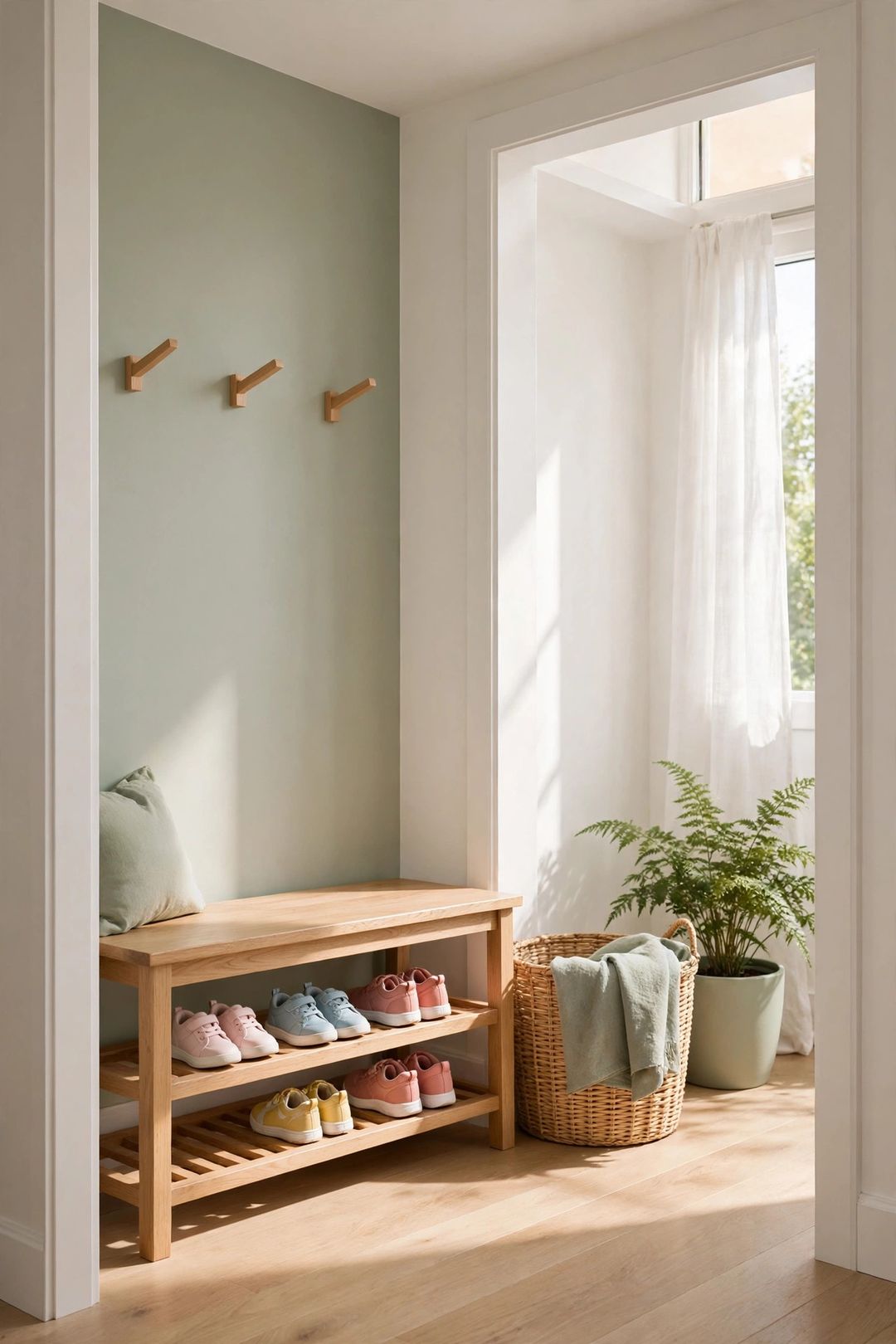
The after-school dump follows a pattern: backpack down, shoes off wherever walking stops, and a mixed pile growing by the door. The problem is rarely the number of shoes. Most storage asks kids to open a lid, stack a pair neatly, or reach a high shelf at the exact moment they want to be done.
These kids shoe storage ideas fix that with three simple rules. Everything sits at kid height, every daily spot works in one step with no lid, and wet or muddy pairs get a separate landing place. A final system handles sizing turnover, so outgrown pairs leave instead of cluttering the rotation.
At the Entryway: One-Step Drop Zones
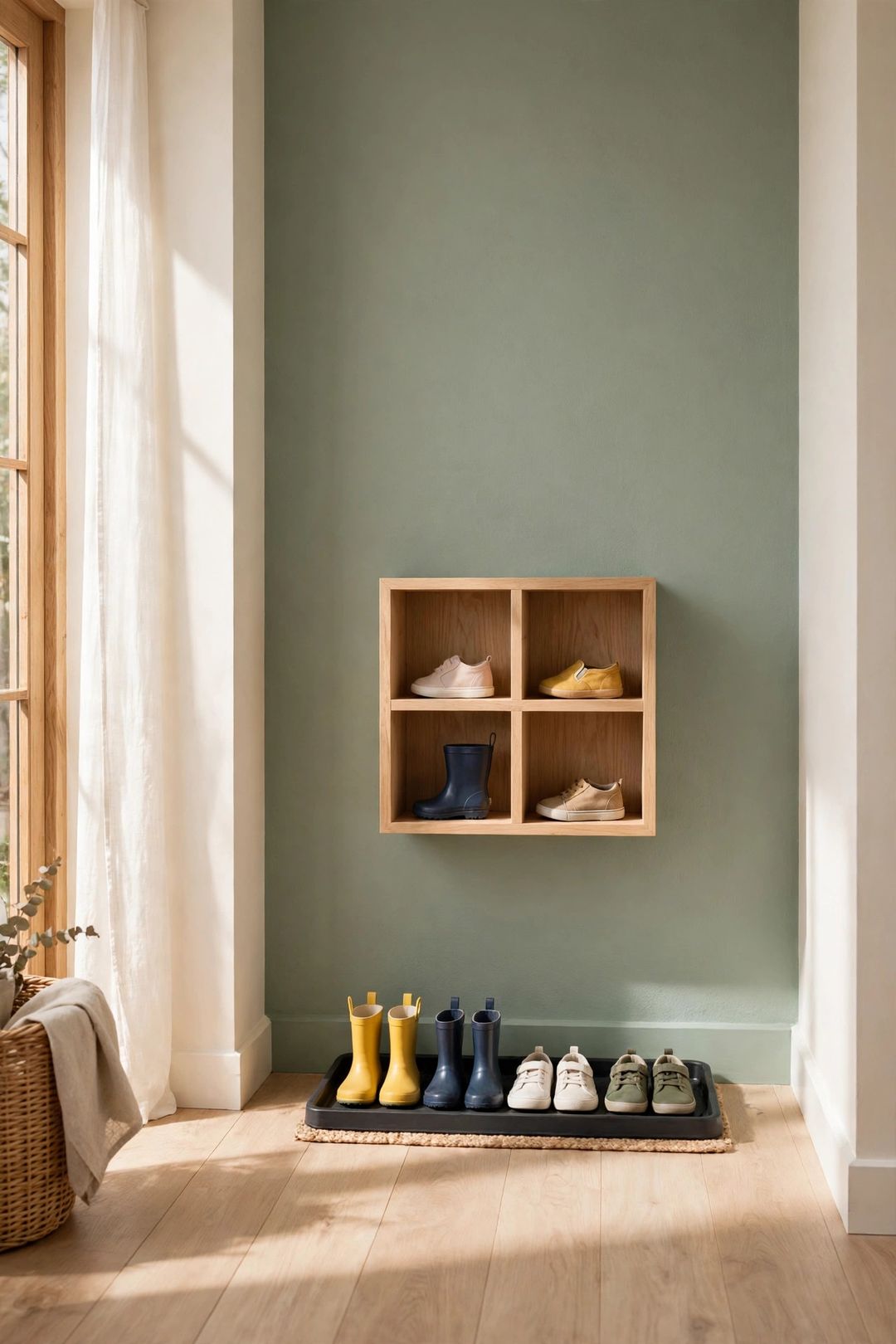
1. Low open cubbies at kid height. A short cubby unit with open compartments lets each child toss a pair in without opening anything. Keep the top row below the youngest child's shoulder height, and assign one cubby per child so ownership is clear.
2. One open basket for the daily pair. A single wide basket by the door catches the pair worn most days. It is not tidy storage, and that is the point: a fast, forgiving target gets used, while a perfect system gets skipped.
3. A boot tray for wet and muddy shoes. A low, lipped tray under the bench or beside the door gives rain boots and muddy sneakers a place to drip. Keeping wet pairs on a washable tray protects floors and stops one soggy pair from soaking the rest of the pile.
4. A strict two-pair limit by the door. Entryway storage stays small on purpose: one everyday pair and one activity pair per child. Everything else lives in the closet, so the drop zone never becomes the whole collection.
In the Closet: Low, Open, and Easy to Reach
5. A low shoe rack on the closet floor. A short two-tier rack under hanging clothes holds the week's rotation at ankle height, where kids can see and grab pairs themselves. Angled shelves work better than flat stacking, because pairs stay separate instead of sliding into a heap.
6. Open-front bins sorted by type. Lid-free bins group sandals, dress shoes, and sports cleats so a category is found in seconds. Lids are the enemy here: if a bin needs two hands and a lid lifted, younger kids will leave the pair on the floor instead.
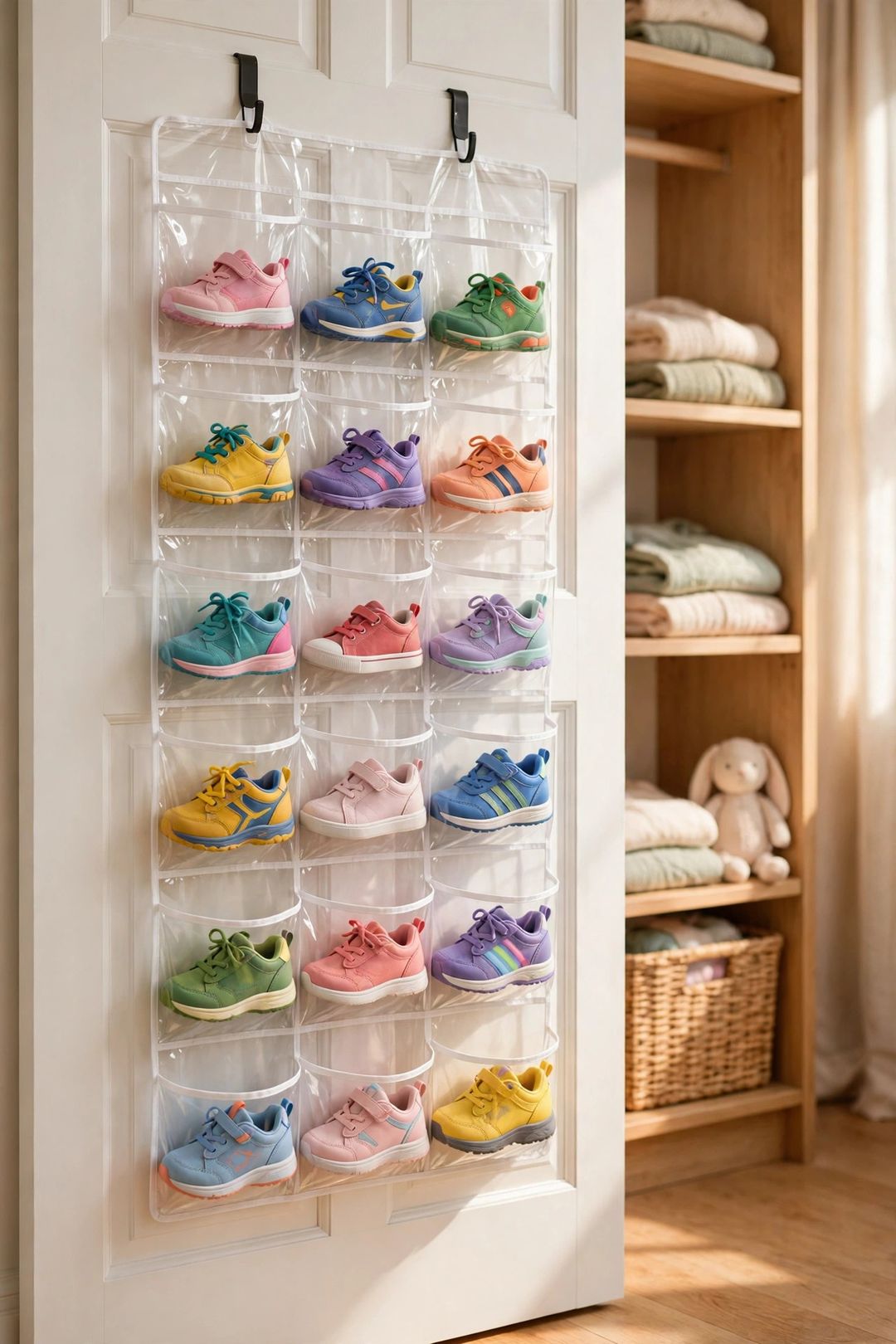
7. A hanging pocket organizer for small shoes. Clear over-door pockets suit toddler and preschool sizes, keeping tiny pairs visible and off the floor. Save the lower pockets for the current size, and move pairs up or out as feet grow.
8. Picture or color labels on every spot. A simple photo, drawing, or colored dot on each cubby and bin shows where a pair belongs without reading. Labels turn tidying into a matching game and help other caregivers return shoes to the same place.
Rotation, Seasons, and Outgrown Pairs
9. A current-size-only rule for prime spots. Entryway and closet space goes only to shoes that fit right now. Too-small and too-big pairs move to labeled bins elsewhere, so kids never dig through shoes that do not fit to find the pair that does.
10. An outgrown bin that lives nearby. Keep one open bin in the closet or laundry area labeled Outgrown. The moment a pair pinches, it goes in the bin instead of back on the rack. When the bin fills, sort it once into donate, toss, or save piles.
11. A hand-me-down bin sorted by size. Pairs worth keeping for a younger sibling go into a separate bin or bag marked with the shoe size on the outside. Storing by size, not by child, makes the next size-up easy to find when needed.
12. A seasonal swap twice a year. When the weather turns, move boots or sandals to a labeled storage bin and bring the new season's pairs forward. The swap is also the natural moment to check fit, empty the outgrown bin, and refresh the entryway limit.
What to Buy
A low open cubby unit, typically $35–$80. Pro: Open compartments at kid height make the one-step drop easy. Con: It takes floor space and holds limited pairs. Skip if: A wall-mounted rack already fits the entryway well.
A lipped boot tray, typically $12–$25. Pro: It contains water, mud, and melting snow in one washable spot. Con: It needs regular emptying and rinsing to stay clean. Skip if: Your climate is dry and shoes rarely come home wet.
A two-tier shoe rack, typically $15–$35. Pro: It doubles closet floor storage without stacking pairs. Con: Very small shoes can slip between widely spaced bars. Skip if: Closet floor space is already used by bins that work.
Open-front storage bins, typically $8–$20 each. Pro: Kids can see and reach a category without lifting a lid. Con: Open fronts collect dust faster than closed boxes. Skip if: Shoes are stored in a dusty garage or attic area.
A clear over-door pocket organizer, typically $10–$20. Pro: It uses dead door space and suits small sizes perfectly. Con: It is too small for older kids' shoes and can bang when the door swings. Skip if: Doors are sliding or already carry another organizer.
Mistakes to Avoid
- Using lidded boxes for daily shoes. A lid plus two hands is one step too many, so daily pairs end up on the floor beside the box.
- Storing shoes too high. If kids cannot reach the spot without help, they will not use it. Keep daily storage below the youngest child's shoulder height.
- Keeping every size in rotation. Outgrown and not-yet pairs bury the shoes that fit. Move them to labeled bins the week they stop fitting.
- Skipping a wet-shoe plan. Without a tray, muddy pairs soak clean shoes and floors. One lipped tray solves most of the mess.
- Buying storage before counting pairs. Count current pairs per child first, then size the cubbies and racks to that number plus a little room.
Frequently Asked Questions
How many pairs should stay by the door?
Two pairs per child is a workable limit for most entryways: the everyday pair and one for sports, rain, or dress. The rest belong in the closet, where a low rack and open bins keep them easy to find.
What is the best way to store muddy shoes?
Give wet and muddy pairs a lipped boot tray in the entryway or mudroom, away from dry shoes. Let them dry fully before moving them to a rack or bin, and rinse the tray as needed so dirt does not build up.
How often do kids outgrow shoes?
Young children can outgrow a size in just a few months, and growth slows as they get older. A quick fit check at each seasonal swap, plus a nearby outgrown bin, keeps the system ahead of growth spurts.
What should happen to outgrown pairs?
Sort them when the outgrown bin fills: save clean, wearable pairs by size for younger siblings, donate pairs in good shape, and recycle or toss worn-through pairs. Clearing them keeps prime spots free.
A shoe system kids can work in one step, at their own height, survives the after-school rush far better than a perfect-looking one. Save this post to your Closet Organization board on Pinterest so the drop zones and outgrown-bin routine are handy at your next reset.