A rolling cart only earns its floor space if it has a clear job. Left without one, it becomes a rolling pile of mail, snacks, and random tools. The fix is simple: give the cart one main use, assign each tier a category, and choose a parking spot before it arrives.
These kitchen cart and rolling island storage ideas focus on uses and placement, not on collecting more gear. A single cart can hold pantry overflow, anchor a coffee bar, or add prep space for a busy night, then roll out of the way when the kitchen needs to open up again.
Give the Cart One Daily Job
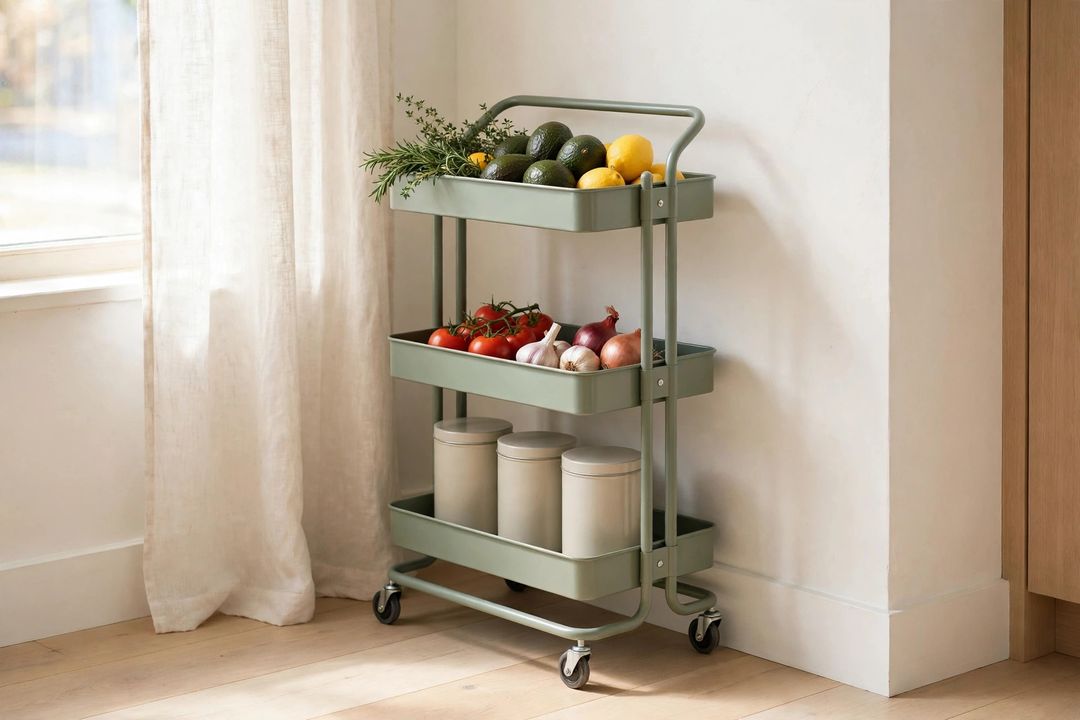
1. Pantry overflow for bulky and backup items. Park the cart near the pantry or the kitchen door and use it for the items that crowd shelves: extra pasta, canned goods, paper towels, and backup oils. Keep only one backup of each item on the cart, so restocking stays quick and nothing hides long enough to expire unnoticed.
2. An appliance station that frees the counter. Move one or two small appliances that get weekly use onto the cart, such as a toaster oven, blender, or stand mixer base stored low. Counters stay clear for daily cooking, and the appliance rolls closer to an outlet and a prep spot only when it is needed.
3. A coffee and tea bar in one small footprint. Put the maker on top, mugs and filters on the middle tier, and beans, tea, and sweeteners below in small jars or bins. Place the cart near water and an outlet to cut morning trips across the kitchen, and add a small tray on top to catch drips and grounds.
4. A snack and lunch-packing station. For households that pack lunches, one tier can hold lunch bags and containers, one can hold shelf-stable snacks in open bins, and the top can stay clear as a small packing surface. Set it near the fridge so cold items move in last, and restock the bins once a week.
Use It as a Flexible Island
5. A movable prep island for big cooking days. Roll the cart beside the main counter to hold chopped items, bowls, and sheet pans. A solid top adds a second surface for rolling dough or cooling trays. When the meal is done, the station rolls to the sink for clearing.
6. A clear tier system: heavy low, daily items on top. Store heavy pots, mixers, and full jars on the bottom tier for balance. Keep daily tools on the top tier at counter height. Middle tiers suit bowls, cutting boards stored upright, and backup supplies.
7. Towel bars and side rails for tools in use. Many carts have a handle or rail that doubles as a towel bar. Hang the towel used during cooking there, not over the oven door. Side hooks or a rail can hold measuring cups, oven mitts, or a small trash bag during prep, keeping the top surface free for food only.
8. A serving and clearing bridge to the table. Load the top tier with plates, drinks, and serving dishes and roll it to the dining area. After the meal, it carries dirty dishes back in one trip. Keep the path clear of thick rugs and loose cords.
Park It Smart and Keep It Steady
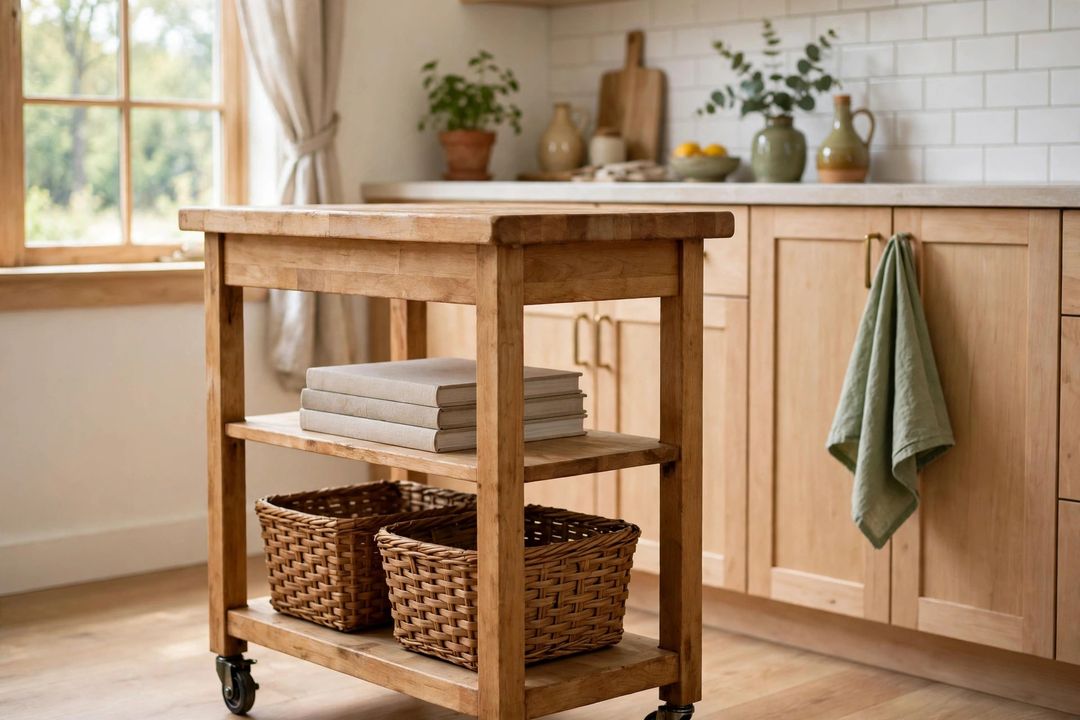
9. An under-counter or open-shelf parking spot. Measure the gap under an open counter section or a low shelf run. A cart that slides fully into its spot keeps walkways clear. Leave a few inches of height clearance so top-tier items do not scrape.
10. Lockable wheels for prep, open wheels for moving. Lock at least two wheels before chopping, pouring, or leaning on the cart for support. Unlock all wheels before a full move, especially when tiers are loaded. If a cart has no locks, park it against a wall for prep work and avoid using it as a steady surface for heavy tasks.
11. A narrow end-of-run spot for daily parking. The end of a counter run or the side of a fridge often fits a slim cart without blocking drawers. Keep that spot empty for anything else, so the cart returns there instead of drifting into the busiest corner.
What to Buy
A three-tier rolling cart, typically $30–$70. Pro: Open tiers suit pantry overflow, snacks, and daily tools that need fast access. Con: Open sides let small items slide off during a fast move. Skip if: The cart will mainly hold heavy appliances that need a solid shelf.
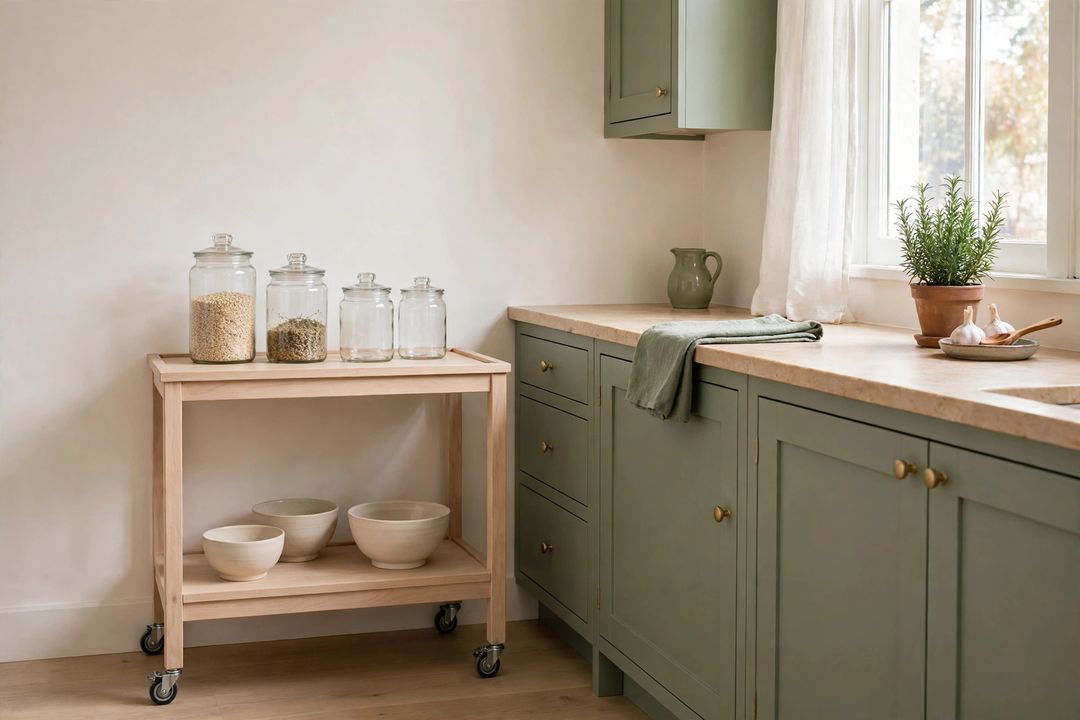
A rolling island cart with a solid top, typically $80–$180. Pro: The top adds real prep and serving space, and lower shelves or drawers hide clutter. Con: It takes more floor space and needs a wider parking spot. Skip if: Walkways are narrow and a slim tiered cart fits better.
A slim cart for narrow gaps, typically $25–$55. Pro: It uses the gap beside a fridge or at the end of a counter run. Con: Narrow tiers hold bottles and boxes better than wide bowls or appliances. Skip if: The main goal is extra prep surface rather than extra storage.
Small open bins and jars for cart tiers, typically $8–$20 for a set. Pro: They group small items so tiers stay sorted instead of becoming loose piles. Con: Too many tiny bins can waste space and slow down restocking. Skip if: The cart holds only large items that already stay in place.
Mistakes to Avoid
- Giving the cart three jobs at once. A cart split between pantry, mail, and tools serves none of them well. Pick one main job and let the tiers support it.
- Loading heavy items on the top tier. Top-heavy carts tip and roll poorly. Keep the heaviest items low and centered.
- Skipping the parking spot. Without a home base, the cart blocks drawers and walkways. Measure and clear its spot before buying.
- Forgetting outlet and water access. A coffee or appliance cart parked far from both adds steps instead of saving them.
- Letting the top tier become a drop zone. Keep the top clear or set for its job. A clear top is what makes the cart useful for prep and serving.
Frequently Asked Questions
How much space does a rolling cart need around it?
Plan for the cart's footprint plus room to walk past it and open nearby drawers. A clear path of about three feet works in most kitchens. Measure the parking spot and the full travel path, not just the cart.
Can a rolling cart replace a kitchen island?
For storage and extra prep surface, a sturdy cart covers many island jobs and moves when floor space is needed. It will not match a fixed island for seating or very heavy daily use, so match the choice to the main jobs.
What should go on the top tier of a kitchen cart?
Keep the top for the cart's main job: a coffee maker for a coffee bar, or a clear surface for a prep island. Daily access and a tidy top matter more than filling every inch.
How do you stop a cart from looking cluttered?
Use one bin style per tier, group items by task, and leave a little empty space. A weekly five-minute reset — returning strays and wiping the top — keeps it from becoming a drop zone.
Start with one job, one parking spot, and a clear top tier, and a single cart can quietly fix the busiest corner of a small kitchen. Save this post to your Kitchen Organization board on Pinterest so the tier and parking ideas are handy before you shop.