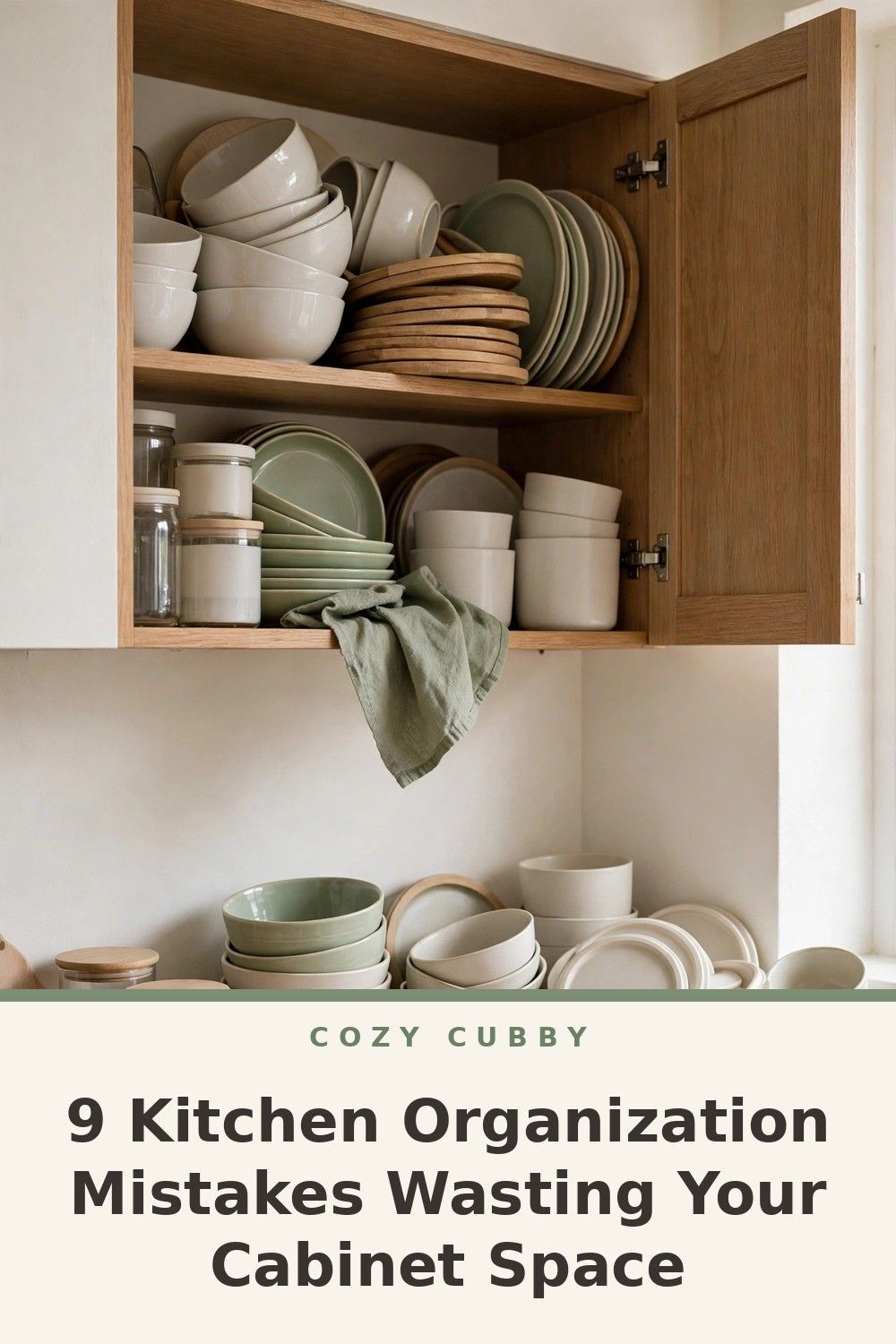
Most kitchens do not need more cabinets. They need the cabinets they have to stop working against them. A deep pile of pans, loose lids, and tall empty air above short jars can make a normal kitchen feel half its size.
Learning to spot kitchen organization mistakes wasting space is the fastest way to get room back without a remodel. Each mistake below names the waste and gives a simple fix using what you own first.
Work one cabinet at a time. Start with the one you open most, fix one mistake, and put everything back before you move on.
1. Stacking All Your Pots and Pans in One Deep Pile
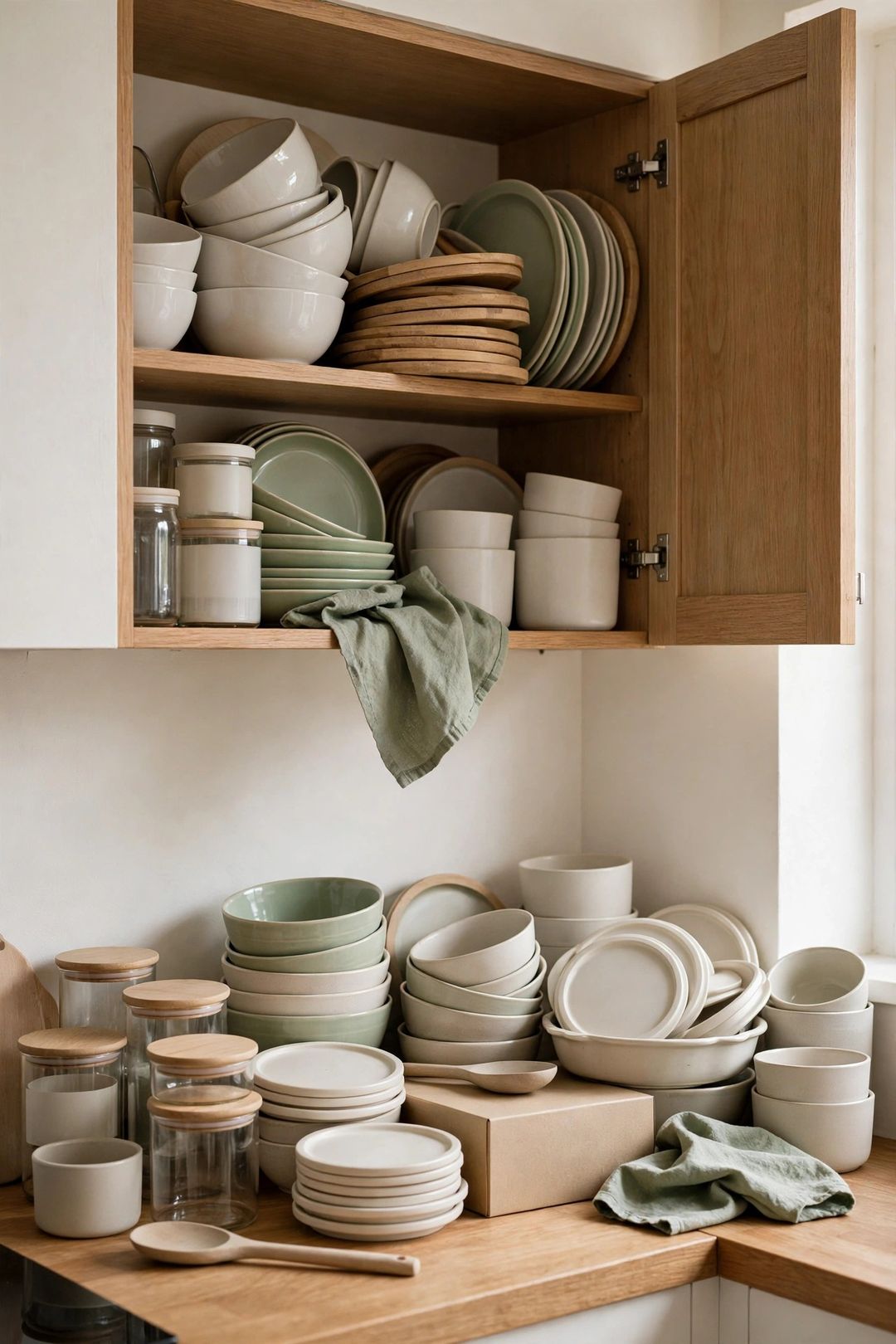
A tall stack looks tidy for a day, then it wastes space and time. Bottom pans get buried, the stack spreads wide, and corners sit empty while you lift three pans to reach one.
The fix: Split the pile or stand pans on edge. Use a rack to hold pans upright like files. Keep daily pans at the front, and move the rarely used roasting pan higher or lower.
2. Storing Lids Loose Across Every Shelf
Loose lids slide, stack badly, and take up flat space in three cabinets at once. One lid can block a whole shelf corner, and matching a lid to a pot becomes a daily hunt.
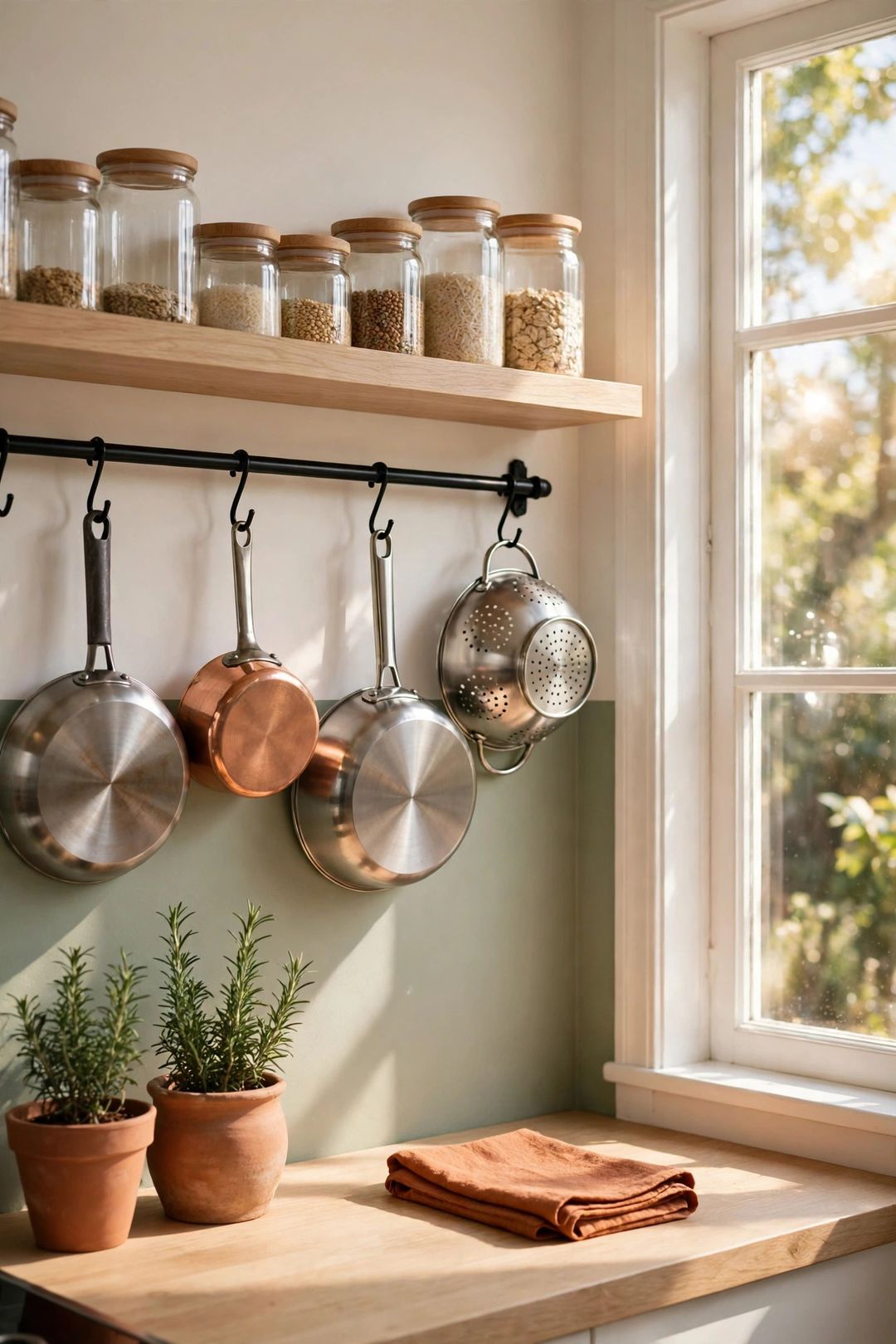
The fix: Give lids one home together. Stand them upright in a rack, a shallow bin, or on hooks inside a cabinet door. Store them next to the pots they fit, not with food or baking supplies.
3. Using Only the Bottom of Each Shelf
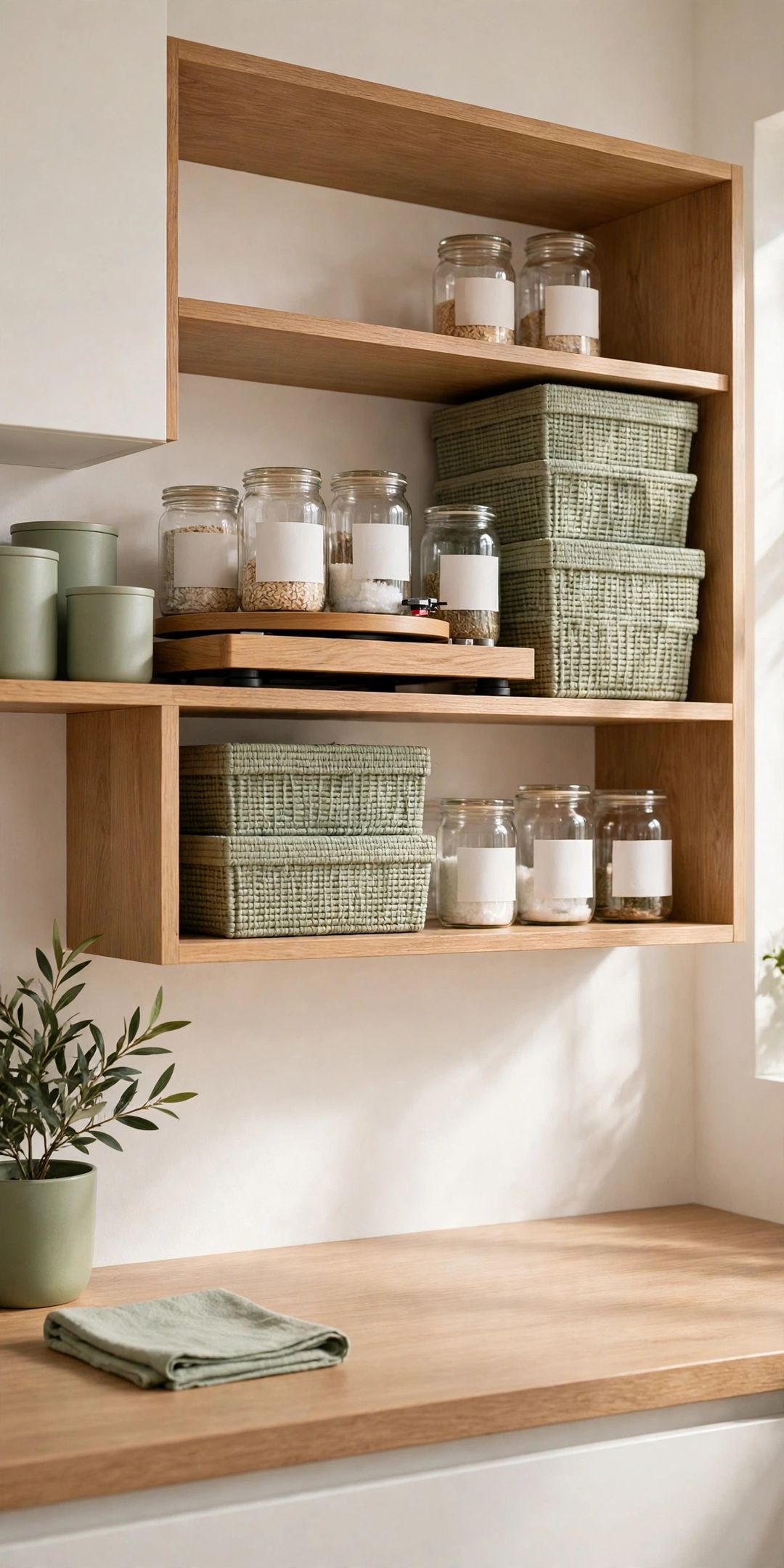
Most shelves have tall gaps above short items. If you only use the floor of the shelf, you waste the top half of the cabinet while the counter below stays crowded.
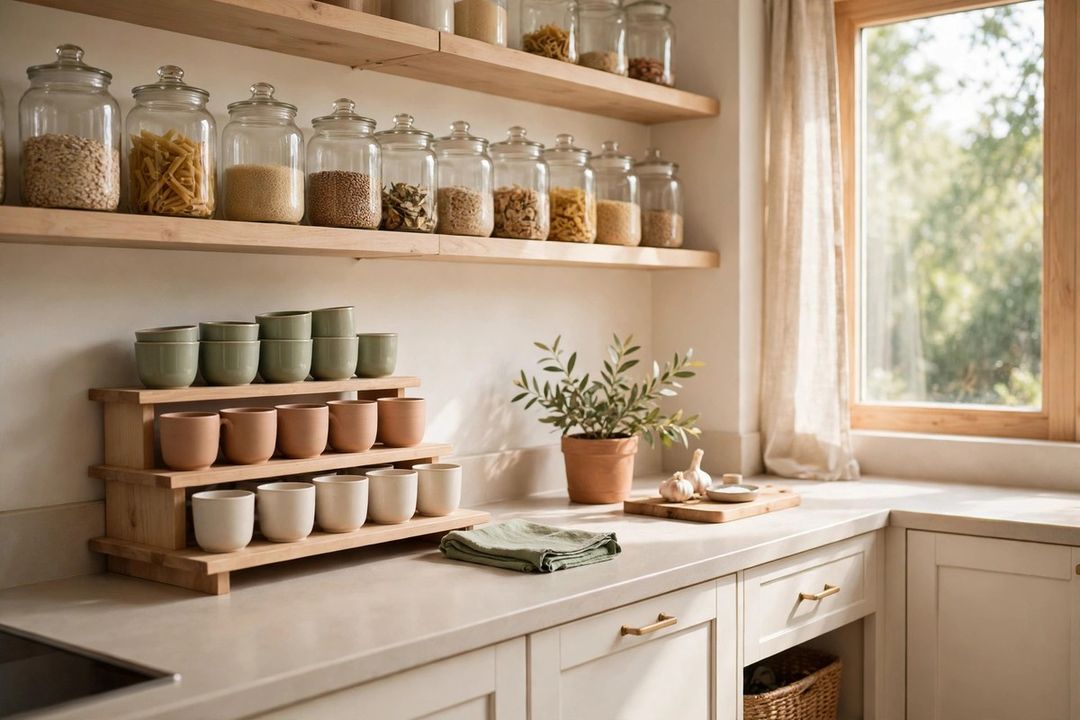
The fix: Add one level inside the shelf. A small shelf riser creates a second layer for cups, small bowls, or spice jars. Measure the height between shelves first, and leave room to lift items off without tipping them.
4. Mixing Food, Tools, and Cleaning Items Together
When pasta shares a cabinet with spray bottles and tools, nothing has a clear zone. Items land wherever there is a gap, duplicates get bought, and half-used bags hide behind boxes.
The fix: Give each cabinet one job. Keep food with food, daily tools near the stove, and cleaning items under the sink. Simple zones stop the shuffle and make empty space easy to see.
5. Pushing Items to the Back in Deep Double Rows
Deep cabinets invite a front row and a forgotten back row. The back row wastes the best space because you cannot see it or reach it, so food expires and tools sit unused.
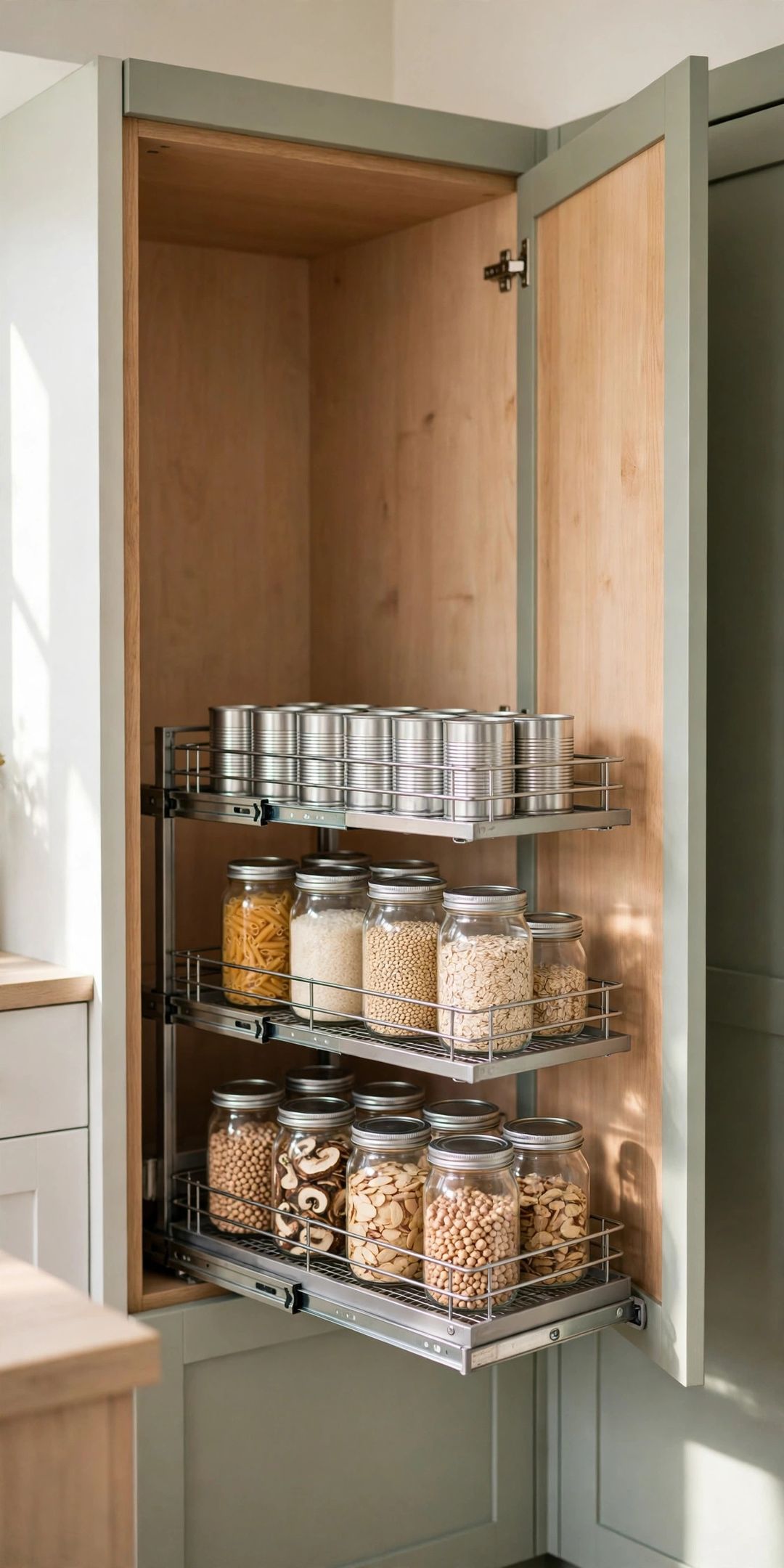
The fix: Store in a single row or use a pull-forward helper. Keep one row where you can, or place back items in a shallow bin or on a turntable. Put new items behind old ones so the oldest get used first.
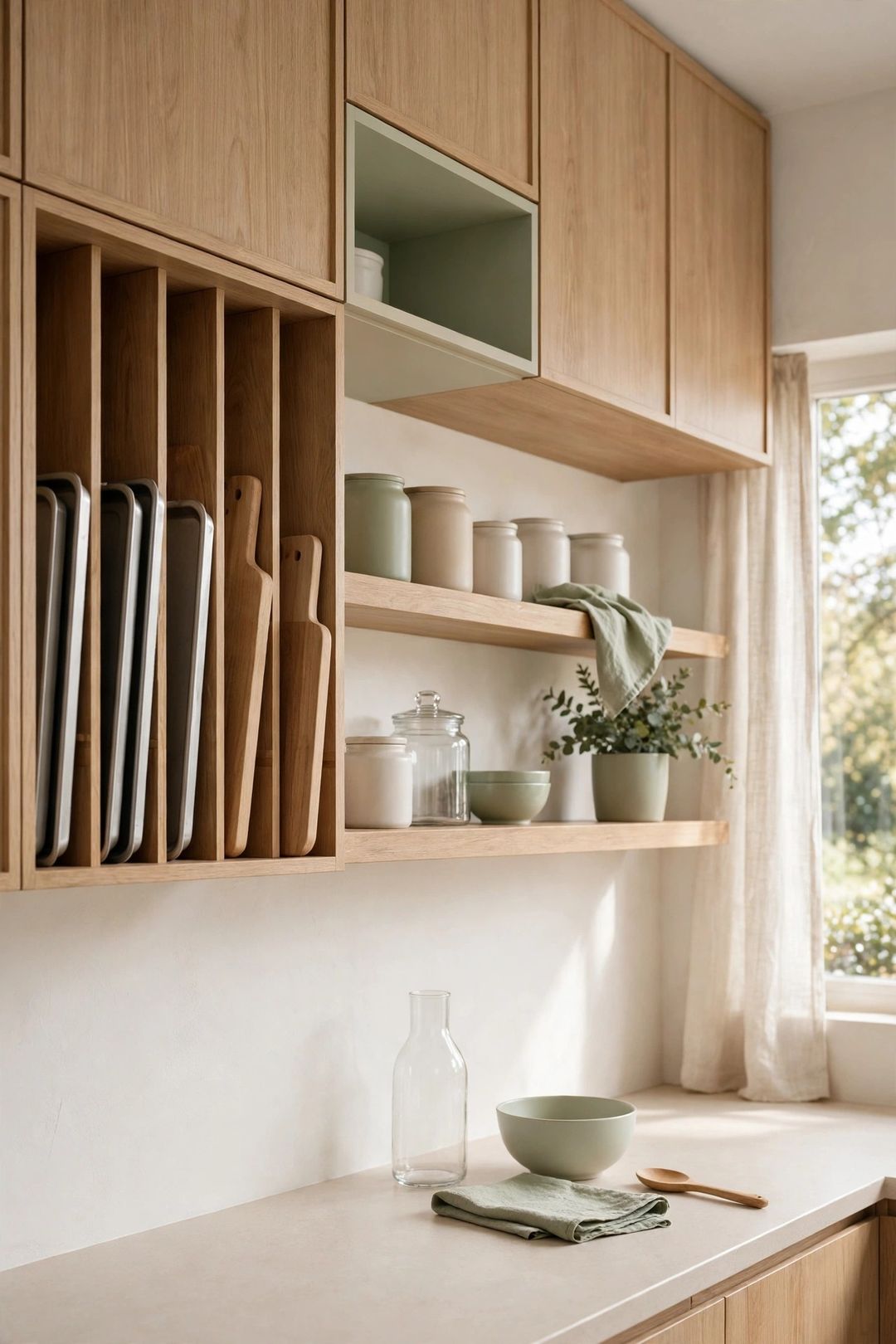
6. Laying Cutting Boards and Baking Sheets Flat
Flat boards and sheet pans take a wide footprint and form a slippery stack. The one you need is always at the bottom, and the stack claims a whole low cabinet that could hold much more.
The fix: Store boards and pans upright. Slide them on edge in a narrow cabinet, beside the oven, or in a rack with dividers. Upright storage uses inches of width instead of a full shelf, and you can pull one out alone.
7. Keeping Rarely Used Gadgets in Prime Cabinets
The waffle maker, the big blender base, and the holiday platter do not need the easiest cabinets. When rare items sit at eye level, daily plates and pans get pushed to hard-to-reach spots.
The fix: Move rare items up, down, or out. Put seasonal pieces on the highest shelf or in a labeled closet bin. Keep prime space for what you touch every day or every week.
8. Using Bins and Containers That Do Not Fit the Shelf
A bin that is too deep will not slide out. A bin that is too tall will not fit at all. Oversized containers waste corners, block the door, and end up stored somewhere else.
The fix: Measure first, then test one bin. Note shelf depth, width, and height, and choose square bins that line up without gaps. Clear bins help you see contents, and a front label keeps the zone clear.
9. Storing Items Far From Where You Use Them
Spices stored across the room from the stove and mugs stored far from the coffee maker waste steps and space. You end up keeping duplicates in two places just to save the walk.
The fix: Store each item at its point of use. Keep spices and oils near cooking, mugs near drinks, and lunch containers near the fridge. One home, close to the task, removes the need for a second stash.
What to Buy
An upright pan and lid rack, typically $12–$22. Pro: It turns a wide, heavy stack into a slim row you can pull from one at a time. Con: Very large pans may not sit well on smaller racks. Skip if: You own only two or three pans and a short stack already works.
A shelf riser, typically $10–$18. Pro: It doubles the usable layer inside a tall shelf without any tools. Con: It can crowd a shelf if the items on top are tall. Skip if: Your shelves are already close together with no spare height.
A clear shallow bin set, typically $14–$24. Pro: Shallow bins pull deep items forward and keep one zone together. Con: Bins too deep for the shelf can block the door. Skip if: Your cabinets are shallow and a single row already stays visible.
A turntable, typically $9–$15. Pro: It brings back-row bottles and jars to the front with a spin. Con: The round shape leaves some corner space unused. Skip if: Your shelf is too narrow for it to turn freely.
Mistakes to Avoid
- Buying organizers before you clear out. New bins around old clutter just hide the waste. Remove what you do not use first.
- Keeping loose lids everywhere. One upright home for lids frees flat space in several cabinets at once.
- Filling every inch. A cabinet packed edge to edge has no room to pull items out. Leave a little working space.
- Storing boards and pans flat. A flat stack claims a whole shelf. Upright storage uses only a few inches of width.
- Giving prime space to rare gadgets. Daily items belong at easy reach. Rare items can live high, low, or outside the kitchen.
Frequently Asked Questions
Which cabinet should you fix first?
Start with the cabinet you open most, often the one with daily pans, plates, or food. One fixed cabinet gives a quick win and shows the waste in the others.
How do you store lids if you have no room for a rack?
Use hooks inside a cabinet door, or stand lids in a shallow box. The key is one upright spot for all lids, not the holder you choose.
Do you need to buy organizers to fix these mistakes?
No. Most fixes start with moving, grouping, and standing items upright. Buy a helper only when a zoned, cleared cabinet still does not work.
What should go on the highest shelves?
Light, rarely used items belong up high: seasonal platters and special baking pans. Keep heavy, daily items between waist and eye level, where they are safe to reach.
Your kitchen can hold more once wasted corners, air, and back rows are back in use. Save this post to your Kitchen Organization board on Pinterest to work through the nine fixes cabinet by cabinet.