Rentals, older homes, and small apartments often come with a surprise: a kitchen with one drawer, or none at all. Cutlery, utensils, and linens end up piled on the counter or stuffed into a single crowded cabinet.
These kitchen storage ideas no drawers homes need give every drawer item a new home. Instead of one deep drawer, you will spread storage across walls, doors, shelves, and rolling pieces, so each tool sits where you actually use it.
Start by listing what your missing drawers would have held: cutlery, utensils, linens, wraps, and small tools. Then match each group to one idea below.
1. Hang a Wall Rail for Cooking Utensils
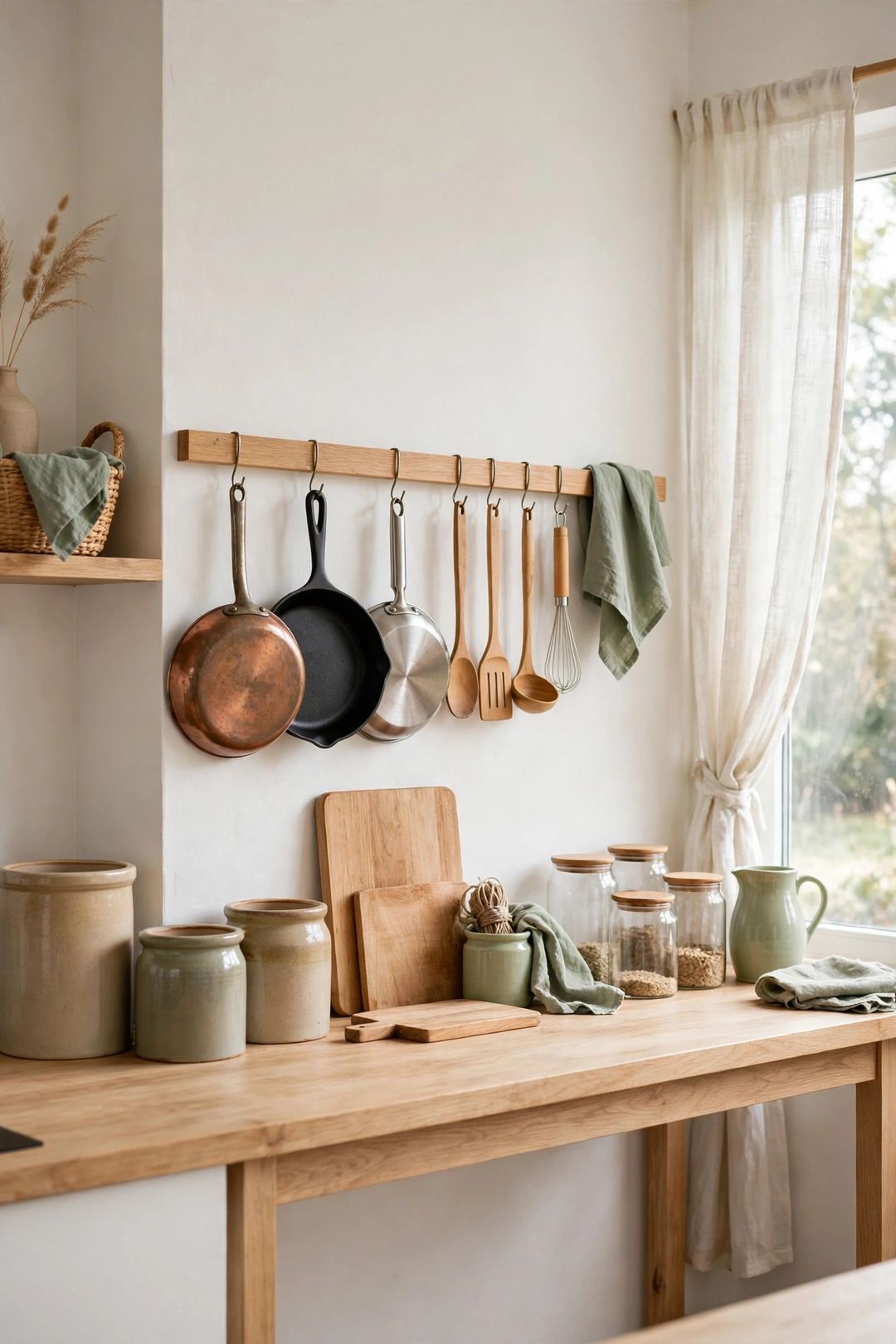
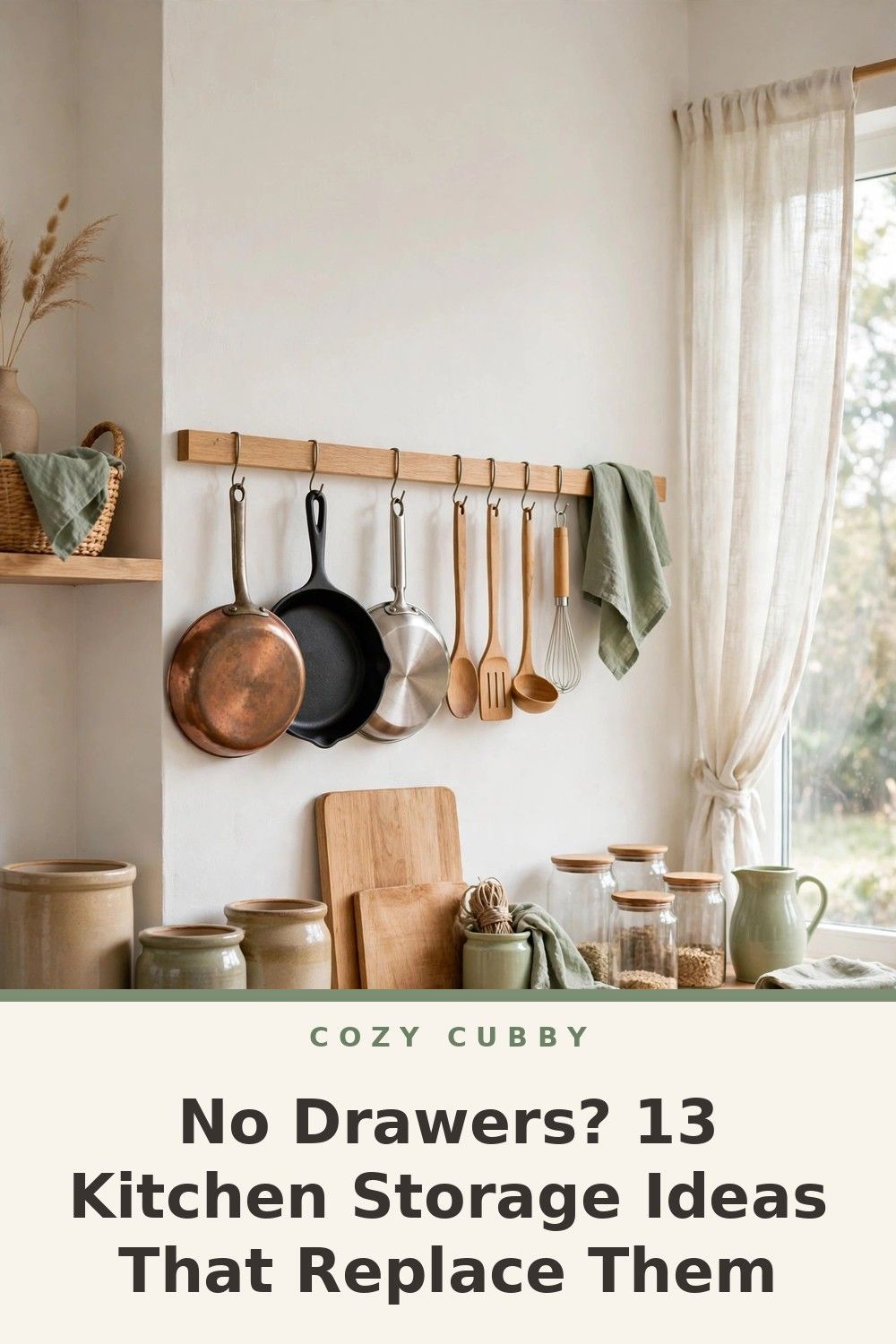
Put the wall by the stove to work. A simple rail with hooks holds ladles, spatulas, tongs, and whisks in one visible row, right where you cook. Space the hooks so each tool lifts off cleanly with one hand instead of tangling with its neighbors.
2. Add a Magnetic Strip for Knives and Tools
Store knives flat against the wall. A magnetic strip holds knives, kitchen scissors, and other metal tools on an unused wall section. It frees a whole cutlery drawer and keeps blades visible. Mount it away from the sink splash zone and clear of counter clutter below.
3. Use a Countertop Utensil Crock
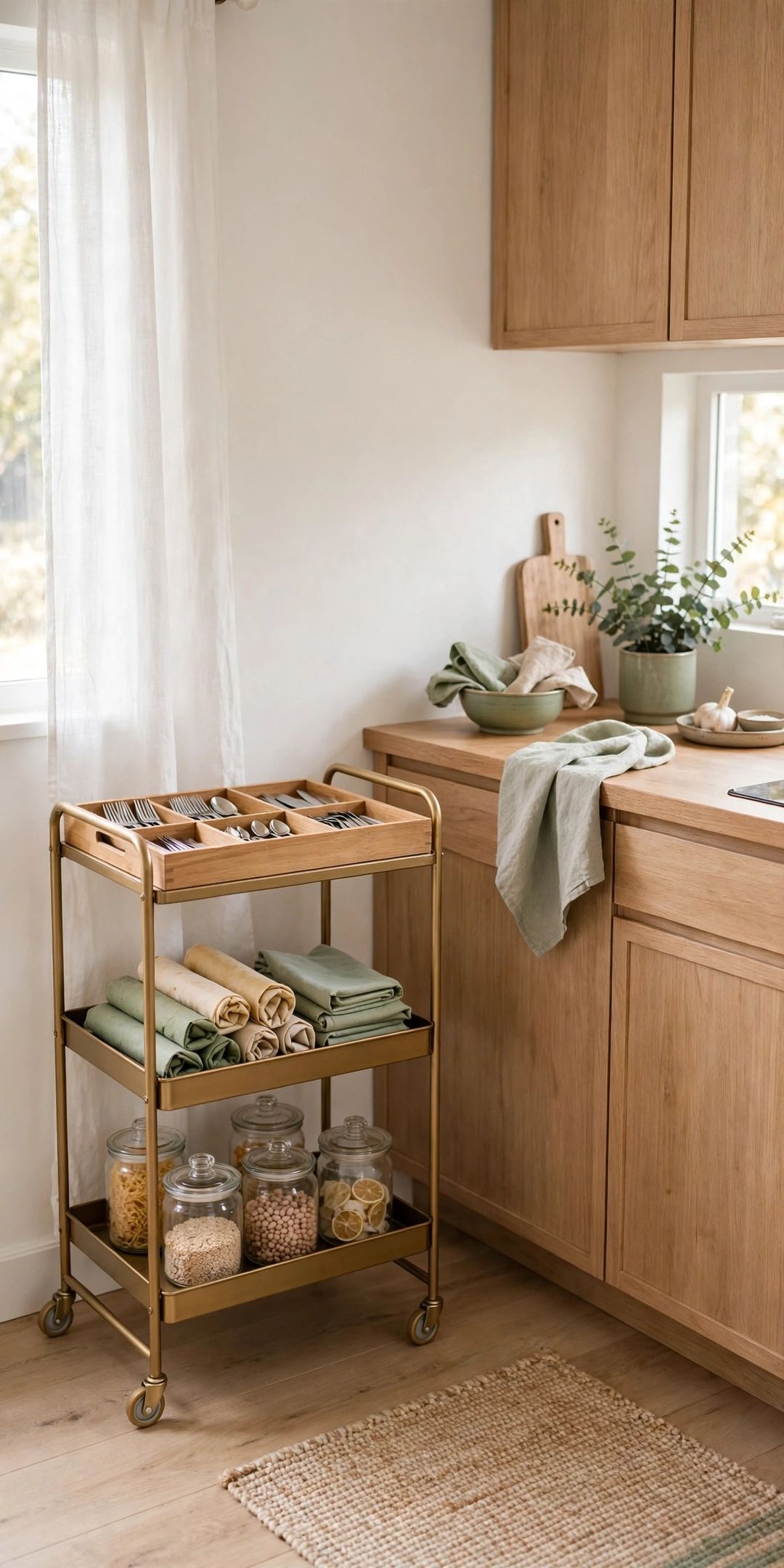
Keep daily tools upright in a crock. A sturdy crock or wide jar beside the stove holds the five or six utensils you use every day. Upright storage takes little counter space and needs no installation. If a tool does not fit without forcing, move it to a rail or bin instead.
4. Stand Cutlery Upright in Divided Jars
Replace the cutlery drawer with jars. Tall jars, canisters, or a divided caddy can hold forks, knives, and spoons upright, sorted by type. Set them on a shelf, counter, or cart near where you set the table, with dividers so you can grab a fork without sorting a mixed jar.
5. Roll In a Slim Kitchen Cart
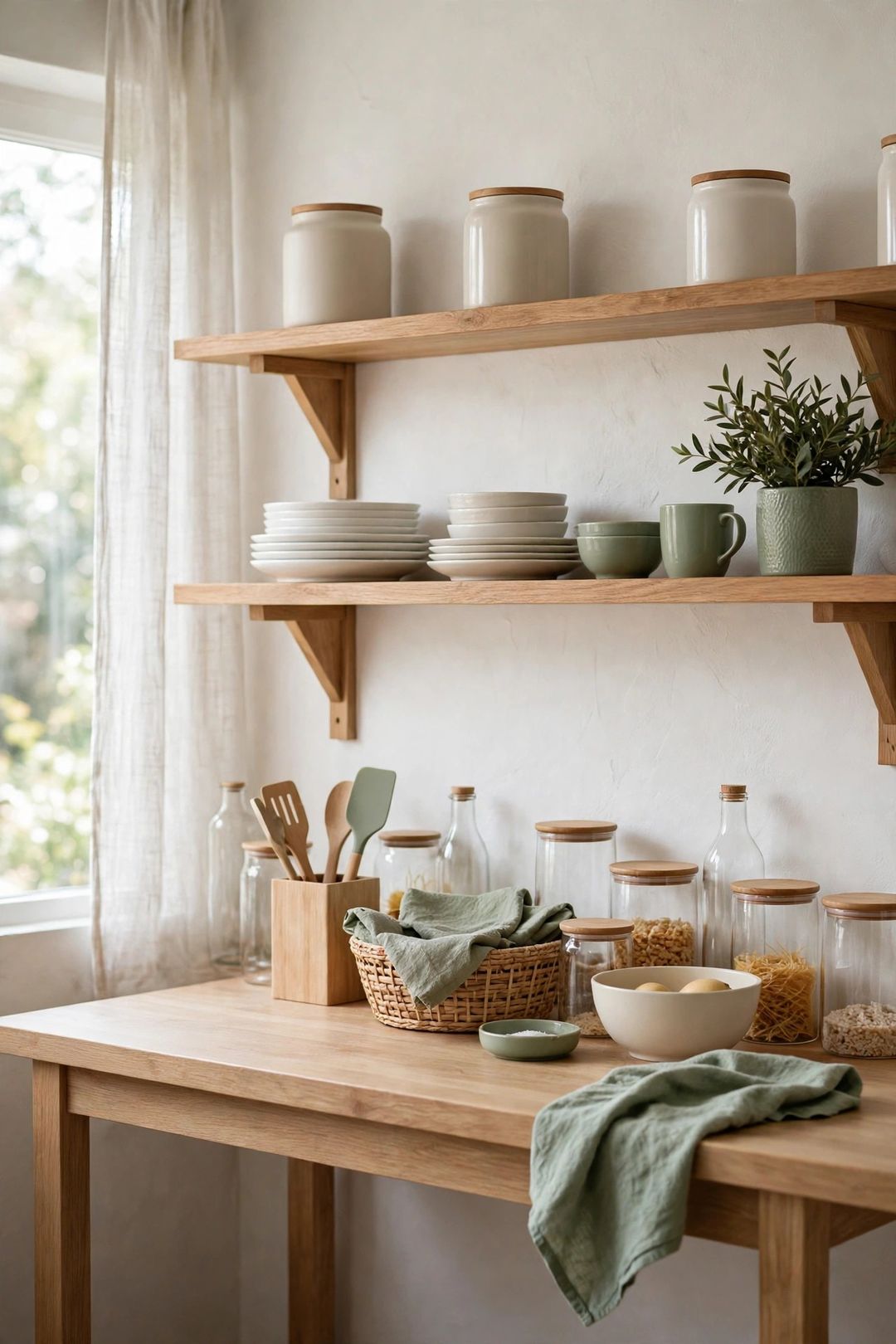
Add the drawers you are missing, on wheels. A rolling cart with shelves or shallow drawers acts as portable drawer storage. Give each tier one job — cutlery on top, linens in the middle, tools below — so it does not become a rolling junk drawer.
6. Use Shelf Bins as Pull-Out Drawers
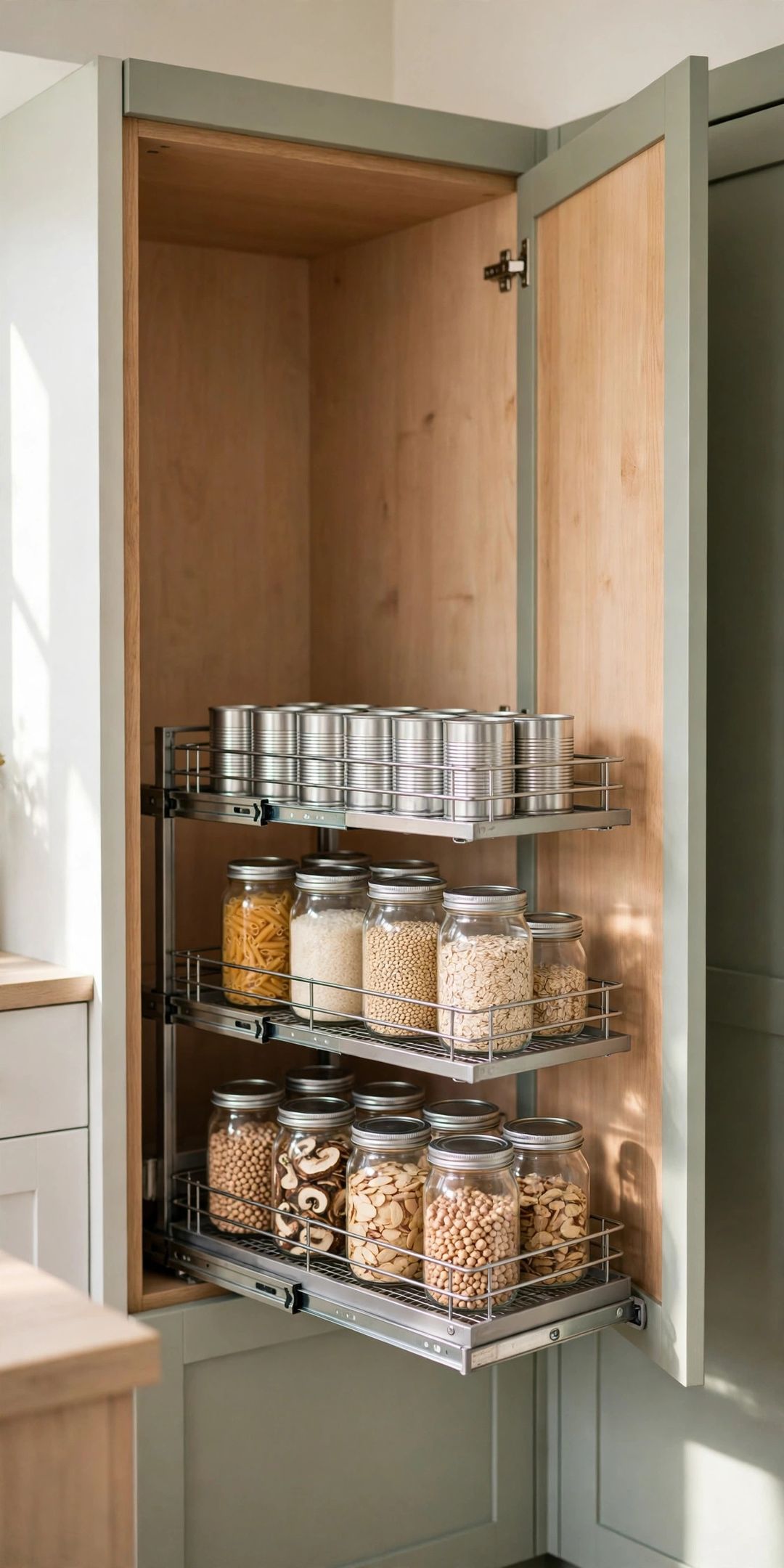
Turn cabinet shelves into drawers with bins. Open bins or low baskets on a cabinet shelf work like pull-out drawers: grip the front, slide the bin out, take what you need. Label the front of each bin, and keep bins shallow enough that utensils, wraps, and small tools sit in one layer.
7. Hang an Over-Door Rack for Wraps and Linens
Use the back of a door. An over-door rack on a pantry or cabinet door holds foil, wrap, bags, and folded linens flat against a surface that is normally wasted. Keep it to light, flat items so the door swings smoothly and nothing heavy bounces as it opens.
8. Store Linens in a Basket on a Shelf
Roll towels instead of folding them flat. Rolled dish towels and cloths stand neatly in a basket or open bin on a shelf. Rolling shows every towel at once and uses vertical space better than a flat stack.
9. Mount a Rail or Rack for Pots and Pans
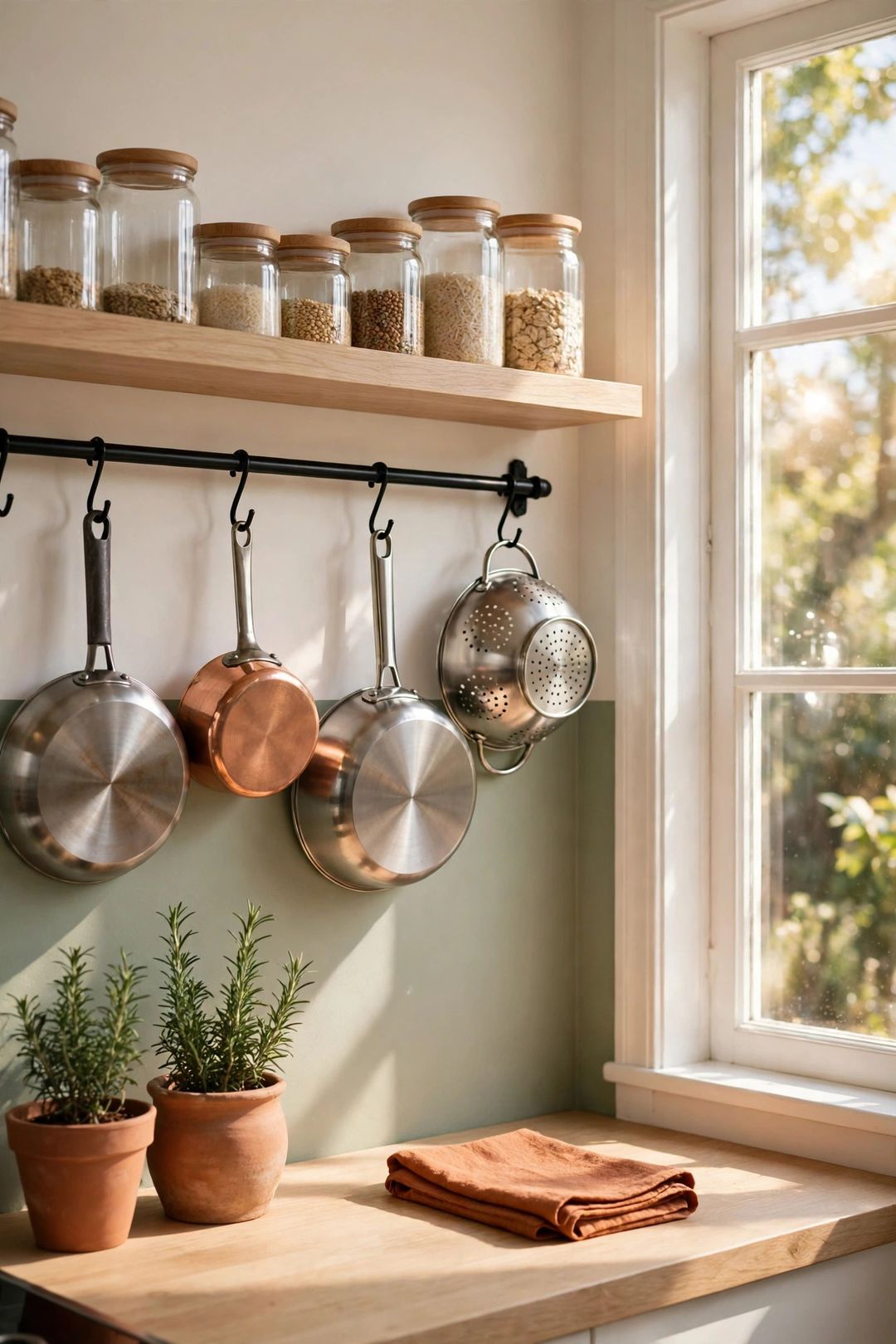
Get bulky pans out of cabinets. A wall rail or ceiling rack holds pots, pans, and lids that often crowd the cabinet where drawer items could go. Hanging them frees shelf space for bins and caddies. Hang daily pans at the easiest height and special pans higher.
10. Use a Tiered Stand for Spices and Small Jars
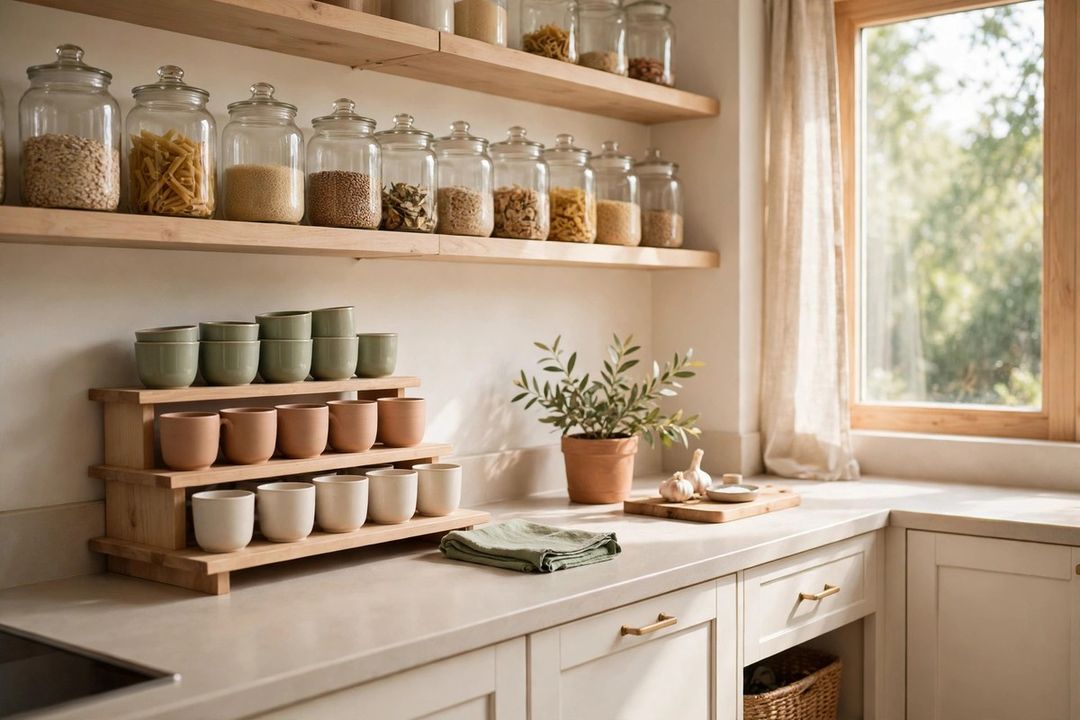
Replace the spice drawer with tiers. A small tiered stand on the counter or in a cabinet lifts back-row spices into view, doing the sorting job a shallow drawer used to do. Keep it by the stove or prep area, in one layer you can read at a glance.
11. Add Hooks Under Cabinets and Shelves
Use the underside of everything. Hooks under a cabinet or shelf hold mugs, measuring cups, and small utensils, often right above the work surface. Check clearance first, so items clear the counter and do not block your hands.
12. Keep a Prep Caddy You Can Carry
Group small tools in a handled caddy. Peelers, openers, measuring spoons, and other small tools can live in a handled caddy that moves from shelf to counter as one piece, replacing the classic junk drawer. Edit it often: if a tool goes unused for months, move it to backstock.
13. Use a Bookshelf or Hutch as Open Storage
Borrow furniture from another room. A narrow bookshelf or hutch against a kitchen wall can hold bins, jars, linens, and tools in clear zones, doing the work of several drawers. Zone each shelf — cutlery on one, linens on another, backstock on top.
What to Buy
A wall rail with hooks, typically $15–$30. Pro: It holds many utensils in a thin strip of wall. Con: It needs secure mounting. Skip if: You cannot put holes in your walls.
A magnetic knife strip, typically $15–$35. Pro: It stores knives flat and visible with no counter space. Con: It only holds metal items. Skip if: Your knives already live safely in a block you like.
A rolling kitchen cart, typically $40–$90. Pro: It adds shelves or drawers you can move. Con: It needs floor space and a clear path. Skip if: Your kitchen has no gap or wall space to park one.
Open shelf bins, typically $8–$20 each. Pro: They turn any shelf into pull-out storage. Con: Open tops collect dust. Skip if: Your cabinets are already shallow and fully zoned.
An over-door rack, typically $18–$35. Pro: It adds flat storage without using a shelf. Con: It can rattle if overloaded. Skip if: Your doors close too tightly for the hooks.
Mistakes to Avoid
- Piling everything on the counter. Counter storage should hold daily tools only, or the work surface disappears under jars and caddies.
- Buying storage before sorting. Sort utensils, cutlery, and linens into groups first, then buy the rail, bin, or cart each group needs.
- Mixing every tool in one big bin. One deep mixed bin is just a drawer with worse access. Keep groups small and labeled.
- Ignoring walls and doors. In a drawer-free kitchen, vertical surfaces are your biggest storage. Leaving them empty wastes the fix.
- Blocking cabinets with a cart. Park rolling storage where it does not stop nearby doors from opening fully.
Frequently Asked Questions
Where do I put cutlery without a drawer?
Stand cutlery upright in divided jars or a sectioned caddy on a shelf, counter, or cart. Sorting by type in separate sections keeps it just as easy to grab as a cutlery tray.
How do I store utensils in a rental without drilling?
Use a countertop crock, a rolling cart, shelf bins, and over-door racks. These cover most utensils and tools with no holes, and they move with you when you leave.
What replaces a junk drawer?
A small handled caddy or one shallow shelf bin works best. Limit it to tools you use weekly, and edit it often so it does not grow into the same clutter in a new shape.
How much counter storage is too much?
If you cannot set down a cutting board and a bowl with room to work, too much has moved onto the counter. Shift the least-used group to a wall rail, door rack, or cart shelf.
A kitchen without drawers is not a kitchen without storage — it just stores in the open instead. Pick two or three ideas to start. Save this post to your Kitchen Organization board on Pinterest so the full list is handy when you set up your space.