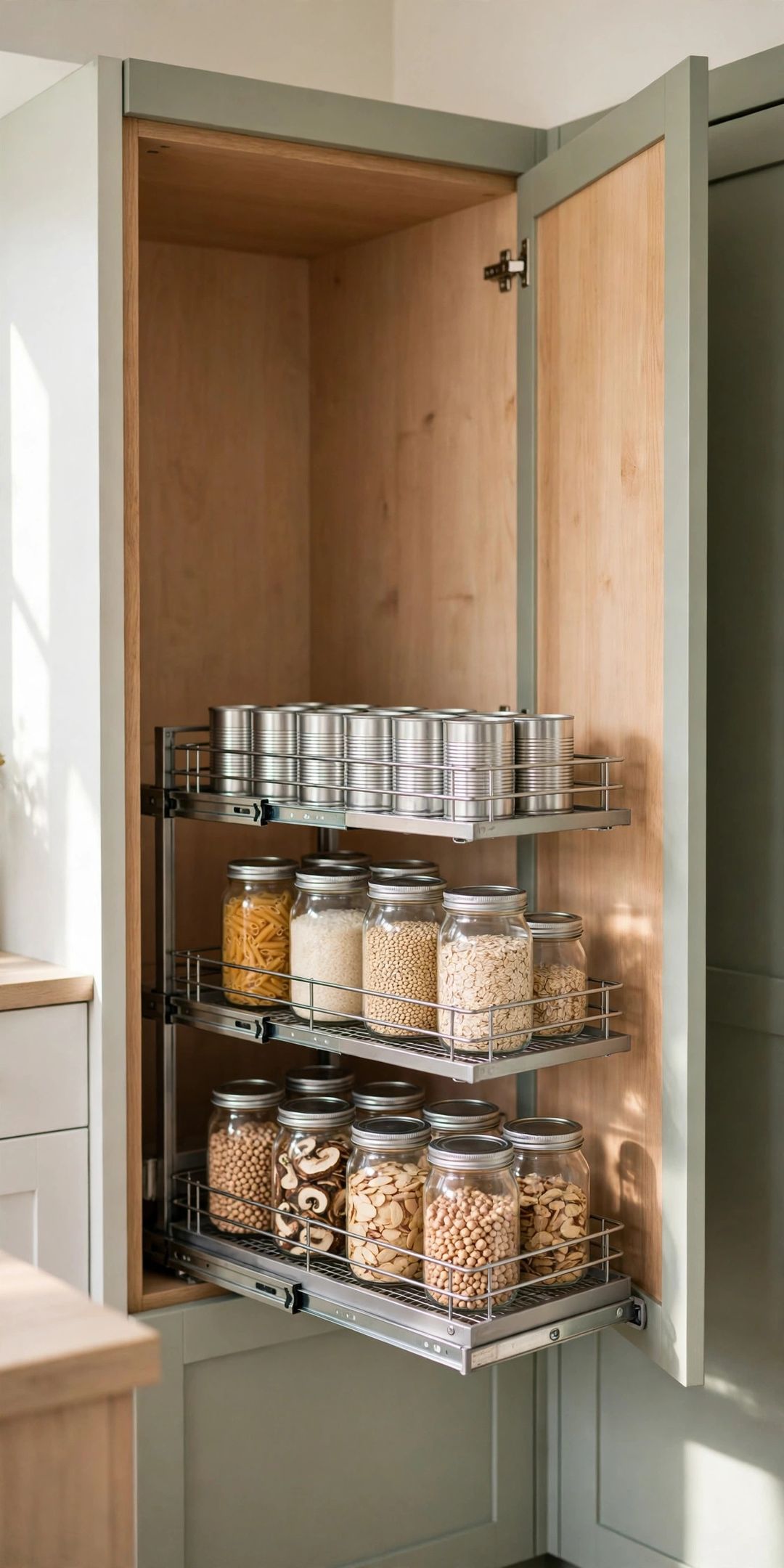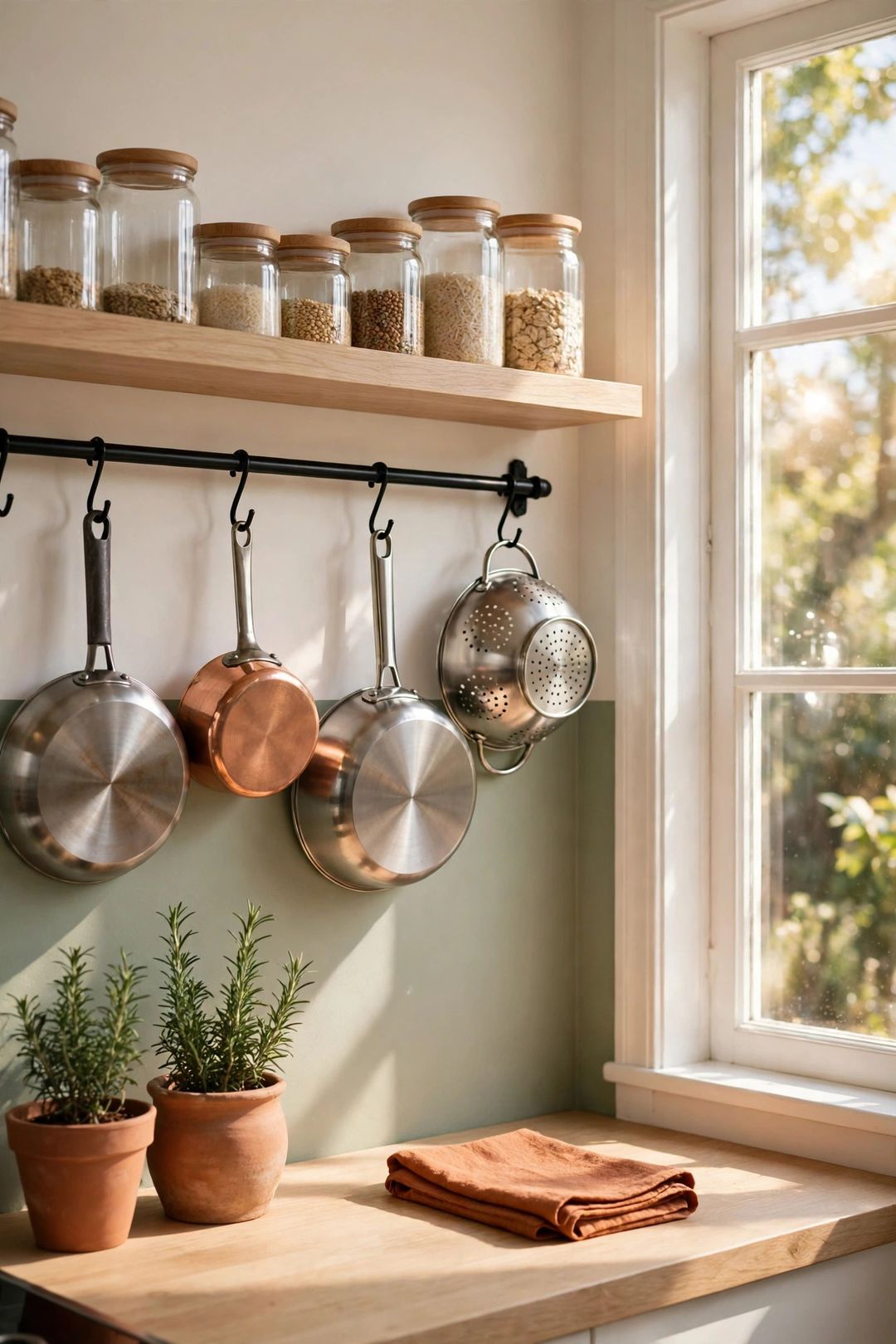
A countertop knife block takes up prime space, holds only the slots it came with, and can be hard to clean inside. For a small kitchen, that footprint is often the first thing worth reclaiming.
These knife storage ideas no block cover nine options grouped by where they live: inside a drawer, on the wall, or next to the drawer. Every option keeps blades covered, slotted, or held in place — never loose among other utensils.
Before choosing, count the knives that need a home, measure the widest blade and longest handle, and check drawer depth or wall space. One safety rule applies to all nine: store knives where children cannot reach them.
In-Drawer Options
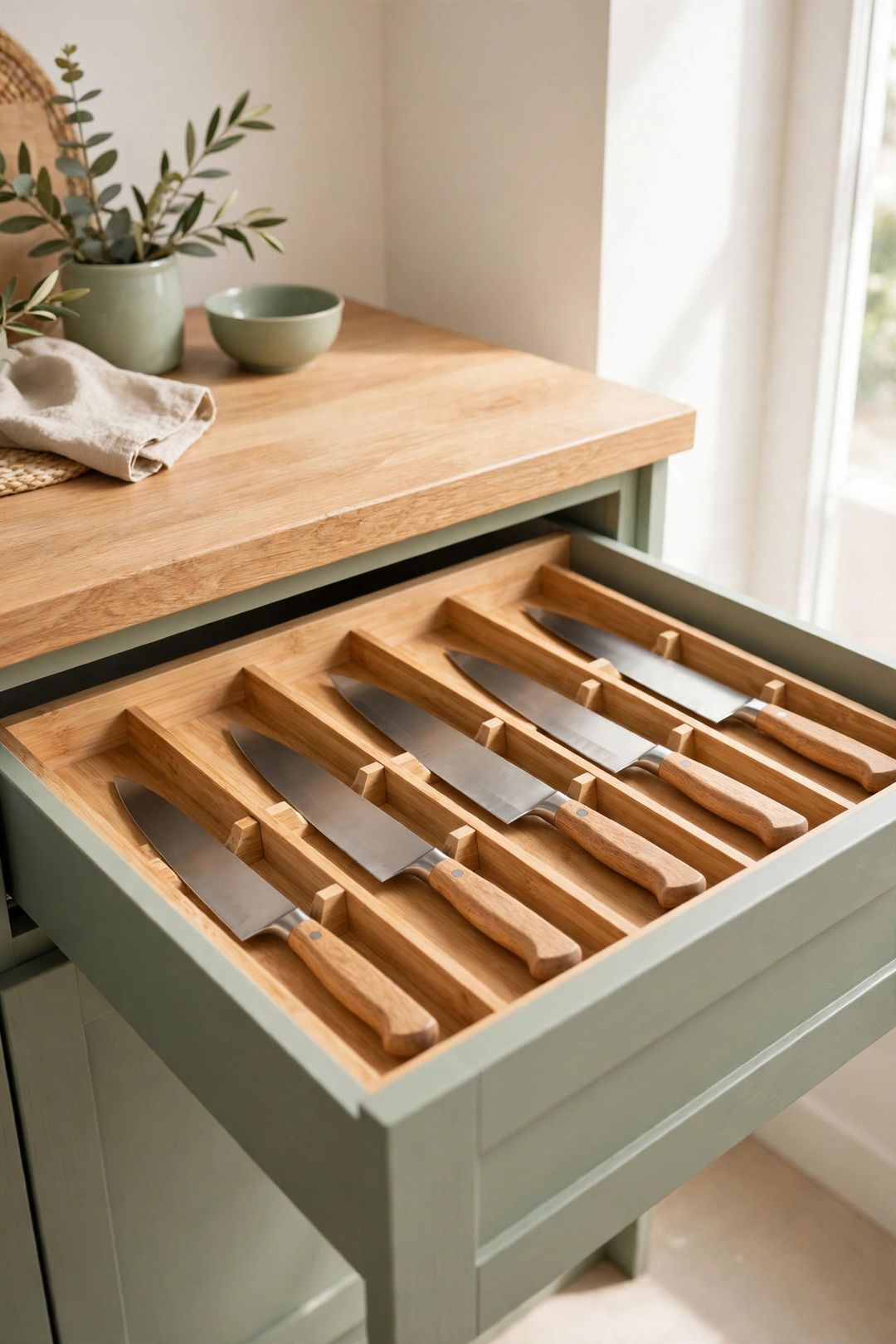
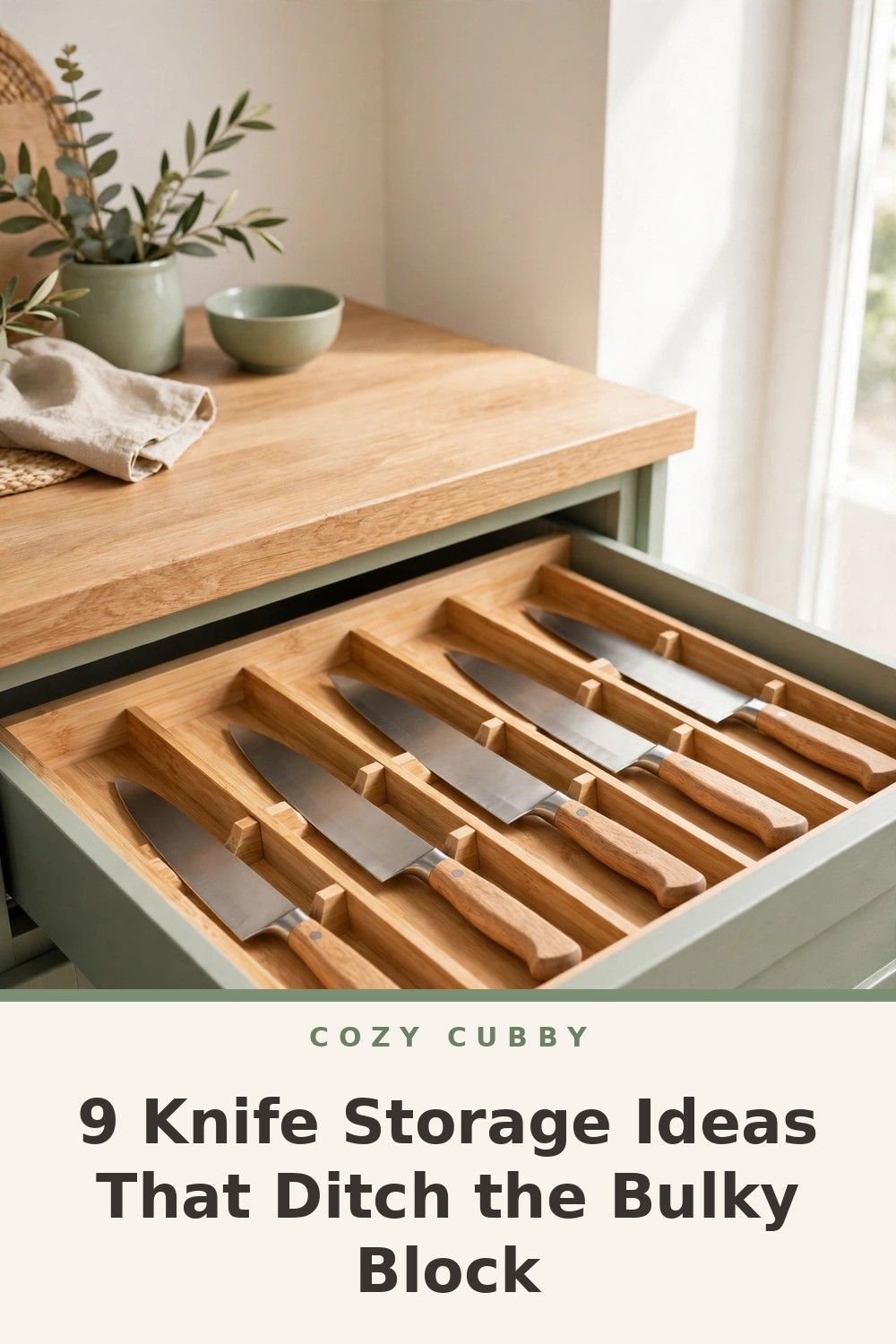
1. Slotted in-drawer knife tray. A low tray with shaped slots lies flat inside a standard drawer, with each blade resting in its own groove and the handle easy to grip. Wood and plastic versions exist in several widths. Measure drawer depth first, and leave the tray in one fixed drawer so everyone knows where blades live.
2. In-drawer knife dock with soft slots. A dock uses cork or flexible slats that grip blades of mixed sizes without fixed slot shapes, so odd knives fit more easily. It suits a varied collection. The soft material can wear around the most-used slots over time, so check grip regularly and keep the dock dry.
3. Angled slot insert, or drawer block. This insert raises handles at an angle inside a deep drawer, much like a countertop block laid down. It holds many knives in a small footprint but needs more drawer depth than a flat tray. Confirm clearance with the drawer closed before buying, handles included.
On the Wall: Magnetic Strips
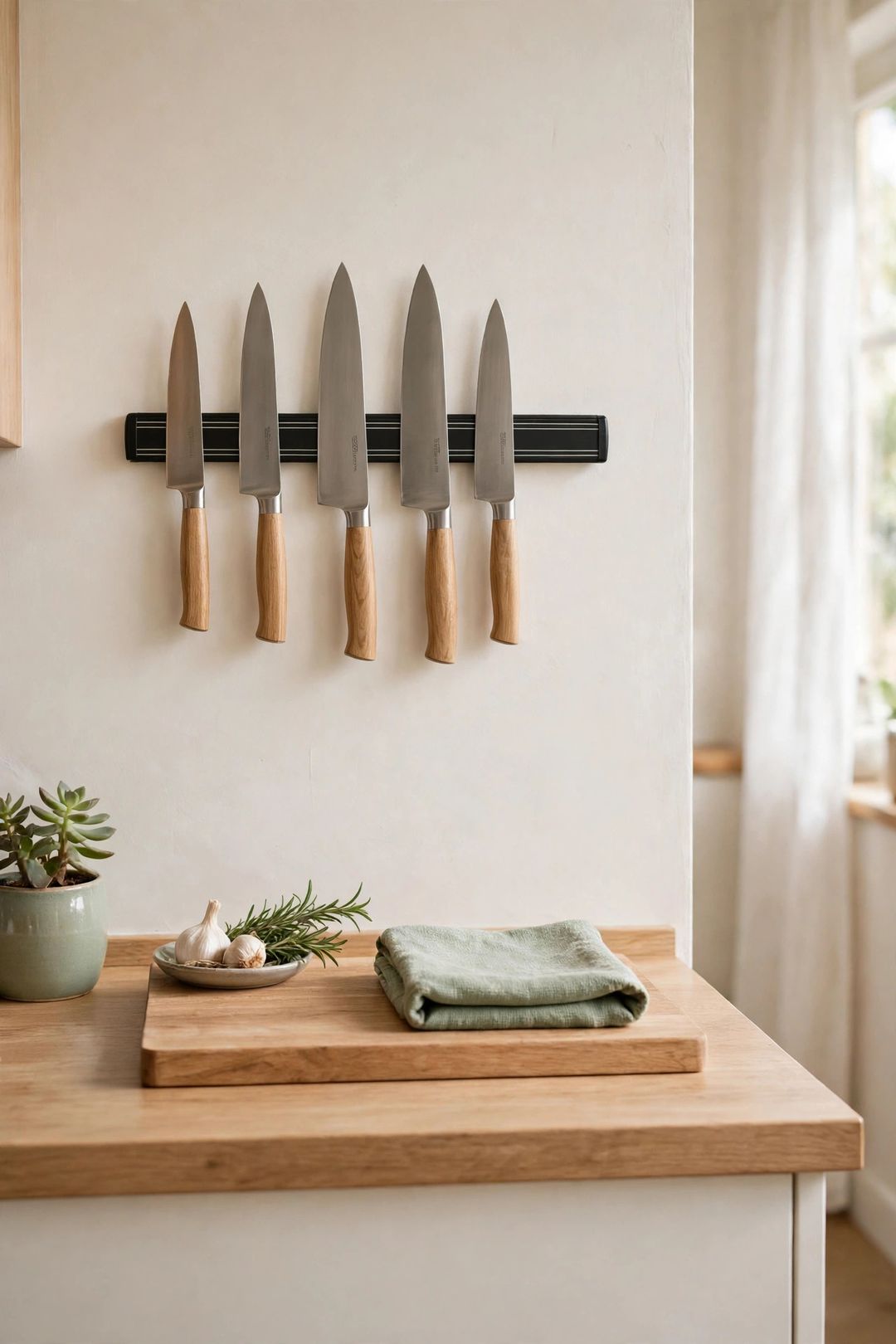
4. Wood magnetic strip. A wood-faced strip mounts on the wall and holds blades flat by their sides, freeing both counter and drawer. The wood face is gentler on blade edges and suits most kitchen styles. Mount it high enough that handles sit well out of reach of small children, and away from the sink splash zone.
5. Metal magnetic strip. A stainless or coated metal strip works the same way, with a slimmer profile and a surface that wipes clean fast. Bare metal can scratch blade sides if knives are dragged sideways, so lift each knife straight off instead of sliding it. Check magnet strength suits heavier knives before mounting.
6. Magnetic strip inside a cabinet door. Mounting a short strip on the inside of a cabinet door keeps knives hidden, covered by the closed door, and off the counter. It needs a solid door with enough depth that blades clear the shelves inside. This spot also keeps knives out of sight and reach when the door stays shut.
Drawer-Adjacent & Other Options
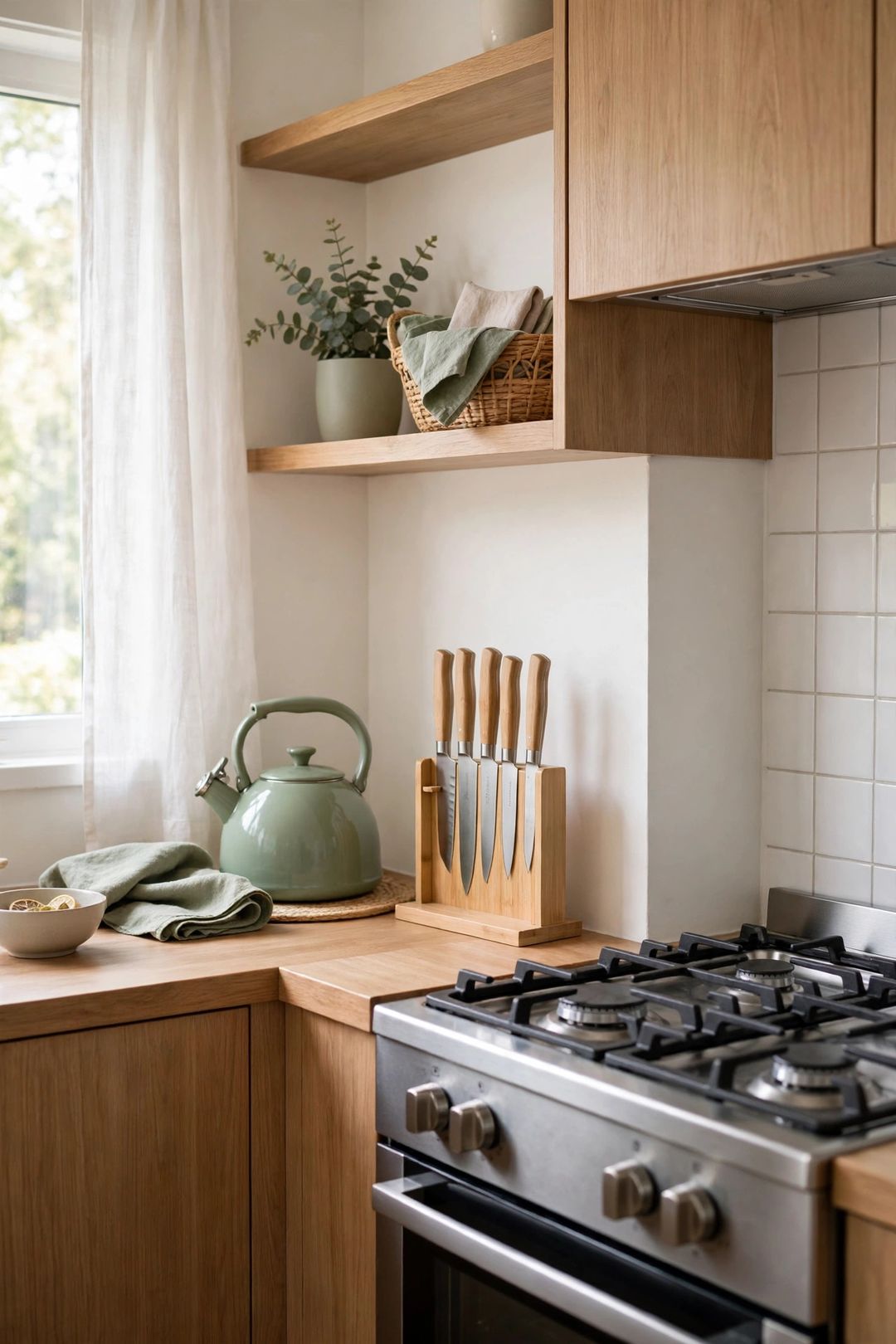
7. Slim countertop dock with a narrow footprint. For kitchens with no spare drawer, a slim dock holds a few knives in a fraction of a block's width, often against the backsplash. It suits a small core set only. Keep it pushed back on the counter, handles facing forward, and well away from the counter edge.
8. Knife roll or zip case. A fabric or leather roll wraps each blade in its own pocket, then rolls or zips closed for storage in a drawer, cabinet, or bag. It protects edges well and suits knives used less often, or sets that travel. Unroll it on a clear surface, and close each pocket before moving it.
9. Individual blade guards with drawer storage. Hard sheaths or blade guards snap or slide over each blade, so knives can lie in a drawer without edges touching each other or hands. Label or color-code guards if several look alike. This is the only safe way to store knives loose in a drawer — uncovered blades should never sit there.
What to Buy
A slotted in-drawer knife tray, typically $20–$40. Pro: It uses existing drawer space and keeps every blade in its own slot. Con: Fixed slots may not match unusual blade shapes. Skip if: No drawer is deep or wide enough to hold one.
A magnetic wall strip, typically $25–$50. Pro: It frees counter and drawer space and keeps knives visible. Con: It needs solid wall mounting and careful placement around children. Skip if: Walls are tile that cannot be drilled or knives must stay hidden.
A set of blade guards or sheaths, typically $10–$20. Pro: Guards are cheap, fit almost any blade, and make drawer storage safe. Con: Each guard must be removed and replaced at every use. Skip if: A slotted tray already covers every knife in the set.
A knife roll or zip case, typically $20–$45. Pro: It protects a full set in one compact, portable bundle. Con: It is slower to open than a drawer or strip. Skip if: Knives are used many times a day and need instant access.
Mistakes to Avoid
- Storing knives loose in a junk drawer. Uncovered blades dull against other items and cut hands that reach in. Use slots, a dock, or guards every time.
- Mounting a strip too low. A magnetic strip within reach of small children is a hazard. Place it high, with handles well above counter reach.
- Sliding knives sideways off a strip. Dragging a blade across metal can scratch and dull it. Lift straight out, then turn the knife away.
- Buying before measuring. Drawer depth, blade length, and handle height decide what fits. Measure all three before choosing any option.
- Washing and storing knives wet. Moisture trapped in slots, docks, and sheaths can damage handles and blades. Dry each knife fully before putting it away.
Frequently Asked Questions
Is a magnetic strip bad for knife blades?
A strip holds the flat side of the blade, not the edge, so normal use does not dull it. Damage comes from dragging or twisting a knife off the magnet. Place and remove each knife straight, edge facing away from the hand.
What is the safest option with young children at home?
A slotted tray in a latched drawer, or a strip mounted well out of reach, are the most practical choices. A strip inside a latched cabinet door adds another barrier. Avoid low countertop docks until children are older.
Can knives go in a regular utensil drawer?
Only with every blade covered by a guard or held in a tray or dock. Loose, uncovered knives mixed with spoons and tools are the setup most likely to cause a cut or a damaged edge.
How should knives be cleaned before storing?
Wash by hand, dry fully with a towel straight away, then store. Letting knives air-dry in a dock or sheath traps moisture against the blade and handle, so the dry step matters as much as the wash.
Pick the option that fits the drawer, wall, and routine already in place, and set it up once, properly. Save this post to your Kitchen Organization board on Pinterest so the nine options are handy when you shop.