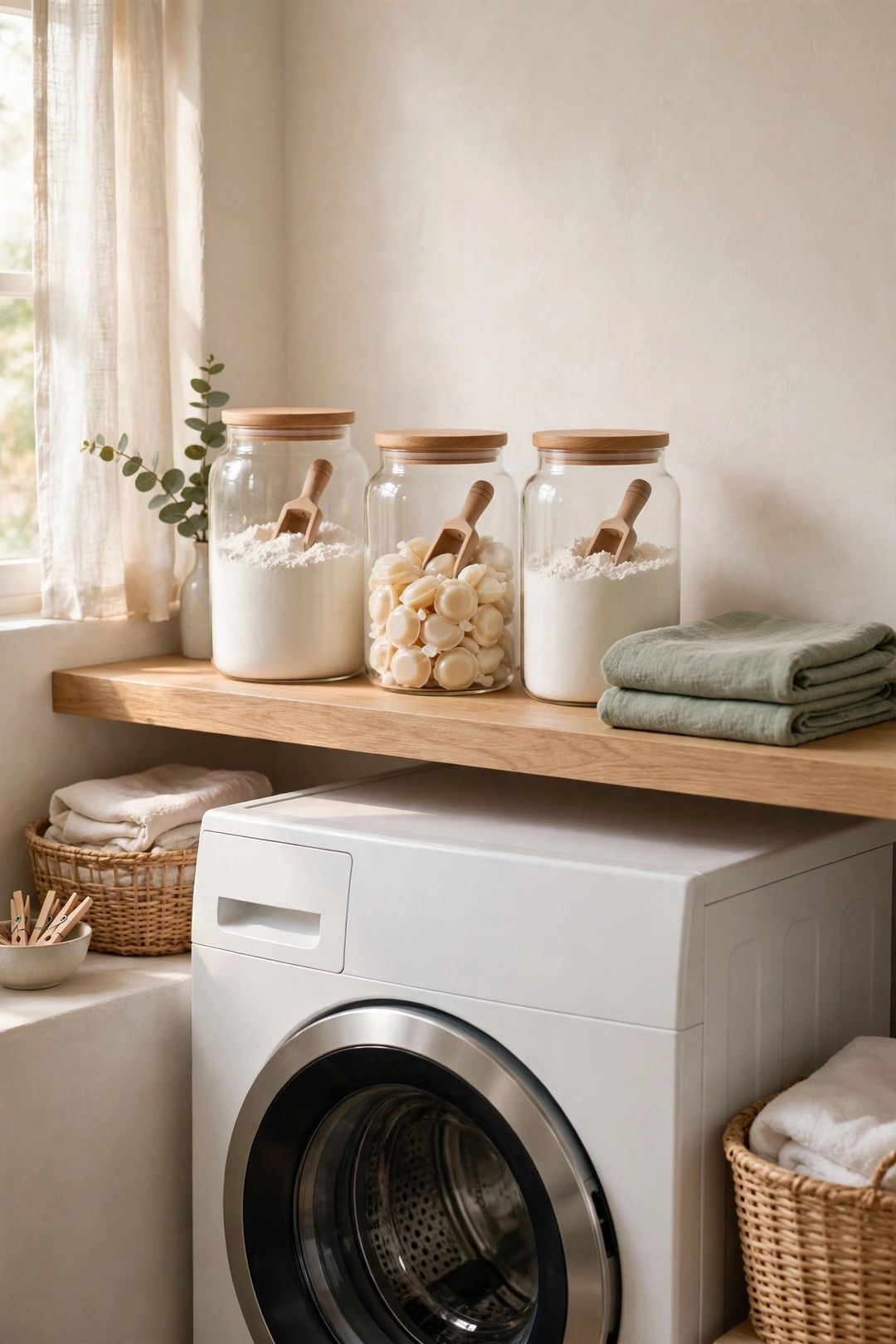
Bulk detergent boxes and big jugs are hard to pour, hard to store, and quick to spill. Decanting moves a working amount into smaller jars and bottles that fit the shelf and feel easier to use on wash day.
These laundry detergent decanting station ideas set up one small station with eight simple systems — a place for powder, liquid, pods, and stain care, each one labeled and easy to refill. Pick the systems that match the products you actually use.
Safety note: Keep all detergents and pods out of children's reach. Never store pods in food-look jars where a child could mistake them for candy or food. Keep the original packaging or its label information, and label every decanted container clearly with the product name.
1. Glass Jars for Powder and Powder Boosters
Wide-mouth glass jars suit powdered detergent and powder boosters because a scoop fits easily and the level is visible at a glance. Choose jars with snug lids to keep moisture out, and keep a small scoop on top or inside the jar. Set jars on the lowest, steadiest shelf, since full glass jars are heavy and should not be lifted down from high up.
2. Pour Bottles for Liquid Detergent and Softener
Liquid detergent pours more neatly from a smaller bottle with a spout or pump top than from a bulk jug. Decant one working bottle for detergent and one for softener, and label each with the product name and dose. Store the bottles on a tray to catch drips, and refill over a sink so spills rinse away instead of spreading across the shelf.
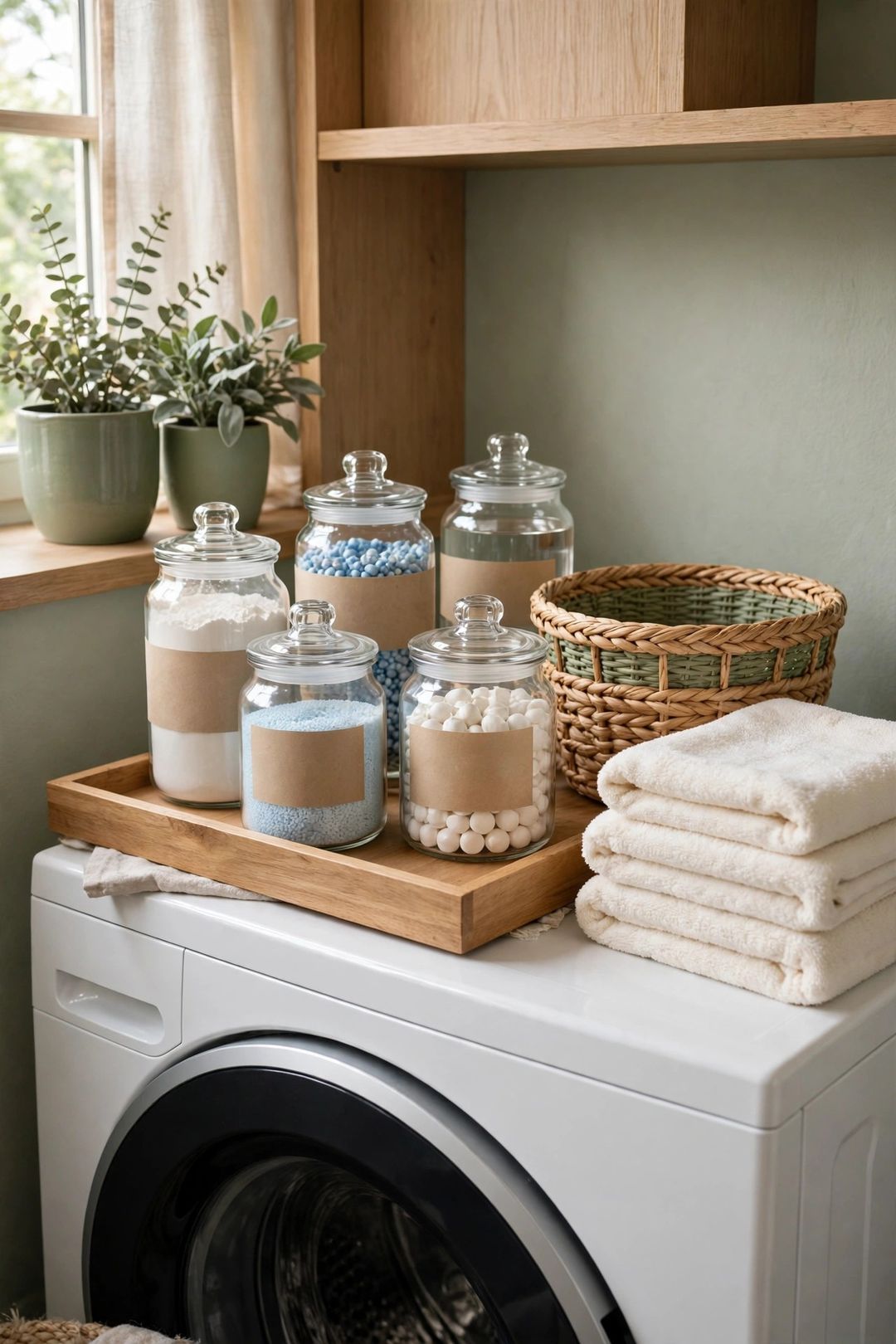
3. A Sealed, Labeled Bin for Pods — Stored Up High
Pods belong in a sealed container with a lid that closes firmly, stored up high or in a closed cabinet, out of children's reach. Choose an opaque or clearly labeled bin rather than a food-look jar, labeled with the product name and "keep out of reach of children." Never mix pod types in one bin, and keep the original package safely for its label information.
4. The Scoop-and-Measure Jar Set
Guessing doses wastes product and can leave residue on clothes. Keep the measuring tool with the product: a scoop in each powder jar, a marked cap or small measuring cup with the liquid bottles, and the dose written on the label. A matching set of scoops and cups, kept in one spot at the station, ends the hunt for the right measure on wash day.
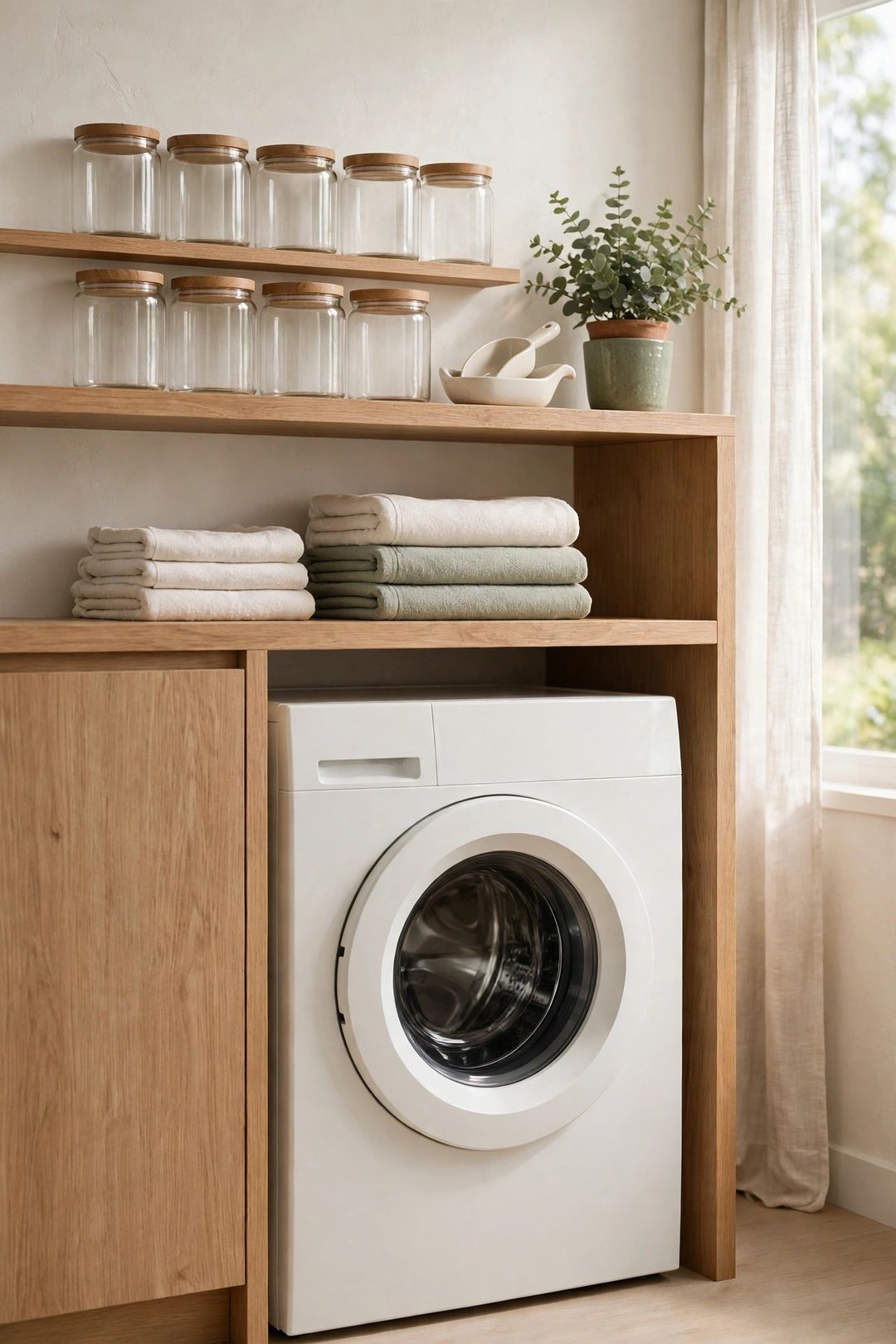
5. Labeled Bins for Sheets and Stain Care
Dryer sheets, dryer balls, stain sticks, and small treatment bottles scatter easily. Give them one open bin or two small labeled bins — one for dryer items, one for stain care — beside the jars. A bin keeps small boxes upright and visible, so a quick look shows what is running low before wash day, not during it.
6. The Tray-Based Station That Contains Drips
A shallow tray with a raised edge under the whole station turns sticky drips and powder dust into a one-minute wipe instead of a shelf scrub. Set jars and bottles on the tray in a fixed order — powder, liquid, pods, stain care — and return each item to the same spot after use. A tray also lets the whole station slide out for cleaning or move as one unit.
7. The Shelf-and-Label System for a Shared Station
When several people share the laundry, labels do the teaching. Use large, plain labels with the product name, the dose, and one short use note, such as "1 scoop per load." Place labels at the same height on every container, facing forward. Clear labels stop mix-ups between similar white powders and keep anyone from guessing which jar holds what.
8. The Refill System With Backstock Kept Separate
A decanting station stays tidy when bulk packages live apart from the daily jars. Store big boxes and jugs in a closed cabinet, on a high shelf, or in a lidded bin, and refill the station jars on a set day, adding the refill date to the back of each label. Keeping backstock separate keeps the station small enough for one shelf or a cart tier.
What to Buy
Wide-mouth glass jars with snug lids, typically $10–$20 for a small set. Pro: Powder levels stay visible and a scoop fits easily. Con: Glass is heavy and can break if dropped. Skip if: Your station is a high shelf — choose light, sealed containers instead.
Pour bottles with spout or pump tops, typically $8–$16 for a pair. Pro: Liquids pour in a controlled stream with fewer drips. Con: Thick liquids can clog narrow spouts. Skip if: Your detergent already comes in a small, easy-pour bottle.
A sealed, opaque bin with a firm lid, typically $8–$15. Pro: It keeps pods contained, labeled, and out of sight of children. Con: The level inside is not visible. Skip if: You do not use pods at all.
A shallow tray with a raised edge, typically $7–$14. Pro: It catches drips and lets the whole station move as one unit. Con: It takes a little shelf depth. Skip if: Your shelf already has a washable liner that contains spills.
A waterproof label set or label maker tape, typically $6–$14. Pro: Clear names and doses prevent mix-ups and survive damp hands. Con: Labels need replacing when a container changes product. Skip if: Masking tape and a marker already give readable labels.
Mistakes to Avoid
- Storing pods where children can reach or mistake them. Pods must stay sealed, labeled, and up high or in a closed cabinet — never in a food-look jar on a low, open shelf.
- Decanting without a label. Similar powders look identical in jars. Label every container with the product name and dose the day it is filled.
- Throwing away the original packaging right away. The package carries directions and safety information. Keep it with the backstock until the product is used up.
- Mixing products in one container. Topping one powder with a different product makes doses unclear. Empty, wash, and dry a container before refilling it with something new.
- Decanting the entire bulk supply. Large amounts in open jars crowd the shelf and spill more. Decant a working amount and keep the rest sealed as backstock.
Frequently Asked Questions
Is it safe to decant laundry detergent into jars?
It can be, with clear rules. Label every container with the product name and dose, keep the original packaging for its directions and safety information, and store all detergents out of children's reach. Pods need extra care: a sealed, labeled bin stored up high, never a food-look jar.
What should never be decanted?
Keep products you rarely use in their original packaging, and keep any product whose warnings or directions you still need to read often in its labeled package. If a container cannot be labeled clearly, the product is better left as it is.
How much detergent should be decanted at one time?
Decant a working amount that the station jars hold comfortably, and keep the rest sealed as backstock in a closed cabinet or lidded bin. This keeps powder drier, limits spills, and makes each refill a quick, set task.
How do you keep a decanting station tidy?
Put jars on a tray, return each item to the same spot, and wipe the tray when you refill. Check labels at each refill, replace any that peel, and add the refill date to the back of the label.
A small station of labeled jars, one sealed pod bin, and a drip tray can make wash day calmer and shelves far tidier. Save this post to your Bathroom & Laundry board on Pinterest so the eight systems are handy when you set up your own station.