A laundry area rarely fails because it is too small. It fails because clean and dirty clothes and supplies all compete for the same flat surface. Piles migrate, socks vanish, and detergent ends up wherever there was a gap.
These laundry room organization ideas work as one shared system for any setup. The zones stay the same whether laundry happens in a full room, a garage corner, a basement, or a closet. Only the furniture changes.
Start with the survey of your space below, then set up the shared systems: sorting, wash-day flow, a folding surface, safe supply storage, and a short weekly reset.
Start With Your Space: Four Common Setups
Full laundry room. Keep sorting near the door, machines in the middle, folding beside them, and supplies on one wall. Use extra space for one clear counter, not more piles.
Garage corner. Dust is the main issue. Choose closed bins, keep sorting off the floor on a shelf or stand, and hold one small folding surface that clears for other jobs.
Basement setup. Light and damp matter most. Keep clothes and supplies off the floor, use bins with lids, and add a bright light over the folding spot.
Closet setup. Think vertical. Slim sorting, a fold-down or over-machine folding surface, and supplies on one high shelf or door rack cover the basics. Keep the floor clear.
Sorting That Happens Before Wash Day
Sorting at the machine slows wash day down. A simple pre-sort means loads start as soon as a section fills.
Use two or three sections only. Lights, darks, and towels or heavy items cover most homes. More sections creates half-full piles that never become a load.
Place sorting where clothes come off. If laundry is far from bedrooms, a small collection spot in a bathroom or hallway, emptied on wash day, beats a perfect sorter no one uses.
Keep one delicates bag ready. A mesh bag by the sorter catches items that need a gentle cycle, so they stop getting lost in a mixed load.
A Wash-Day Workflow and a Folding Surface
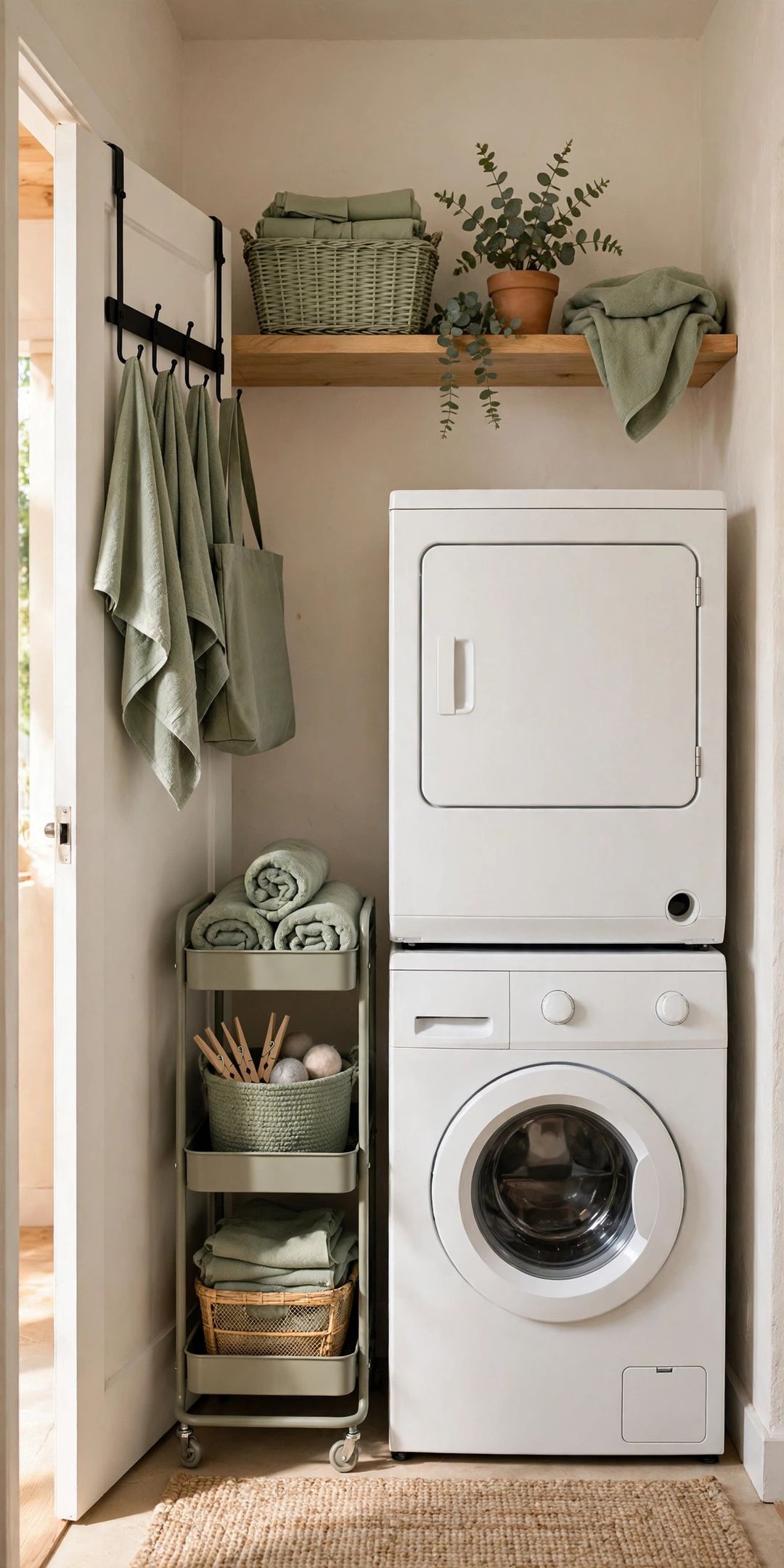
Move clothes in one direction: sorter to washer, washer to dryer or rack, then straight to the folding surface. Nothing clean lands on the machines or floor.
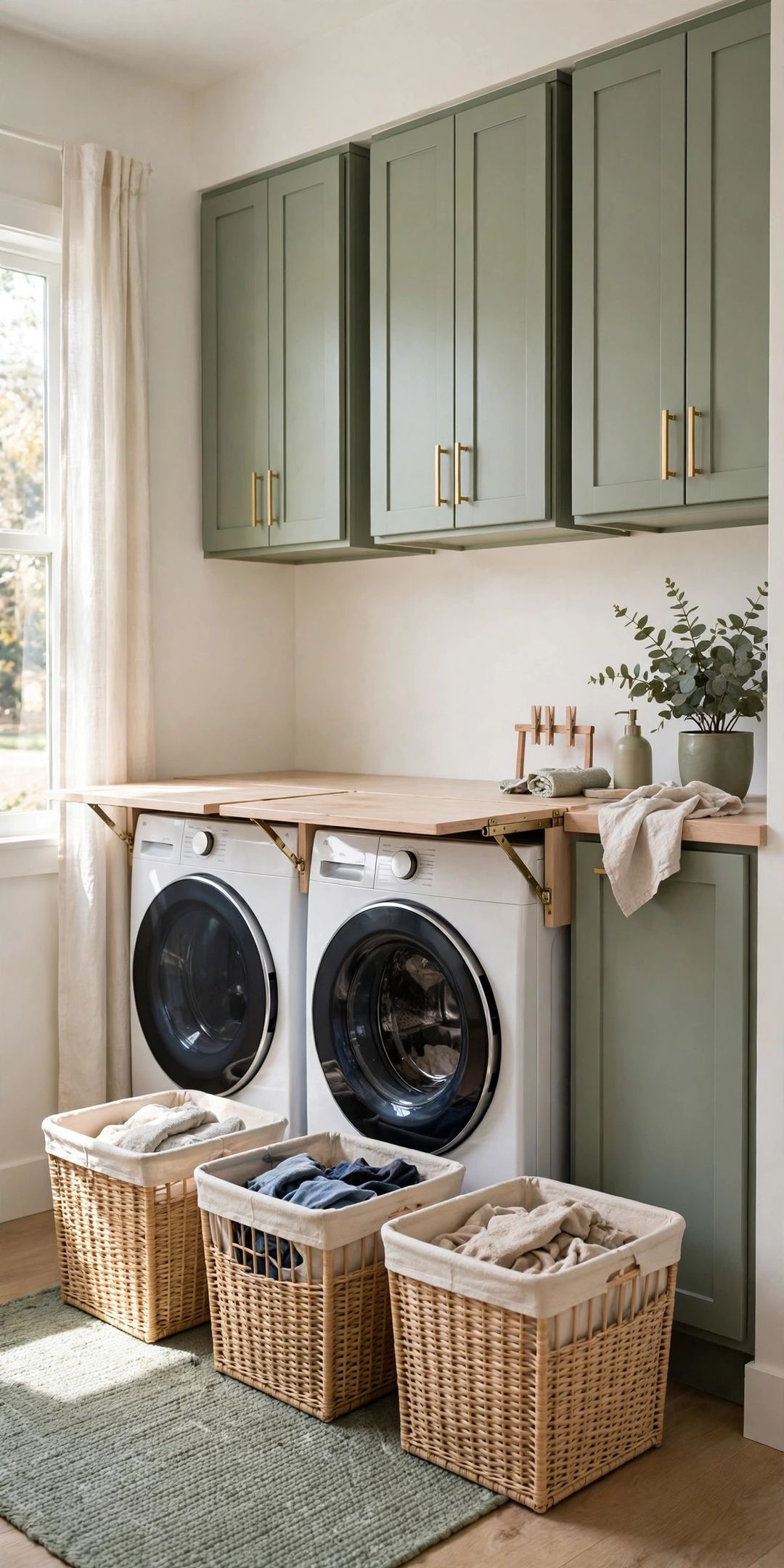
Give folding a real home. A short counter, machine tops with a mat, a fold-down table, or a rolling cart all count. It only needs to fit one folded stack.
Fold or hang right away. Two minutes at the folding surface prevents the clean-pile problem, where washed clothes wrinkle, mix with dirty items, and get washed again.
Keep a small empty basket as the exit. Folded clothes go in, the basket leaves the area, and the surface is clear for the next load.
Supply Storage: Up High, Closed, and Safe
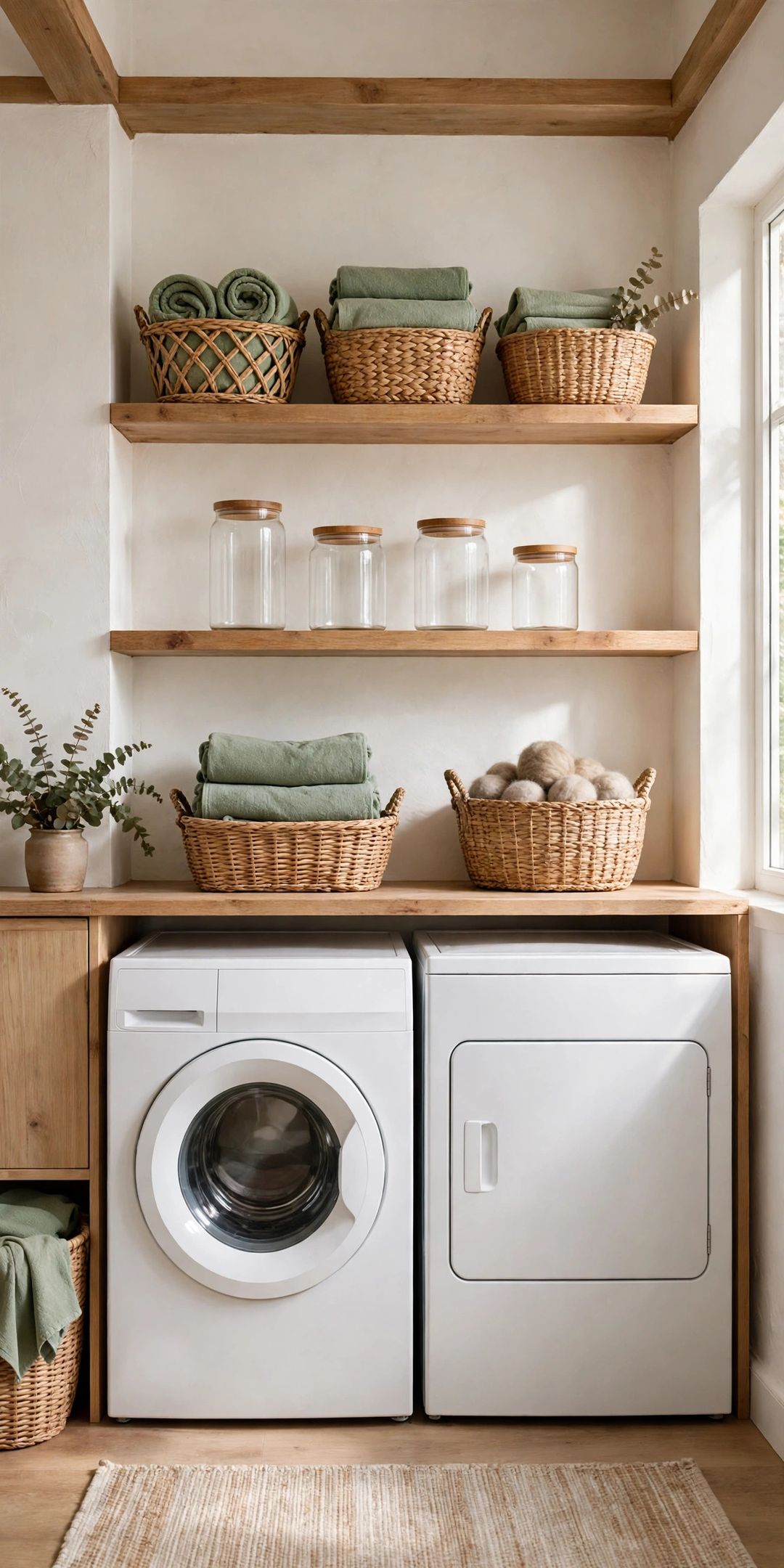
Detergent, stain treatments, and cleaning products should live in one zone, up high and closed, out of reach of young children and away from clean laundry.
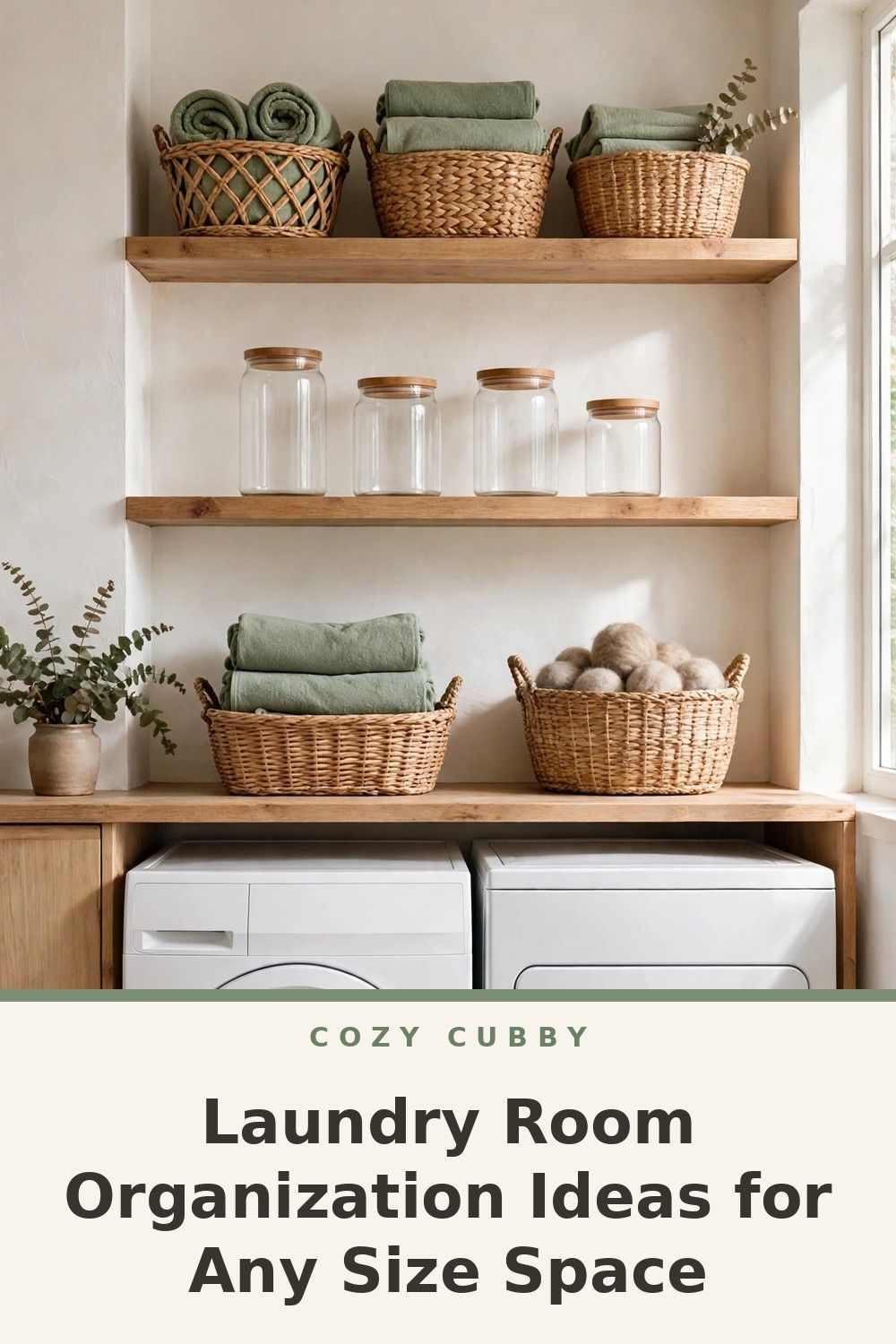
One shelf or cabinet for all supplies. Keep daily detergent at the front and backups behind it or higher. A shallow tray under bottles catches drips and keeps the shelf clean.
Decant with care, or not at all. Powder can go in a labeled jar with a tight lid, but keep the original safety information handy. Liquids often pour best from their own bottles.
Separate laundry from household cleaning. Bleach and strong cleaners belong in their own closed bin, apart from items that touch clothes and skin daily.
Lost Socks, Lint, and the Small Stuff
Small items cause much laundry clutter. Give each one a tiny, fixed home.
Start a lost-sock spot. One small clip, hook, or basket near the folding surface holds single socks. Check it each wash day and pair what matches.
Empty lint every load. Clean the dryer lint screen each time, and keep a small trash can by the machines for lint and pocket finds.
Add a pocket-find dish. Coins and hair ties from pockets go in one dish by the washer and get returned on reset day.
The Simple Weekly Reset
Ten minutes once a week keeps the system from drifting.
1. Clear every flat surface. Fold, hang, or put away anything left out, and wipe the folding surface and machine tops.
2. Check supplies. Note what is running low, move one backup forward, and check that lids are closed and supplies are still up high.
3. Empty the small bins. Tip out the lint trash, sort the pocket-find dish, and check the lost-sock spot for new pairs.
4. Set up the next load. End with the sorter tidy, one load ready or started, and the exit basket empty and waiting.
What to Buy
A slim 2- or 3-section laundry sorter, typically $25–$50. Pro: Sorting happens all week, so loads start faster. Con: Wide sorters will not fit closets. Skip if: One hamper plus a mesh bag already keeps up.
A wall-mounted fold-down table, typically $35–$70. Pro: A real folding surface that folds flat in small spaces. Con: It needs solid wall fixing and clear swing space. Skip if: A counter or machine-top mat already works well.
A closed supply bin with a handle, typically $10–$22. Pro: Contains drips and lifts down in one go. Con: Tall bottles may not fit with the lid closed. Skip if: Supplies already sit in a closed, high cabinet.
An over-door rack for supplies, typically $18–$32. Pro: Uses dead door space in closet and small-room setups. Con: It can rattle and needs light items only. Skip if: Your door is sliding or bifold.
A mesh delicates bag set, typically $8–$15. Pro: Delicates and socks stop vanishing in mixed loads. Con: Bags wear out and zips can fail over time. Skip if: Nothing in your wash needs a gentle cycle.
Mistakes to Avoid
- Building for a room you do not have. A closet or garage setup needs slim, vertical, closed storage. Copying a large-room layout wastes money and floor space.
- Sorting into too many categories. Five or six sections creates half-full piles and slows everything down. Two or three is enough for most homes.
- Storing supplies low or open. Detergent and cleaners at floor level or uncapped are a risk for children and pets, and spill more easily.
- Having no folding surface. Without one, clean clothes pile on machines, mix with dirty laundry, and end up washed twice.
- Letting the small stuff spread. No home for lint, pocket finds, and single socks means every shelf slowly fills with tiny clutter.
Frequently Asked Questions
How can a closet laundry space stay organized?
Keep the floor clear, sort in a slim or door-hung container, fold on a fold-down surface or machine-top mat, and store supplies on one high shelf. Every item needs a vertical home.
Where should detergent be stored safely?
On a high shelf or in a closed cabinet, in a bin that catches drips, with lids closed and out of reach of young children. If you decant it, label it and keep the original safety information.
What is the best order to do laundry in?
Start with the fullest section, move clothes in one direction from sorter to washer to drying to folding, and put each load away before the next when you can. Towels suit the last load, as they dry slowest.
How often should a laundry area be reset?
A 10-minute weekly reset is enough for most homes. Clear surfaces, check supplies, empty the lint trash, and check the lost-sock spot.
Whatever your setup — full room, garage, basement, or closet — sorting, one folding surface, safe supply storage, and a weekly reset will keep it working. Save this post to your Laundry Room board on Pinterest so the guide is handy on wash day.