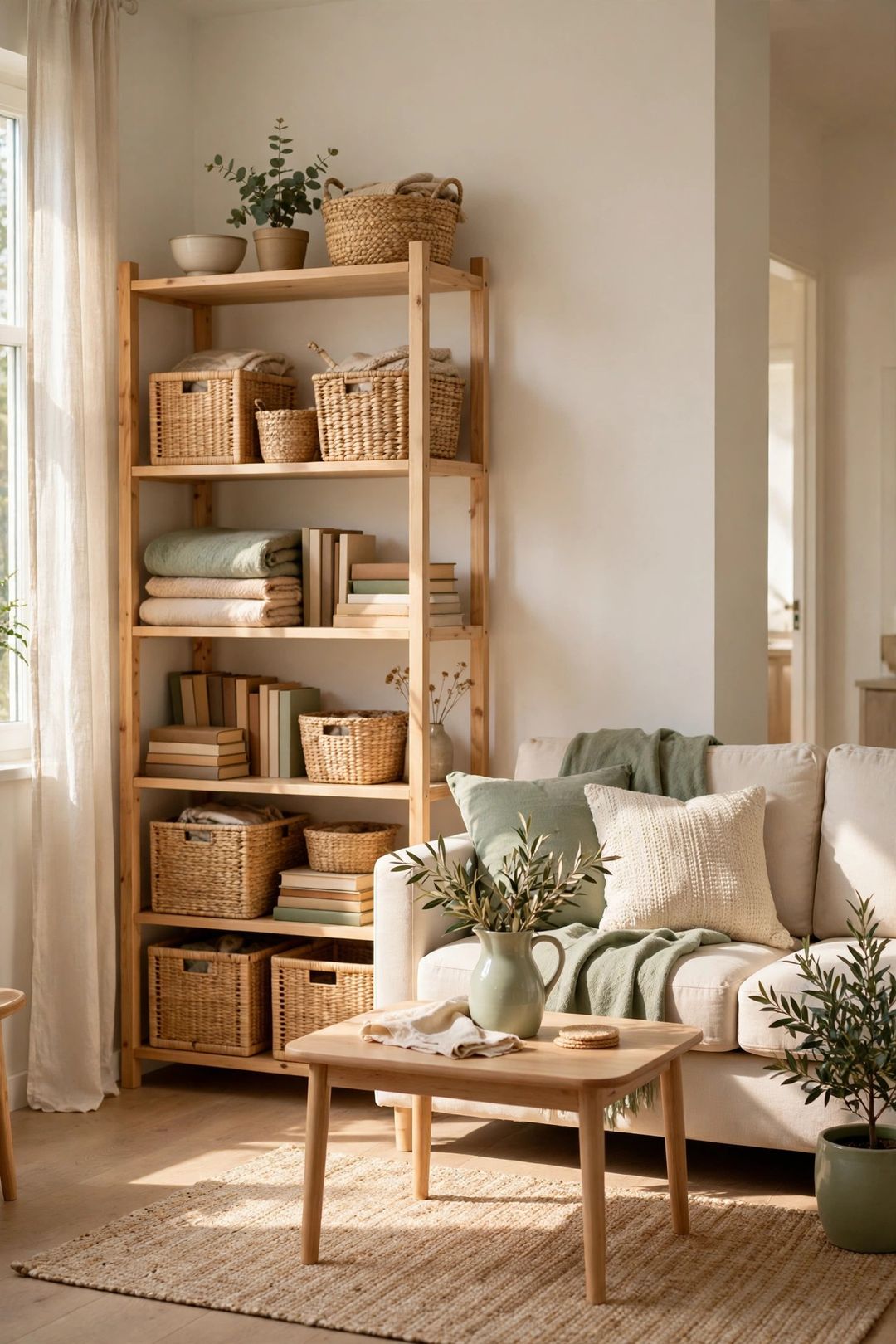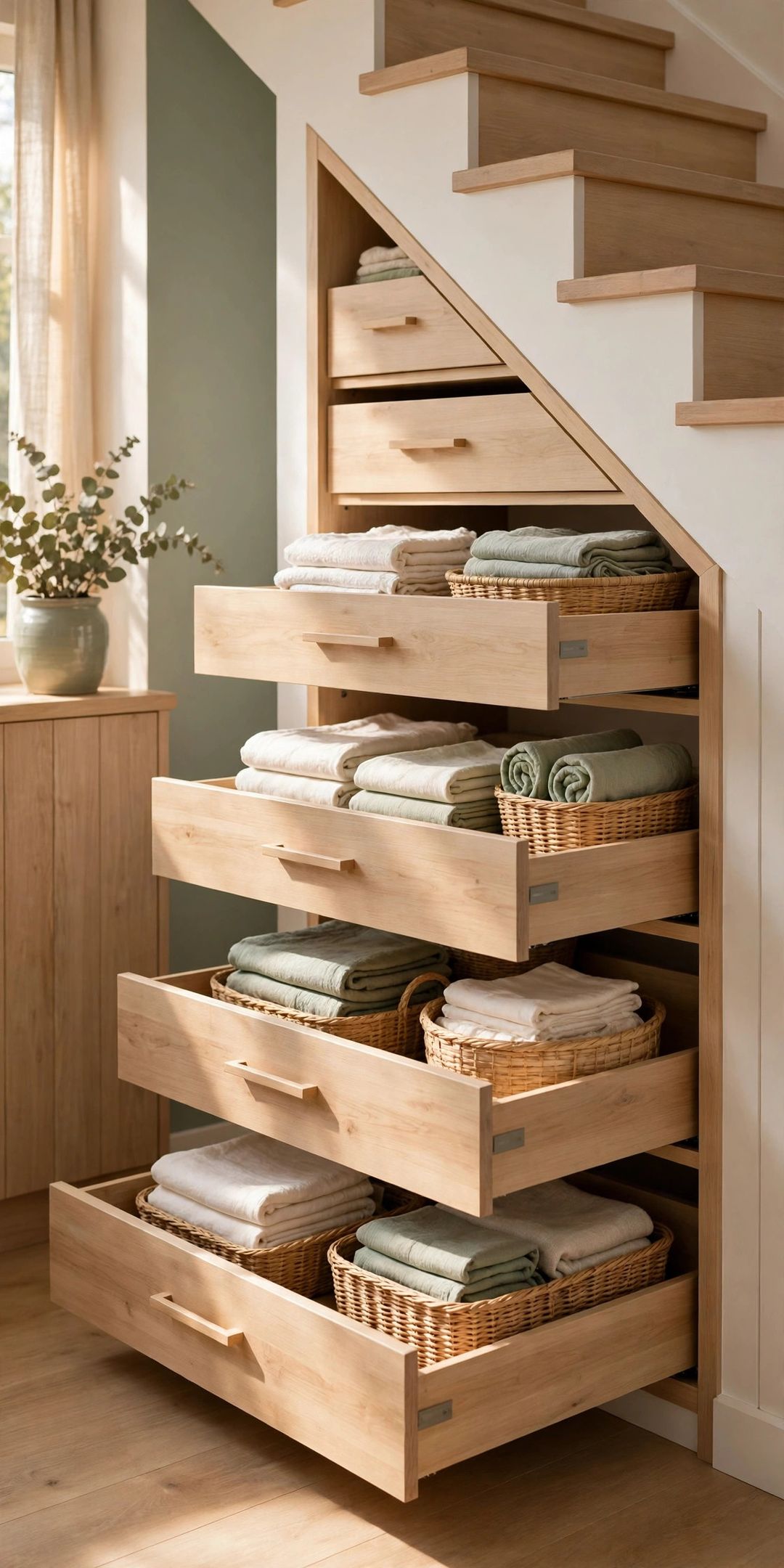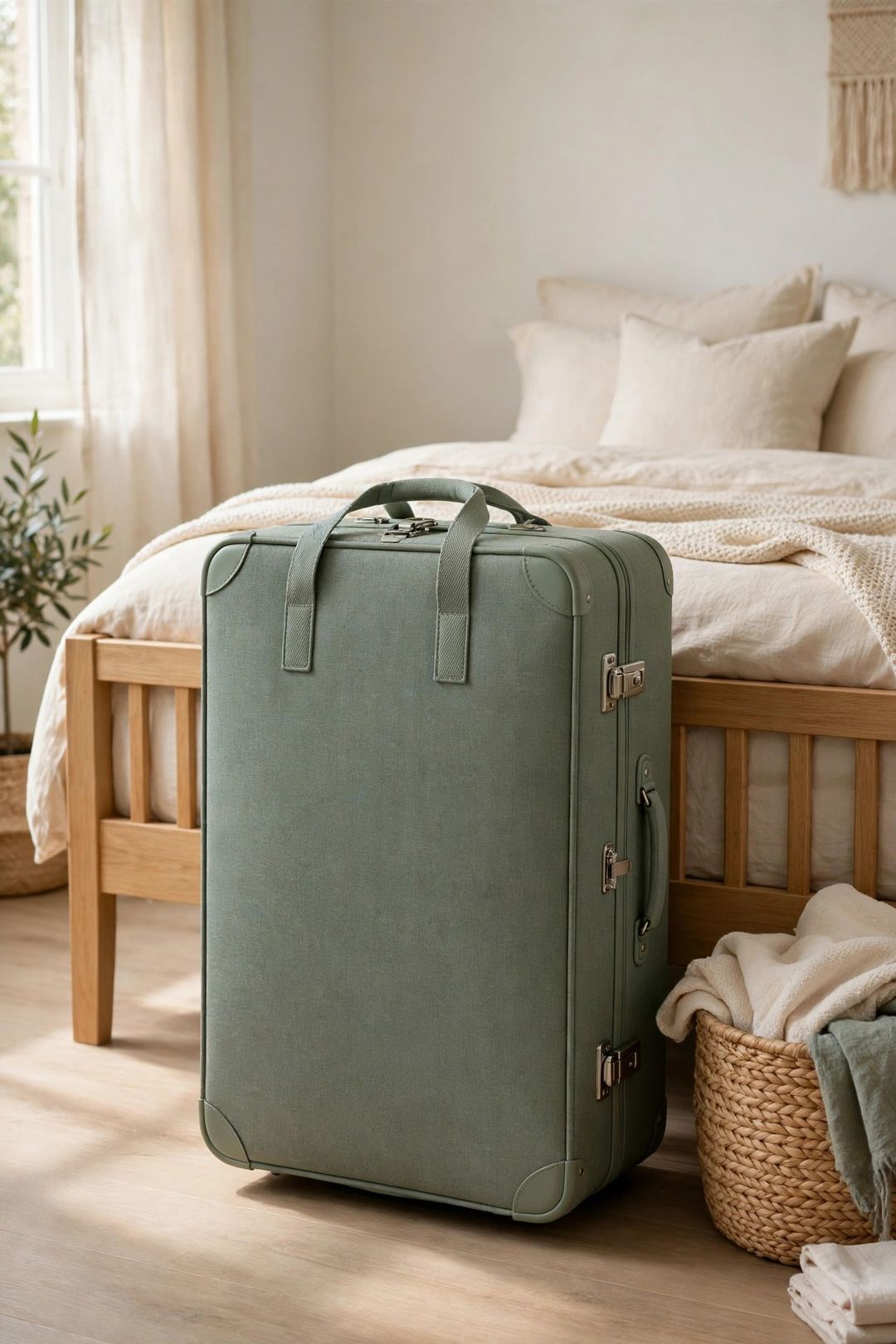
A full-size suitcase takes up about as much floor area as a small chair, and most apartments have nowhere obvious to put one. Stacked in a corner, luggage becomes the bulkiest clutter in the room.
These luggage storage ideas small apartment living calls for use dead space instead: inside the cases, under furniture, and above eye level. All nine ideas keep suitcases clean, aired, and quick to grab before a trip.
Before choosing a spot, measure each case. Most checked suitcases are about 28 to 30 inches tall, carry-ons about 22 inches, and depth runs 9 to 12 inches. Those three numbers rule ideas in or out fast.
Use the Suitcase Itself as Storage
An empty suitcase is wasted storage volume. The first three ideas put that space to work, so the case earns its footprint all year.
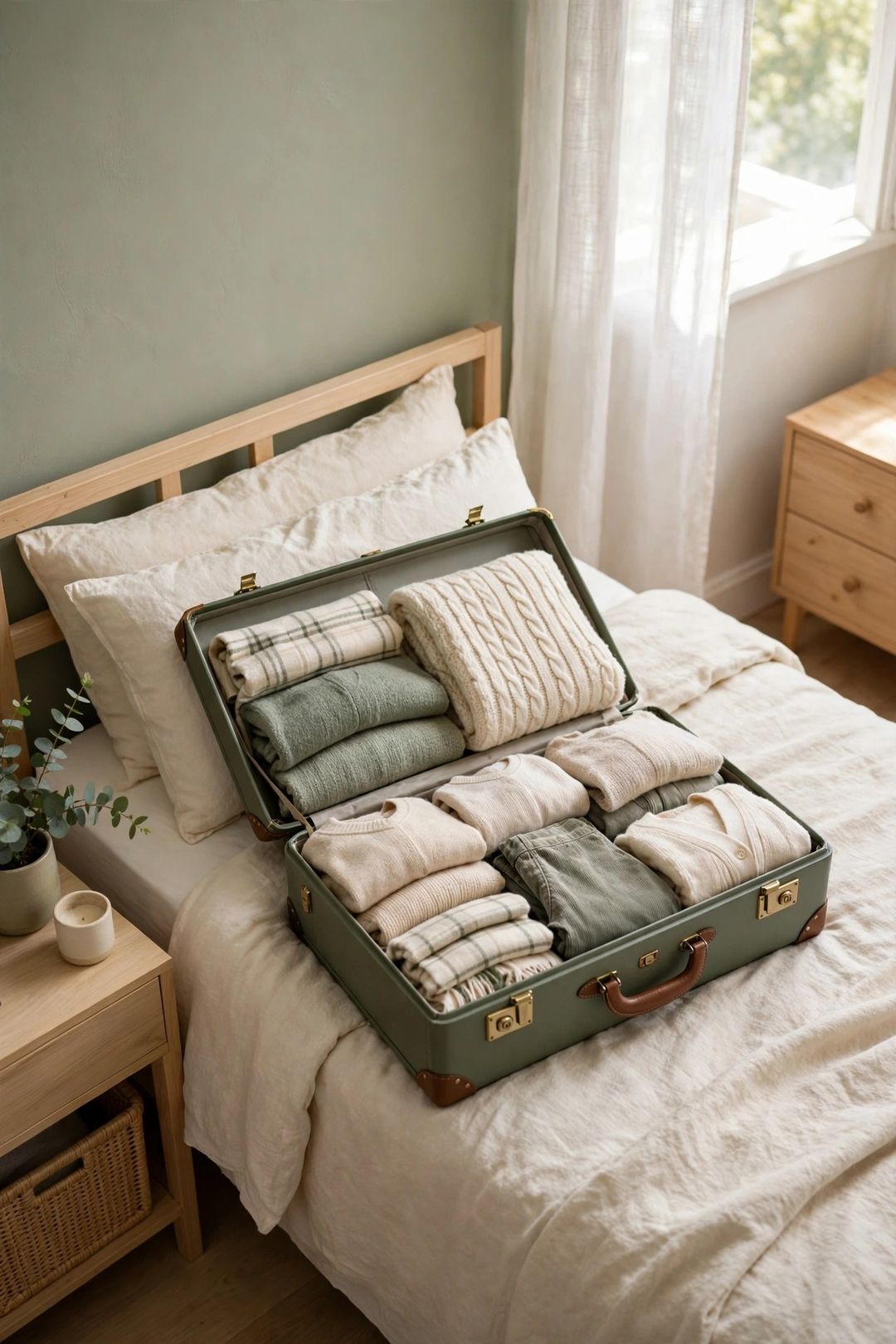
1. Store out-of-season clothes inside the largest suitcase. Fold off-season sweaters, coats, or summer clothes flat inside the biggest case, add a scented sachet or cedar block, and zip it shut. The case protects clothes from dust better than an open shelf, and the clothes pad the shell so it holds its shape.
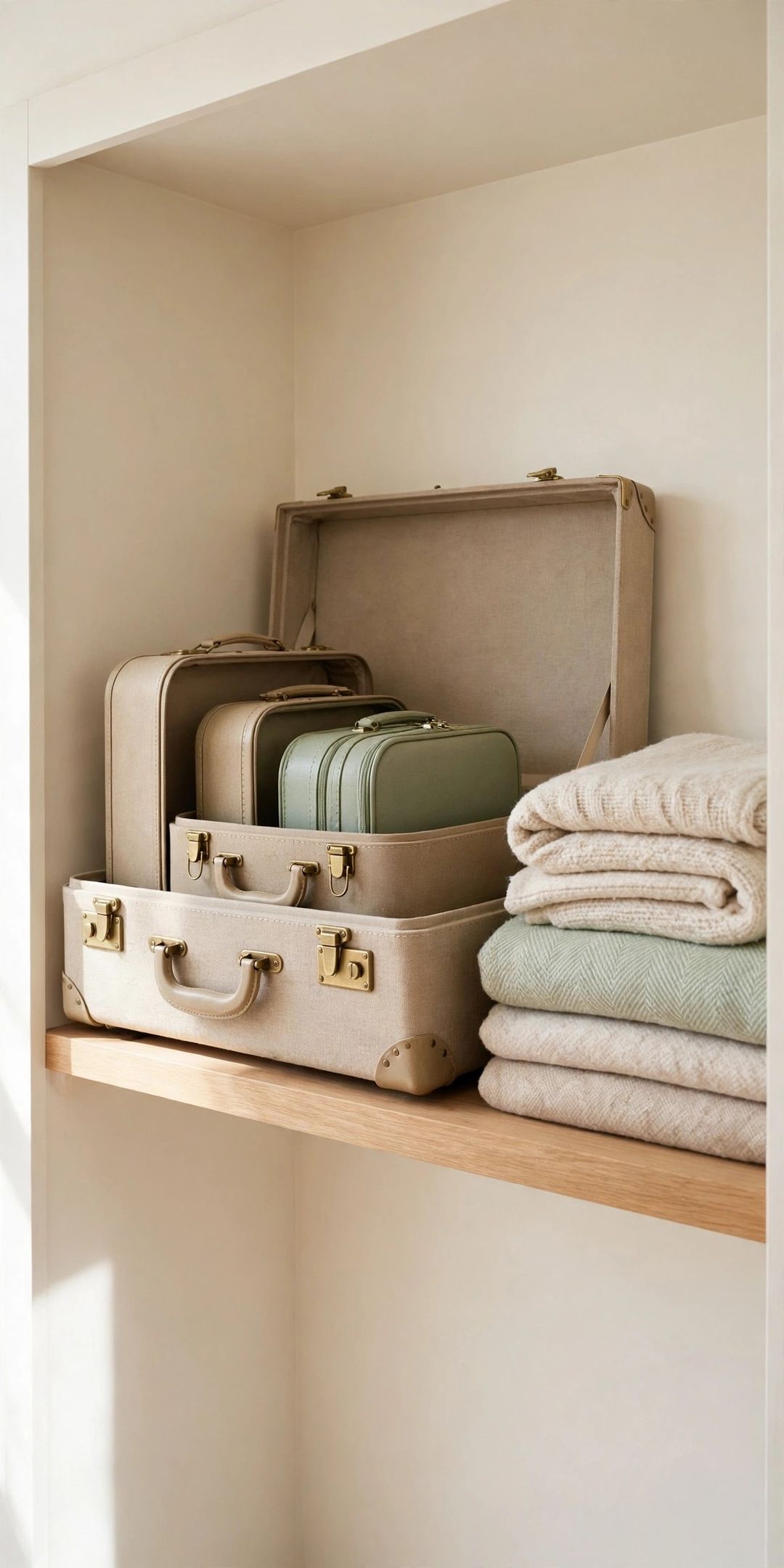
2. Nest the full set, one case inside another. Open every suitcase, place the smallest inside the medium, and that inside the largest, like nesting bowls. Three cases then take the floor space of one. Keep the inner cases unzipped slightly so air can move and no musty smell builds up.
3. Make one suitcase the guest and linen case. Store the spare sheet set, guest towels, and a travel toiletry kit inside a carry-on. When guests stay or a trip comes up, the full set is in one grab-and-go place instead of three closets.
Hide Cases in Flat, Dead Space
These spots are too low, high, or narrow for daily items, which is exactly why they suit luggage used only a few times a year.
4. Slide suitcases under the bed. Most bed frames give 6 to 14 inches of clearance. A soft-sided or low hard case slides under on its side. Measure the clearance at the frame's lowest rail first, and use under-bed storage bags only for soft duffels that can compress without damage.
5. Stand cases on the top shelf of the closet. The shelf above the hanging rail is often 12 to 18 inches deep and hard to reach, a poor spot for daily clothes but a good one for carry-ons. Stand cases upright with handles facing out, and keep the heaviest case at the end nearest the wall for safer lifting.
6. Use the gap above tall wardrobes and cabinets. The space between a wardrobe top and the ceiling often fits a flat carry-on laid on its side. Wipe the surface first, lay the case on a clean old pillowcase to guard against dust, and keep this spot for the lightest case only, since lifting overhead needs care.
Work the Edges of the Room
When closets are full, the last options use edges and gaps that hold nothing else. Each keeps the case off main floor space.
7. Hang a flat case behind a door. A sturdy over-door hook pair can hold a slim carry-on or garment bag flat against the back of a closet or bedroom door. Check that the door still opens fully and the case depth, usually 9 inches or less for this trick, does not hit the wall.
8. Fill the dead corner beside the wardrobe. Many bedrooms have a narrow slot, 10 to 14 inches wide, between a wardrobe and the wall. A suitcase stood on end slides into that slot and disappears from view. Add a felt pad at the base so the case does not scuff the floor when pulled out.
9. Keep a carry-on under a desk or entry bench. The knee space under a little-used desk, or the open base of a hallway bench, fits one carry-on stood upright or laid flat. This is the best home for the case used most often, because there is no lifting, un-nesting, or moving of other items to reach it.
What to Buy
Vacuum storage bags, typically $15–$25 for a multi-pack. Pro: They shrink bulky coats and linens so more fits inside a stored suitcase. Con: Long compression can crease delicate fabrics. Skip if: You store mostly sturdy cottons and denim that fold flat already.
Under-bed storage bags with handles, typically $12–$22. Pro: Handles make sliding a soft duffel out from under the bed easy, and the bag blocks dust. Con: Rigid hard cases do not fit most bag sizes. Skip if: Your case slides under the bed cleanly on its own and stays dust-free.
Over-door hooks, typically $10–$18 for a pair. Pro: They turn a door back into storage with no drilling. Con: They only suit slim, light cases and can mark door edges. Skip if: Your doors are glass, sliding, or already carry a mirror or rack.
Cedar blocks or lavender sachets, typically $8–$15. Pro: They keep closed cases and stored clothes smelling fresh. Con: Scent fades and blocks need light sanding or replacing over time. Skip if: Cases are opened often, so air already moves through them.
Furniture risers for the bed frame, typically $12–$20. Pro: They add 3 to 5 inches of under-bed height, enough for many standard cases to fit. Con: They raise the whole bed, which changes sheet drop and bed height. Skip if: Your frame already gives 12 inches or more of clearance.
Mistakes to Avoid
- Storing a case while it is damp. A case put away wet from a rainy trip can grow mildew inside. Air it open for a full day first.
- Forgetting what is inside each case. Linen in one case and coats in another gets confusing. Tape a short contents list inside the lid.
- Stacking heavy boxes on a hard shell. Weight over months can dent or warp the shell. Keep the top of a stored case clear.
- Wedging a case where heat builds up. Next to a radiator or in a hot attic corner, heat can damage fabrics, wheels, and plastic parts over time.
- Blocking the most-used case. If the carry-on sits behind everything else, every trip starts with a clear-out. Give the frequent case the easiest spot.
Frequently Asked Questions
How do you store luggage without a closet?
Use the flat and high spots first: under the bed, above a wardrobe, and behind a door. Nest the set so it takes one footprint, and fill the largest case with off-season clothes so it doubles as a clothes box rather than dead weight in a corner.
Is it okay to store clothes inside suitcases long term?
Yes, for sturdy fabrics like coats, sweaters, and denim, as long as clothes go in clean and fully dry and the case stays in a dry room. Add a cedar block or sachet, and open the case every few months to air the contents.
Should suitcases be stored zipped or unzipped?
Store them unzipped or cracked slightly open. A small air gap stops stale, musty smells building up in the lining. If cases are nested, leave each inner case open a few inches as well.
What is the best spot for the suitcase used most often?
Choose the spot with no lifting and no unstacking: under a desk, at the end of a closet, or upright beside a wardrobe. Overhead and under-bed spots suit cases used once or twice a year, not the regular carry-on.
The right spot turns a bulky suitcase into hidden, useful storage. Save this post to your Small-Space Storage board on Pinterest so all nine ideas are handy before your next clear-out.