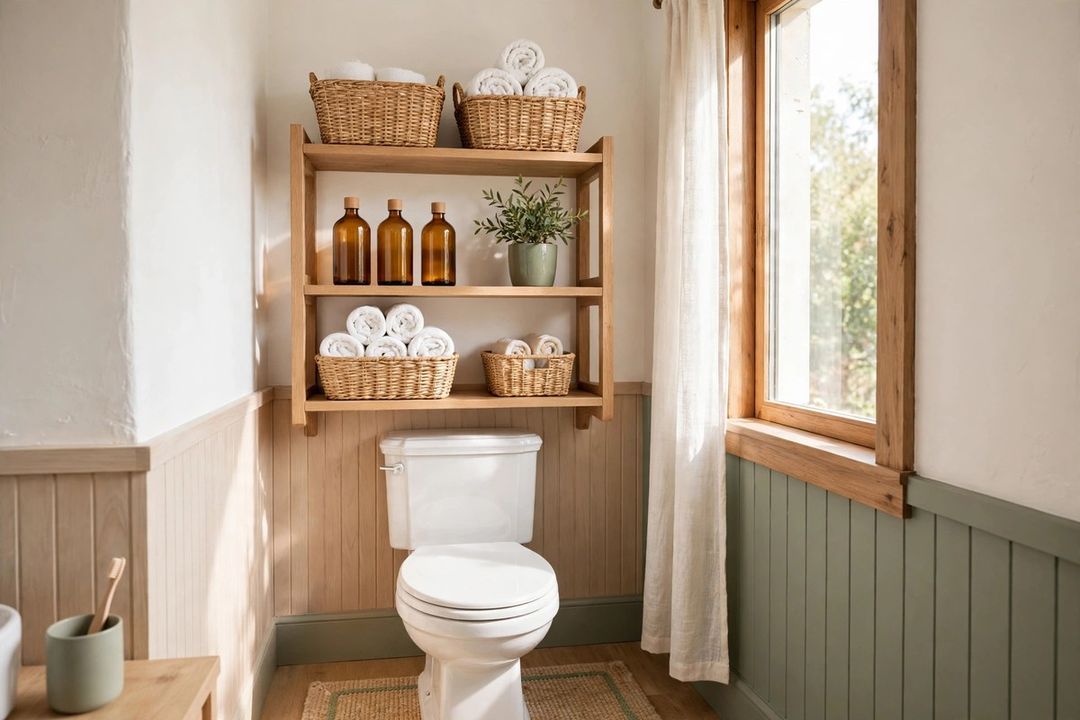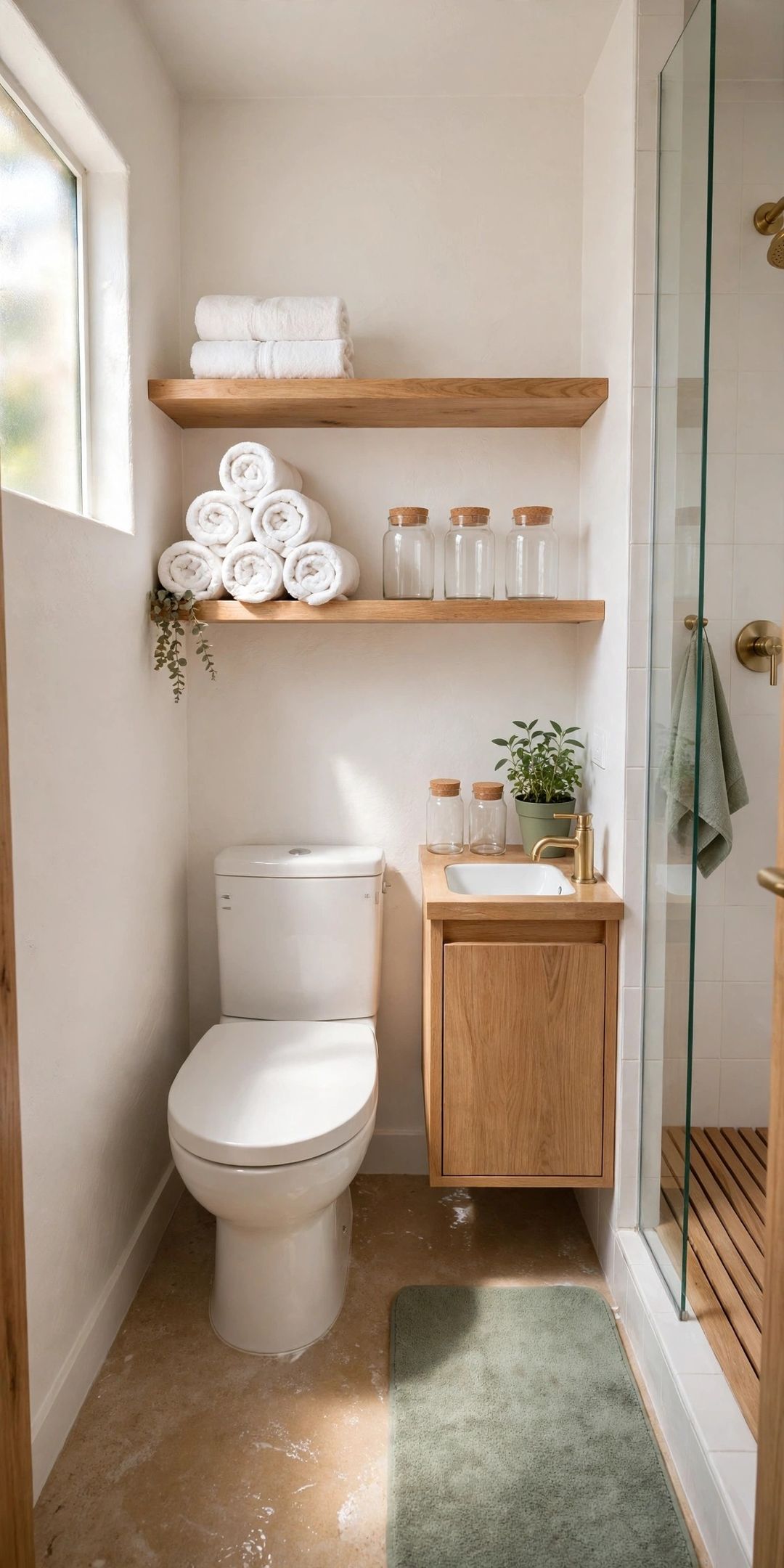
A wet bath puts the shower, sink, and toilet in one open space, so almost everything gets splashed. In a room this small, a normal floor cabinet or fabric basket can stay damp, rust, or block the little floor you have.
These micro bathroom storage ideas wet bath rooms need start with one rule: store up, not out. Choose materials that tolerate splashes and dry fast, like plastic, stainless steel, coated metal, glass, and sealed bamboo. Avoid plain steel, untreated wood, and fabric that holds water.
Measure the walls, the shower zone, and the space above and behind the toilet before you buy anything. The nine ideas below use those spots first.
Go Wall-Hung Before Floor-Standing
1. Hang a wall cabinet above the toilet. The wall over the tank is usually empty, and a shallow closed cabinet keeps medicine, cotton supplies, and spare toilet paper dry and out of sight. Pick a depth that clears your head when you sit down, and fix it into studs or with anchors rated for the wall type.
2. Use adhesive or suction shelves where drilling is not allowed. Sticky-pad and suction shelves suit renters and tile walls. Clean and dry the tile first, press the mounts firmly, and wait as directed before loading them. Keep them for light items like razors, toothbrushes, and small bottles, and check the grip now and then.
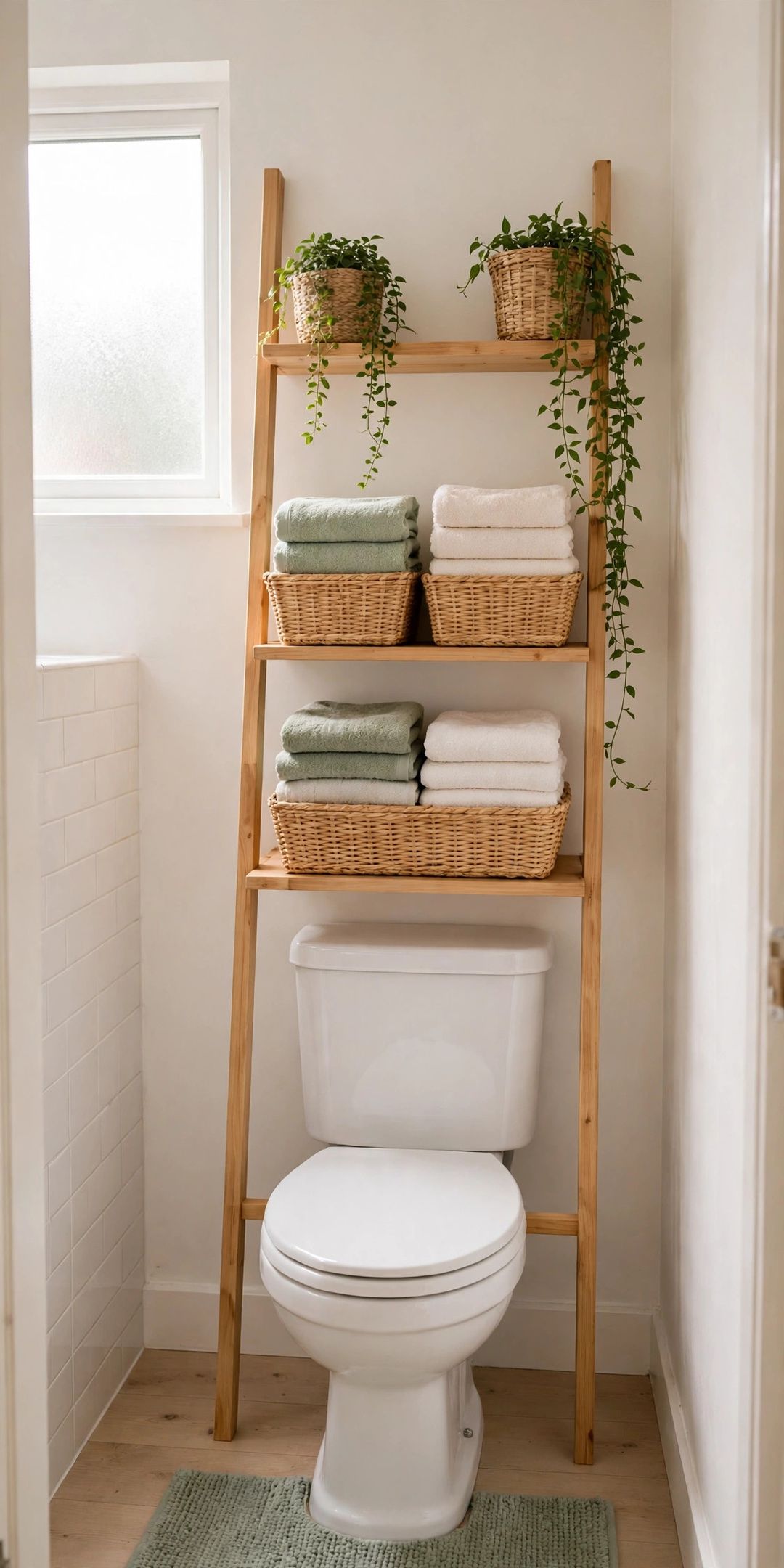
3. Add a slim over-toilet rack. A narrow rack stands over the tank and turns that column of air into two or three shelves. Look for rust-resistant coated metal or plastic, and choose a frame with adjustable feet so it sits steady on uneven floors. Leave the lowest shelf high enough to reach the flush and tank lid.
Make the Shower Zone Hold Its Own Supplies
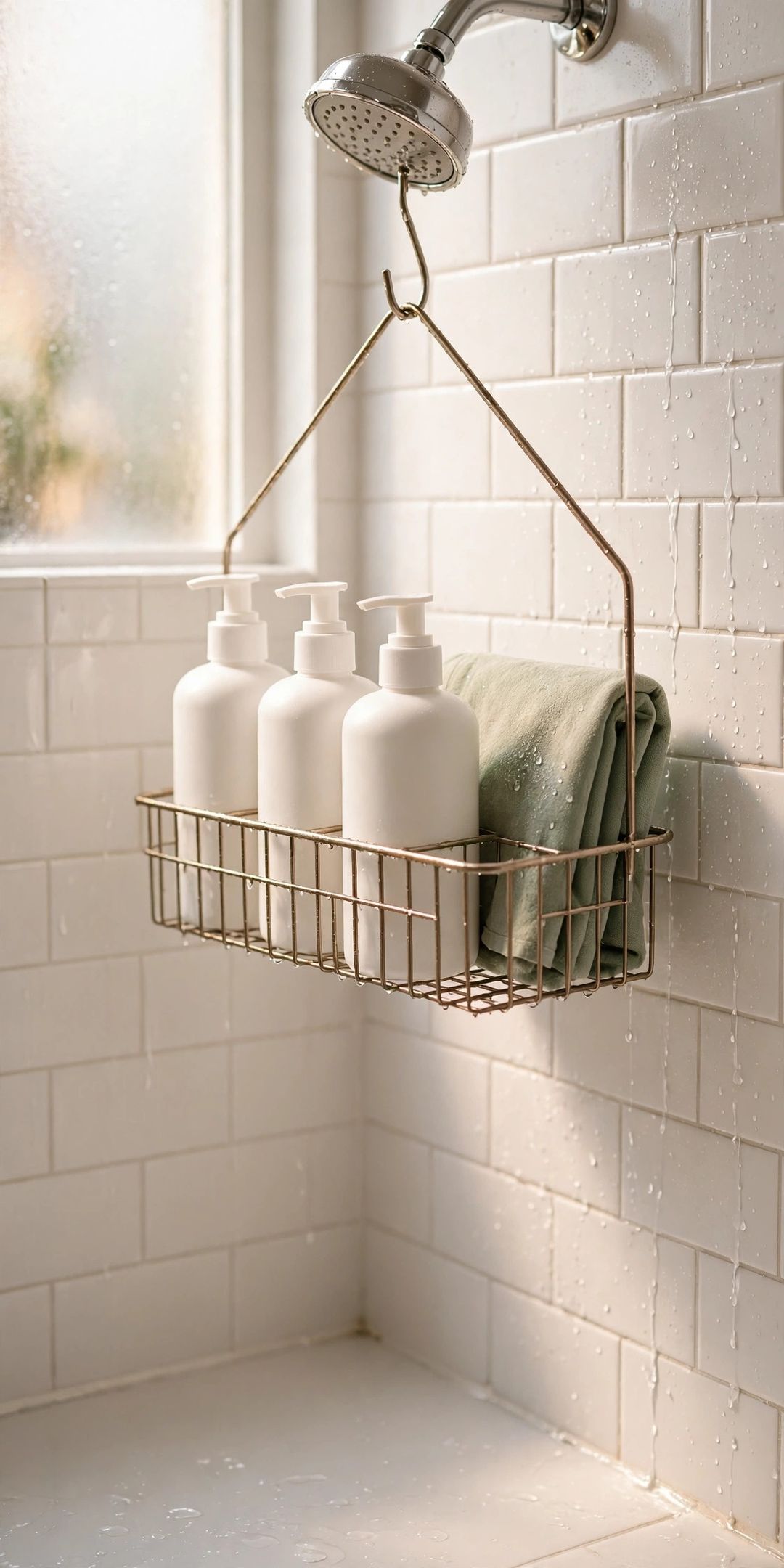
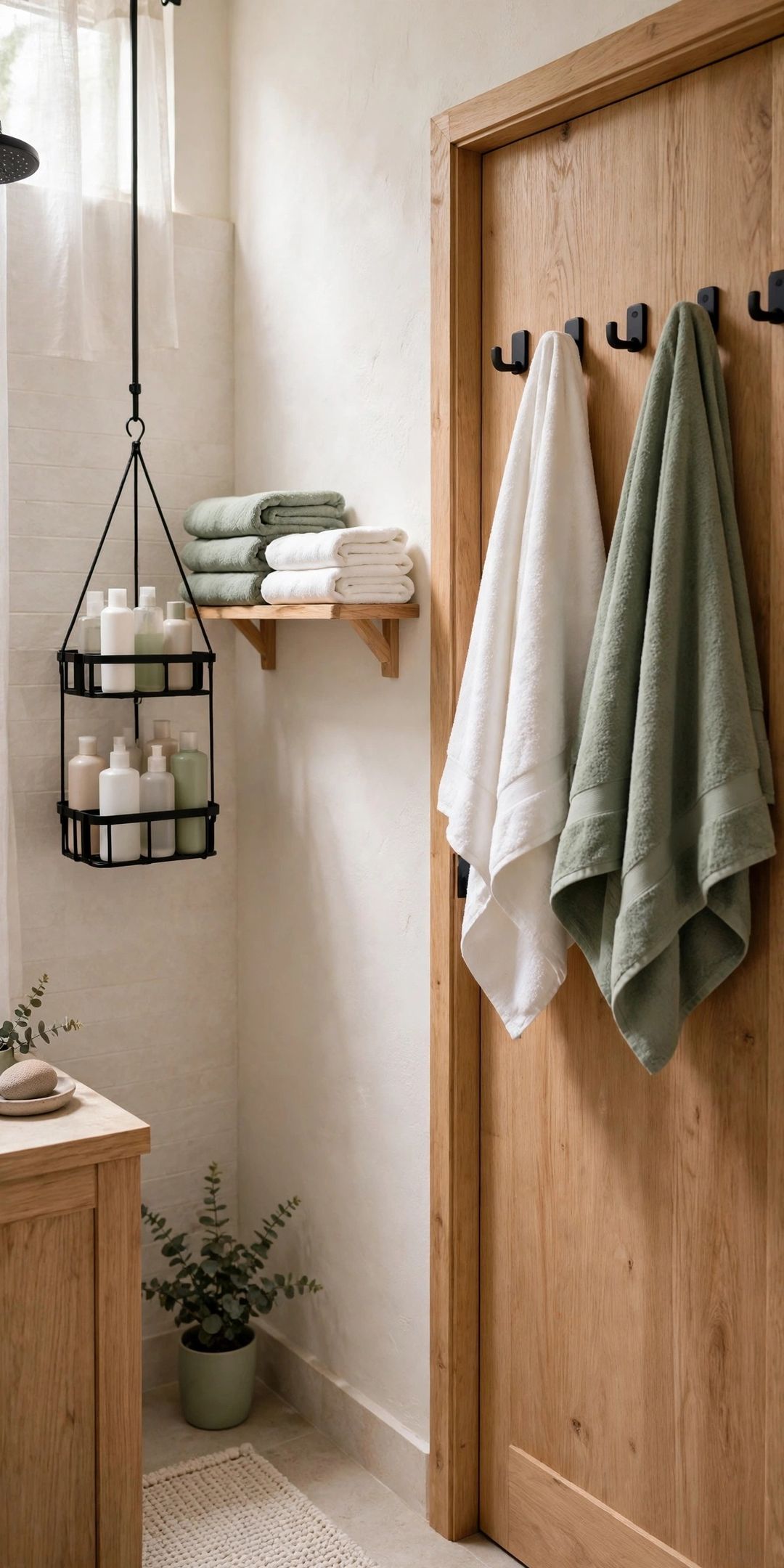
4. Hang a caddy from the showerhead or a hook. A hanging caddy keeps shampoo and soap inside the shower, where you use them, instead of on the floor or rim. Choose wide slots or mesh so water drains through. Skip caddies that swing or rust at the joints, and lift it down for a quick rinse each week.
5. Fit corner shelves in the shower. Corners hold space that nothing else uses. Tension-pole, adhesive, and suction corner shelves all work without taking floor room. Rounded shelves with drainage holes dry faster than solid ones. Put daily bottles on the lowest shelf and lighter, less-used items higher up.
6. Move bottles into wall dispensers. One mounted dispenser for shampoo, one for conditioner, and one for body wash can replace a row of bulky bottles. Refillable dispensers clear the floor, look calmer, and are easy to wipe. Test the pump with your thickest product first, since some pumps struggle with heavy formulas.
Use Slim, Hidden, and Door Space
7. Slide a slim rolling cart beside the toilet or sink. A narrow cart, only a few inches wide, can fill the gap next to the toilet or vanity. Use it for spare rolls, cleaning spray, and backup toiletries. Pick plastic or coated metal with open shelves, so splashes wipe off and air can move through.
8. Add an over-door rack for towels and extras. The back of the door is a full storage wall in a micro bath. Slim hooks or a shallow rack hold towels, a robe, or a small basket of extras. Use padded hooks to protect the door, and keep the load light so the door still closes smoothly.
9. Store small items in waterproof boxes with lids. Hair ties, cotton buds, first aid bits, and spare blades get lost fast in a tiny room. Clear lidded boxes group them, stack on a shelf, and keep spray out. Label each box on the front, and keep one box only per type so backups do not quietly double up.
What to Buy
A rust-resistant hanging shower caddy, typically $14–$24. Pro: It keeps daily bottles off the wet floor and drains freely. Con: It can swing if it is overloaded. Skip if: Your showerhead is fixed too low for a hanging style, in which case corner shelves fit better.
Adhesive or suction corner shelves, typically $12–$22 for a pair. Pro: They add storage with no drilling and remove cleanly in rentals. Con: Grip weakens on rough or textured tile. Skip if: Your walls are painted or uneven, since adhesive mounts need a smooth, dry surface.
A slim over-toilet rack, typically $28–$48. Pro: It adds two or three shelves without using new floor space. Con: It must clear the tank lid for repairs. Skip if: Your toilet sits under a low cabinet or sloped ceiling that blocks the frame.
A narrow rolling storage cart, typically $18–$32. Pro: It turns a dead gap into storage and pulls out for cleaning. Con: Wheels can stick on rough grout lines. Skip if: The gap beside your toilet or sink is too narrow for the cart plus your hand.
Clear waterproof storage boxes, typically $8–$16 for a set. Pro: Lids keep spray out and stacks stay neat on one shelf. Con: Boxes that are too deep hide small items at the bottom. Skip if: You prefer open trays and will not keep up with lids.
Mistakes to Avoid
- Choosing plain metal that rusts. Uncoated steel marks tile and weakens in constant spray. Pick stainless, coated, or plastic storage for wet zones.
- Putting fabric baskets in the splash zone. Cloth and rope hold water and dry slowly. Keep soft storage outside the shower area, if you use it at all.
- Blocking the floor with a big cabinet. Floor-standing pieces crowd a wet bath and trap water underneath. Hang storage and keep the floor clear for drying and cleaning.
- Overloading suction and adhesive mounts. Too much weight pulls shelves down without warning. Load them lightly and save heavy bottles for fixed shelves.
- Storing paper and cardboard in the open. Spare rolls and boxes soften and fall apart in spray. Keep paper goods in a closed cabinet or lidded box.
Frequently Asked Questions
What materials work best in a wet bath?
Plastic, stainless steel, coated metal, and glass handle splashes well and wipe dry fast. Sealed bamboo can work outside the direct spray. Avoid untreated wood, plain steel, and fabric in the wet zone, since they hold water or rust.
How do you add storage without drilling?
Use adhesive shelves, suction corner shelves, a hanging shower caddy, an over-door rack, and a slim over-toilet frame. Clean and dry the surface first, follow the wait time on the mounts, and keep adhesive storage loaded lightly.
Where should spare toilet paper go in a micro bathroom?
Keep one roll in use and store spares in a closed wall cabinet or a lidded waterproof box above splash height. Open baskets on the floor get wet fast in a wet bath, so raised, covered storage works better.
How do you keep a tiny wet bath from feeling crowded?
Keep the floor fully clear, group items by zone, and use closed storage for small clutter. One shelf per zone is usually enough. If a new organizer needs floor space to work, it is probably the wrong pick for the room.
A wet bath stays workable when storage is raised, waterproof, and kept to what each zone really needs. Save this post to your Bathroom & Laundry board on Pinterest so these nine ideas are handy when you measure your space.