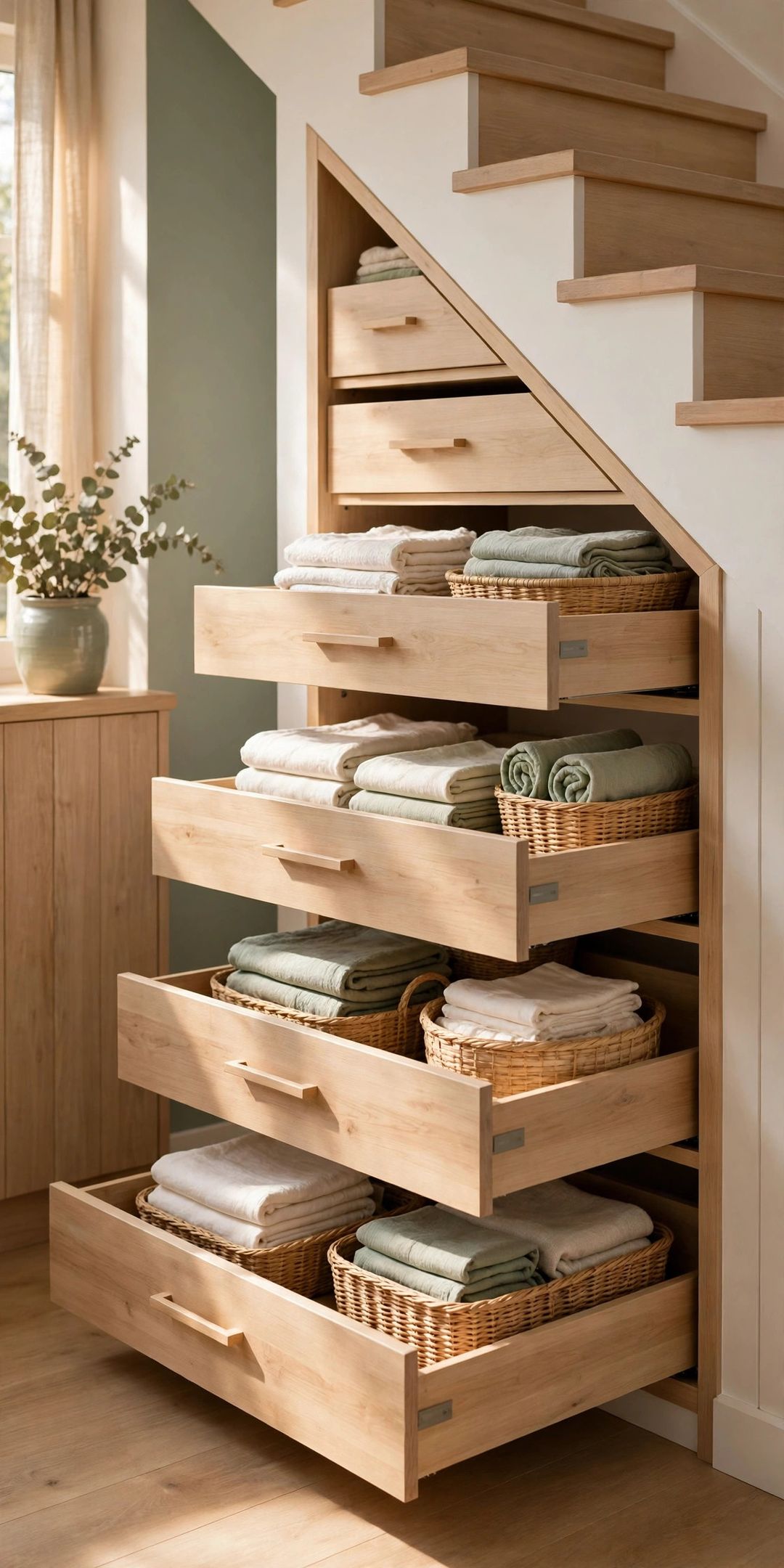
The nightstand drawer is small, close, and easy to ignore, so it quietly collects dead batteries, old receipts, three lip balms, and cords for devices you no longer own. Good nightstand organization ideas start by giving that one shallow drawer a clear, limited job.
Most nightstand drawers are only about 3 to 4 inches deep, so they hold nightly essentials well and almost nothing else. The 11 ideas below fix the drawer first, then the top, the cords, and the space underneath.
1. Fix the Drawer First
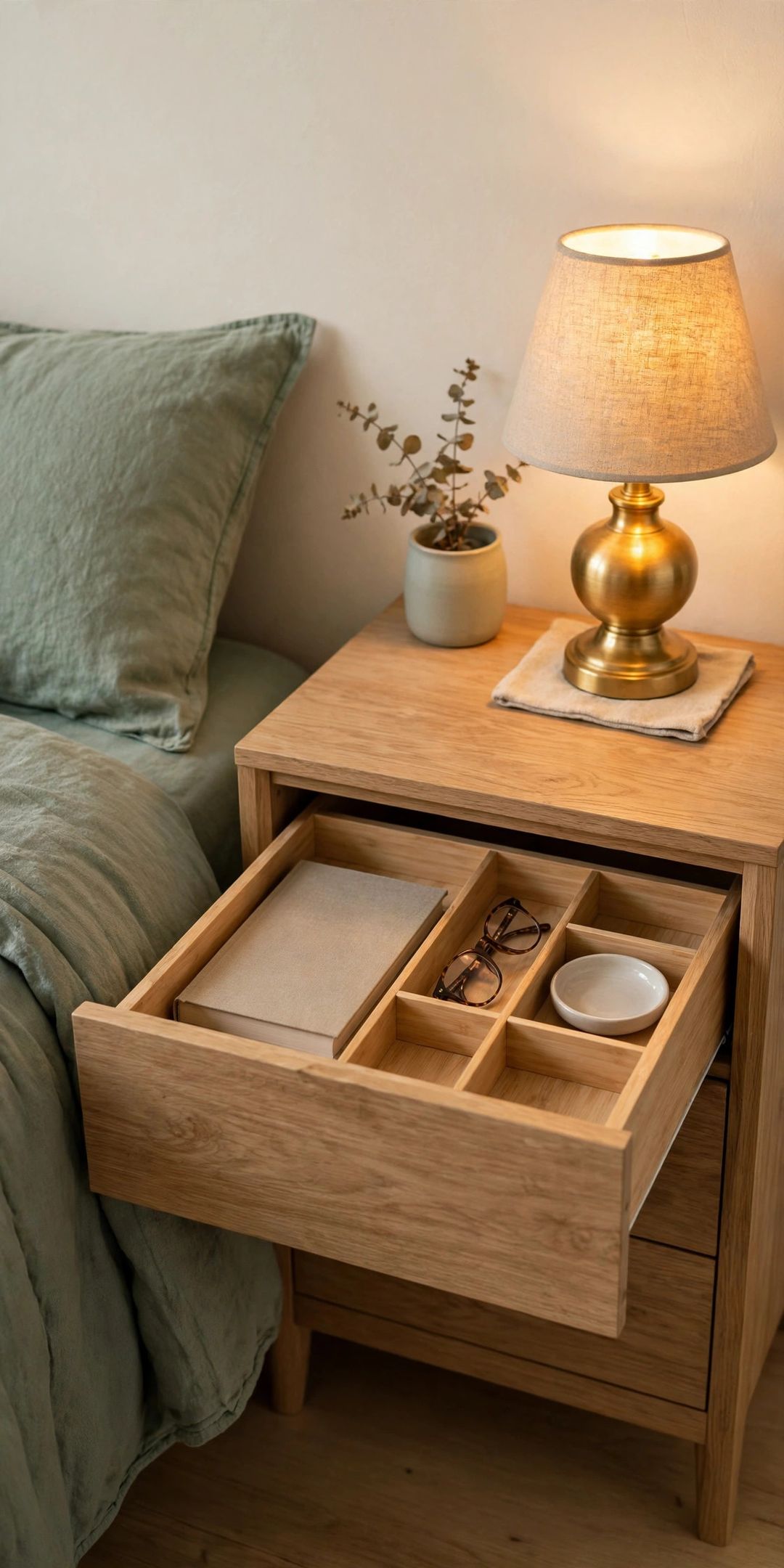
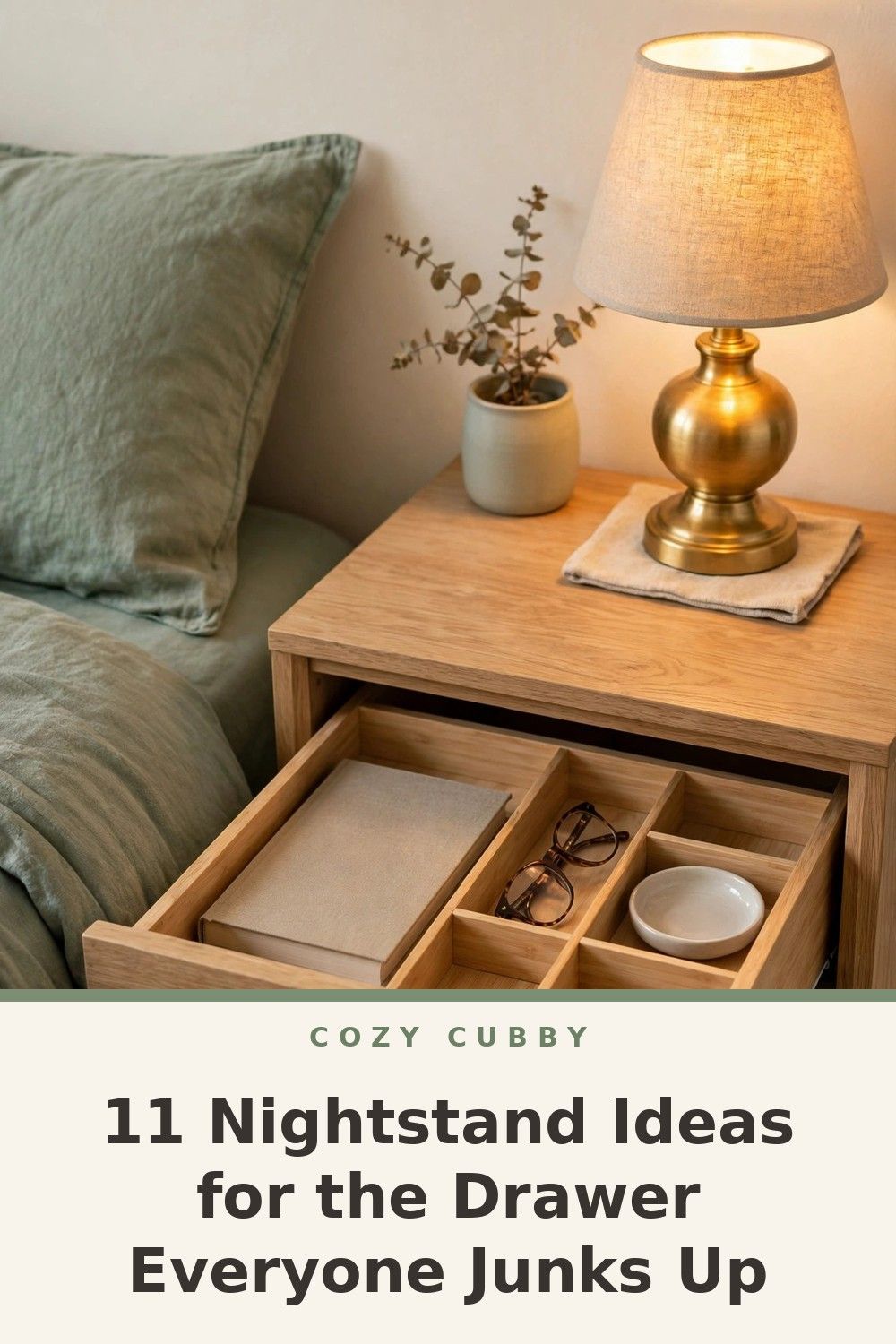
1. Add dividers that fit a shallow drawer. Choose a divider set or small trays made for drawers 3 to 4 inches deep. Give each section one job: glasses, lip balm, hand cream, medicine, and a pen. When every item has a lane, you can see at a glance what is duplicated.
2. Use the one-in rule for the drawer. From now on, nothing new goes in unless something else leaves. A new book light means the broken one goes out the same night, not back into the corner. This single rule stops the slow refill that turns an organized drawer back into a junk drawer within a month.
3. Move back-stock and rarely used items out. Spare batteries, backup chargers, extra cords, and the alarm clock manual do not belong beside the bed. Store them with household supplies. The drawer should hold what you reach for weekly, not someday items.
4. Add one small tray for the nightly handful. A shallow tray, roughly 4 by 6 inches, inside the drawer corrals the tiny loose items that roll around: hair ties, earplugs, a ring, and loose pills in their labeled bottle. If the tray is full, something has to move out before anything else joins it.
2. Clear the Top Surface
5. Set a three-item limit on top. Pick three things that earn the surface, usually a lamp, your current book, and a water bottle or glass. Everything else, from mail to skincare bottles, lives in the drawer, the bathroom, or its real home. A firm number works better than a vague plan to keep it tidy.
6. Keep a landing spot, not a pile. If you set your phone, watch, and glasses down in the same place each night, use a small tray or felt pad about 6 by 8 inches to mark that spot. The pad makes the limit visible. Items landing outside it signal clutter creeping back.
7. Move the lamp up or make it smaller. A bulky lamp base can eat half of a small nightstand top. Switch to a compact lamp, a plug-in wall light, or a clip-on reading light and the whole surface opens up. Measure the top first; many small nightstands are only 14 to 18 inches wide.
3. Tame the Charging Cords
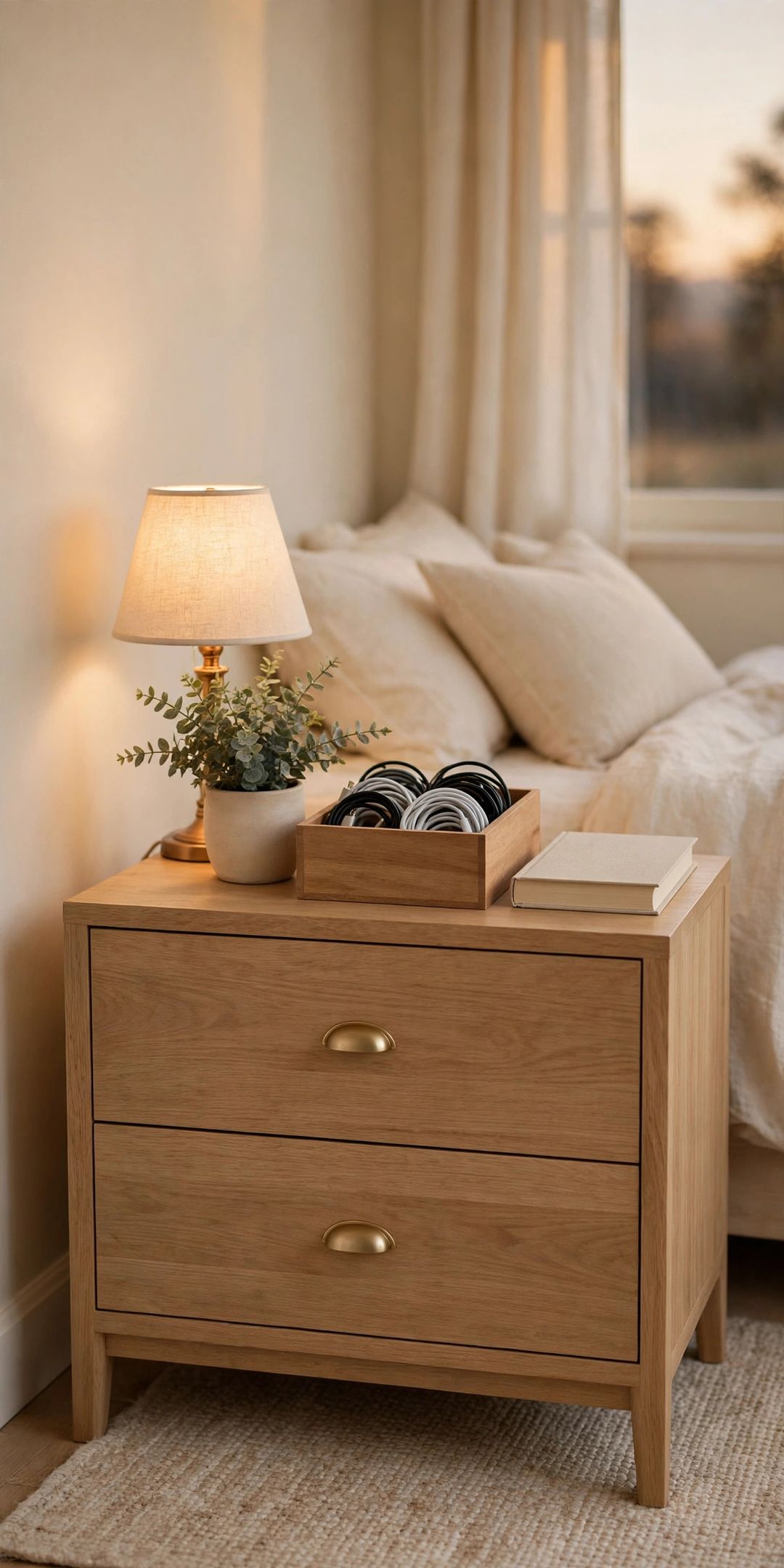
8. Create one charging spot, not three. Charge the phone and watch in one place only, using a short cord and a single outlet. Run the cord behind the nightstand and clip it to the back edge so it stays within reach but off the pillow and floor. Loose cords invite everything else to pile up around them.
9. Hide the power strip in a cable box below. A small cable box on the floor behind or under the nightstand holds the power strip and extra cord length out of sight. Leave the lid easy to lift and keep the box clear of bedding and curtains. Label each plug once, and unplugging the right device stops being a guessing game.
4. Use the Space Under and Beside It
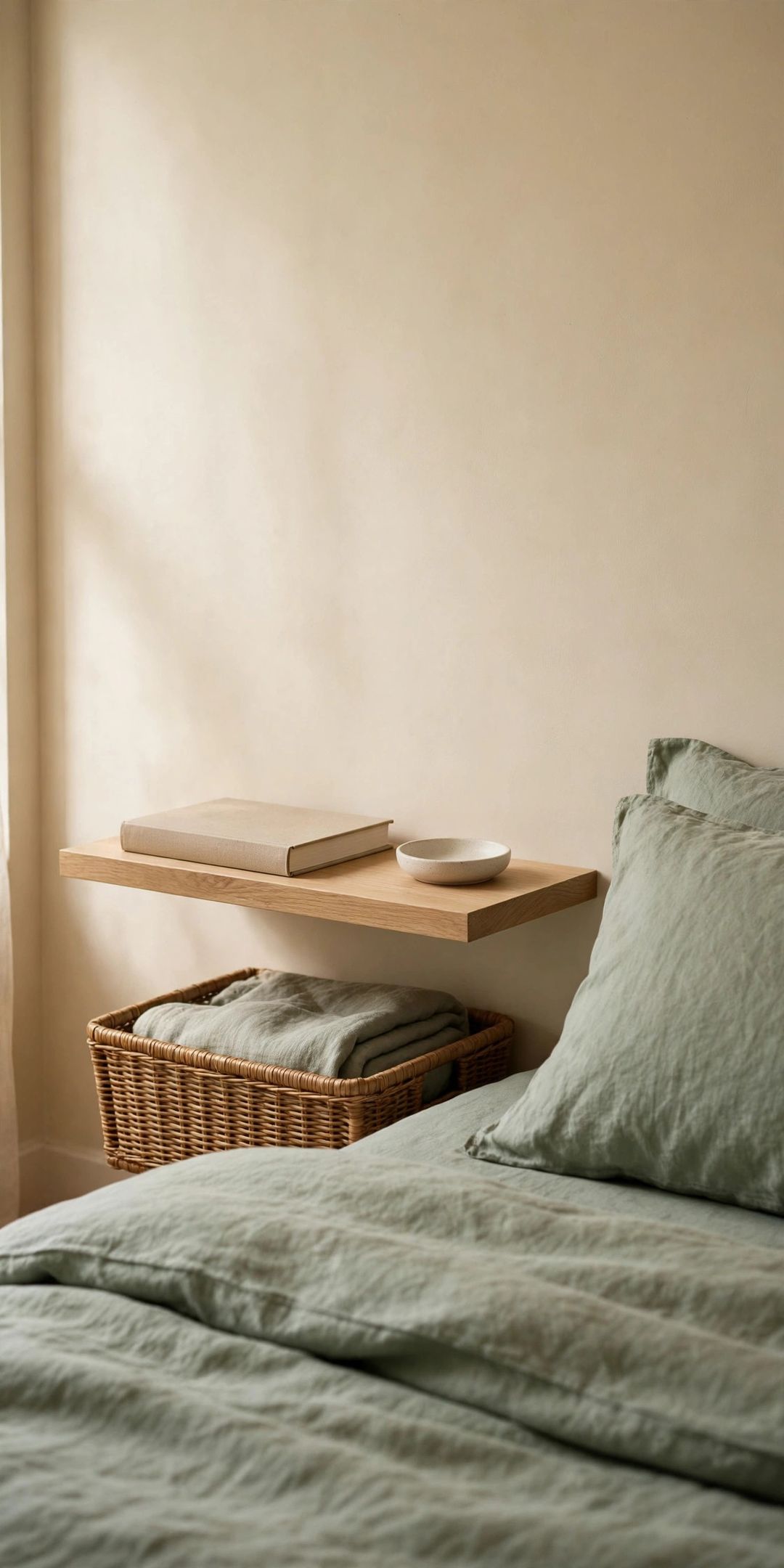
10. Slide a low bin underneath for books and extras. The gap under many nightstands fits a low basket or bin about 4 to 6 inches tall. Use it for next-up books, a heating pad, or slippers. Measure the clearance, including any bottom rail, before you buy.
11. Put the side gap to work. The narrow space between the nightstand and the bed or wall, often just 4 to 8 inches, fits a slim magazine holder or a hanging pocket for a book, remote, and reading glasses. Use it for flat, light items only, and leave room to reach in and clean.
What to Buy
Shallow drawer divider set, typically $10–$20. Pro: turns one junk drawer into clear zones sized for a 3- to 4-inch-deep drawer. Con: fixed layouts may waste space in an unusual drawer size. Skip if: small trays or boxes you already own fit the drawer well.
Small cable management box, typically $12–$22. Pro: hides the power strip and spare cord length behind the nightstand. Con: takes floor space and needs dusting like any other box. Skip if: you charge only one device with a short, tidy cord.
Adhesive cord clips, typically $6–$12 for a pack. Pro: keep charging cords pinned to the back edge instead of sliding to the floor. Con: adhesive can leave residue on some finishes. Skip if: your nightstand sits where cords stay put on their own.
Low under-nightstand basket, typically $10–$20. Pro: uses the dead space underneath for books, slippers, or a heating pad. Con: only works if your nightstand has at least 4 inches of clearance. Skip if: the base sits flat on the floor with no gap.
Small surface tray, typically $8–$15. Pro: gives the phone, watch, and glasses one clear landing spot on top. Con: a tray that is too big becomes a tray-shaped pile. Skip if: your three-item limit already holds without one.
Mistakes to Avoid
- Treating the drawer as general storage. It is too small and too handy for back-stock, paperwork, and spare parts. Keep it for nightly items only.
- Buying dividers before measuring. Drawer depth is often just 3 to 4 inches, so tall organizers jam or keep the drawer from closing.
- Charging everything at the bedside. Tablets, laptops, and guest cords all bring their own clutter. Charge extras in one other room instead.
- Letting the top surface set its own limit. Without a set number of items, the top fills to its edges. Pick your three items and hold the line.
- Skipping the weekly two-minute reset. Even a good system drifts. One quick pass a week, returning strays to their homes, keeps the drawer honest.
Frequently Asked Questions
What should actually go in a nightstand drawer?
Keep only what you use at night or first thing in the morning: glasses, lip balm, hand cream, needed medicine, a book light, earplugs, and one charging cord. Everything else belongs somewhere else.
How do you keep a nightstand drawer from becoming a junk drawer again?
Use dividers so each category has a visible lane, apply the one-in rule so new items push old ones out, and do a two-minute reset once a week. The drawer stays tidy when its capacity and its contents are both limited.
How can you hide charging cords beside the bed?
Run one short cord behind the nightstand, clip it to the back edge, and put the power strip in a small cable box on the floor underneath. Charging in one spot only keeps extra cords from spreading across the top and floor.
What if the nightstand has no drawer at all?
Use the same ideas in other forms: a small tray on top for the nightly handful, a hanging pocket or slim holder beside it for a book and glasses, and a low basket underneath for extras. The limits matter more than the furniture.
Save these 11 ideas to your bedroom organization board on Pinterest, then start tonight with the drawer: empty it, divide it, and let only the nightly essentials back in.