Open shelves can make a small kitchen feel bright and roomy, but they show everything you own. Without a system, they quickly look busy and dusty. These open kitchen shelving storage rules keep everyday dishes easy to grab while shelves still look calm and planned.
You do not need new dishes or a perfect matching set. Most rules use what you already have. Work shelf by shelf, take everything down, and put back only items that pass each rule below.
1. Keep Only Everyday Items on Display
Open shelves should hold what you use most days: daily plates, bowls, glasses, and mugs. Seasonal platters, spare gadgets, and novelty items belong in a closed cabinet or closet. If an item already has dust on it, it does not get used enough to earn open space.
2. Group Items by How You Use Them
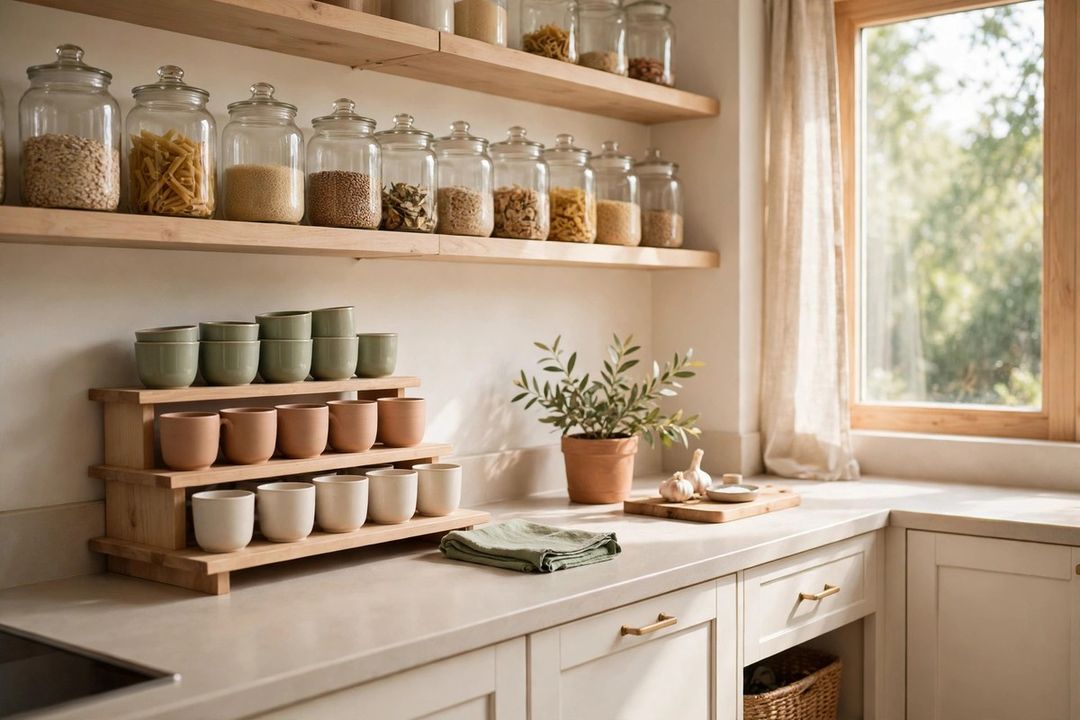
Place items where their task happens. Keep mugs, filters, and coffee together near the coffee maker, and everyday dishes near the dishwasher or sink. Grouping by use cuts morning hunting and looks tidy, because each shelf reads as one clear set, not a random mix.
3. Use Uniform Containers for Dry Goods
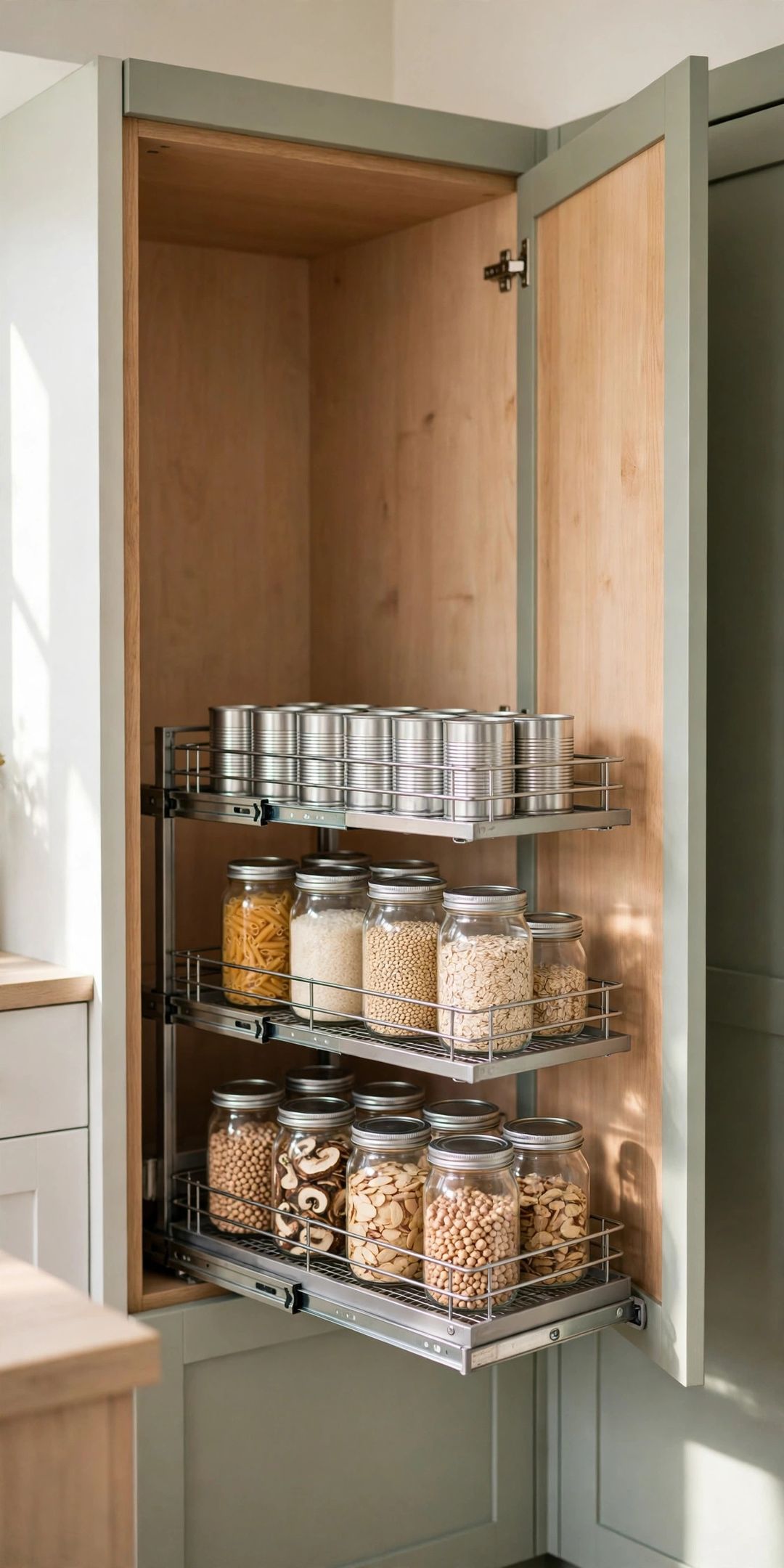
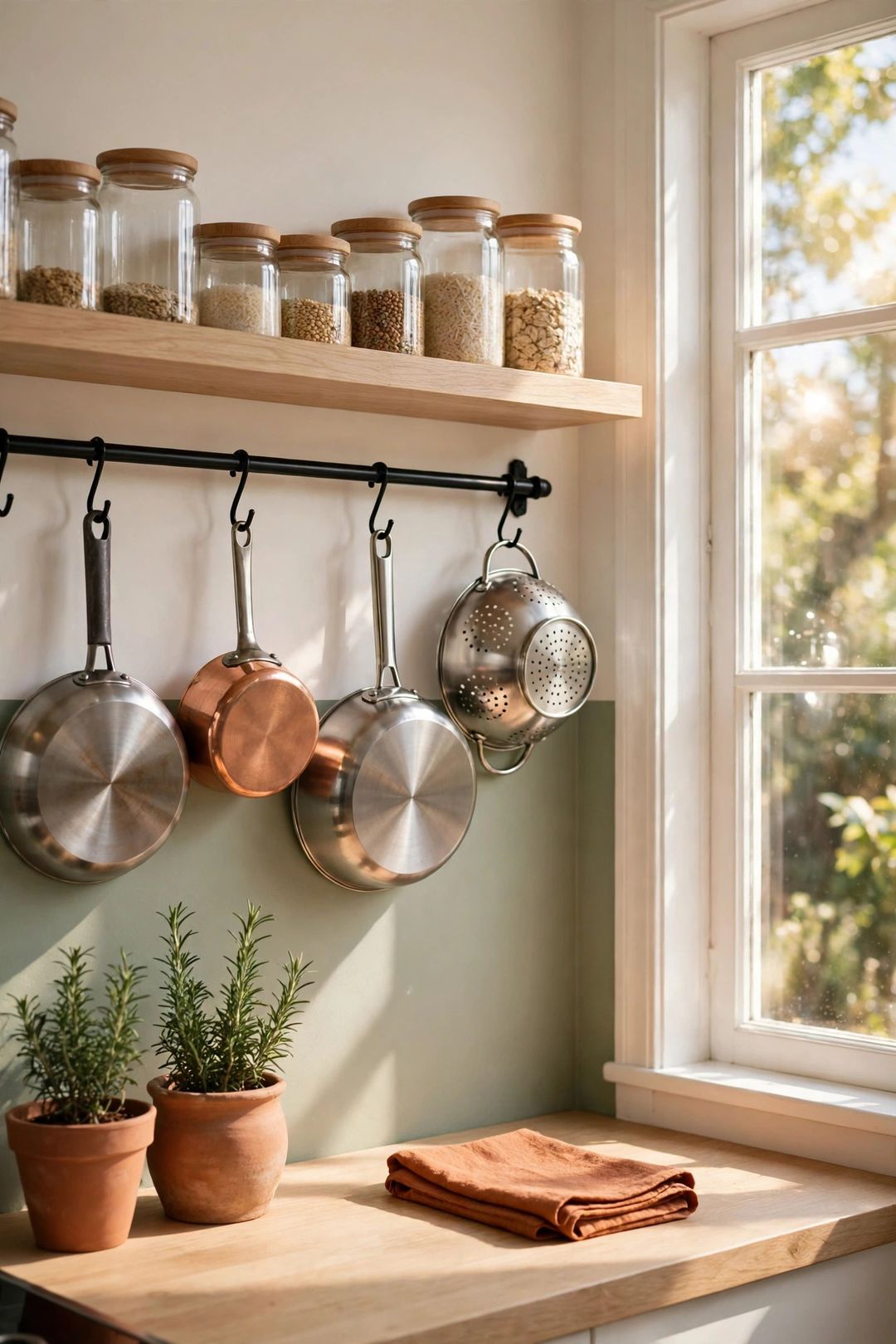
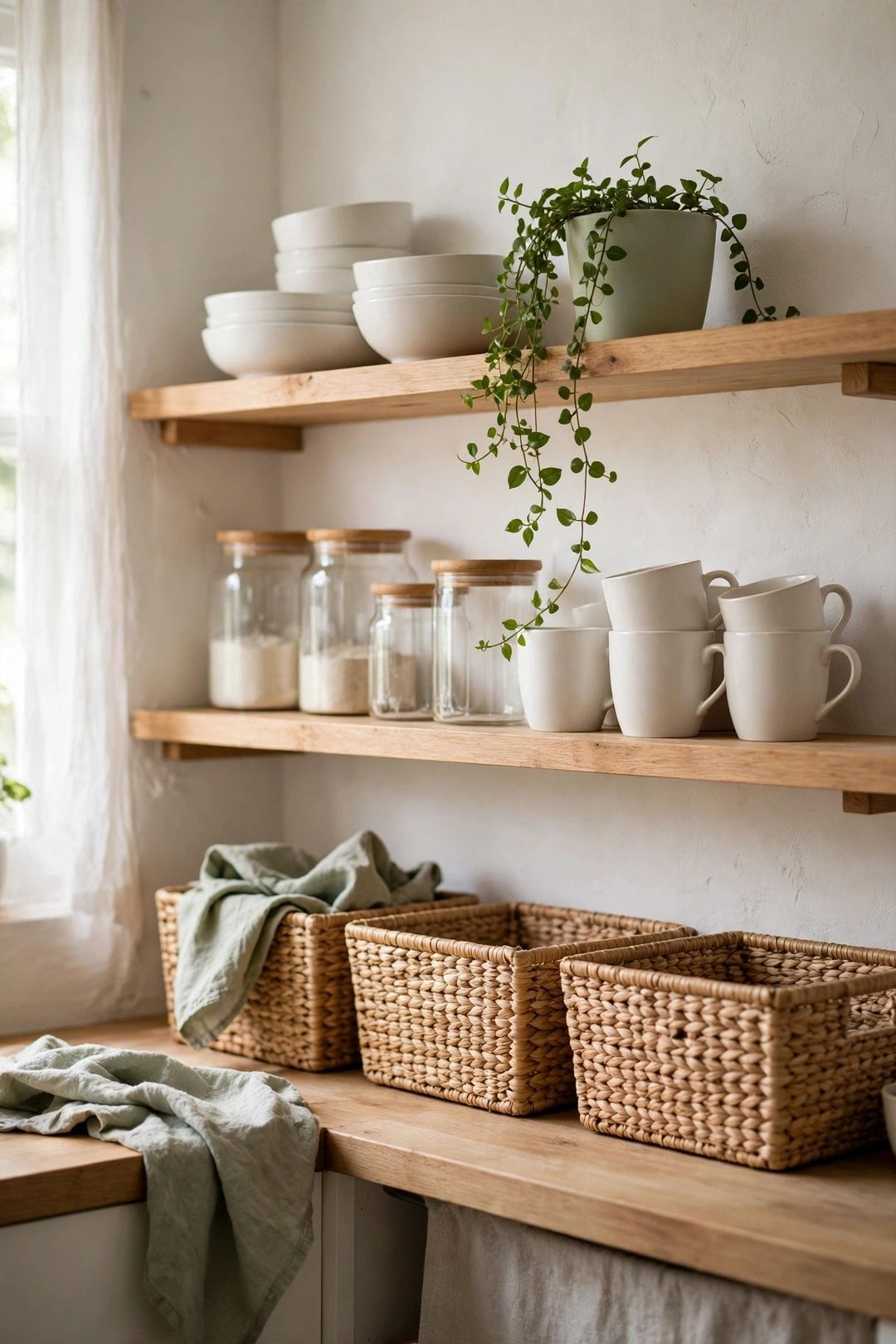
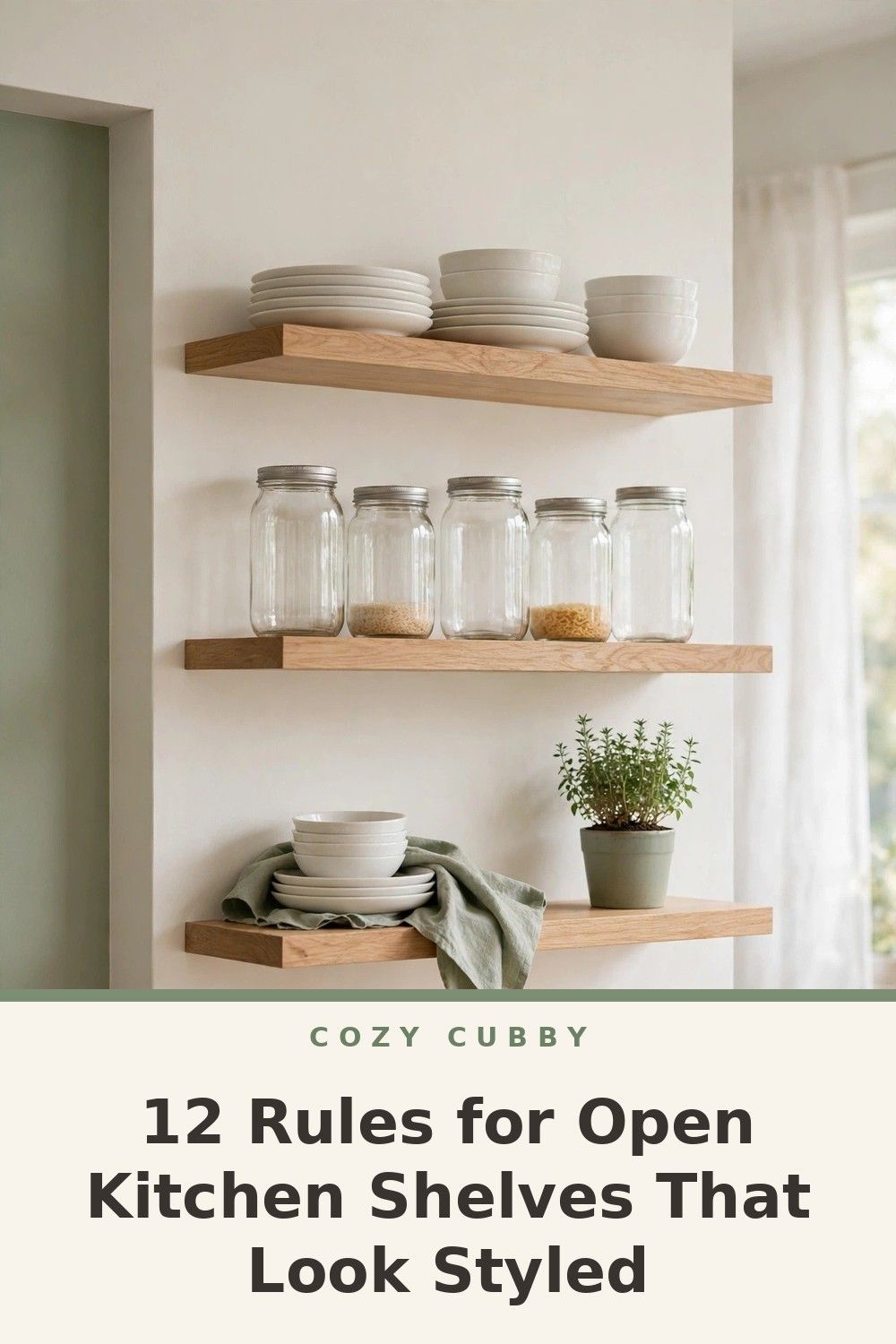
Flour, pasta, rice, and coffee look calmer in matching jars than in a row of loud, half-empty bags and boxes. You do not need an expensive set; a few jars in the same style work well. Clear containers also show when supplies run low.
4. Leave Breathing Room on Every Shelf
A shelf packed edge to edge always looks stuffed, even when clean. Leave empty space at the ends of each shelf and small gaps between groups. Aim to fill most of the shelf, not all of it. That space makes kept items look chosen and easier to lift down.
5. Put Heavy Items on the Lowest Shelf
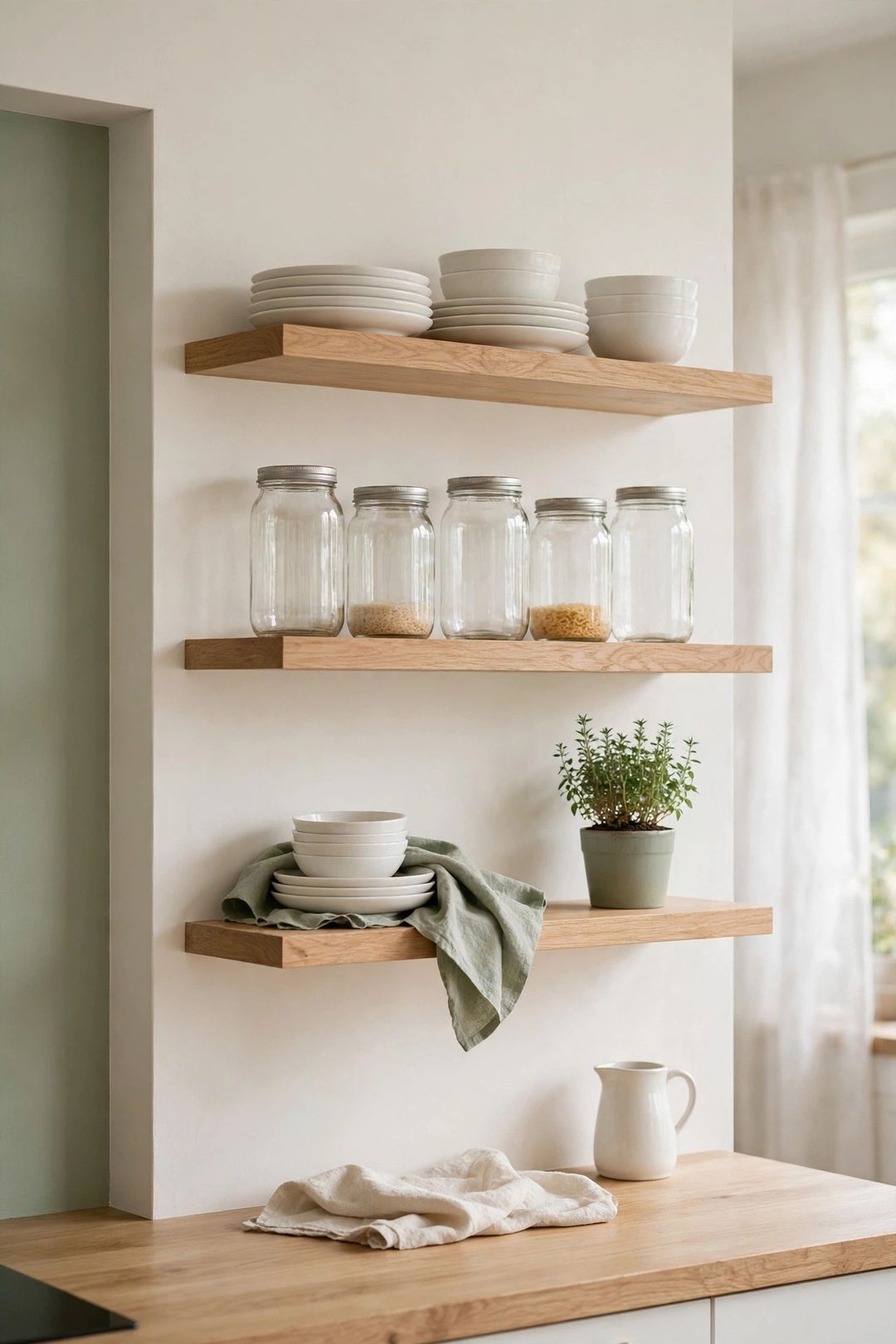
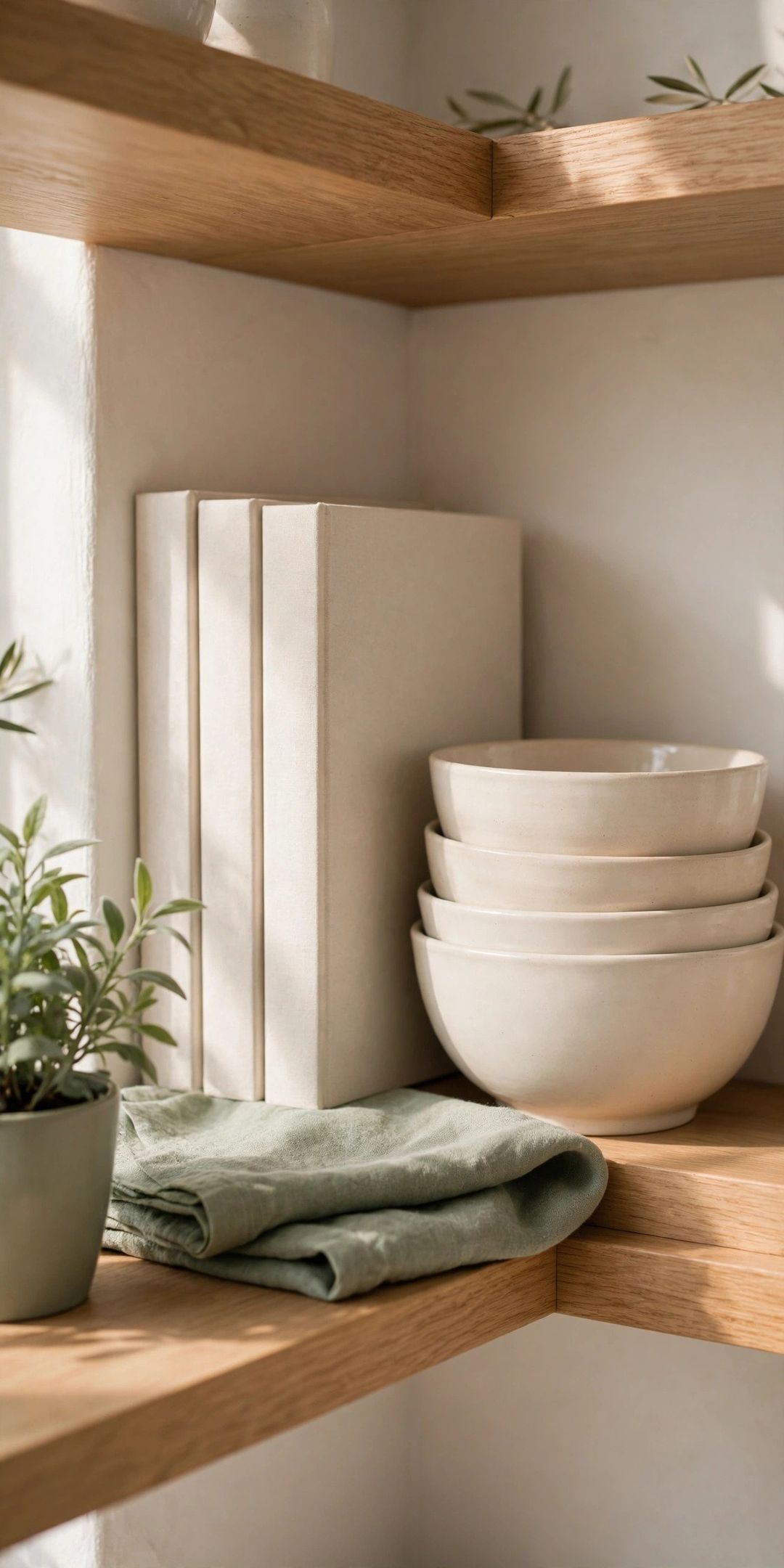
Place heavy bowls, large jars, and tall bottles on the bottom shelf, where they are safest and easiest to lift. Lighter glasses and small bowls can go higher. This order also looks balanced: a solid base with lighter items above feels steady, not top-heavy.
6. Limit Each Shelf to a Few Colors
A simple color plan pulls shelves together fast. Stick to two or three tones, such as white, wood, and one accent color, and move clashing pieces behind closed doors. Shades do not need to match exactly; close tones still read as one calm group.
7. Stack Less, Line Up More
Short, steady stacks of plates and bowls are fine, but tall stacks look messy and are hard to use. Keep stacks low, line glasses in straight rows, and face handles and labels the same way. These small habits cost nothing and take only seconds.
8. Add One Closed Basket for Small Clutter
Every kitchen has small, odd items that never look neat in the open: packets, clips, and spare lids. Give them one lidded basket or opaque bin so they stay handy but hidden. One basket looks tidy; a full row starts to look like storage boxes.
9. Corral Oils and Spices on a Tray
Oils and spices spread out fast and leave rings behind them. Keep them on a small tray or in one basket near the stove, away from direct heat. A tray catches drips, keeps bottles upright, and lifts away in one move when you wipe underneath.
10. Set a Simple Dusting Routine
Open shelves collect dust and cooking grease, so a quick routine beats a rare deep clean. Wipe shelves with a damp cloth once a week, and rinse shelf dishes that sit unused. Work top to bottom so dust falls onto shelves you have not cleaned yet.
11. Edit the Shelves Every Few Months
Shelves slowly fill back up as new mugs, jars, and gifts sneak in. Every few months, move out anything you stopped using, own twice, or no longer like seeing. If you would not miss an item after a month in a box, it needs no open space.
12. Style One Small Spot, Not Every Shelf
One styled moment, like a plant, a leaning cookbook, or a stack of wooden boards, adds warmth without stealing storage. Keep it to one spot per shelf run and leave the rest practical. Too many decor pieces turn useful shelves into display shelves.
What to Buy
Matching glass jars with lids. Pro: they calm visual clutter and show contents at a glance. Con: glass is heavy, so keep big jars low. Skip if food lives in closed cabinets. Typically $15–$30.
A small lidded basket. Pro: it hides packets and odd items while keeping them close. Con: deep baskets can bury small things. Skip if you have little small clutter. Typically $10–$18.
A low tray for oils and spices. Pro: it catches drips and makes wiping faster. Con: it uses some shelf depth, so measure first. Skip if shelves are very shallow. Typically $12–$22.
Simple white everyday dishes. Pro: a plain matching set looks neat with no effort. Con: replacing dishes costs more than editing your own. Skip if your set already matches. Typically $25–$45.
Mistakes to Avoid
- Displaying everything you own. Rarely used items collect dust and crowd out dishes you reach for daily.
- Filling every inch of shelf. Shelves with no empty space look stuffed, however clean they are.
- Mixing too many colors and patterns. A busy mix fights for attention and makes tidy shelves look messy.
- Ignoring dust until it builds up. Grease and dust bond over time, so weekly wipes beat rare scrubbing.
- Styling over function. If daily dishes are hard to reach, the setup falls apart within weeks.
Frequently Asked Questions
How do you keep open shelves from looking cluttered?
Keep only daily items on them, group by use, use matching containers, and leave empty space on each shelf. Those four habits do most of the work.
How often should open shelves be cleaned?
A quick wipe once a week handles most dust and grease. Wash items that sit unused, and do a fuller edit and clean every few months.
What should not go on open kitchen shelves?
Avoid rarely used appliances, spare gadgets, tall unstable stacks, and food in torn packaging. They look busy, gather dust, and belong behind closed doors.
Can open shelves work in a very small kitchen?
Yes, if you edit strictly. One or two shelves of daily dishes can free cabinet space and feel airy, as long as each shelf keeps breathing room.
Styled shelves are not about buying more; they are about keeping less, grouped well, with room to breathe. Start with one shelf and live with it for a week. Save this post to your Kitchen Organization board on Pinterest for your next shelf refresh.