A home with no closets can feel like a storage puzzle with missing pieces. Coats pile near the door, clothes have no clear home, towels stack on chairs, and cleaning supplies end up wherever there is a gap.
Learning how to organize a home with no closets starts with a simple shift: stop looking for closet space and start assigning each classic closet job to a piece of furniture or a zone. Every home still needs a place for coats, clothes, linens, cleaning supplies, and seasonal items, even when there is no closet door to hide them behind.
The plan below walks through the home room by room, giving each job a new home. Start with one zone, such as the entry, and add the next zone only when the first one is working.
1. Entry and Coats: Build a Landing Zone
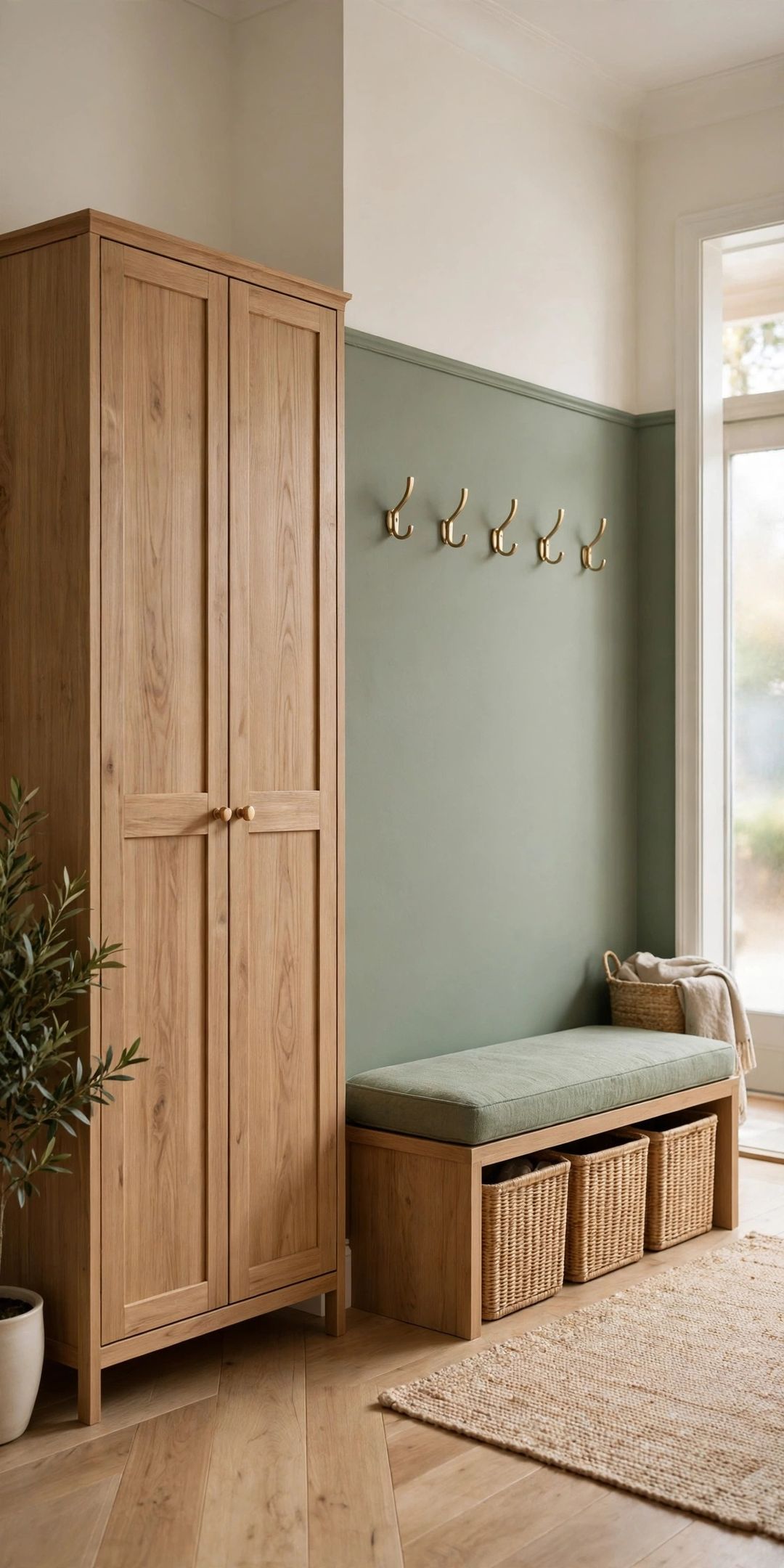
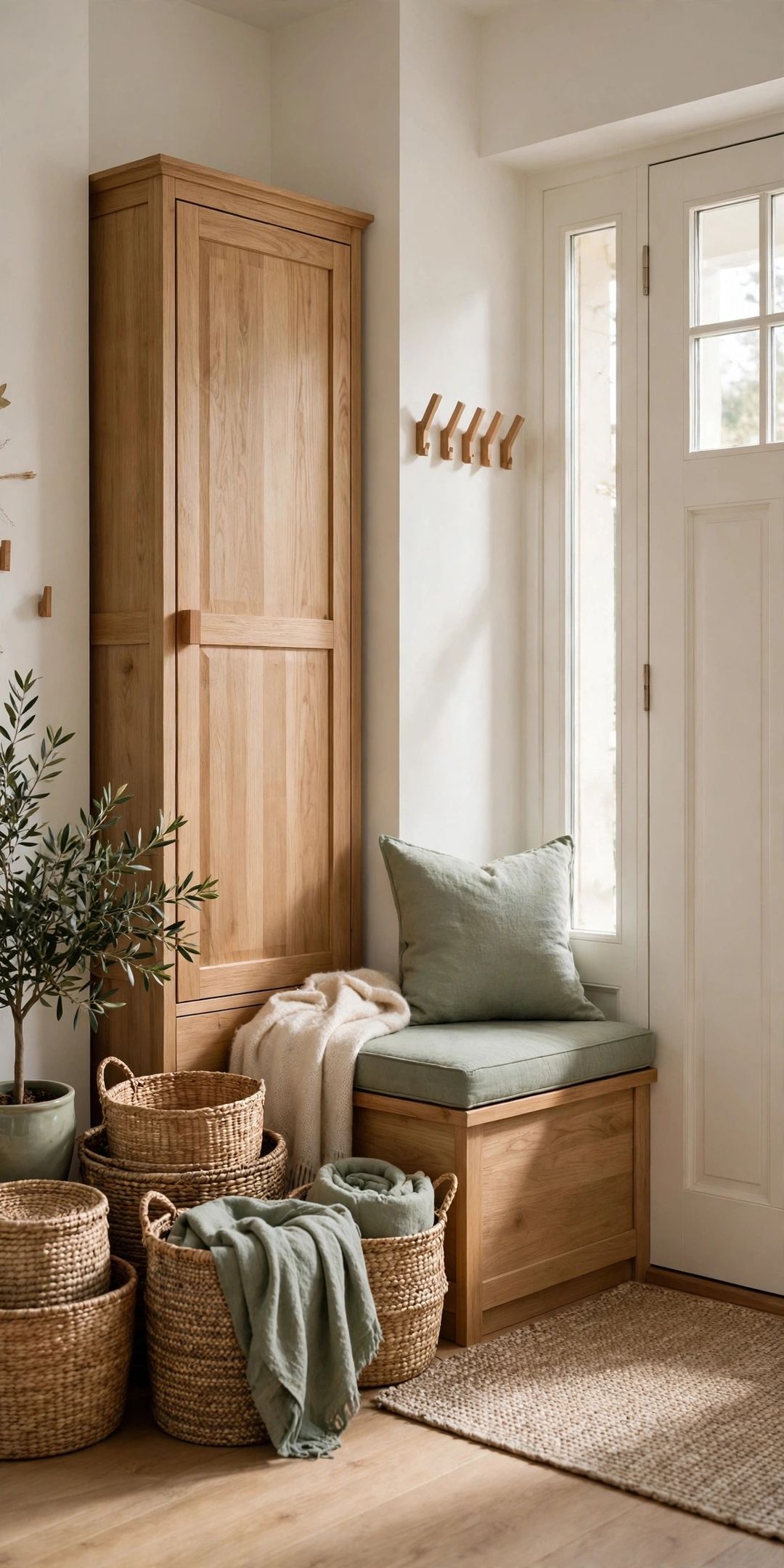
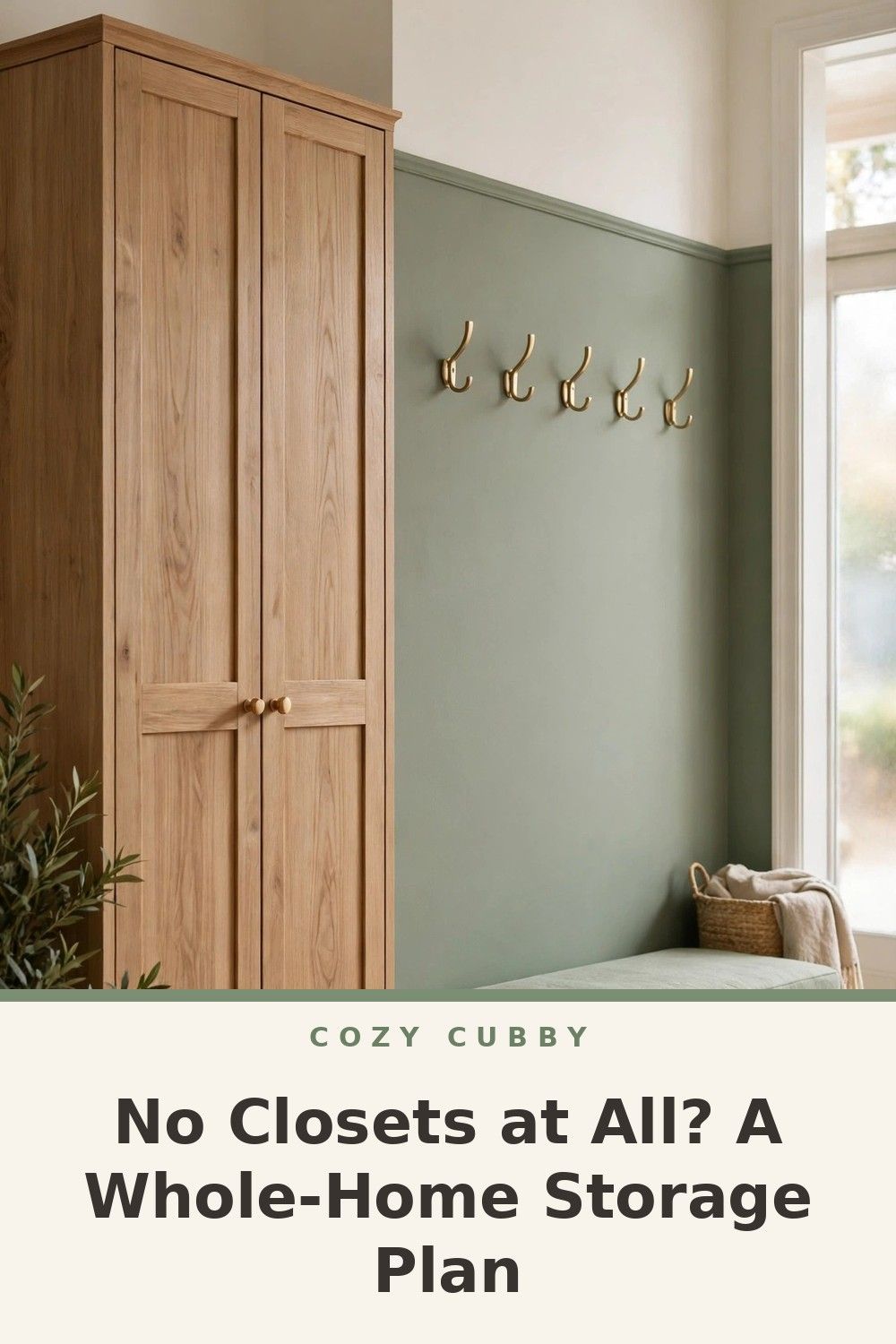
Give coats, bags, and shoes a landing zone by the door. A row of sturdy wall hooks, a slim coat rack, or a small bench with a shelf underneath can hold daily coats and bags without a closet. Add a basket or tray for shoes, and keep only the coats in regular use here, so the entry stays open and welcoming.
Seasonal coats that are not in use belong in the seasonal zone later in this plan. When the entry holds only current-season coats, it stays useful instead of turning into a second wardrobe.
2. Everyday Clothing: Use a Wardrobe and Dresser System
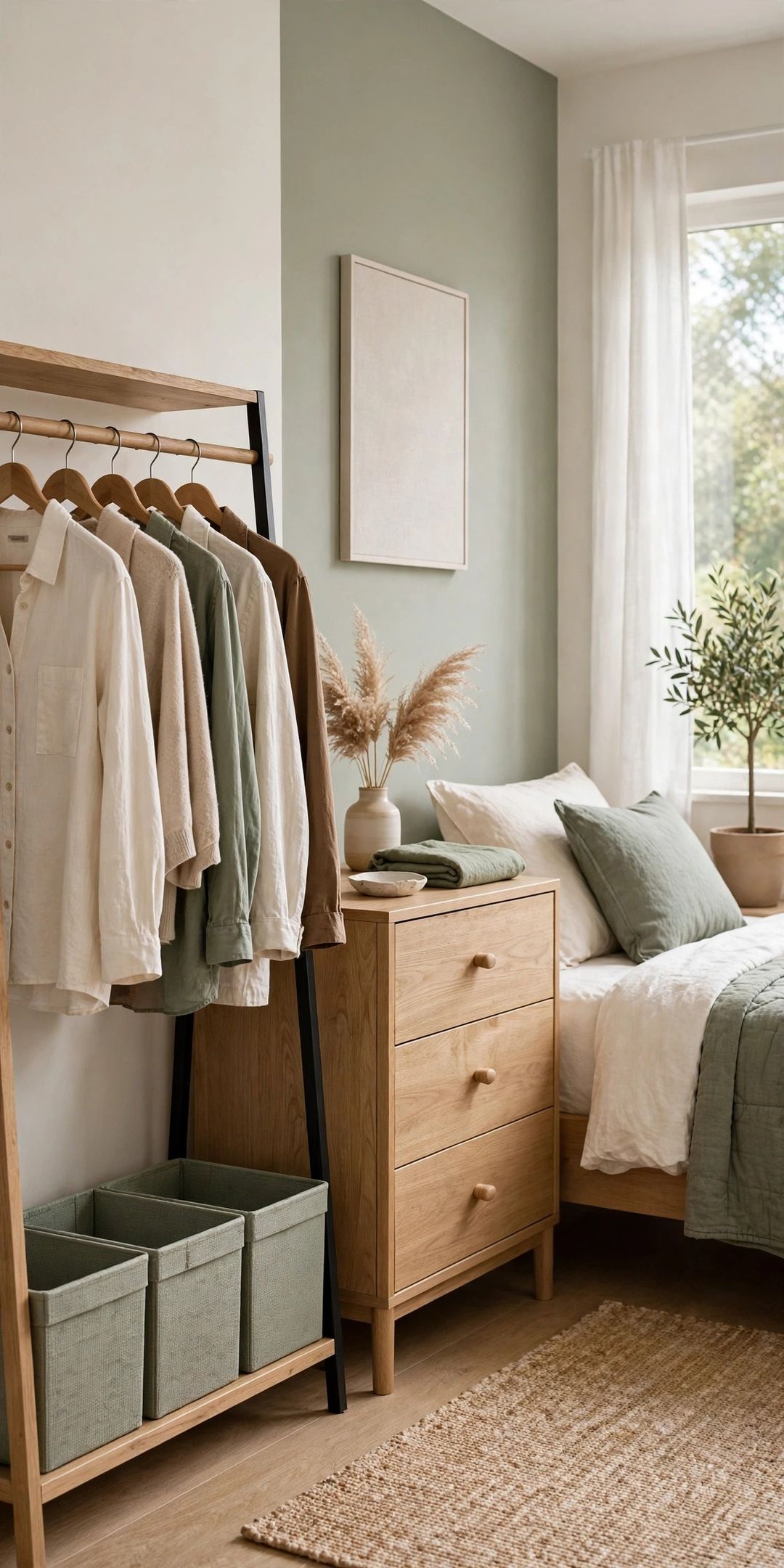
Replace the bedroom closet with a wardrobe, a dresser, and open hanging space. A freestanding wardrobe holds hanging clothes, a dresser holds folded items, and a simple garment rack can cover overflow during busy weeks. Group clothes by type, such as work, casual, and outerwear, so getting dressed follows the same order every day.
Keep the everyday wardrobe to clothes worn regularly. Off-season and rarely worn clothes move to the seasonal zone, which keeps the wardrobe roomy and the morning routine simple.
3. Linens and Towels: Create Open Shelving That Stays Tidy
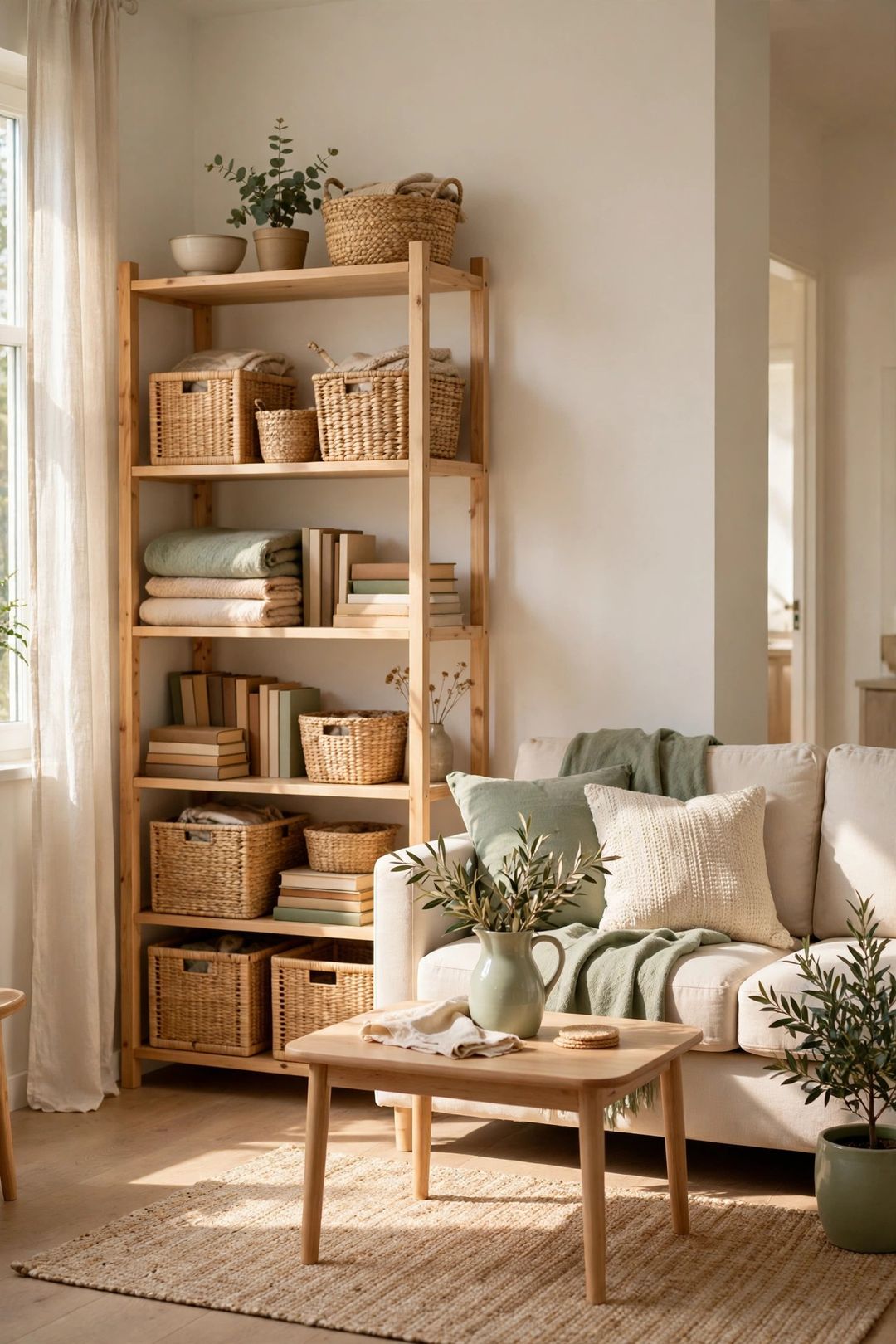
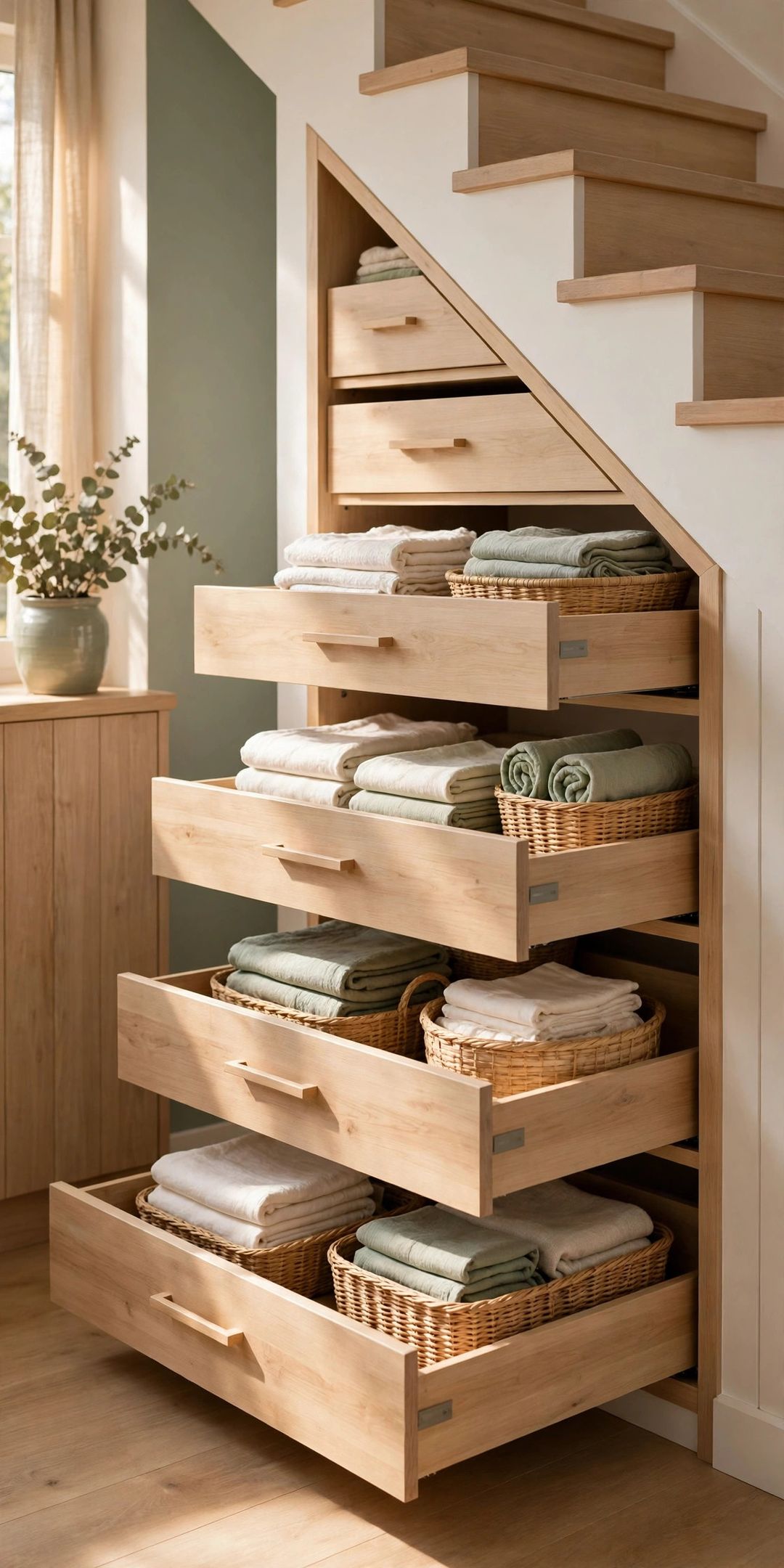
Store linens and towels on open shelves, in a linen cabinet, or in labeled baskets. Fold towels and sheets into neat stacks, and keep one set in use plus one spare set per bed or bathroom. Rolled towels fit well in baskets, while flat sheets stack neatly on a shelf.
Label baskets by room or by set, so anyone can find fresh towels without unfolding the whole stack. Keep linen storage near the bathroom or bedroom it serves, so fresh sets do not travel across the house.
4. Cleaning Supplies: Claim One Safe Cabinet or Cart
Give cleaning supplies one dedicated home, away from food and towels. A tall cabinet, a utility shelf, or a rolling cart can hold sprays, cloths, gloves, and tools in one place. Keep daily cleaners at easy reach, and store stronger products higher up, out of reach of children and pets.
A small caddy for the cleaners used most often saves trips back and forth. Fill it before cleaning, carry it room to room, and return it to the same cabinet when finished.
5. Seasonal and Overflow: Store Up High and Out of the Way
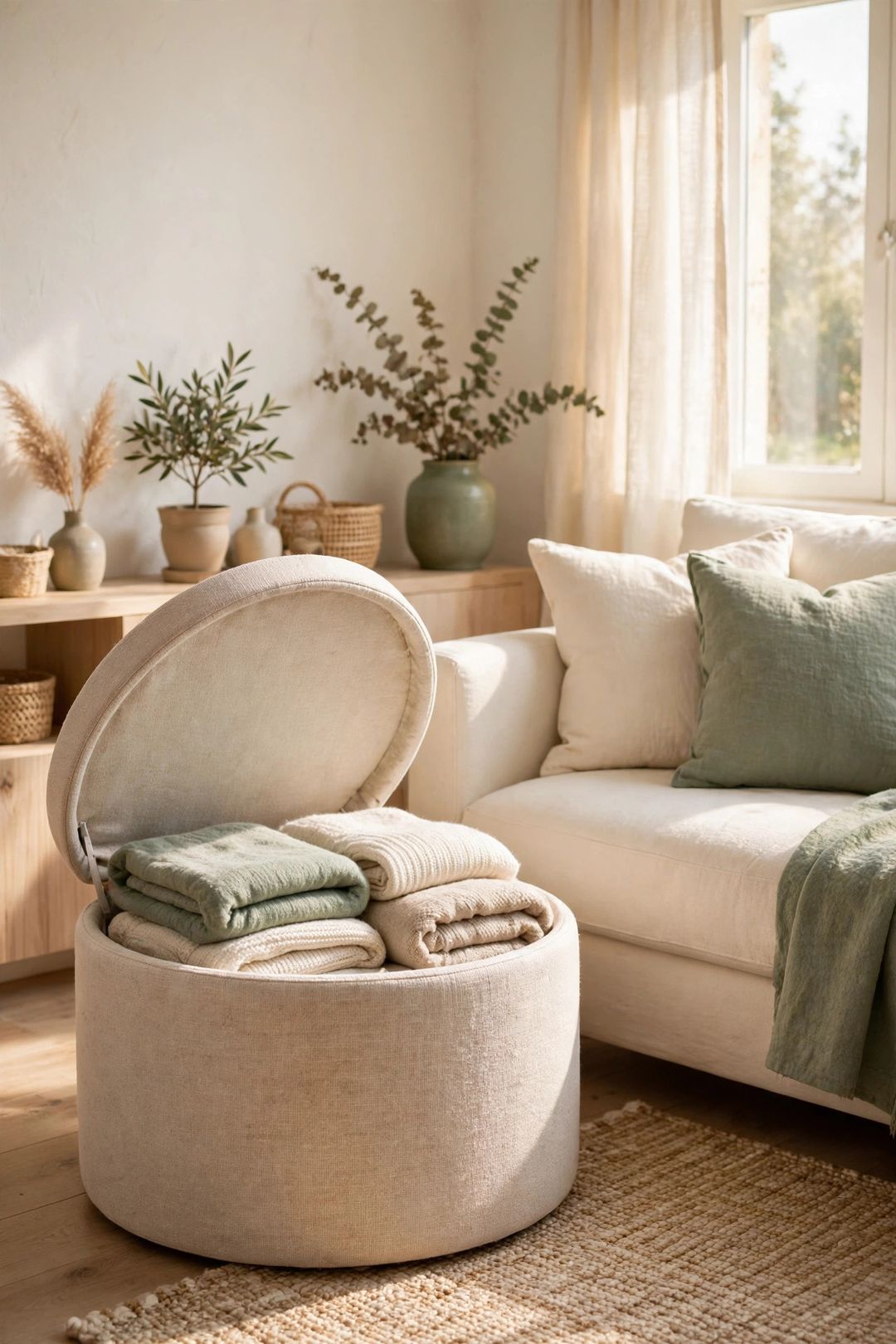
Move seasonal and overflow items to high shelves, under beds, or on top of wardrobes. Labeled bins for winter coats, holiday items, and spare bedding keep these things contained and out of daily zones. Label each bin with its contents and season, so finding the right box later takes seconds.
Check seasonal bins twice a year, when the seasons change. Swap the contents of the entry and wardrobe zones at the same time, so current-season items stay easy to reach and off-season items stay stored.
What to Buy
A freestanding wardrobe, typically $90–$220. Pro: It replaces a bedroom closet with hanging space and shelves in one piece. Con: Large wardrobes need wall space and careful measuring. Skip if: A dresser plus a garment rack already covers daily clothing.
A wall hook rail or coat rack, typically $18–$45. Pro: It creates entry storage with no floor space lost. Con: Hooks can overload quickly if seasonal coats are not moved out. Skip if: A bench with hooks already serves the entry well.
A set of labeled storage bins, typically $20–$40. Pro: Seasonal and overflow items stay contained, labeled, and easy to stack. Con: Bins that are too large get heavy and hard to lift. Skip if: Under-bed drawers already hold seasonal items neatly.
An open shelving unit for linens, typically $35–$80. Pro: Towels and sheets stay visible, so nothing gets forgotten at the back. Con: Open shelves need regular folding to look tidy. Skip if: A linen cabinet or deep baskets already hold linens well.
A rolling utility cart, typically $25–$50. Pro: Cleaning supplies move room to room and return to one cabinet. Con: A loaded cart can tip if tall items are not balanced. Skip if: Cleaning supplies already live in one dedicated cabinet near the middle of the home.
Mistakes to Avoid
- Keeping every coat at the entry. An entry that holds all seasons at once fills up fast. Keep current-season coats there and store the rest.
- Buying furniture before sorting. A wardrobe bought for clothes that are rarely worn just moves clutter. Sort first, then buy furniture to fit what remains.
- Mixing cleaning supplies with linens or food. Sprays and cloths need their own cabinet. Mixed storage risks spills on towels and confusion in the kitchen.
- Using unlabeled seasonal bins. Unlabeled bins turn a simple swap into a search through every box. Label contents and season on every bin.
- Letting overflow creep into daily zones. When seasonal items drift back into the wardrobe or entry, daily zones fill up again. Return overflow to its bin after each use.
Frequently Asked Questions
What replaces a closet in a small bedroom?
A wardrobe plus a dresser usually covers it. The wardrobe holds hanging clothes, the dresser holds folded items, and a garment rack can add temporary space. Keep the wardrobe to everyday clothes so it stays roomy.
Where should towels go without a linen closet?
Open shelves, a small linen cabinet, or labeled baskets near the bathroom all work. Keep one set in use plus one spare set, and roll towels in baskets when shelf space is tight.
How do you keep a closet-free home looking tidy?
Closed bins for seasonal items, labeled baskets for linens, and a short weekly reset help a lot. When every zone has a job and a boundary, open storage looks intentional instead of cluttered.
What if there is no room for a wardrobe?
Try a garment rack with a dresser, or wall-mounted shelves with hanging rods underneath. Even a narrow rack plus under-bed bins can hold a full everyday wardrobe in a small room.
A home without closets does not need more space, just a clear job for every zone, from the entry hooks to the seasonal bins up high. Save this post to your Small-Space Storage board on Pinterest so the whole-home plan is handy when setting up each room.