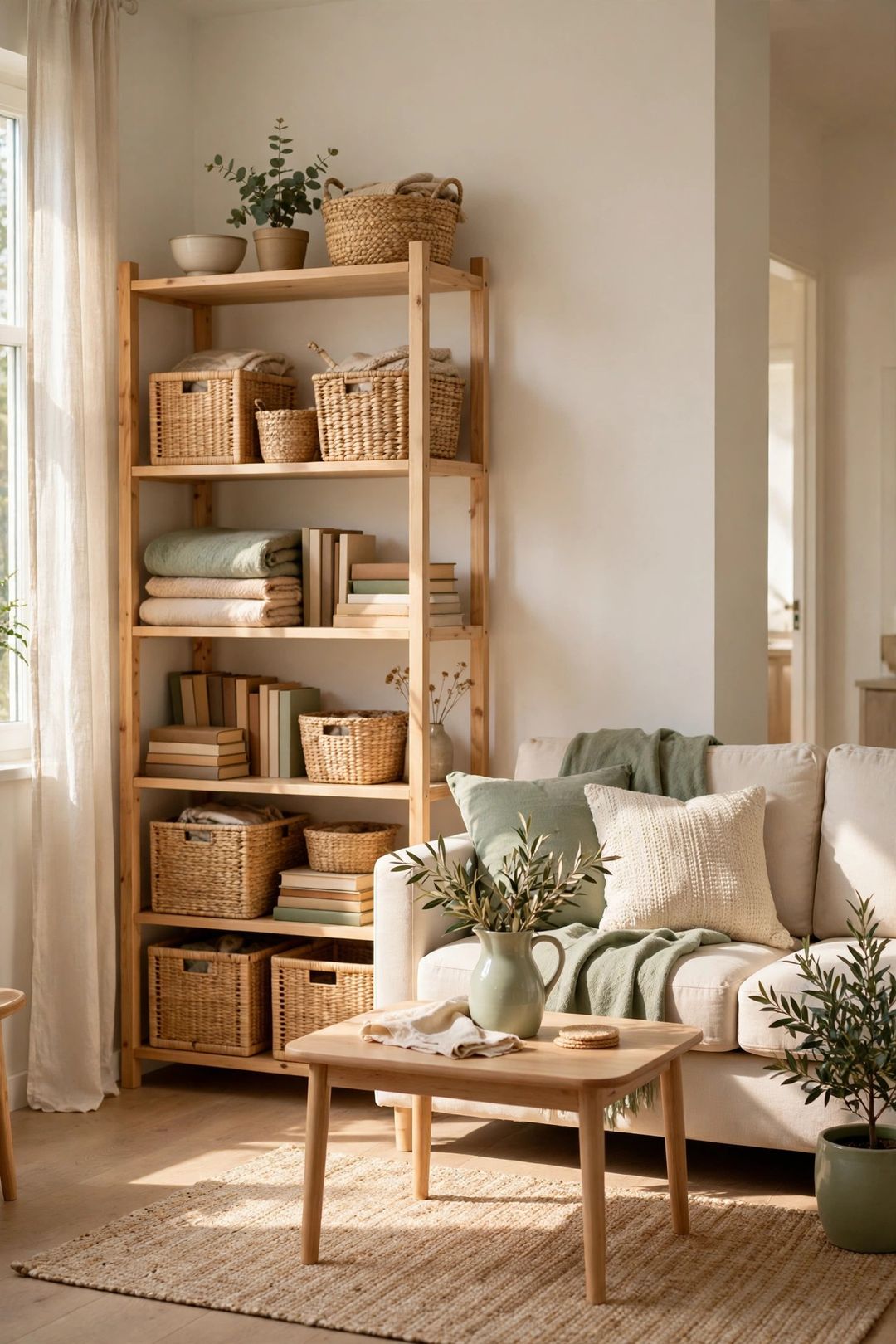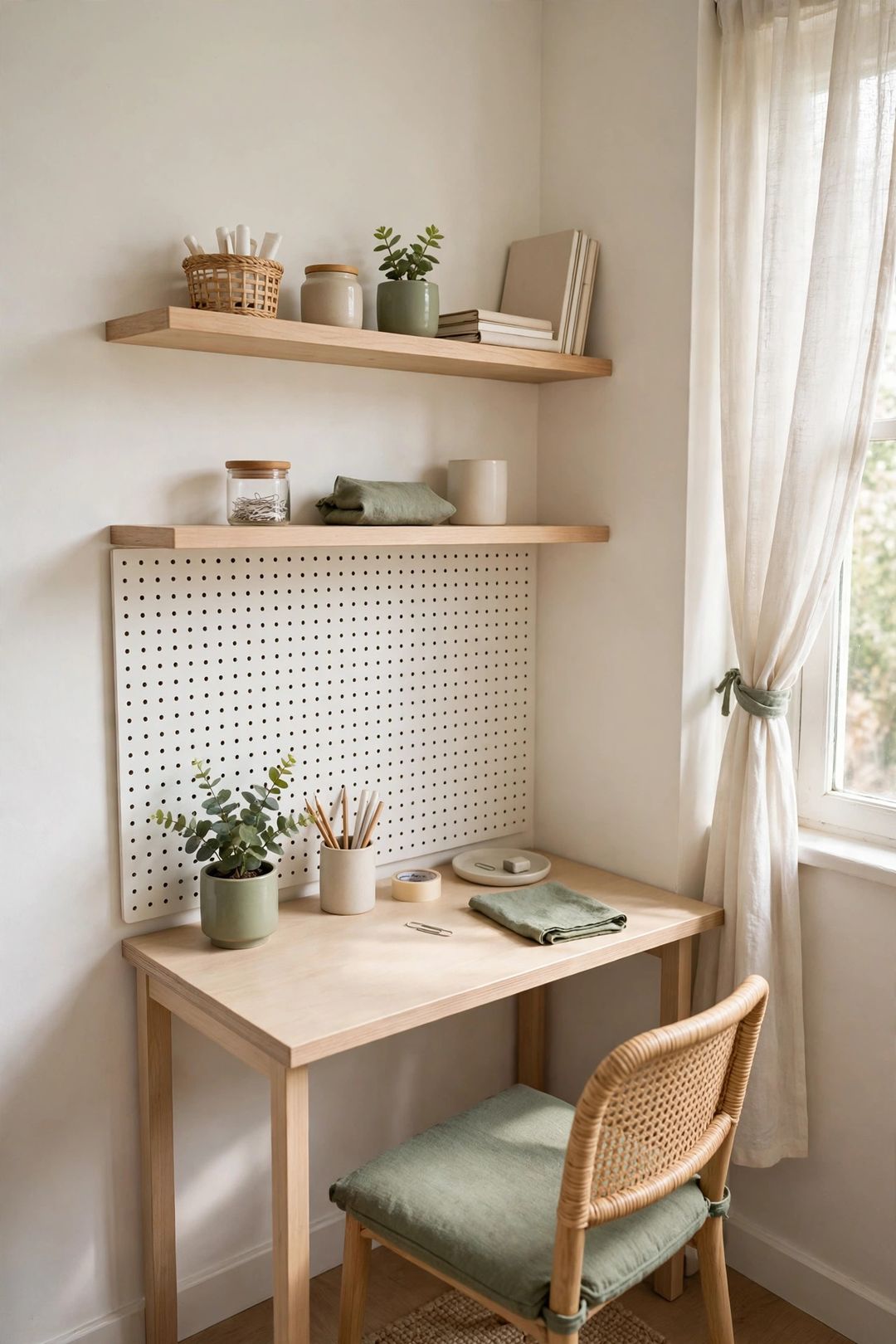
A spare room is a luxury; a corner is a decision. Learning how to organize home office tiny corner setups comes down to treating 36 to 48 inches of wall like a real workstation: a right-sized desk, storage that climbs instead of spreads, one paper system, and a closing routine that makes the office disappear at the end of the day.
This guide is for a corner of a living room or bedroom — deliberately not a closet conversion. Everything here is renter-friendly, needs no construction, and can be undone in an afternoon if the corner ever needs to be a corner again.
Pick the Corner: Light, Power, Quiet
Three things decide the corner: daylight from the side (not behind the screen, which glares), an outlet within cord reach, and the least foot traffic in the room. Measure the wall run honestly: 36 inches fits a compact desk and one person; 48 inches adds elbow room and a small storage piece. Avoid the wall behind a door swing and the spot directly over a heat vent — paper curls, and so will you in winter. If two corners tie, pick the one where your back faces the room's activity; a calmer background helps both focus and video calls.
The Desk Footprint: Small on Purpose
A desk 36 to 48 inches wide and 20 to 24 inches deep is the corner standard — deep enough for a laptop and notebook, shallow enough to leave the room walkable. Legs beat panels for small corners: open legs keep the floor visible, which keeps the corner reading as part of the room instead of a furniture landing. A wall-mounted fold-down desk is the extreme-space option, giving a full work surface that folds to about 4 to 6 inches deep at night; it demands solid mounting, so renters should confirm what the lease allows before drilling, or choose a freestanding desk instead.
Go Vertical: One Shelf and a Rail
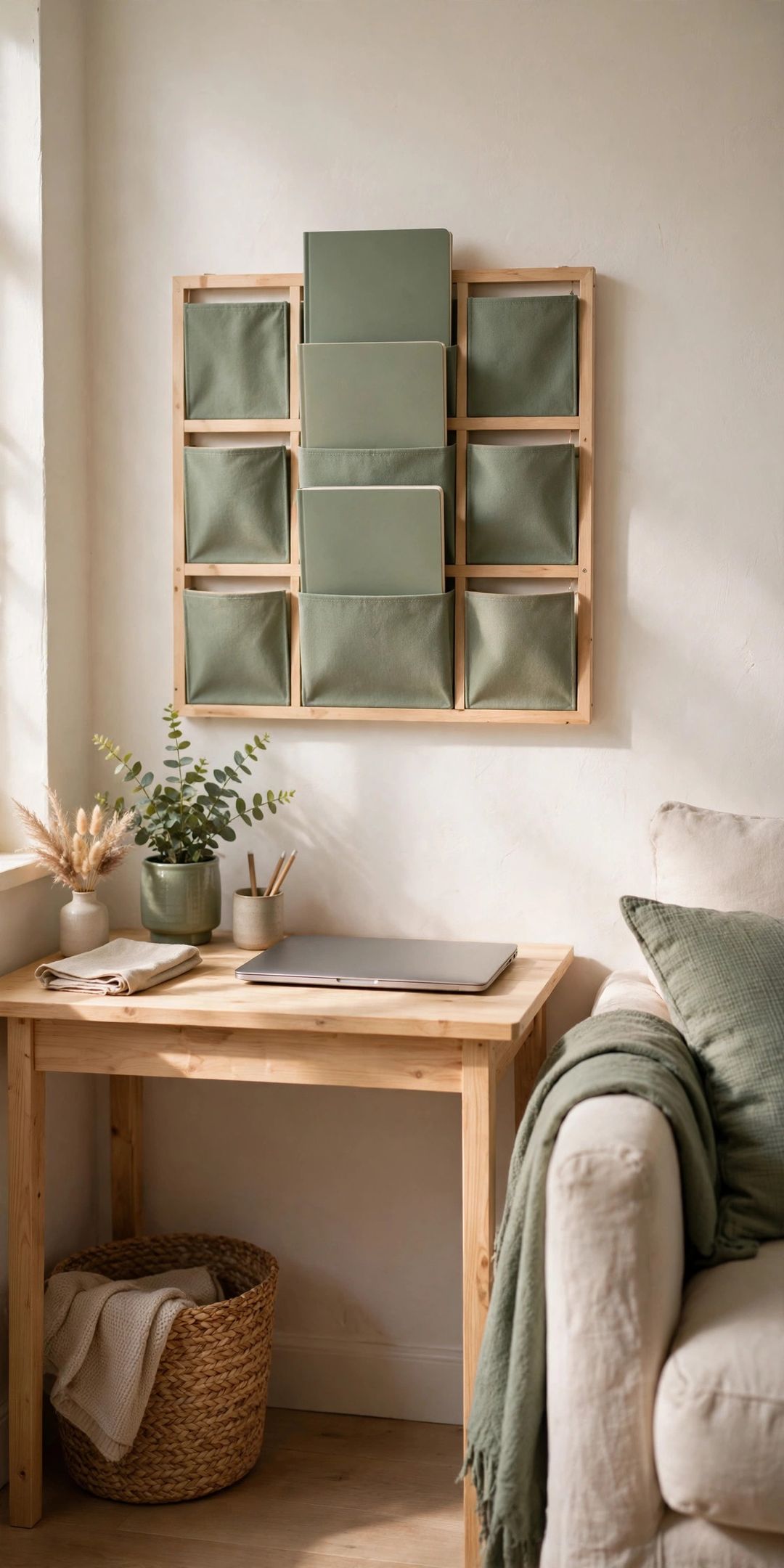
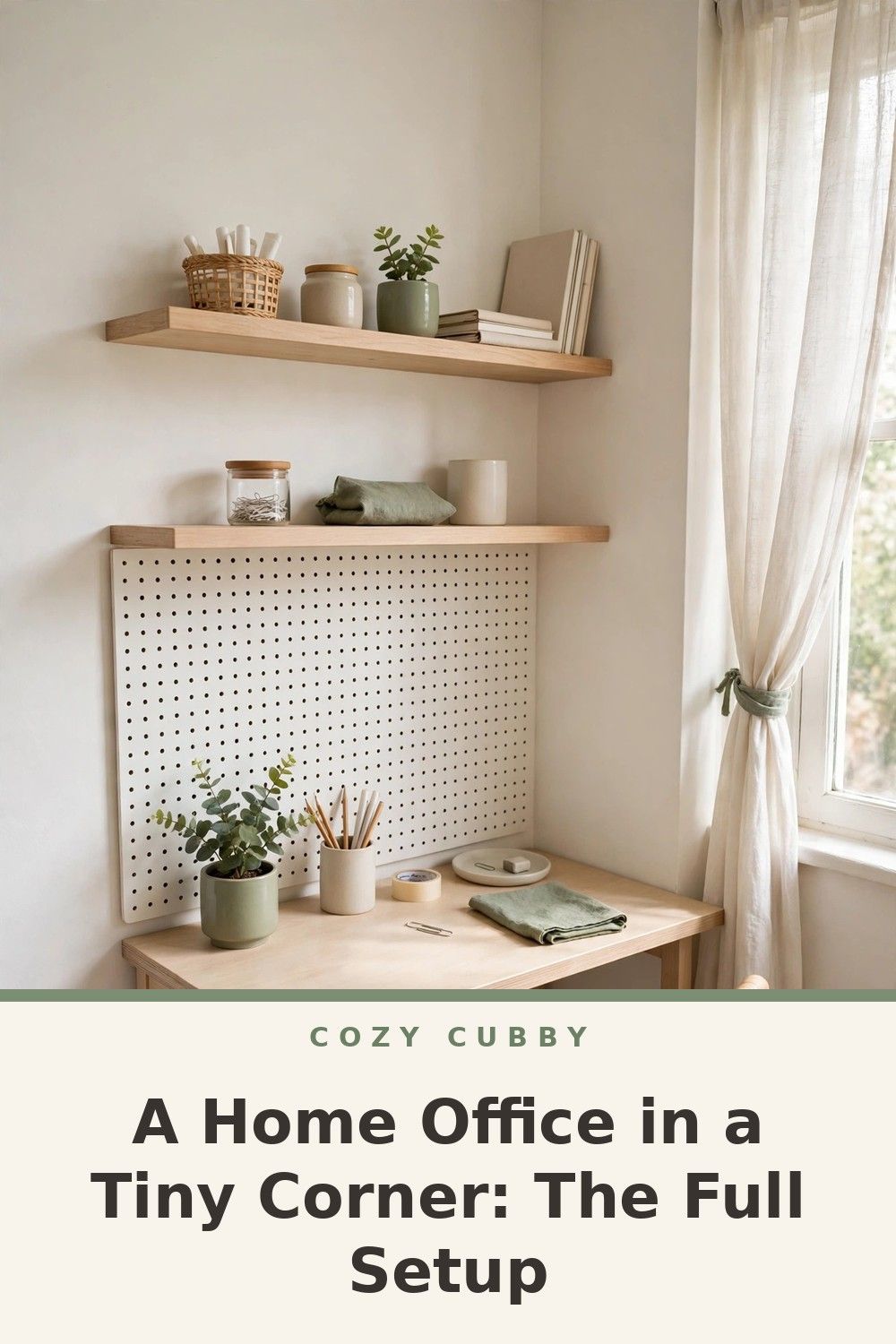
The floor space is finished; the wall is not. One floating or bracket shelf 10 to 12 inches deep, mounted so its underside clears your raised hand at the desk (often around 24 to 30 inches above the desktop), holds reference books, the printer paper, and the supplies box. Below or beside it, a rail or peg strip takes scissors, tape, and headphones on hooks — the daily tools, visible and off the desk. Keep the vertical zone to one shelf plus one rail: two shelves are storage, three are a bookcase competing with the room. What does not fit the shelf does not belong to the office.
Paper: One Tray In, One Tray Out
Corner desks die by paper spread, so paper gets exactly two trays: in and out, stacked or side by side, at the desk's back corner. Everything paper-shaped lands in "in"; nothing lives anywhere else. The out tray is for finished work on its way to filing, recycling, or another room. Once a week, both trays get emptied to zero in one ten-minute pass. If a third category truly exists (active project), it gets a single folder standing in a sorter — a folder, not a third tray, because folders close and trays invite piles.
Cables and the Chair That Tucks In
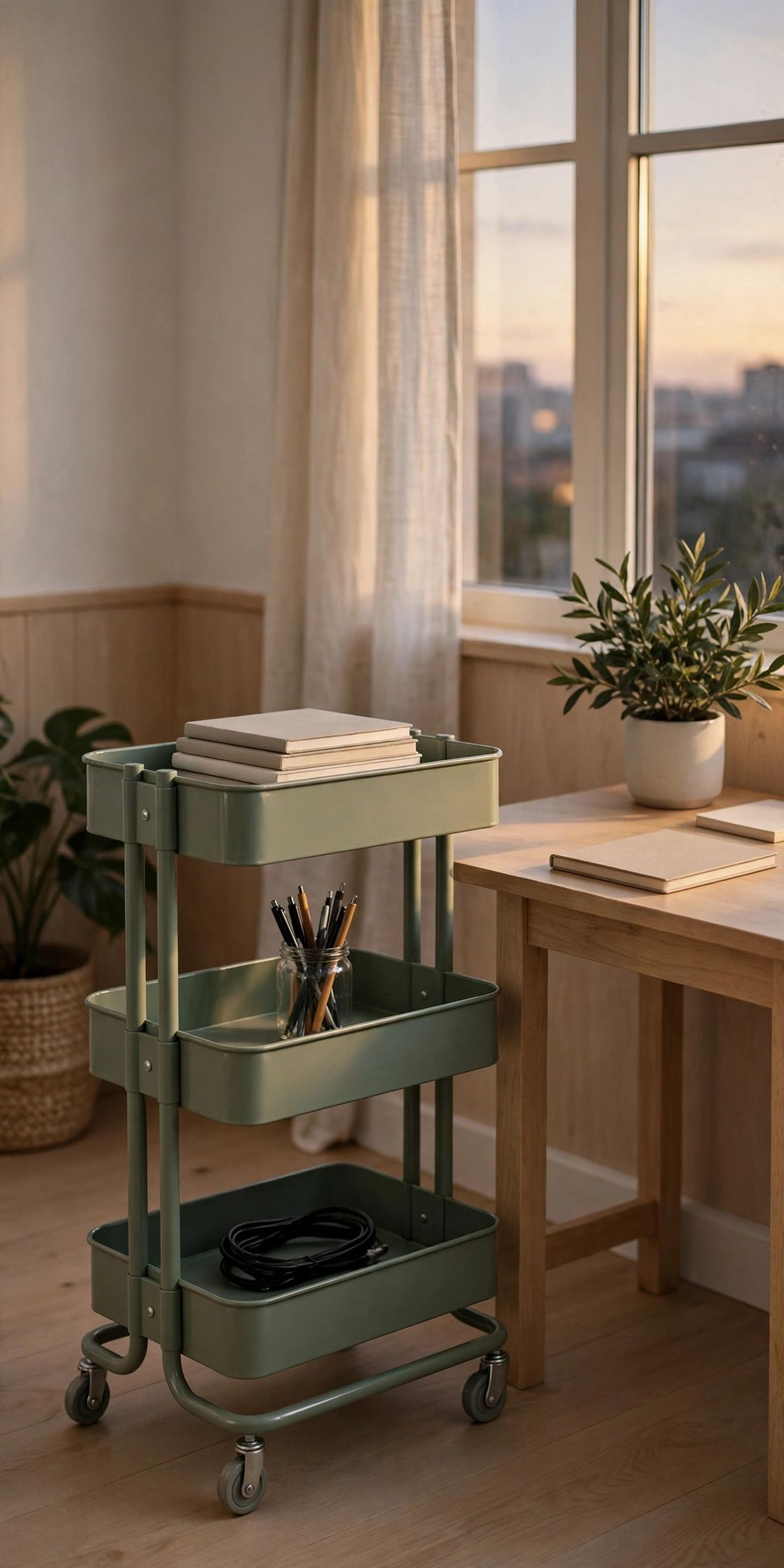
Run one power strip in a cable box under or behind the desk and route every cord through it, so the corner has one visible plug instead of five crawling cords. Clips along the desk's back edge park the daily charging cable where your hand expects it. The chair is the corner's second footprint problem: choose one that tucks fully under the desk — arms low or absent, back height under the desktop when pushed in. A chair that parks completely away doubles the room's evening floor space and is the difference between "office in the room" and "room with a desk in it."
Close the Office: The 3-Minute Shutdown
The corner earns its place by closing. End of day: paper into the trays, laptop shut or screen dark, supplies back on the rail, chair tucked fully in, and — the signal move — the desk lamp switched off. Three minutes, and the living room is a living room again, which matters more in a small home than any single organizer. Households sharing the room will respect the office during the day precisely because it visibly retires at night.
What to Buy
A compact desk, 36–48 inches wide, typically $60–$140. Pro: The right footprint makes every other system possible. Con: The single biggest purchase here — measure the corner twice first. Skip if: A small table you own already fits the wall run.
One wall shelf with brackets, typically $15–$30. Pro: Adds a full storage level for the price of a pizza. Con: Needs secure mounting — renters may swap to a tall desk-side cart. Skip if: The corner already has a usable ledge or windowsill at the right height.
A two-tray paper set, typically $10–$18. Pro: In/out is the whole paper system, in one purchase. Con: Trays tempt permanent storage — the weekly empty-to-zero pass is mandatory. Skip if: Two spare letter trays or shallow boxes are already in the house.
A cable management box with clips, typically $12–$20. Pro: One hidden strip calms the whole corner visually. Con: Boxes need ventilation and access, so do not bury them behind furniture. Skip if: Your setup runs on a laptop alone with one charger.
Mistakes to Avoid
- Choosing the leftover corner. The corner nobody wants (dark, outlet-free, high-traffic) makes a workday nobody wants. Pick for light and power first.
- Letting storage spread sideways. In a corner office, growth is vertical or it is takeover. New gear must displace old gear.
- A chair that cannot tuck in. A chair parked mid-room all evening is the office never closing — measure the tuck before buying.
- Paper without a border. The moment mail and printouts land outside the trays, the desk is a pile again. The trays are the office walls.
- Skipping the shutdown. Without the 3-minute close, work visually leaks into every evening the corner shares with the room.
Frequently Asked Questions
How small is too small for a corner office?
Thirty-six inches of wall run is the practical floor: compact desk, chair, one shelf. Below that, a fold-down wall desk with a side cart works, but at that point a lap-friendly nook elsewhere in the home may serve better than forcing the corner.
What about a printer?
If you print weekly or more, the shelf level is its home — measure the shelf depth against the printer before mounting. Occasional printers do better in a closet or cabinet, carried out when needed, than permanently taxing the corner's only shelf.
How do I handle video-call backgrounds?
Sit so the wall, not the room, is behind you. The corner setup naturally does this: two walls meet behind the desk in most corners. Keep the shelf styled simply, and the background reads tidy without a backdrop.
Can two people share one corner office?
Yes, with the shutdown ritual doubled: each person keeps one personal tray, and the desk returns to neutral at every handover. Shared corners fail on leftover personal gear, so a small personal bin per person, stored elsewhere, keeps the peace.
Pick the corner by light and power, size the desk to the wall, climb one shelf high, and close the office every night. Save this guide to your Home Office board on Pinterest before you measure your corner.