In a tiny bedroom, jewelry usually ends up in one tangled pile. Necklaces knot together in a drawer, earring pairs split up, and the pieces worn most often are the hardest to find on a busy morning.
Figuring out how to organize jewelry in a small bedroom is less about one big box and more about giving each type of piece a small, clear home. Drawers, walls, and the back of a door can all help, even when floor space is tight.
The 11 ideas below start in the drawer, move to the walls and door, and finish with ways to stop tangles and hide valuables. Pick two or three first, and add more only if needed.
Drawer and Dresser-Top Ideas
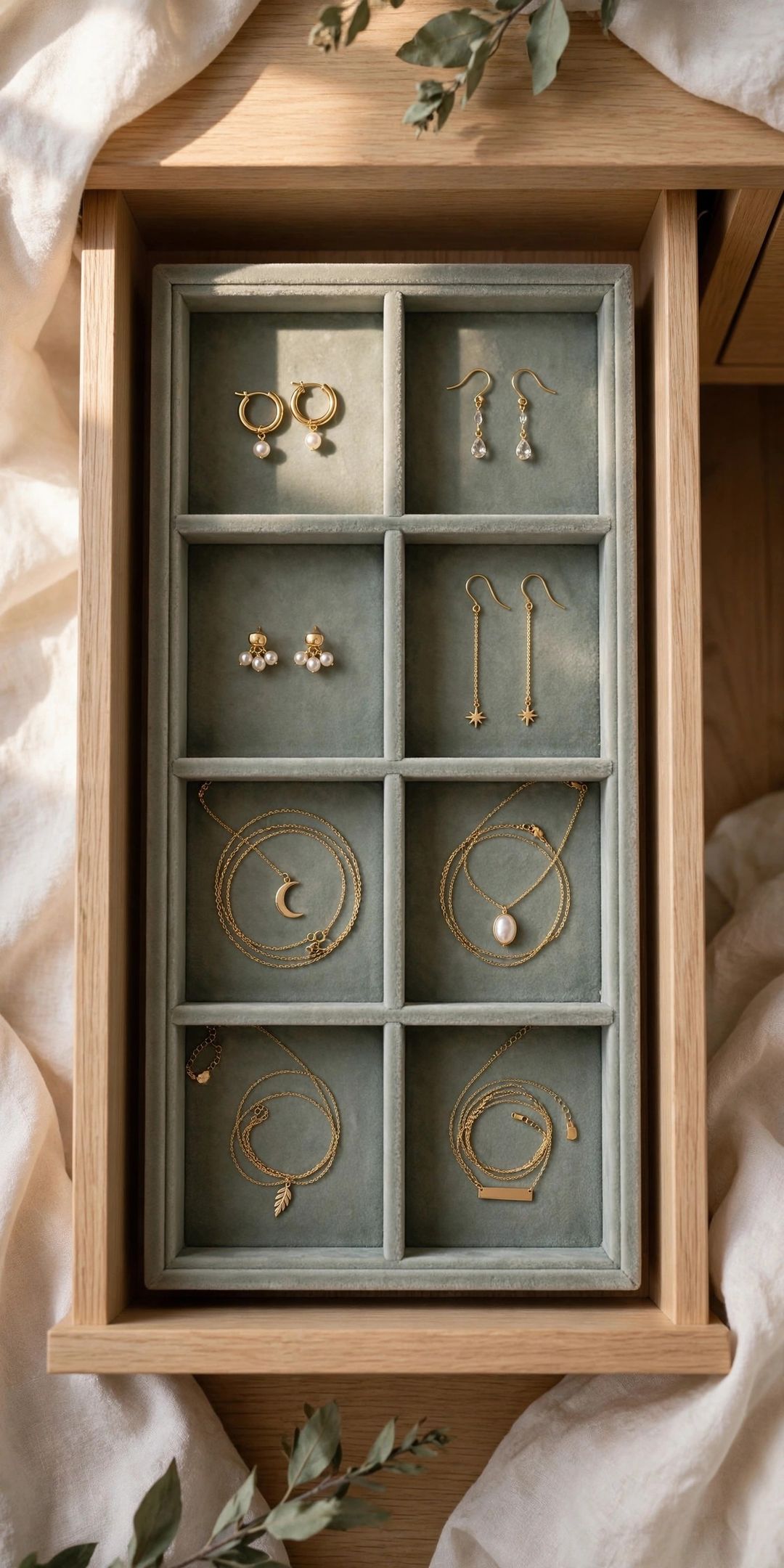
1. Divided drawer tray. A shallow tray with small compartments gives rings, studs, and bracelets separate spots in one drawer. Leave a little space at the front so it slides out easily. Sorting by type makes it faster to spot a missing pair and put pieces back.
2. Stackable drawer inserts. When a drawer is deep but the dresser is small, stackable inserts create two thin layers instead of one messy pile. Keep daily pieces on top and less-worn sets below. Measure the drawer height before buying, because even half an inch too tall will stop it closing.
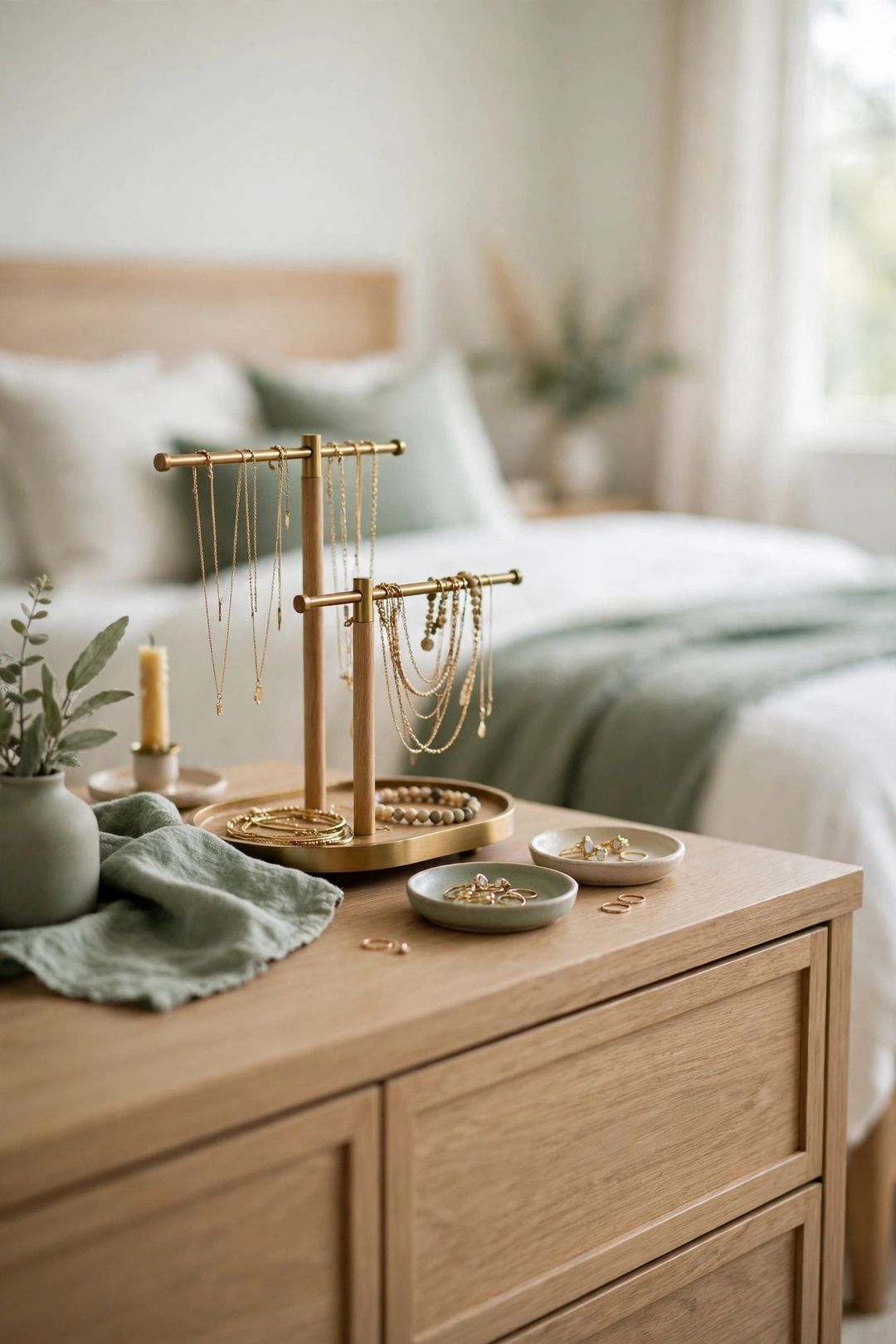
3. Small dish for daily pieces. A shallow dish or small plate on the dresser holds the watch, ring, and earrings worn every day. It works as a landing spot at night, so daily pieces do not scatter across the top. Keep the dish small on purpose — a large dish quickly turns into a second clutter pile.
Use the Walls, Door, and Closet Rod
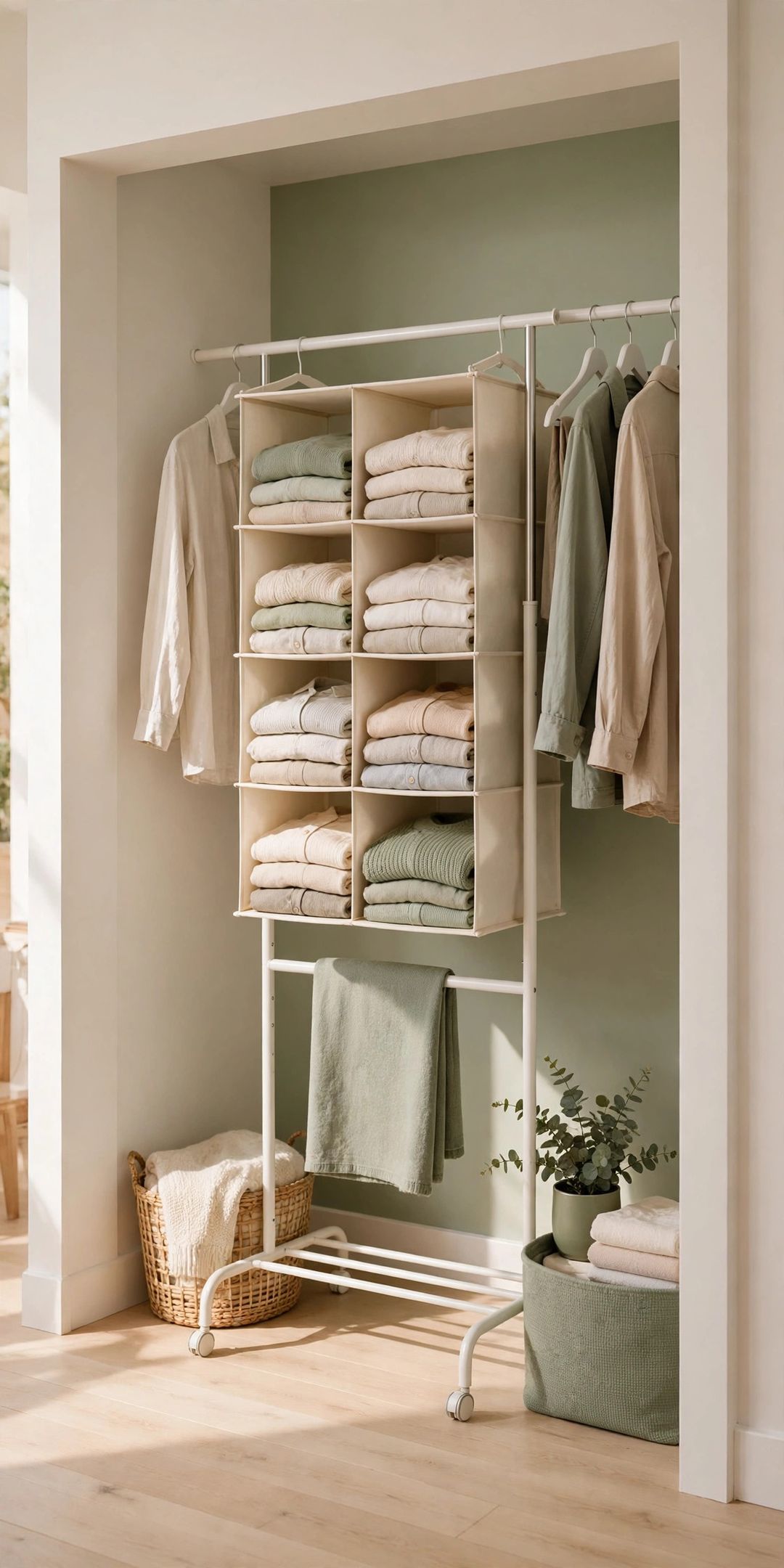
4. Clear-pocket hanging organizer. A hanging organizer with clear pockets can go on the back of a door or on a closet rod. Each pocket holds one set or one necklace, so pieces stay visible without taking shelf space. It suits costume jewelry and everyday sets best.
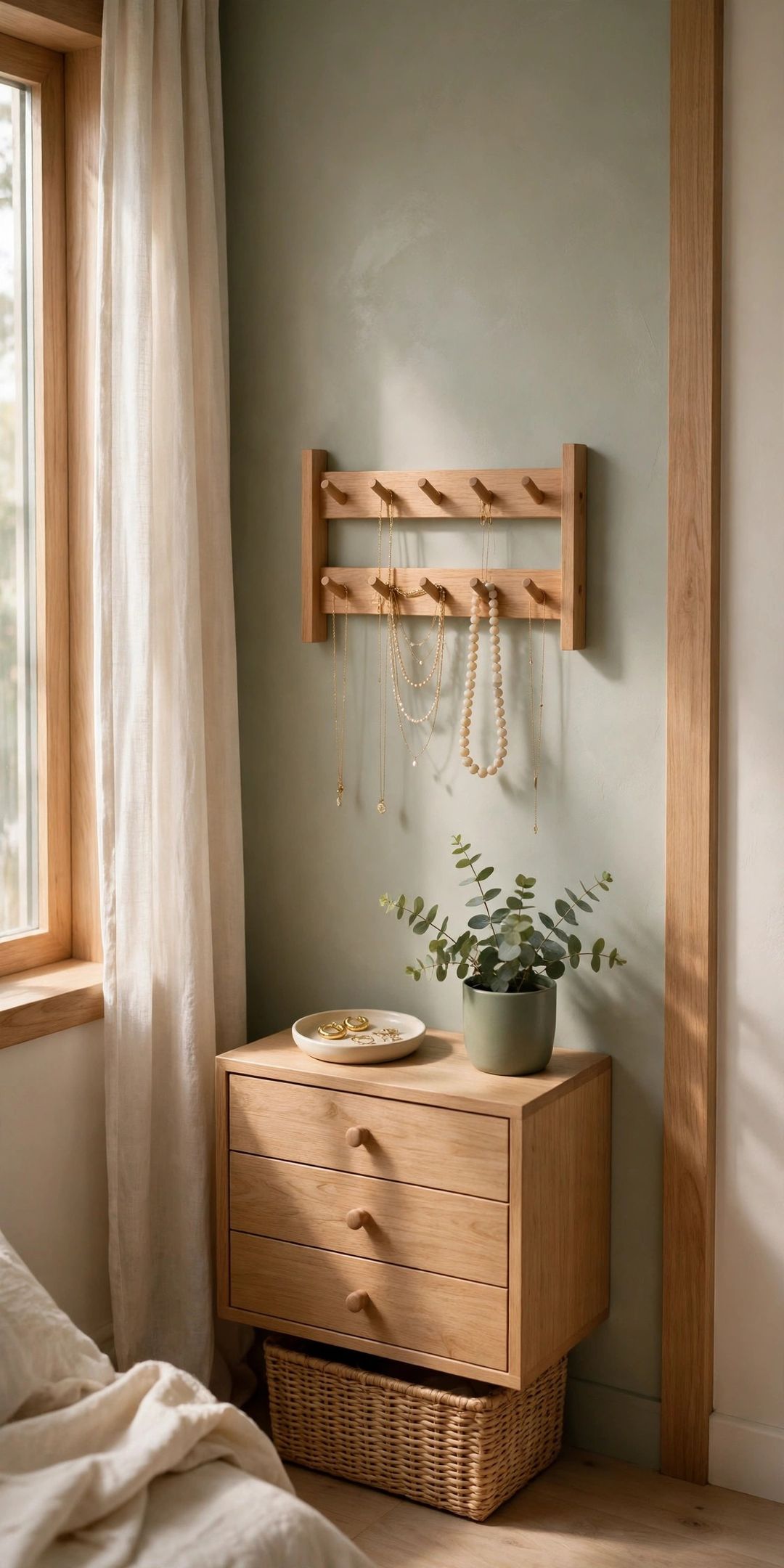
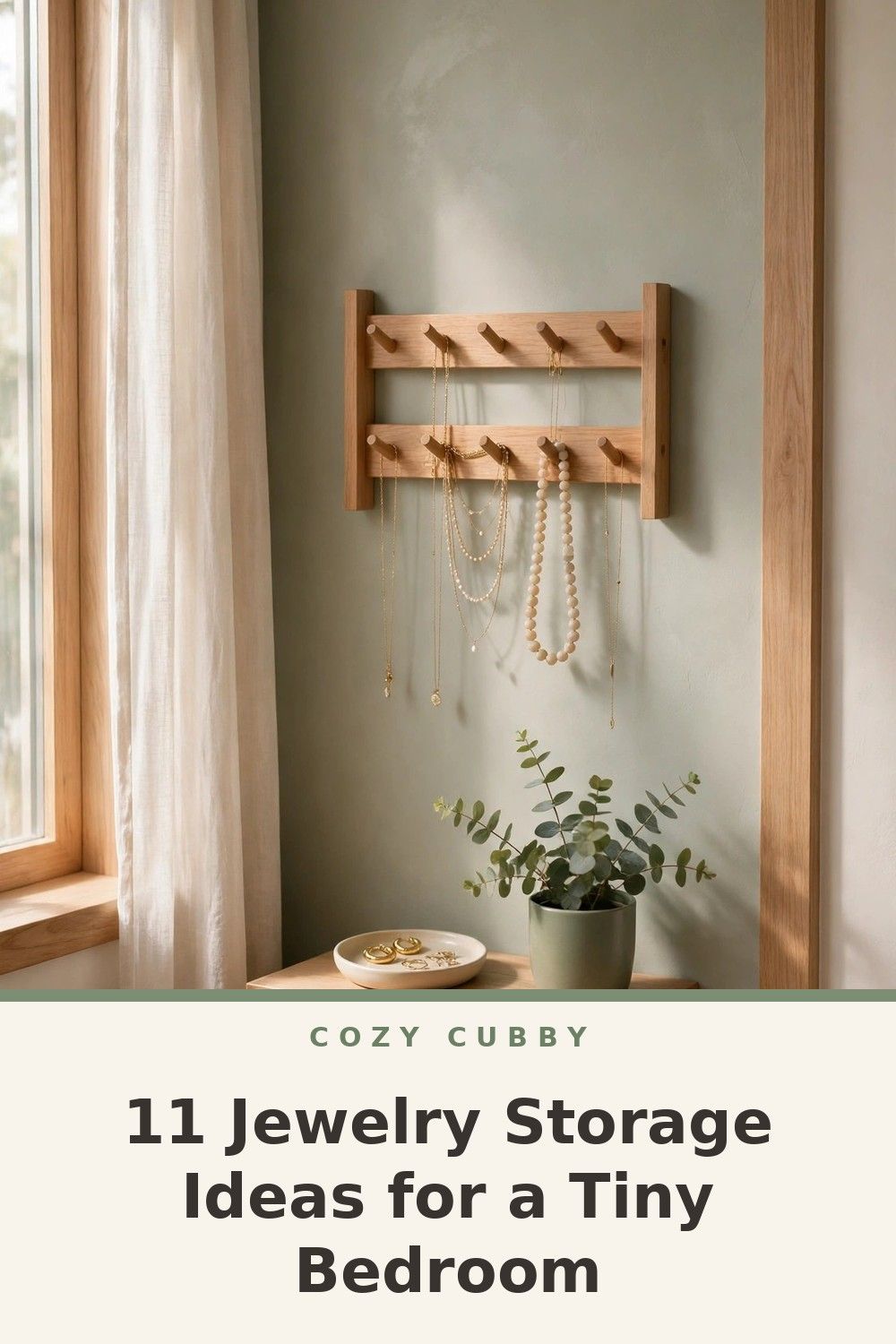
5. Wall hook strip for necklaces. A short strip of small hooks on a wall, inside a closet, or beside a mirror gives necklaces their own hanging space. Space the hooks so chains do not touch. Hanging is the simplest way to keep long chains straight, and using the wall frees the whole dresser top for other things.
6. Framed mesh earring holder. A picture frame fitted with mesh, screen, or lace turns into flat earring storage that hangs like art. Hook earrings push through the mesh and stay in pairs, easy to see at a glance. It uses almost no depth, which helps in a small room.
7. Hanging necklace holder on a rod. A slim bar or a row of S-hooks on a closet rod can hold necklaces and bracelets above shorter clothes. Keep one chain per hook, with a small gap between hooks. This is a good overflow spot for longer pieces that do not fit in a drawer tray.
Stop Tangles and Keep Valuables Out of Sight
8. One chain per pouch or slot. Tangles start when several chains share one space and slide together. Small zip pouches, soft fabric pouches, or a roll with separate slots keep each necklace apart. Lay chains flat in their own slot, so they lift out without pulling other pieces with them.
9. Pair keeper for studs and small earrings. Studs and small hoops get lost fastest, so give them a keeper with tiny sections, holes, or cards that hold a pair together. Store spare backs in one small section of the same keeper. Checking pairs while tidying is easier than hunting for one stud on a rushed morning.
10. Bracelet and watch roll. A soft roll or a padded bar keeps bracelets and watches in a neat row inside a drawer or on a closet shelf. The round shape stops bangles rattling loose and helps cuffs keep their shape. A roll also lifts out in one piece.
11. Plain hidden box for valuables. Keep the most valuable or least-worn pieces in a plain, unmarked box at the back of a drawer, on a high closet shelf, or inside a larger storage box. Out of sight is the point, so skip shiny cases that draw attention. Note the spot somewhere private, so the hiding place is not forgotten during a clear-out.
What to Buy
Divided drawer tray, typically $10–$20. Pro: It sorts many small pieces in one shallow drawer. Con: Fixed compartments may not fit large cuffs or chunky necklaces. Skip if: There is no drawer to spare and wall storage is the only option.
Clear-pocket hanging organizer, typically $12–$22. Pro: It adds many pockets without using shelf or floor space. Con: Pockets can sag if filled with heavy pieces. Skip if: Doors and closet rods are already full.
Small trinket dish, typically $6–$14. Pro: It gives daily pieces a clear landing spot for very little cost. Con: It only holds a few pieces well. Skip if: Dresser-top space is already crowded.
Soft pouch or jewelry roll set, typically $10–$18. Pro: Separate slots and pouches stop chains from tangling. Con: Pieces are hidden, so choosing takes a little longer. Skip if: Most jewelry is worn daily and needs to stay visible.
Framed earring holder, typically $14–$26. Pro: It keeps pairs together on the wall in almost no depth. Con: It works best for hook earrings, not clip styles. Skip if: The collection is mostly studs, which suit a divided tray better.
Mistakes to Avoid
- Storing all necklaces in one box. Chains slide, knot, and wear against each other. One chain per hook, pouch, or slot prevents most tangles.
- Buying storage before sorting. Count necklaces, earrings, and bracelets first. Storage bought for a guessed collection rarely fits the real one.
- Keeping daily pieces in a hidden spot. If the everyday set is hard to reach, it will end up left out. Keep daily pieces in the dish or top tray.
- Leaving valuables on open display. Pretty wall storage suits everyday pieces, but valuable items belong out of sight in a plain box.
- Using deep, undivided drawers. Small pieces sink and mix in deep spaces. Shallow layers and dividers keep everything visible.
Frequently Asked Questions
How can necklaces be stored without tangling in a small drawer?
Give each chain its own space. Lay chains in separate tray sections, hang them on individual hooks, or place each one in its own pouch. Chains should not slide against each other when the drawer opens.
What is the best jewelry storage for a bedroom with no dresser?
Use vertical space. A clear-pocket organizer on the door, a hook strip on the wall, and a framed earring holder cover most pieces without any furniture. A small dish can sit on a shelf or windowsill for daily pieces.
Where should valuable jewelry be kept in a small bedroom?
A plain, unmarked box at the back of a drawer or on a high closet shelf keeps valuables out of sight without drawing attention. Avoid open dishes and wall hooks for valuable pieces, and keep a private note of the spot.
How often should jewelry storage be re-sorted?
A quick check every few months is enough for most collections. Re-pair earrings, move pieces no longer worn out of the daily tray, and check hidden pieces are still in their spots.
Start with the drawer tray and the daily dish, then add wall storage only for what is left over. Save this post to your Closet & Wardrobe board on Pinterest so all 11 ideas are handy for your next small-bedroom tidy-up.