Bags slide into a pile, foil boxes tear at the corners, and the wrap roll you need is always under everything else. One drawer can hold all of it, but only if each item gets a set spot and a set limit.
This guide shows how to organize plastic bags foil and wrap in a single standard drawer. You will set a simple layout, stand boxes upright, decant the rolls that waste space, and cap the grocery-bag stash before it takes over.
Start by emptying the drawer fully and grouping what you find by size and type. That quick sort makes the nine ways below much easier to set up.
Start With a Layout That Fits One Drawer
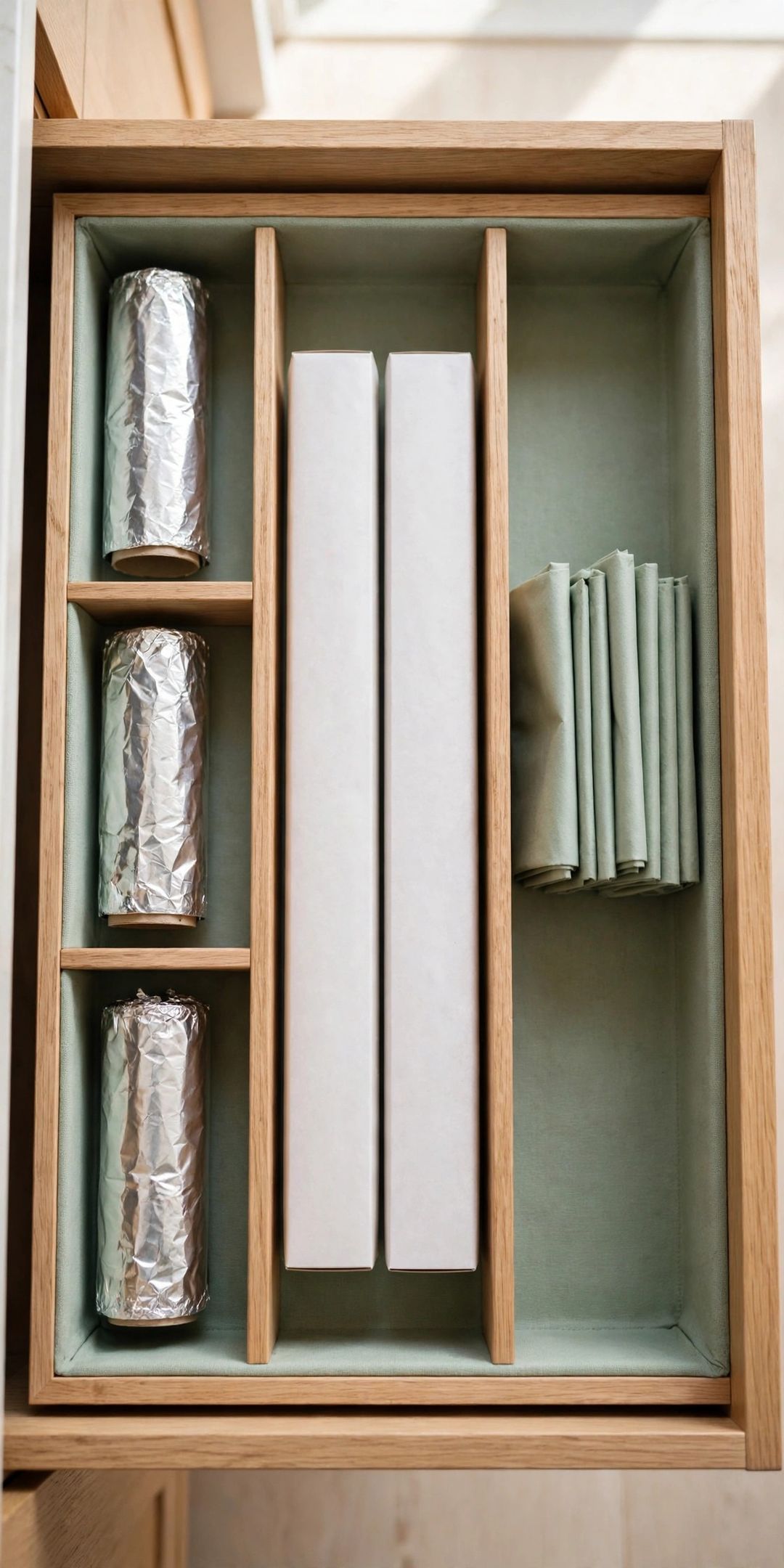
1. Map the one-drawer layout plan by reach. Put daily items at the front: sandwich and snack bags, plus foil. Put gallon bags, parchment, and backup rolls toward the back. Keep one clear row for each category, in a single layer where possible. If an item has no row, it does not belong in this drawer. Move overflow, such as bulk packs, to a pantry shelf or high cabinet.
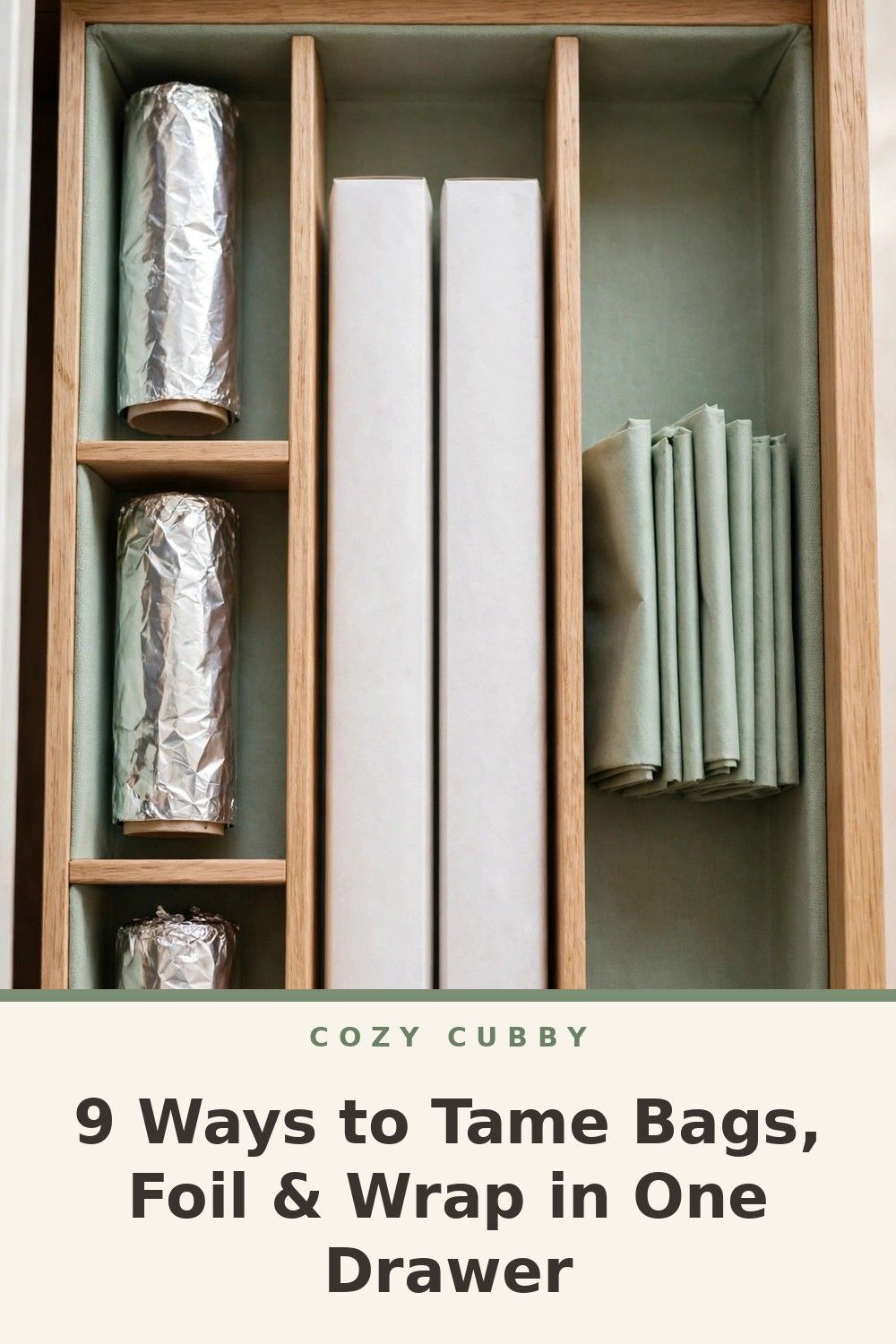
2. Use drawer dividers to hold the map in place. Adjustable dividers or shallow trays turn the layout into fixed lanes, so bags cannot slide across the drawer every time it opens. Measure the inside width, depth, and height first, then choose dividers that can shift as stock changes. Long lanes suit rolls and boxes. Short, narrow lanes suit folded zip bags.
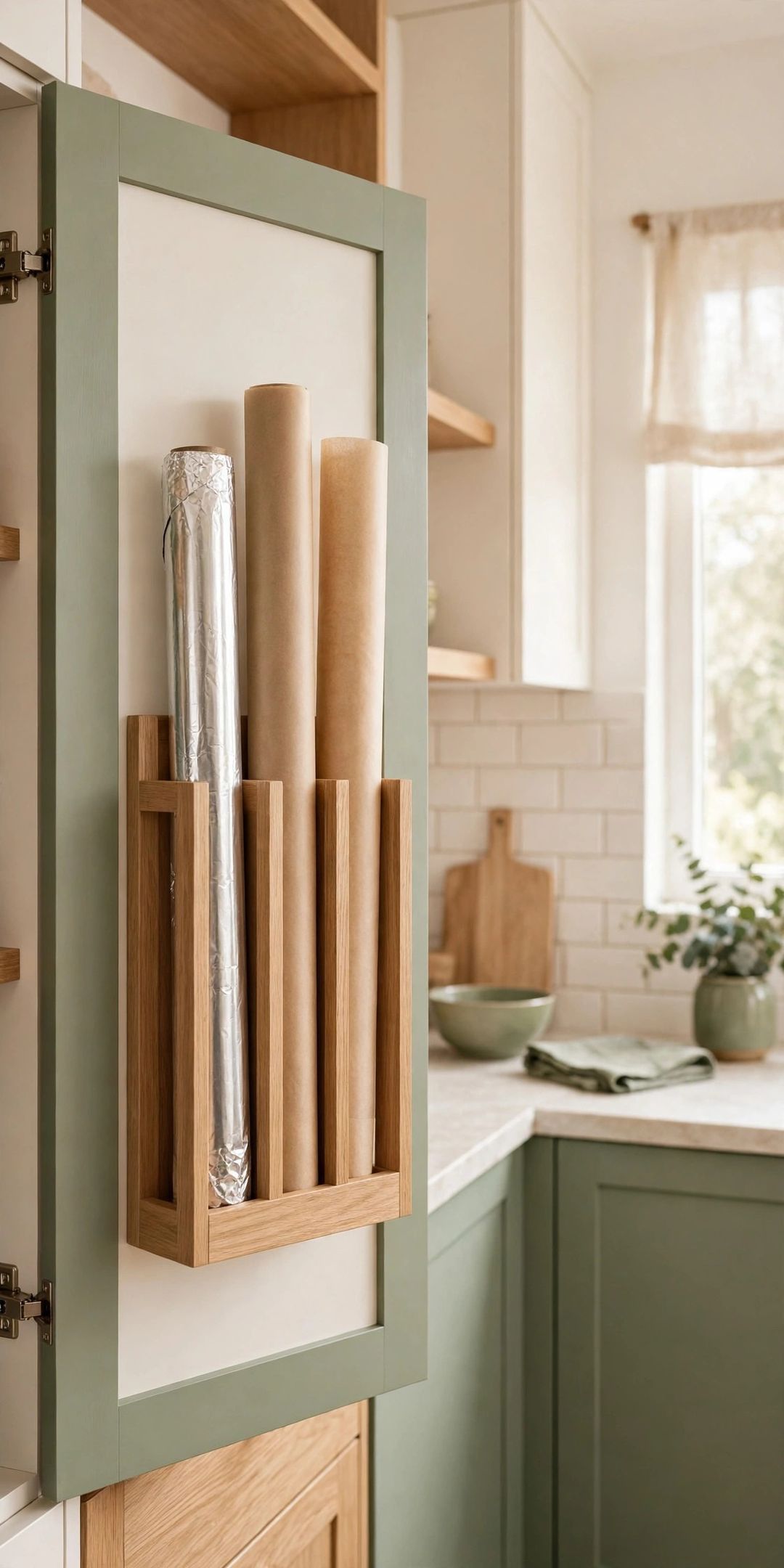
3. Stand dispenser boxes upright and trim the ends. The original boxes for foil, wrap, and bags are sturdy and already labeled, but lying flat they stack into a slippery pile. Stand them upright in one lane, like files in a folder, with the opening facing up. Trim loose flaps and torn end panels so each box matches the height of the roll inside. Labels stay readable, and a roll pulls out cleanly.
Dispensers and Decanting That Save Inches
4. Move zip bags into a bag holder or dispenser. A divided bag dispenser holds sandwich, quart, and gallon bags in separate slots, with the next bag feeding through an opening. It replaces three or four half-crushed boxes with one compact block. Check that the slots fit the sizes bought most often, including gallon bags if used. Refill one size at a time.
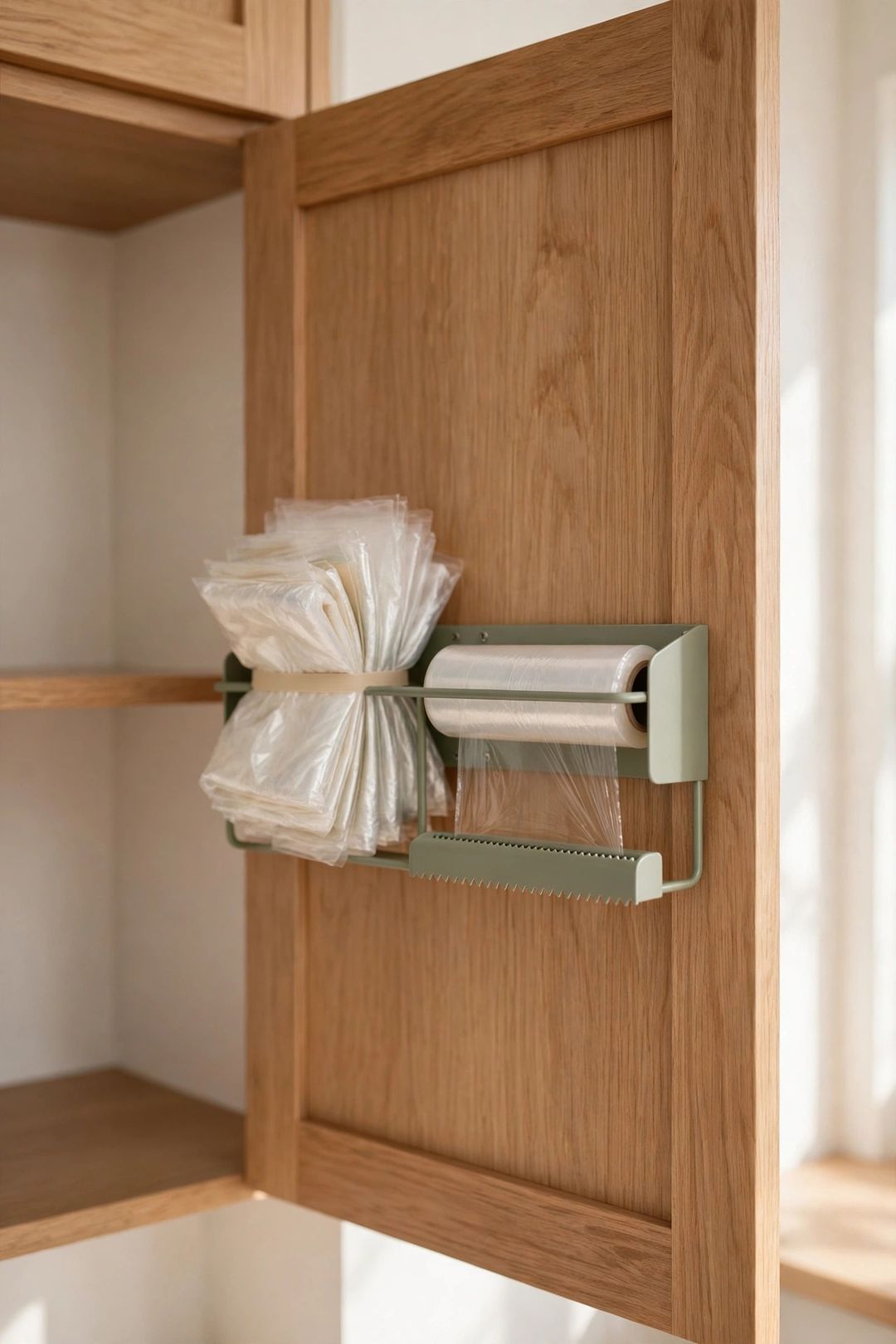
5. Decant rolls out of bulky boxes. Foil, plastic wrap, and parchment often come in boxes far wider than the roll itself. Moving a roll into a slim refillable dispenser cuts that wasted width and gives every roll the same footprint. Keep the cutting edge protected and facing away from where fingers reach in. If a roll has no cutter of its own, keep its original box instead.
6. File loose bags by size instead of stacking them. Loose zip bags turn into a tangled stack when they lie flat in a pile. Stand them upright in a narrow divider lane or small open bin, grouped by size, with the sealed edge up. Add a divider card between sizes if the lane is shared. Finding the right size becomes a one-look job, and the pile never needs digging through.
Labels, the Grocery-Bag Stash and Staying Tidy
7. Label every lane, slot and box end. Labels keep the system working for everyone who uses the kitchen. Put the bag size on each dispenser slot, the contents on each decanted roll, and a short label on the divider edge if the drawer is deep. Replace a label the moment a slot's contents change.
8. Give grocery bags one capped stash system. Grocery bags multiply faster than any other item in this drawer, so they need a hard limit. Choose one holder only: a fabric dispenser, a small bin, or a single larger bag that holds the rest. Smooth each bag flat, fold it, and add it to the holder. When the holder is full, new bags go straight to recycling.
9. Keep tall and odd items out of the drawer lanes. A standard drawer fails when tall bottles, spray cleaners, or bulky clips get mixed into the bag and wrap lanes. Keep this drawer for flat, roll, and bag items only. Move tall items to a cabinet, and keep only a small set of bag clips in one corner tray. Protecting the lanes keeps the other eight ways working.
What to Buy
An adjustable drawer divider set, typically $12–$22. Pro: Lanes can shift as stock changes, with no tools needed. Con: Spring-loaded styles can slip in very smooth drawers. Skip if: Shallow trays already on hand create clear, stable lanes.
A divided zip-bag dispenser, typically $18–$32. Pro: Three or four bag sizes sit in one compact block with easy pull-out access. Con: Bulk bag sizes may not fit standard slots. Skip if: Only one bag size is used and its box already stands neatly upright.
A refillable wrap and foil dispenser, typically $15–$28. Pro: Slim, uniform holders cut the wasted width of store boxes. Con: Some rolls are too wide or thick for refillable holders. Skip if: Original boxes are slim, sturdy, and already line up well.
A grocery-bag holder, typically $8–$18. Pro: One capped holder stops loose bags drifting around the drawer. Con: Wall-mount styles need a good mounting spot. Skip if: Grocery bags are not kept, or a single bin already contains them fully.
A label maker or label tape set, typically $10–$25. Pro: Clear labels stay readable and are quick to replace. Con: It is one more small tool to store. Skip if: A marker on painter's tape already gives neat, readable labels.
Mistakes to Avoid
- Storing boxes flat in a stack. Flat stacks slide, tear, and bury the bottom box. Standing boxes upright keeps every label visible.
- Keeping unlimited grocery bags. Without a capped holder, loose bags expand to fill any drawer. One full holder is the limit.
- Decanting a roll with no cutter. A roll without a safe cutting edge wastes wrap. Keep the original box in that case.
- Skipping measurements. Dispensers that miss the drawer depth by half an inch will not close or will rattle. Measure inside first.
- Mixing tall items into flat lanes. Bottles and bulky clips break up the lanes and start the tangle again.
Frequently Asked Questions
What if the drawer is too shallow for upright boxes?
Trim the box ends down to the height of the roll, as in way 3, and lay that one category in a single flat lane. Keep everything else upright or filed, so nothing stacks on top of it.
How many grocery bags are worth keeping?
Keep what fits in one holder, filled neatly without forcing more in. That covers lining small trash bins and everyday reuse for most homes. Send the rest to a store recycling bin.
Should foil and wrap be decanted or kept in store boxes?
Either can work. Keep store boxes when they are slim, sturdy, and have a good cutting edge, and stand them upright. Decant when boxes are oversized, torn, or all different widths.
What else belongs in this drawer?
Very little. Parchment sheets, a small tray of bag clips, and twist ties fit the flat-item rule. Everything tall or heavy belongs in its own spot, so the lanes stay clear.
One drawer, nine simple rules, and every bag and roll has a home. Save this post to your Kitchen Organization board on Pinterest so the layout plan is handy on your next drawer reset.