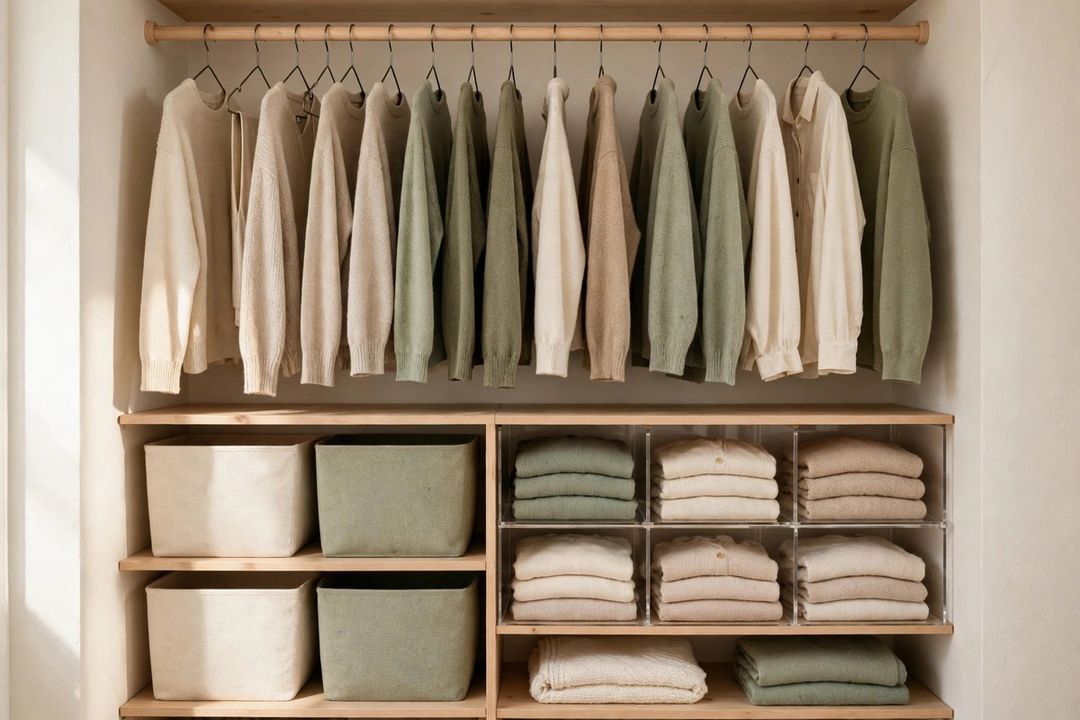
A reach-in closet looks simple: one rod, one shelf, and a door that barely clears the clothes. Yet shirts crowd dresses, shoes pile on the floor, and the top shelf sits out of reach.
This guide explains how to organize a reach in closet by dividing it into clear zones. Each zone holds one type of item, sized to the space it actually needs, so nothing competes for the same inches.
Start by measuring width, depth, and ceiling height. Most reach-in closets are about 24 inches deep, and that number decides which rods, shelves, and bins will fit.
The Double-Hang Zone: Two Rods for Short Clothes
Most shirts, blouses, folded pants, and jackets need far less hanging height than a full-length rod gives them. Two short rods, one above the other, can hold about twice as many in the same width.
1. Plan about 42 inches per level. Leave roughly 40 to 45 inches of height for each rod, so shirts clear the rod or floor below. Place the top rod high, near 80 inches, and the lower rod near 40 inches, then adjust to your clothes.
2. Give this zone the widest share. For many wardrobes, double hang takes about half to two-thirds of the rod width. Count your short items first and set the width from that count.
3. Keep hangers slim and matching. Slim hangers save width in a tight closet and keep shoulders even, so clothes slide instead of bunching.
The Long-Hang Zone: A Slim Section for Long Pieces
Dresses, long coats, and full-length items need height, not width. A narrow long-hang section protects them from dragging on shoes or bins below.
1. Size it to your longest item. Measure your longest dress or coat on its hanger, then allow about 60 to 72 inches of clear height for most long pieces. Shorter wardrobes can give some of this space back.
2. Keep it narrow on purpose. About 12 to 18 inches of width suits a small group of long items. If you own only two or three, do not let this zone grow wider than the clothes need.
3. Use the floor below with care. The space under shorter long items can hold a small bin or a laundry bag. Leave true floor-length pieces completely clear.
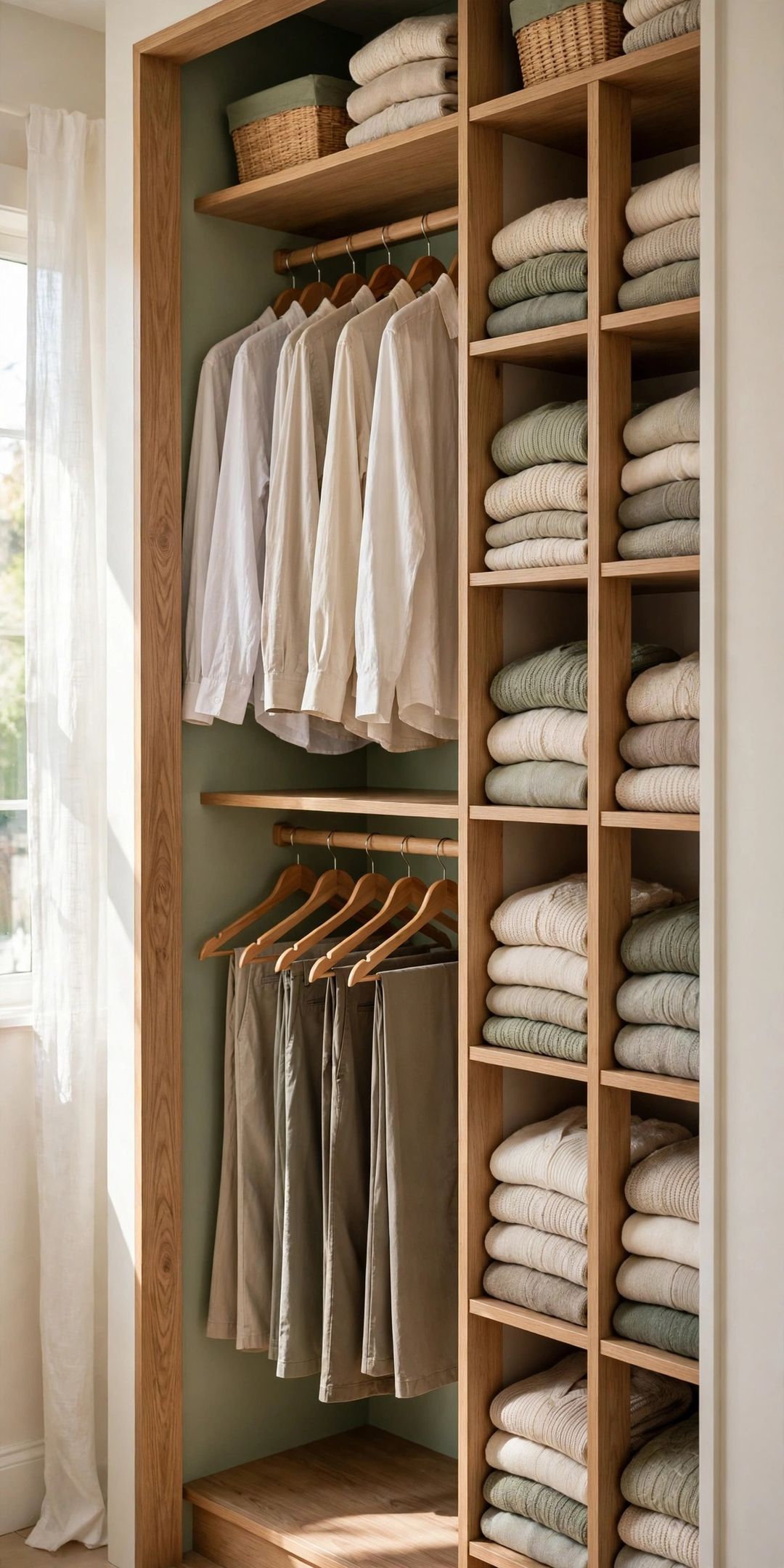
The Shelf Tower: Folded Clothes in the Middle
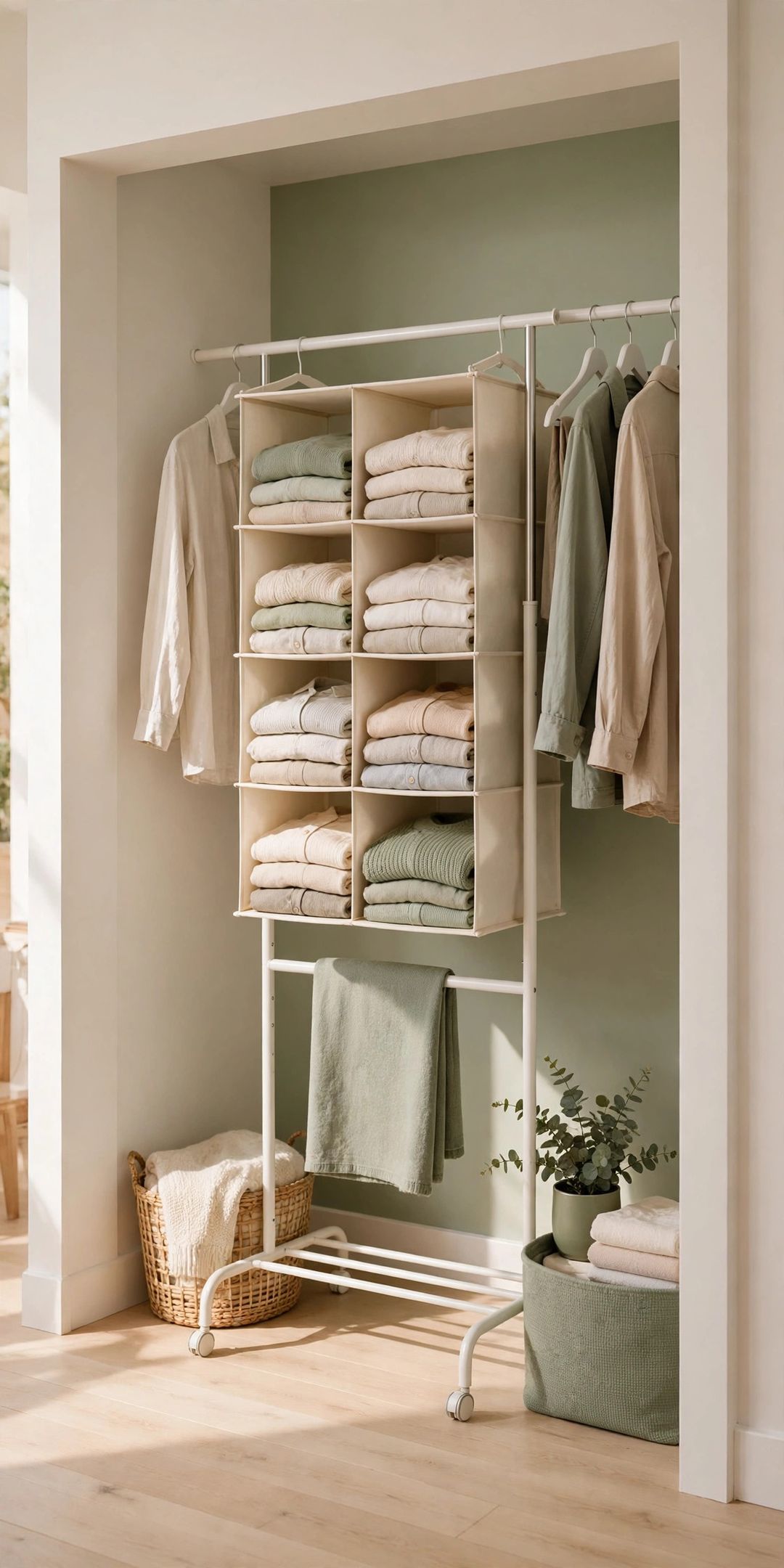
A vertical stack of shelves, often in the center or at one end, turns wasted air into storage for folded clothes, bags, and bins.
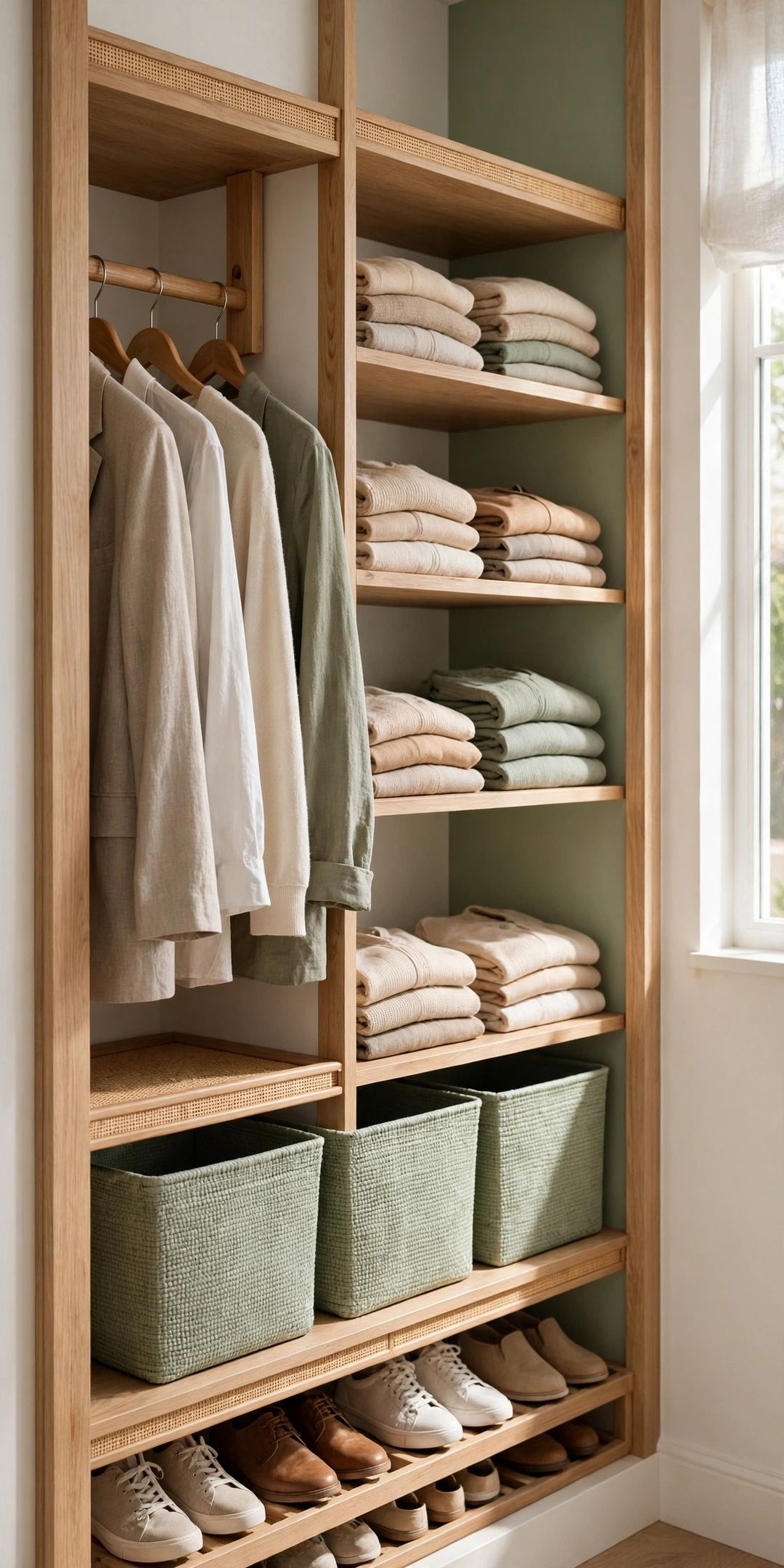
1. Plan shelves about 12 inches apart. A shelf every 12 to 14 inches fits folded sweaters, jeans, and tees in short stacks. Taller gaps invite tall, tippy piles.
2. Keep stacks short and sorted. Limit each stack to about four or five folded items, sorted by type. Short stacks are easier to pull from without toppling the rest.
3. Put daily items at eye level. Shelves between waist and eye height are the easiest to use. Store bags and rare items on top instead.
The Shoe Zone: Off the Floor, In One Place
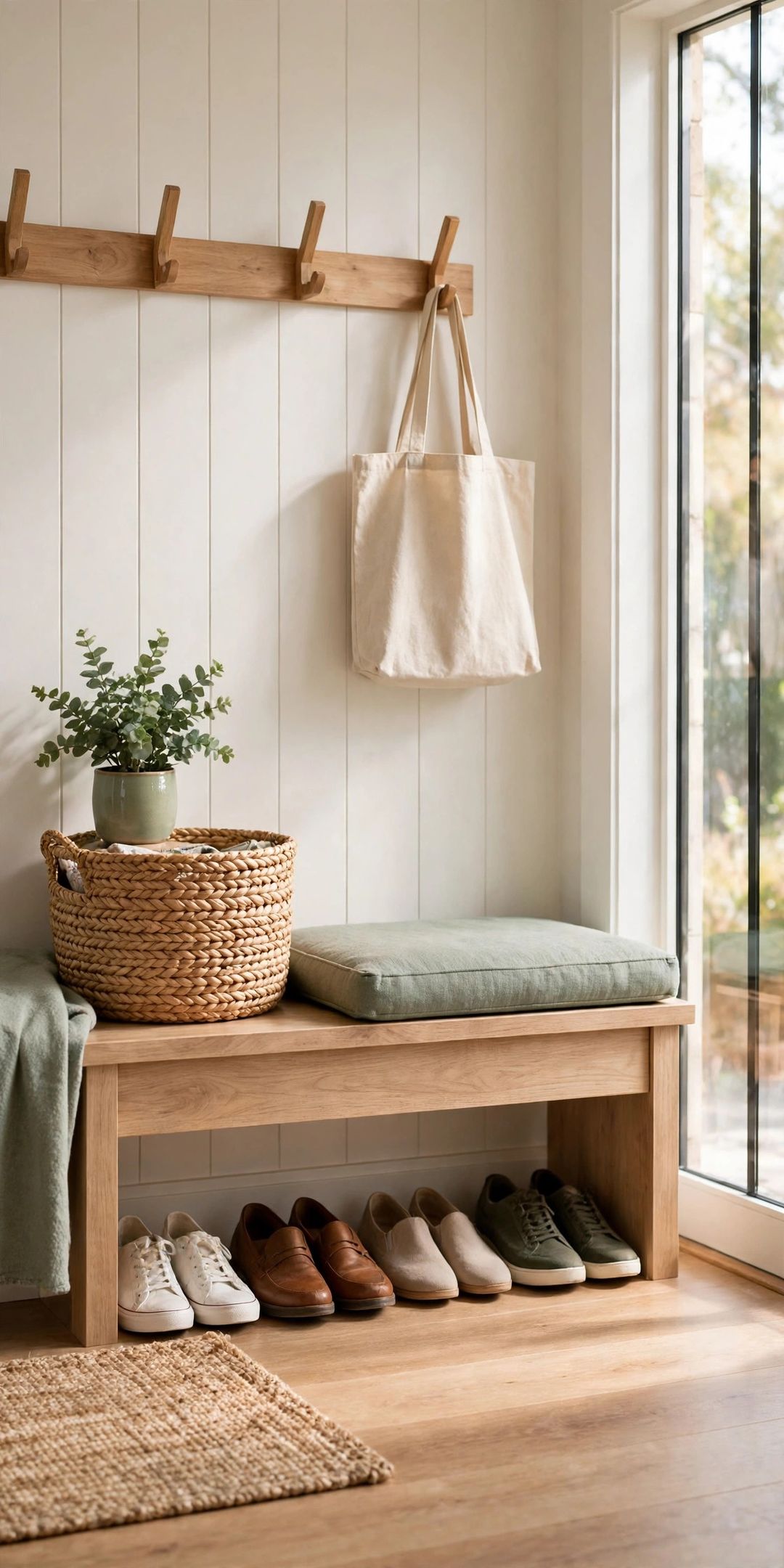
Shoes scattered across the floor block bins and collect dust. One defined shoe zone, sized to the pairs you wear often, keeps the floor clear.
1. Choose the format that fits your depth. A low angled rack, flat shelves, or clear boxes all work in about 24 inches of depth. Most shoes need roughly 9 to 12 inches per pair.
2. Keep daily pairs at the front. Place the two or three pairs you wear most at the easiest end of the zone. Seasonal boots and dress shoes can sit at the back or on a higher shelf.
3. Cap the collection to the zone. When the shoe zone is full, a new pair means an old pair leaves. This one rule stops the floor pile from coming back.
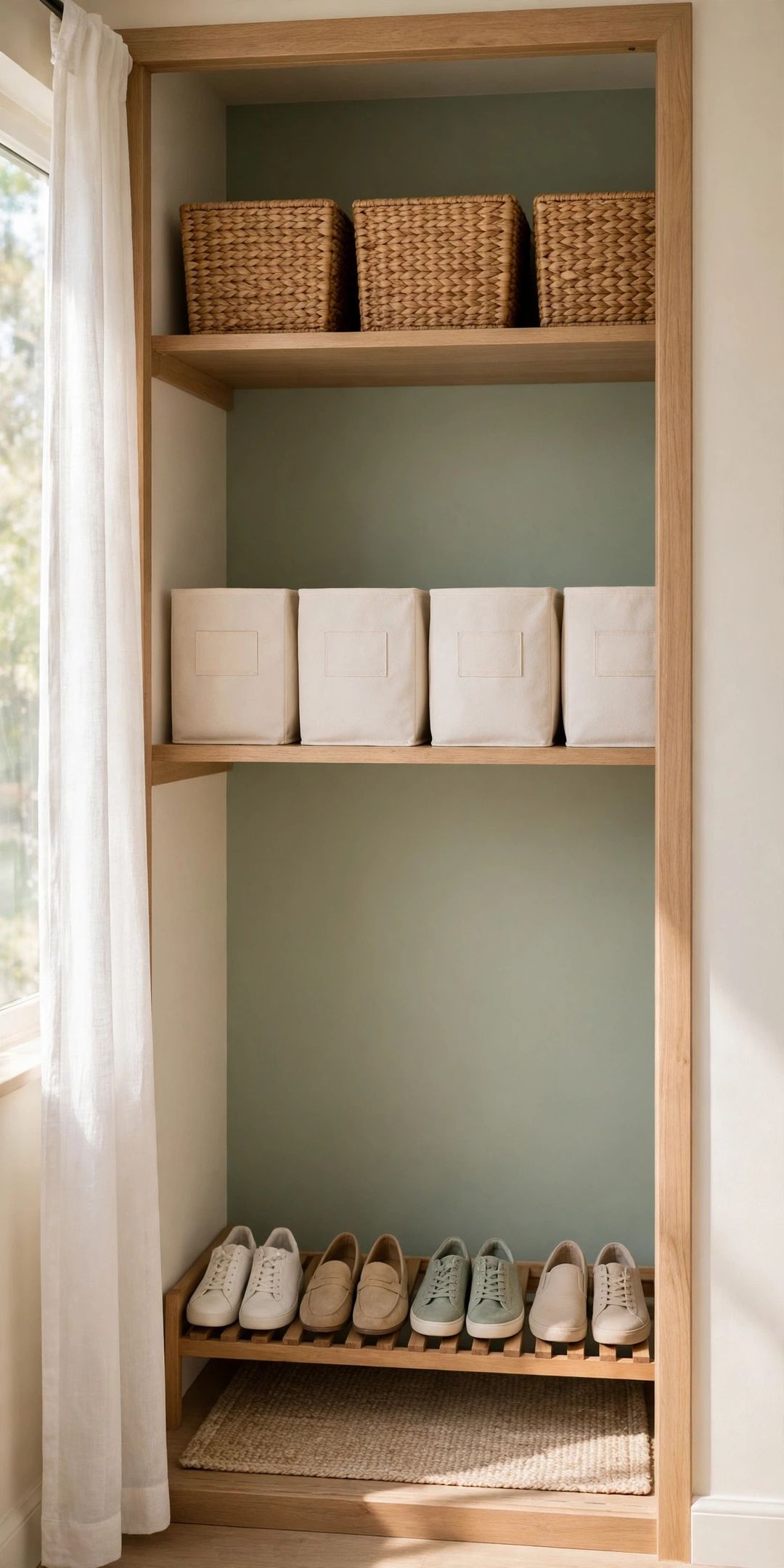
Dead Corners and Ends: The Space Most Closets Waste
Reach-in closets often hide space at both ends, past the door opening. These corners are hard to reach, so they suit rare items, not daily clothes.
1. Store rare items at the far ends. Out-of-season clothes in labeled bins, spare hangers, and keepsakes fit well in the ends. Slide them out when needed without disturbing daily zones.
2. Use the back of the door if it clears. A door rack or hooks can hold belts, scarves, or a small bag, as long as the door still opens fully and nothing presses into hanging clothes.
3. Light the dark spots simply. A battery light with a motion sensor, typically placed above the rod, helps you see into deep ends. If you can see a corner, you will use it well.
What to Buy
A second closet rod or hanging bar, typically $15–$35. Pro: It creates the double-hang zone for the lowest cost. Con: It needs secure fixing and enough height. Best for: Closets with one high rod and many short clothes.
A narrow shelf tower or cube unit, typically $30–$70. Pro: It adds folded storage without building shelves in. Con: It takes rod width, so measure the leftover space first. Best for: Closets with many sweaters, jeans, and bags.
Slim matching hangers, typically $12–$25 for a pack. Pro: They save width and keep clothes at one even height. Con: Very heavy coats may need sturdier hangers. Best for: Crowded double-hang zones.
A low shoe rack or clear shoe boxes, typically $18–$40. Pro: Pairs stay visible, sorted, and off the floor. Con: Boxes take more depth than a simple rack. Best for: Shoe piles that keep spreading across the floor.
Mistakes to Avoid
- Copying a layout without measuring. Rod height, shelf depth, and door swing vary by closet. A plan that ignores your numbers will not fit your clothes.
- Letting long hang take half the closet. A few dresses rarely need as much width as all your shirts and pants. Size each zone to the count of items in it.
- Stacking folded clothes too high. Tall piles topple and hide the items at the bottom. Short stacks of four or five stay usable.
- Storing daily items in dead corners. Hard-to-reach ends are for rare items. Daily clothes buried in a corner will be forgotten and bought again.
- Buying organizers before sorting. Keep, donate, and repair piles change how much space each zone needs. Sort first, measure second, buy last.
Frequently Asked Questions
How high should the two rods be in a double-hang zone?
A common setup places the top rod near 80 inches and the lower rod near 40 inches, giving each level about 40 inches for short clothes. Check your longest shirt on a hanger and adjust if needed.
What if the closet has sliding doors?
Work one half at a time, and keep the center overlap in mind. Place daily zones where the doors open most easily, and use the harder-to-reach ends for seasonal storage in labeled bins.
Can a shelf tower work in a very narrow closet?
Yes, if it stays narrow, around 12 to 15 inches wide, and the hanging zones still fit your clothes. In a very small closet, a tower at one end usually works better than one in the center.
How deep should closet shelves be?
Shelves about 12 to 16 inches deep suit folded clothes in a standard reach-in closet. Deeper shelves hide items at the back, while shallower shelves can let folded stacks tip forward.
A reach-in closet does not need more space. It needs zones sized to the clothes you own. Save this post to your Closet Organization board on Pinterest so the measurements and layout are handy before you shop.