Under almost every oven sits a wide, shallow drawer that most kitchens use badly. It often holds one warped pan, a lid that clatters every time the drawer opens, and a lot of empty space that could be working much harder.
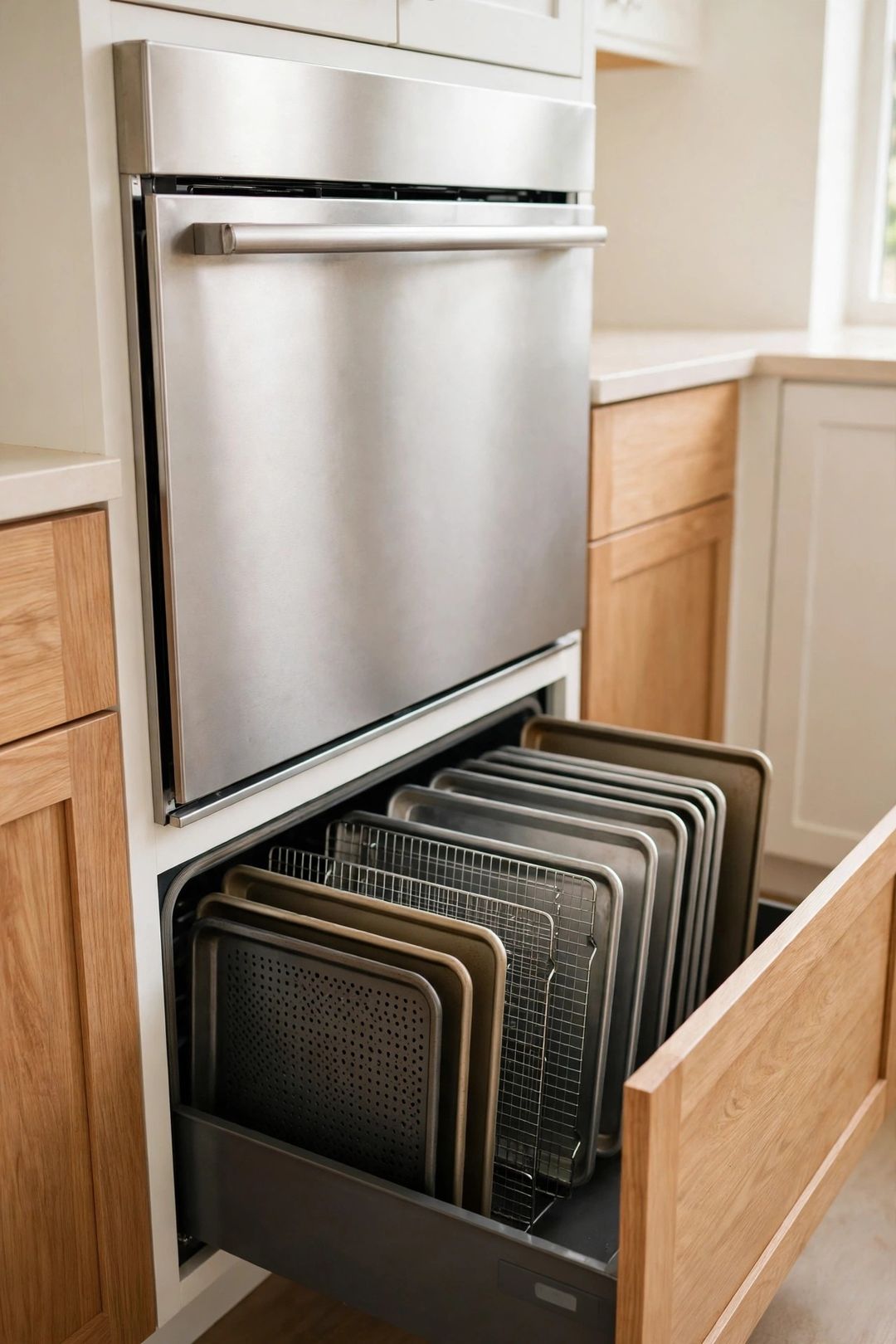
These oven drawer storage ideas uses that flat space for the wide, awkward items that never sit well in cabinets. Sheet pans, racks, and flat bakeware match the drawer's shape, so they slide in without stacking into a heavy pile.
Before loading it up, find out which kind of drawer you have. Some are simple storage drawers, some are warming drawers that heat up, and on some gas ranges the drawer is a broiler. Your oven manual states which type you own, and that answer decides what belongs inside.
First, a Plain Safety Note
Only store oven-safe metal and bakeware items in this drawer. Never store plastics, towels, paper, wooden items, or anything flammable there, because a warming or broiler drawer gets hot enough to melt or scorch them. If your drawer heats, treat everything inside it as something that will get hot too, use oven mitts to handle it, and let items cool before putting them away. When in doubt, check the manual and store the item somewhere else.
8 Storage Uses for the Oven Drawer
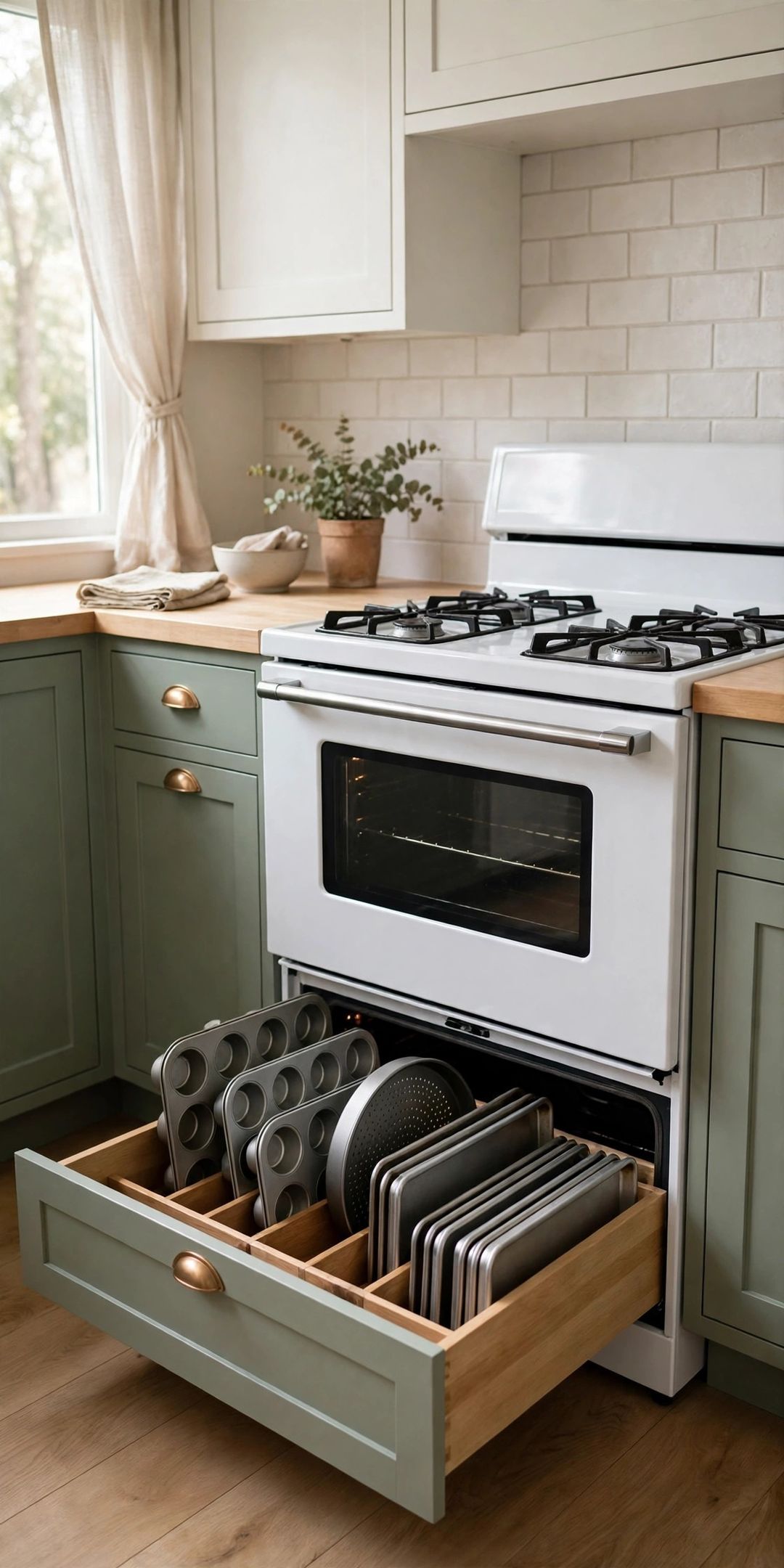
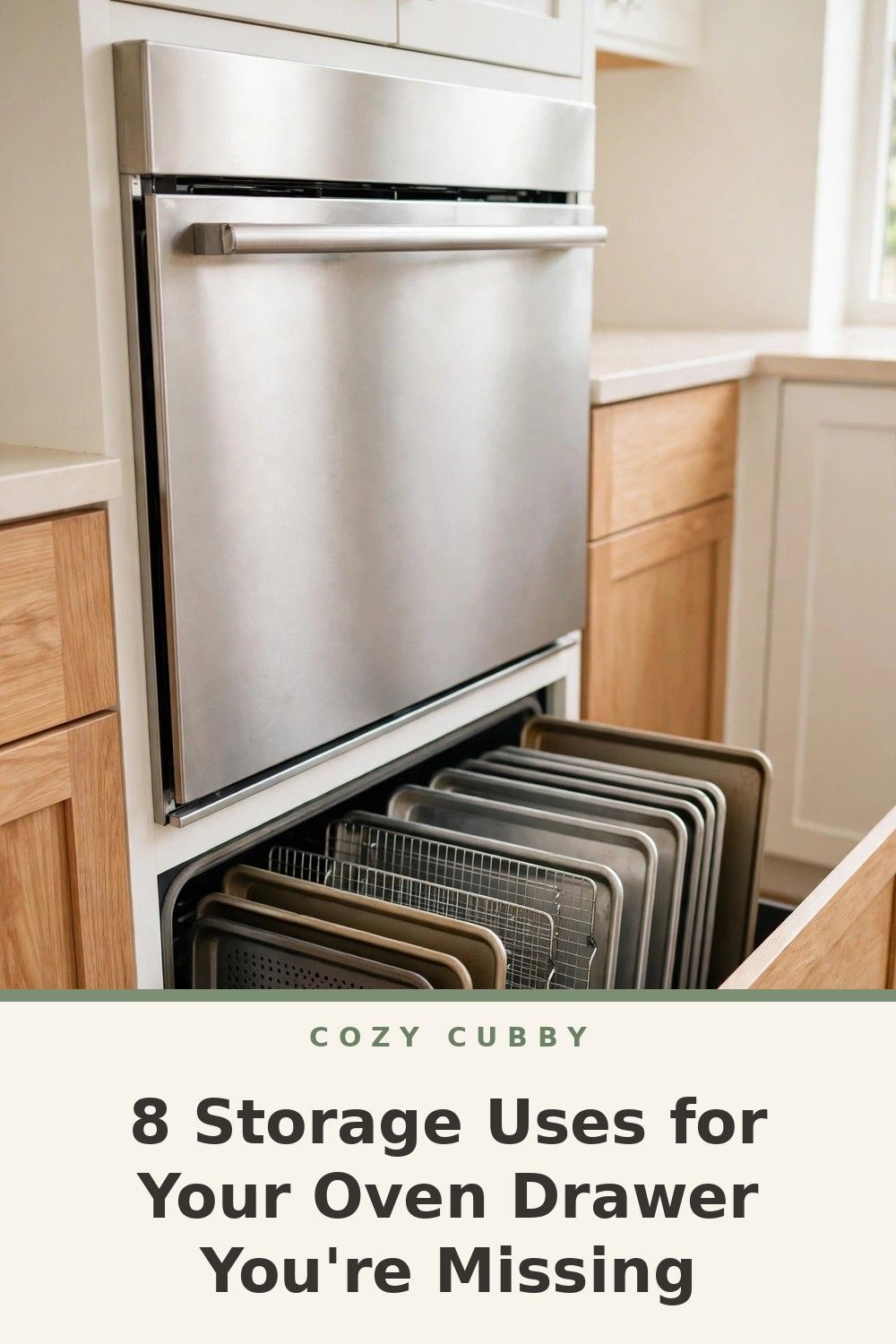
1. Sheet pans and cookie sheets. This is the drawer's best job. Large flat pans that jam upright cabinets lie flat here in a short stack. Keep the stack to three or four pans so the bottom one still gets used, and place the most-used pan on top.
2. Flat bakeware like muffin tins and cake pans. Muffin tins, loaf pans, and round cake pans nest together and fit the shallow height well. Group baking pans on one side of the drawer so they stop rattling around the deep cabinets where cakes and casseroles live.
3. Cooling racks and roasting racks. Wire racks are thin, light, and exactly the shape of this drawer. Slide them in beside or on top of the sheet pans. Keeping racks with pans also makes sense, since the two usually come out together on baking days.
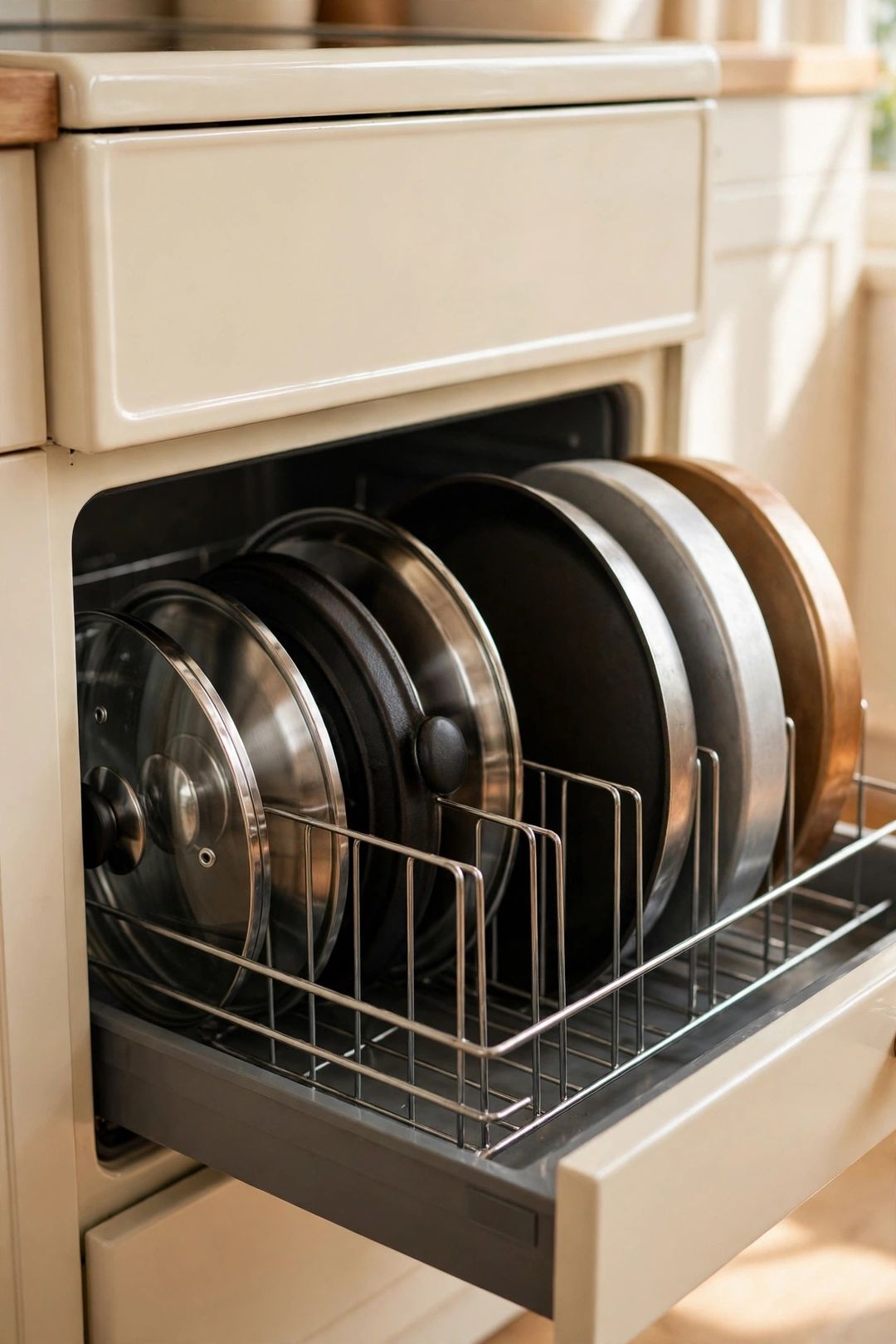
4. Pot and pan lids. Wide lids waste cabinet space and clang against pots. Laid flat or stood in a simple rack inside the drawer, metal lids stay sorted and easy to match. Measure your widest lid first, since large stockpot lids may be taller than the drawer opening.
5. Cast iron and oven-safe skillets. A heavy skillet sits low and steady in this drawer, close to the stove where it is used. Store only one or two heavy pans here, place them on a flat surface so the drawer glides well, and check the drawer's weight limit in your manual.
6. Metal trivets and hot pads. Flat metal trivets belong with bakeware, since both come out when hot dishes land on the counter. They take almost no height, so they can rest on top of the pan stack. Keep only metal trivets here, not fabric or wooden ones.
7. The broiler pan and pizza pan. Most ranges come with a broiler pan that rarely gets used and fits nowhere sensible. This drawer is its natural home, along with a round pizza pan. Storing both flat frees a tall cabinet for the pots you use every day.
8. Oven mitts, only in a true storage drawer. If your manual confirms the drawer is a storage drawer that stays at room temperature, a pair of mitts can live at the front corner for quick grabs. If your drawer warms or broils, keep mitts in a regular drawer instead, with no exceptions.
How to Arrange It So It Stays Tidy
Lay the largest, flattest items down first and build short stacks by type: pans together, racks together, lids together. Keep total stacks low enough that you can lift the top item without pulling the whole stack out. Leave the front few inches for the items you grab weekly, and push rarely used pieces, like the broiler pan, to the back. Wipe crumbs out monthly, since this drawer quietly collects them.
What to Buy
A low lid rack or file-style divider, typically $12–$20. Pro: Holds lids upright so each one lifts out without clattering. Con: It uses width that flat stacks do not need. Skip if: You own only two lids and they already lie flat neatly.
A washable drawer liner, typically $8–$14. Pro: Catches crumbs and stops metal pans scraping or sliding. Con: It must be cut to size and removed for cleaning. Skip if: Your drawer is a broiler drawer, where a liner does not belong.
A matched set of nesting sheet pans, typically $20–$35. Pro: Nesting pans stack into one short, stable pile. Con: Buying a set only helps if your old pans truly need replacing. Skip if: Your current pans fit well and bake evenly.
Flat metal trivets, typically $10–$16 for a pair. Pro: They store in almost no space and handle hot pans safely. Con: Plain metal styles offer little grip on smooth counters. Skip if: You already own metal trivets that live near the stove.
Mistakes to Avoid
- Storing plastic, paper, or towels in the drawer. In a warming or broiler drawer these can melt or scorch. Keep the drawer for oven-safe metal and bakeware only.
- Guessing which type of drawer you have. Storage, warming, and broiler drawers look alike. The manual, not the appearance, gives the safe answer.
- Stacking pans too high. A tall, heavy stack means the bottom pan never gets used and the drawer becomes hard to open.
- Overloading it with heavy cookware. Too much cast iron can strain the drawer glides. Check the weight guidance in your manual.
- Forgetting what is stored there. Out-of-season bakeware gets forgotten fast. Keep a short list inside a nearby cabinet door if that helps.
Frequently Asked Questions
Is the drawer under the oven meant for storage?
Sometimes. Many electric ranges have a plain storage drawer, while some drawers warm food and some gas drawers are broilers. Check the manual or the oven controls for a warming or broiler setting before treating it as storage.
Can you store pots and pans in the oven drawer?
Oven-safe metal pans can go in a storage or warming drawer, and flat pans suit it best. Avoid non-stick pans if your drawer heats and the pan maker warns against high heat, and avoid anything with plastic handles.
Why does the drawer feel hot after baking?
Heat from the oven above warms the drawer during long bakes, even on storage models. That is one more reason to limit the drawer to metal and bakeware and to handle contents with care after the oven has run.
How do you clean an oven drawer?
Remove everything, pull the drawer out if your manual shows how, and vacuum crumbs before wiping with warm soapy water. Dry it fully before putting pans back so metal items do not sit in moisture.
Measure your drawer, confirm its type, and give those flat pans a proper home this week. Save this post to your Kitchen Organization board on Pinterest so the safety check is handy before you start.