A pantry can be full on every shelf while its best storage spot stays empty: the back of the door. Most pantry doors are 24 to 30 inches wide, which is nearly the width of a full shelf, from top to bottom.
These pantry door storage ideas turn that flat surface into visible storage for spices, wraps, snacks, and small packets. Start by measuring, check how the door swings, and pick the ideas that match what keeps getting lost on your shelves.
Renters have good options here too, since most of these ideas hang, clip, or stick on with no drilling.
1. Measure First and Check the Door Swing
Door storage only works if the door still opens and closes easily. Note where it sits closest to the shelves. Slim items belong on tight doors, and heavier racks need strong hooks.
Check three clearances. Leave room at the top for hooks, at the side for the swing, and in front of the shelves so bins do not hit cans. If clearance is tight, choose flat pockets.
2. Full-Door Racks for Everyday Staples
A full-door system gives the biggest gain. One rack can hold what used to take a whole shelf.
1. Over-door wire rack. A rack that hooks over the top of the door holds cans, jars, and bottles in rows. Choose adjustable shelves, keep heavy cans on the lowest rows, and check the hooks fit your door.
2. Tiered basket rack. Deep baskets suit potatoes, onions, and snack bags that roll around on shelves. Keep the load light near the top, and use the lowest basket for the heaviest items so the door does not sag.
3. Slim no-drill rail rack. A narrow rail system hooks or sticks on without screws, which suits renters and hollow doors. It holds light jars and packets best. Follow the weight limit, and let adhesive rails set fully before loading.
4. Door-mounted mini shelves. Two or three short shelves inside the door hold oils, vinegars, and sauces. This is the most fixed option, so it suits owners best. Keep bottles short enough to clear the shelves when the door closes.
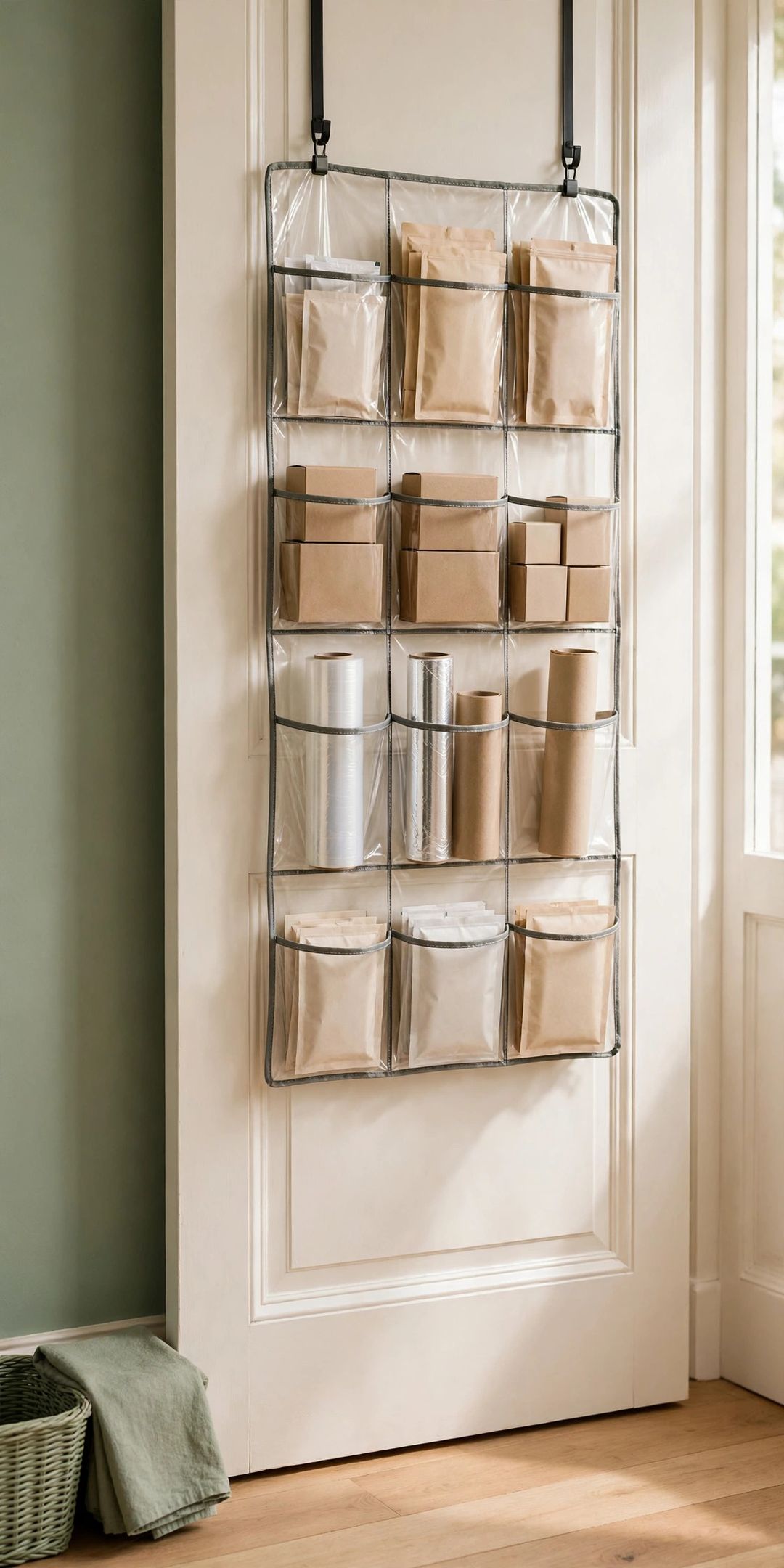
3. Clear Pockets and Spice Storage
Spices and small packets are the worst shelf clutter. They are light, flat, and easy to lose, which makes them perfect for the door.
5. Clear over-door pockets. A clear pocket organizer shows every packet and pouch at once. Use it for seasoning mixes, drink packets, and sauce sachets. Because each pocket is visible, duplicates and expired packets are easier to spot.
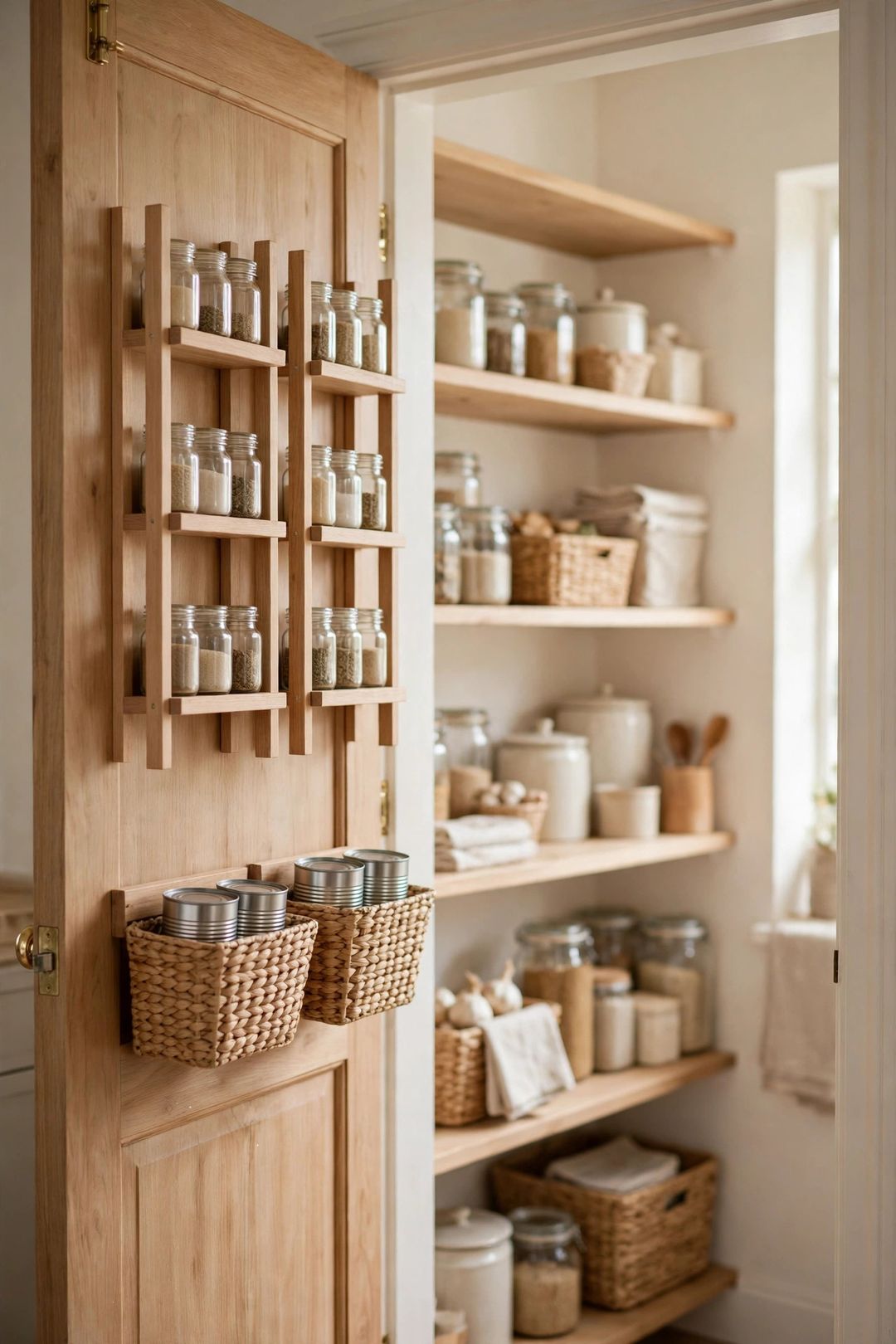
6. Individual spice clips. Small clips grip spice jars in a neat row and use almost no depth, so they work on tight doors. Arrange jars by how often you use them, with daily spices at hand height.
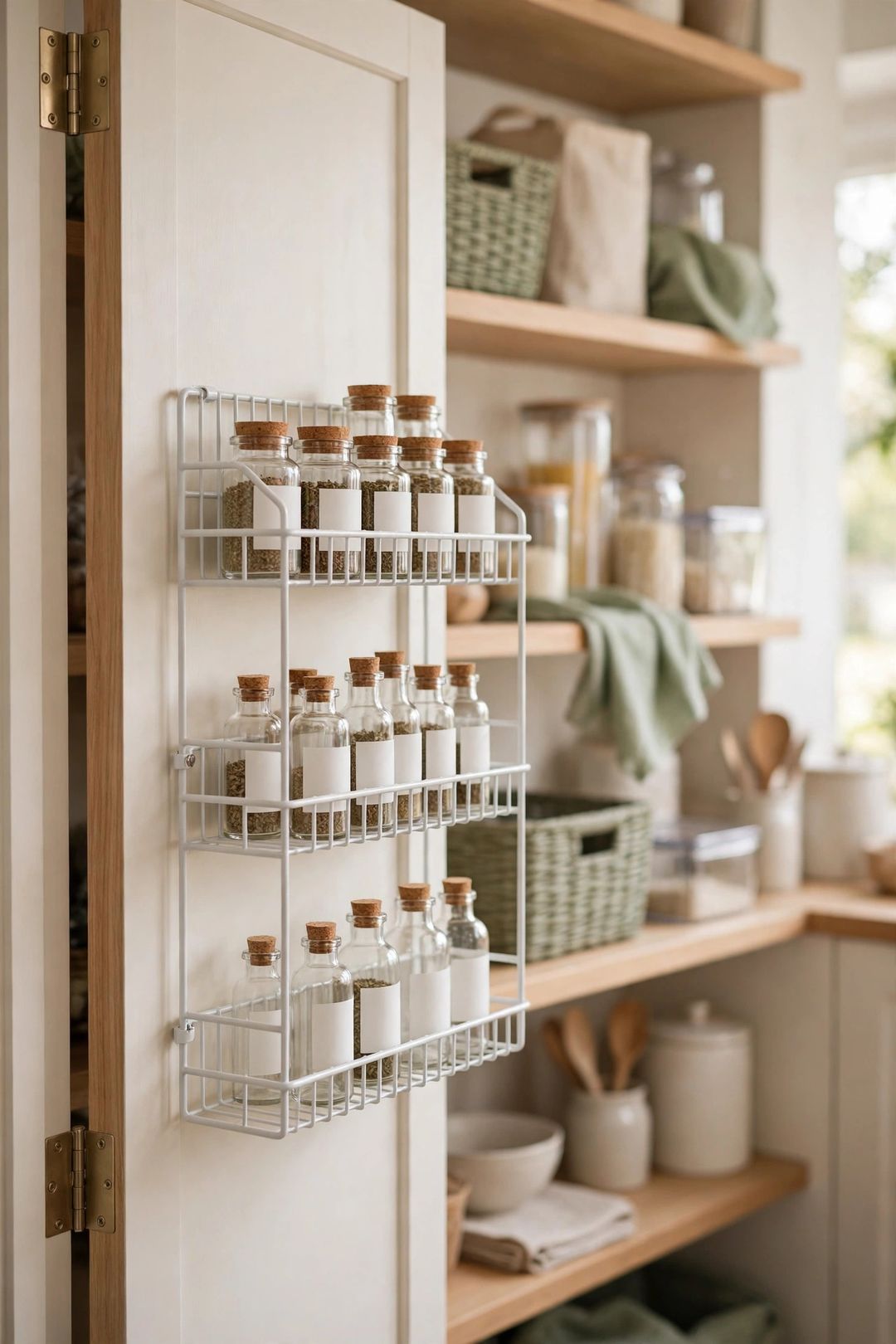
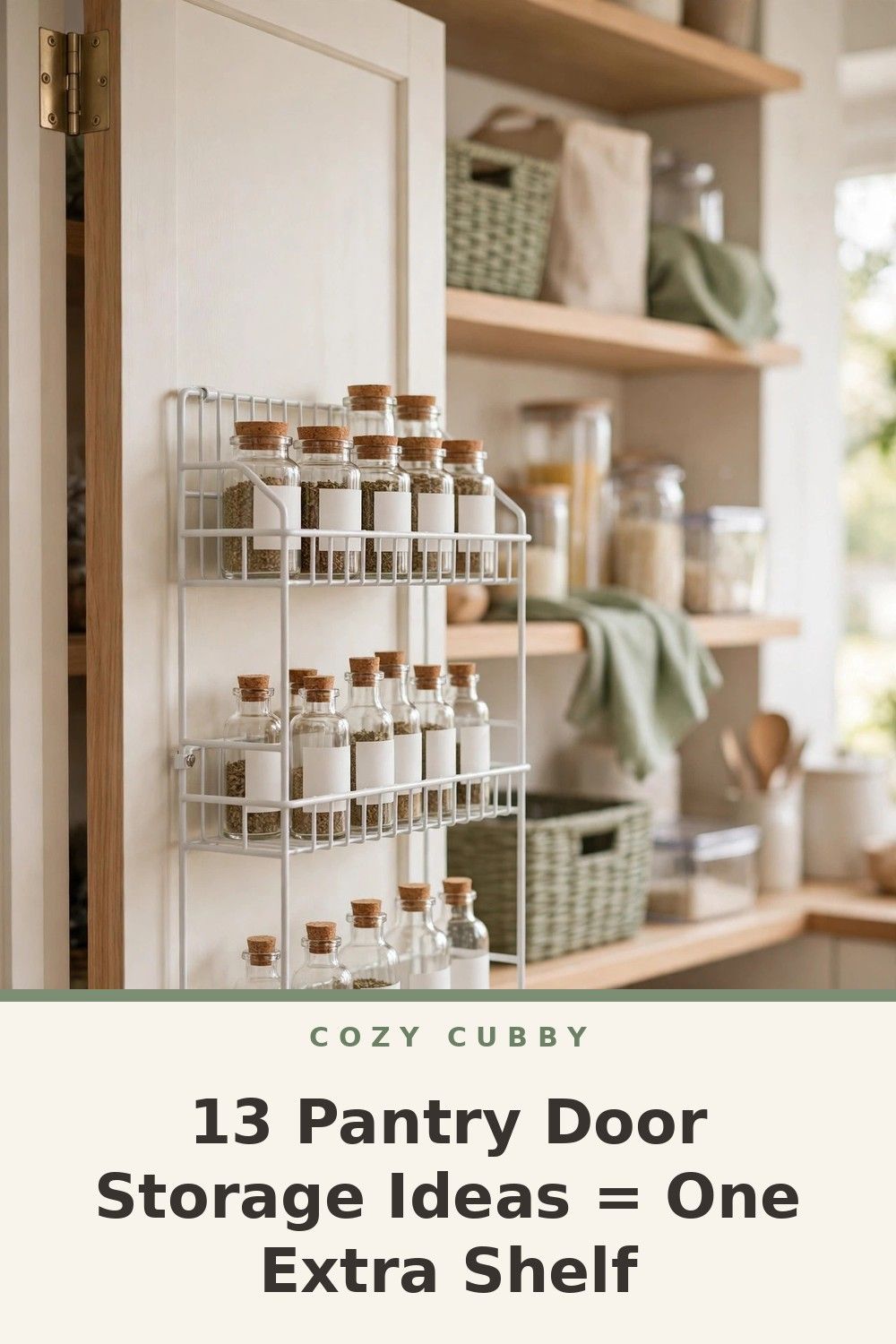
7. Narrow spice rack with a lip. A slim rack with a front lip stops jars sliding when the door moves. Keep it one row deep so labels stay readable. Two short racks often fit a narrow door better than one wide rack.
8. Magnetic spice tins on a door panel. If the door is metal, small tins can sit flat on the surface and use very little depth. Check each lid seals well, and keep tins away from heat and steam.
9. Pocket for measuring spoons and small tools. A flat pocket holds measuring spoons, bag clips, and a small funnel near the food they serve. Keeping these tiny tools on the door frees a drawer.
4. Wraps, Foils, and Small-Item Bins
Long boxes and loose small items waste shelf space. The door handles both well.
10. Vertical wrap and foil holder. A tall, narrow holder stores foil, parchment, wrap, and zip bags upright in one slot. Boxes stay easy to pull out. Mount it low enough to reach without stretching.
11. Door bin for lunch and snack supplies. A shallow bin holds granola bars, fruit pouches, and lunch bags in one grab-and-go spot. Give snacks one bin only, so the limit is visible. When it is full, new snacks wait in backstock.
12. Small bins for packets, ties, and extras. Two or three small, labeled bins corral twist ties, rubber bands, and spare batteries for kitchen tools, all in one known place.
13. Shopping list and restock pocket. A flat pocket on the door holds a notepad, a pen, and coupons where you see supplies run low. Write items down as you finish them. This makes the weekly shop faster and cuts duplicate buying.
What to Buy
Over-door wire rack, typically $25–$45. Pro: It adds the most storage and adjusts to different jar heights. Con: It can rattle and needs good clearance. Skip if: Your door is bifold or sliding and cannot carry hooks.
Clear pocket organizer, typically $12–$22. Pro: Every packet stays visible, and it hangs with no drilling. Con: Pockets sag if filled with heavy jars. Skip if: You mainly need space for large bottles and cans.
Spice clip strips, typically $10–$18. Pro: They use almost no depth and keep labels facing out. Con: Clips fit only jars close to their intended size. Skip if: Your spices are all in large tins or bulk containers.
Wrap and foil holder, typically $14–$24. Pro: Long boxes stand upright and take very little door space. Con: Extra-long rolls may not fit standard holders. Skip if: You store wraps in a drawer that already works well.
Shallow door bins, typically $8–$16. Pro: They group snacks and small items in flexible spots. Con: Open bins collect crumbs and need a quick wipe often. Skip if: All food must stay in sealed containers in your home.
Mistakes to Avoid
- Skipping the clearance check. A rack that scrapes shelves or stops the door closing will be removed within a week. Measure depth first.
- Loading heavy cans up high. Weight belongs low. Heavy items at the top strain hooks and make the door swing hard.
- Using deep baskets on a tight door. Deep storage only works when the swing is clear. Choose flat pockets when space is narrow.
- Mixing food and cleaning chemicals. Keep cleaning sprays under the sink, never above or beside open food on the door.
- Drilling a rental door without asking. Use over-door hooks, clips, and adhesive options first. They hold light storage well and leave no holes.
Frequently Asked Questions
How much weight can a pantry door hold?
It depends on the door and the rack. A solid door holds much more than a hollow door with adhesive rails. Follow the maker's limit, keep heavy items low, and stop if the door sags.
What if the pantry has a bifold or sliding door?
Skip over-door racks, which need a swinging door with a top edge. Use the wall beside the door instead, with narrow shelves, clear pockets on wall hooks, or a slim cart in the gap next to the pantry.
Will door storage work on a 24-inch door?
Yes. A 24-inch door fits a narrow rack, two short spice racks, or a clear pocket organizer. Choose slim, single-row storage, and measure the usable width inside the frame, which is a little less than the full door.
How do you stop a door rack from rattling?
Add small adhesive pads where the rack touches the door, tighten loose hooks, and spread weight evenly with heavier items low. Lining baskets with a thin cloth also quiets jars when the door moves.
One well-used door can hold spices, wraps, snacks, and all the small packets that once hid on every shelf. Save these ideas to your Kitchen Organization board on Pinterest, so the list is ready next time you measure your pantry door.