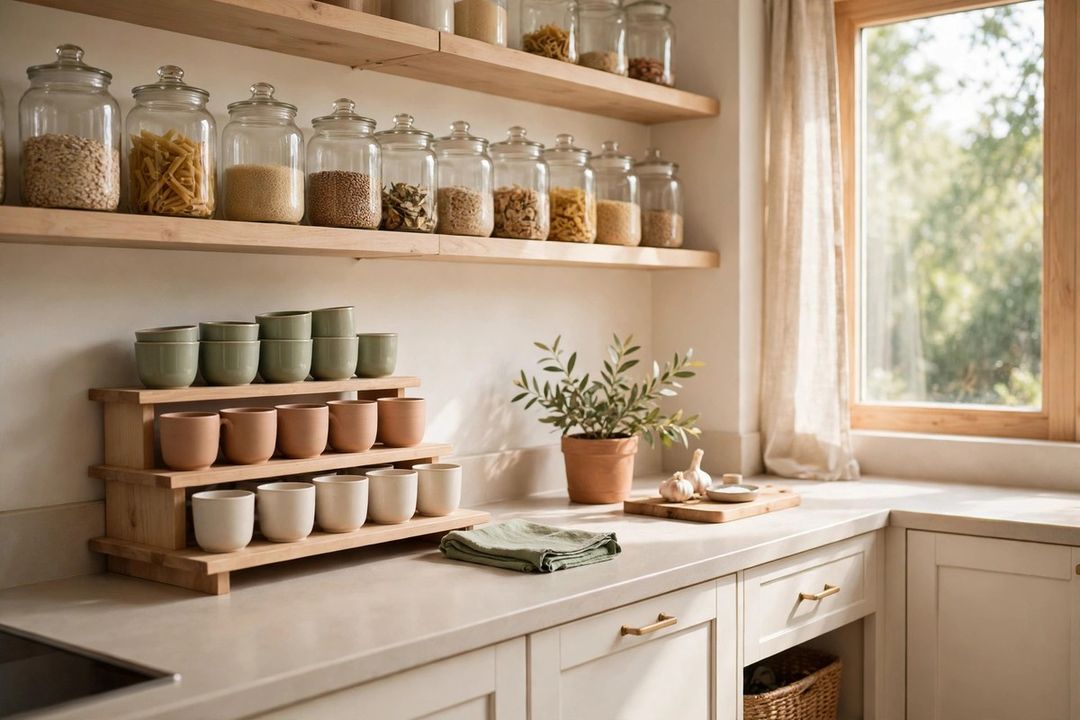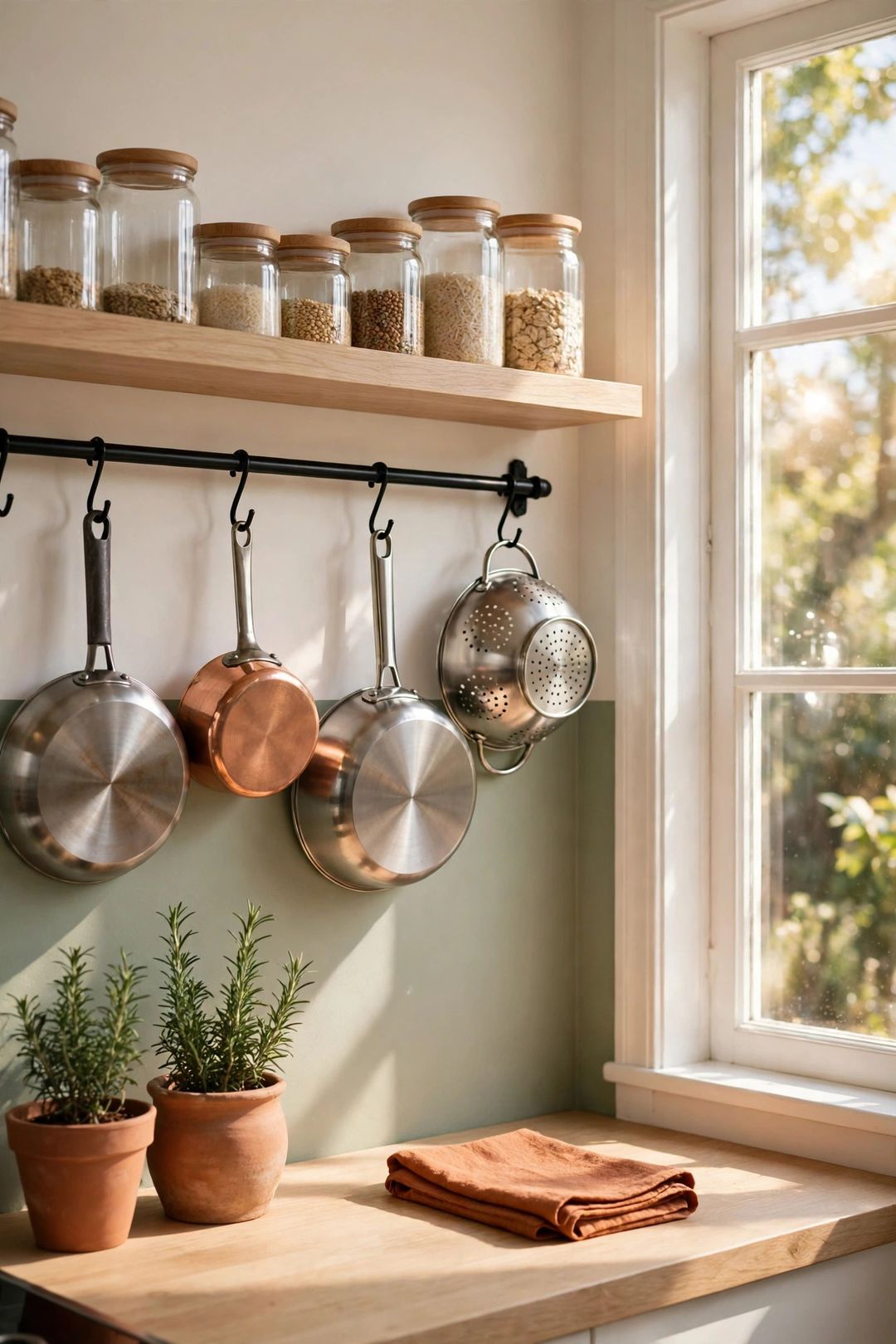
A small pantry rarely fails because it is small. It fails because everything lands wherever there is a gap. Baking powder hides behind cereal, three bags of rice sit open at once, and last week's snacks vanish behind cans.
These pantry organization ideas build a simple system for one cabinet, a few shelves, or a small closet pantry. You will map five zones by height, decant only the foods that benefit, use height instead of width, and stock new items the FIFO way.
Set aside about an hour for the first setup, shelf by shelf. After that, a short weekly reset keeps it running, and shopping gets easier because you can see what you have.
1. Start With a Zone Map
Zones stop the daily shuffle. Give each shelf a job based on height and reach, then return items to the same zone every time.
Zone 1: Daily cooking, at eye level. Oils, salt, pasta, grains, and your most-used sauces belong on the easiest shelf.
Zone 2: Breakfast, one shelf away. Group cereal, oats, coffee, tea, and spreads together. This keeps breakfast boxes off the cooking shelf.
Zone 3: Baking, on a higher shelf. Flour, sugar, baking soda, and cocoa are used less often, so they can live higher, in one bin or clear section.
Zone 4: Snacks, within easy reach. Keep snacks in one open bin or basket. A single visible spot stops snack bags appearing on every shelf.
Zone 5: Backstock, lowest or highest shelf. Extra cans, backup pasta, and unopened duplicates go here. This is your built-in store — check it before any shopping list.
2. Decanting Rules: What Earns a Container
Decanting everything is slow and costly, and sometimes worse for the food. Use clear rules so containers earn their shelf space.
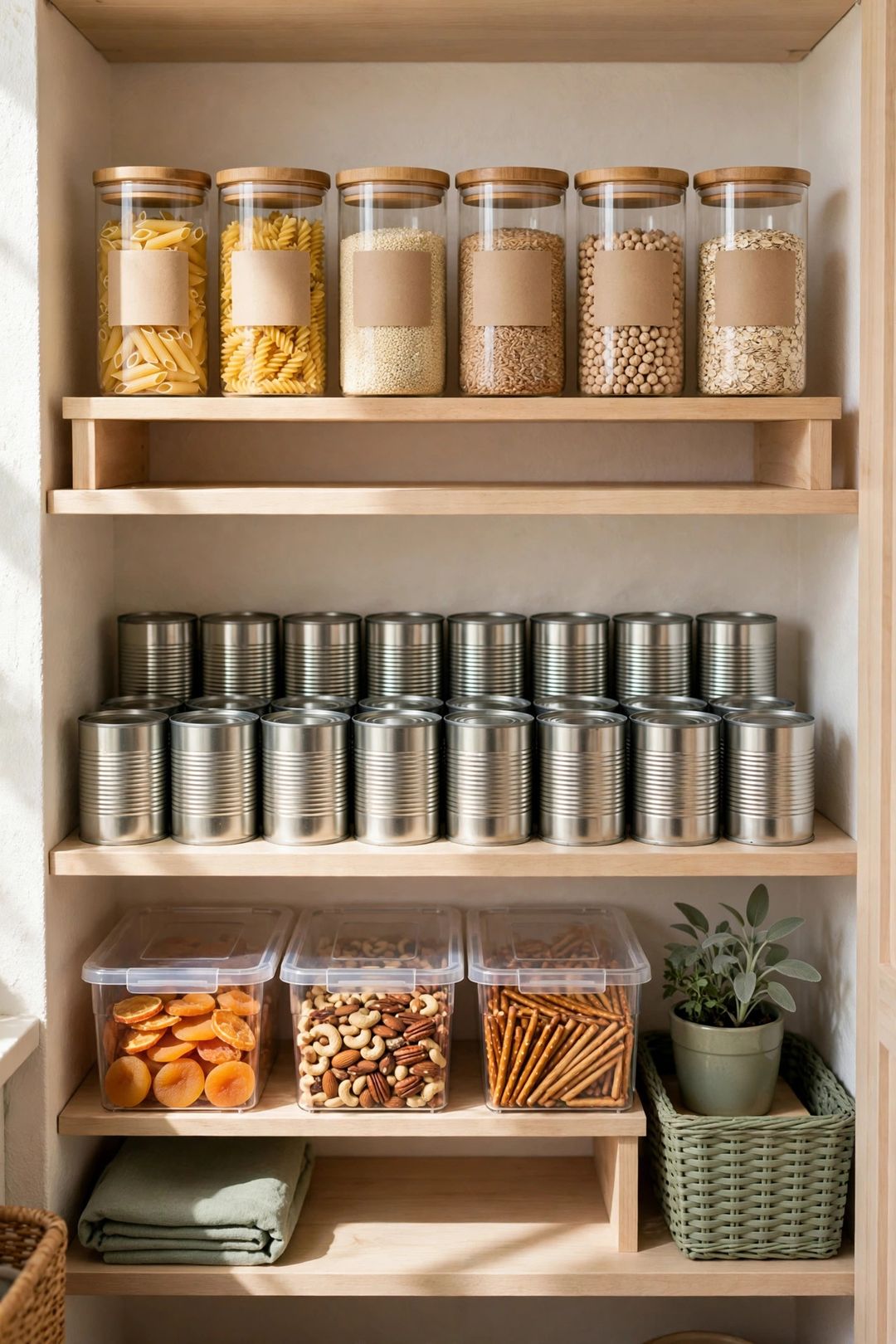
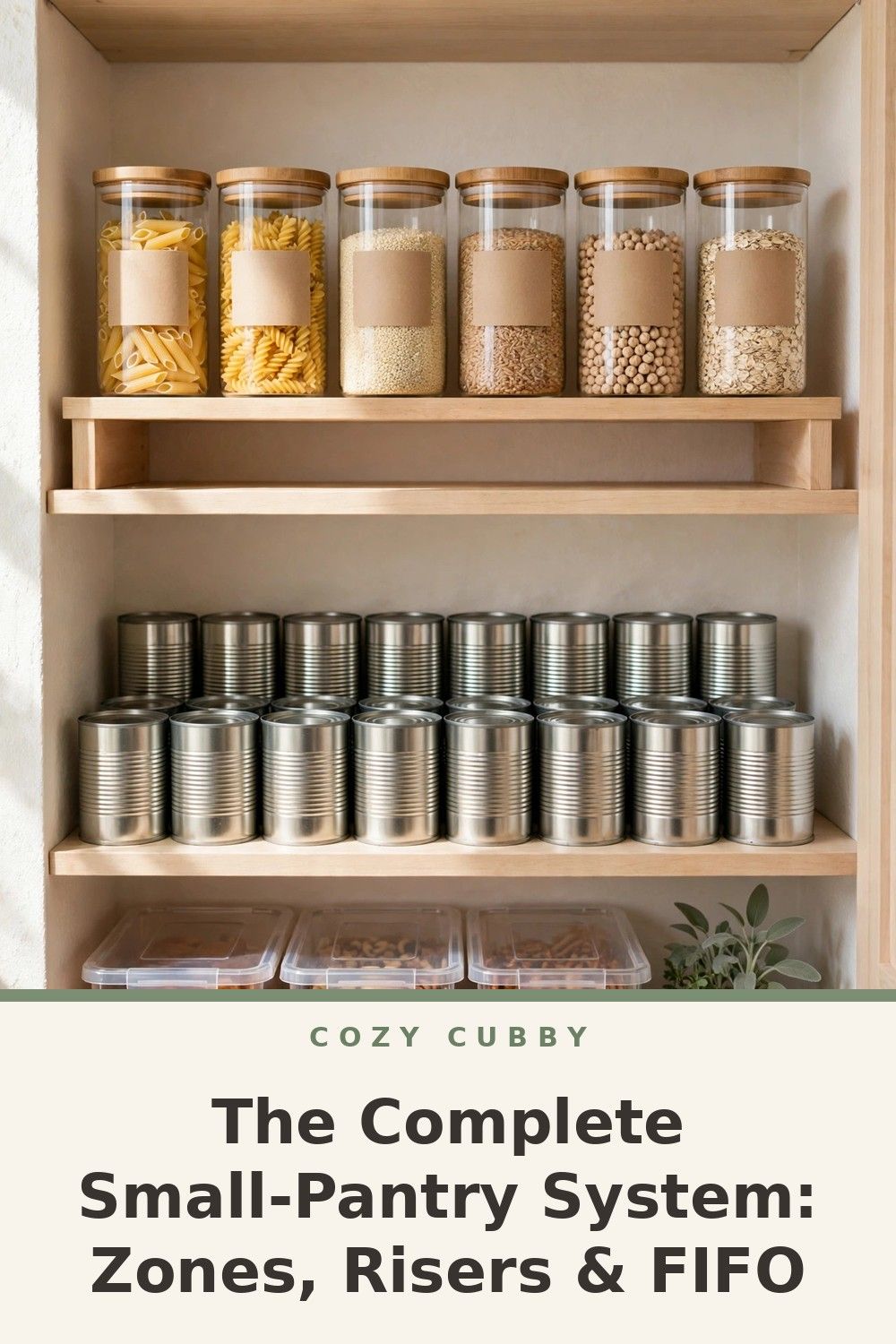
1. Decant the daily staples. Flour, sugar, rice, oats, and dried beans benefit from airtight containers. They spill easily from bags, and a uniform container stacks and pours better.
2. Keep rarely used boxed mixes packaged. A cake mix used twice a year needs no container. The box stores flat, protects the contents, and carries the directions.
3. Keep the instructions. If you decant a mix or grain with a specific water ratio, tape the directions to the container or drop the label inside.
4. Label and date every container. A date makes the FIFO system in section 4 possible.
3. Risers, Tiers and the Door: Vertical Fixes
Most small pantries waste the space above short items. These pantry organization ideas use height, so one shelf holds two clear layers.
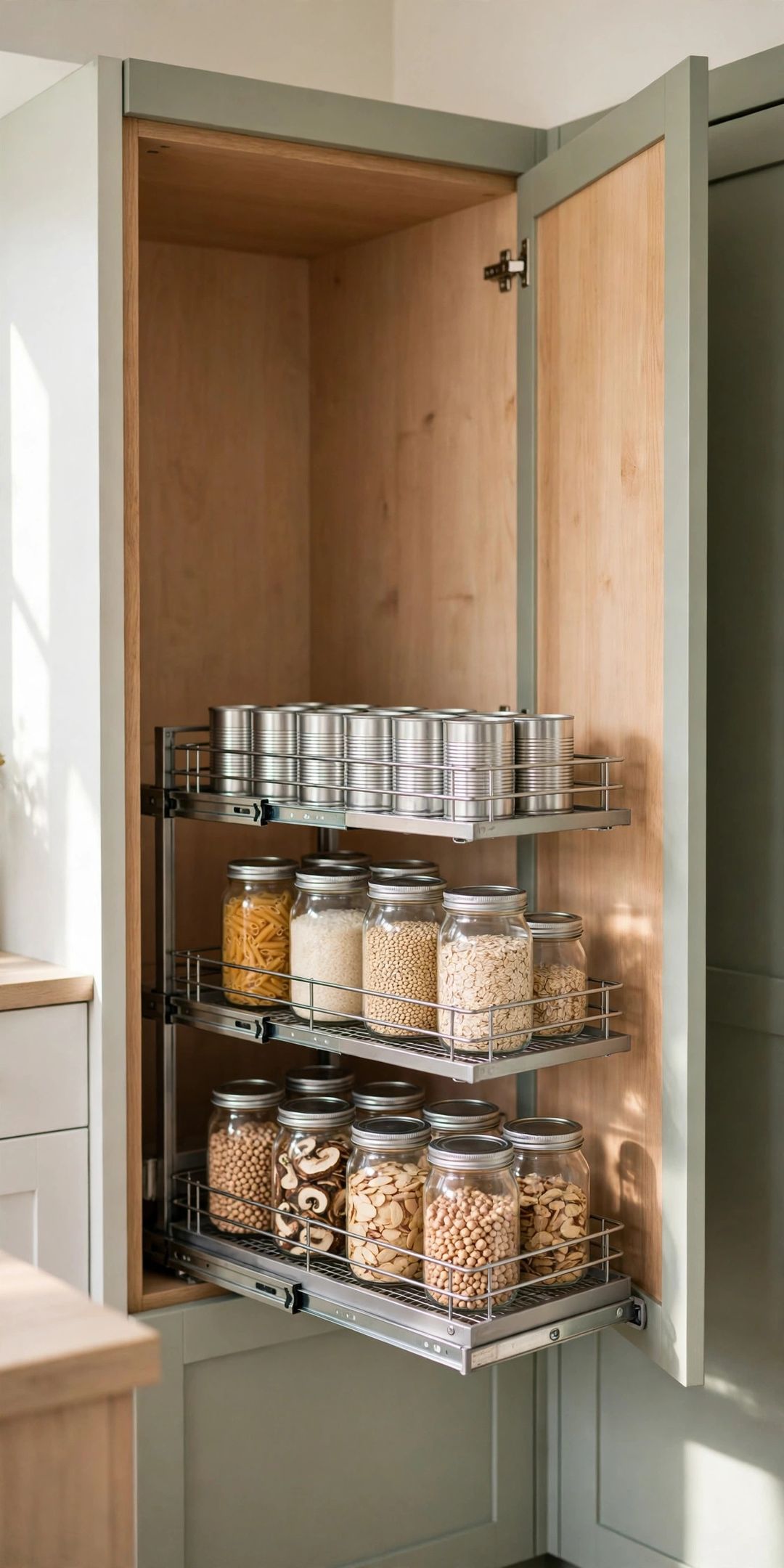
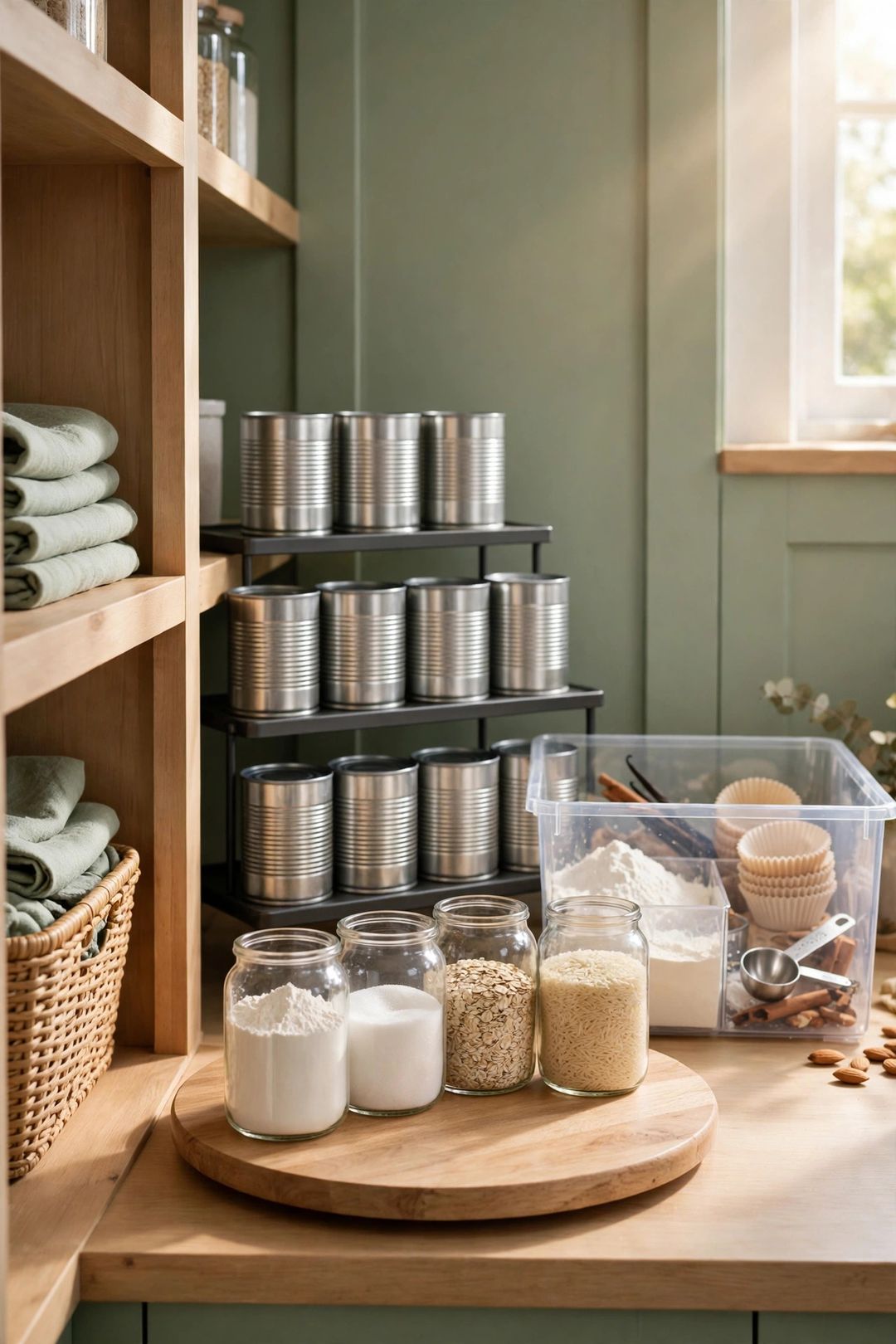
1. Add a tiered riser for cans and jars. A stepped riser, often about 10 to 13 inches wide, lifts the back row so labels stay visible and no can hides behind another.
2. Use a shelf riser to double a shelf. A raised insert creates a second level for short jars or small bowls. Measure the height between shelves first.
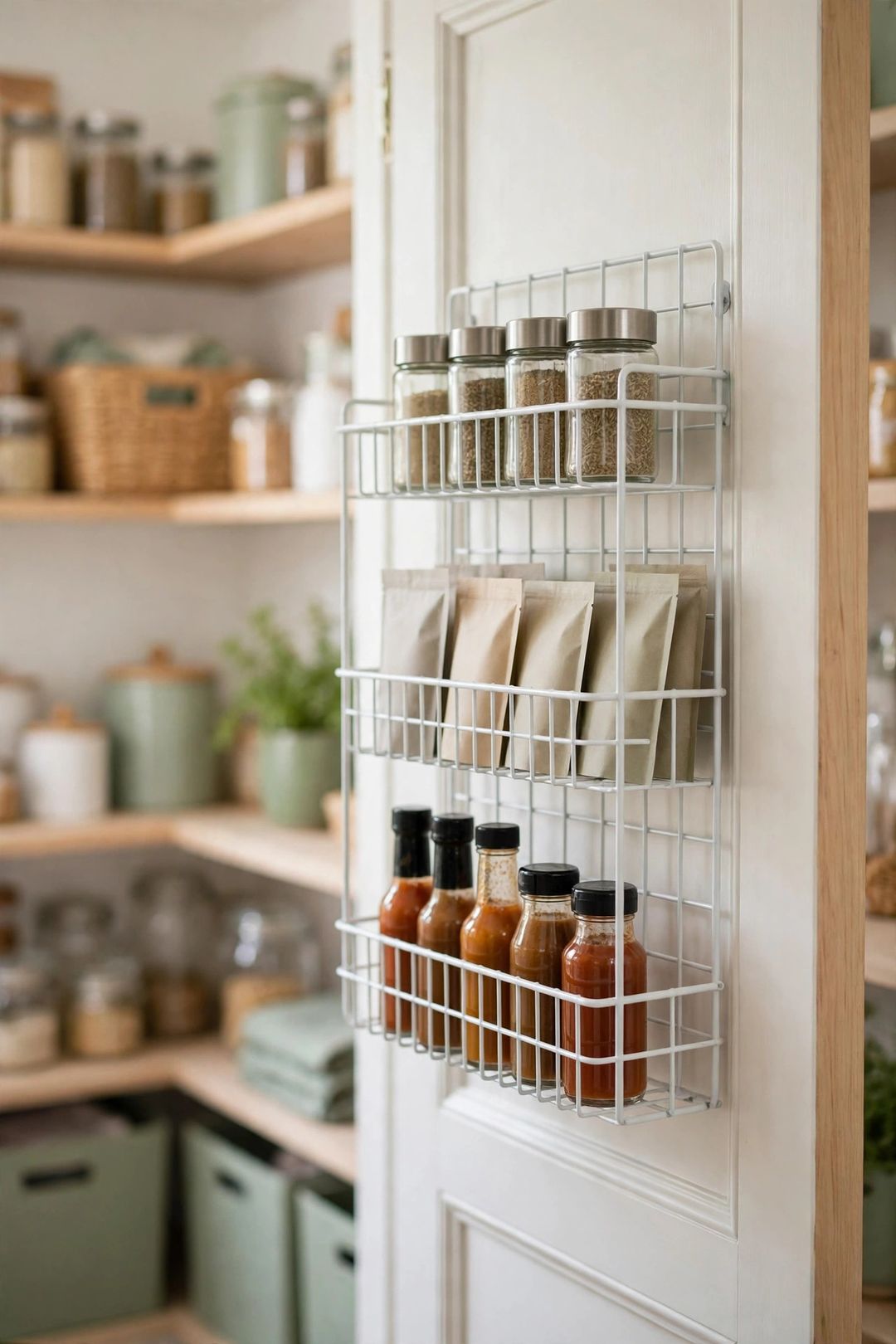
3. Put the door to work. An over-door rack holds wraps, foil, and spice packets on a wasted surface. Keep it to light, flat items so the door closes smoothly.
4. Turn deep corners with a turntable. A 10-inch turntable brings back items forward in a deep cabinet. It works best for bottles and jars.
4. FIFO: First In, First Out
FIFO is the stocking rule used in shops, and one of the most useful pantry organization ideas at home. It simply means the oldest items get used first.
1. Put new items behind the old ones. When unpacking, move existing cans and boxes forward and place new ones behind.
2. Add a simple date label. Write the month and year on cans and packages. You do not need exact days — a clear month is enough to spot what moves forward.
3. Keep a restock list on the door. Tape a small list inside the pantry door or on the fridge. Write down anything you finish.
4. Check backstock before you buy. Make backstock the first stop when building a list. Many duplicates are bought simply because the spare was never seen.
5. The 10-Minute Weekly Reset
Systems drift because life is busy. A short reset on grocery day keeps these pantry organization ideas working without a full re-do.
1. Front and face everything. Pull items to the front edge and turn labels outward. Two minutes of facing makes the whole pantry readable again.
2. Check eat-first and backstock. Move anything close to its date into the daily cooking zone, and note what backstock covers this week before buying more.
3. Wipe one shelf. Clean a single shelf on rotation, catching crumbs and sticky spots early. In a few weeks, every shelf has been done.
4. Fix one problem spot. If a zone keeps overflowing, move a category, add a small bin, or shift a rarely used item to backstock now, not later.
What to Buy
An airtight container set, typically $20–$35. Pro: Uniform sizes stack neatly and keep staples fresh. Con: Large sets include sizes you may never use. Skip if: You decant only one or two staples and own matching jars.
A tiered can riser, typically $12–$20. Pro: Every can and jar label stays visible. Con: Tall cans may not fit on the top step. Skip if: Your pantry holds mostly boxes and bags.
An over-door rack, typically $18–$30. Pro: It adds storage for wraps and spices with no shelf space. Con: It can rattle if overloaded. Skip if: Your door is sliding or bifold and cannot hold one.
A 10-inch turntable, typically $9–$15. Pro: It solves deep corners and brings bottles forward. Con: The round shape wastes some corner space. Skip if: Your shelves are too narrow for it to spin freely.
A label set, typically $6–$14. Pro: Clear names and dates make FIFO work for everyone. Con: Labels need updating when contents change. Skip if: A marker on painter's tape already gives readable labels.
Mistakes to Avoid
- Decanting everything. Every box in a container wastes money, loses directions, and makes refills a chore. Decant daily staples only.
- Buying containers before measuring. Shelf depth and height decide what fits. Measure first, or containers end up stored elsewhere.
- Having no backstock zone. Extras scatter across shelves and get bought again because no one saw them.
- Hiding food behind food. Deep double rows with no FIFO order mean older items expire unseen at the back.
- Skipping labels and dates. Unlabeled containers turn similar grains into a guessing game, and undated food never moves forward.
Frequently Asked Questions
What if the pantry is just two cabinets?
The same system works, just smaller. Use one cabinet for daily cooking and breakfast, and the second for baking, snacks, and backstock. Risers and a turntable matter even more, because cabinet depth hides items easily.
How deep should bins be for a 12-inch shelf?
Choose bins about 10 to 11 inches deep. That leaves a small gap at the front to grip and slide the bin out, and stops it pressing on the door.
What foods should never be decanted?
Keep rarely used boxed mixes, items with directions you still need, and foods in packaging that already seals and stacks well in their original packaging. If the box protects, stores flat, and shows instructions, a container adds only work.
How often should a pantry be reset?
A 10-minute weekly reset on grocery day is enough for most homes. Check dates and backstock more deeply every few months.
A small pantry with zones, a few risers, and a FIFO habit can work better than a large pantry with no system. Save this post to your Kitchen Organization board on Pinterest so the full system is handy on grocery day.