A big bag of kibble is hard to hide. It slumps in a corner, spills when you scoop, and never matches the rest of the kitchen. In a small space, it can take over a whole cabinet or a large patch of floor.
These pet food storage ideas kitchen kibble setups solve that without a remodel. You will move food into airtight containers, use dead space inside cabinets and beside appliances, and give bowls, treats, and extras one clear home.
Start by measuring where food could live: a cabinet, a pantry shelf, the gap beside the fridge, or a spot near the feeding area. Then pick the two or three ideas below that fit that space best.
1. Swap the Bag for an Airtight Bin
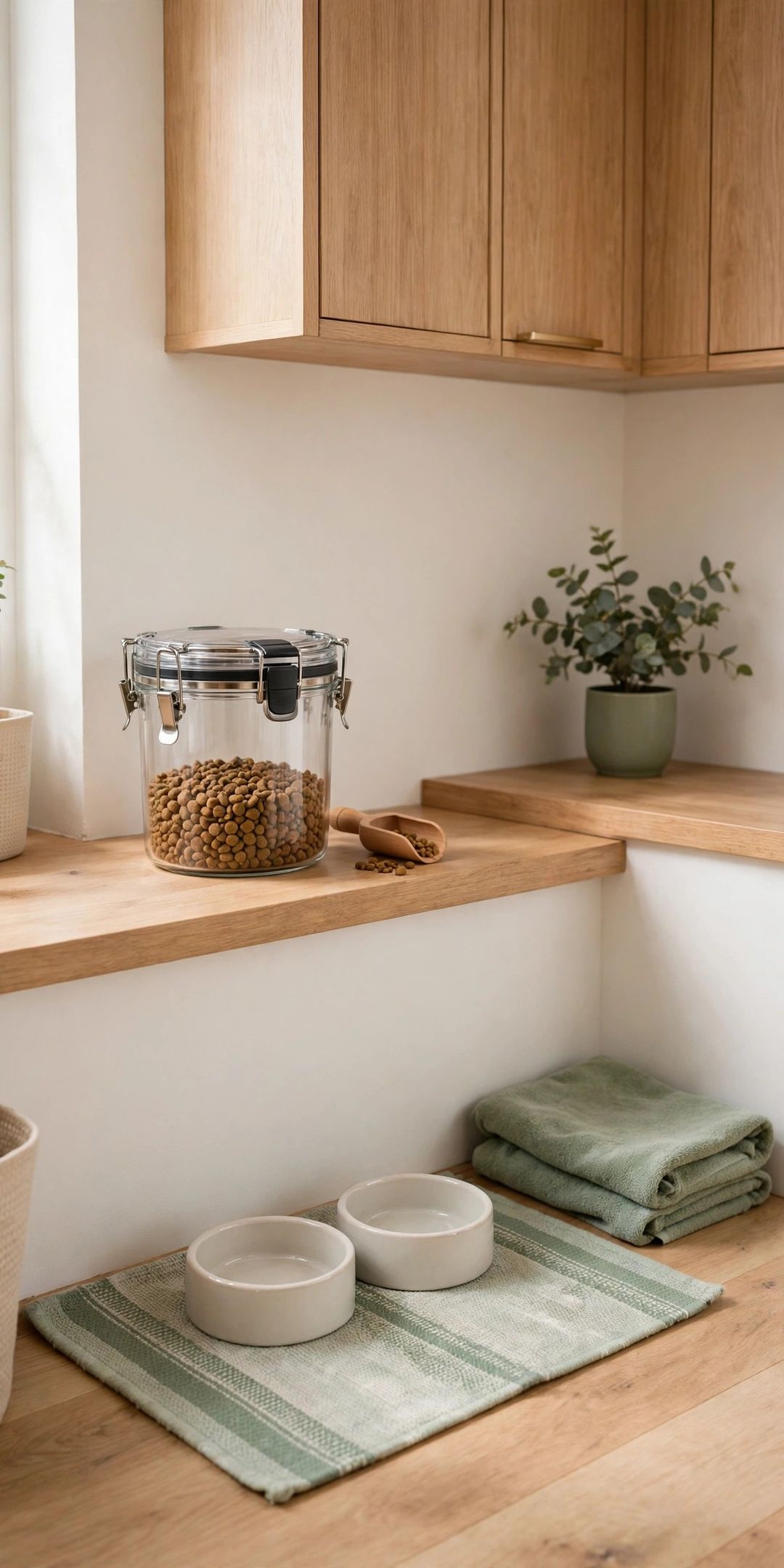
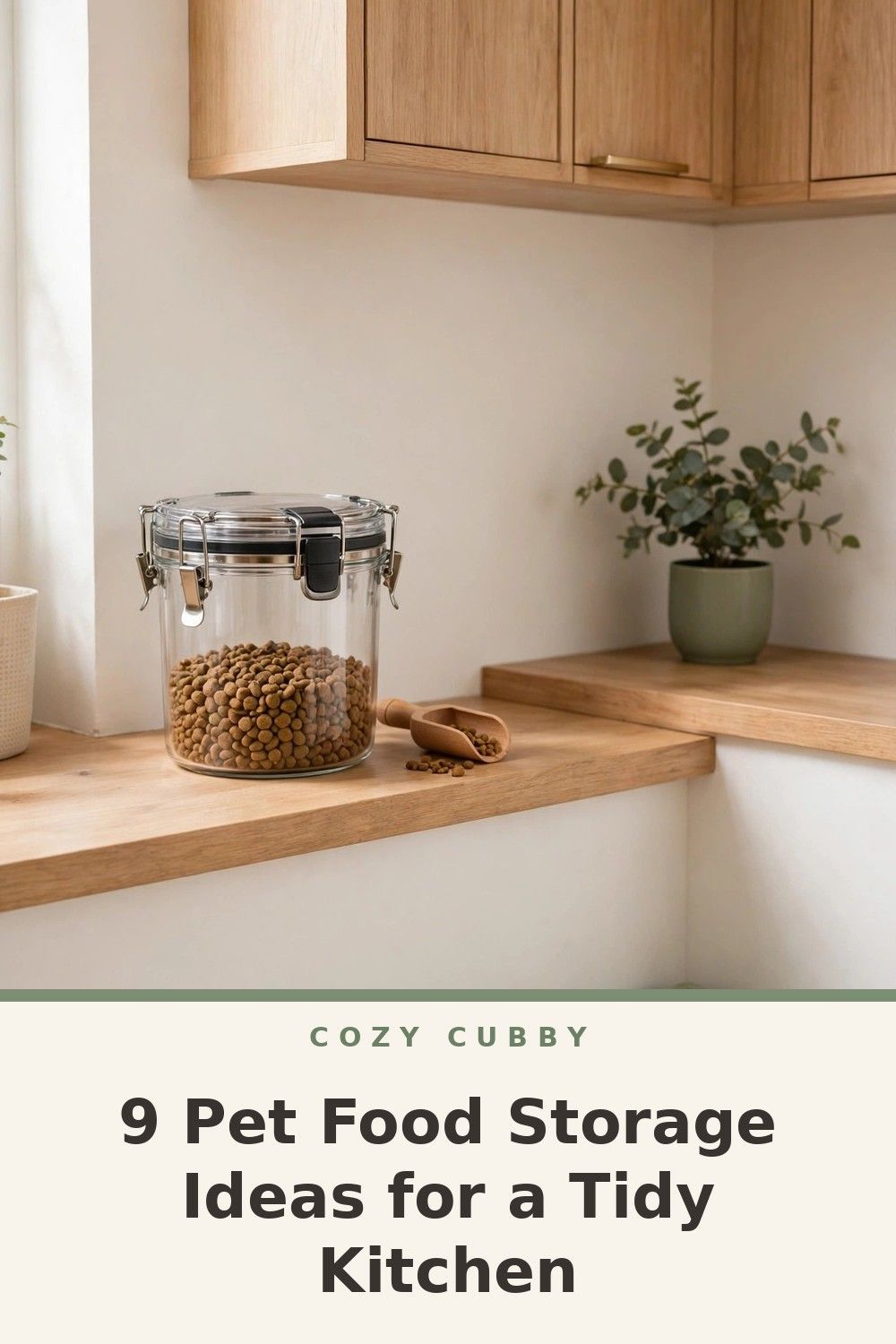
Start with the main container. Pour kibble into a sturdy bin with a tight, airtight seal. Airtight seals slow staleness and keep food contained if the bin tips. Choose a size that matches the bag you usually buy, label it with the food name and opening date, and keep the folded original bag nearby until the bin is empty, so the product details stay easy to find.
2. Use a Rolling Container Under a Shelf
Put low space to work. A low rolling container slides under a pantry shelf, a kitchen cart, or a raised cabinet. The wheels matter because a full bin is heavy and awkward to drag forward. Measure the clear height, including the lid, and leave a little room above the bin so it rolls out without catching.
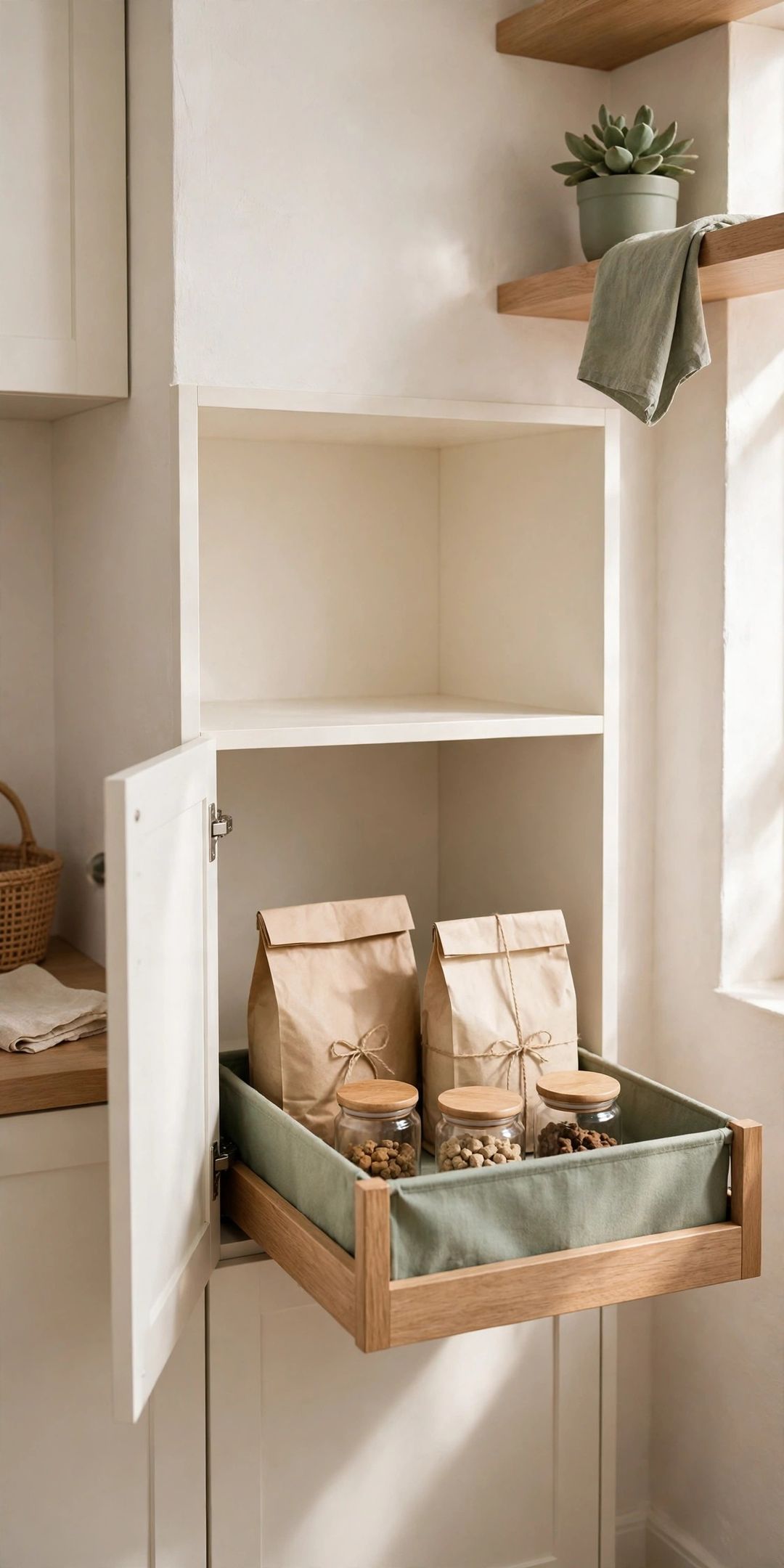
3. Try an In-Cabinet Dispenser
Mount storage inside a cabinet. Some dispensers sit on a cabinet shelf or mount inside it, holding kibble in a clear chamber and releasing a portion from the bottom. Place it in the cabinet nearest the bowls, so you are not carrying loose kibble across the kitchen. A small tray or mat under the spout catches stray pieces.
4. Decant Treats Into Small Jars
Give treats their own small home. Treats often arrive in crinkly bags that never reseal well. Small jars with tight lids keep them contained on a shelf or near the door where walks start. Use one jar per type so different treats do not mix, and choose clear jars so you can see when you are running low.
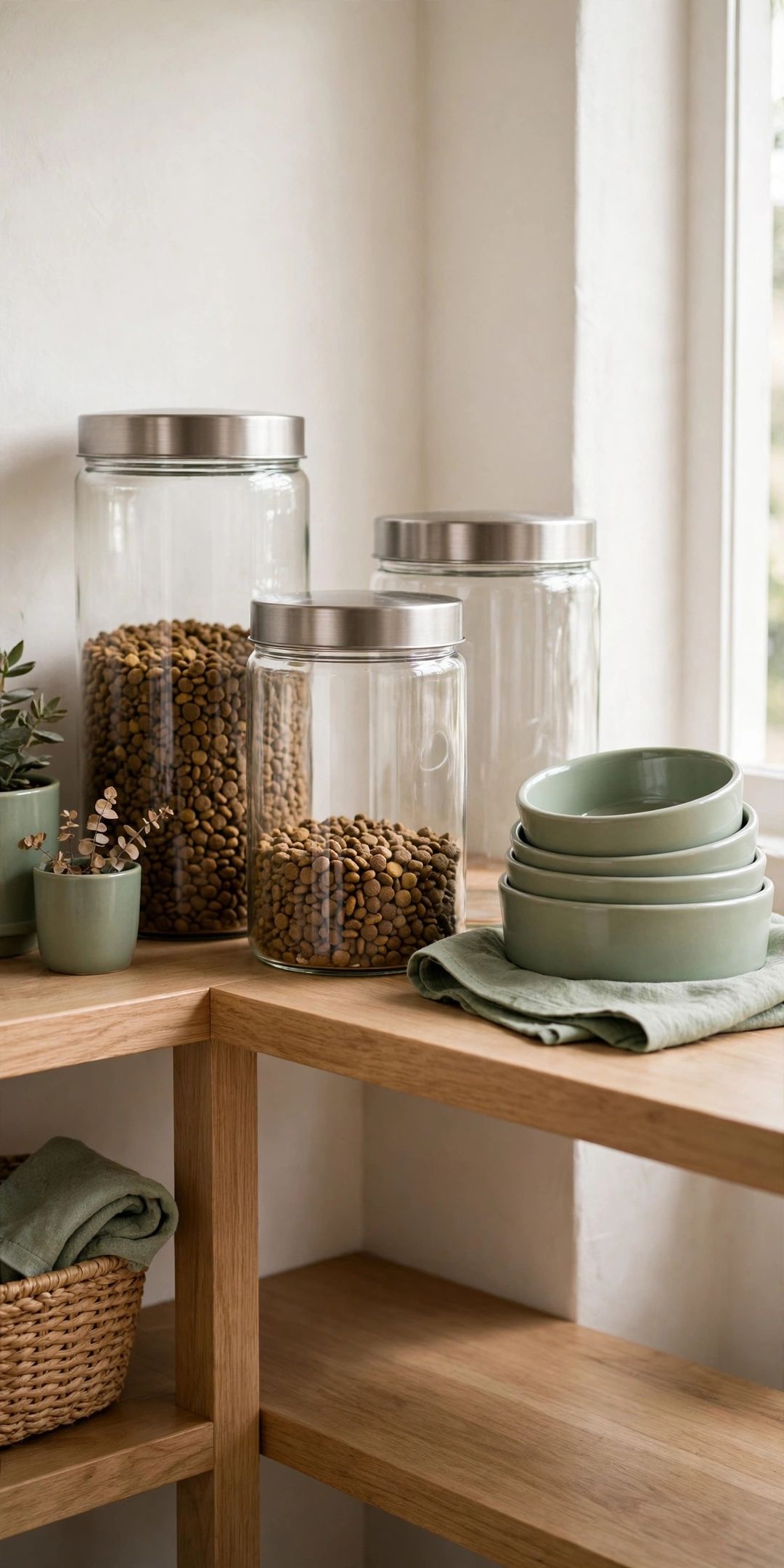
5. Build a Feeding Station With Storage Below
Combine bowls and storage in one spot. A small stand, low cabinet, or bench-style station can hold bowls on top and a bin or basket below. Everything for feeding time then lives in a single footprint instead of spreading across the room. Add a washable mat under the bowls, sized a little wider than the bowls, to catch drips and stray kibble.
6. Slide a Slim Bin Between Appliances
Use the narrow gap. Many kitchens have a slim gap beside the fridge, stove, or washer. A tall, narrow bin or slim rolling cart can fit there, turning wasted inches into hidden storage. Measure the width at floor and counter height, keep the bin away from heat sources, and make sure it pulls out fully without scraping.
7. Keep a Small Counter Caddy for Daily Use
Store a little, not a lot. If the main bin lives in a pantry or closet, keep a small airtight canister on the counter or in an easy cabinet for daily scooping, and refill it from the main bin as needed. Choose a simple finish that matches your kitchen, and keep the scoop inside the canister so it never wanders off.
8. Store the Scoop and Extras Together
Make a simple supply basket. Keep the scoop, bag clips, and any extras in one small basket or bin next to the food. Searching for the scoop at feeding time is a small hassle that adds up. A hook inside a cabinet door can also hold the scoop or a folded towel for spills, keeping these tools with the food instead of in a general junk drawer.
9. Use a Stacked Bin System for More Than One Pet
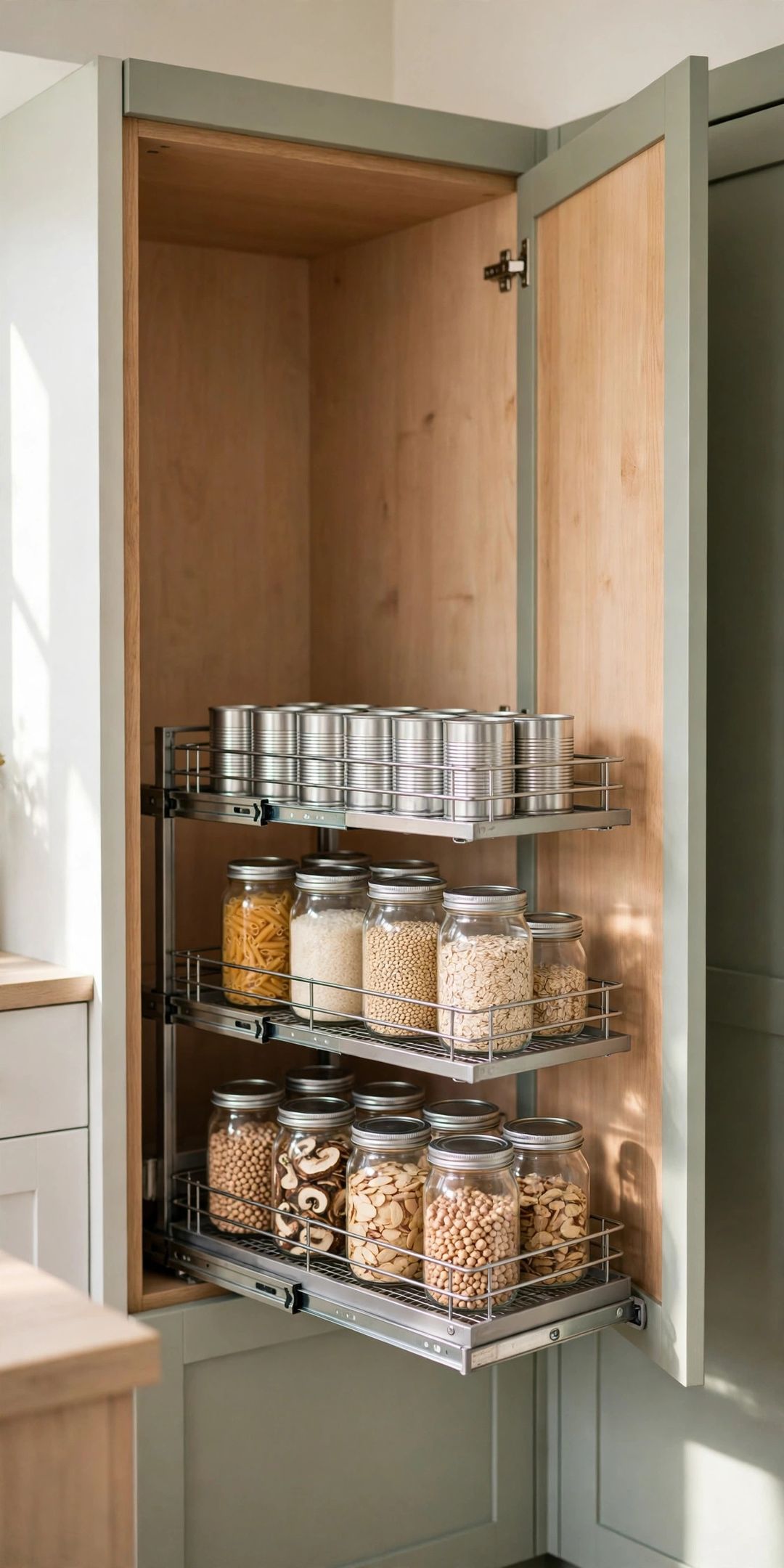
Stack instead of spreading out. Homes with more than one kind of food can use two smaller stackable bins instead of two big bags side by side. Stacking uses vertical space in a pantry or tall cabinet. Put a clear label on the front of each bin, not the lid, so you can read it while stacked, and keep the most-used food in the easiest bin to open.
What to Buy
An airtight pet food bin, typically $20–$45. Pro: It replaces a slumping bag and seals tightly. Con: Large sizes are heavy when full. Skip if: Your current container already seals well and fits its spot.
A rolling food container, typically $25–$50. Pro: It moves easily even when full and uses low space. Con: Wheels need a smooth floor. Skip if: You have no clear space under a shelf or cart.
An in-cabinet dispenser, typically $20–$40. Pro: It portions food without lifting a bin. Con: It holds less than a large bin. Skip if: You buy very large bags and have no room for a backup bin.
Small treat jars with tight lids, typically $8–$18 for a set. Pro: They tidy loose treat bags and show levels clearly. Con: Glass jars can break if dropped. Skip if: Your treat bags reseal well and fit one small bin.
A washable feeding mat, typically $10–$25. Pro: It catches drips and stray kibble in one place. Con: It needs regular shaking and wiping. Skip if: Your feeding spot already sits on an easy-clean tray.
Mistakes to Avoid
- Buying a bin before measuring. A container too tall for the cabinet or too wide for the gap becomes clutter somewhere else.
- Leaving the open bag on the floor. Open bags spill, tear, and take up the most visible space in the room.
- Skipping the label. Label each refill with the name and opening date so you always know what is in the bin.
- Storing food far from the bowls. A long carry across the kitchen means more spills and a slower routine.
- Letting treats spread across shelves. Loose treat bags in several places get forgotten and bought again.
Frequently Asked Questions
Should kibble stay in its original bag?
You can keep the bag inside a larger airtight bin, which gives you both a tight seal and the original product details. If you pour the food out, keep the folded bag nearby until the bin is empty, and label the bin with the name and opening date.
Where is the best spot for pet food in a small kitchen?
The best spot is dry, easy to reach, and close to the bowls: inside a low cabinet, on a pantry shelf, or in a slim gap beside the fridge. A spot you can reach without moving other items is the one you will keep tidy.
How do I store food for two different pets?
Use two smaller labeled bins instead of one shared container. Stackable bins save space, and a clear label on the front of each one prevents mix-ups at feeding time.
What size bin should I buy?
Match the bin to the bag size you buy most often, then check its height and width against your cabinet or gap before ordering. A bin that fits the food but not the space solves nothing.
Pet food does not have to live in a corner or take over a cabinet. Pick one bin, one treat jar, and one clear feeding spot to start. Save this post to your Kitchen Organization board on Pinterest so the ideas are handy before your next bag of kibble arrives.