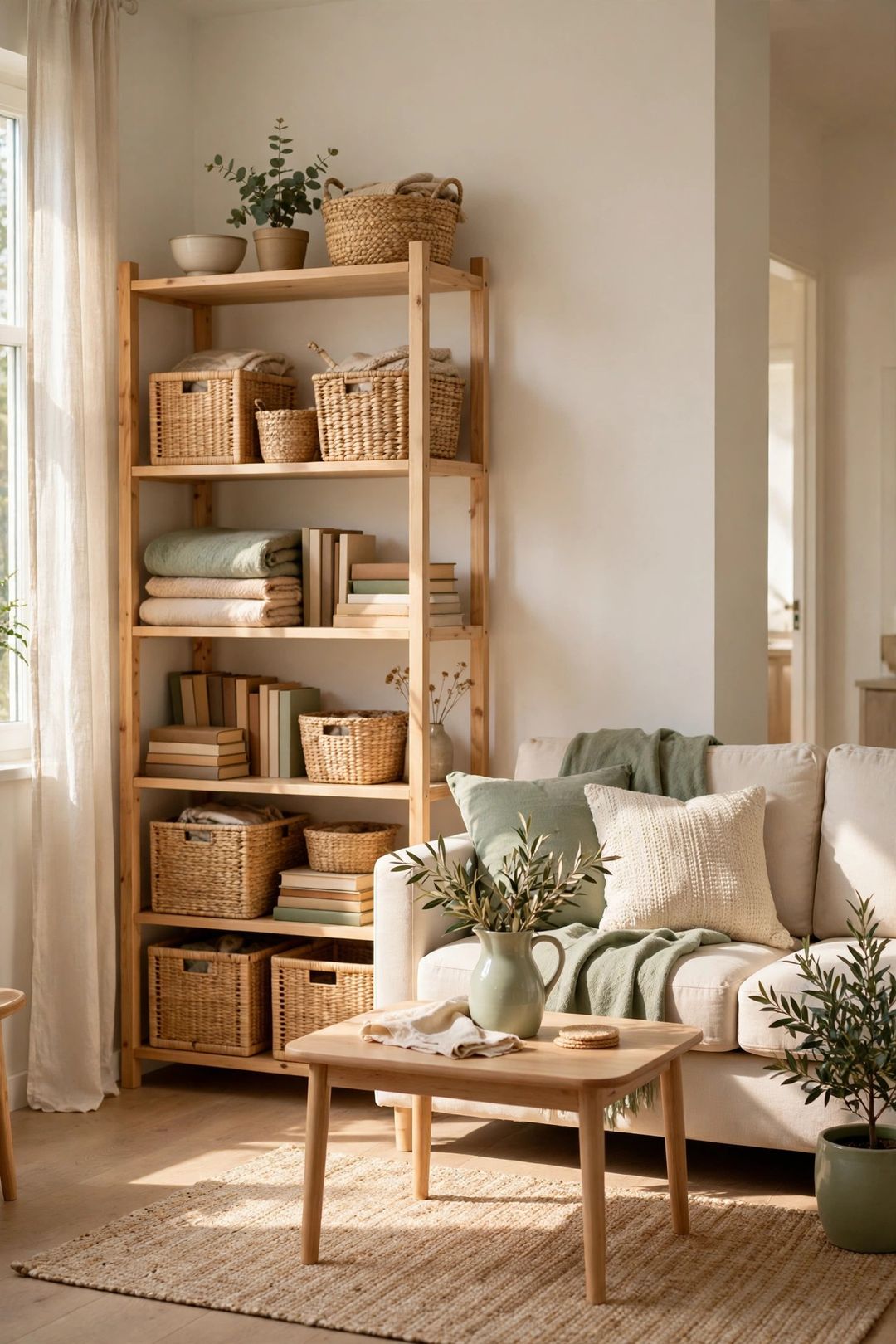
Life in an RV or camper runs on very little space. Cabinets are shallow, the fridge is tiny and drawers become a jumble after a few bumpy miles. Storage that looks neat parked can slide and spill once the wheels turn, so motion is the first test.
The rv and camper storage ideas below borrow proven rules from small apartments. Use vertical space, pick items that do two jobs, keep clear zones and follow one-in-one-out for new gear. Heavy items belong low, light items go high, and anything loose needs a lip, a latch, a bin or non-slip liner.
Humidity adds one more challenge. Condensation builds in small, closed spaces, so airflow, sealed bins and quick-dry fabrics help keep bedding, clothes and food fresh.
Kitchen and Food
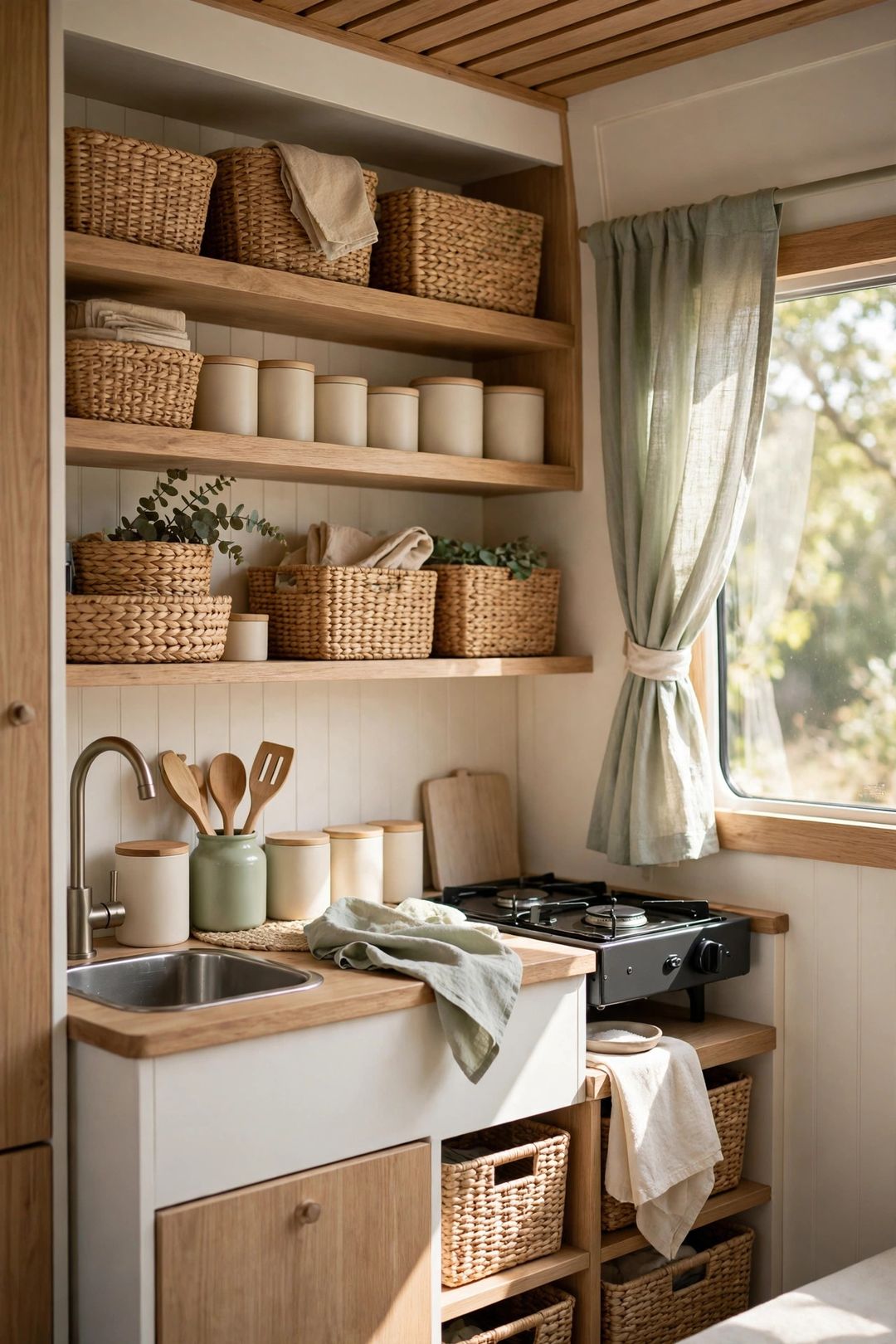
1. Nesting Bowls With Lids. A nesting set stacks bowls inside each other, so five bowls take the space of one. Lids turn each bowl into sealed storage for leftovers, which stops spills on rough roads. Flat lids stack best. The drawback is size limits, since the smallest bowls hold very little. Typically $15–$25.
2. Collapsible Dish Rack. A fold-flat dish rack opens beside the tiny sink for washing up, then folds to a slim board that slides beside the stove. Thin plastic hinges can wear out with daily folding, so gentle handling helps. Typically $12–$22.
3. Hanging Fruit Hammock. A small net hammock hangs under a cabinet and holds fruit and bread off the counter. The net cradles round items so they do not roll or bruise, and air flow keeps produce fresh. Hooks need a solid cabinet base, and heavy loads can stretch the net. Typically $10–$18.
4. Magnetic Spice Tins on a Metal Strip. Small tins with magnetic backs stick to a metal strip inside a cabinet door. Spices stay visible, use zero shelf space and cannot tip over in transit. Strong bumps can shift weak magnets, so firm magnetic backs work best. Typically $18–$30 for a set.
5. Tension Rods as Cabinet Keepers. A short tension rod across the front of a cabinet shelf acts as a guard rail. Bottles, cans and jars stay behind the rod instead of tumbling out after a drive. Rods need no screws. A loose rod can pop out, so firm tension matters. Typically $8–$15 for a pack.
Sleeping and Clothes
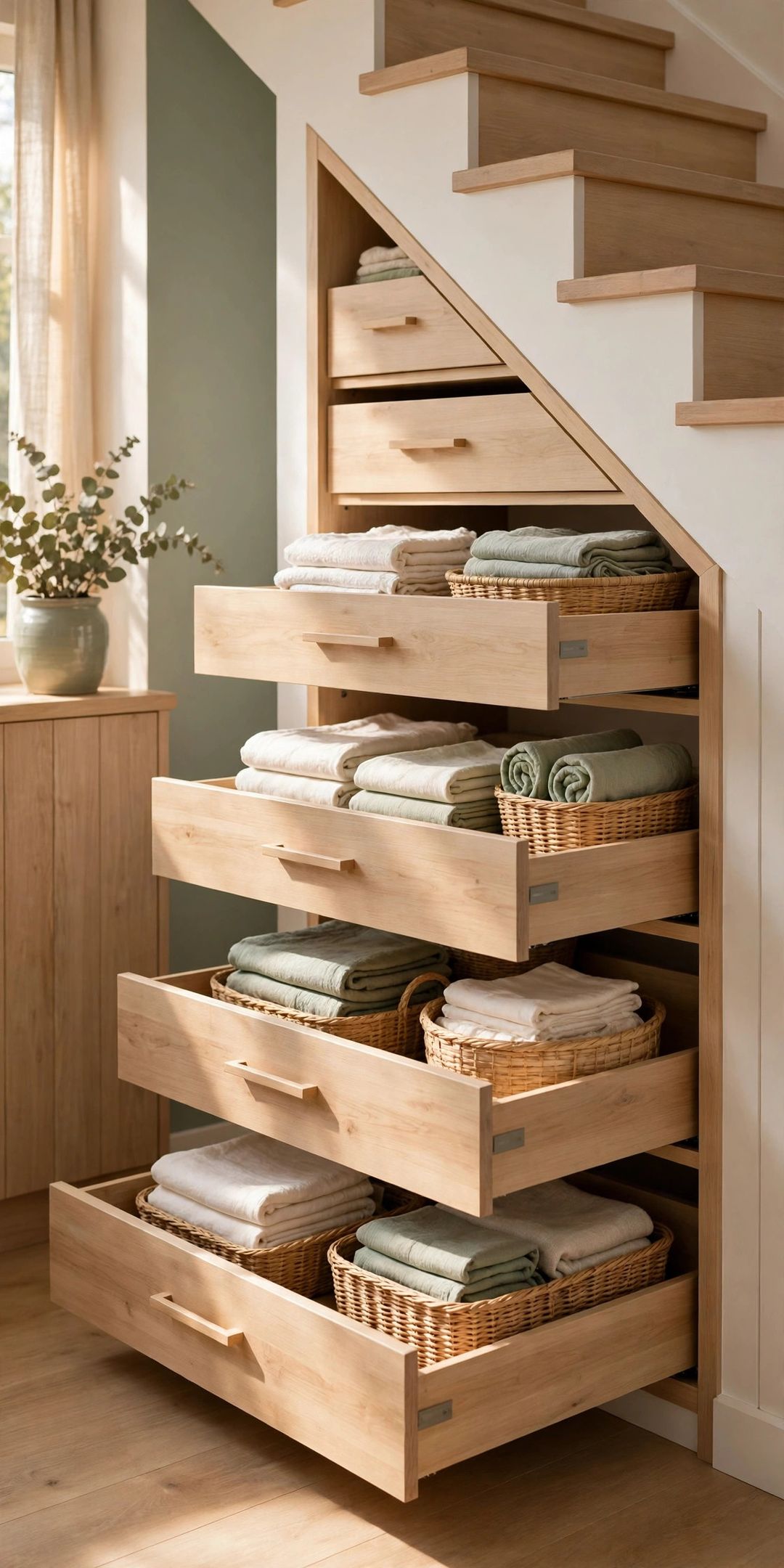
6. Vacuum Bags for Bedding. Bulky blankets, spare pillows and off-season clothes shrink flat inside vacuum bags. Flat bags slide under the bed or into a bench seat, freeing closet space. Sealed bags also guard against humidity. Bags need a pump to reseal, and sharp edges can puncture thin plastic. Typically $15–$28 for a multi-pack.
7. Fold-Flat Crates for Clothes. Lightweight crates fold flat when empty and open into sturdy bins for folded clothes, shoes or pantry overflow. Crates stack in a closet and keep soft items from sliding. Cheap crates can crack at the hinges if overloaded, so keep loads light. Typically $10–$20 each.
8. Over-Door Shoe Pockets for Small Gear. A clear pocket organizer on a closet or bathroom door holds far more than shoes. Pockets suit socks, chargers, sunscreen and snacks, all visible at a glance. Overfilled pockets can swing while driving, so soft, light items work best. Typically $10–$16.
Bathroom and Utility
9. Over-Cabinet Trash Bag Holder. A simple holder hooks over a cabinet door and keeps a small trash bag open under the sink. It uses dead space and removes the need for a bulky bin that slides around. Small bags fill fast on longer trips. Typically $8–$14.
10. Bins With Lids and Non-Slip Liner. Small lidded bins corral toiletries, cleaning supplies and medicine so nothing rolls loose. Non-slip liner under each bin stops sliding, and lids keep contents inside if a bin tips. Measure first, since too many bins waste space. Typically $12–$22 for a set.
11. Quick-Dry Towel and Laundry System. Thin quick-dry towels take half the space of thick towels and dry fast in humid weather, which cuts mildew risk. A hanging mesh laundry bag keeps dirty clothes in one zone. The trade-off is feel, since thin towels take some adjustment. Typically $12–$24.
Entry and Everyday Carry
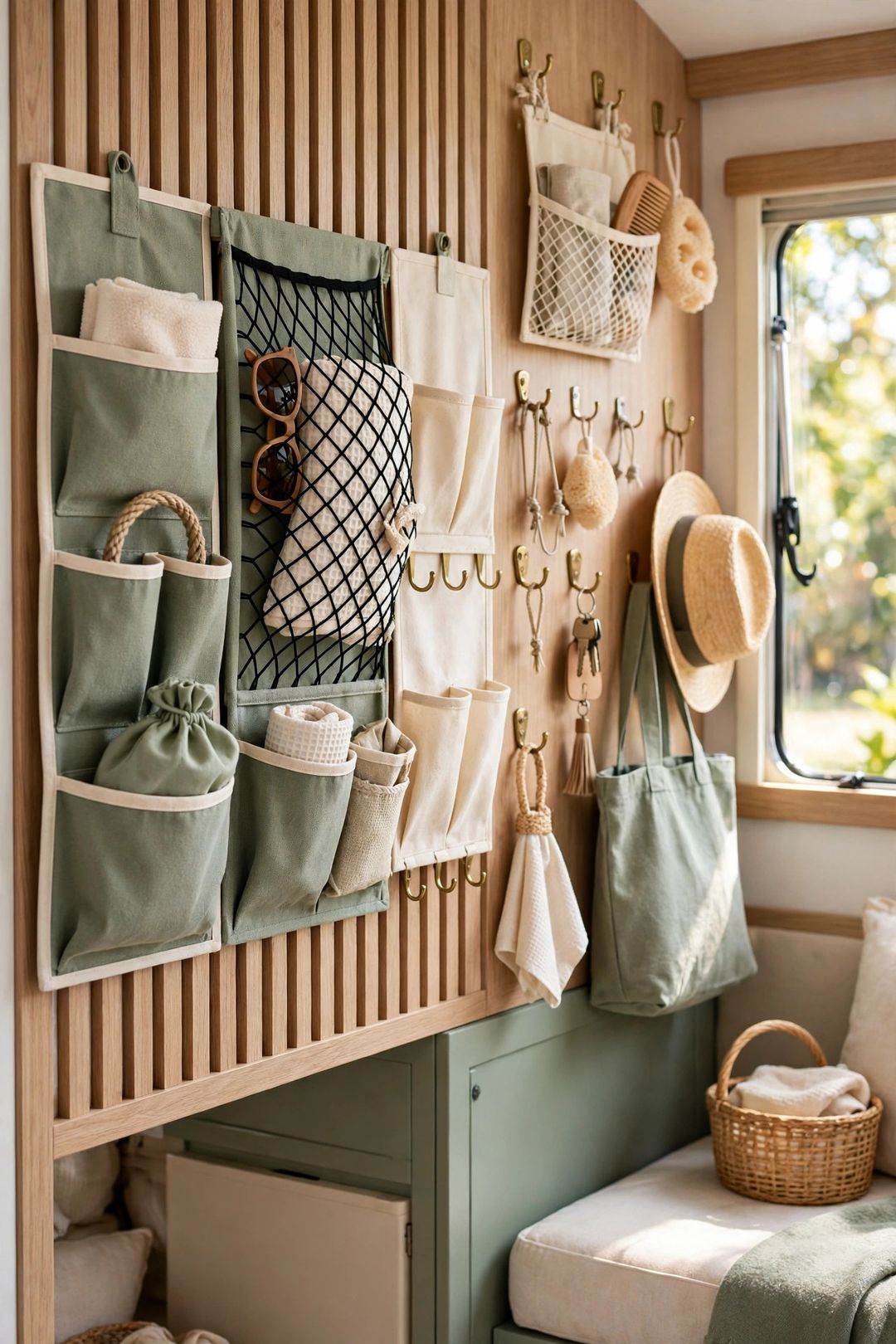
12. Removable Adhesive Hook Systems. Strips and hooks that remove cleanly hold keys, hats, leashes and light jackets on entry walls without drilling. Hooks turn blank wall space into a drop zone. Weight limits are real, and heavy bags can pull hooks off in heat. Typically $10–$18 for a multi-pack.
13. Slim Entry Tray With a Lip. A shallow tray with raised edges sits by the door for sunglasses, wallets and campsite passes. Non-slip liner underneath keeps the tray in place during travel. One tray per rig is usually enough for a single drop zone. Typically $9–$16.
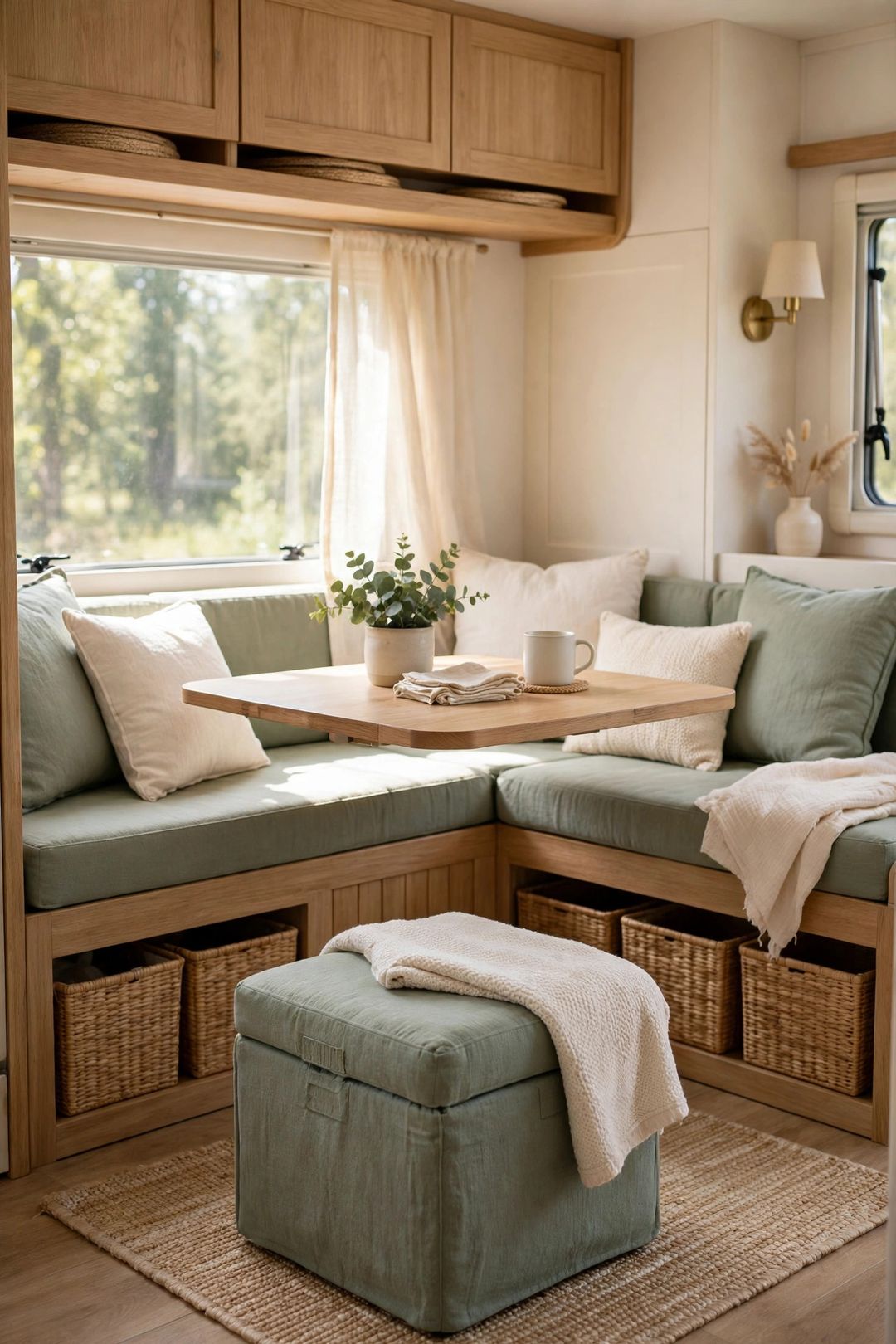
14. Multi-Use Bench Seat Storage. Most dinette benches hide hollow space under the seat. Flat bins inside hold games, cords, tools and seasonal gear. Labels speed up searches in the dark compartment. Access means lifting the cushion, so store weekly items here, not daily ones. Typically $14–$24 for flat bins.
What to Buy
The multi-use MVPs earn space in almost any rig. Nesting bowls with lids serve as prep, serving and sealed fridge storage in one set, typically $15–$25. The pro is three jobs in one footprint. The con is limited bowl sizes.
Vacuum bags deliver the biggest space gain for the cost, typically $15–$28. The pro is flat storage for bulky items. The con is the need for a pump to reseal bags on the road.
Tension rods and removable hooks add storage without tools or holes, typically $8–$18. The pro is fast setup. The con is weight limits, so heavy gear still needs cabinets and low placement.
Mistakes to Avoid
- Storing heavy items up high. Heavy cans, tools and full water jugs belong low. High storage raises the risk of falling items and makes cabinets harder to open safely after a drive.
- Leaving loose items on counters. Anything left out will move in transit. Cups, bottles and tools need a bin, a lip, a latch or a spot behind a tension rod before departure.
- Skipping the one-in-one-out rule. Space never grows inside a camper. A new item should replace an old one, or clutter slowly takes over every cabinet and bench.
- Ignoring humidity. Sealed bedding, damp towels and closed cabinets grow musty fast. Air out bedding, choose quick-dry fabrics and leave cabinet doors open at stops when possible.
- Overfilling the tiny fridge. A packed fridge blocks cold air and spoils food faster. Plan small, shop often and use lidded bowls that stack neatly instead of bulky packages.
Frequently Asked Questions
How can items be kept from sliding while driving?
Use bins with lids, non-slip liner under trays, tension rods across cabinet fronts and lips on shelves. Pack cabinets snugly, and place soft items like towels between hard goods to cut movement and noise.
Where should heavy items be stored in a camper?
Heavy items belong low, close to the floor, in cabinets and bench storage. Light items such as clothes and bedding go in high cabinets. Low placement keeps weight stable and cuts the risk of falling objects.
How does one-in-one-out work in an RV?
The rule is simple. When a new item comes in, an old item of similar size goes out. The habit keeps closets and kitchen gear at a level that fits the rig.
What helps with humidity and condensation in a small camper?
Ventilation helps most. Crack vents when weather allows, air bedding at stops, choose quick-dry towels and store clothes in sealed bins. Small moisture absorbers in closets can also help. Typically $8–$15.
Save this post to your camper organization board on Pinterest so these motion-proof ideas stay handy before the next packing day.