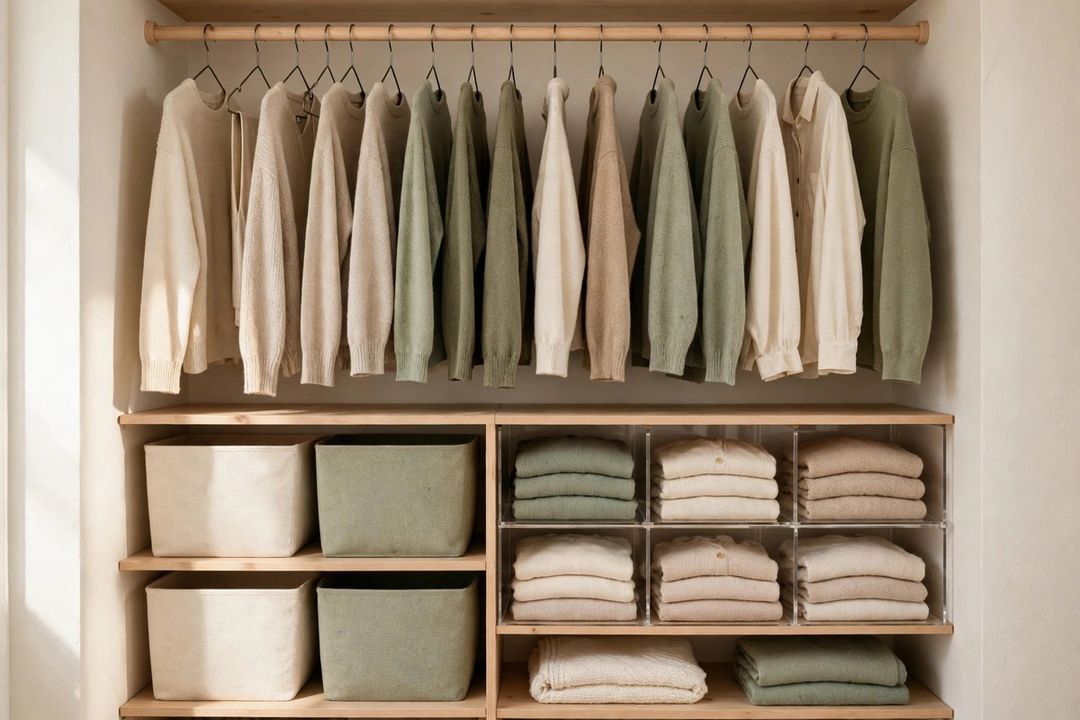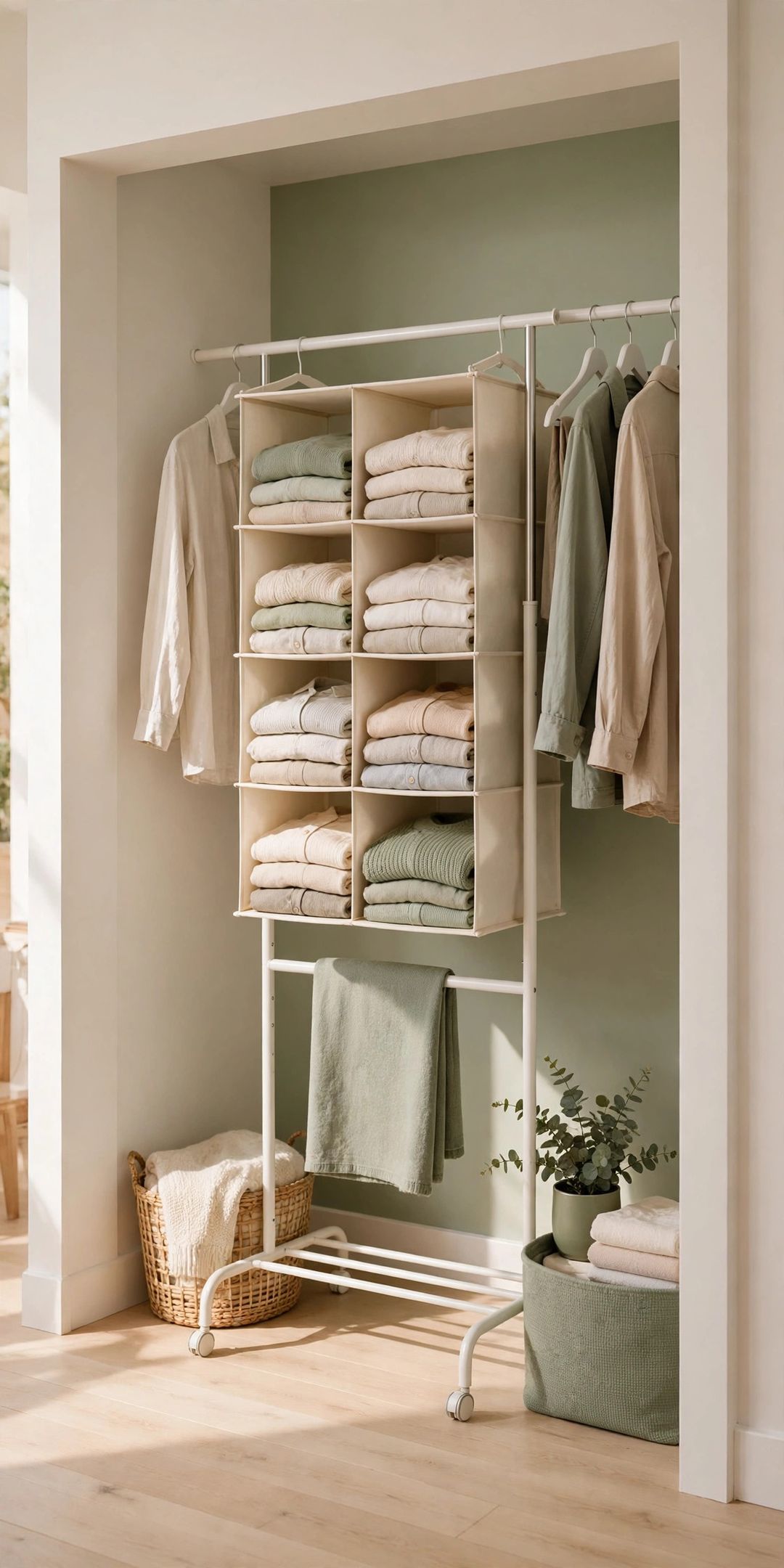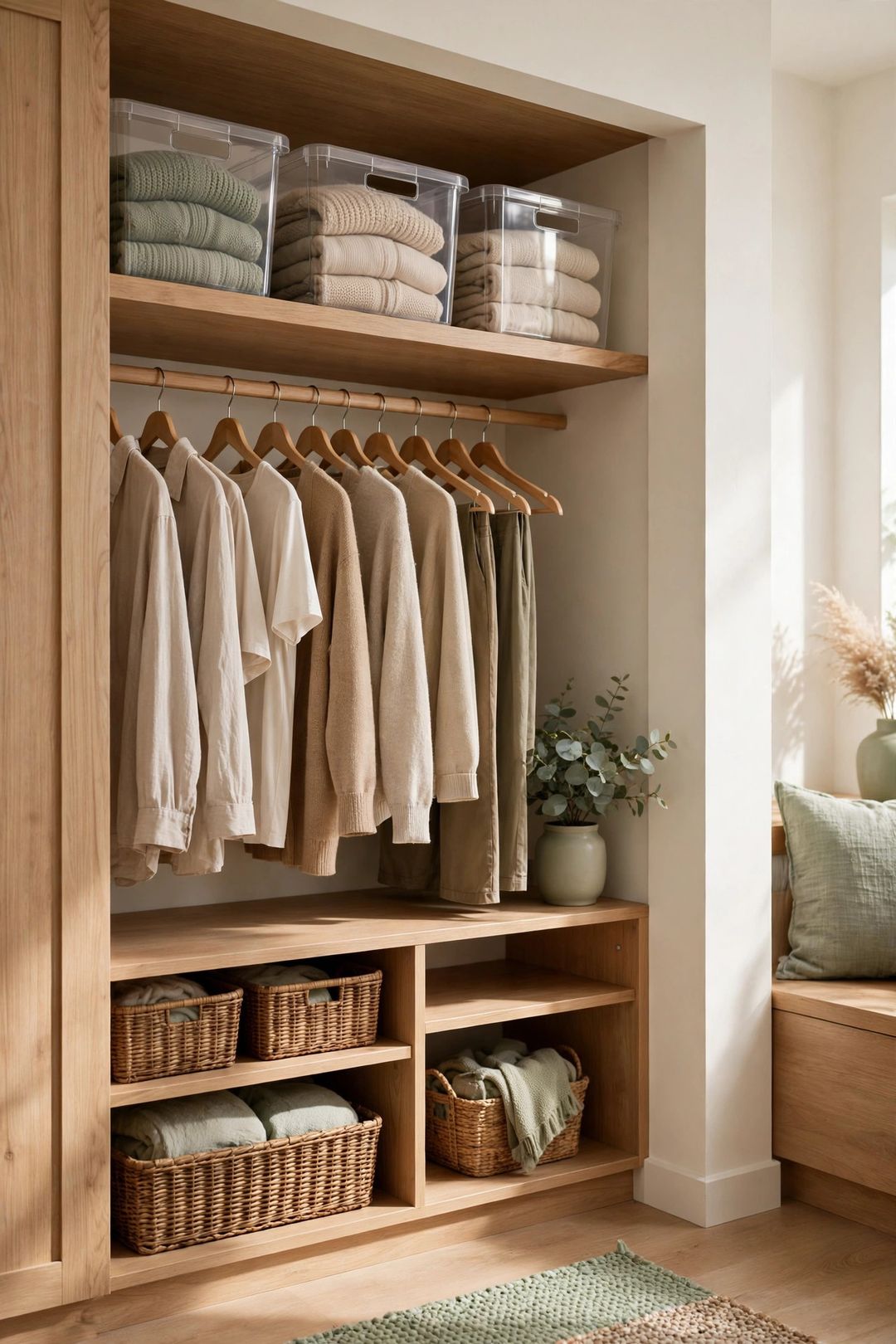
A seasonal closet swap fails when it turns into an all-day event. Clothes cover the bed, storage bins sit half packed, and by evening the old season and the new one are mixed together in one tired pile.
This seasonal closet swap checklist fixes that with a timer and a clear order. The whole job runs in three timed phases that add up to about 90 minutes: pull and sort, clean and store, then hang the new season.
Before you start, clear the bed, set out donation and repair bags, and get empty bins ready. The clock keeps decisions simple and stops the swap spreading.
Minutes 0–25: Pull & Sort
Do not sort hanger by hanger from inside the closet. Pull the whole outgoing season out first, so every item gets one clear decision.
- Empty one section at a time. Take out all of the outgoing season from one rod or shelf before moving to the next.
- Sort into four piles as you go. Keep and store, donate, repair, and toss or recycle. Every item lands in a pile, not back on the bed.
- Apply the wear test. If you did not wear it all season, it goes to the donate pile, unless there is a clear reason, like a formal outfit for rare events.
- Check the fit now, not later. If it does not fit comfortably today, donate it or store it separately, away from prime space.
- Spot the damage. Stains, missing buttons, broken zips, and worn heels go to the repair pile. If the repair is not worth it, donate or recycle it instead.
- Pull the incoming season out too. Bring the stored bins in now, so phase three is hanging, not hunting for boxes.
Minutes 25–60: Clean, Edit & Store
This is the longest phase, and the one most people skip. Storing clothes clean and edited makes the next swap faster.
- Wash or air everything before storing. Moths are drawn to wool and other natural fibers with body oils, food spots, and deodorant left on them, so clean clothes are safer in storage.
- Dry fully before packing. Even slight dampness can cause a musty smell or mildew in a closed bin.
- Do a second, harder edit. Look at the keep pile again. Anything you hesitated over in phase one usually belongs in the donate bag.
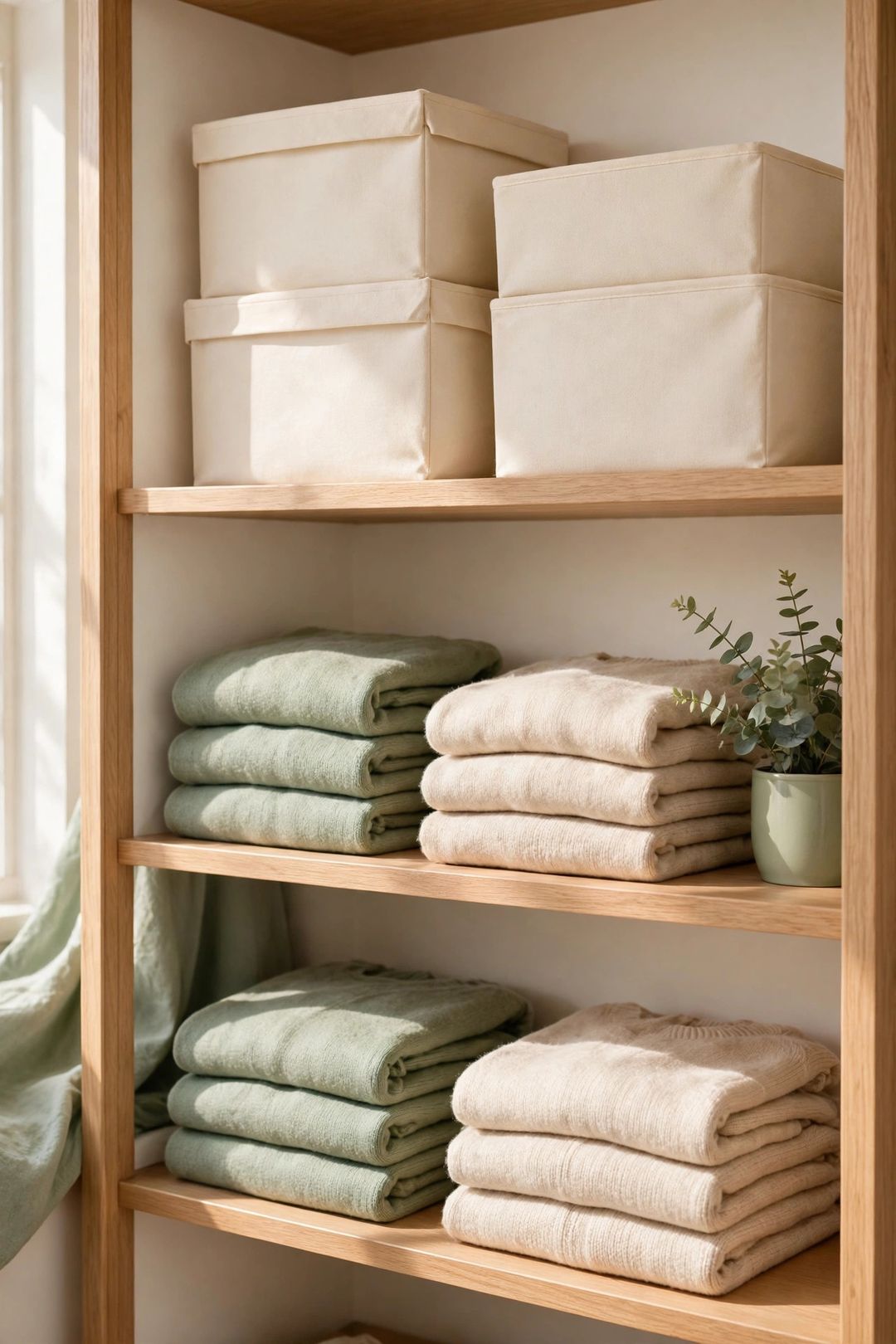
- Fasten and fold with care. Button coats, zip jackets, and fold knits instead of hanging them, where they can stretch.
- Pack by category, not by outfit. Group sweaters together, dresses together, and so on. Category bins are easier to unpack than mixed boxes.
- Label every bin on two sides. Write the season and category, like Winter — Sweaters. A readable label saves a full unpack later.
- Bag donations and repairs today. Donations go in the car or by the door, and repairs in one bag with a deadline. Piles left out drift back into the closet.
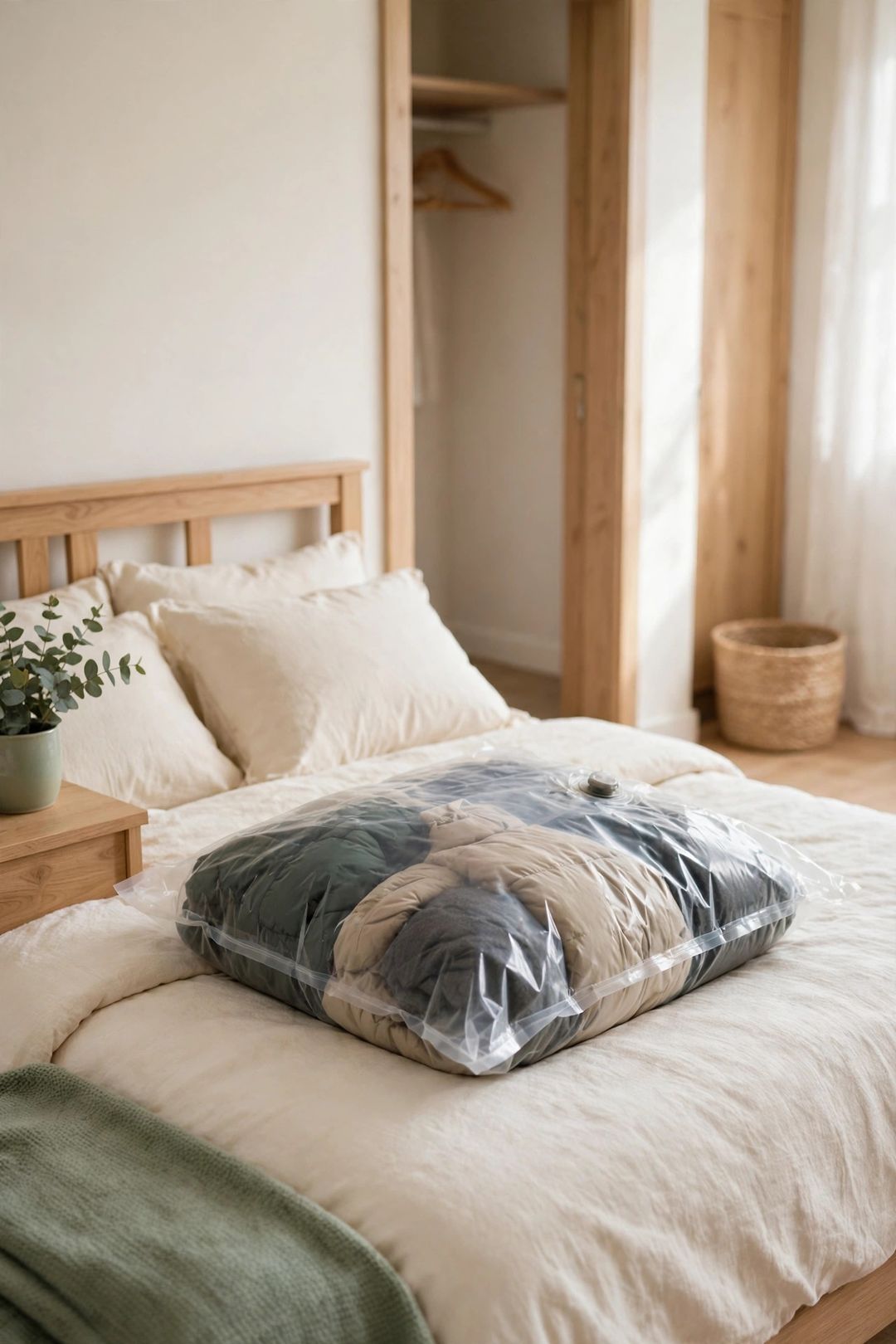
Storage choice matters here. Clear bins are sturdy, stack well, and show the contents, but take up full space even when half empty. Vacuum bags shrink bulky coats and sweaters and suit small closets, but can wrinkle delicate fabrics. Many closets use both: bins for regular clothes, vacuum bags for the bulkiest layers.
Minutes 60–90: Hang the New Season & Finish
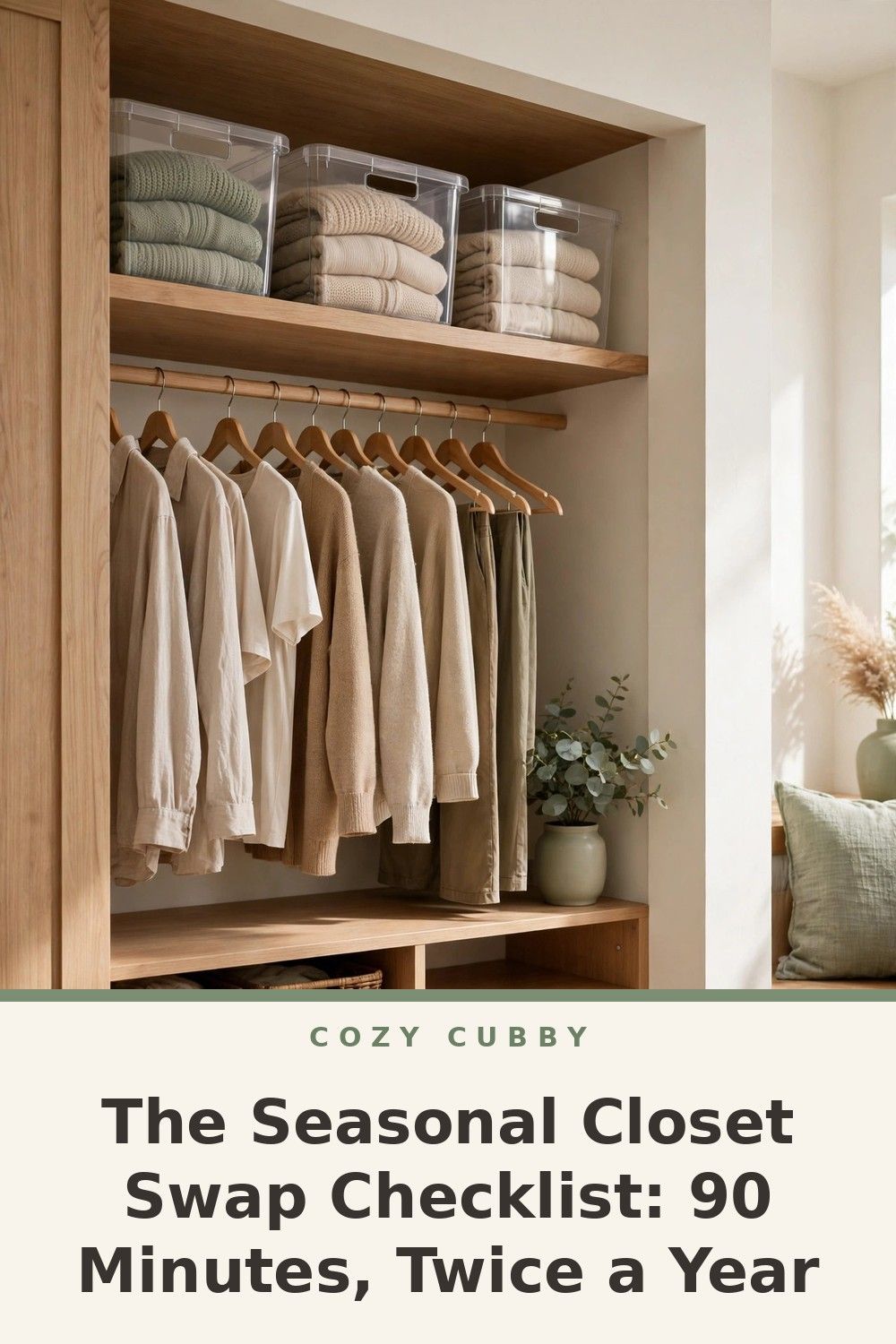
Now rebuild the closet for the months ahead. Hang the incoming season in the order you get dressed, not the order it left the bin.
- Clean the empty closet first. Take five minutes to wipe shelves and check corners. It is the only time the space is fully empty.
- Hang by category, then by length. Group work, casual, and occasion wear. Keep long items at one end so the floor below stays usable.
- Put daily wear at eye level. The clothes you reach for most belong in the easiest section. Special items can live at the edges.
- Unpack one bin at a time. Hang or fold everything from a bin before opening the next. Empty bins go straight back to storage.
- Keep out a transition layer. Weather rarely flips in a day. Leave one light jacket, one warmer layer, and a mid-weight option for the in-between weeks.
- Make a short fix-it list. Note loose hooks, a crowded shelf, or anything missing. A written list stops impulse buying later.
- Finish the room. Bins stored, bags out, bed clear. The swap counts as done only when nothing from it is still sitting out.
What to Buy
Clear storage bins with lids, typically $8–$15 each. Pro: You can see the contents, they stack neatly, and they protect clothes from dust. Con: They take up full space even when half empty. Skip if: You already own sturdy bins that stack and close well.
Vacuum storage bags, typically $15–$30 for a multi-pack. Pro: They shrink bulky coats and sweaters and save serious closet space. Con: They can wrinkle delicate fabrics and lose their seal over time. Skip if: Your off-season clothes are mostly thin items that fold small anyway.
Bin labels or a label maker, typically $6–$18. Pro: Clear season and category labels make the next swap and mid-season searches much faster. Con: Labels need redoing if you change how you pack. Skip if: Masking tape and a thick marker already give you readable labels.
Cedar blocks or rings, typically $8–$16 for a pack. Pro: Cedar adds a fresh scent to stored natural fibers and fits easily inside a bin or on a hanger. Con: The scent fades and blocks need light sanding to refresh them. Skip if: Your storage is fully sealed plastic and scent is not a concern for you.
Mistakes to Avoid
- Storing clothes unwashed. Invisible spots and body oils attract moths and can set as stains over months in a bin.
- Skipping the edit. Packing everything you own, including what never gets worn, means bigger bins and a harder swap next time.
- Mixing seasons in one bin. A mixed bin forces a full unpack every time the weather changes for a few days.
- Hanging knitwear in storage. Sweaters and knit dresses stretch on hangers. Fold them for the off-season instead.
- Letting donation bags linger. Bags that sit for weeks tend to get reopened. Move them out the same day.
Frequently Asked Questions
When is the best time to do a closet swap?
Swap when the forecast has clearly shifted, usually twice a year, in spring and fall. Keep that transition layer out for the uneven weeks in between.
What if there is no storage space outside the closet?
Use the closet's least reachable spots: the highest shelf, the far end of the rod, or flat vacuum bags under the bed. The goal is separation, not a separate room.
Should off-season shoes and accessories swap too?
Yes, in the same session. Boots, scarves, gloves, and heavy bags take real space. Sort, clean, and store them with the same piles.
How is this different from a full closet declutter?
A swap is a seasonal rotation with a light edit built in. A full declutter goes deeper. The small edit twice a year keeps the closet from needing a huge overhaul.
A closet that turns over in 90 minutes, twice a year, never builds up into a weekend project. Save this post to your Closet Organization board on Pinterest so the checklist is ready when the weather turns.