When two kids share one closet, clothes end up in the wrong pile, the wrong size, and often on the floor. Dressing for school becomes a search through a mixed-up row of clothes.
Good shared kids bedroom closet organization gives each child a clear zone and storage at a height they can reach. These twelve systems work in a standard reach-in closet, mostly with bins, hangers, and one extra rod.
Start by taking everything out and sorting by child and by size. Outgrown clothes are a main reason a shared closet feels too small.
1. Split the Closet Down the Middle
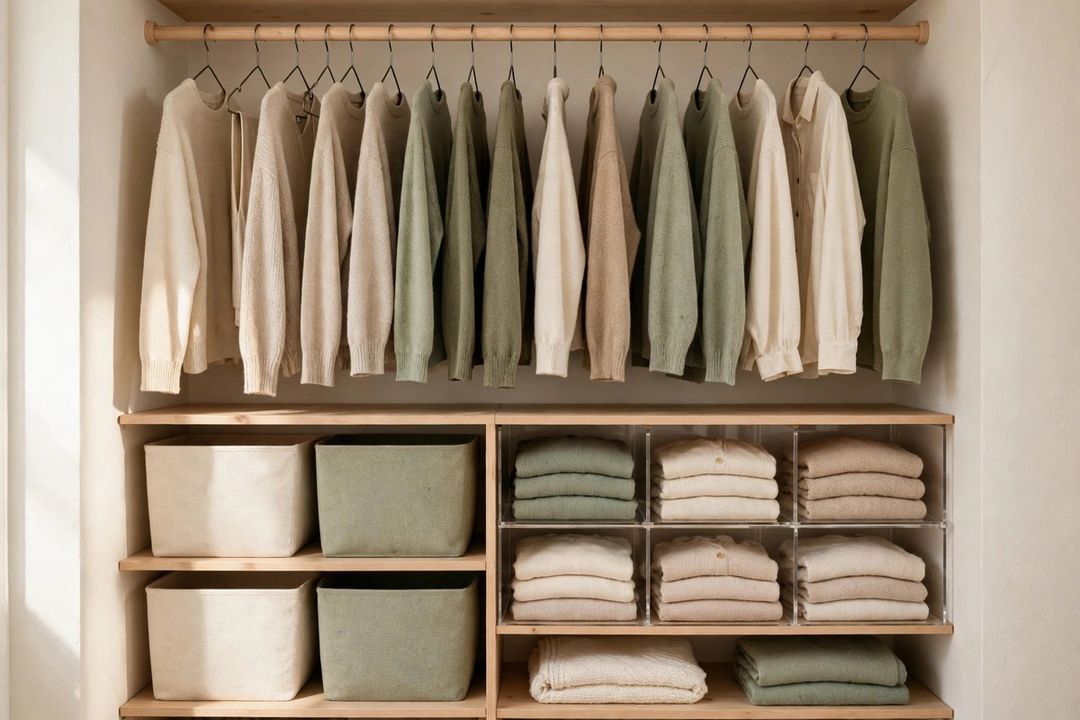
The simplest system is a clear left-and-right split. One child gets the left half of the rod, shelves, and floor, and the other gets the right half. Add a hanging organizer in the center so the boundary is easy to see. A visible split stops clothes from drifting and makes laundry day sorting simple.
2. Give Each Child a Color
Pick one color per child and use it everywhere: hangers, bins, baskets, and labels. Blue hangers for one child and green for the other turns sorting into a quick visual check that even young kids can follow. Color coding helps most at laundry time, when similar shirts and socks need to land in the right zone fast.
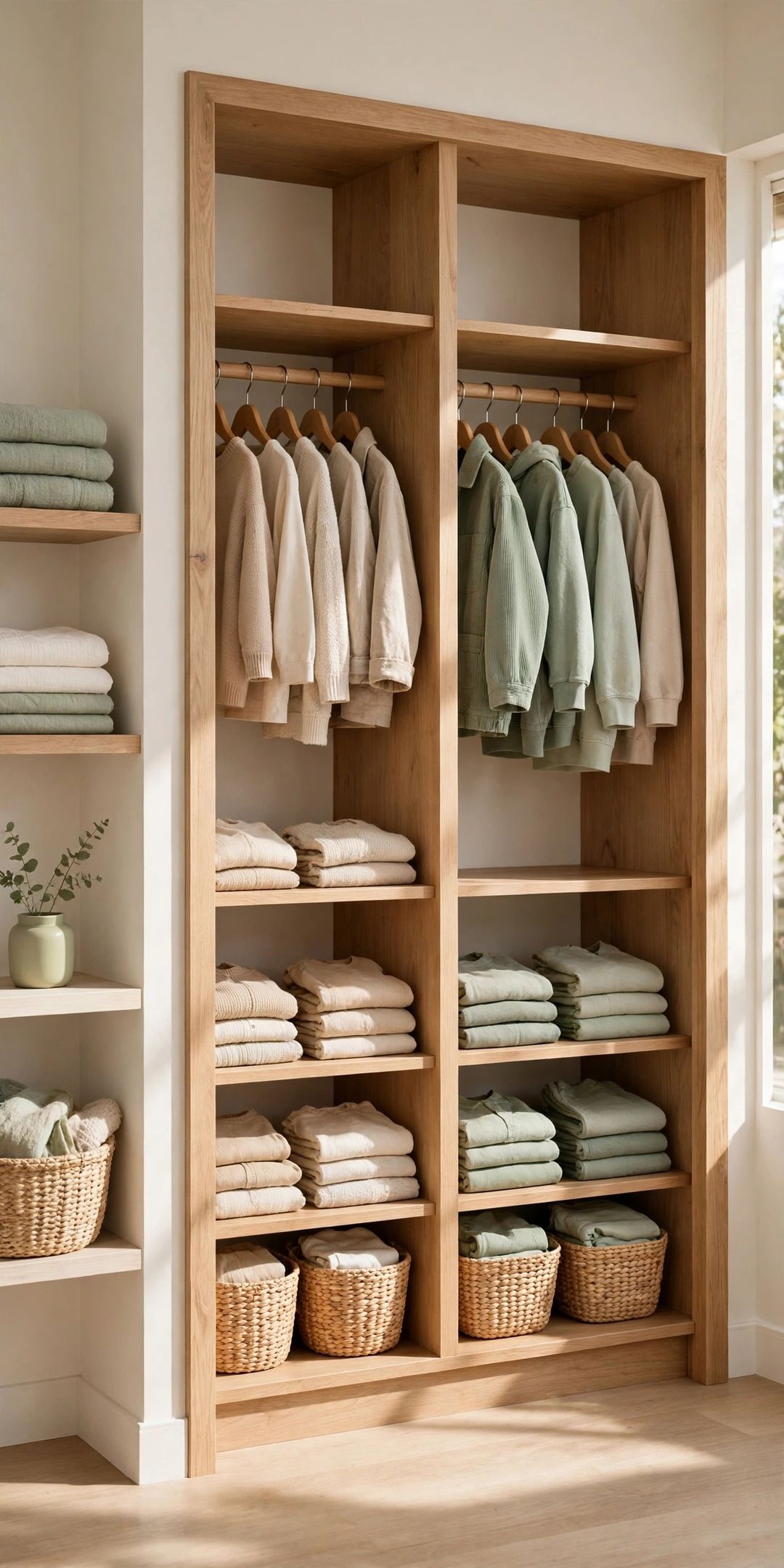
3. Add a Second, Lower Rod
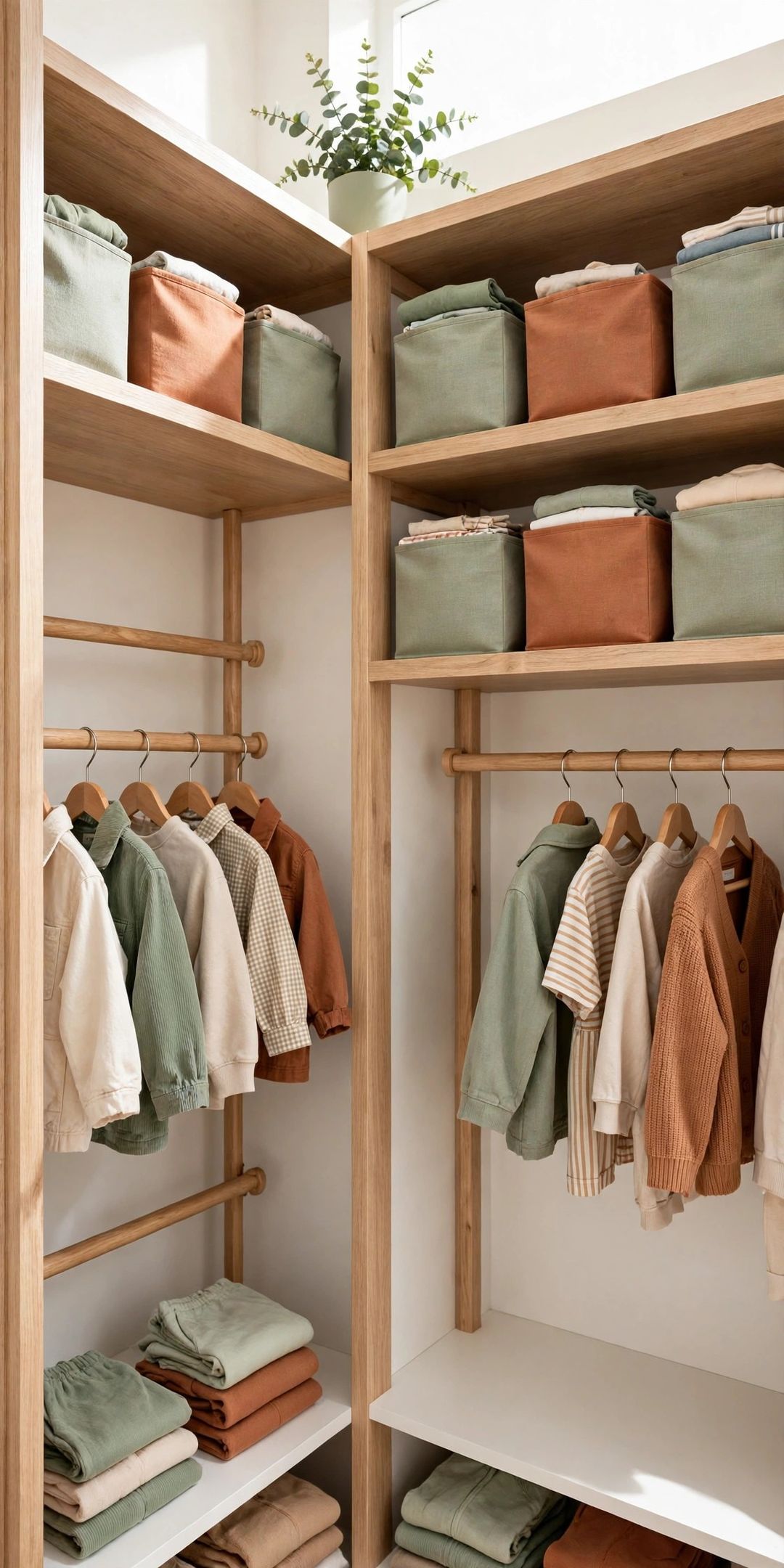
A lower rod puts everyday clothes at child height. The older child can use the upper rod, while the younger child reaches the lower one. Keep school clothes and pajamas low, and store rarely worn outfits higher up. An adult should fit and check any added rod so it sits firmly before clothes go on it.
4. Use Two Hanging Shelf Organizers Side by Side
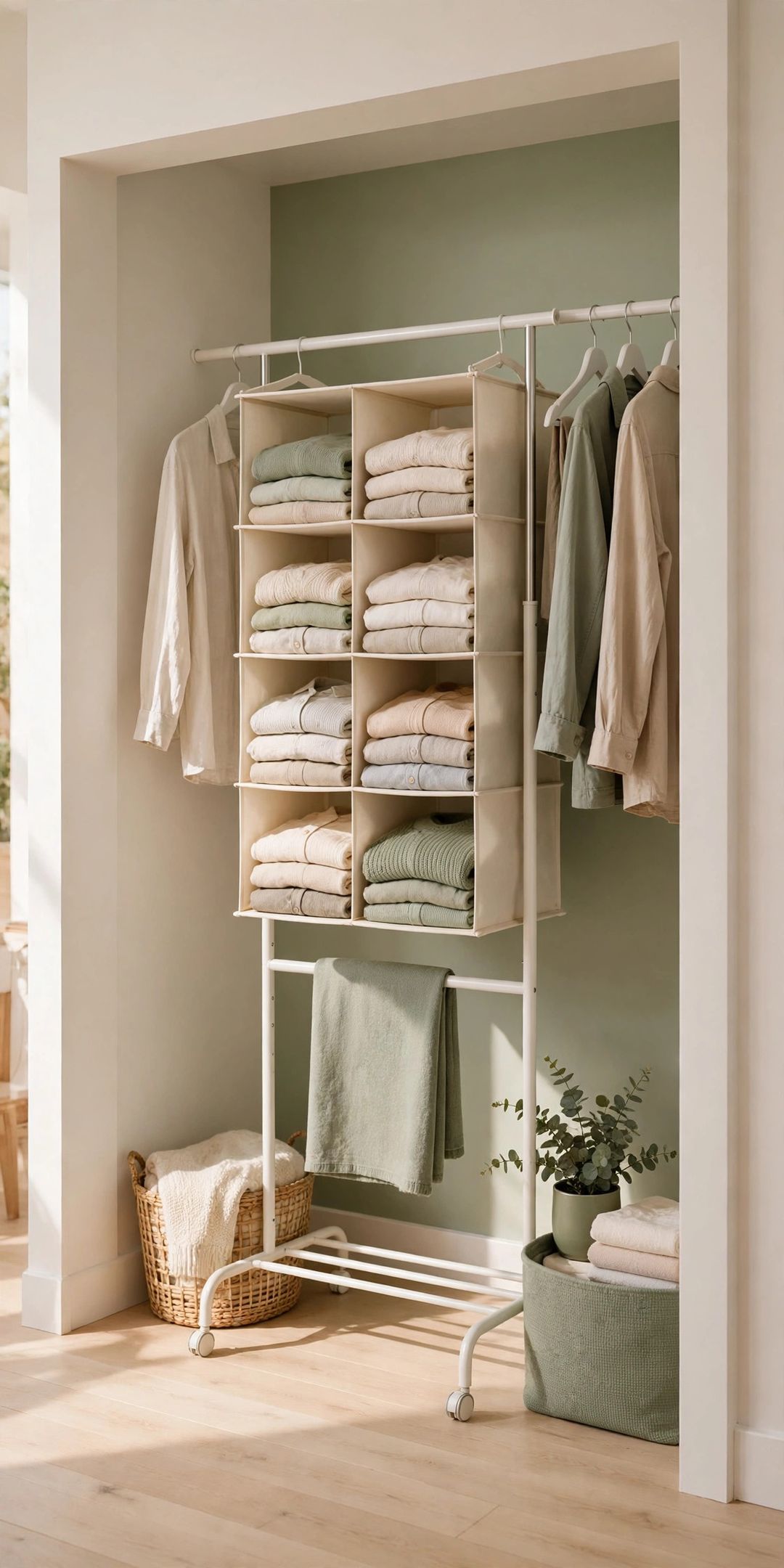
Fabric hanging organizers turn open rod space into cubbies. Hang two side by side, one per child, and give each cubby a job: shirts, pants, pajamas, and a spare outfit. Keep cubbies only partly full, so one item comes out without the whole stack sliding down.
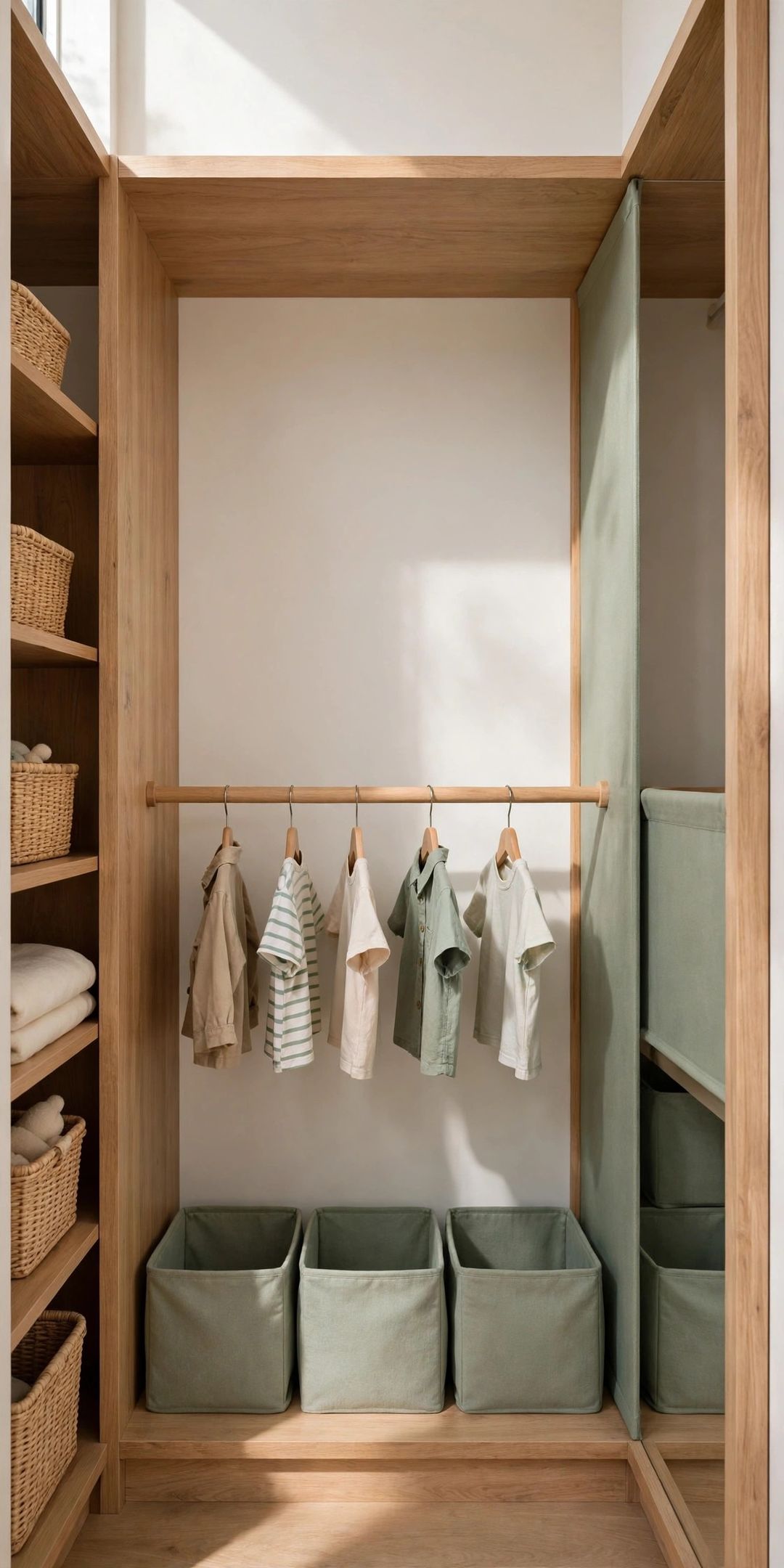
5. Set Up Matching Labeled Bins on the Shelf
The top shelf often becomes a jumble. Give each child two matching bins: one for out-of-season clothes in their current size, and one for accessories like hats and swim gear. Use picture labels for younger kids and word labels for older ones, so bins do not slowly turn into mixed storage.
6. Keep Shoes in Two Low Baskets
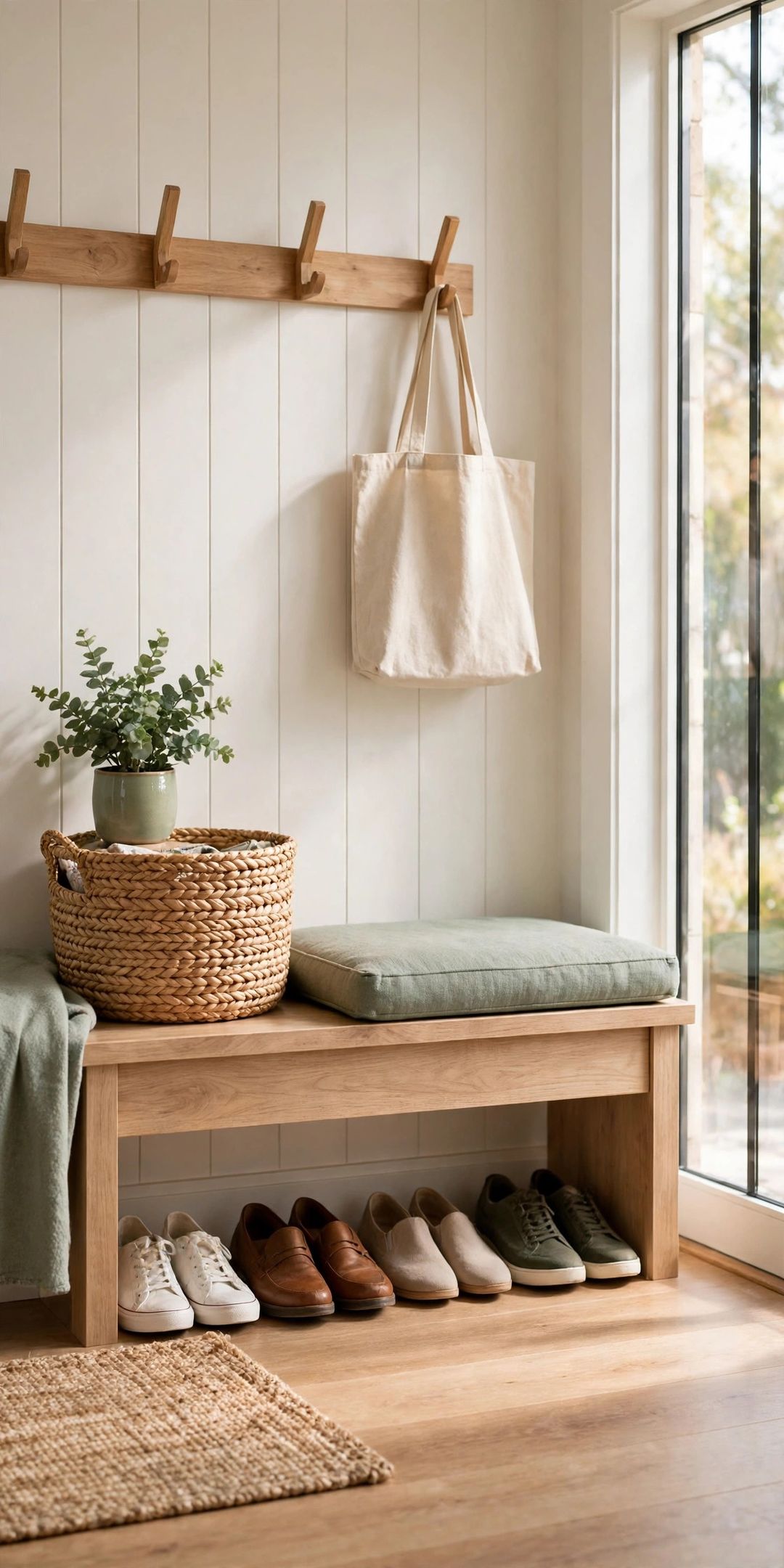
Shoes are easier to manage in two open baskets on the closet floor, one per child, than in a tall rack small kids cannot reach well. Each basket holds the pairs worn most weeks. Store extra pairs in a labeled bin on the shelf. A low basket also gives kids a clear target at cleanup time.
7. Create a Shared Middle Zone for Shared Things
Not everything belongs to one child. Costumes, rain gear, and spare bedding can live in a shared middle bin or section. Mark it with a third color or a label that says "both," so common items stay out of each child's personal space.
8. Sort Storage by Height and Reach
Put the clothes each child wears most at a height that child can reach without climbing. Everyday items go low and in front. Party clothes and next-size-up pieces go higher, where an adult can get them down when needed.
9. Add a Small Laundry Basket for Each Child
Two small laundry baskets inside or beside the closet — one in each child's color — keep dirty clothes off the floor and make sorting simpler. Each load starts out already separated on wash day.
10. Use a Door Organizer, Split by Color
A clear over-the-door organizer can hold small items that get lost in bins: socks, underwear, gloves, belts, and hair accessories. Split the pockets by color-coded pouches, one color per child, or give each child set rows. Keep it light, and check that the door still opens and closes freely before loading every pocket.
11. Keep a Grow-Into Bin and a Grow-Out Bin
Kids outgrow clothes at different speeds, so a shared closet needs a flow system. Keep one labeled bin for clothes the younger child will grow into, and one donation bin for pieces both kids have outgrown. When a shirt gets tight, it moves to the right bin the same day, not back on the rod.
12. Run a 10-Minute Weekly Closet Reset Together
Shared systems drift without a short reset. Once a week, spend about ten minutes putting stray clothes back in the right zone, returning shoes to baskets, and moving outgrown pieces to the grow-out bin. Give each child their own side to fix, so the job is fair and quick.
What to Buy
Hangers in two colors, typically $10–$18 for a multi-pack set. Pro: Color coding makes sorting fast for kids and adults. Con: You will need more as wardrobes grow. Skip if: Labels alone keep both zones tidy.
Fabric hanging shelf organizers, typically $12–$22 each. Pro: They add cubbies with no tools and fit most rods. Con: Heavy items can make them sag. Skip if: Your closet already has shelves for each child.
Matching storage bins with lids, typically $15–$30 for a set. Pro: Uniform bins stack well and calm the top shelf. Con: Lids can slow down daily use. Skip if: Open baskets already hold everything neatly.
Picture and word labels, typically $6–$12. Pro: Labels help younger kids put clothes away on their own. Con: They need updating as sizes change. Skip if: Color coding alone keeps zones clear.
Two small laundry baskets, typically $10–$20 for a pair. Pro: They separate laundry at the source and keep floors clear. Con: Small baskets need emptying often. Skip if: A shared family hamper system already works well.
Mistakes to Avoid
- Mixing both kids' clothes on one rod. A shared jumble means daily searching. Give each child a clear, visible zone.
- Setting everything at adult height. If kids cannot reach their clothes, an adult manages every outfit. Put daily items low.
- Keeping outgrown clothes in the closet. Old sizes eat space and cause mix-ups. Move them to a bin right away.
- Using bins with no labels. Unlabeled bins end up holding a bit of everything. Labels or colors keep each job clear.
- Skipping the weekly reset. A shared closet drifts twice as fast as a single one. Ten minutes a week keeps it working.
Frequently Asked Questions
How do you split a small closet fairly between two kids?
Split by zone, not by counting hangers. Give each child the same types of space: a rod section, cubby or shelf space, a shoe spot, and a bin. If one child has more clothes, use the shared middle zone for overflow.
What if the kids are very different ages?
Use height to your advantage. The older child can use the upper rod and higher shelves, while the younger child gets the lower rod and low cubbies. Color coding still helps, because laundry sorting stays a visual job.
How many clothes should stay in a shared closet?
Keep only the current season and current sizes in the closet itself. Store next sizes and out-of-season pieces in labeled bins on the top shelf. A closet that holds less is easier to keep tidy.
Can a shared closet work without buying organizers?
Yes. A left-and-right split, two laundry baskets, and a clear shared zone cost nothing and solve most mix-ups. Add color hangers or cubbies later if you spot a specific problem.
One closet can serve two kids well when each child has a zone, a color, and clothes at a reachable height. Save this post to your Closet & Wardrobe board on Pinterest for your next laundry day.