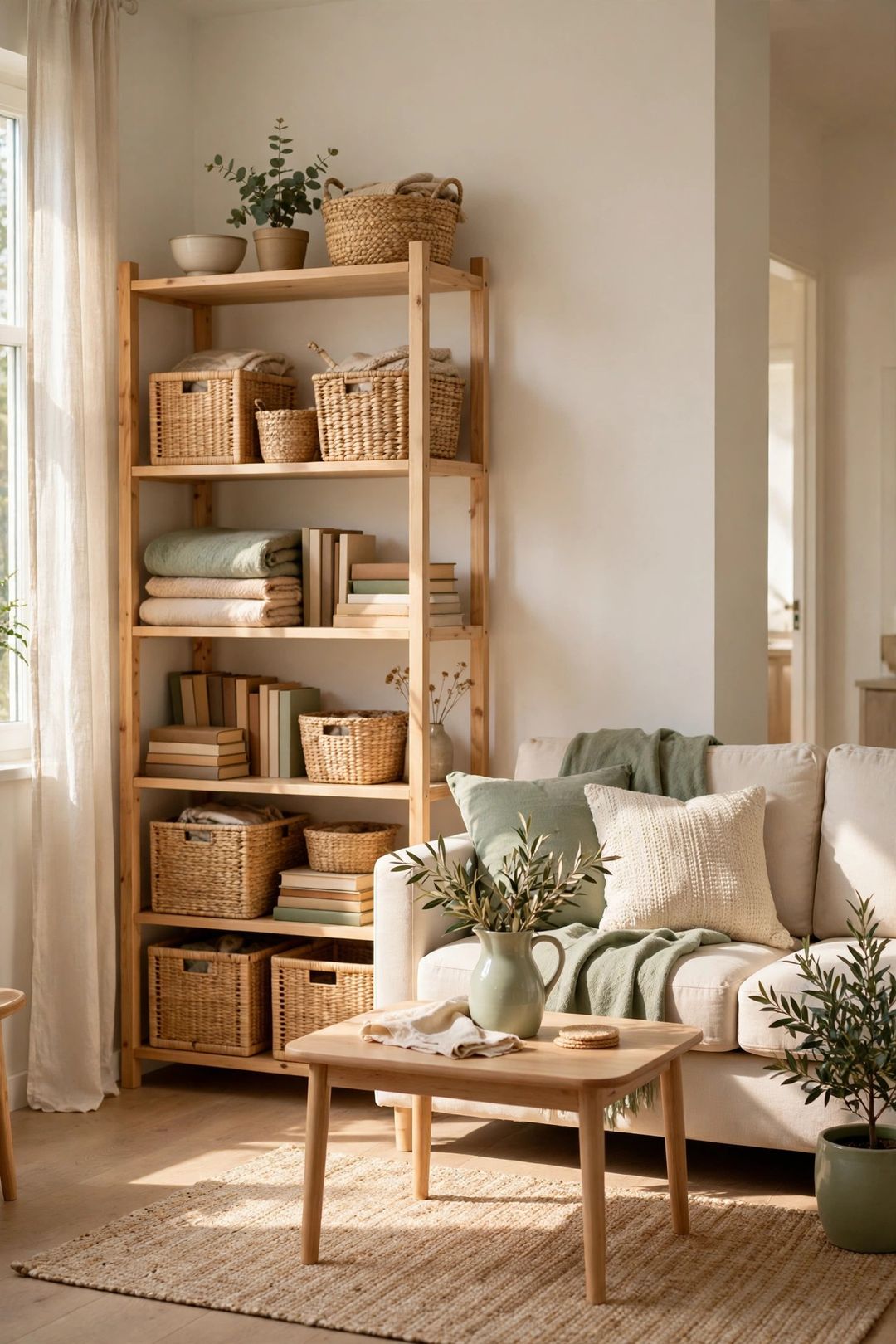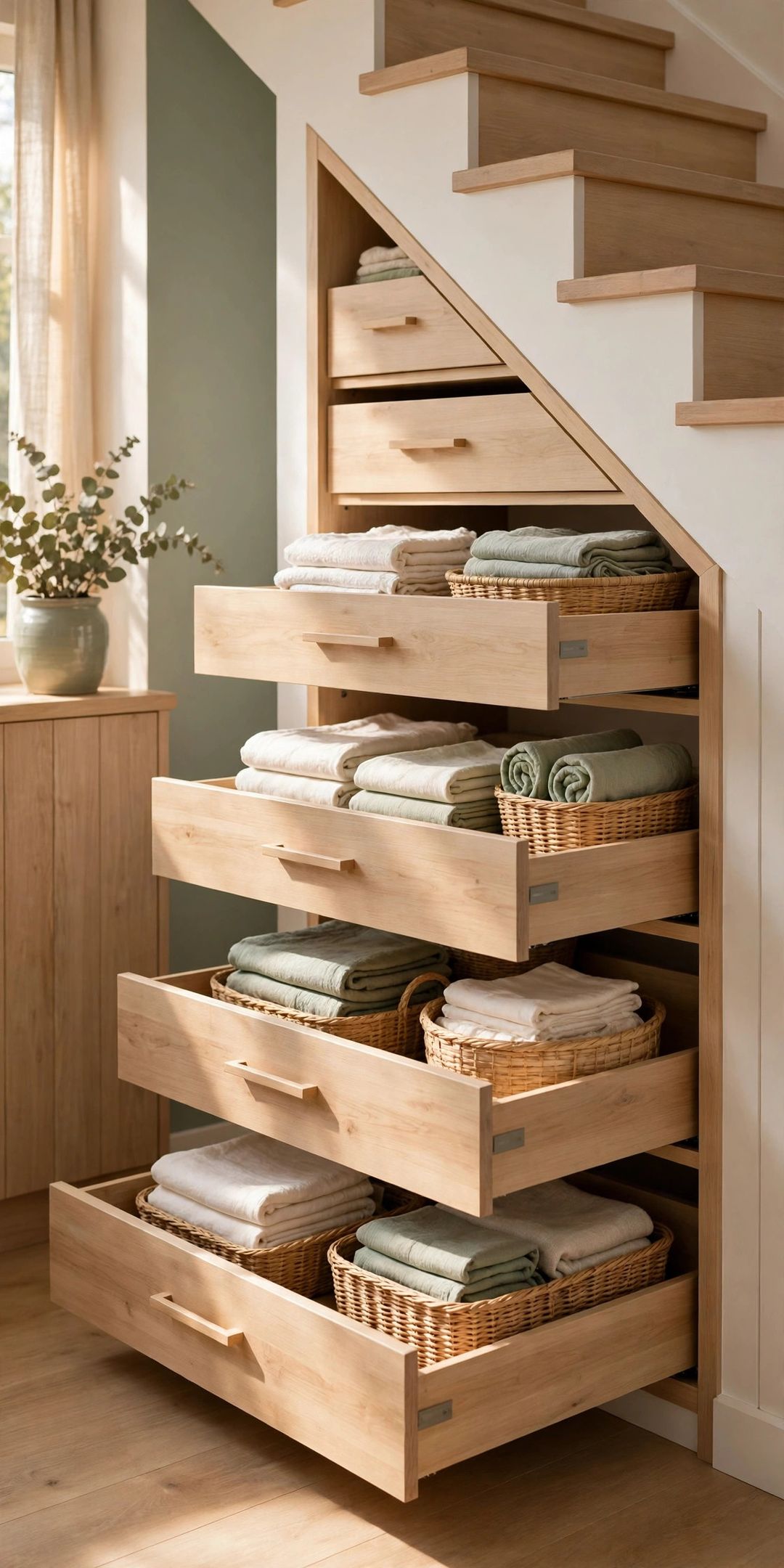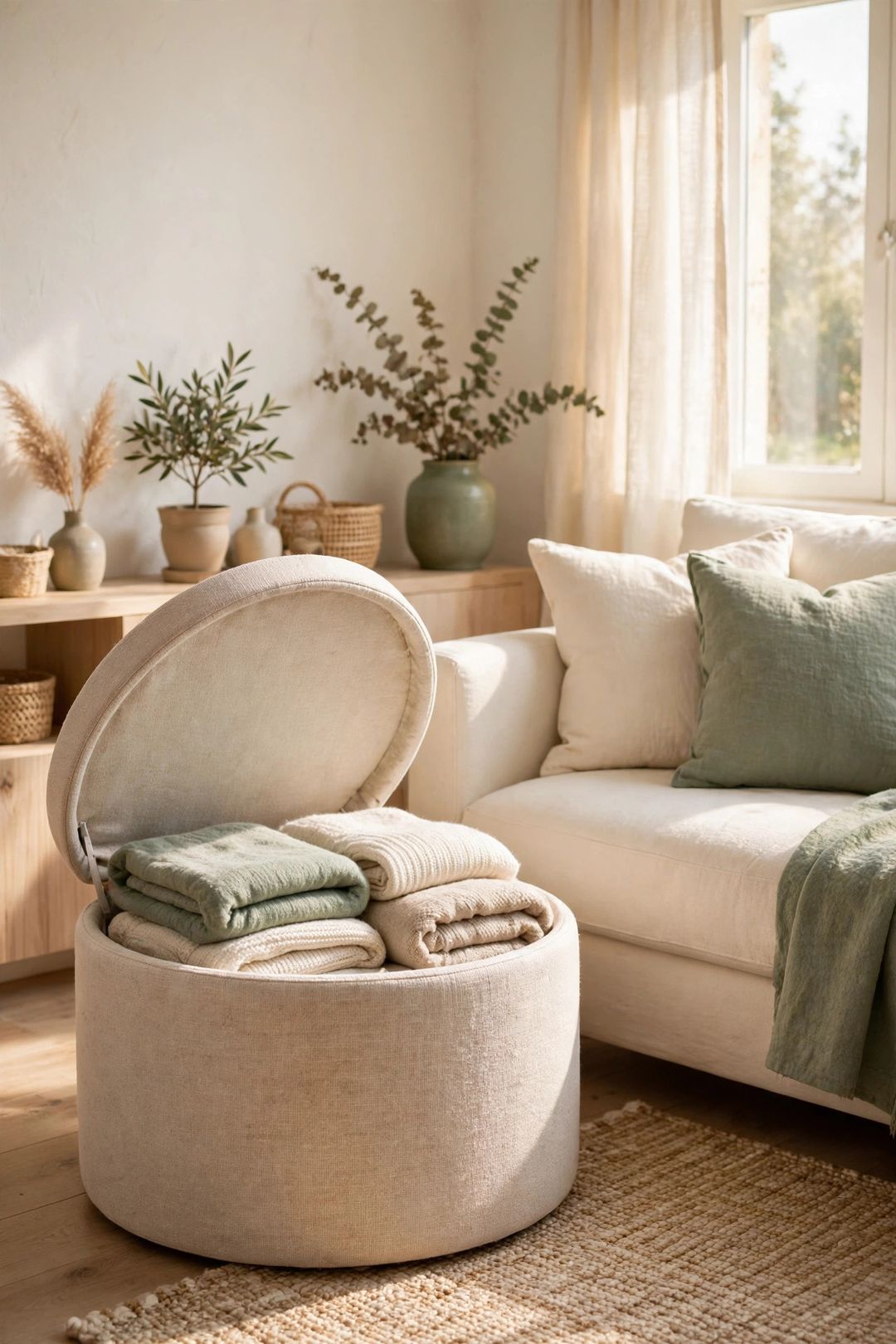
A small bedroom has to hold sleep, clothes, charging cords, and daily clutter in very few feet. Good small bedroom organization ideas treat the room as one system, so the nightstand, bed, walls, and dresser each do one clear job.
The 19 ideas below are grouped by zone, starting where clutter lands first. Most need no drilling, and sizes are given in inches so you can check your space before buying anything.
Nightstands: Contain the Daily Pile
1. Drawer dividers in the top drawer. Small dividers, usually in 8- to 12-inch sections, separate chargers, lip balm, and glasses so the top drawer stops becoming a junk drawer.
2. Cord control behind the nightstand. Clip cords to the back edge or run them through a small cable box on the floor. One charging spot for phone and watch keeps cords off the pillow and floor.
3. A small tray for daily items. A tray about 6 by 9 inches holds only what you use nightly. If it does not fit in the tray, it lives somewhere else.
4. One book, one bottle rule. Keep the surface to a lamp, the tray, one book, and a water bottle. Everything else moves to a drawer or shelf, which makes the room look calmer at once.
The Bed: Use the Biggest Piece of Furniture
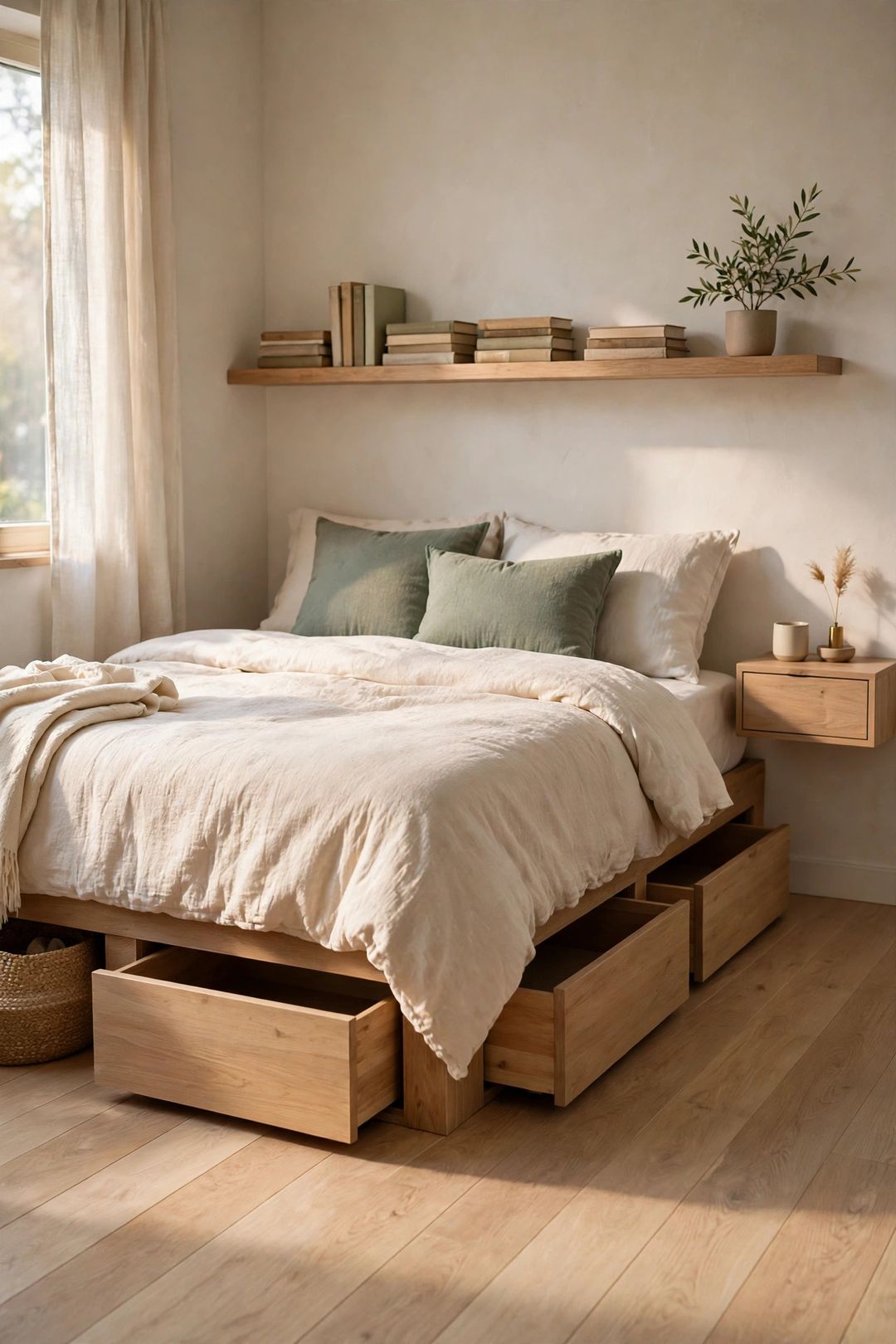
5. Low under-bed bins for off-season items. Bins 6 to 7 inches tall hold extra bedding or off-season clothes. Measure frame clearance first, including any center support.
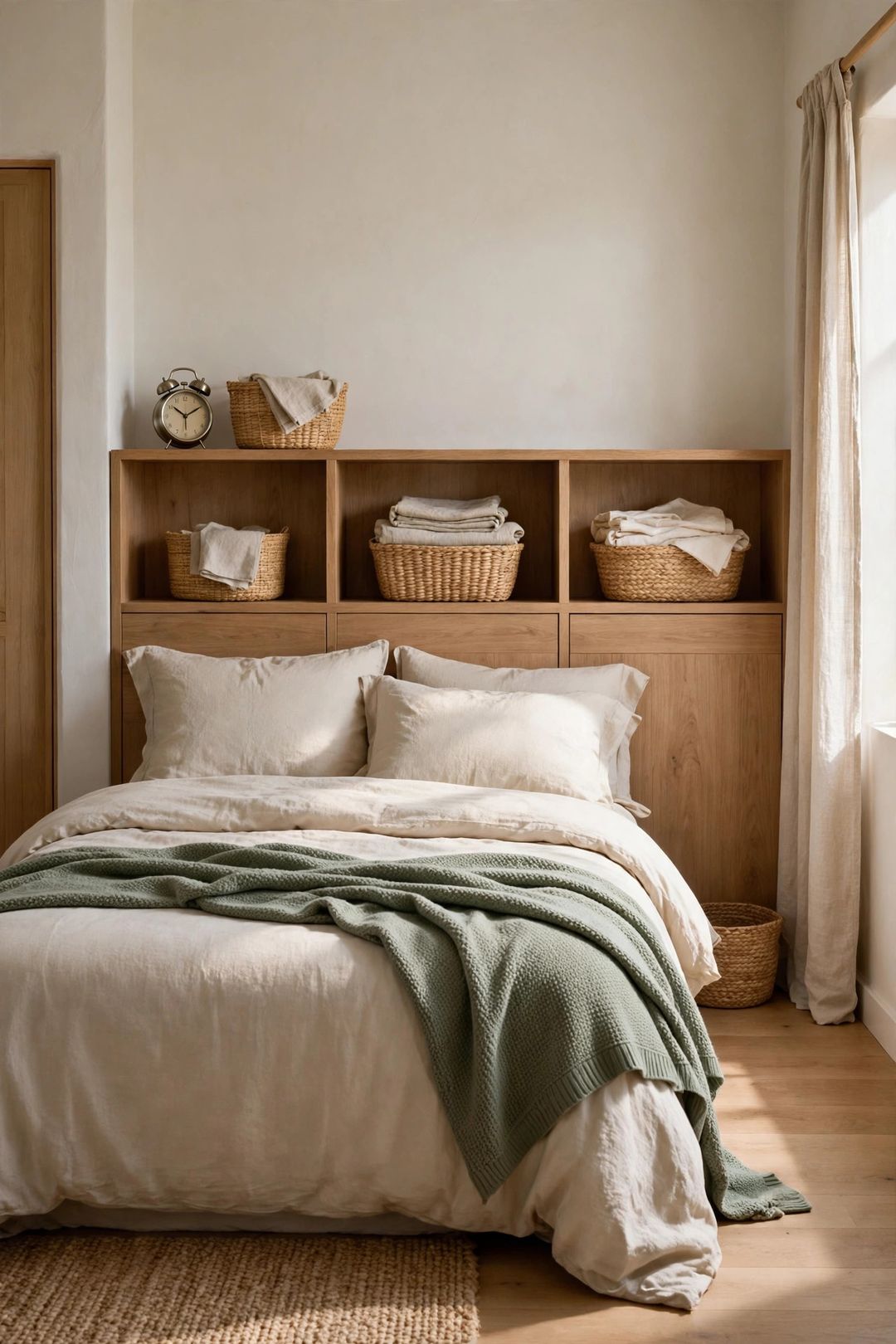
6. A headboard shelf for the essentials. A narrow shelf headboard, about 6 inches deep, holds a phone, book, and small lamp where there is no room for two nightstands.
7. A hanging bedside caddy. A fabric caddy tucked under the mattress holds a book, remote, and glasses on the side without a nightstand. It suits dorm-style and very narrow rooms well.
8. Storage at the foot of the bed. A slim bench or basket at the foot holds the throw and extra pillow by day, so they do not pile on a chair at night.
The Wall Behind the Bed and Vertical Space
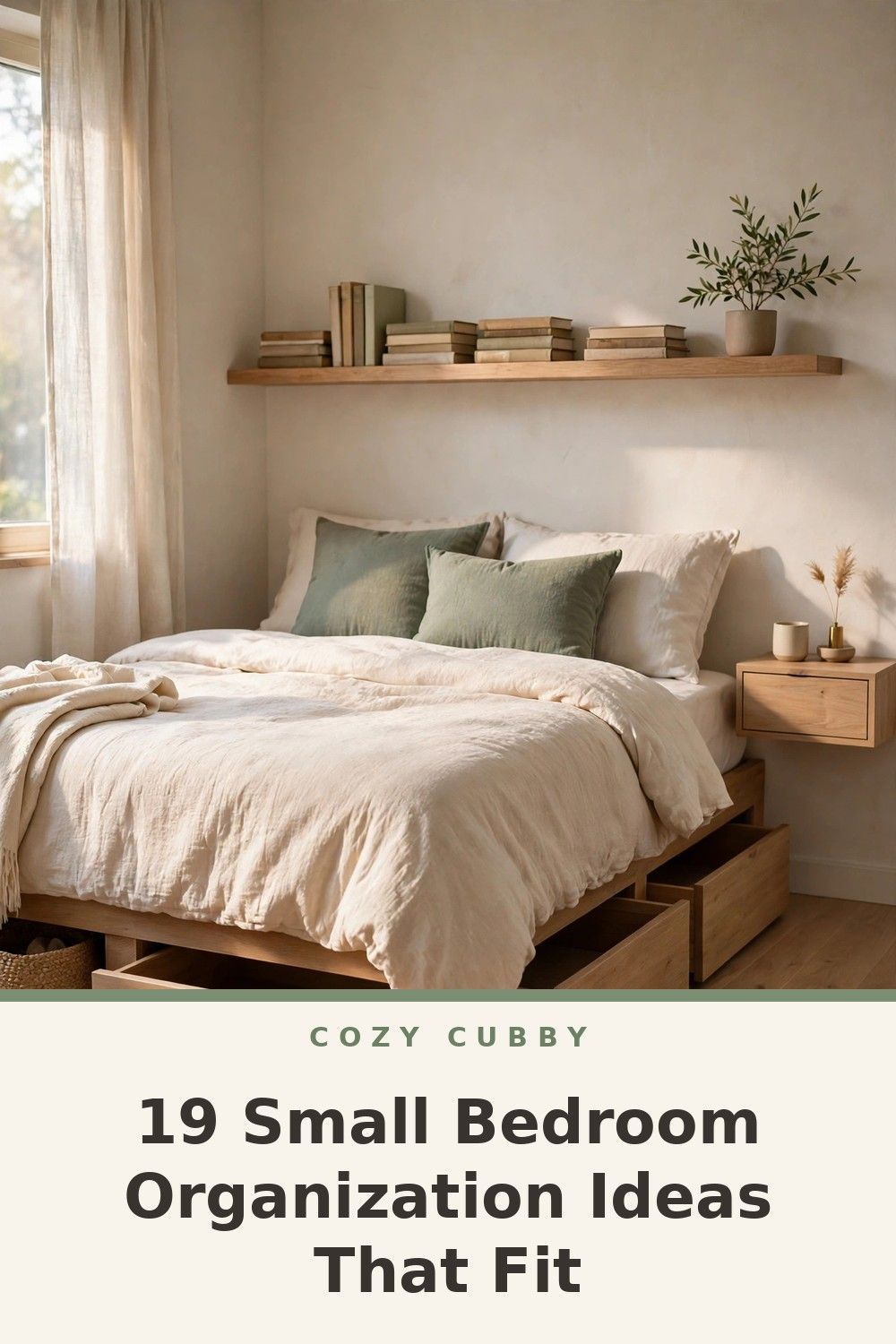
9. Floating shelves above the headboard. One or two shelves set high enough to clear sitting height hold books and a small plant. Keep heavy items off these shelves for safety.
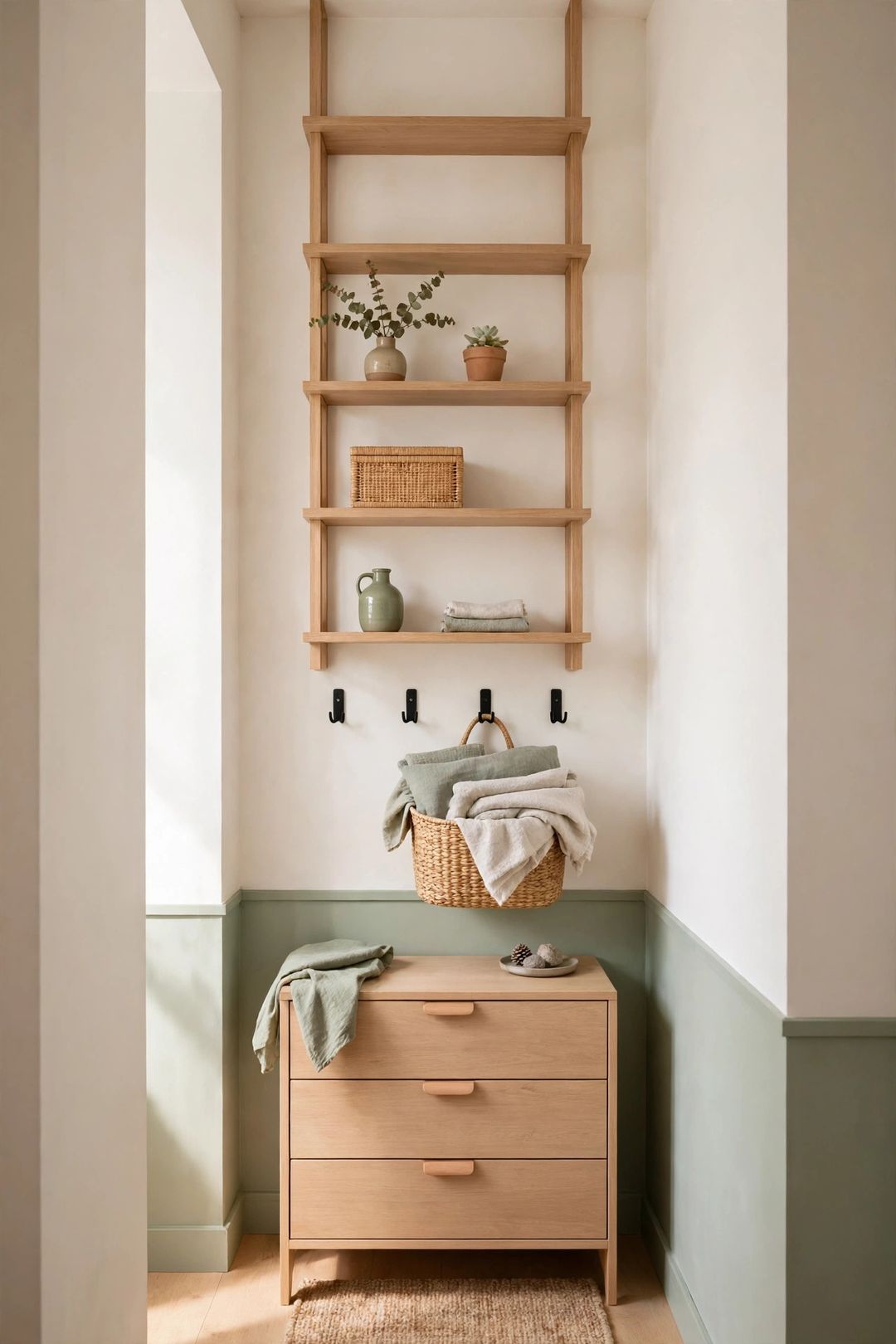
10. A peg rail for daily wear. A wall peg rail near the door holds tomorrow's outfit, a bag, and a hat. It replaces the chair pile and needs only a small strip of wall.
11. Over-door hooks or a shoe organizer. The back of the door holds robes and bags, while a clear over-door organizer suits small items like scarves and chargers. Check door clearance before fitting.
12. Wall sconces or clip lights instead of table lamps. Moving light to the wall frees the full nightstand surface. Plug-in and battery styles keep the fix renter friendly.
Dresser and Surfaces: Zones, Not Spreading Out
13. Tray rules on the dresser top. Group daily items on one tray and leave the rest of the surface empty. A clear rule stops perfume, mail, and coins from spreading edge to edge.
14. Drawer zones by category. Give each drawer one job, such as tops, bottoms, or sleepwear, and use thin dividers for small items. Folding files upright shows every piece at a glance.
15. A small catch-all bowl by the door. One bowl for keys and loose change near the entry stops pockets being emptied onto the dresser. Empty it back to its homes once a week.
16. Mirror or art with hidden storage. A shallow cabinet mirror in a tight room can hold jewelry or daily toiletries behind the glass. Choose a depth of about 4 to 5 inches so it stays unobtrusive.
Closet-Adjacent Overflow: The Edge of the Closet
17. A slim rolling cart beside the closet. A cart about 12 inches wide fills the gap next to a closet or dresser and holds accessories or folded workout clothes. It rolls out for cleaning.
18. Hooks on the closet side wall. Adhesive or over-rod hooks on the closet's side edge hold belts, bags, and next-day items without taking rod space from clothes.
19. One labeled overflow bin on the closet floor. A single bin for the current overflow category, such as guest bedding, keeps extras contained. When it fills, something leaves instead of a second bin joining it.
What to Buy
Drawer divider set, typically $10–$20. Pro: turns a messy nightstand or dresser drawer into clear zones in minutes. Con: fixed sizes may not fit deep drawers. Skip if: small boxes you own already divide the drawer well.
Low under-bed bins, typically $15–$30 for a pair. Pro: uses the largest hidden space in the room for bedding and off-season clothes. Con: hard to reach daily, so they suit storage only. Skip if: your frame clearance is under 6 inches.
Hanging bedside caddy, typically $10–$18. Pro: adds bedside storage with no furniture and no drilling. Con: holds light items only. Skip if: both sides of the bed already have nightstands.
Over-door hook rack, typically $12–$22. Pro: instant storage for robes and bags on unused door space, fully renter friendly. Con: can rattle or block a door that fits tightly. Skip if: your doors do not close with a rack fitted.
Slim rolling cart, typically $20–$35. Pro: fills a narrow gap and moves easily for cleaning. Con: open shelves can look busy if overloaded. Skip if: there is no gap at least 12 inches wide.
Mistakes to Avoid
- Buying storage before measuring. Under-bed height, door clearance, and shelf depth in inches decide what fits, not the product photo.
- Letting every surface become storage. If the dresser, nightstand, and bed all hold piles, the room never looks restful. Give each surface one job.
- Storing daily items in hard-to-reach spots. Under-bed and high shelves suit seasonal items only. Daily things belong within arm's reach of the bed or door.
- Adding a second overflow bin. Overflow grows to fill the space given. One bin is the limit that keeps it honest.
- Ignoring the wall behind the bed. That wide, empty wall is often the best shelf and light space in a small bedroom.
Frequently Asked Questions
How do you organize a small bedroom with no nightstand?
Use a hanging bedside caddy for a book and glasses, a headboard shelf for a phone, and wall or clip lighting. Together they do the nightstand's job without taking floor space.
What is the best under-bed storage for a small bedroom?
Low lidded bins 6 to 7 inches tall suit most frames and keep dust off bedding and off-season clothes. Measure clearance first, and reserve under-bed space for items used monthly or less.
How can renters add bedroom storage without drilling?
Start with over-door hooks, a bedside caddy, plug-in wall lights, adhesive hooks, and a slim rolling cart. All five add real storage and leave no holes to fill later.
Where should extra bedding go in a small bedroom?
Store the spare set in a low under-bed bin or the single closet-floor overflow bin. Keep only the bedding in use, plus one spare set, so the space does not get crowded out.
Save these 19 ideas to your small bedroom board on Pinterest, then start with the nightstand tray and one under-bed bin for a calmer room tonight.