Hosting brunch in a tiny dining area can feel like a puzzle. The table seats four, the guest list is longer, and serving dishes still need somewhere to go.
These small dining space ideas easter brunch hosting plans solve the squeeze in order: seat more people comfortably, add flexible surfaces that fold away after, and keep food moving on a separate buffet so the table stays clear.
Most of the plan uses what a small home already has, plus a few folding pieces that store flat. Set the layout the day before, so Easter morning is about food, not moving furniture.
1. Make Room to Seat More Guests
1. Open the table to its full size. If the table expands, add the leaf or lift the drop leaves the day before and check the fit. Allow roughly 24 inches of table edge per person, and test chairs around it before guests arrive, not during serving.
2. Swap chairs for a bench on one side. A bench along the wall fits more people in the same length than separate chairs, because there are no chair arms or gaps. It also slides under or close to the table after brunch, which returns floor space right away.
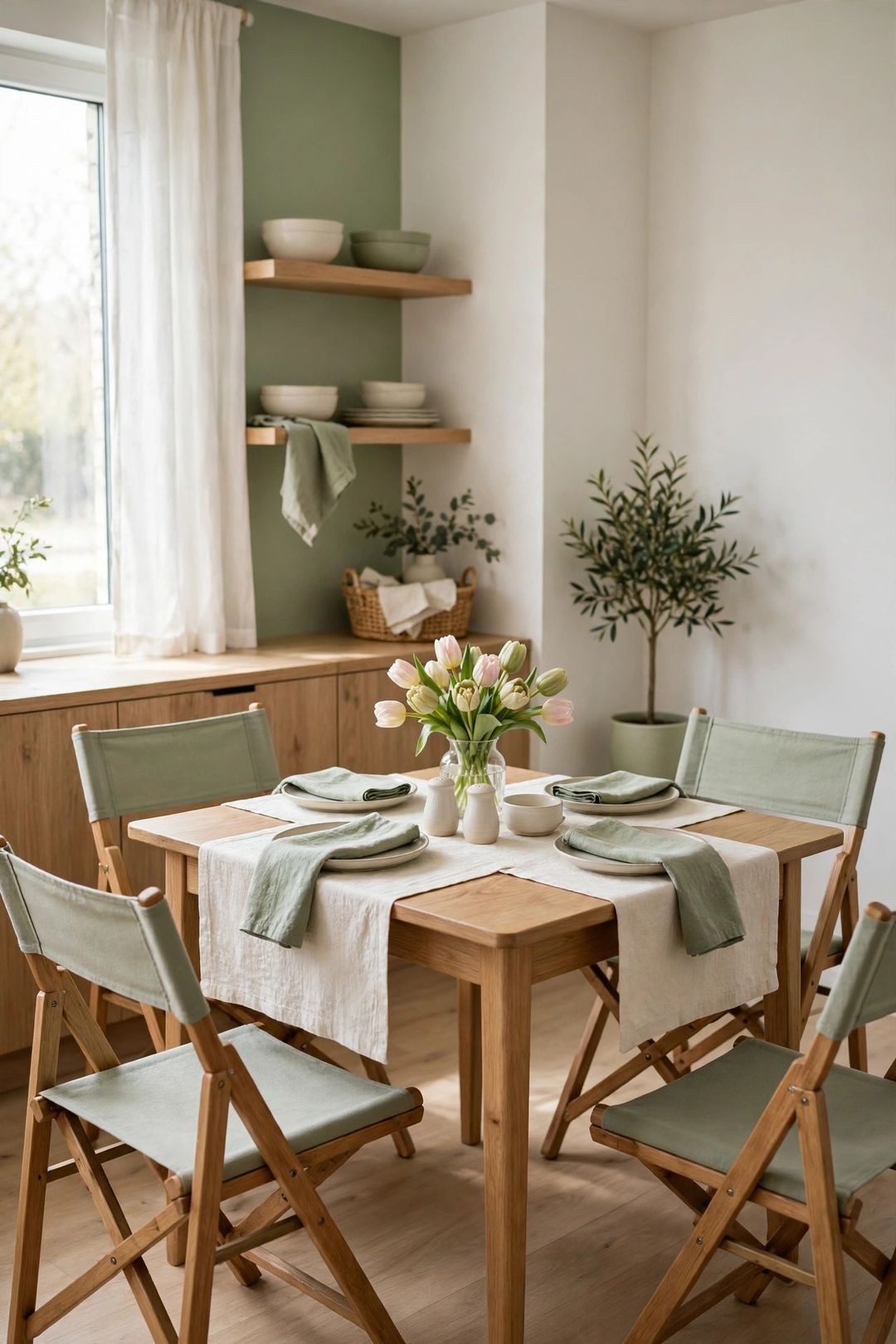
3. Bring in slim folding chairs for the extra seats. Folding chairs fill the gaps without crowding every place setting. Add them only where needed, with a cushion on each one so every seat feels comfortable.
2. Add Folding and Flexible Surfaces
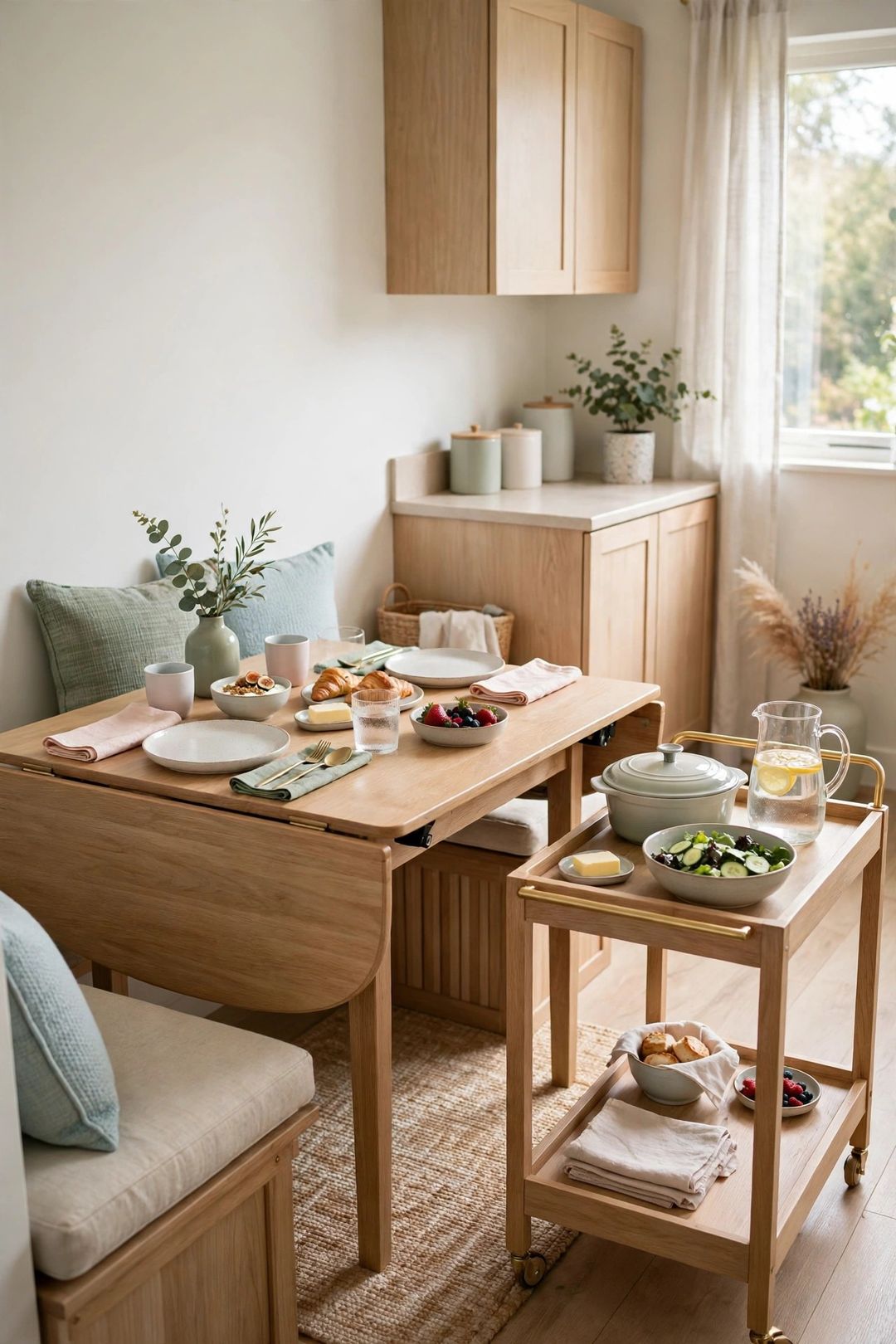
4. Set up a folding table as a side surface. A small folding table beside the main table can hold serving dishes, a bread basket, or desserts. It gives brunch a second surface without buying dining furniture, and it folds flat against a wall or behind a door after.
5. Use a console or desk as the backup table. A narrow console, desk, or dresser can become extra dining or serving space for one morning. Clear it the day before, protect the top with a runner, and return it to its normal job after.
6. Move non-dining furniture out for the morning. Side tables, plant stands, and extra stools eat floor space and block movement. Move them to a bedroom or hallway just for brunch, so chairs pull out fully and guests can pass behind.
3. Set a Buffet Flow That Keeps the Table Clear
7. Serve buffet-style off the table. Put main dishes on a sideboard, counter, or folding table instead of the dining table. Guests serve themselves, then sit with just a plate and glass, so a small table feels far less crowded and passing dishes disappears.
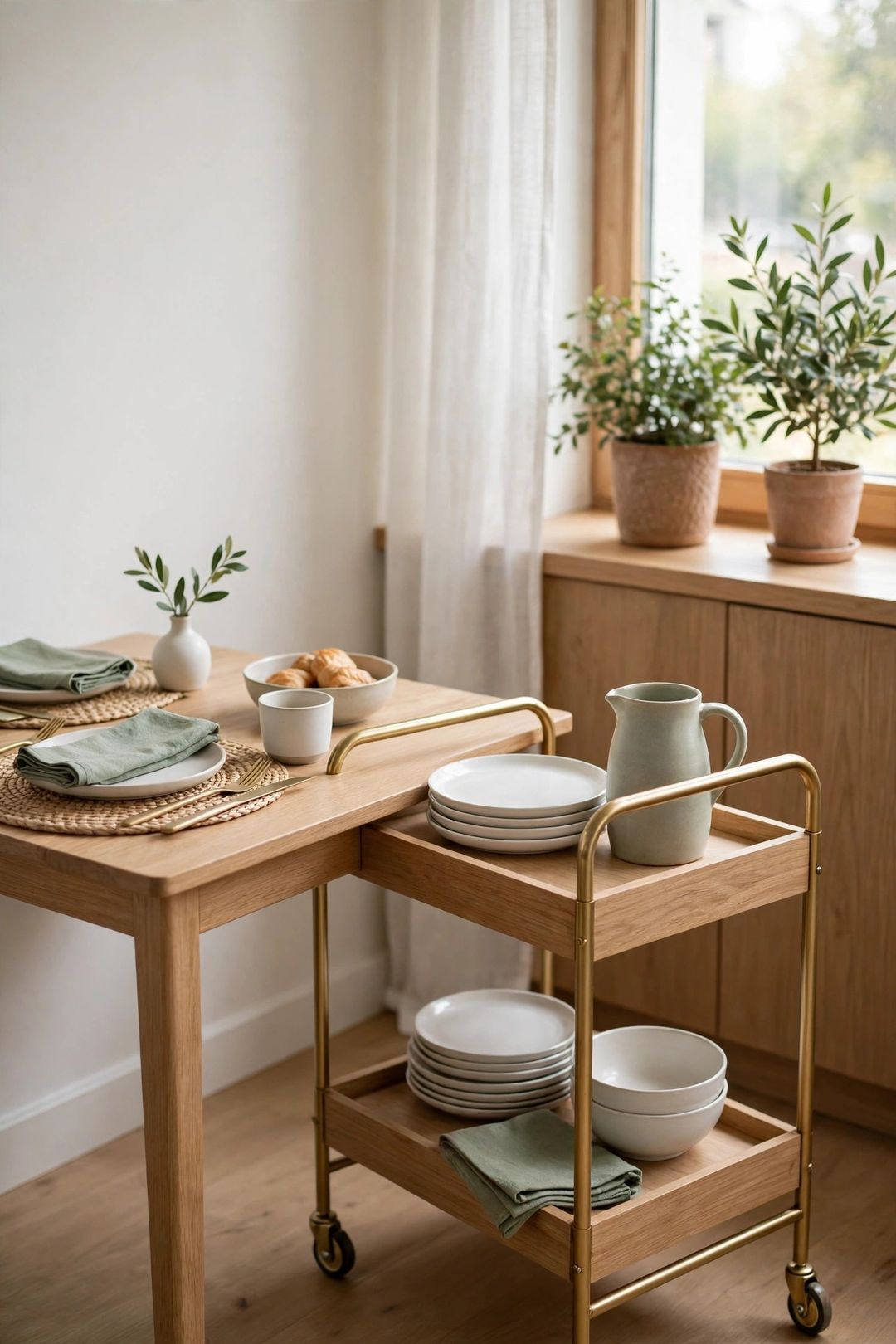
8. Give drinks their own station. Coffee, juice, and water in one separate spot, away from the food line, stops a bottleneck. A cart, desk corner, or kitchen counter all work, as long as cups start there too.
9. Use tiered stands to serve upward. A tiered stand holds pastries, fruit, or eggs in the space of one plate. Vertical serving keeps the buffet surface open for hot dishes, and the stand folds or comes apart for flat storage after brunch.
10. Plan one clear path through the room. Arrange the flow in a simple line: buffet first, then drinks, then seats. Keep that path free of bags and extra chairs, so guests are not squeezing past each other with full plates.
4. Choose Easter Decor That Stores Flat
11. Decorate with flat and foldable pieces. A cloth runner, paper garland, and simple napkins give an Easter table a festive look with almost no storage cost. All of it folds flat into a drawer or envelope after, instead of filling a box in a closet.
12. Make the centerpiece from things that get used up. A bowl of dyed eggs, spring flowers, or a plate of pastries can be the centerpiece. Food and flowers need no storage, and a low centerpiece lets guests talk across a small table.
13. Pack one slim Easter brunch kit afterward. Store the runner, garland, napkins, and any small decor together in one slim bin or large labeled envelope. One flat kit is easy to keep on a closet shelf, and next year the whole table look comes out in a single grab.
What to Buy
Folding chairs, typically $25–$50 each. Pro: They add real seats for one morning and store flat in a closet or behind a door. Con: They are less padded than dining chairs. Skip if: A bench plus current chairs already seat the full guest list.
A folding utility table, typically $40–$90. Pro: It works as a buffet, extra dining surface, or dessert table, then folds away. Con: It needs a flat storage spot. Skip if: A desk or console in the room can do the same job.
A tiered serving stand, typically $20–$40. Pro: It serves more food in less surface space and suits pastries and fruit well. Con: It holds light items best. Skip if: Brunch is mostly hot dishes served in pans or bowls.
A cloth table runner, typically $12–$25. Pro: It makes a plain table feel set for Easter and folds flat for storage. Con: Light colors show spills quickly. Skip if: A folded flat sheet or existing runner already gives the same look.
Chair cushions for folding chairs, typically $10–$20 each. Pro: They make folding chairs comfortable for a long brunch. Con: They need a small storage spot. Skip if: Guests will mostly stand and mingle.
Mistakes to Avoid
- Putting all the food and drinks on the dining table. Serving dishes crowd out place settings fast. A separate buffet keeps seats usable and the table calm.
- Squeezing in seats with no elbow room. Too many chairs make brunch uncomfortable. Use a bench for extra places and keep roughly 24 inches per person.
- Using a tall, bulky centerpiece. Big decor blocks views and takes serving space. Keep it low, flat, or edible on a small table.
- Buying single-use decor that cannot be stored. Bulky Easter pieces with no flat storage become year-round clutter in a small home. Choose foldable or reusable items.
- Rearranging furniture on Easter morning. Moving tables and hunting for chairs adds stress. Set the layout, seats, and buffet the day before instead.
Frequently Asked Questions
How many guests can fit at a table that normally seats four?
Often six can fit for one meal if one side uses a bench and the ends are used too. Allow about 24 inches per person, keep settings simple, and serve food from a separate buffet so plates are the only things on the table.
Where should a buffet go if there is no sideboard?
Use a folding table, a desk, a dresser, or a stretch of kitchen counter. The best spot is along a wall, in a line with the drinks station, so guests can serve themselves and sit down without crowding the table.
What if there are not enough matching chairs?
Mixed chairs look fine at brunch, especially with a cushion on each one to tie them together. Put matching chairs on the most visible side, a bench on the other side, and fill any gaps with folding chairs.
How can Easter decor be stored in a very small home?
Choose decor that folds flat: a runner, cloth napkins, and a paper garland. Pack them in one slim bin or large envelope labeled for Easter brunch, and store it on a closet shelf or inside a bench.
A small dining space can host a relaxed Easter brunch when seating, serving, and decor each have a simple plan. Set it up the day before and fold it away after. Save this post to your Easter board on Pinterest so the plan is ready before you shop.