A small kitchen feels crowded fast. One appliance on the counter, one junk drawer, and one deep cabinet can make the whole room hard to use.
This small kitchen organization checklist 30 fixes list works in zone order, so you fix one area fully before moving on. Each fix is short, needs no remodel, and uses space you already have.
How to Use This Checklist
Work zone by zone, not room by room. Start with counters, because clear work space makes every later zone easier to sort.
A realistic pace is one weekend: two or three zones on Saturday, the rest on Sunday. Put donations by the door between zones, and do not buy storage until you have finished the sort.
Counters
1. Keep only daily tools out. Leave the kettle, coffee maker, or toaster you use daily. Move weekly appliances into a cabinet.
2. Create one prep strip. Clear a stretch of counter next to the stove and keep it empty for food prep.
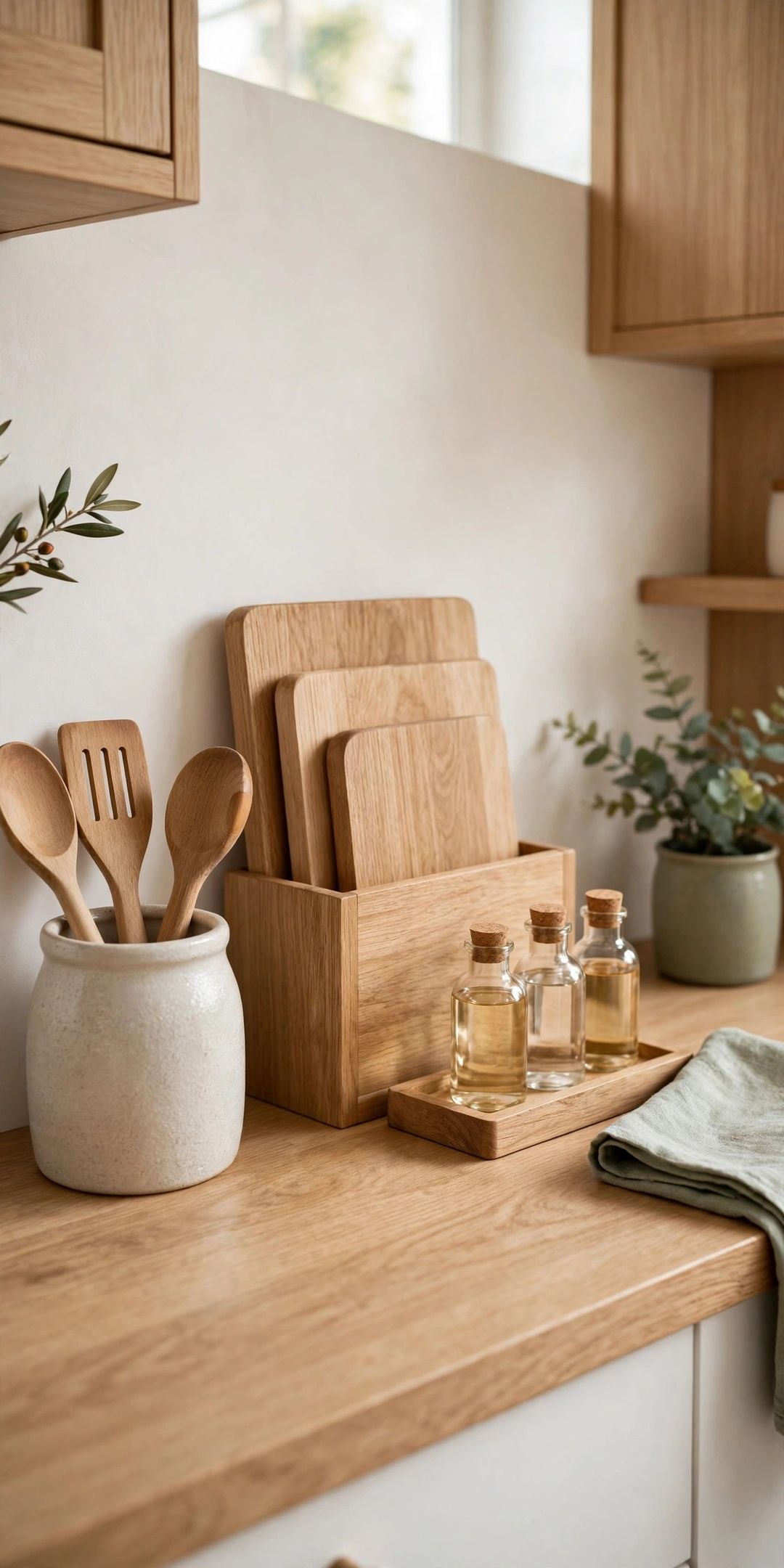
3. Corral oils and spices in one tray. A low tray near the stove holds cooking basics together and catches drips before they spread.
4. Move paper off the counter. Mail, lists, and school papers go to one wall folder or drawer.
5. Give produce one bowl. Fruit and onions sit in a single bowl instead of spreading across the counter in bags and nets.
Cabinets
6. Put daily dishes at eye level. Plates, bowls, and glasses you use most belong on the easiest shelf to reach.
7. Move rarely used items up high. Holiday dishes and spare vases go on the top shelf, where hard reach does not matter.
8. Stack by type, not by size. Keep baking dishes together and food storage together, instead of mixed piles.
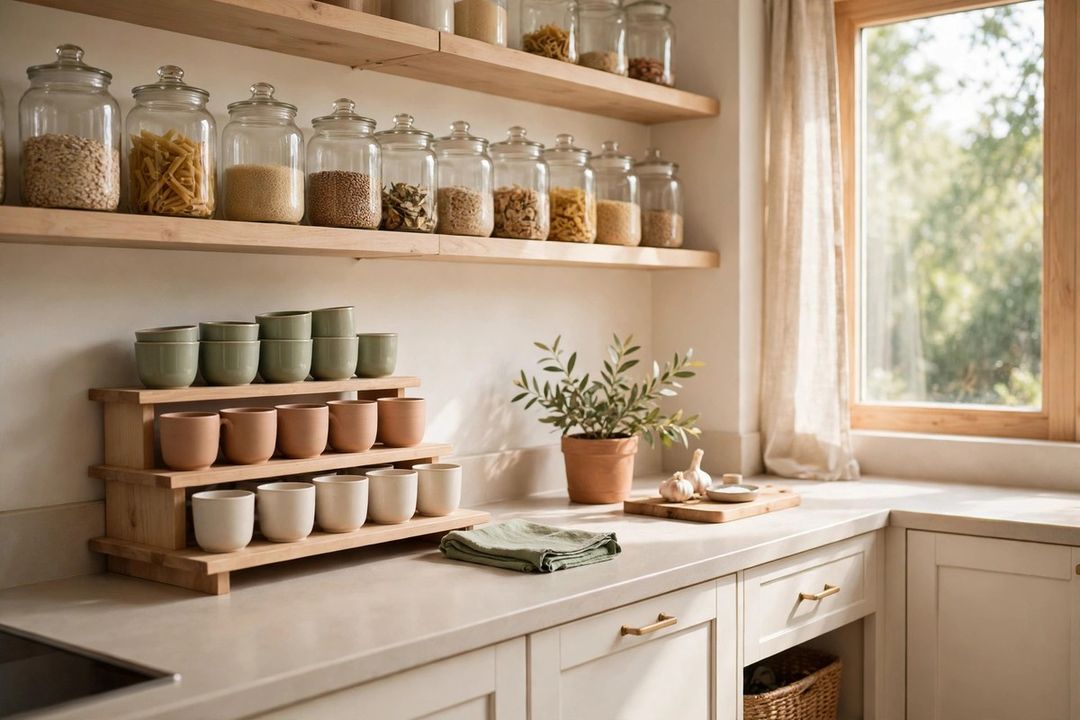
9. Add one shelf riser. A riser doubles a short shelf for mugs or small bowls. Measure shelf height first so doors still close.
10. Use the cabinet door. Slim hooks or a small rack inside a door can hold measuring spoons, lids, or wrap rolls.
Drawers
11. Give the top drawer one job. Cutlery and daily utensils only. Anything else moves out, so the drawer you open most stays calm.
12. Divide utensils with a tray. A simple divider stops spatulas and ladles from tangling. Leave one open section for odd-shaped tools.
13. End the junk drawer creep. Keep one small drawer for household bits, with a tray inside. When the tray is full, something leaves.
14. Store towels in one drawer. Fold dish towels flat and stack them by use: drying, cleaning, and hot pans. Mixed towels cause daily digging.
15. Keep knives in one safe spot. Use an in-drawer block or a magnetic strip, never loose in a mixed drawer.
Sink Zone
16. Clear the sink edges. Keep only dish soap and a sponge or brush at the sink. Extra bottles move under the sink in one bin.
17. Use one under-sink bin. Cleaning sprays and refill bottles sit in a single bin you can pull out, instead of spreading across the cabinet floor.
18. Hang the dish brush. A suction hook or small holder keeps the brush upright to dry, and frees the sink ledge.
19. Add a slim drying mat. A mat next to the sink catches hand-washed items, and folds or hangs to dry.
20. Keep trash bags at the point of use. Store a small roll under the sink or in the trash cabinet, not across the room.
Fridge & Pantry
21. Put leftovers at eye level. Cooked food in clear containers at the front gets eaten first and is less likely to be forgotten at the back.
22. Give the fridge door one job per shelf. Sauces on one shelf, drinks on another. Mixed door shelves hide small jars behind tall bottles.
23. Use one eat-first bin. Food that needs using soon goes in a labeled bin. Check that bin before cooking or shopping.
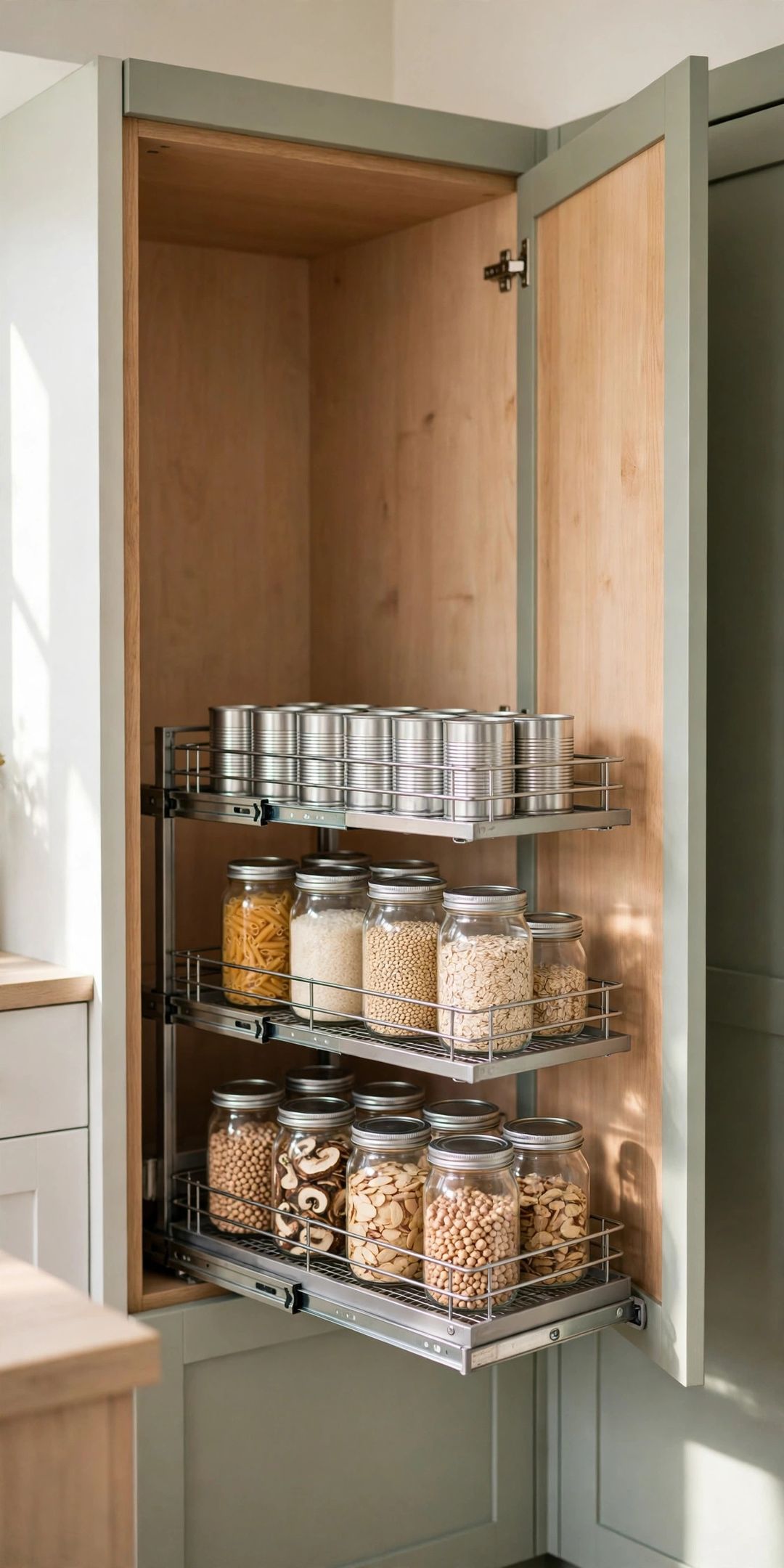
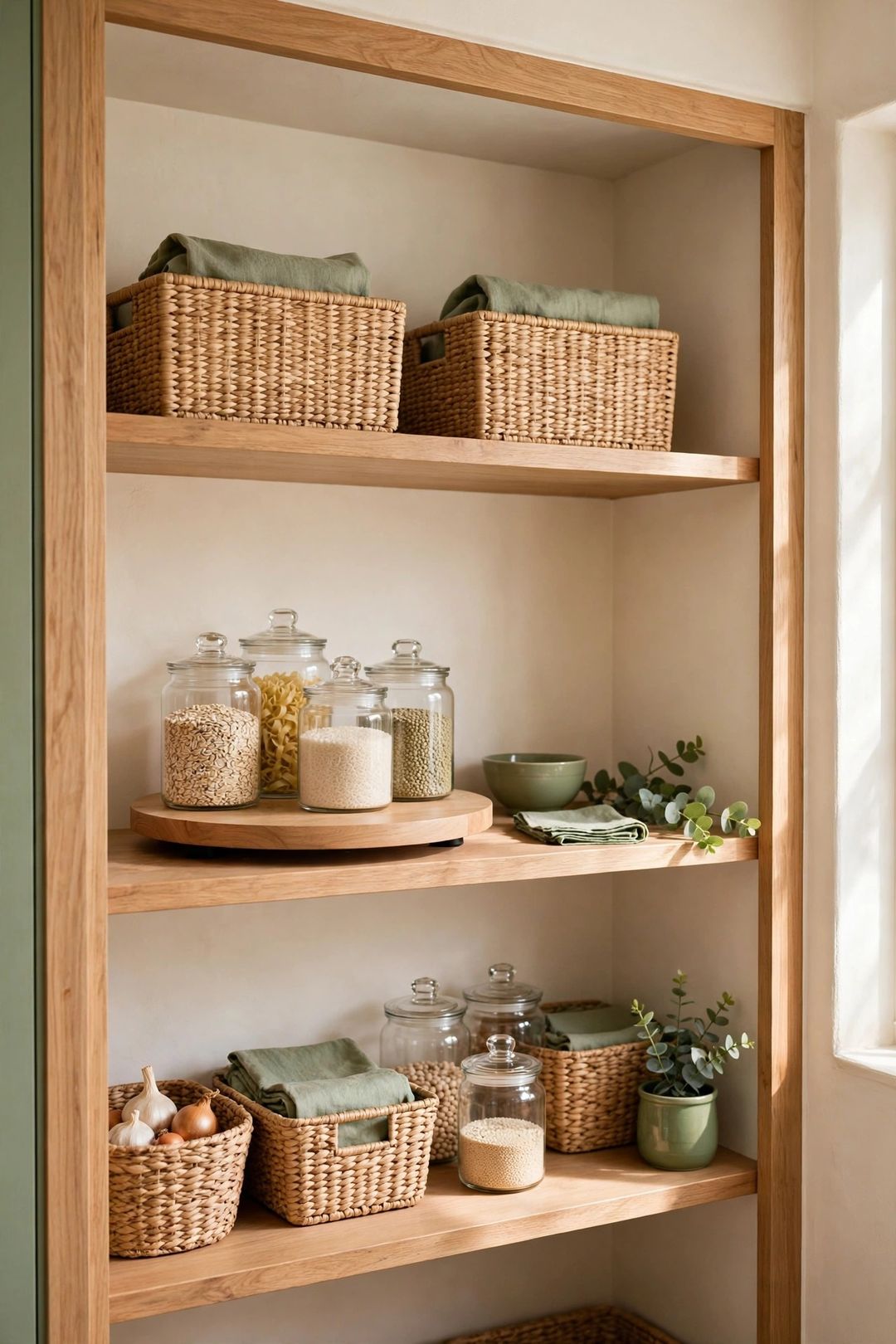
24. Group pantry foods by use. Breakfast, baking, snacks, and daily cooking each get one shelf area or bin, so items stop scattering.
25. Put new food behind old food. When you unpack, move older cans and boxes forward so they get used first.
Walls & Doors
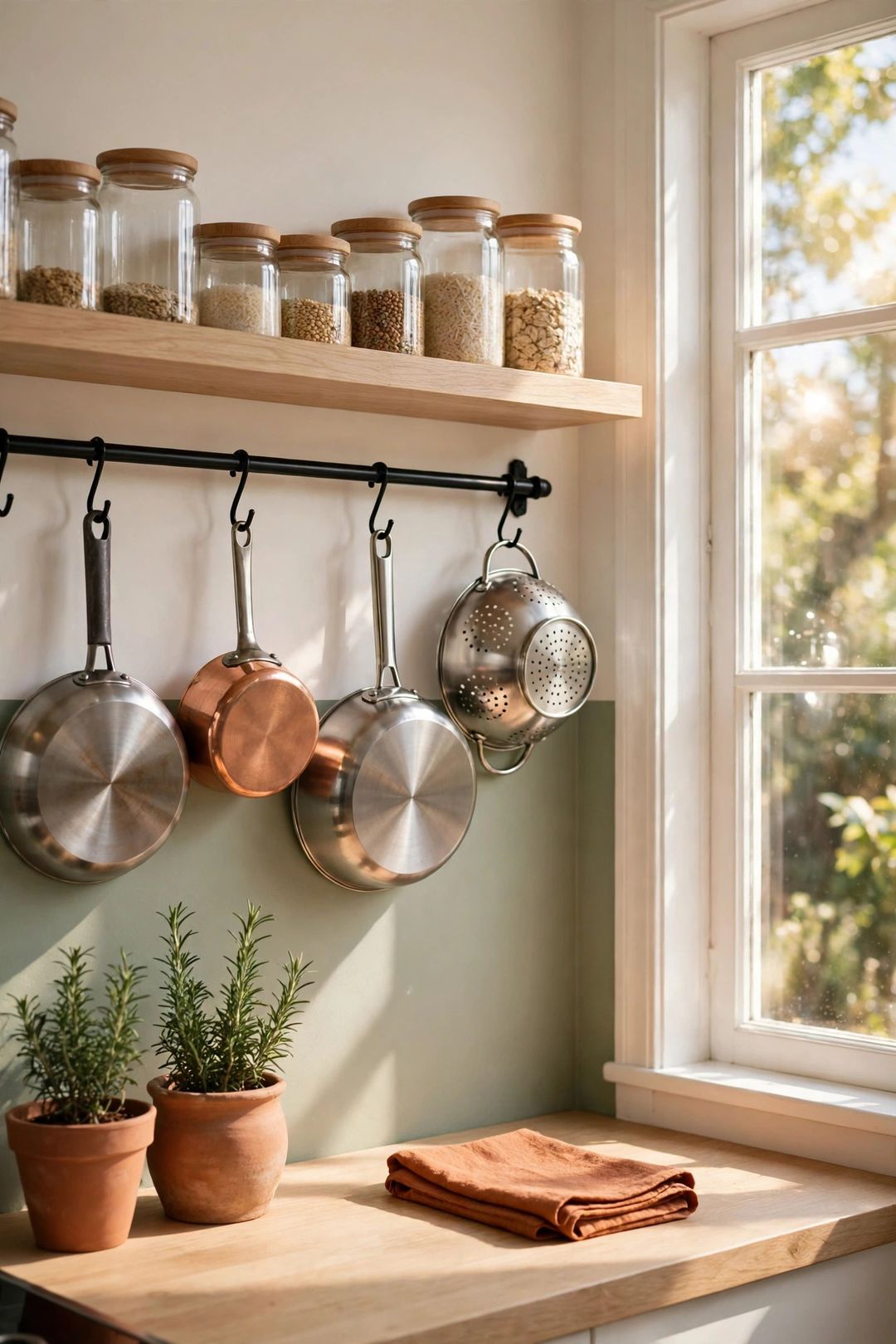
26. Hang pans you use daily. Two or three sturdy hooks hold your main pans and free a whole cabinet shelf.
27. Use the back of the pantry door. A slim rack holds wraps, spice packets, and small bottles on space that is usually wasted.
28. Add hooks for aprons and bags. One row of hooks near the door holds aprons, tote bags, and lunch bags off chairs and counters.
29. Mount a small rail for utensils. A rail near the stove holds ladles and tongs you reach for while cooking, clearing a drawer section.
30. Keep one wall spot for lists. A small board or pad on the wall holds the shopping list, instead of loose notes across the fridge and counter.
What to Buy
A shelf riser, typically $10–$18. Pro: Doubles short shelves for mugs and bowls. Con: Wrong height can block tall items. Skip if: Your adjustable shelves already fit dishes well.
A drawer divider tray, typically $8–$16. Pro: Stops utensils tangling and makes tools easy to spot. Con: Fixed sections may not fit odd tools. Skip if: One open drawer already works for your few utensils.
A low counter tray, typically $9–$17. Pro: Groups oils and spices and contains drips. Con: Oversized trays eat prep space. Skip if: Cooking basics already sit neatly in a cabinet by the stove.
An over-door or inside-door rack, typically $15–$28. Pro: Adds storage without shelf space. Con: Can rattle or block a door if overloaded. Skip if: Your doors are sliding or too tight for a rack.
Clear food containers, typically $12–$24 for a small set. Pro: Leftovers and staples are easy to see and stack. Con: Large sets add lids to manage. Skip if: You own matching jars that stack well.
Mistakes to Avoid
- Buying storage before sorting. Bins bought first rarely fit what you keep. Sort each zone, measure, then buy only what is missing.
- Starting with the hardest zone. Clear counters first for quick, visible progress.
- Keeping duplicates just in case. Keep the best one of each tool and let the extras go.
- Hiding daily items up high. If you reach for it every day, it belongs at easy height.
- Skipping labels on bins. Unlabeled bins become mixed bins within weeks. A simple label keeps returns in the right zone.
Frequently Asked Questions
How long does this checklist take?
Plan for a weekend, zone by zone, with breaks. Counters and drawers are usually fastest, while cabinets and the fridge take longer because they hold more.
What if I have almost no cabinet space?
Lean on walls and doors first. Hooks, a rail, and a slim door rack add storage without cabinets, and the counter and drawer fixes still apply.
Should I do all 30 fixes or just a few?
Start with one zone and finish it fully. A complete counter or drawer zone helps daily right away, while half-done zones tend to drift back.
How do I keep the kitchen tidy after the weekend?
Use a short reset when you unpack groceries: return items to their zones, move older food forward, and clear the prep strip.
A small kitchen needs clear zones, not more space. Save this post to your Kitchen Organization board on Pinterest so the checklist is handy on your next free weekend.