A tiny home can host a great New Year's Eve. The hard part is not the guest list. It is the everyday stuff already taking up the floor, chairs, and counters.
Good small space new years eve hosting storage is temporary by design. You are parking clutter out of sight for one night, setting up clear spots for coats, drinks, and seats, then putting everything back the next day.
Start the day before if you can. One calm pass with a few bins beats a rushed shove into random closets an hour before guests arrive.
Where Everyday Clutter Goes for One Night
The goal is simple: clear the living area, and use storage spots your guests will never need to open.
Use the top of the closet. The high shelf in a bedroom or hall closet holds light, bulky items well: throw blankets, board games, and spare cushions.
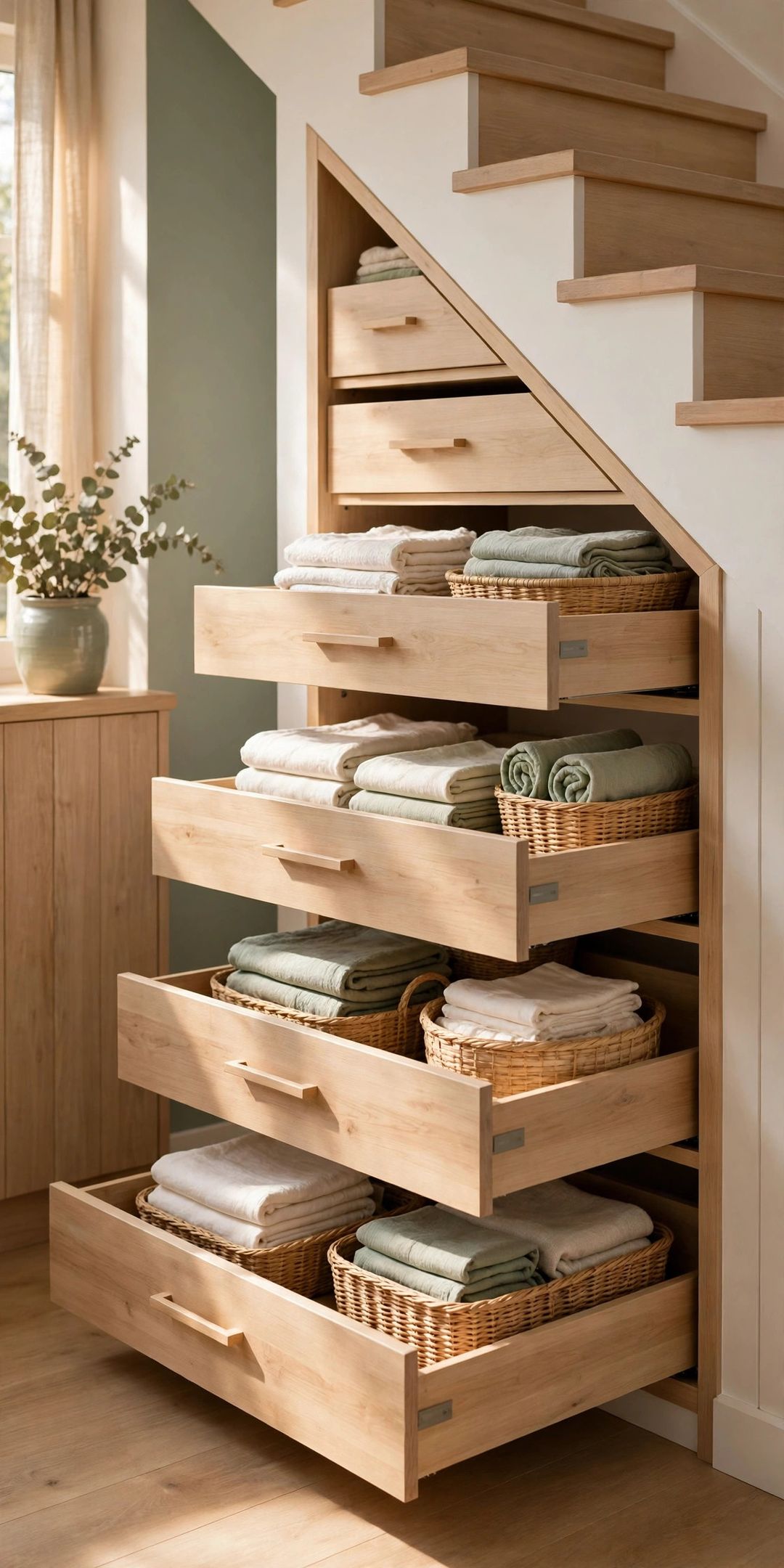
Fill under-bed bins. Flat bins under a bed swallow remotes, chargers, work bags, and table clutter. Slide them in, and that category is gone for the night.
Use the car trunk as overflow. Its trunk can hold a laundry basket of non-valuable everyday items for a few hours, like sports gear or extra shoes.
Park one box in the bathtub. A closed shower curtain hides a box of bathroom counter items, cleaning bottles, or spare towels, and guests rarely need the tub itself.
Set Up a Coat and Bag Landing Zone
Without a plan, coats land on the bed, the sofa, and every chair. Give them one clear home on arrival.
Clear one closet section. Move your own coats to a bedroom door hook for the night, and free a short run of hangers near the front door for guests.
Use a bedroom door rack. An over-door rack in the bedroom holds coats and bags out of the living area, so guests can find their things easily later.
Add a bag basket by the door. One large basket or open bin catches handbags, scarves, and gloves that would otherwise scatter across seats and floors.
Keep shoes in one line. A mat or low tray by the door gives wet or snowy shoes one spot, instead of a growing pile blocking the entry.
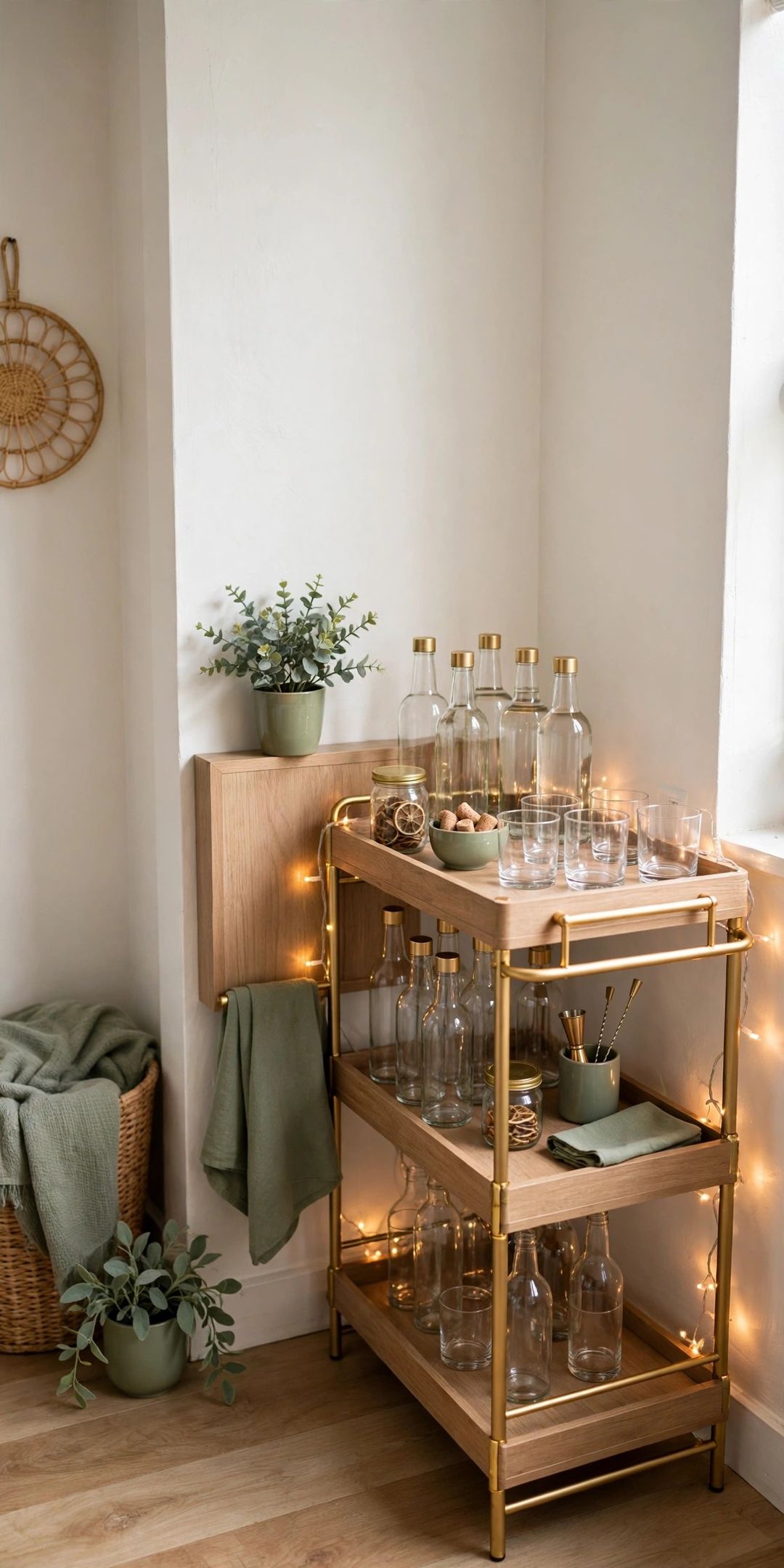
A Drink Station That Borrows Storage Furniture
A drink station on the kitchen counter steals your only prep space, so borrow a piece of storage furniture instead.
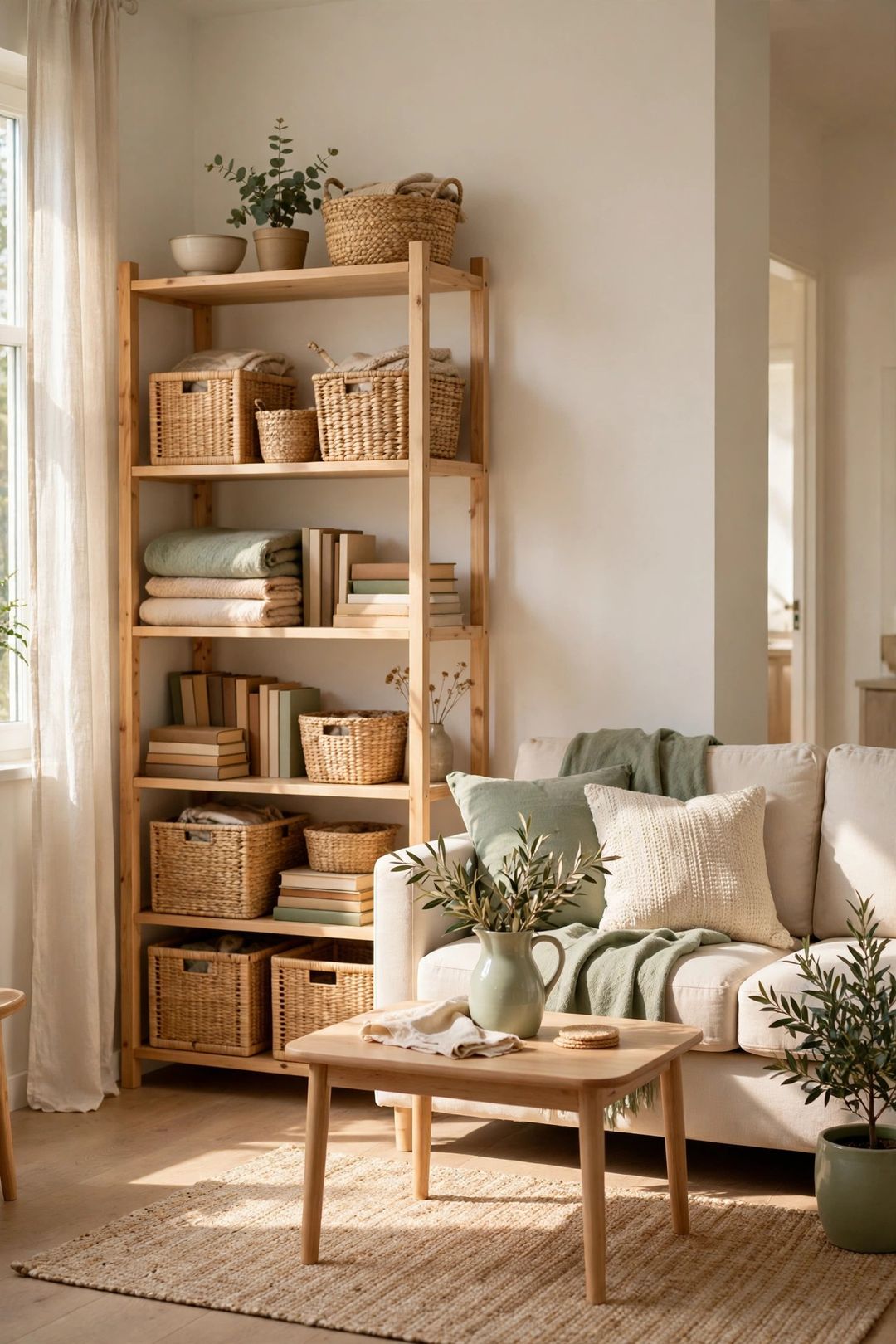
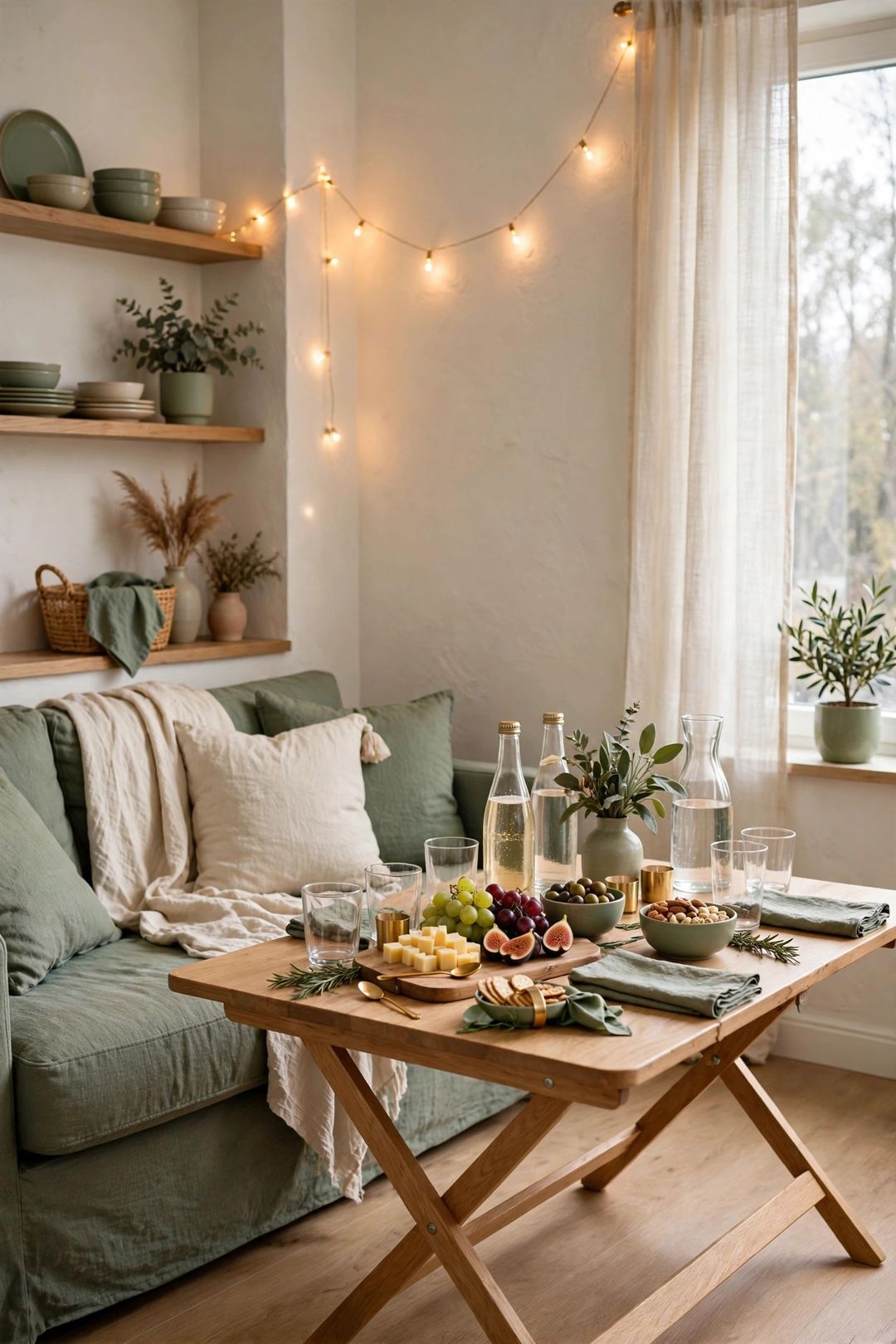
Turn a bookshelf into the bar. Clear one or two shelves, line them with a tray, and set out bottles, glasses, and a small ice bucket there.
Use a dresser or sideboard top. A living room sideboard is ideal, and its drawers can hold napkins, openers, and spare coasters for the night.
Keep refills in a cooler below. A cooler or lidded bin under the station holds extra cans and ice. It keeps the main shelf uncluttered and cold drinks close.
Put trash and recycling beside it. One small bin and one bag for cans, right at the station, stop empties collecting on every shelf and table in the room.
Folding Seating That Stores Flat
Extra seats are the bulkiest part of hosting. Choose seating that folds or stacks, borrows a corner, and disappears again the next day.
Store folding chairs behind a door. Two to four folding chairs hang on hooks or lean flat behind a bedroom door or in a closet gap.
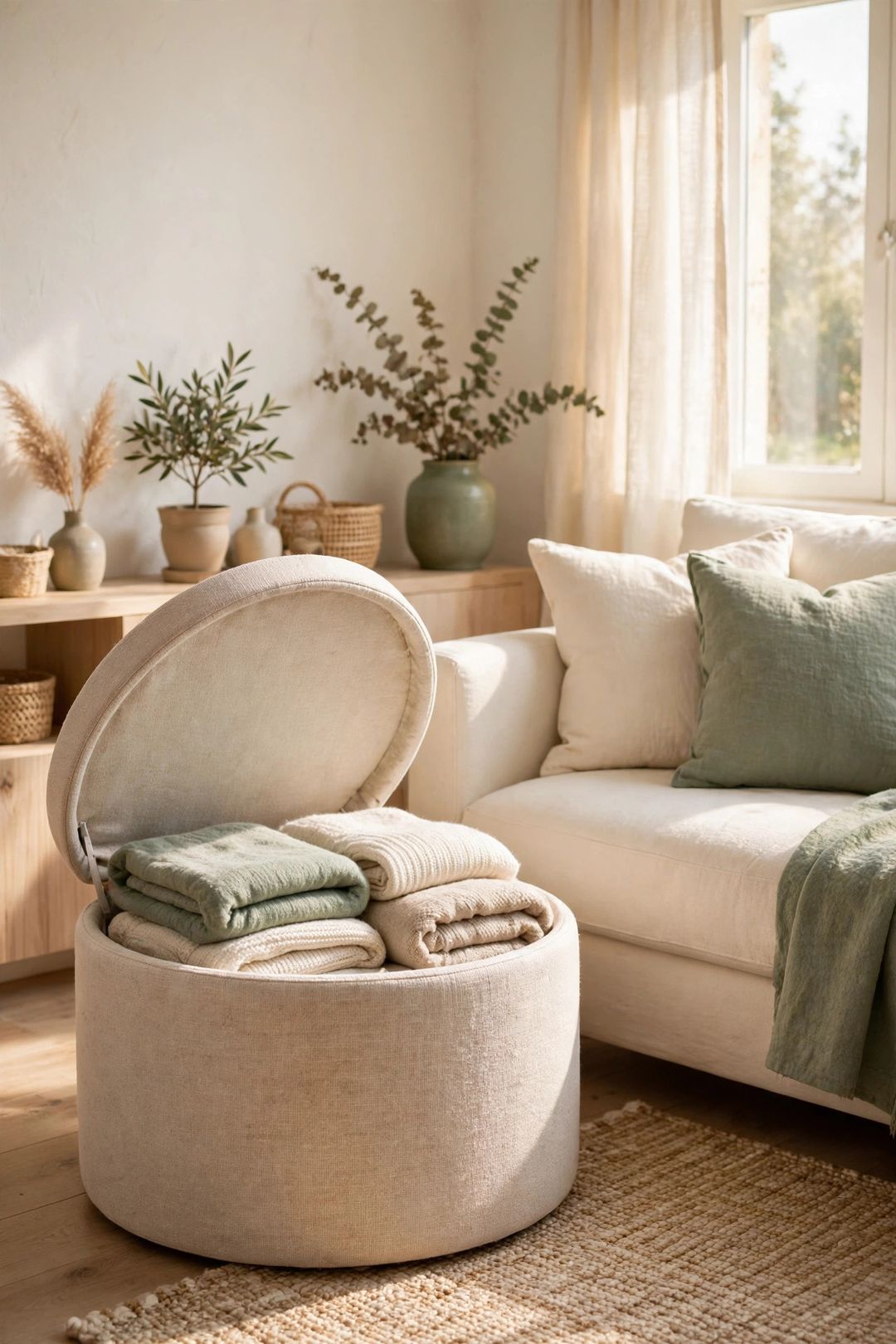
Use floor cushions from under-bed storage. Large cushions live in a flat bin under a bed or sofa, then work as low seating around a coffee table.
Borrow stools as side tables. A kitchen stool or step stool can hold a drink and a plate for the night, doing two jobs while taking one small footprint.
Clear one wall for standing room. Push one piece of furniture against a wall and store its usual clutter on top, since standing space matters more than extra tables.
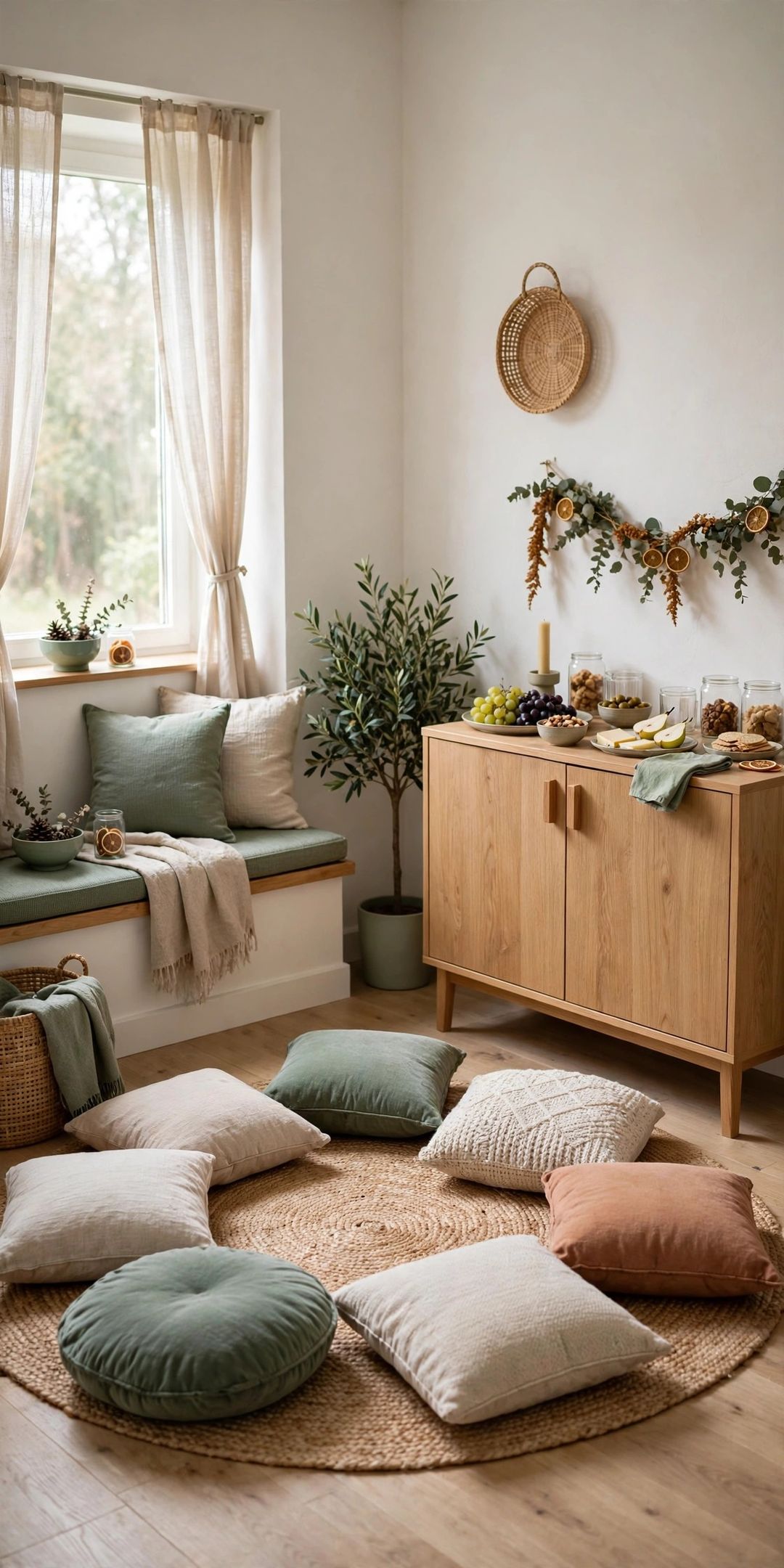
The 15-Minute Next-Day Reset
The reset works because every hiding spot was chosen on purpose, so nothing takes long to find and return.
Minutes 1–5: Clear the surfaces. Bag trash and recycling, gather glasses to the sink, and put leftover drinks in the fridge. Clear surfaces first, so the room looks calm fast.
Minutes 6–10: Empty the hiding spots. Bring back the under-bed bins, closet-top items, and trunk basket, one spot at a time. Return each item straight to its normal place.
Minutes 11–15: Restore seats and coats. Fold chairs back behind the door, return cushions to their bin, and move your own coats back to the entry closet.
What to Buy
Flat under-bed bins, typically $12–$25 each. Pro: Hide clutter and cushions in wasted space. Con: Low beds may fit only slim bins. Skip if: You own flat bins or suitcases that slide under the bed.
An over-door hook rack, typically $10–$20. Pro: Creates a coat station with no floor space or wall holes. Con: Heavy coats can make some doors hard to close. Skip if: Your doors are too tight for a rack.
Folding chairs, typically $18–$35 each. Pro: Add real seating and store flat behind a door. Con: A set of four still needs a planned storage spot. Skip if: You host rarely and can borrow chairs instead.
A large open basket, typically $14–$26. Pro: Works as a bag basket that night and blanket storage all year. Con: Open baskets show clutter if they become a daily drop zone. Skip if: A laundry basket you own can do the same job.
A serving tray, typically $10–$22. Pro: Turns any shelf into a tidy drink station and catches drips. Con: A large tray will not fit narrow shelves. Skip if: A baking sheet with a cloth liner already works.
Mistakes to Avoid
- Hiding things at random. Items shoved into odd spots take days to find. Choose two or three hiding spots and note what went where.
- Blocking closets guests need. If coats go in the entry closet, do not fill it with clutter first. Keep guest storage and hidden clutter separate.
- Buying party furniture for one night. Bulky items bought for one evening need storage all year. Borrow, fold, or repurpose what you own first.
- Putting drinks on the kitchen counter. The counter is your only prep and cleanup space in a small kitchen. A shelf or sideboard station keeps it clear.
- Skipping the reset plan. Without a next-day reset, temporary hiding spots become permanent clutter zones. Put items back while the plan is fresh.
Frequently Asked Questions
How far ahead should I clear space for guests?
The day before works well for most small homes. Fill bins and the closet top calmly, and check that guest coats fit the freed space.
What if there is no closet near the front door?
Use a bedroom door rack or hooks in the nearest room, plus a bag basket by the door. One clear landing zone, pointed out on arrival, stops coats spreading.
Is the car trunk a safe place for clutter?
Use it only for low-value items, for a few hours, and only if the car is parked somewhere you trust. Skip valuables, electronics, and anything heat or cold could damage.
How many extra seats does a small room need?
Plan a mix instead of a chair for everyone. Some guests stand, some use the sofa, and folding chairs and cushions cover the rest.
A full room needs clutter parked with a plan, not a bigger home. Save this post to your Small-Space Storage board on Pinterest so the tricks are ready before your next gathering.