A snack area usually fails in a predictable way. Boxes get opened on three different shelves, chip clips vanish, and the last granola bar is always the one nobody wanted. What started as a shared spot turns into a free-for-all every afternoon.
A dedicated station fixes that. These snack station organization ideas create one clear home for snacks inside a pantry, cabinet, or drawer, with zones by person or snack type, pre-portioned bins, and a restock rule that keeps the station full without overflowing.
You do not need a large pantry. One shelf, one deep drawer, or two baskets can hold the whole system, as long as every snack has a set place and a clear limit.
Set Up the Station Zones
1. Give snacks one home, not five. Pick a single shelf, drawer, or cabinet section and move every snack there. When chips, bars, and crackers live in one spot, anyone can see the full choice at a glance, and snacks stop turning up behind cans and cereal boxes on other shelves.
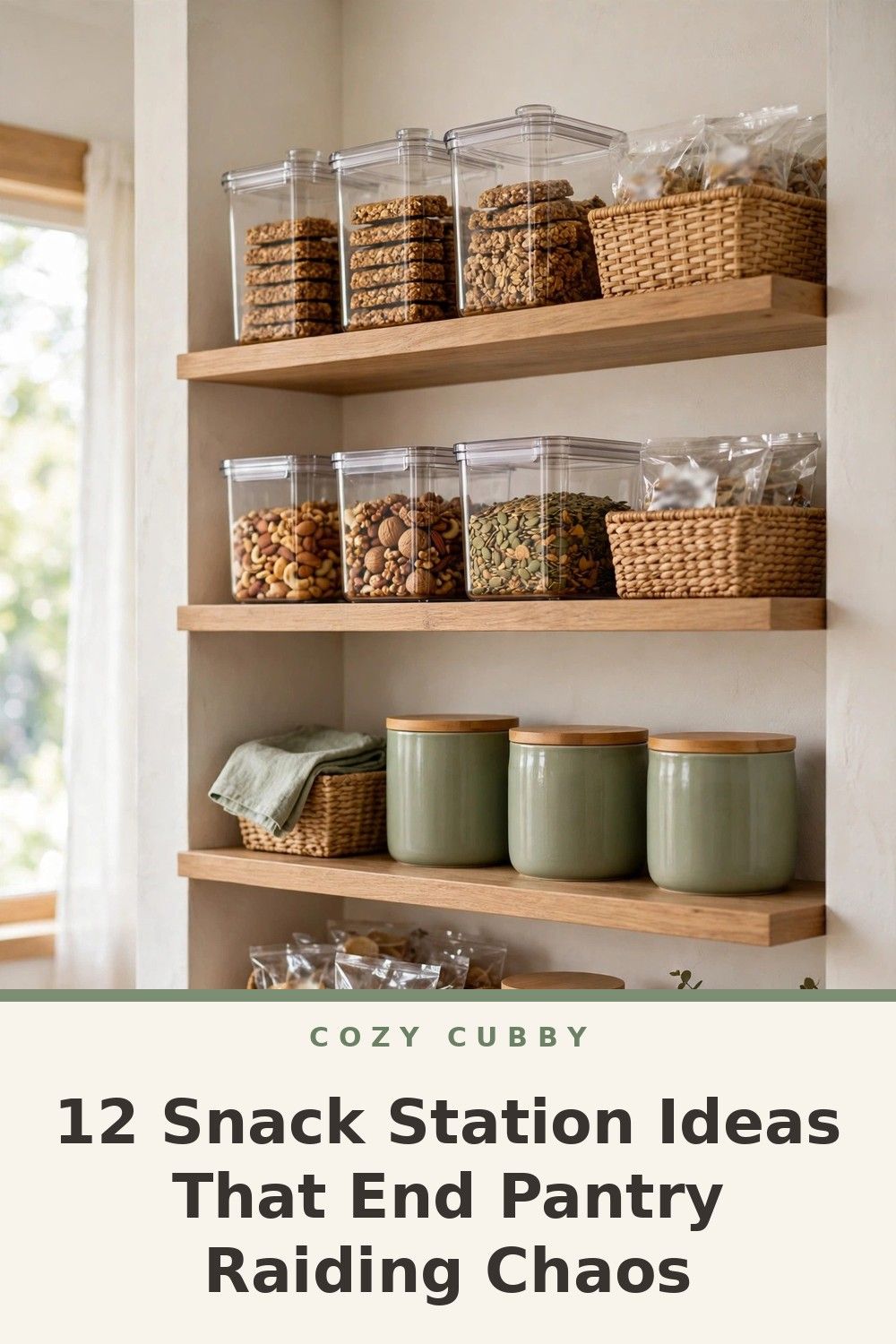
2. Zone by snack type. Group like with like: one bin for salty snacks, one for sweet snacks, one for bars, and one for fruit cups or dried fruit. Type zones make the station easy to scan and restock, because each bin shows what is running low.
3. Zone by person when sharing causes fights. If snacks disappear unevenly, give each person a small labeled bin or one side of a divided bin. Each bin holds that person's share for the week. The rule is simple and visible: when a personal bin is empty, that person's snacks are done until restock day.
Make Portions Grab-and-Go
4. Portion bulk snacks into single servings. Large bags invite handful-after-handful eating and go stale fast. Divide pretzels, crackers, and trail mix into small containers or snack-size bags, stored upright in a bin. Portions control cost, cut crumbs, and make lunch packing grab-and-go.
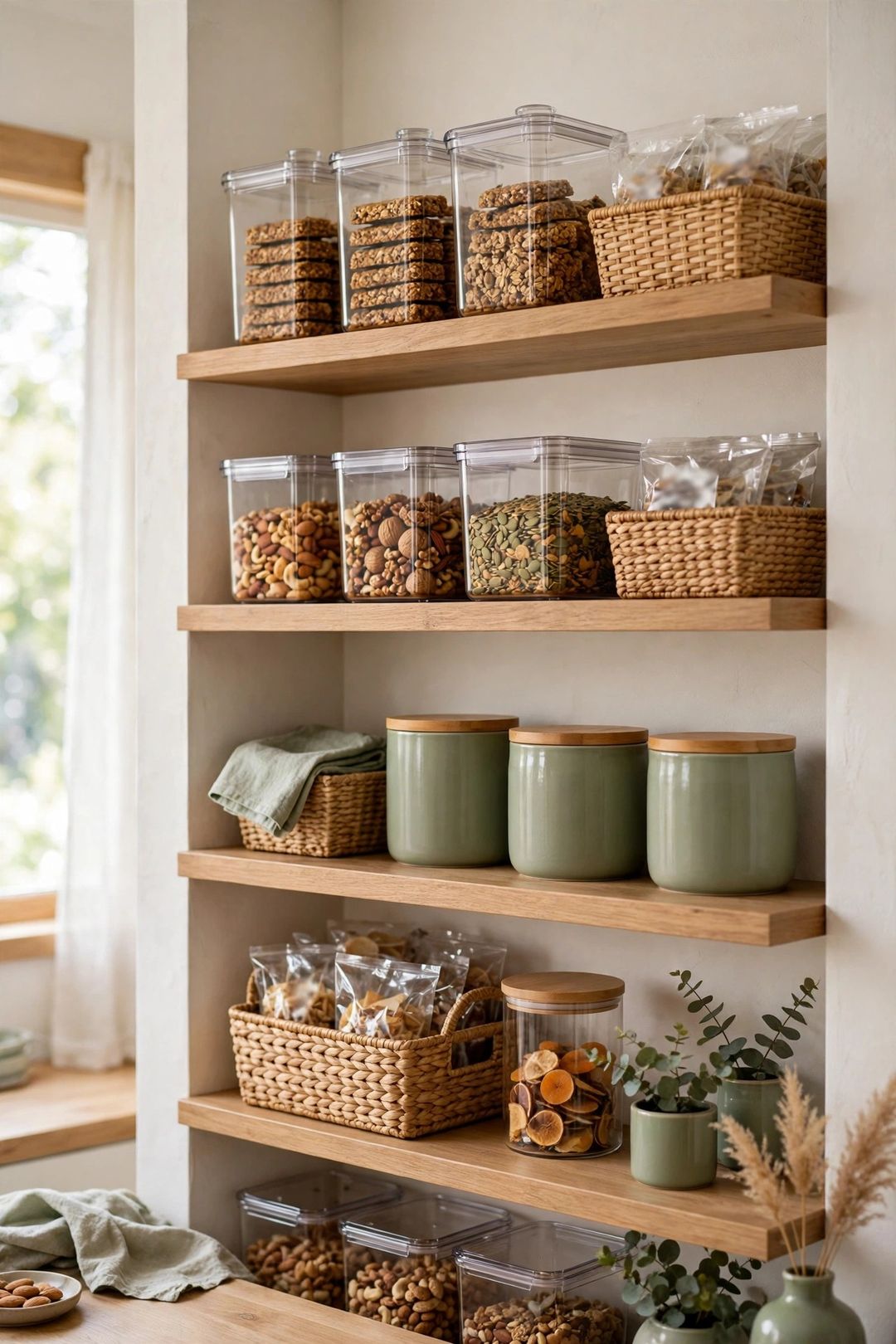
5. Use open-front bins you can see into. Choose clear or open-top bins with a low front, so contents stay visible without pulling the bin out. Line bins up side by side instead of stacking them. A stacked station hides the bottom layer, and hidden snacks are the ones that expire.
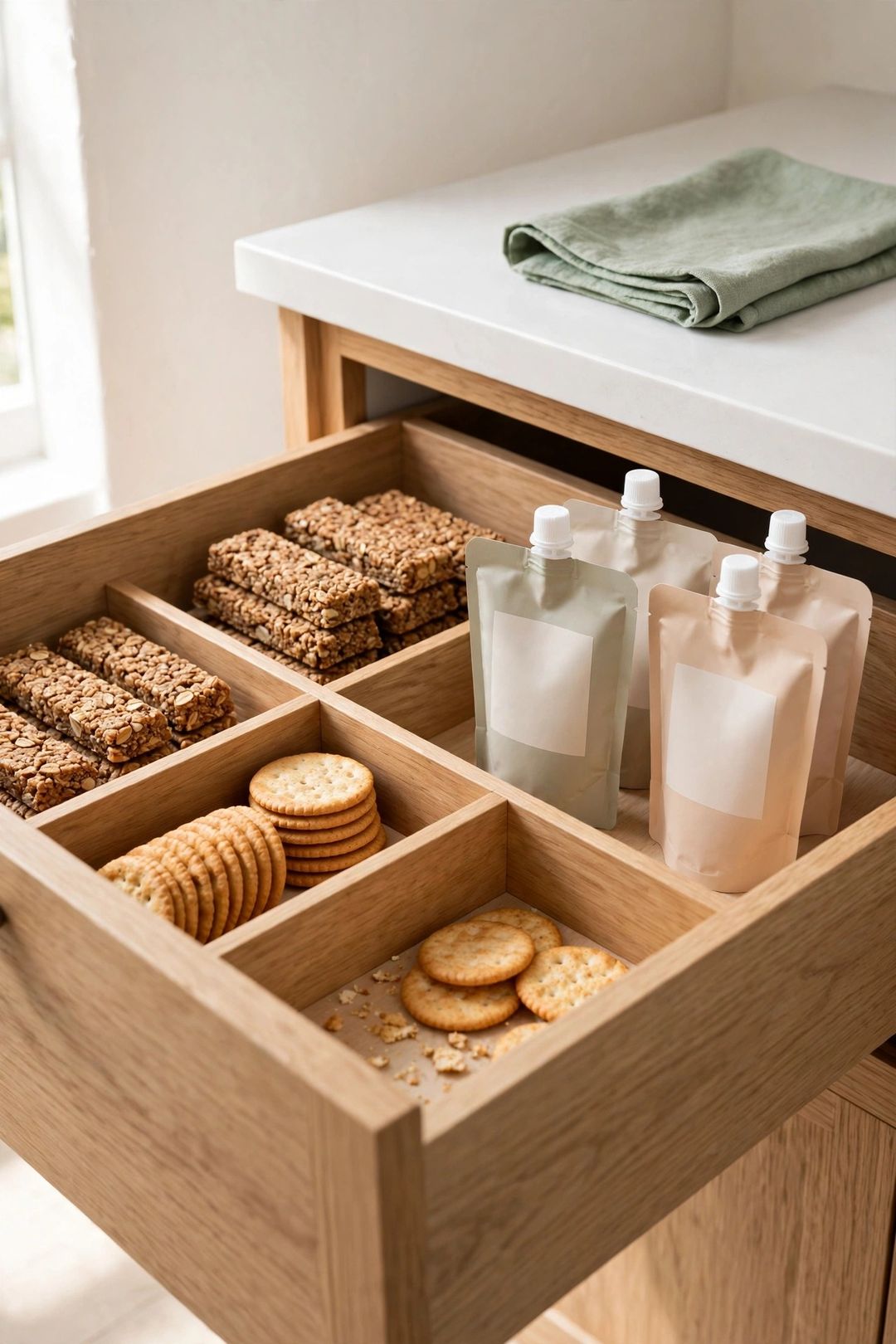
6. Turn one deep drawer into a snack drawer. No pantry shelf to spare? A deep kitchen drawer works well with dividers or small bins inside. Stand bars and pouches upright like files, keep chip bags in one section, and add a small tray for portion cups. Close the drawer and the counter stays clear.
Add Stations for Drinks and Busy Hours
7. Build an after-school station at kid height. Place one bin at a reachable level with approved after-school choices: bars, fruit snacks, portioned crackers, and a small sweet option. Keeping this bin separate from lunch snacks stops the daily negotiation and keeps the rest of the station untouched.
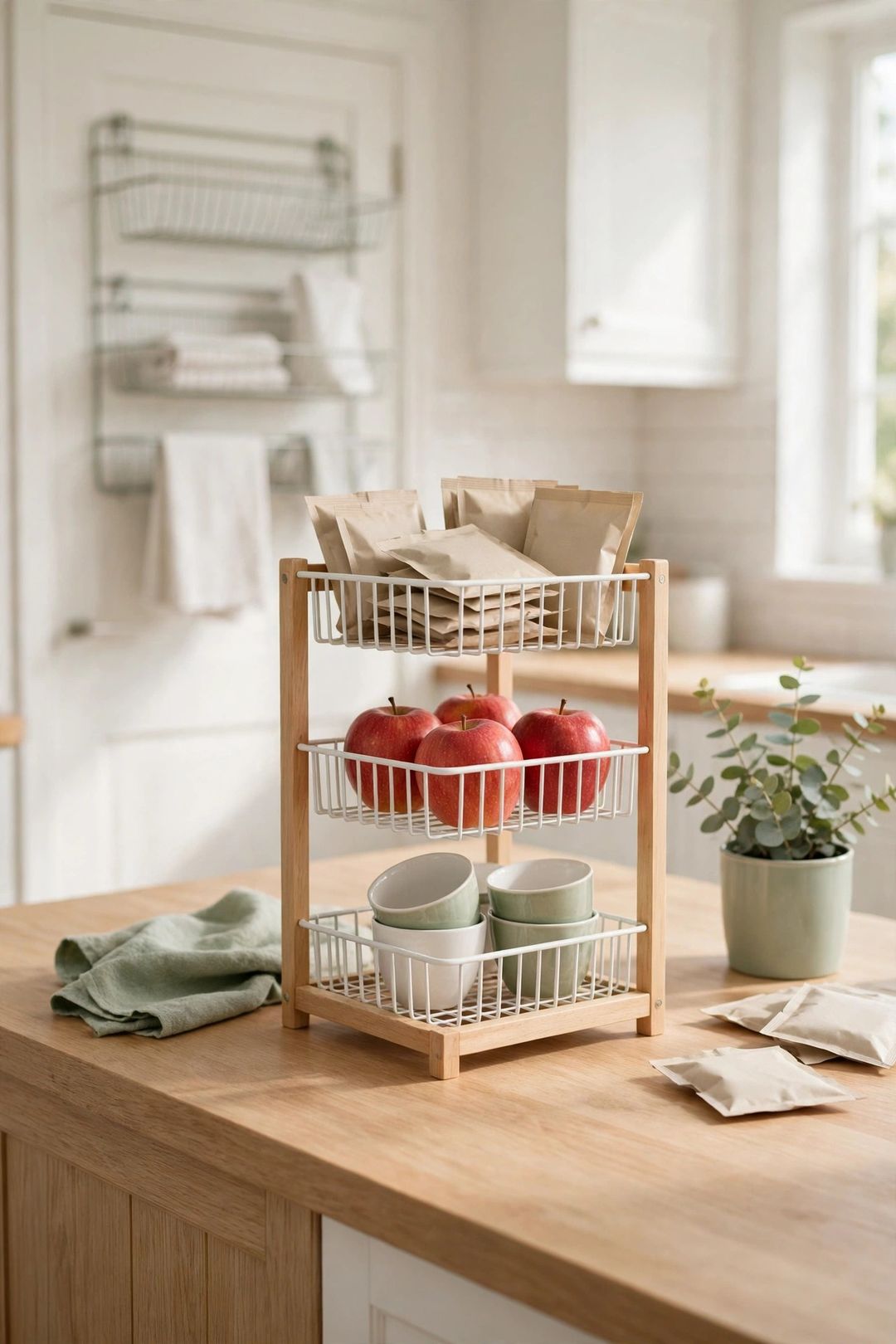
8. Pair snacks with a drink station. Store water bottles, juice boxes, or drink pouches in a narrow caddy or fridge bin right beside or below the snack station. A combined stop means one trip instead of three, and drinks stop crowding the main fridge shelves. Refill the caddy when you refill the snack bins.
9. Keep a separate grown-up shelf. Snacks that are costly, spicy, or bought for specific recipes last longer on a higher shelf or in a clearly labeled bin away from the main station. This is not about hiding food. It is about giving every category an honest home, so special items are still there when planned.
Keep the Station Full Without the Mess
10. Set label rules everyone can follow. Label each bin by type or name, and add one simple rule to the front of the station, such as one sweet and one salty per snack time. Labels remove guesswork for guests and anyone restocking. Use large, plain words.
11. Keep backstock out of the station. Store unopened backup boxes in a separate spot, such as a high shelf or storage bin. The station itself holds only what is open and in use. This one limit stops the station from doubling in size every grocery trip and makes the shopping list honest.
12. Run a five-minute restock routine. On grocery day, empty crumbs, toss stale items, refill portion bins from backstock, and move older snacks to the front. Write anything missing on the shopping list right then. Five steady minutes once a week beats a full pantry clean-out every few months.
What to Buy
Open-front stackable bins, typically $12–$22 for a set. Best for shelves and cabinets. Pro: The low front keeps snacks visible and reachable. Con: Open bins do not contain crumbs or smells. Skip if: A drawer station with dividers already gives clear sections.
Small portion containers or snack cups, typically $10–$18 for a set. Best for dividing bulk bags. Pro: Portions cut waste and make lunch packing fast. Con: Lids are small and easy to lose in the wash. Skip if: You buy mostly single-serve packs already.
Drawer dividers or small organizing trays, typically $10–$20. Best for a deep drawer station. Pro: Dividers stop bags and bars sliding into one pile. Con: Fixed sizes may leave gaps in wide drawers. Skip if: Your drawer is narrow enough for two bins side by side.
A label set or label maker tape, typically $6–$14. Best for shared stations. Pro: Clear bin names and names-by-person end most snack arguments. Con: Labels need redoing when zones change. Skip if: Painter's tape and a marker already stay readable in your kitchen.
A slim drink caddy, typically $11–$19. Best for pairing drinks with snacks. Pro: Bottles and juice boxes stand upright in one row. Con: It takes width small kitchens may not spare. Skip if: Drinks already have a fixed fridge home.
Mistakes to Avoid
- Letting snacks live on every shelf. Scattered snacks cannot be counted, portioned, or restocked. One station is the whole point.
- Keeping family-size bags open in the station. Big open bags go stale, spill, and invite unplanned handfuls. Portion them or keep them in backstock.
- Stacking bins so the bottom one hides. Hidden snacks expire and get bought again. Line bins up where every layer stays visible.
- Skipping labels on a shared station. Without names and type labels, every bin becomes a surprise bin within a week.
- Restocking without checking backstock first. New boxes pile onto old ones, and the station overflows. Check the backup spot before you shop.
Frequently Asked Questions
Where can a snack station go without a pantry?
Use one deep drawer, a single cabinet shelf, a rolling cart, or two baskets on a counter. The location matters less than the limit: all snacks in that one spot, and nothing stored elsewhere except sealed backstock.
How do you stop one person from eating all the snacks?
Switch from type zones to person zones. Give each person a labeled bin with a fair weekly share. The empty bin is the limit, and it is visible to everyone without anyone policing the pantry.
Should snacks stay in their original boxes?
Keep boxes only if they stack neatly and show contents clearly. Bulky half-empty boxes waste space and hide how much is left. Portion bags and single bars usually work better in open bins.
How often should a snack station be restocked?
Once a week on grocery day is enough for most homes. Do a quick midweek check only on the after-school bin and portion cups, since those empty fastest.
One clear station, honest portions, and a weekly five-minute reset can end the daily snack scramble for good. Save this post to your Kitchen Organization board on Pinterest so the 12 ideas are handy on your next grocery day.