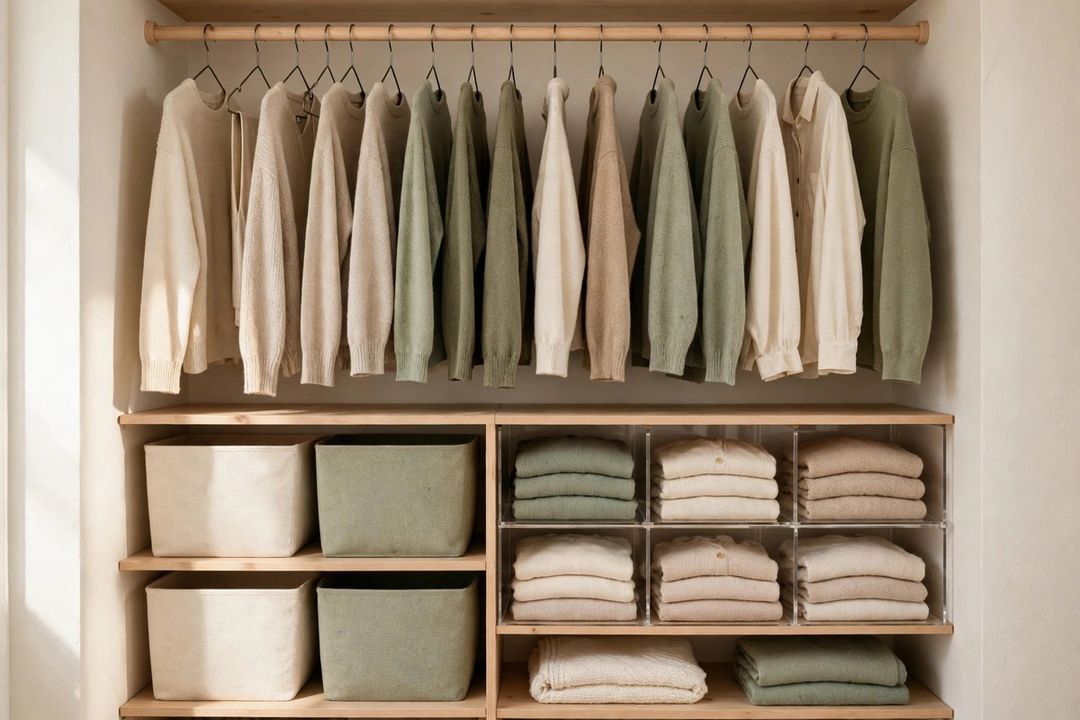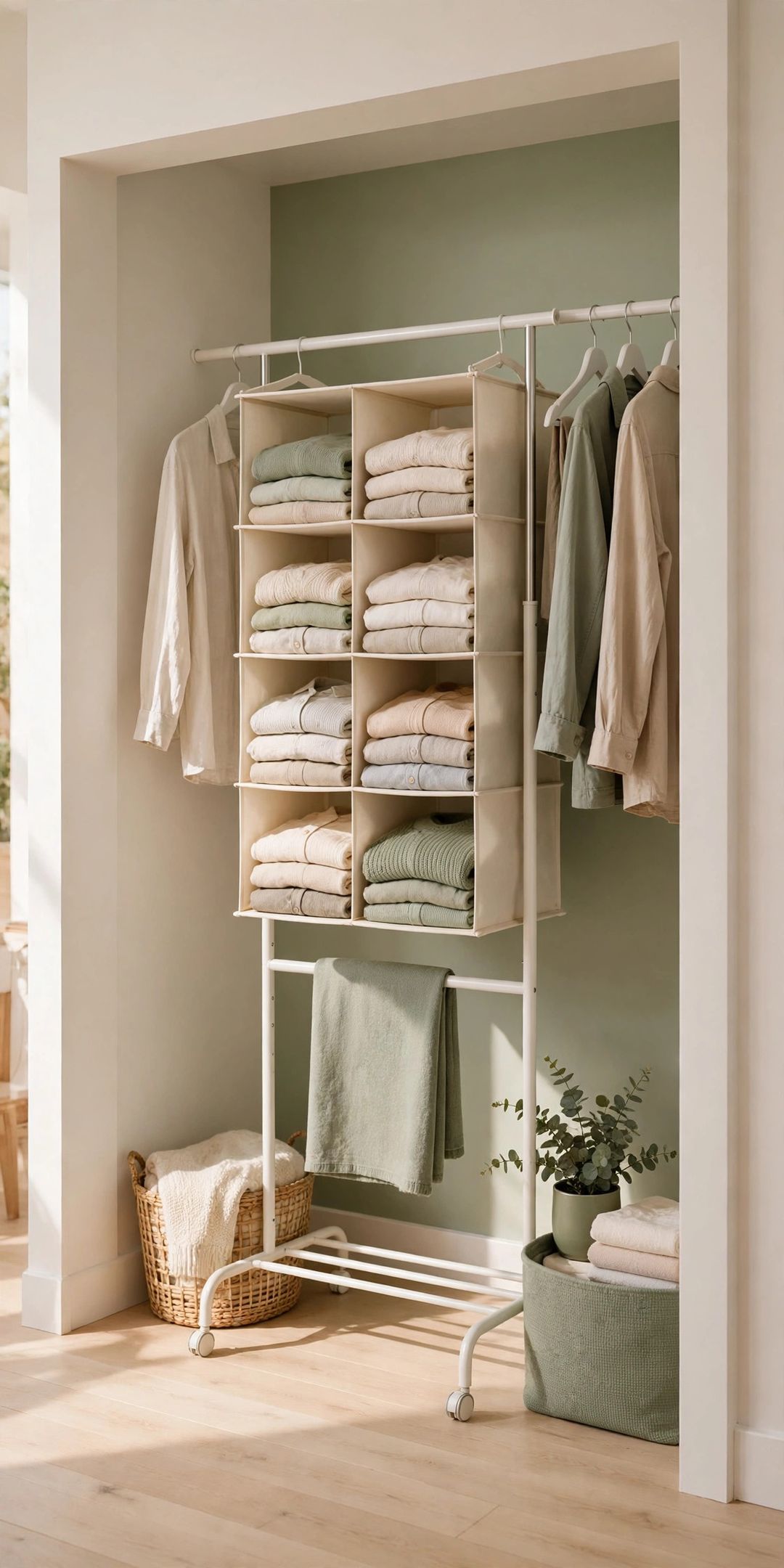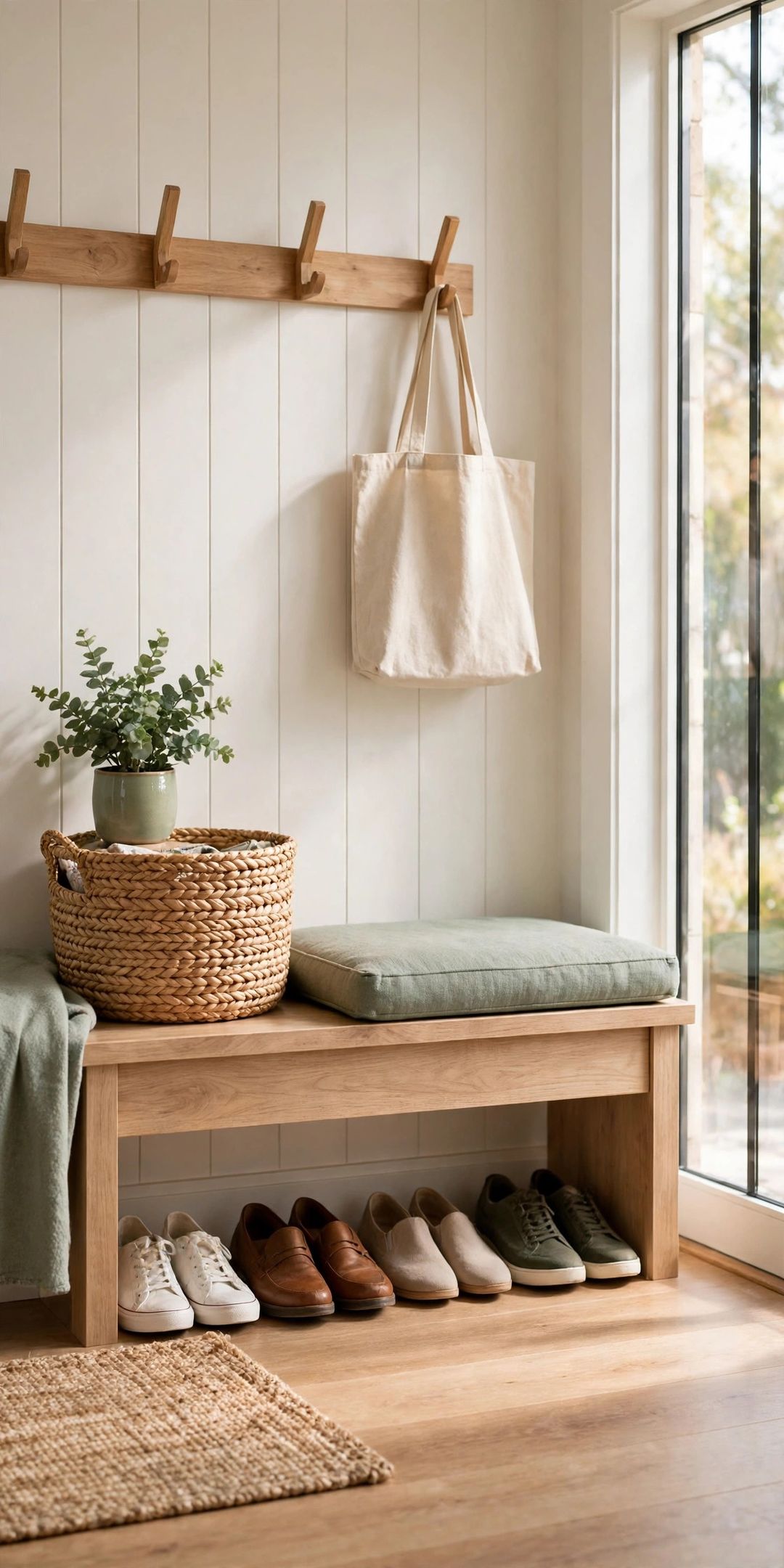
A sneaker collection grows one pair at a time, but a small closet does not. Soon pairs stack on the floor, boxes crush each other, and the pair you want is always at the bottom of the pile.
These sneaker storage ideas collection small closet owners can actually use focus on visibility, vertical space, and protection. Every pair gets a set spot, stays in shape, and can be pulled out without moving five other pairs first.
You do not need a bigger closet or expensive built-ins. Measure the closet width, depth, and door type first, then work through the ideas below and pick the mix that fits your collection size.
Boxes, Stacks and Risers
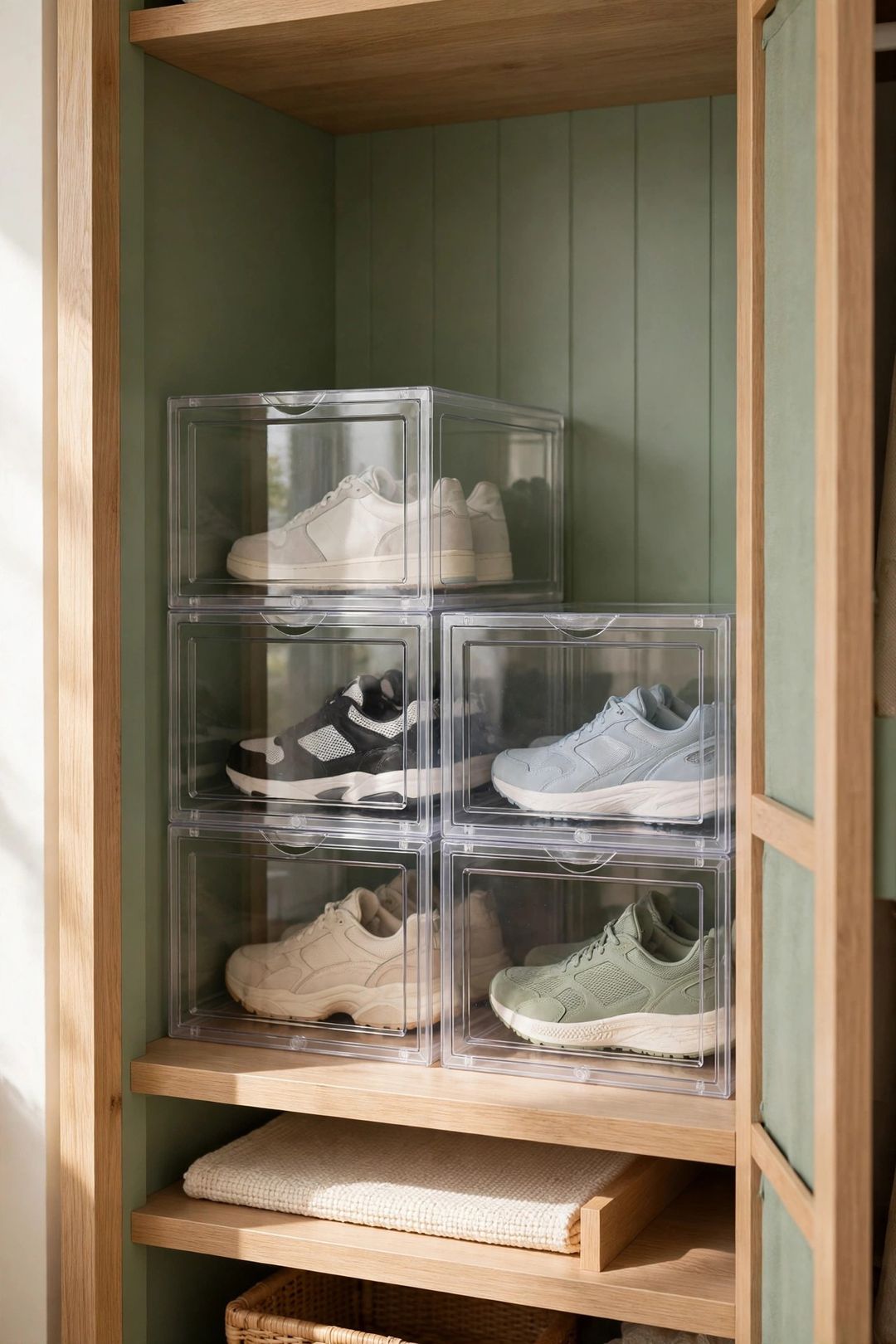
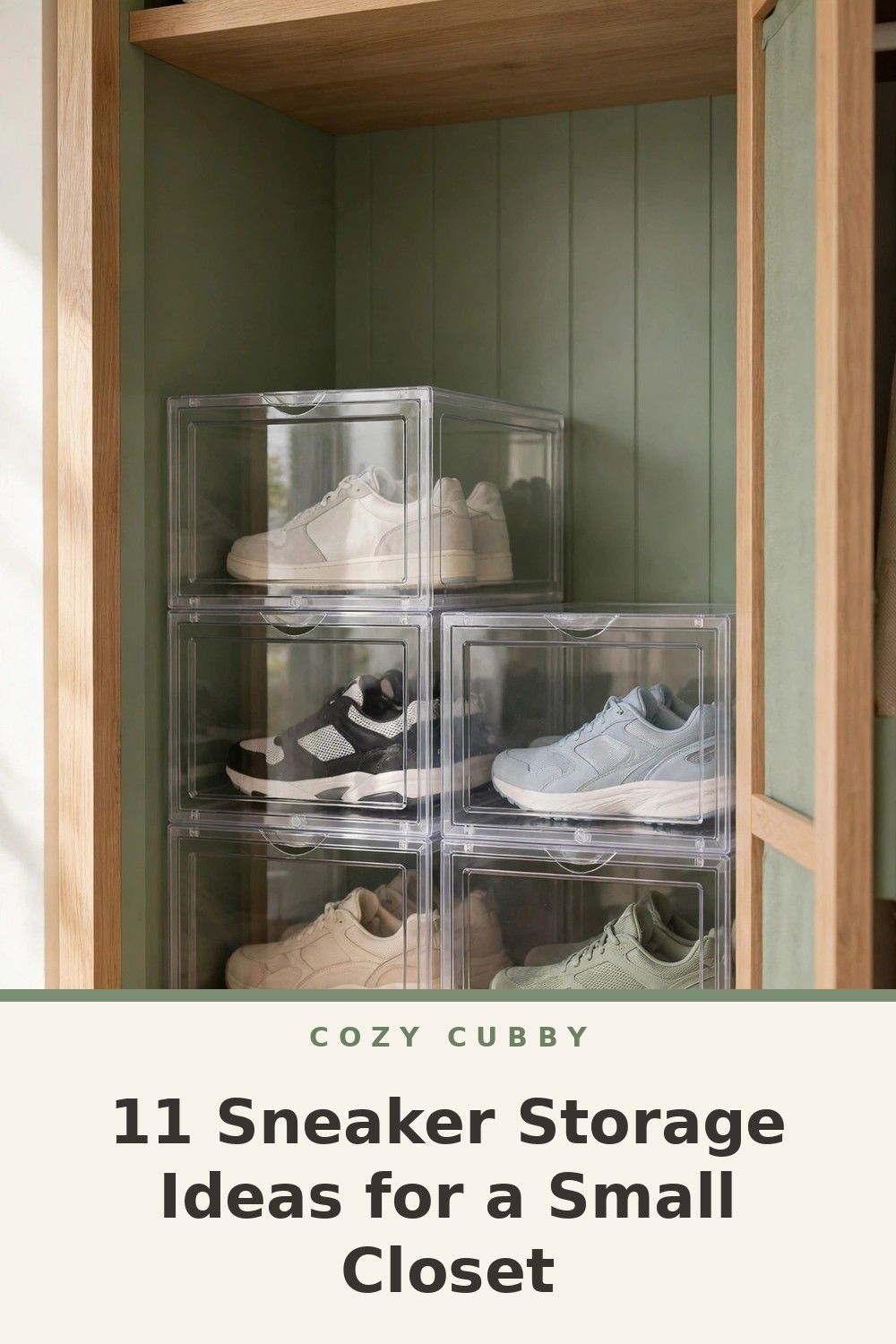
1. Clear drop-front boxes. These boxes open from the front, so you can reach a pair in the middle of a stack without lifting everything above it. The clear front shows color and style at a glance. Measure your largest pair first, including high-tops, and buy one size that fits every pair so stacks stay even.
2. Stack in one tidy column system. Stacking only works when boxes share the same footprint. Line up two or three columns by category, such as runners, everyday pairs, and dressier styles. Keep stacks to a height you can reach safely, and put the heaviest boxes at the bottom so the column stays stable.
3. Shelf risers to double a shelf. A closet shelf often wastes the space above low sneakers. A metal or wood riser creates a second level, so two rows fit on one shelf. Leave enough height above each row to slide a pair out without scraping the top, and use risers for your lightest, most-used pairs.
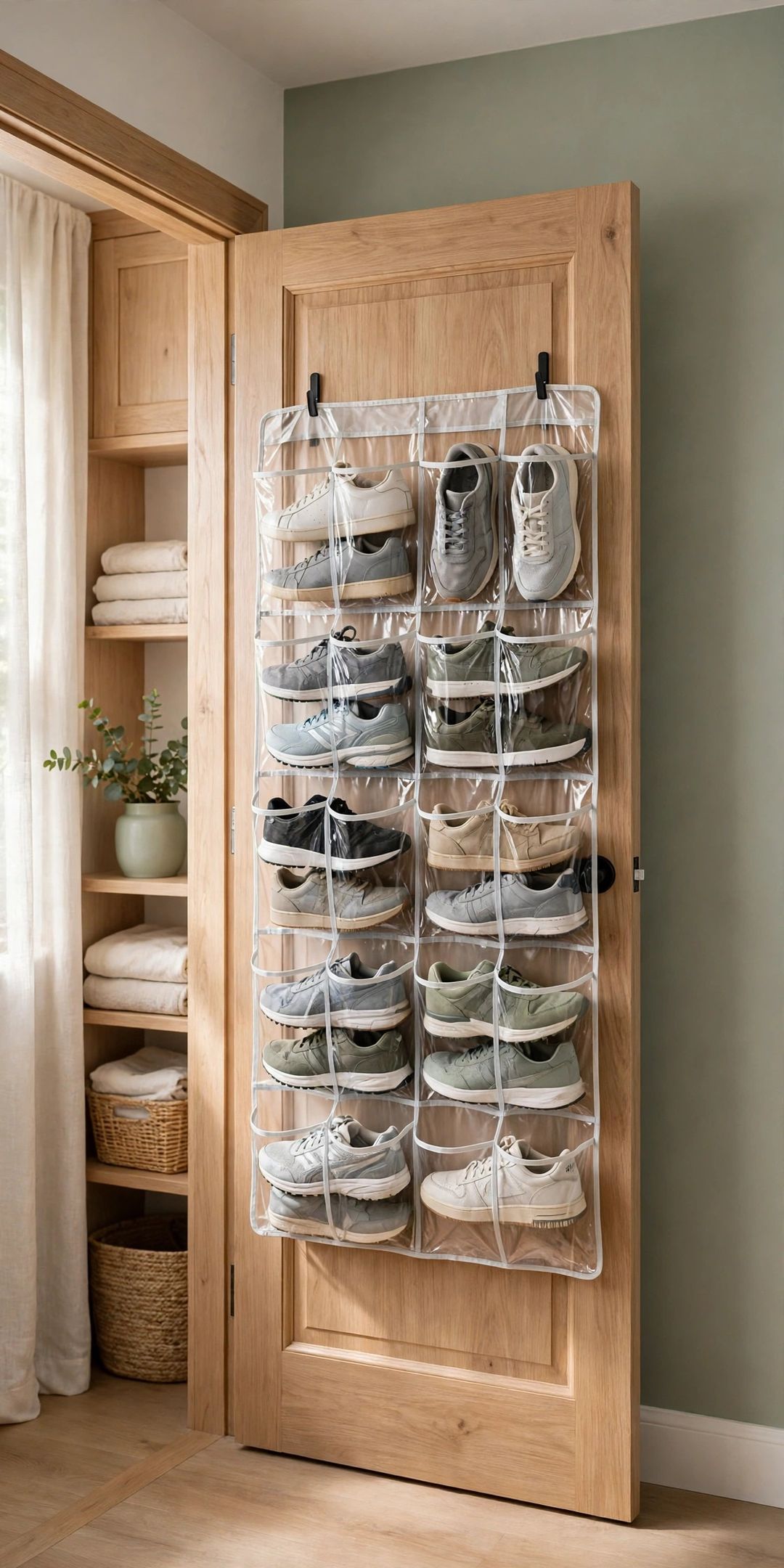
4. Over-the-door storage. The back of a closet door is flat, unused space. A clear-pocket organizer or a slim rack can hold lightweight pairs, kids' sizes, or sandals and slides. Hang only pairs the pockets can support without stretching, and check that the door still closes fully with shoes in place.
Hidden Space and Display
5. The top shelf for least-worn pairs. Reserve the highest shelf for pairs worn a few times a year, like boots for trips or special-event shoes. Store them in closed boxes, labeled on the front edge. Keeping rare pairs up high frees the easy shelves for the pairs in weekly use.
6. Under-bed storage for off-season pairs. When the closet is full, move off-season pairs under the bed in low, flat bins with lids. A pair of winter boots can swap places with summer sneakers twice a year. Choose bins that slide easily and label each end, so you know what is inside without pulling the whole bin out.
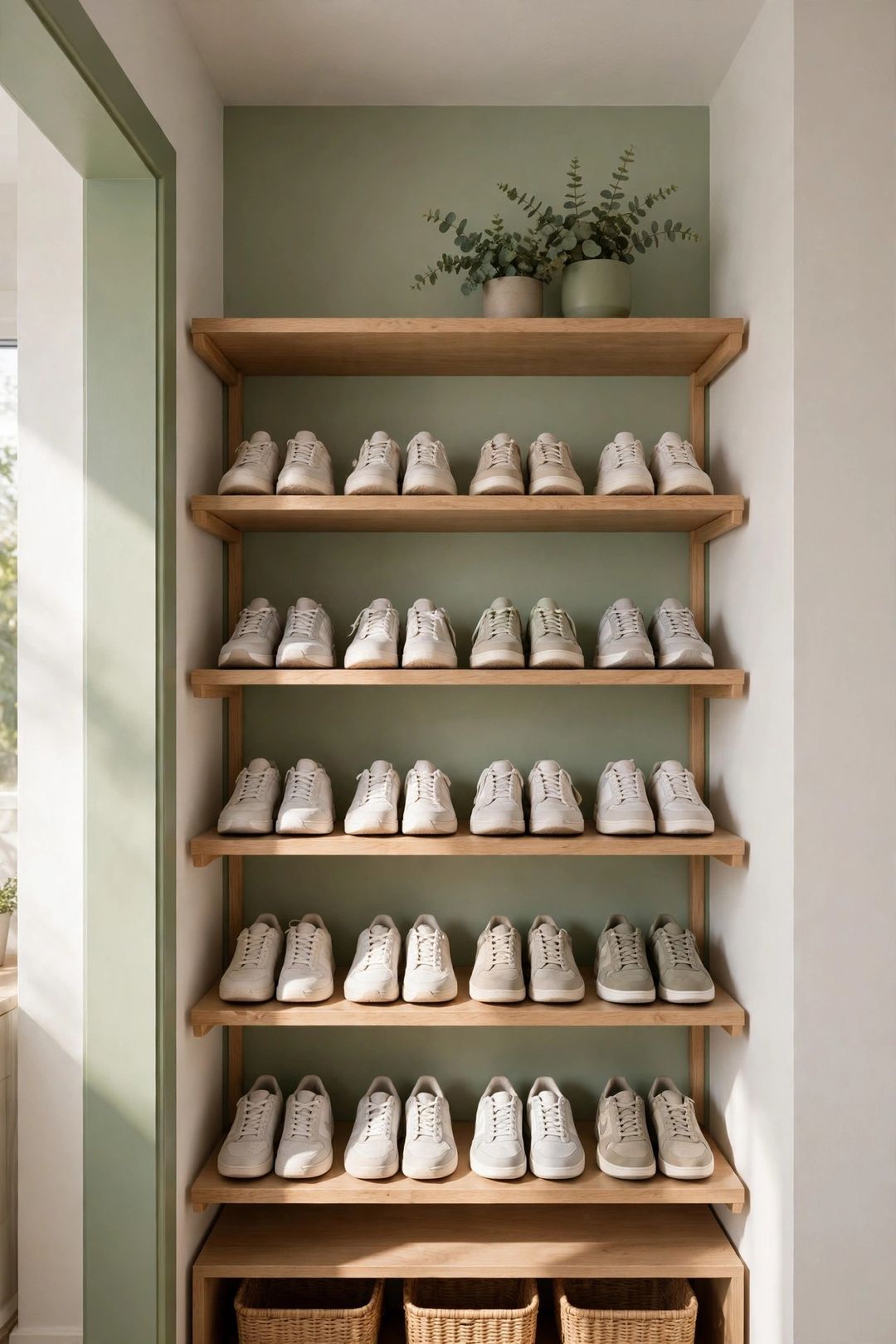
7. A display shelf for favorites. Pick two to four favorite pairs and give them one open shelf at eye level, angled or lined up with space between them. Display works best for clean, dry pairs only. Rotating which pairs sit on display keeps the shelf fresh and stops it becoming another crowded row.
Shape, Dust and Rotation
8. Keep pairs in shape. Sneakers left crushed in a pile can crease and fold at the toe and heel. Store each pair side by side, toes facing out, and use simple shoe inserts, rolled socks, or the paper that came in the box to hold the shape of pairs worn less often.
9. Protect pairs from dust. Open shelves collect dust fast, especially on suede, knit, and light colors. Closed boxes, lidded bins, or soft drawstring bags keep dust off pairs that sit for weeks. Skip sealed plastic for leather pairs stored long term, since trapped moisture is worse than a little dust.
10. Set up a simple rotation. Keep three or four pairs in the front, easy zone for the current week. After wearing a pair, let it air out, then return it to the back of that zone. A rotation spreads wear across the collection, gives each pair time to dry fully, and stops the same pair being grabbed daily.
11. Label the outside of every box. A short label, a small photo, or a color dot for each category ends the open-every-box search. Note the size and style on the front edge that faces out. Labels matter most for solid or stacked boxes where the shoes inside cannot be seen.
What to Buy
Clear drop-front shoe boxes, typically $25–$45 for a multi-pack. Pro: Front access and full visibility for stacked pairs. Con: Cheap plastic can crack at the hinges. Skip if: Your shelves are open and shallow enough that plain rows already work.
A stackable shelf riser, typically $15–$30. Pro: Doubles one shelf without tools or drilling. Con: Adds height that tall boots will not fit under. Skip if: Your closet shelves are already adjustable and closely spaced.
An over-door shoe organizer, typically $15–$28. Pro: Uses dead door space for light pairs. Con: Pockets stretch under heavy shoes and doors may not close. Skip if: Your closet has sliding or bifold doors.
Low under-bed bins with lids, typically $18–$35 for two. Pro: Holds off-season pairs out of the closet entirely. Con: Easy to forget what is stored there. Skip if: Your bed frame sits too low for bins to slide under.
Basic shoe inserts, typically $8–$18 a pair. Pro: Help soft uppers hold their shape in storage. Con: One size does not suit every style. Skip if: You already save the inserts and paper from new pairs.
Mistakes to Avoid
- Piling pairs loose on the floor. Loose piles crush toe boxes, mix up pairs, and make the closet floor hard to clean.
- Buying boxes before measuring. High-tops and chunky soles need more height; measure your biggest pair and the shelf space first.
- Stacking too high. Tall, wobbly columns are unsafe and annoying to use; keep stacks within easy reach.
- Storing damp or dirty sneakers closed up. Moisture and dirt trapped in a closed box can cause odors and stains; clean and dry pairs first.
- Keeping every pair in prime space. Rarely worn pairs on the best shelves crowd out daily pairs; move them high or under the bed.
Frequently Asked Questions
How many pairs can fit in a small closet?
It depends on closet width and how much hanging space you give up. As a rough guide, one 24-inch shelf holds about three to four pairs side by side, and drop-front boxes stacked three high can hold nine to twelve pairs in that same width.
Are clear boxes better than the original shoe boxes?
For a collection, usually yes. Original boxes vary in size, hide the contents, and force you to unstack them to reach a lower pair. Uniform clear boxes stack evenly and open from the front, though sturdy original boxes are fine for top-shelf storage.
How should sneakers be stored for a long time?
Clean and fully dry them first, add inserts or paper to hold the shape, and store them in a closed box or bag in a cool, dry spot away from direct sunlight. Check long-stored pairs every few months and air them out.
What is the best way to store high-tops and boots?
Measure their height and buy taller boxes or use the top shelf where vertical space is often greater. Store boots upright with inserts so the shafts do not fold, and keep them in the off-season zone if they are worn rarely.
A small closet can hold a real collection when every pair has a visible, reachable home. Save this post to your Closet Organization board on Pinterest so the 11 ideas are handy on your next closet reset day.