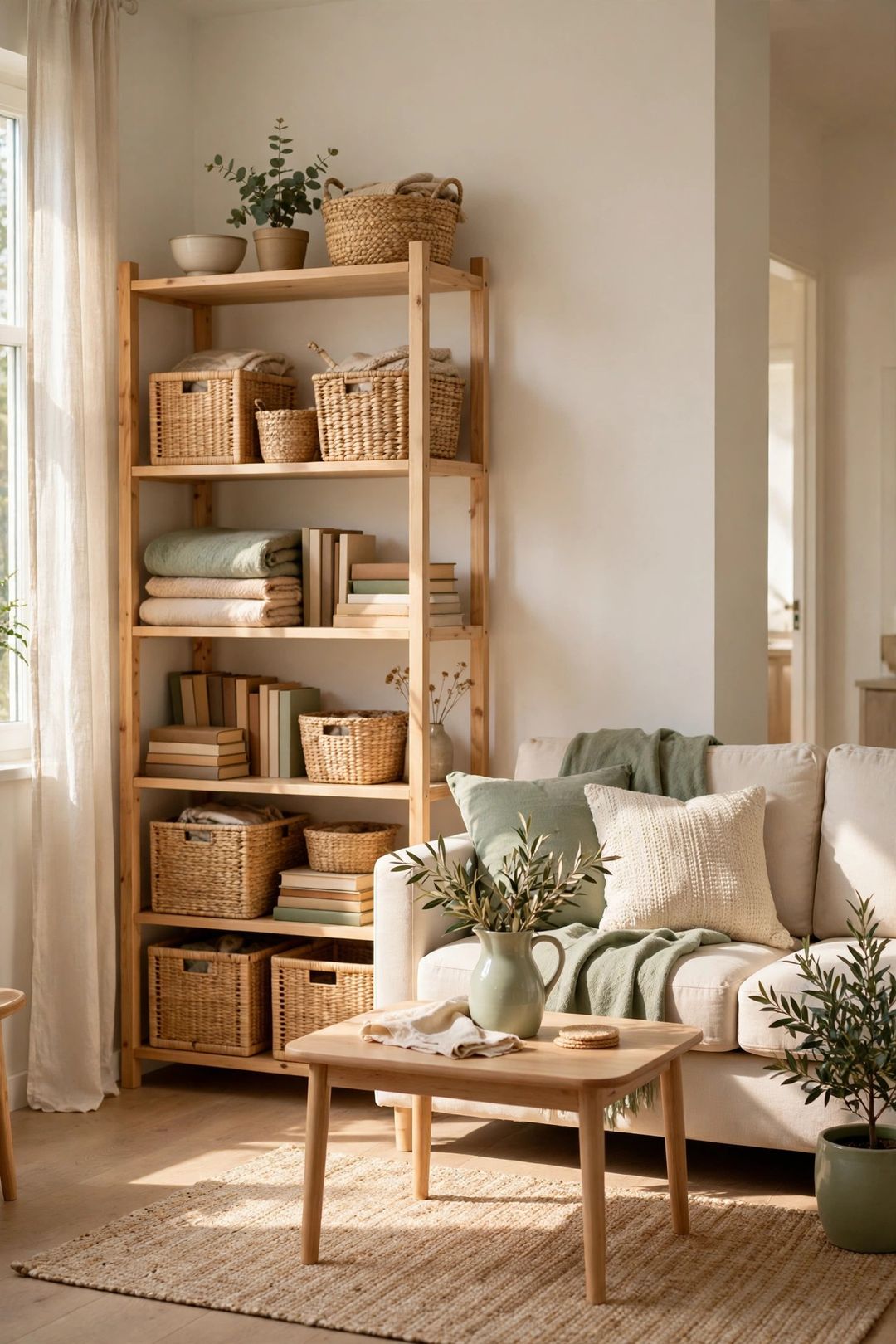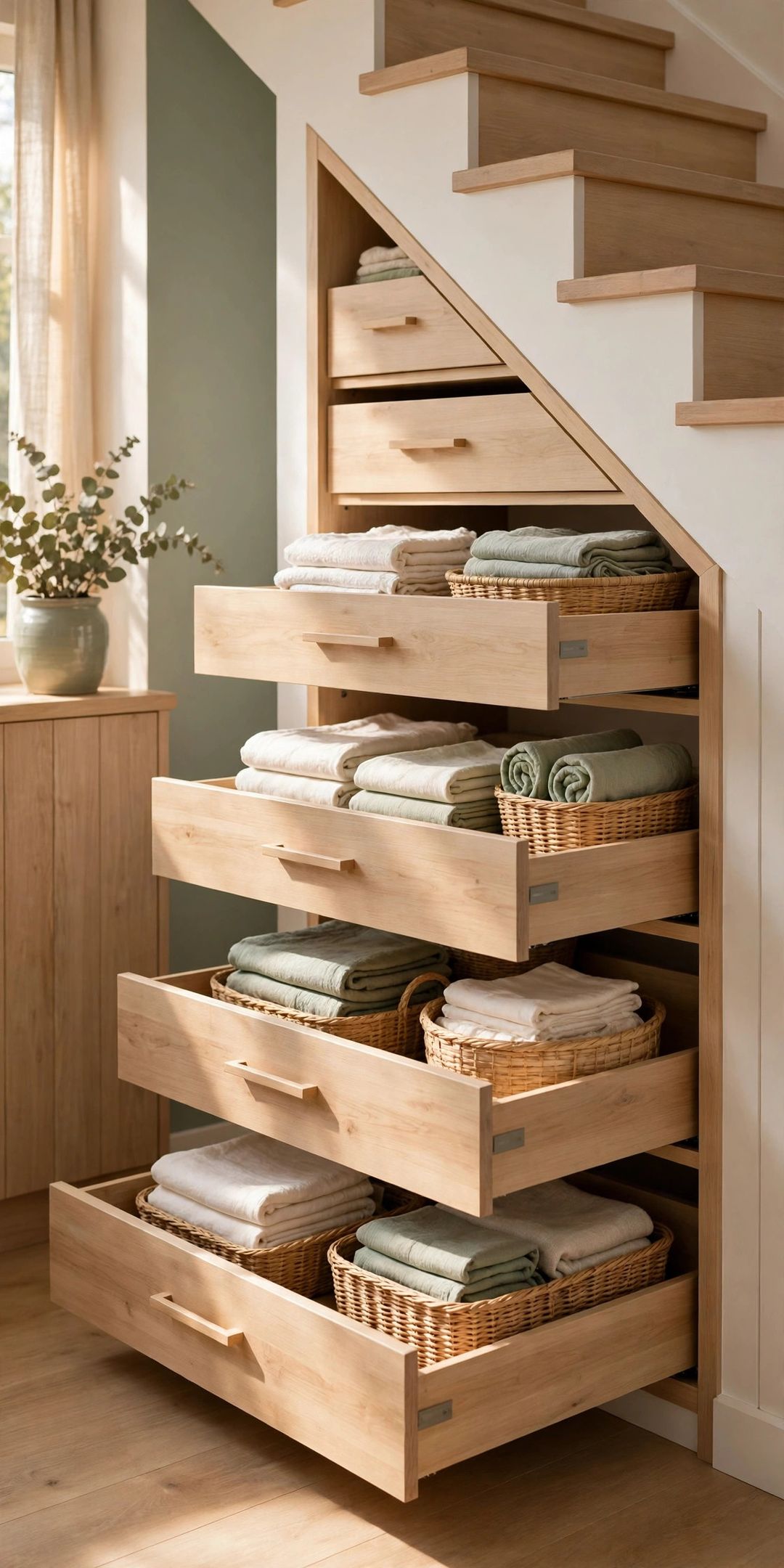
Balls roll into walkways, helmets land on chairs, and rackets lean in corners until they fall. In a small home, every bulky item needs a spot that uses height, doors, and corners instead of floor space.
These sports equipment storage ideas small home households can actually fit start with walls and doors, add furniture that stores as well as it serves, and finish with a drop zone for muddy gear and a seasonal swap for off-season kit.
Before buying anything, gather all the gear in one place and sort it by sport and how often it gets used.
Use Walls, Doors and Forgotten Height
1. Build bungee ball storage in a corner or frame. Stretch strong bungee cords vertically between two points — the sides of a closet, a garage corner, or a simple frame — and balls press in and pull out one at a time. Basketballs, soccer balls, and volleyballs stay visible and off the floor. Space the cords so the smallest ball cannot slip through.
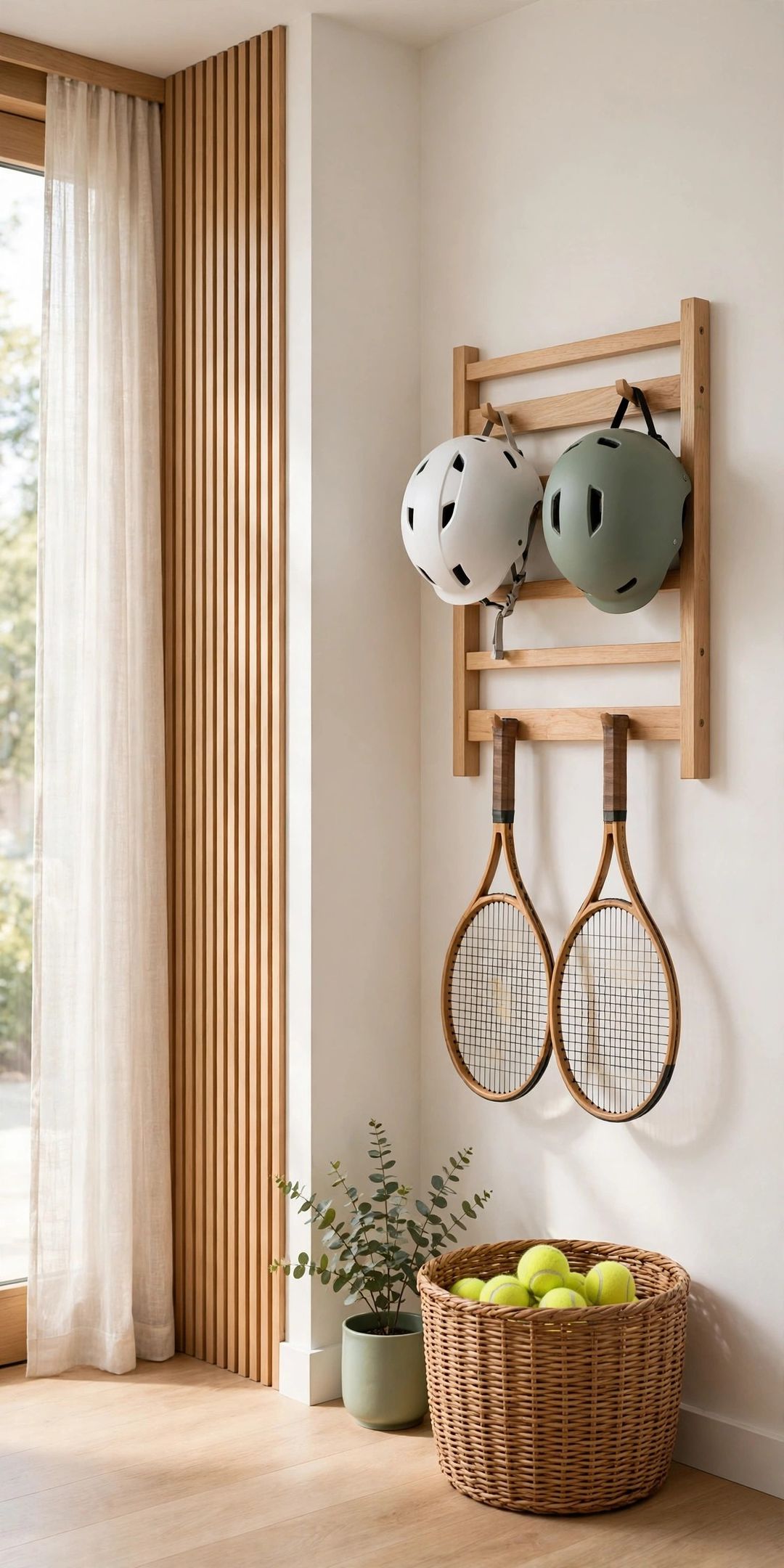
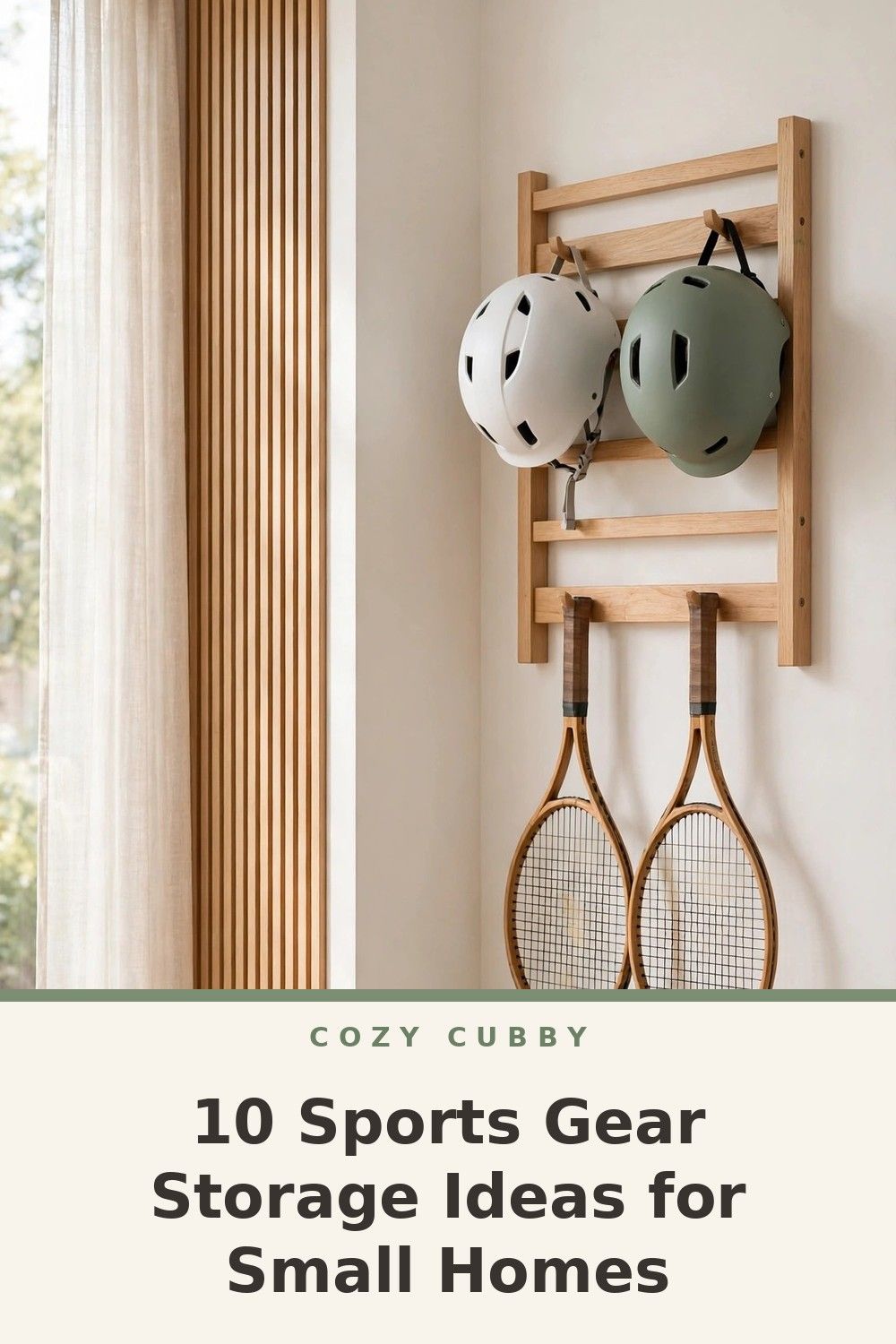
2. Hang helmets and rackets on wall hooks and racks. Sturdy wall hooks hold helmets by their straps, while a slotted rack or row of pegs keeps rackets flat against the wall. Put daily gear at easy reach and less-used items higher up. Check weight ratings, and anchor racks into studs or use fixings rated for the wall type.
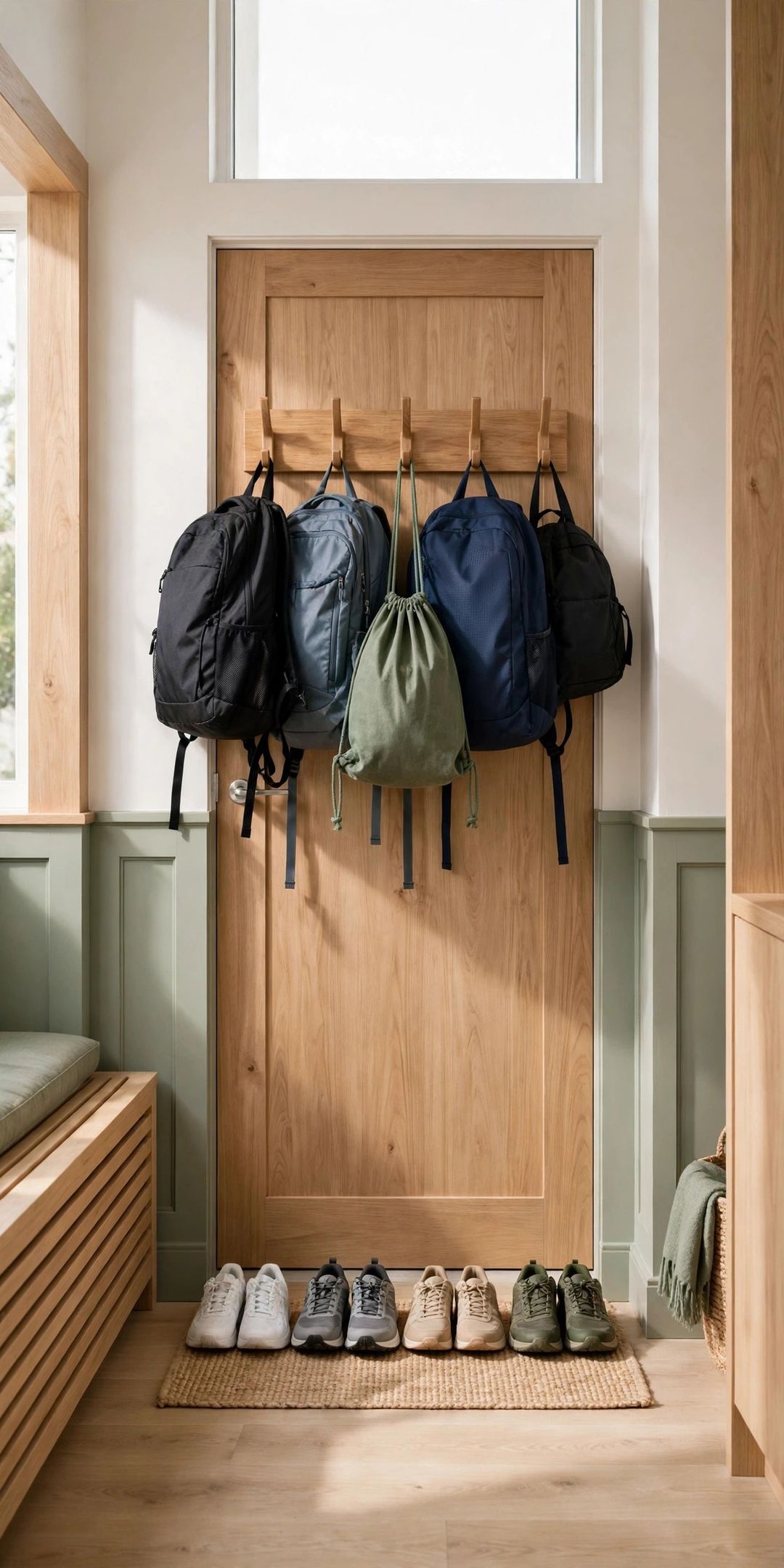
3. Put the back of a door to work. An over-door rack with hooks or pockets adds a full vertical strip of storage with no floor or wall space. It suits light items well: gloves, goggles, caps, jump ropes, and small rackets. Keep heavy items off door racks, since extra weight can strain hinges and stop the door closing smoothly.
4. Use ceiling and high corner space in a garage or closet. The top foot of a garage or closet is rarely used, yet it suits flat, light off-season gear: boogie boards, foam pads, and spare nets. A ceiling rack, high shelf, or hooks in the top corner keep these items out of daily reach. Label what goes up there, and keep anything heavy or used weekly at a safer height.
Furniture and Containers That Earn Their Space
5. Choose a storage bench for seating and gear. A bench by the entry or at the foot of a bed gives a place to sit and put on shoes, with a compartment underneath for balls, gloves, and smaller kit. Furniture that does two jobs beats a single-purpose bin. Measure the inside space before buying, since padding and hinges take up room. A washable liner helps if damp items will share the bench.
6. Corral long gear in a tall bin or upright holder. Bats, hockey sticks, and lacrosse sticks share one problem: they are tall and tip-prone. A tall, sturdy bin, rolling corral, or deep upright holder in a corner keeps them standing together instead of spread across the floor. Choose a base wide enough not to tip, and place it against a wall.
7. Sort smaller gear into labeled, stackable bins by sport or person. Shin guards, swim gear, and spare laces stop mixing when each sport or person gets one labeled bin. Stackable bins use closet shelf height instead of floor space. Keep bins modest in size, since a large bin becomes a dig-through pile. A contents list on the front saves opening every lid.
8. Add a rolling cart that tucks away. A slim rolling cart holds the current season's small gear — tape, gloves, water bottles, and cones — and rolls into a closet or corner when not in use. The whole kit moves to the door on game day and back in one trip. Choose large wheels if the cart will cross thresholds.
Systems That Stop Gear Spreading Again
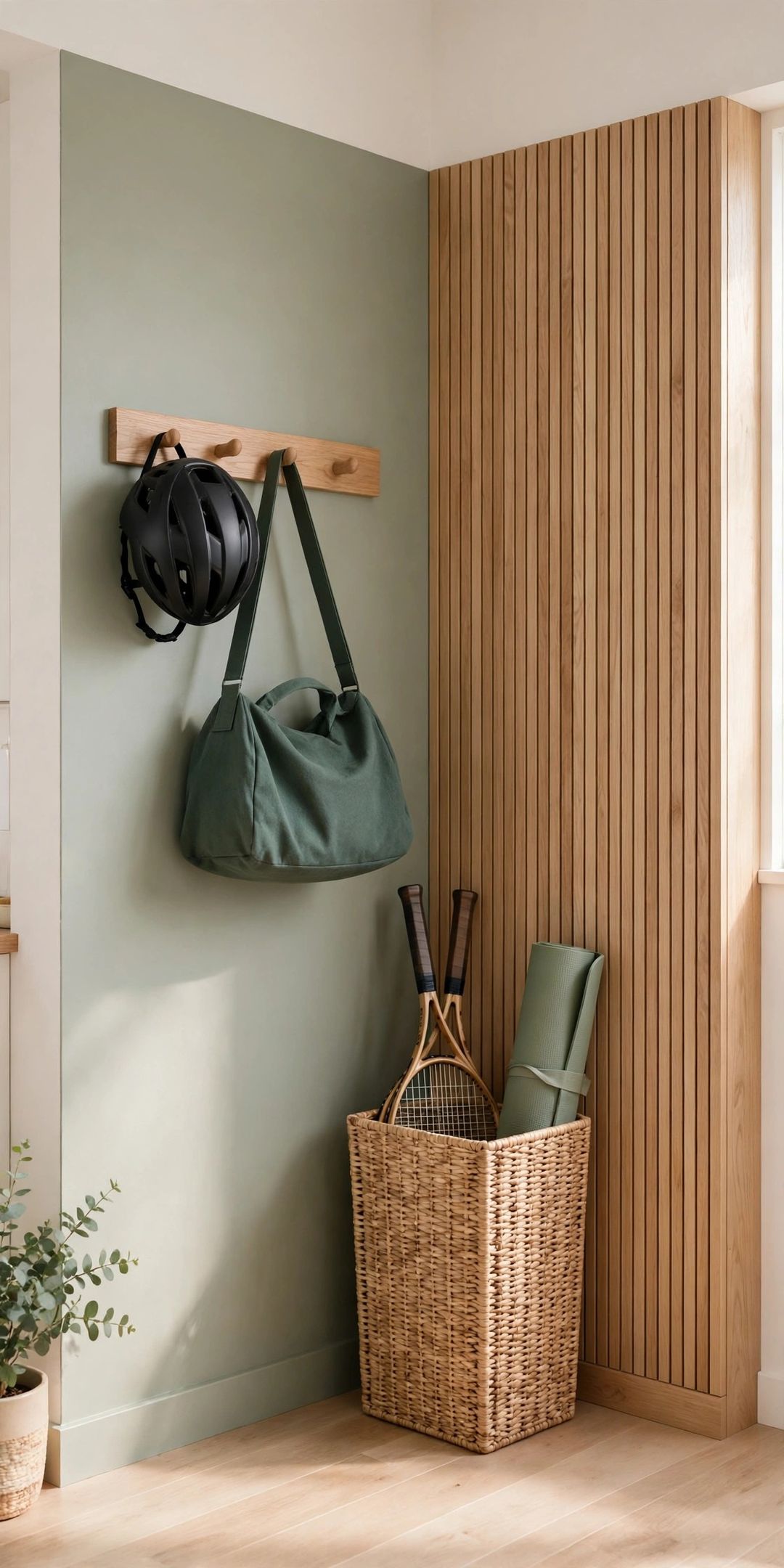
9. Set up a muddy-gear zone near the entry. Muddy cleats and wet gloves spread dirt fast if they land wherever they are dropped. Create one small drop zone just inside the door: a washable mat or boot tray, one hook per person for a bag or helmet, and a small ventilated bin for damp items. Keep it close to the door, so using it is easier than dropping gear further inside.
10. Rotate gear by season instead of storing it all at once. Most small homes cannot hold every sport at arm's reach all year. Keep the current season's gear in the easy spots — hooks, bench, and cart — and pack off-season gear into labeled bins on a high shelf or under a bed. Swap when the season changes, and use the swap to pass on outgrown sizes.
What to Buy
A bungee cord set or ball storage frame, typically $15–$35. Pro: It turns a dead corner into visible, floor-free ball storage. Con: Very small balls can slip through wide cord spacing. Skip if: There are only one or two balls, which a tall bin already handles.
Heavy-duty wall hooks and a racket rack, typically $15–$40. Pro: Helmets and rackets get off chairs and floors and stay easy to grab. Con: Fixings must suit the wall, or anchors can pull out. Skip if: Walls cannot be drilled and an over-door rack covers the same gear.
An over-door hook rack, typically $12–$28. Pro: It adds storage with no drilling and no floor space. Con: It suits light items only and can rattle without pads. Skip if: Doors are sliding or bifold, or the gear is mostly heavy.
A storage bench, typically $45–$120. Pro: Seating and hidden storage in one piece, well suited to an entry. Con: Inside space can be smaller than the outside size suggests. Skip if: Entry space is too tight for a bench to open and be sat on.
A tall sports corral or upright bin, typically $25–$55. Pro: Bats and sticks stand together instead of tipping across a room. Con: A light, narrow base can tip when full. Skip if: No long gear is stored, or a secure corner strap does the same job.
Mistakes to Avoid
- Storing everything on the floor. Floor piles spread, get tripped over, and make cleaning harder. Fill walls, doors, and height first.
- Using one giant bin for all gear. A single deep bin buries small items under balls and bats. Sort by sport or person instead.
- Hanging heavy gear on a door. Heavy bags can strain hinges and stop doors closing. Keep door racks for light items only.
- Having no muddy-gear spot. Without a tray and hook by the door, wet items land on floors and furniture throughout the home.
- Keeping outgrown and broken gear. Gear that no longer fits still takes prime space. Pass it on at each seasonal swap.
Frequently Asked Questions
Where should sports gear go in a home with no garage?
Use the same system indoors: bungee ball storage in a closet corner, hooks and an over-door rack, a storage bench, and high shelves for off-season bins.
How can balls be stored without a net or cage?
Bungee storage is the simplest option, since cords stretch to fit different ball sizes and hold them in a column. A tall bin also works for a small collection.
What is the best way to store long bats and sticks?
Stand them upright together in a tall, stable corral or deep bin against a wall. Vertical storage uses little floor space and makes each item easy to pull out.
How often should gear be rotated or cleared out?
Swap seasonal gear when each season starts and ends, and use each swap to check sizes and remove anything broken or outgrown.
Small homes can hold a full sports kit when walls, doors, and corners do the heavy lifting. Save this post to your Small-Space Storage board on Pinterest before the next season starts.