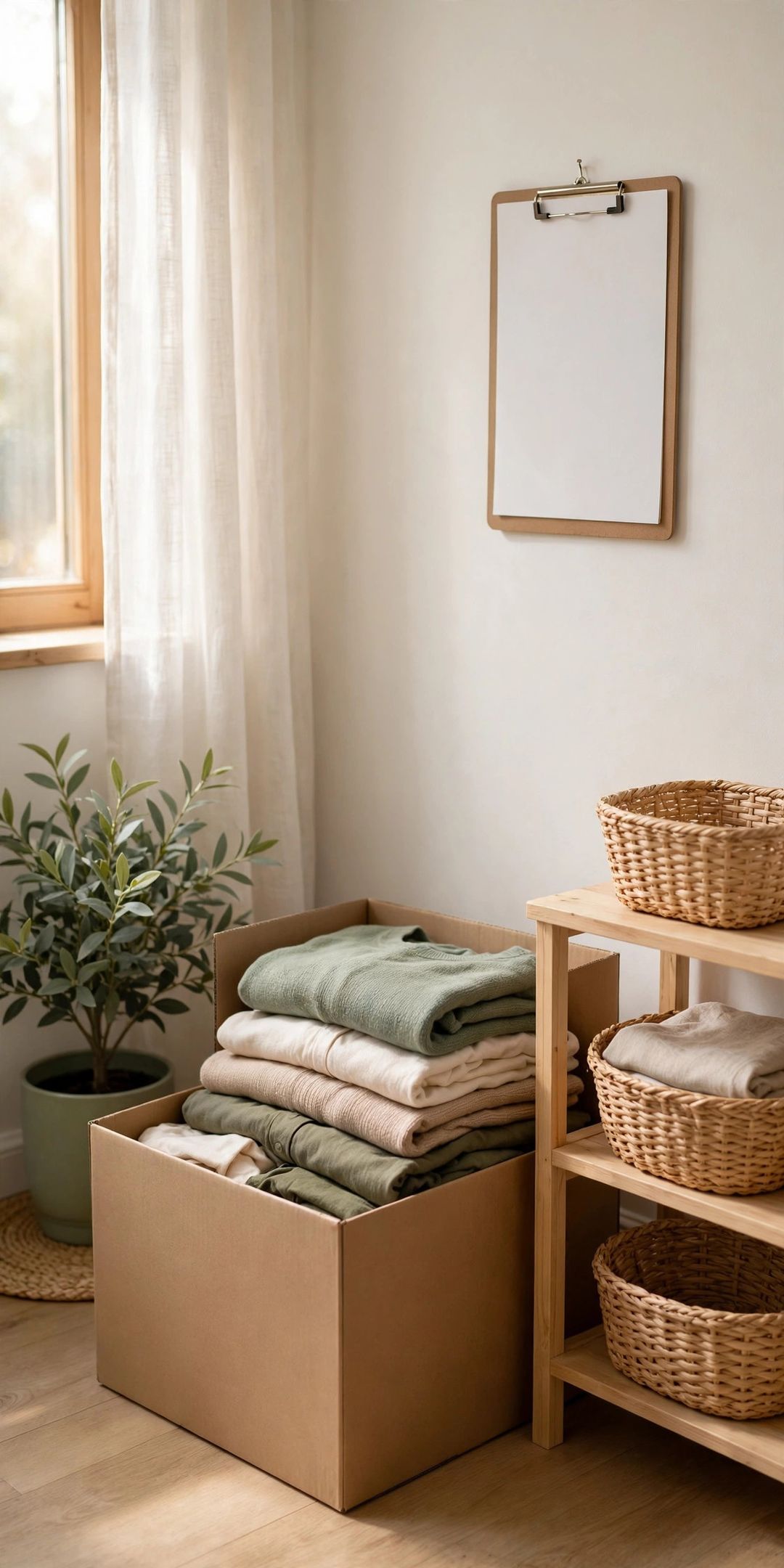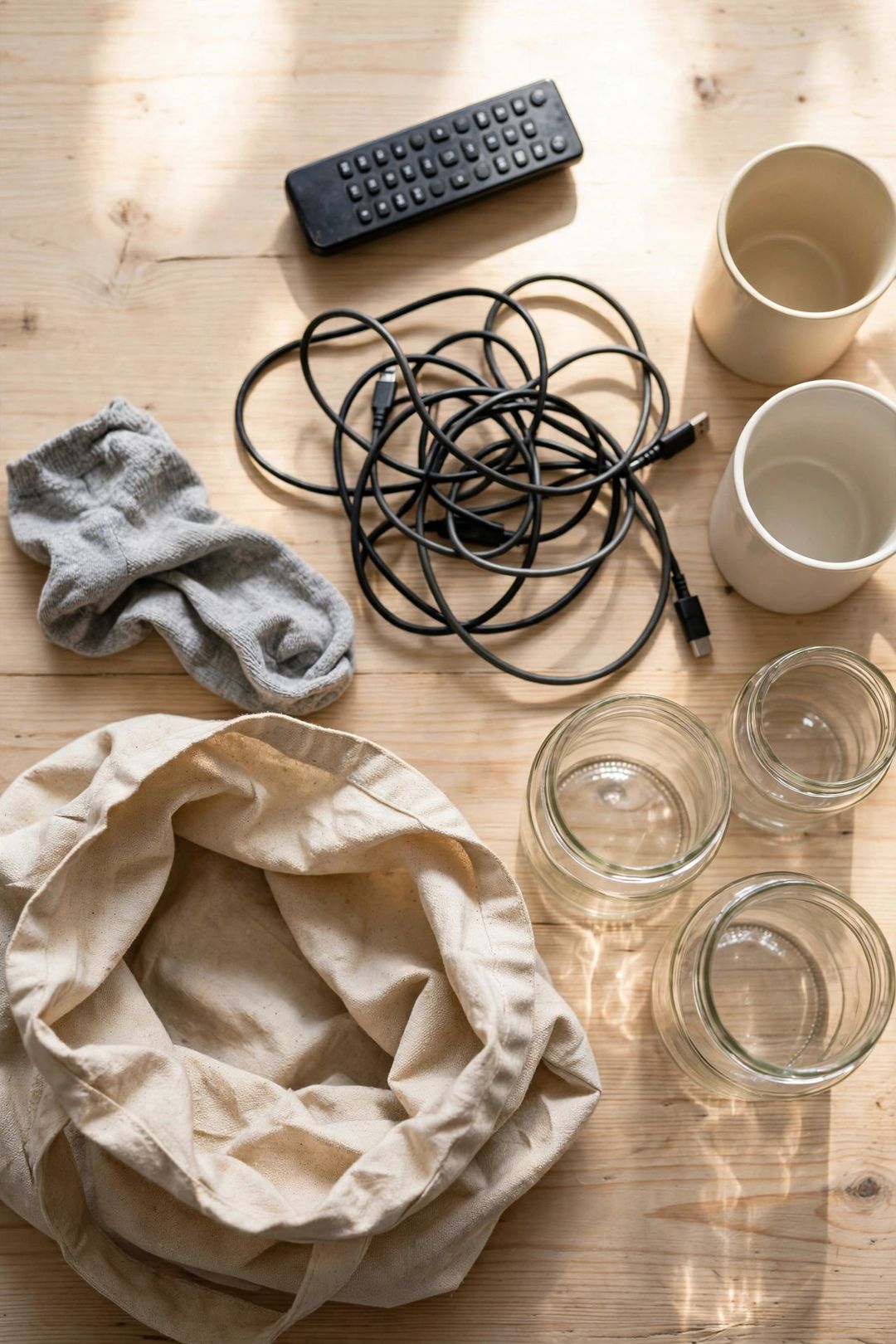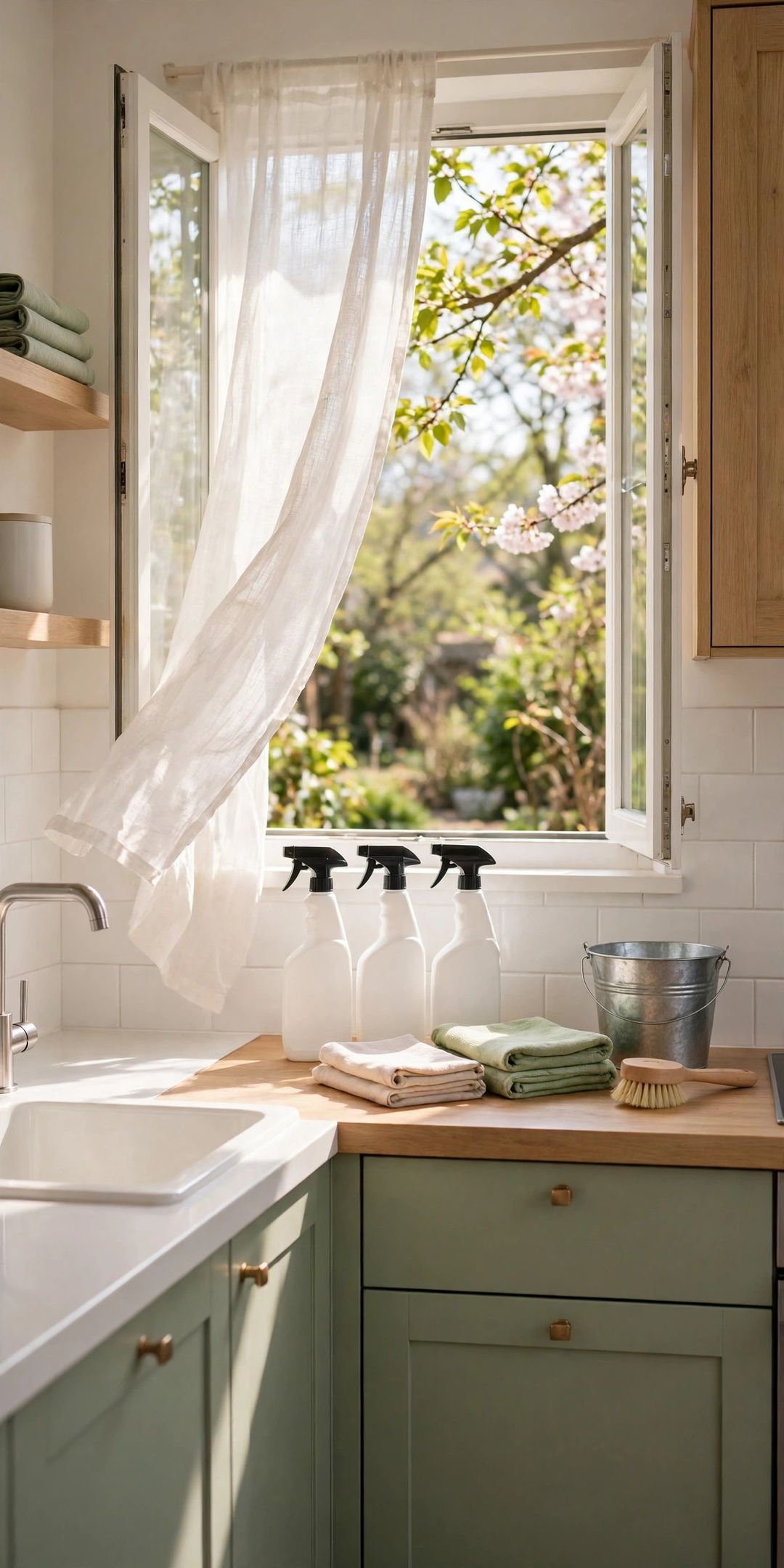
Small homes get dirty in the same places as big ones, but every surface has to work harder. This spring cleaning checklist for small homes blends cleaning and organizing into one room-by-room pass, because less stuff always means less to clean, dust, and move.
Work one room at a time, top to bottom: light fixtures first, surfaces and cabinets next, floors last. Keep a donation bag and a trash bag in the room, so worn-out and unused items leave in the same session.
Most rooms below fit in 45 to 90 minutes. Set out supplies first: all-purpose and glass cleaner, microfiber cloths, a scrub brush, and a vacuum. Then start in the kitchen, where grease builds up fastest.
1. Kitchen
Work from the range hood down. As each cabinet opens, pull out anything expired or duplicated, so there is less to wipe around next time.
- Degrease the range hood filter: soak in hot water with dish soap for 15 minutes, scrub, dry, refit.
- Wipe cabinet tops and the top of the fridge, where grease and dust mix.
- Empty the fridge, toss expired food, wipe shelves, and reload by zone: dairy, produce, condiments, leftovers.
- Scrub the sink, faucet base, and disposal splash guard; clean the microwave inside and out.
- Clean the dishwasher filter, then run it empty on a hot cycle; descale the coffee maker per its label.
- Sort the pantry shelf by shelf: check dates, front-face soon-to-expire items, donate sealed extras.
- Wipe cabinet fronts, handles, light switches, and the trash can inside and out.
- Shake out or wash the rug, mop the floor, and clean baseboards last.
2. Bathroom
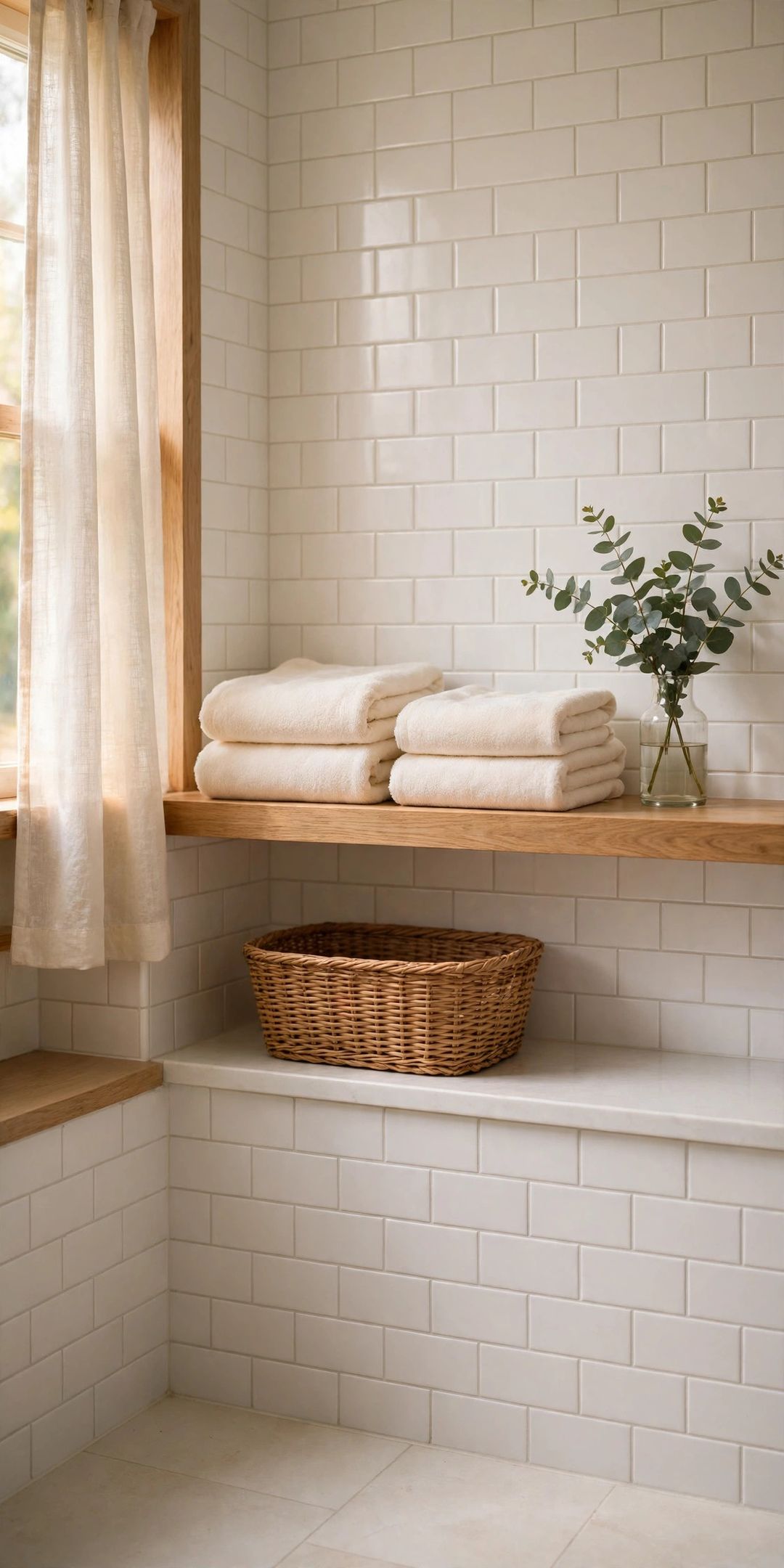
Bathrooms are small, so a deep clean is fast, but moisture leaves grime in seams and fabric. Sort cabinets while surfaces are empty.
- Wash the shower curtain liner on gentle, or replace it if mildew spots stay.
- Scrub grout, and soak the showerhead in vinegar in a tied bag for a few hours to clear buildup.
- Wash or replace the bath mat, and launder hand towels and washable window coverings.
- Empty the medicine cabinet, toss expired medicine and old makeup per label directions, wipe shelves.
- Scrub the toilet base, hinges, and floor behind it, plus the sink faucet and drain.
- Clean the mirror, light fixtures, and exhaust fan cover; dust open shelves.
- Sort under-sink supplies: combine half-used duplicates and toss sticky or leaking cleaners.
- Mop the floor last, including corners behind the door where hair collects.
3. Bedroom and Closet
This room holds dust in fabric and clutter in corners. Strip the bed first, then work the closet while bedding washes, so both finish together.
- Flip and rotate the mattress, vacuum it, and wash the mattress protector and pillows per care labels.
- Wash all bedding, and store spare sets folded inside one pillowcase each.
- Dust ceiling fan blades, light fixtures, headboard, and tops of dressers and door frames.
- Sort hanging clothes: bag unworn, outgrown, or damaged items for donation.
- Wipe closet shelves, vacuum the closet floor, and leave the floor clear.
- Clear both nightstands, sort the drawers, and keep only a lamp, a book, and daily chargers.
- Vacuum under the bed, bin what stays in labeled bins, and remove anything that belongs elsewhere.
- Wash windows inside, wipe sills and tracks, and clean baseboards behind movable furniture.
4. Living Room
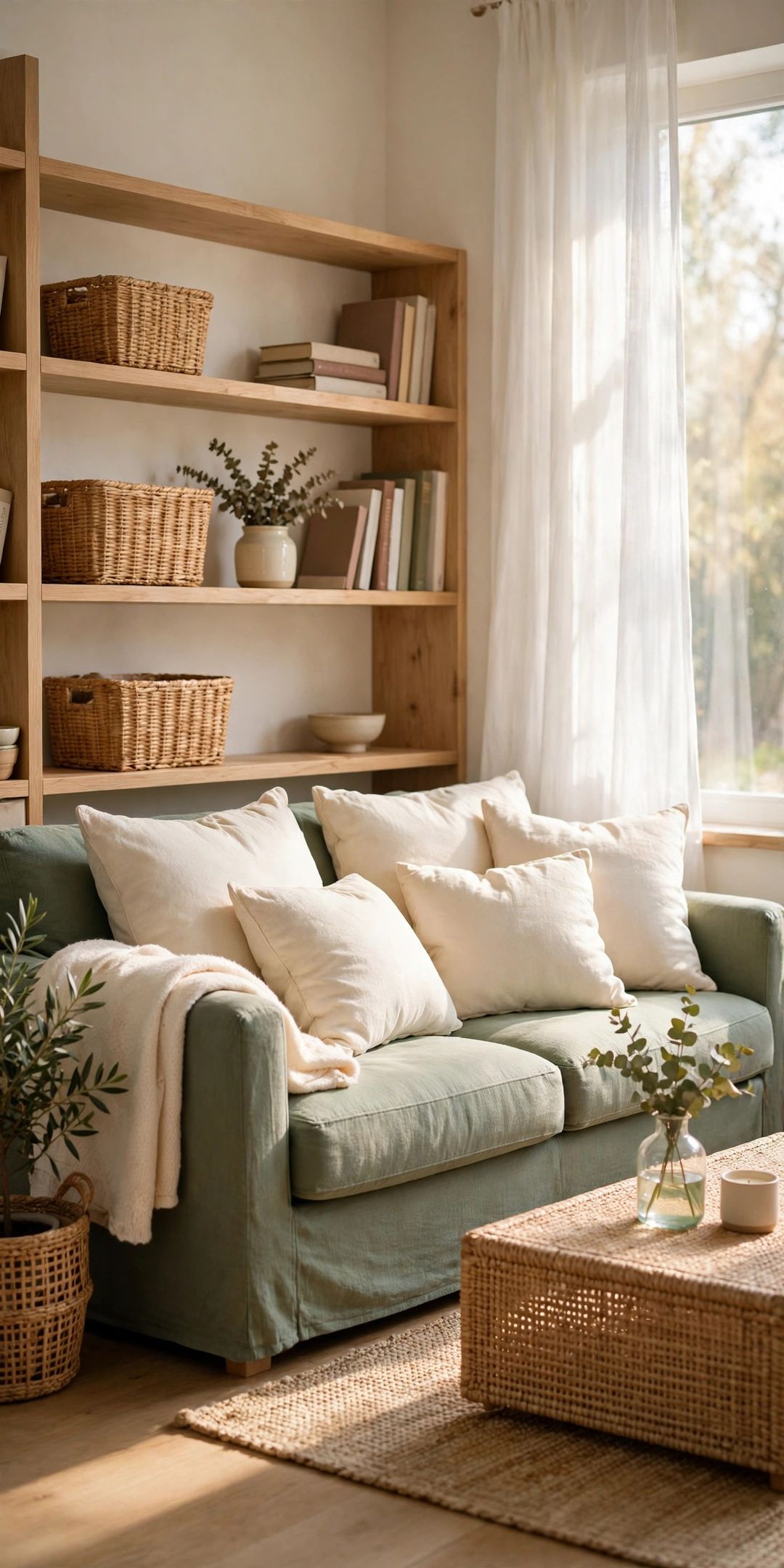
This room should hold relaxing, not overflow storage. Clean soft surfaces first, since they hold the most dust, then reset shelves and baskets.
- Vacuum sofas and chairs, including under cushions, and spot-clean stains per fabric labels.
- Wash machine-washable throw blankets and cushion covers; keep only the set that fits the seats.
- Dust shelves, picture frames, electronics, and the TV screen with a dry microfiber cloth.
- Sort one basket or storage ottoman at a time; return only items used in this room.
- Gather loose cords and chargers into one spot near an outlet; recycle broken cables.
- Check under sofas and chairs for lost items, trash, and toys from other rooms.
- Clean windows and mirrors, wipe switches and remotes, and dust ceiling corners and vents.
- Vacuum and mop floors last, reaching edges and under rugs where possible.
5. Entryway
The entry is small, seen first by guests, and it decides how clean the rest of the home stays. Set a strict limit: only daily shoes, bags, and current-season outerwear live here.
- Empty the whole entry: shoes, coats, bags, and the drop-zone tray or basket.
- Wipe the door, handle, and light switch, and clean any glass panel.
- Keep out only daily shoes, about 2 pairs per person; store seasonal pairs in the closet.
- Check coat pockets, wash scarves and gloves, and donate outerwear not worn last season.
- Sort the mail tray into file, act, recycle, and shred, with no leftover stack.
- Shake out or wash the doormat, then sweep, mop, and wipe baseboards.
- Reset one hook or spot per person for keys, bags, and leashes.
- Keep reusable bags folded inside one tote, with nothing loose on the floor.
What to Buy
Microfiber cloth multi-pack, typically $10–$18. Pro: one cloth type handles dusting, glass, and counters, and washes for reuse. Con: microfiber loses grip after many hot washes. Skip if: old cotton towels already work as rags.
Extendable duster, typically $12–$20. Pro: reaches fan blades, cabinet tops, and corners without a step stool. Con: cheap heads push dust around instead of trapping it. Skip if: ceilings are low and surfaces are easy to reach.
Scrub brush set, typically $8–$14. Pro: narrow brushes fit grout, faucet bases, and stove edges cloths miss. Con: stiff bristles can scratch soft plastic. Skip if: the main jobs are flat surfaces a cloth handles.
All-purpose cleaner concentrate with spray bottles, typically $10–$16. Pro: one concentrate refills bottles for kitchen, bath, and glass, cutting under-sink clutter. Con: mixing and labeling takes a few minutes. Skip if: cleaners on hand already cover every surface on this list.
Clear bins for sorted storage, typically $20–$40 for a multi-pack. Pro: items sorted during cleaning stay grouped and visible. Con: hard bins fit poorly in odd corners. Skip if: existing bins are labeled and half empty.
Mistakes to Avoid
- Cleaning around clutter: wiping shelves full of unused items doubles the work, so sort each surface first.
- Doing floors first: dust and crumbs fall from counters and fans, so floors always come last.
- Starting every room at once: half-clean rooms feel worse than one finished room, so close each room first.
- Keeping just-in-case extras: spare cleaners and duplicate tools take storage small homes do not have.
- Skipping the donation drop-off: bags left by the door drift back onto shelves, so take them out the same day.
Frequently Asked Questions
How long does spring cleaning a small home take?
Most small homes take one weekend split into room sessions of 45 to 90 minutes, or about five weekday evenings. Kitchens and closets take longest.
What order should rooms be cleaned in?
Start with the kitchen and bathroom, since they involve water, grease, and stronger cleaners. Then bedroom and closet, living room, and entry last.
How does decluttering fit into spring cleaning?
Sort each surface and cabinet as it gets emptied for cleaning. Expired food, worn towels, unworn clothes, and dead cleaners leave in the same session, so cleaned spaces reload lighter.
How often should a deep clean like this be repeated?
Once a year covers the full list, with a shorter fall version for high-use zones: fridge, entry, closet, and bathroom grout. Weekly basics keep it from becoming a big job again.
One finished room at a time turns a small home light and easy to keep. Start with the kitchen this week, and save this checklist to your cleaning board on Pinterest so each room is ready to tick off.