A closet packed with winter coats in April makes getting dressed harder than it needs to be. Heavy knits take the best hangers, boots crowd the floor, and lighter clothes end up squeezed at the back.
These spring closet swap ideas walk through the full changeover in order: pack winter away clean and labeled, protect it in storage, and bring spring pieces forward so they are easy to see and wear.
The swap can be done in one afternoon with a few bins, vacuum bags, and labels. Work rod by rod, and keep a donation bag open the whole time.
Pack Away Winter Coats, Boots and Knits
1. Start with an empty rail. Take everything off one rod or shelf at a time. A clear surface makes sorting faster and shows dust that needs wiping before spring clothes go back in.
2. Sort winter into three piles. Make piles for keep and store, donate or sell, and repair or clean. Items unworn all season, poorly fitting, or worn out do not earn storage space.
3. Pack heavy coats by type. Group wool coats, puffers, and ski jackets together. Button or zip each coat closed so it holds its shape, and keep them in one sturdy bin or garment bag.
4. Store boots upright and clean. Wipe salt and mud from soles and leather, let boots dry fully, and stand them upright with rolled magazines or boot shapers inside. Laying them flat can crease the shafts.
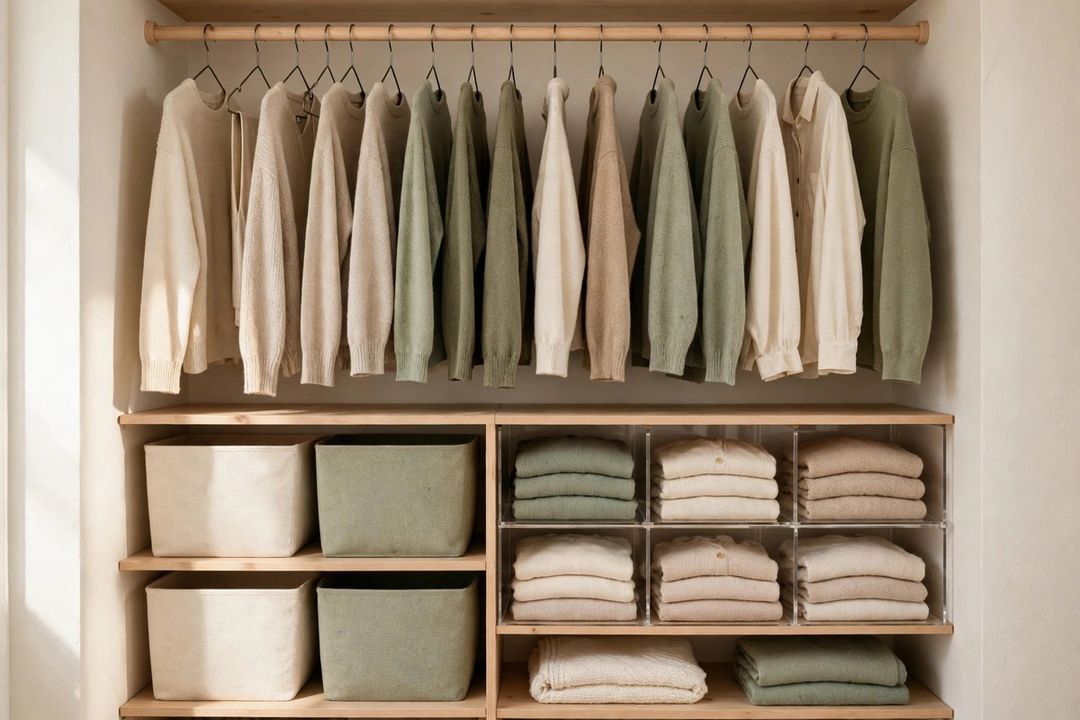
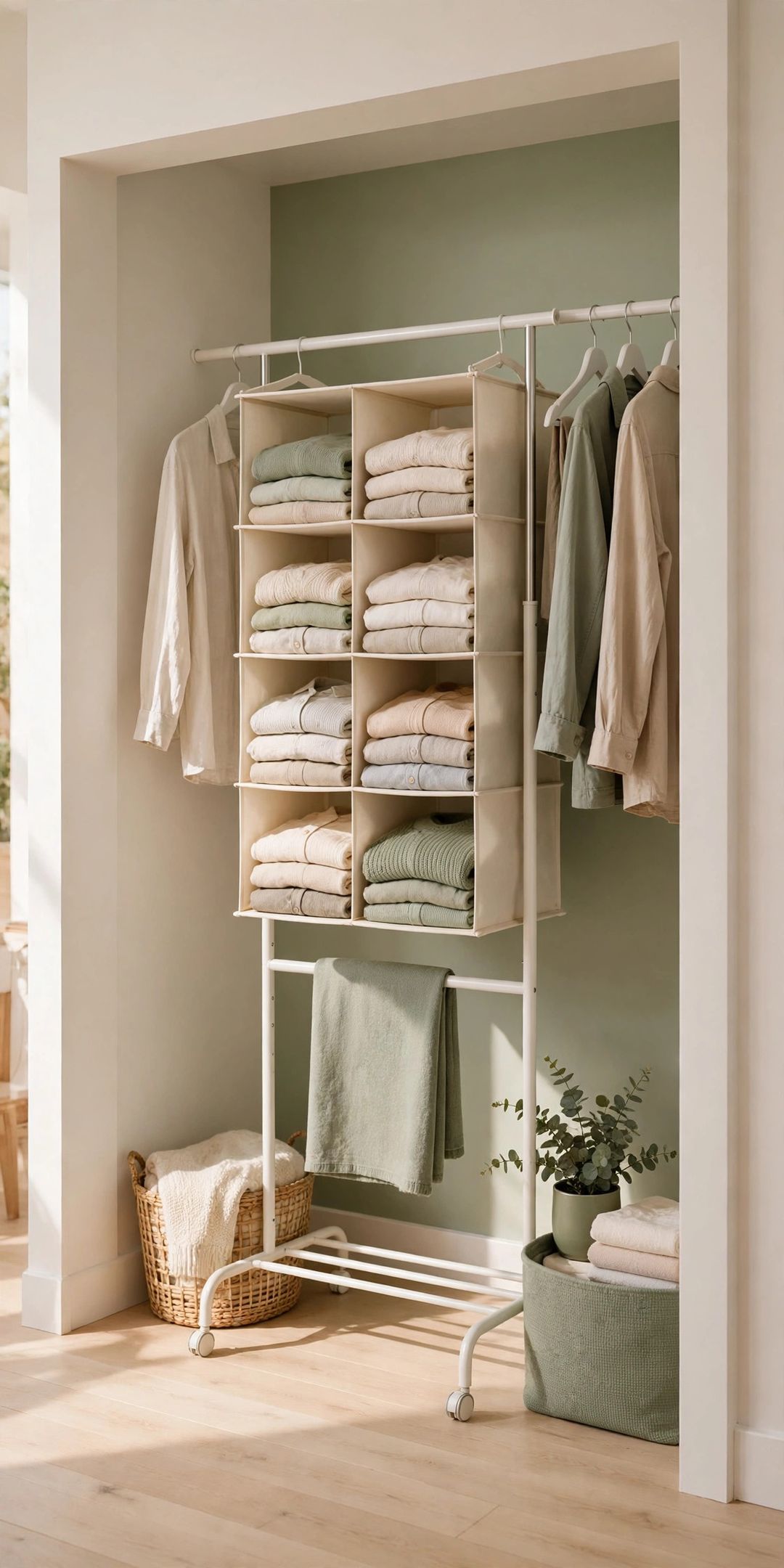
5. Fold knits instead of hanging them. Sweaters stretch on hangers. Fold each knit neatly and stack no more than four or five high so the bottom pieces do not get crushed flat.
6. Keep one light layer out. Spring weather shifts fast. Keep one mid-weight jacket and one versatile sweater in the closet, and store the rest. That prevents a bin being reopened for one chilly week.
Clean, Protect and Store It Right
7. Wash or dry-clean before storing. Never store winter clothes unwashed. Invisible spots from food, perfume, and body oils can set over months and attract pests. Pack only items that are completely dry.
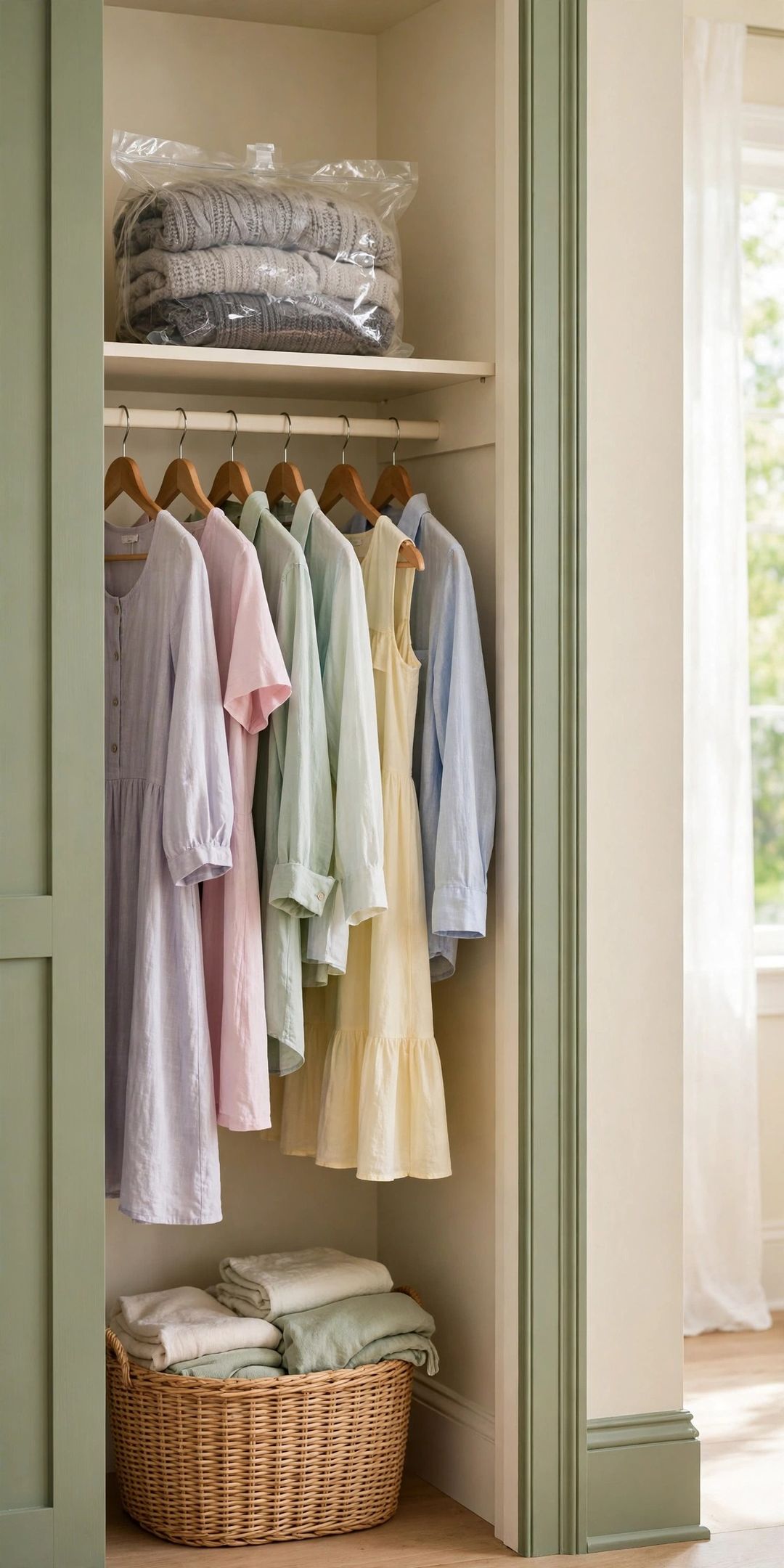
8. Use vacuum bags for bulky items. Vacuum bags work best for puffers and thick sweaters, where removing air saves real shelf space. Seal slowly, check the valve, and avoid overfilling, which can break the seal.
9. Choose clear bins for the rest. Clear bins with latching lids, commonly around 18 to 30 quarts for folded items, let contents be seen without opening. Keep one category per bin, such as scarves and gloves.
10. Label every bin on two sides. Write the contents and size range, for example Winter Coats — Medium. Label the front and one short end, so the bin reads correctly however it is stacked.
11. Add cedar or lavender for freshness. Cedar blocks, rings, or lavender sachets on top of folded knits help stored clothes smell fresh. Keep them from touching delicate fabrics directly, and refresh cedar each season.
12. Store bins off the floor in a dry spot. Use a high closet shelf, a spare wardrobe, or lidded under-bed space. Avoid damp basements and hot attics for wool and leather when another spot is available.
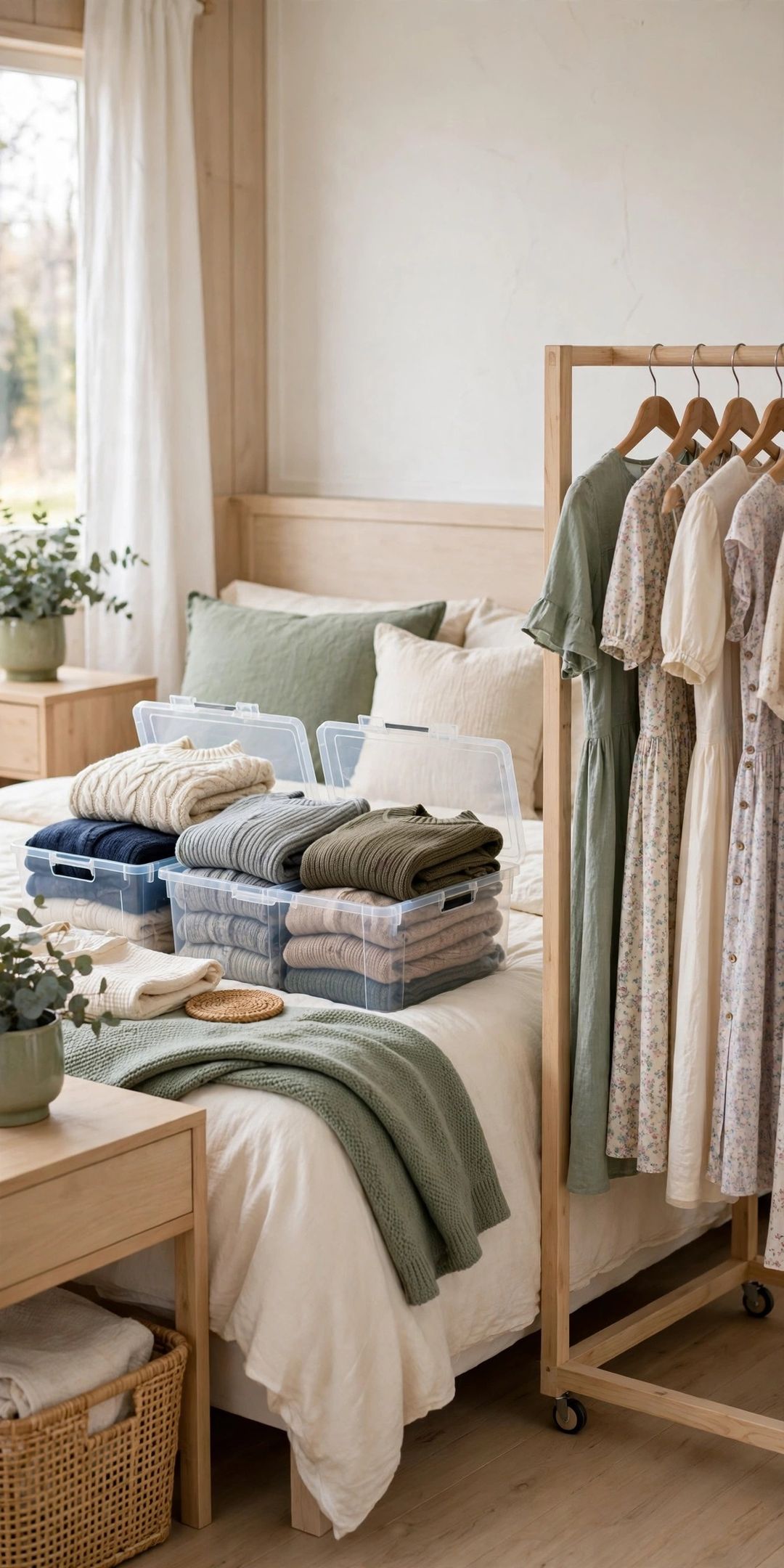
Bring Spring Forward and Make Room
13. Wipe shelves and vacuum the floor first. Wipe shelves with a damp cloth, vacuum the floor and corners, and check behind shoe racks. A clean closet keeps light fabrics looking fresh longer.
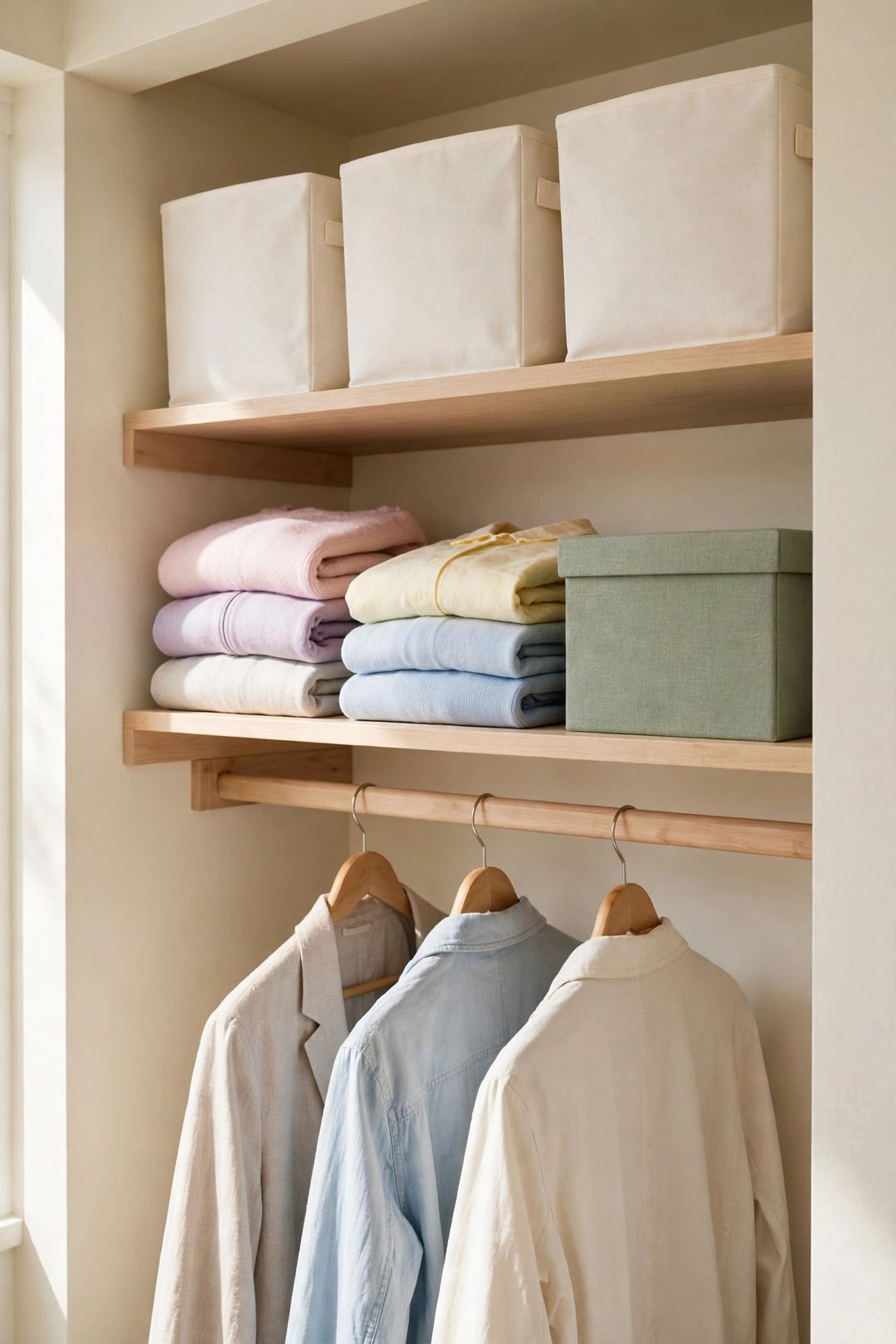
14. Unpack spring in order of use. Hang the most-worn spring pieces at eye level in the center of the rod first, then add occasional items toward the ends. Everyday tops should be the first things seen each morning.
15. Do a try-on and donation pass. Try on anything stored from last spring before it gets a hanger. If it no longer fits or is stained, put it straight in the donation bag.
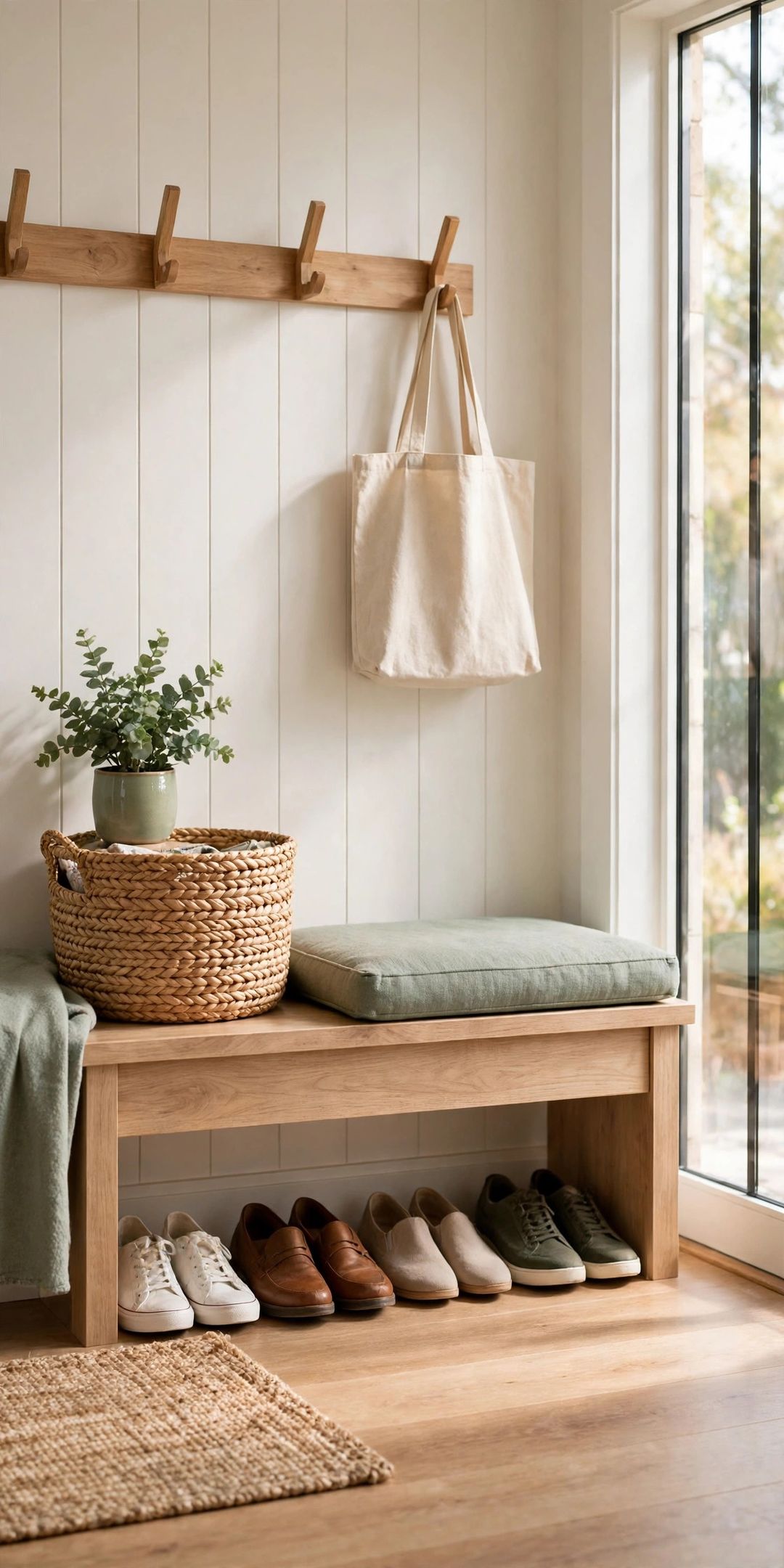
16. Swap the shoe lineup. Move winter boots to storage and bring forward sandals, sneakers, and light flats on the main rack. Keep pairs together in a single row so a missing mate is spotted right away.
17. Group spring outfits by use. Hang work clothes, casual sets, and occasion pieces in simple groups, with scarves and light layers on hooks or in one shallow basket. Grouping cuts morning decisions.
18. Leave breathing room on the rod. Leave a little space between hangers so air can move and clothes do not wrinkle from being pressed tight. If the rod is still packed solid, another donation pass is needed.
What to Buy
Vacuum storage bags, typically $15–$28 for a multi-pack. Pro: They shrink puffers and bulky knits so one shelf holds far more. Con: Seals can fail if overfilled, and lofty items may wrinkle. Skip if: Winter pieces are mostly thin layers that fold small.
Clear storage bins with latching lids, typically $8–$18 each. Pro: Contents stay visible and bins stack to use vertical space. Con: Cheap lids can crack and let dust in. Skip if: Sturdy opaque bins are already on hand and clearly labeled.
Breathable garment bags, typically $12–$22 for a set. Pro: They protect coats from dust while letting fabric breathe. Con: They take more hanging space than a bin. Skip if: Coats store well on a spare rod.
Cedar blocks or rings, typically $9–$16 for a pack. Pro: A low-cost way to keep stored bins smelling fresh. Con: The scent fades and needs refreshing. Skip if: Bins will be reopened within a few weeks.
Boot shapers or inserts, typically $10–$20 per pair. Pro: They keep tall boots upright and help prevent creasing. Con: One size does not suit every boot height. Skip if: Boots are ankle height and hold their shape on a shelf.
Mistakes to Avoid
- Storing clothes unwashed. Hidden stains and oils set during months in a bin and are much harder to remove later.
- Using vacuum bags for everything. Leather, delicate wool, and structured coats can crease or lose shape under hard compression; use bins or garment bags for those.
- Skipping labels. Unlabeled bins mean every box gets opened next fall just to find one coat or pair of gloves.
- Packing damp items. Even slightly damp knits or boots can smell musty in sealed storage; dry everything fully first.
- Keeping every spring piece from last year. Hanging it all back without a try-on pass fills the rod with clothes that will never be worn.

Frequently Asked Questions
When is the right time for a spring closet swap?
Swap when daytime weather stays mild for about two weeks and heavy coats are no longer in weekly use. Keep one light jacket and one warm layer out a little longer for cool spells.
Can vacuum bags damage winter clothes?
They suit puffers and soft, bulky items well. Avoid long compression for leather, structured wool coats, and delicate knits, because those can crease or lose shape. Bins and garment bags are safer for those pieces.
Where should winter bins be stored in a small home?
Use the highest closet shelf, lidded under-bed space, or the top of a spare wardrobe. Keep bins in a dry indoor spot and stack no more than two or three high.
What should go in the donation bag?
Anything unworn all winter, anything that no longer fits, and pieces that are stained, stretched, or damaged beyond a simple repair. Bag donations the same day so they do not drift back into the closet.
A clean, labeled swap now means no hunting through winter bins on the first warm morning. Save this post to your Closet & Wardrobe board on Pinterest so the full checklist is handy at every change of season.