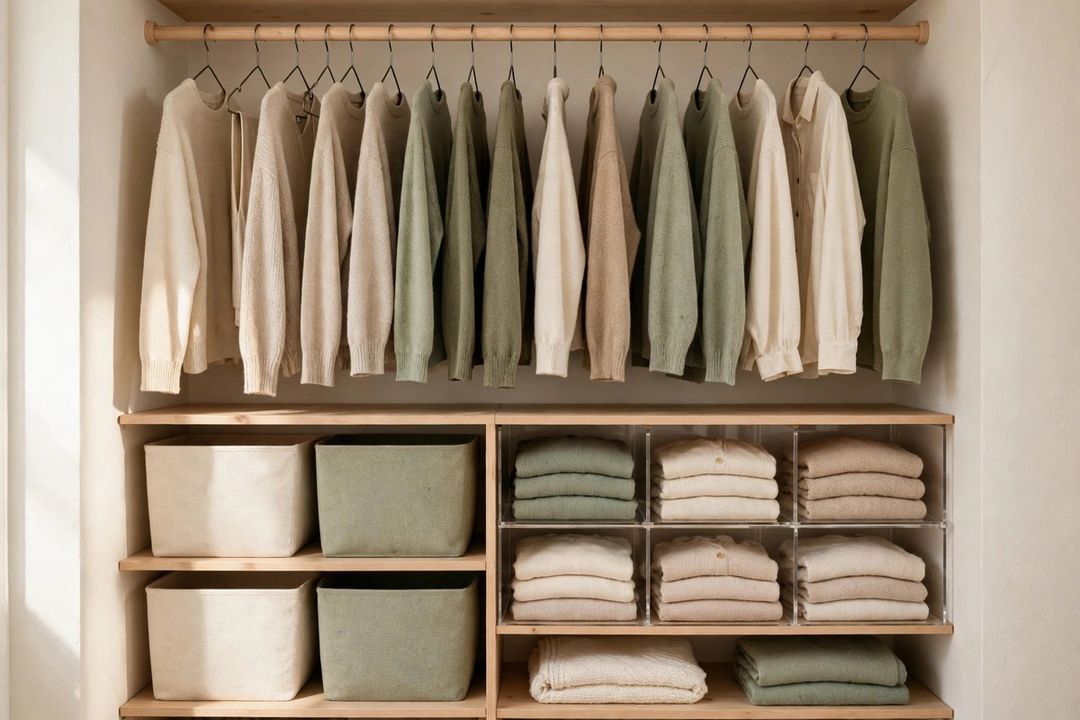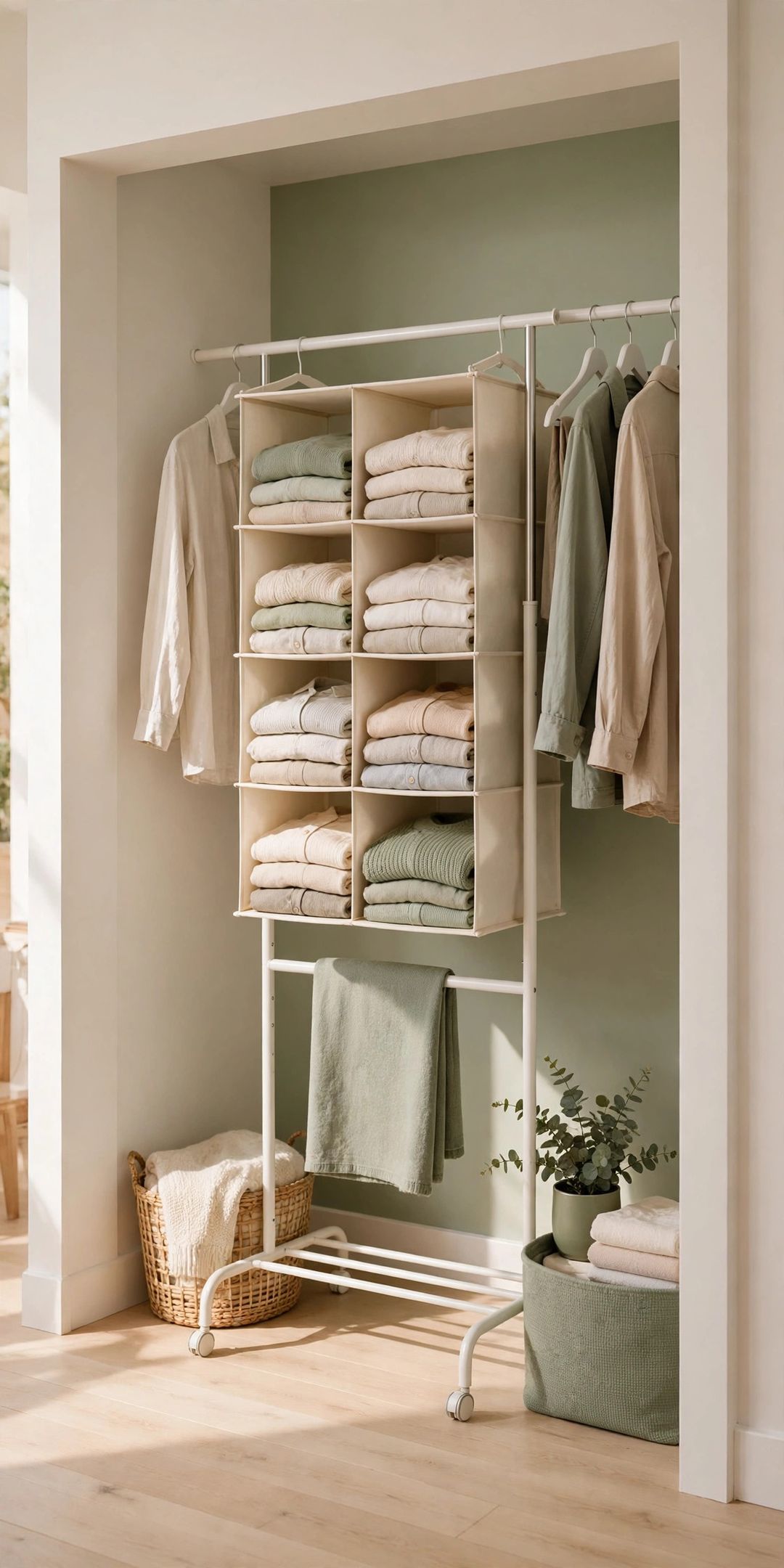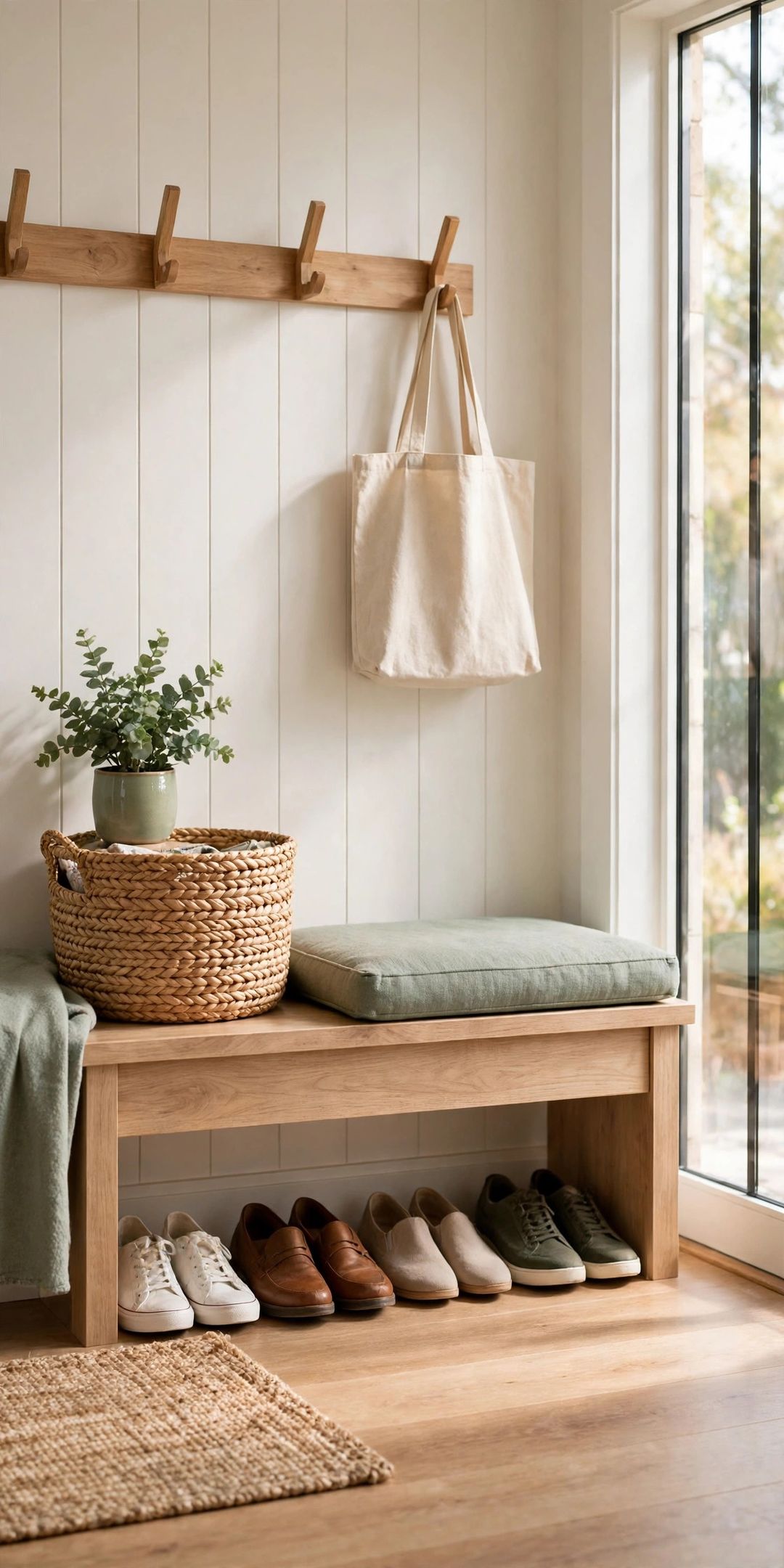
Look up the next time you open your closet. Above the rod, most closets have a single wide shelf — and in many homes it holds a sad mix of one shoebox, a loose hat, and a lot of empty air. It is some of the best storage space in the room, used the worst.
The trick is knowing what this zone is for. Smart storage above closet rod top shelf space is not for daily clothes. It is high, a little hard to reach, and perfect for light, rarely used items that still need a real home. The eight ideas below turn that dead space into a calm, labeled zone you only visit a few times a year.
Before you start, measure the shelf depth and the gap between the shelf and the ceiling. Those two numbers decide which bins fit and how tall anything up there can be.
Labeled Homes for Rare-Use Items
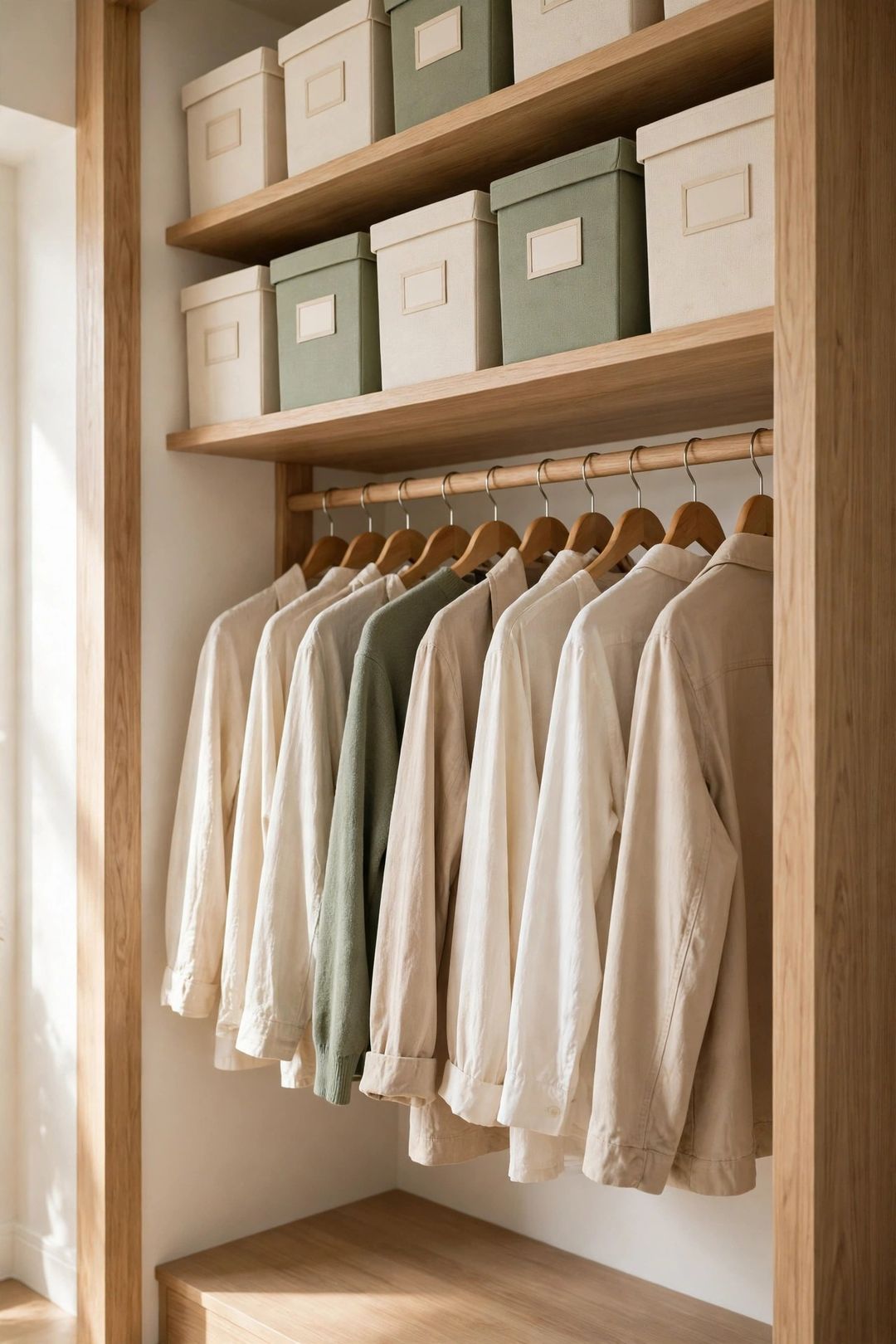
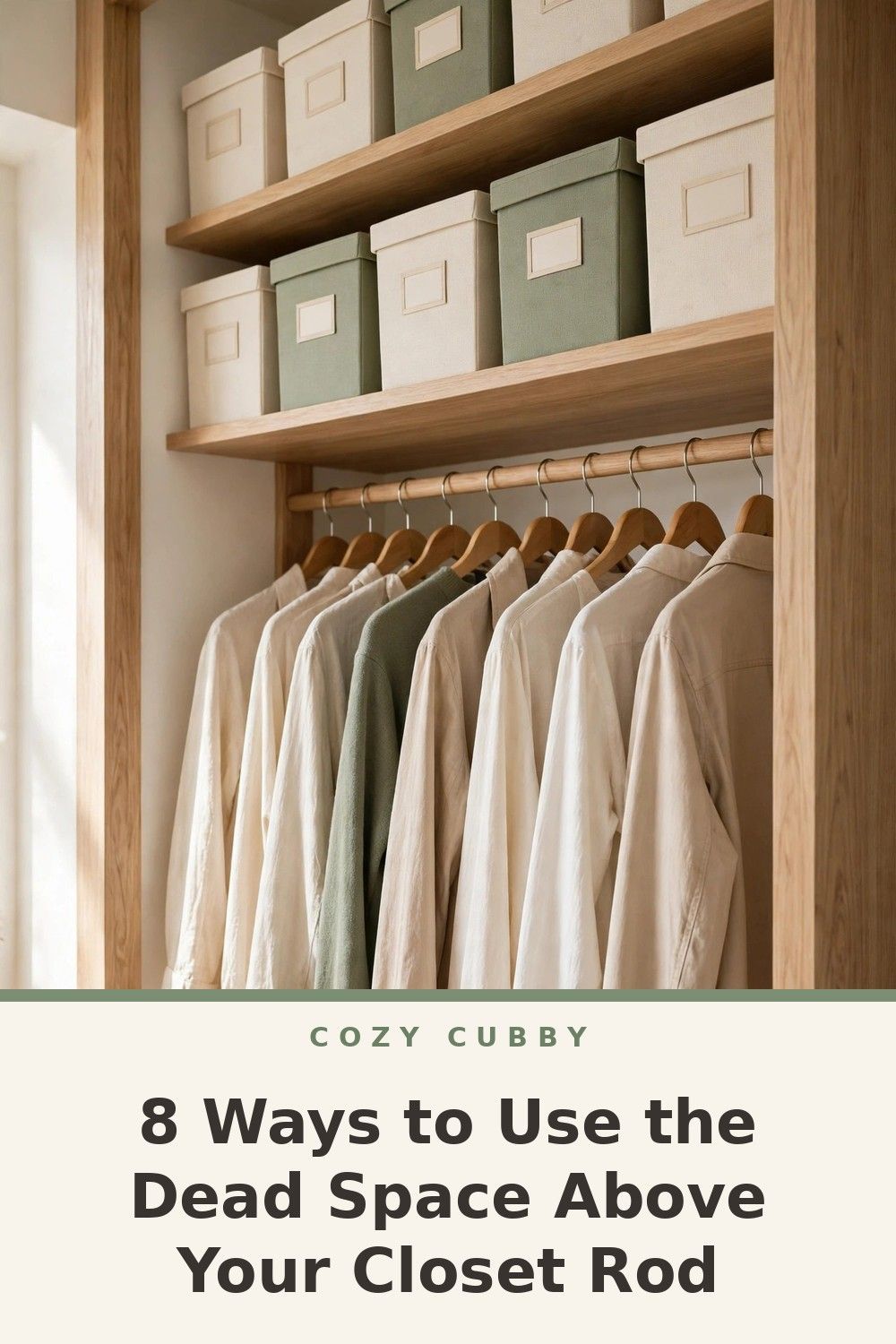
1. One labeled bin per category. Give each rare-use group its own bin with a big, clear label facing out: holiday outfits, guest bedding, keepsake clothes, travel gear. One category per bin means you pull down only the box you need, instead of digging through a mixed pile on a stool.
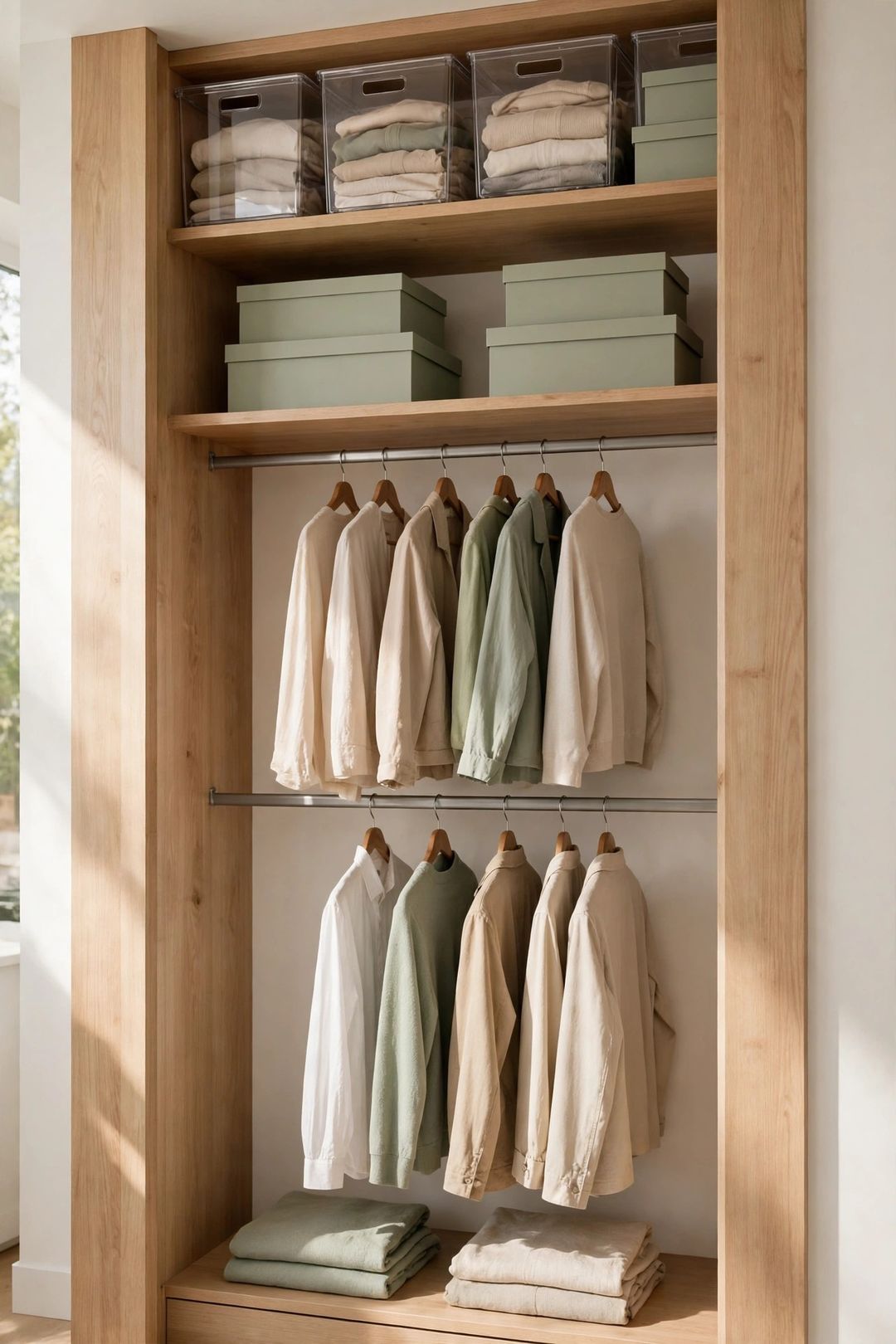
2. Off-season clothing in flat, lidded bins. The top shelf is the natural home for the season you are not wearing. Fold off-season clothes into flat bins that slide across the shelf, and label each bin with the season and size. When the weather turns, the swap is one bin down and one bin up.
3. A memory and keepsake box zone. Items you want to keep but never use — a wedding outfit, baby clothes, a uniform — belong at the far end of the top shelf, in sturdy lidded boxes. Grouping them together keeps sentiment from spreading across the whole shelf and crowding out useful storage.
4. Guest and spare bedding up high. Extra blankets, a spare pillow, and guest towels are bulky but light, and you only need them when guests come. Store them in a soft storage bag or open bin at one end of the shelf, where their size is an asset, not a problem.
Making the High Shelf Easy to Use
5. Shelf dividers to stop the slide. On a long shelf, stacks and bins slowly lean and merge. Shelf dividers clipped along the top shelf create upright sections for bins, bags, and folded items, so each category stays in its lane even when the shelf is deep.
6. Clear bins in front, solid bins in back. If your shelf is deep enough for two rows, put clear bins in front so contents stay visible, and solid bins for long-term storage behind them. Label the back row on the front edge of the shelf itself, so you know what is hidden before you climb up.
7. A photo inventory taped inside the door. Because this zone is out of sight, it is easy to forget — and easy to buy duplicates of what is already up there. Snap a photo of the shelf, print a simple list of what each bin holds, and tape it inside the closet door. Update it whenever a bin changes.
Access and Safety Come First
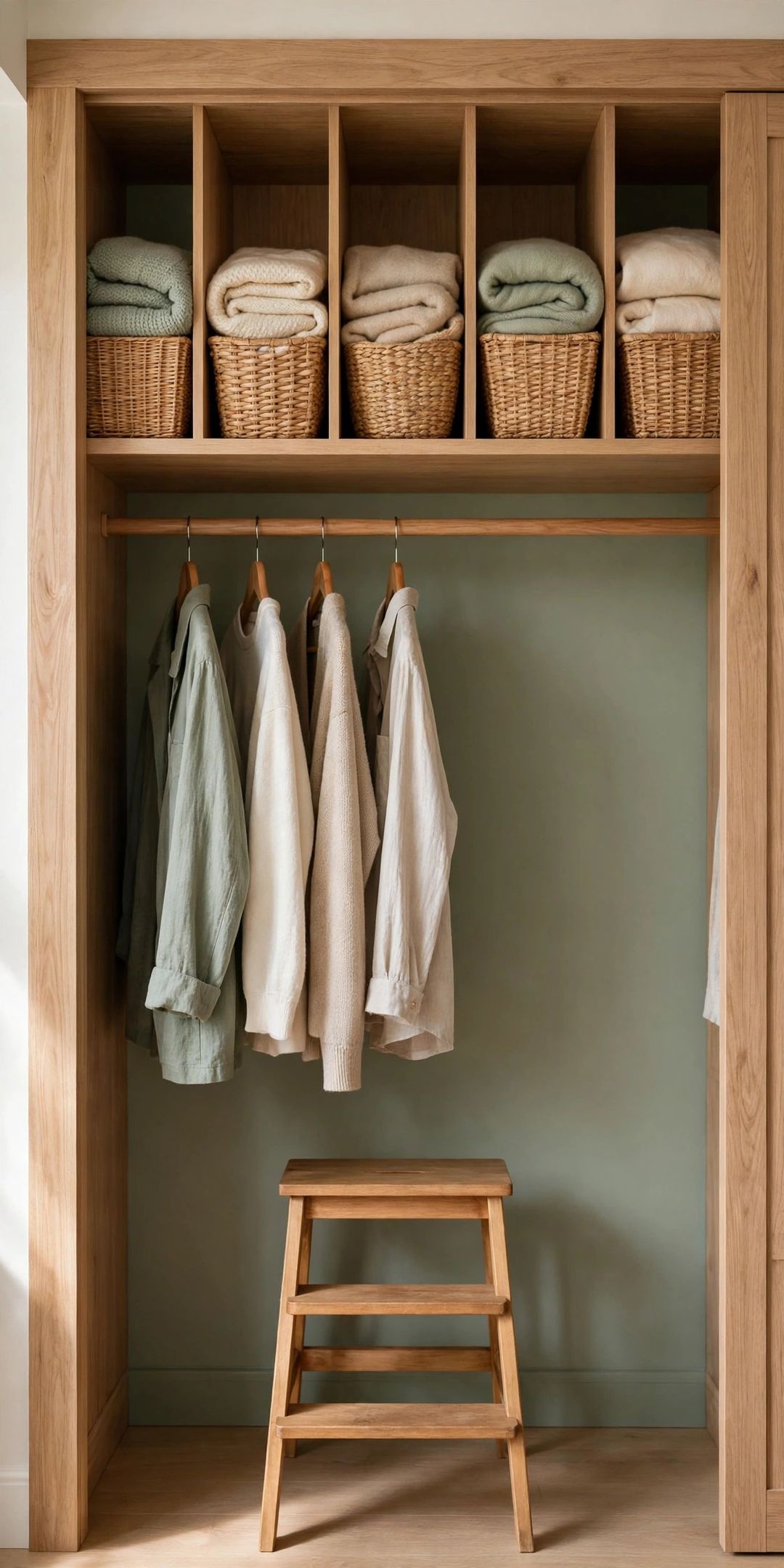
8. A step-stool plan, with heavy items kept low. This zone only works if you can reach it safely. Keep a sturdy folding step stool in or near the closet, and use both hands when lifting a bin down — or slide bins to the edge and lift them at waist height once you are back on the floor. As a general safety rule, heavy items do not belong overhead: weight belongs on low shelves or the floor, where a dropped load cannot fall far. If a bin is too heavy to lift down with control, split it into two lighter bins.
What to Buy
Lidded plastic bins, typically $8–$18 each. Pro: They stack, protect contents from dust, and slide well on a shelf. Con: Odd sizes waste space, so buy one size that fits your shelf depth. Skip if: You already own sturdy boxes of a uniform size.
Soft fabric storage bags, typically $12–$25 for a set. Pro: Light and flexible, ideal for bedding and off-season clothes. Con: They do not stack as firmly as hard bins. Skip if: Everything you store up high is small and hard-edged.
Shelf dividers, typically $10–$20 for a pack. Pro: They clip on with no tools and keep sections upright. Con: They fit only certain shelf thicknesses. Skip if: Your shelf is already split into cubbies or short sections.
A folding step stool, typically $20–$40. Pro: It makes the top shelf reachable with both hands free and stores flat. Con: Cheap stools can feel wobbly — choose a sturdy one with a wide base. Skip if: You already own a stable stool that lives nearby.
Large bin labels, typically $6–$12 for a pack. Pro: Big text can be read from the floor, which saves needless trips up the stool. Con: Labels need rewriting when a bin's contents change. Skip if: A marker on painter's tape is already readable from below.
Mistakes to Avoid
- Storing daily clothes up high. Anything you reach for weekly will make you dread the stool. The top shelf is for rare-use items only.
- Putting heavy items overhead. Heavy bins are hard to lift down with control and can fall. Keep weight low, and split heavy loads into lighter bins.
- Skipping labels. An unlabeled bin above eye level is a mystery box. Label big, and label the front.
- Stacking bins too tall. A stack that reaches the ceiling is hard to unstack safely. Leave a few inches of clearance above every bin.
- Using the shelf as a dumping ground. Loose items tossed up without a bin or category quickly turn the zone back into dead space. Everything up there needs a container and a label.
Frequently Asked Questions
How much weight can a closet top shelf hold?
It depends on how the shelf is mounted and what it is made of, so check for sagging or loose brackets before loading it. As a safe habit, store light items up high, spread weight evenly along the shelf, and move anything heavy to a low shelf or the floor.
What should never go on the top shelf?
Skip heavy items, anything fragile that would break if it fell, and anything you use every week. Liquids and anything that could leak are also a poor fit overhead, where a spill would rain down on your clothes.
How do I reach the top shelf if I am short?
A sturdy folding step stool with a wide base is the standard answer. Choose bins with handles, keep them light, and slide a bin to the shelf edge before lifting. If a bin cannot be reached safely, its contents belong lower.
How often should the top-shelf zone be checked?
Twice a year is plenty for most homes — once at each season swap. Check that labels still match contents, bins are not cracked or overfilled, and nothing heavy has crept up there.
That empty stretch above the rod can quietly hold a season of clothes, guest bedding, and every keepsake in the house. Save this post to your Closet Organization board on Pinterest so the plan is ready on your next closet day.