Laundry rooms are often the smallest work space in the house, yet the wall above the machines sits empty. Detergent crowds the floor, towels land on the dryer, and spare supplies end up in a hallway closet.
Smart storage above washer and dryer turns that dead space into the room's main storage zone. The ideas below cover shelves, towers, and wall options for side-by-side machines, with notes on reach, clearance, and what should never live up there.
Measure first: the width across both machines, the height to the ceiling, and — for a top-loader — how high the lid opens. The lowest shelf must clear hoses, plugs, and that lid.
Shelf Systems That Clear Your Machines
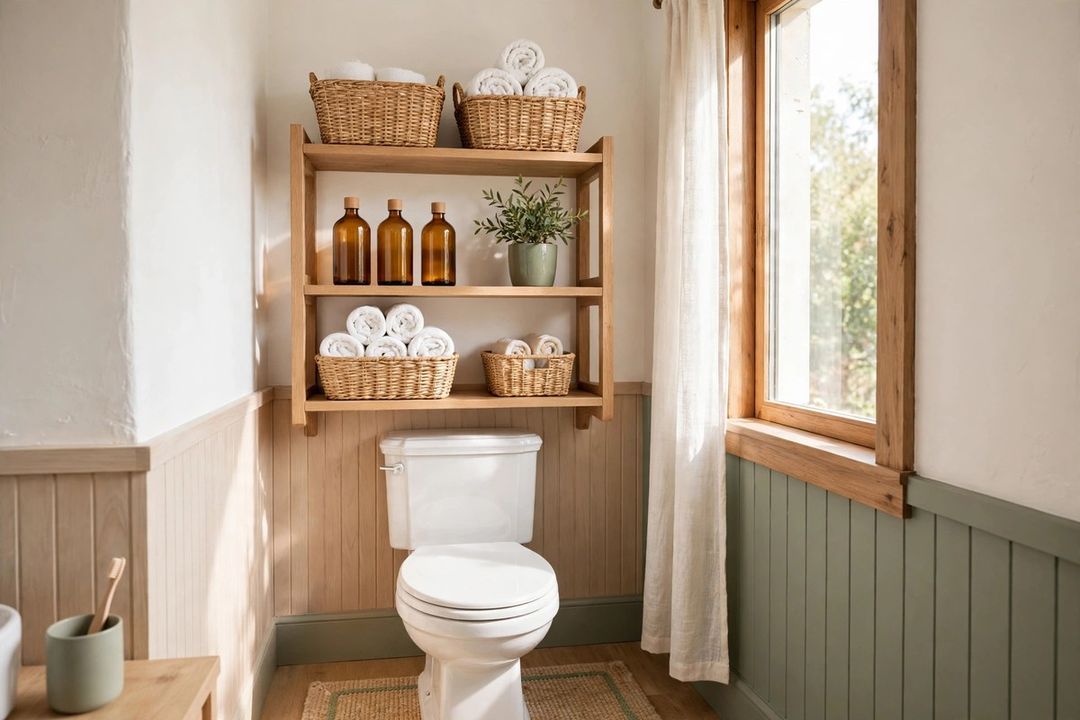
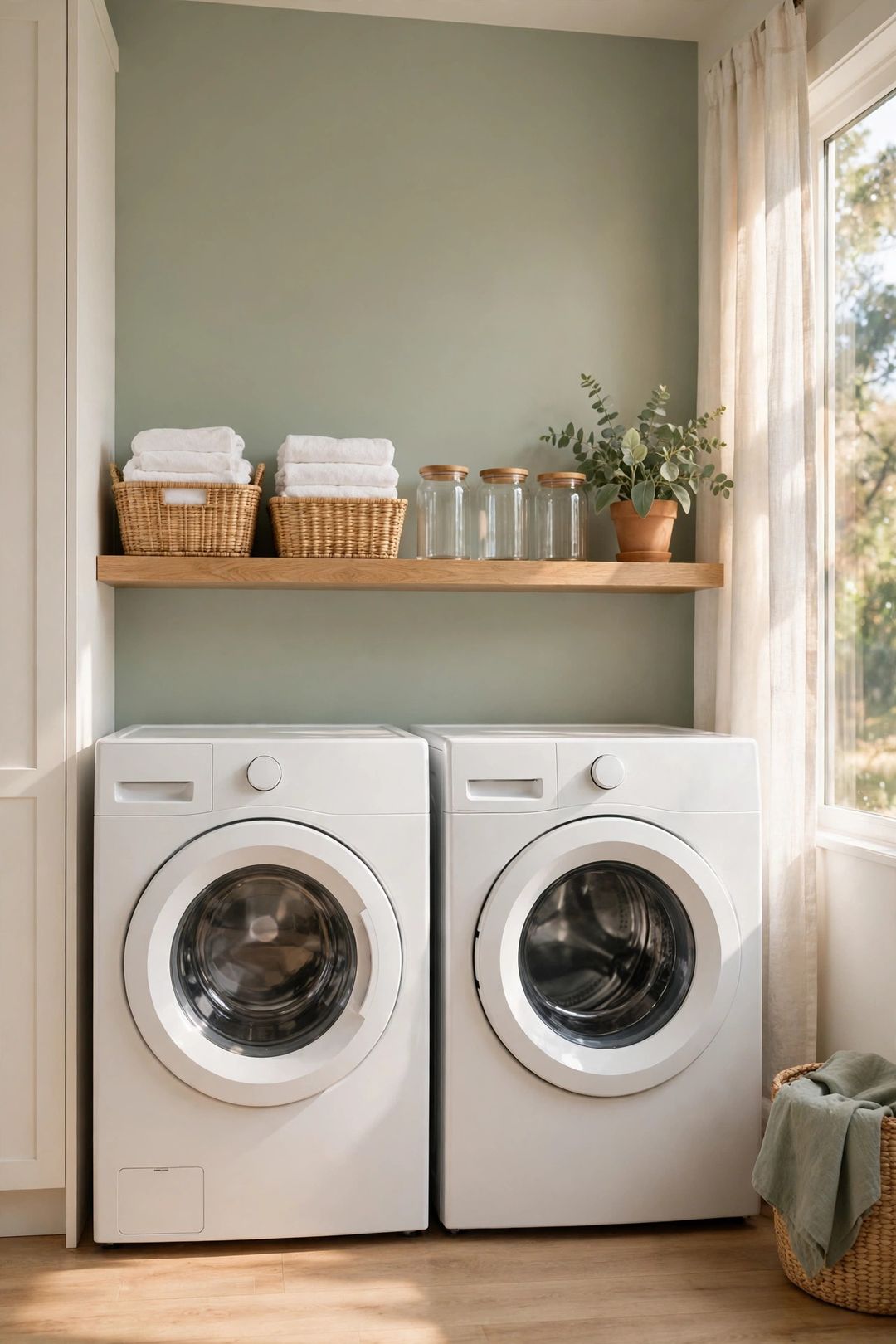
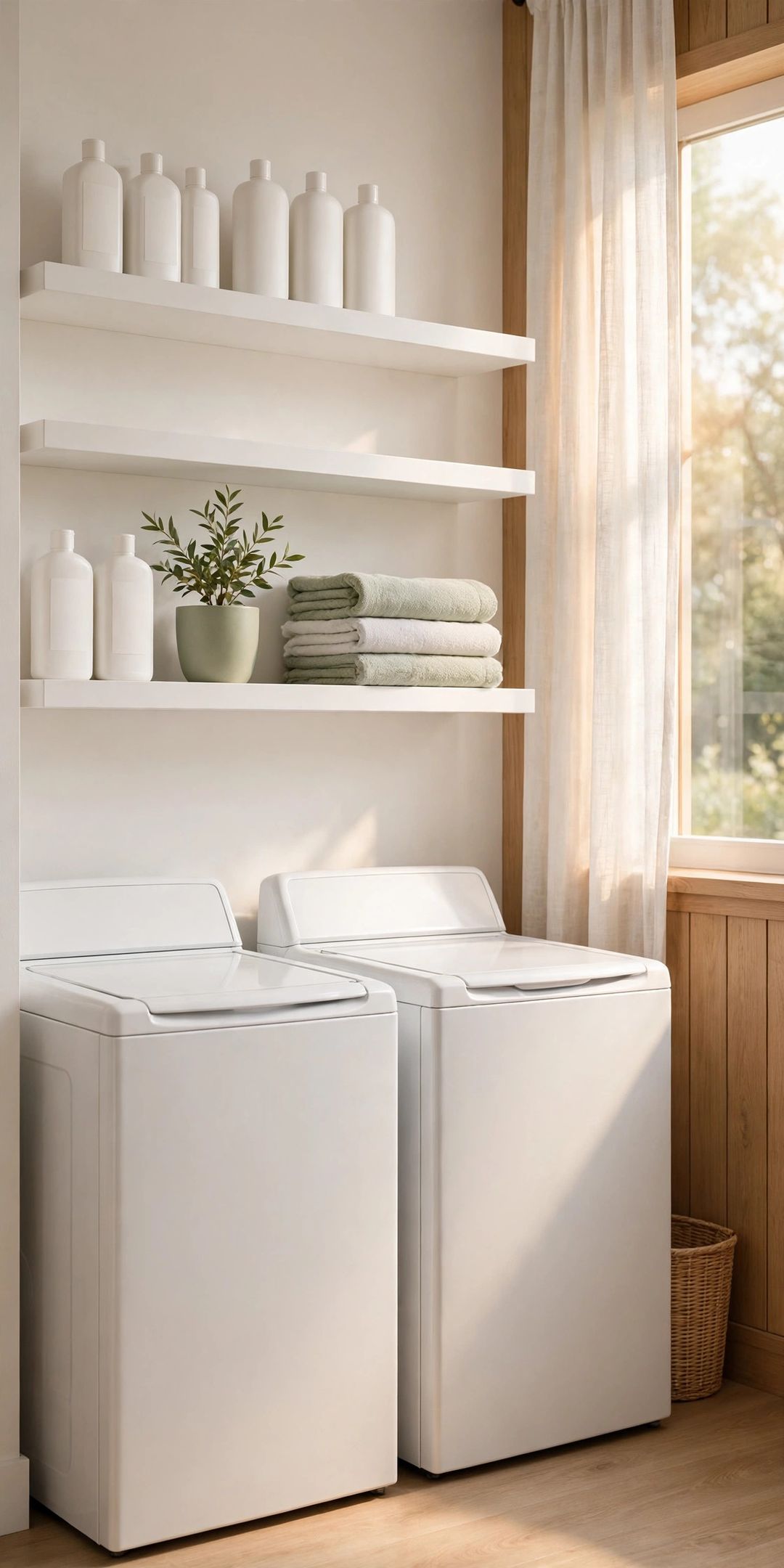
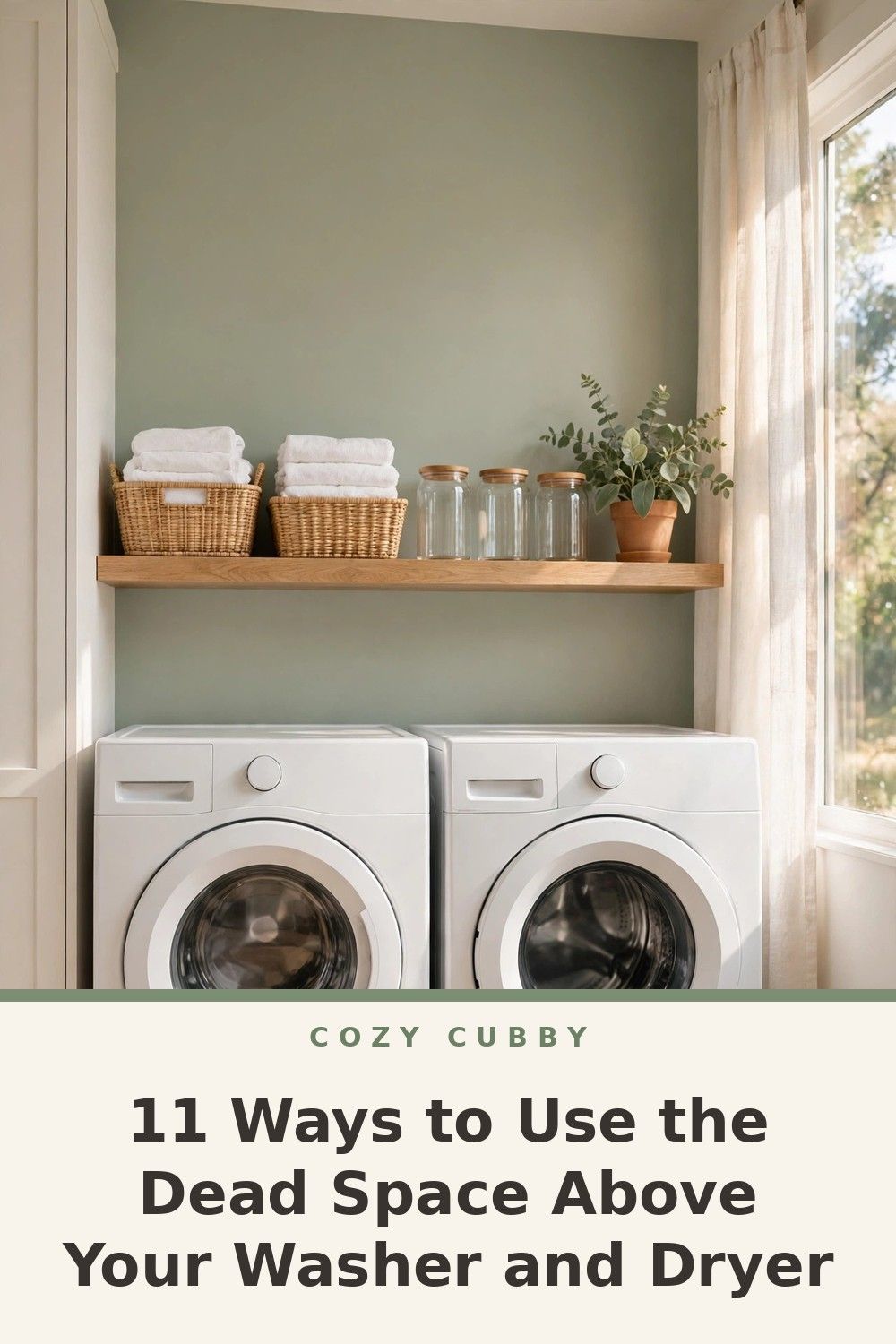
1. A single deep floating shelf. One shelf about 12 inches deep, mounted into studs, holds detergent, stain remover, and a basket of cloths in one row. It suits front-loaders and top-loaders alike, as long as it sits above the top-loader's open lid. If you need a step stool for daily items, it is too high.
2. A two-tier adjustable shelf unit. Two shelves with adjustable heights let tall bottles sit below and short supplies stack above. This works for both machine types when the lower shelf clears the lid and controls. Leave a few inches of air space so heat and moisture from the dryer are not trapped.
3. A countertop shelf over front-loaders only. A solid board or ready-made counter across two front-loaders creates a folding surface with a low riser shelf behind it. Flag this one clearly: it only suits front-loaders in a side-by-side setup. A top-loader cannot open under a counter, and a stacked unit has no flat top.
Freestanding Towers and Racks, No Drilling Needed
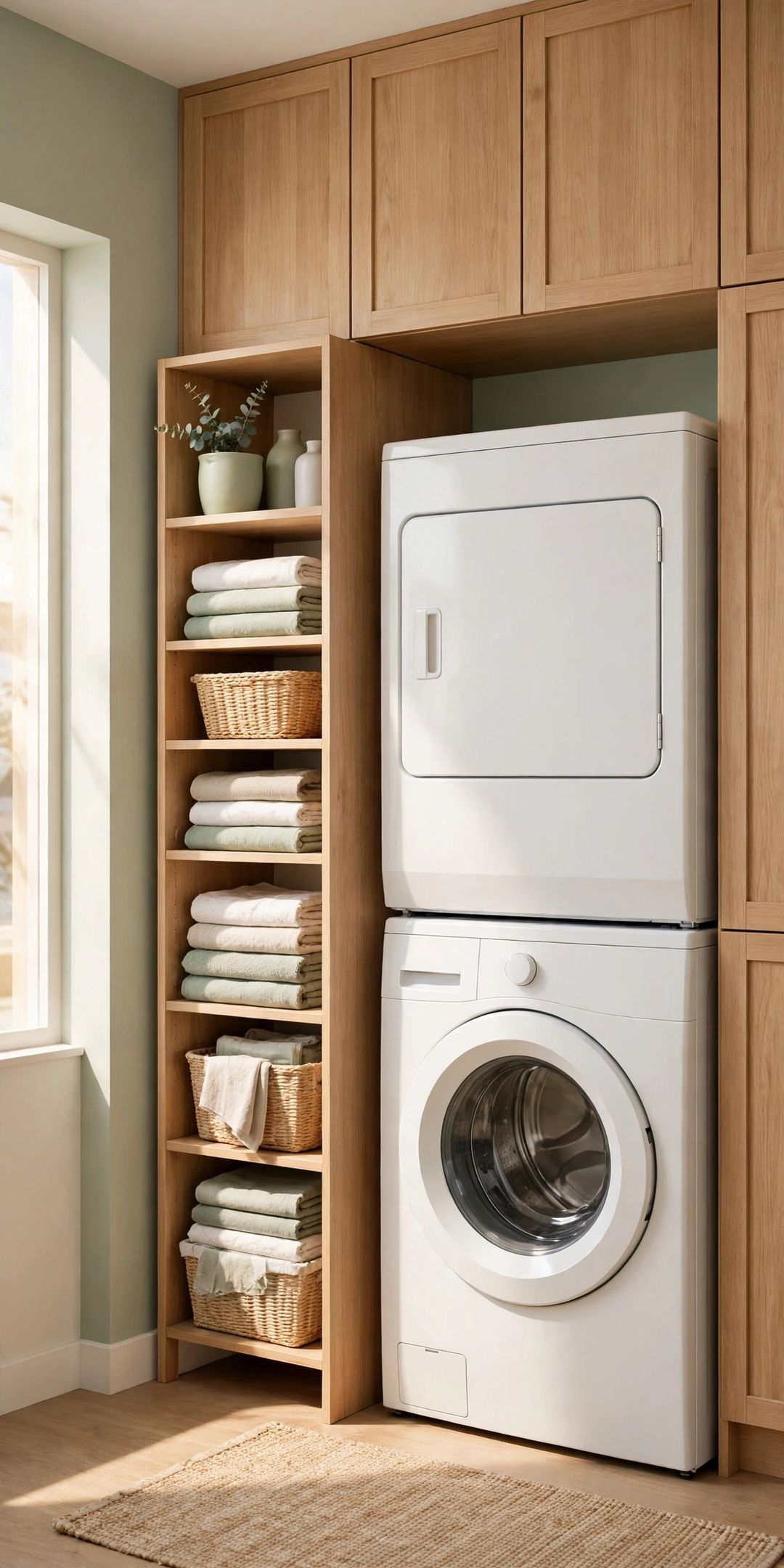
4. An over-the-machine storage rack. This freestanding frame straddles one or both machines with legs on the floor and two or three shelves above. It is a strong pick for renters because nothing mounts to the wall. Confirm the lowest shelf clears a top-loader lid, or limit it to front-loaders.
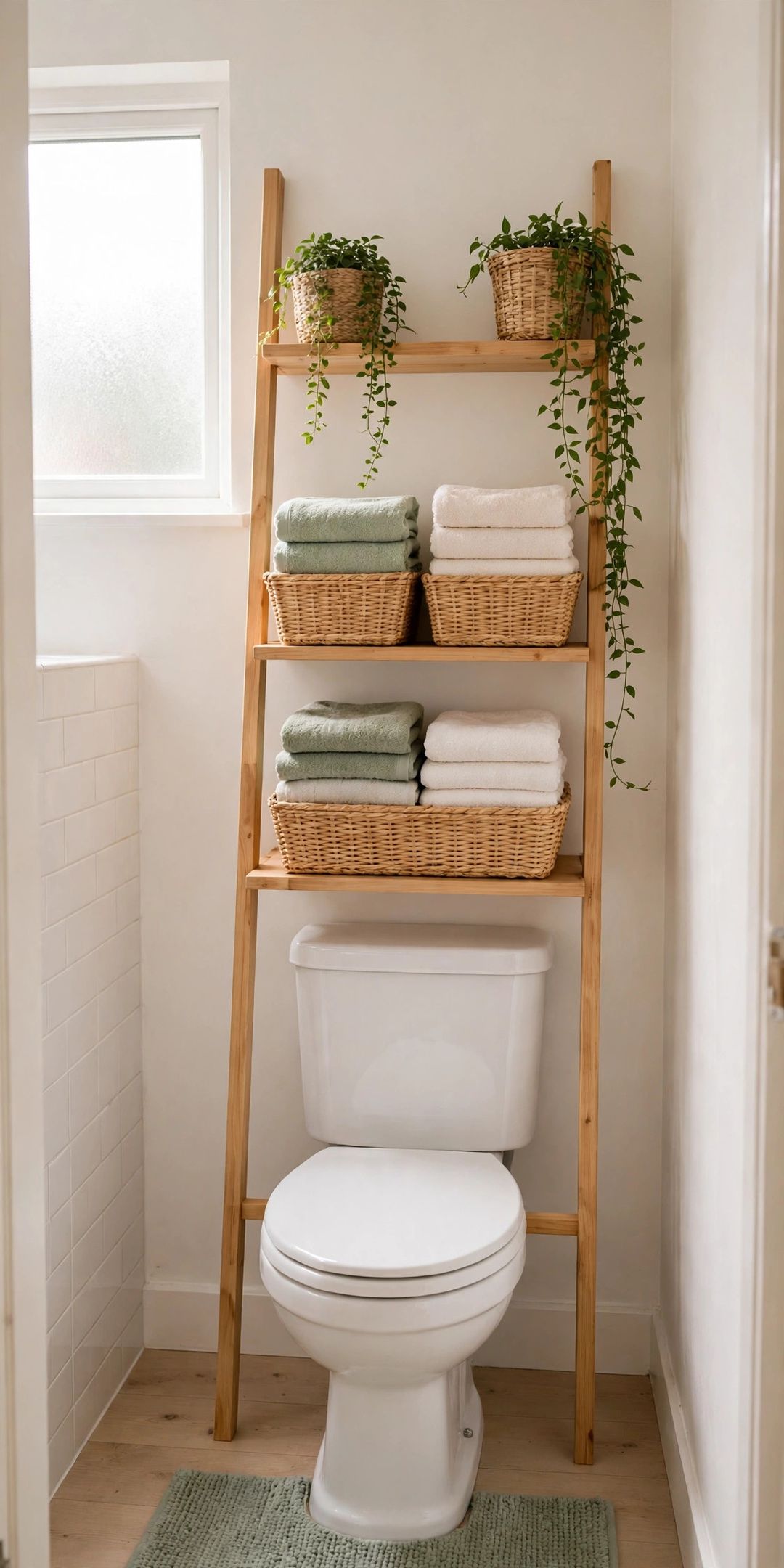
5. A slim ladder shelf behind front-loaders. A leaning ladder shelf adds graduated shelves, deep at the bottom and shallow at the top, which keeps heavy bottles low. It needs a flat, level surface behind it, so it suits front-loaders best. Secure it to the wall at the top if the design allows.
6. Stackable open crates on a wide shelf. Two or three lightweight crates on a sturdy base shelf sort supplies by job: wash, treat, and clean. Crates contain a bottle if one tips. Keep the stack to two high, and never stack crates on a machine top, where vibration will walk them to the edge.
Wall and Door Options for Tight Rooms
7. A shallow wall cabinet with doors. A cabinet about 6 to 8 inches deep hides clutter and keeps cleaning products behind a closed door, harder for small children to reach. Mount it high enough to clear an open top-loader lid. It will not hold bulk jugs, so plan it for small and medium bottles.
8. A rail or pegboard system. A wall rail with hooks and hanging baskets holds dryer balls, lint tools, cloths, and a mesh bag for lost socks. It suits any machine type because it mounts on the wall. Use baskets, not loose hooks, for bottles, so a bump does not send one behind a machine.
9. An over-door rack on the laundry room door. If wall space is gone, the back of the door can hold cloths and light supplies in clear pockets or wire baskets. Keep it light so the door swings freely. This helps top-loader rooms where shelf clearance is tight.
What Belongs Up There — and What Does Not
10. Light, labeled bins grouped by task. The system that keeps any shelf tidy is three or four light bins: detergent and stain care, dryer supplies, cleaning cloths, and a lost-and-found bin. Bins you can lift with one hand get put back. Heavy bulk containers belong in a lower cabinet, not overhead.
11. A clear no-go zone on the machine tops. Treat each machine top as a landing pad only, never storage. Vibration during spin cycles moves bottles, and one that falls behind a machine is hard to retrieve. Keep detergent and bleach on a shelf instead, away from heat vents and well back from the edge.
What to Buy
A wall-mounted floating shelf, typically $25–$60. Pro: Simple and sturdy when mounted into studs. Con: Fixed height, so bottle sizes decide the spacing. Skip if: You rent and cannot drill into the wall.
An over-the-machine storage rack, typically $45–$90. Pro: Adds two or three shelves with no wall mounting. Con: The frame must match your machine width and lid clearance exactly. Skip if: Your machines are stacked or in a tight closet.
A shallow wall cabinet, typically $40–$85. Pro: Closed doors hide clutter and contain products. Con: Shallow depth rules out bulk containers. Skip if: Your wall space is already used by shelves.
A rail system with hanging baskets, typically $20–$45. Pro: Flexible layout that changes as supplies change. Con: Open storage looks busy if items are not grouped. Skip if: You prefer a clean, closed look.
Small lidded storage bins, typically $12–$30 for a set. Pro: They group supplies by task and contain small spills. Con: Lids slow you down on a busy wash day. Skip if: Open baskets already keep your shelves sorted.
Mistakes to Avoid
- Blocking a top-loader lid. Any shelf or rack that stops the lid opening fully will be a daily frustration. Measure with the lid open before you buy or drill.
- Storing bottles on the machine top. Spin-cycle vibration moves them, and a fallen bottle can leak behind the machine where it is hard to clean up.
- Mounting shelves too high. Daily detergent should be reachable without a stool. Save the highest shelf for light, rarely used backstock.
- Overloading a shelf with bulk refills. Heavy jugs add up fast. Check the weight limit and keep the heaviest items low or on the floor.
- Ignoring hoses and vents. Shelves and towers must leave access to water shut-offs, plugs, and the dryer vent for leaks and lint clean-outs.
Frequently Asked Questions
How much clearance does a top-loader need above it?
Measure to the highest point of the fully open lid, then add a few inches. Any shelf must sit above that line. If the height does not fit, use wall storage beside the machines or an over-door rack.
Is it safe to store detergent above the machines?
Yes, on a proper shelf or in a bin, set back from the edge. The risk is bottles loose on the machine top, where vibration can move them. Keep bleach up high, closed, and away from the dryer vent.
What if the washer and dryer are stacked?
Skip counters and over-machine racks. Use the wall beside the stack instead: a shallow cabinet, a rail system, or a slim tower holds the same supplies without blocking the doors.
Can renters use these ideas without drilling?
Yes. A freestanding rack, stackable crates on an existing shelf, and an over-door rack all add storage with no holes. Check your lease before using wall anchors for a rail or cabinet.
The space above your machines can hold your whole laundry system, as long as clearance and reach come first. Save this post to your Laundry Room board on Pinterest so the notes are handy before you shop.