Cast iron lasts for years, but it is hard on the kitchen that holds it. A large skillet is heavy, a Dutch oven is bulky, and stacking them in a low cabinet can scratch shelves, chip enamel, and make every pan a chore to lift out.
Learning how to store cast iron skillets heavy pots comes down to three simple rules: keep each piece dry, give it real support, and avoid dragging it across wood or paint. You do not need a big kitchen to do that well.
The eight ideas below use walls and vertical space as much as cabinets. Pick one for the pans you use daily, and a second for pieces you reach for only on weekends.
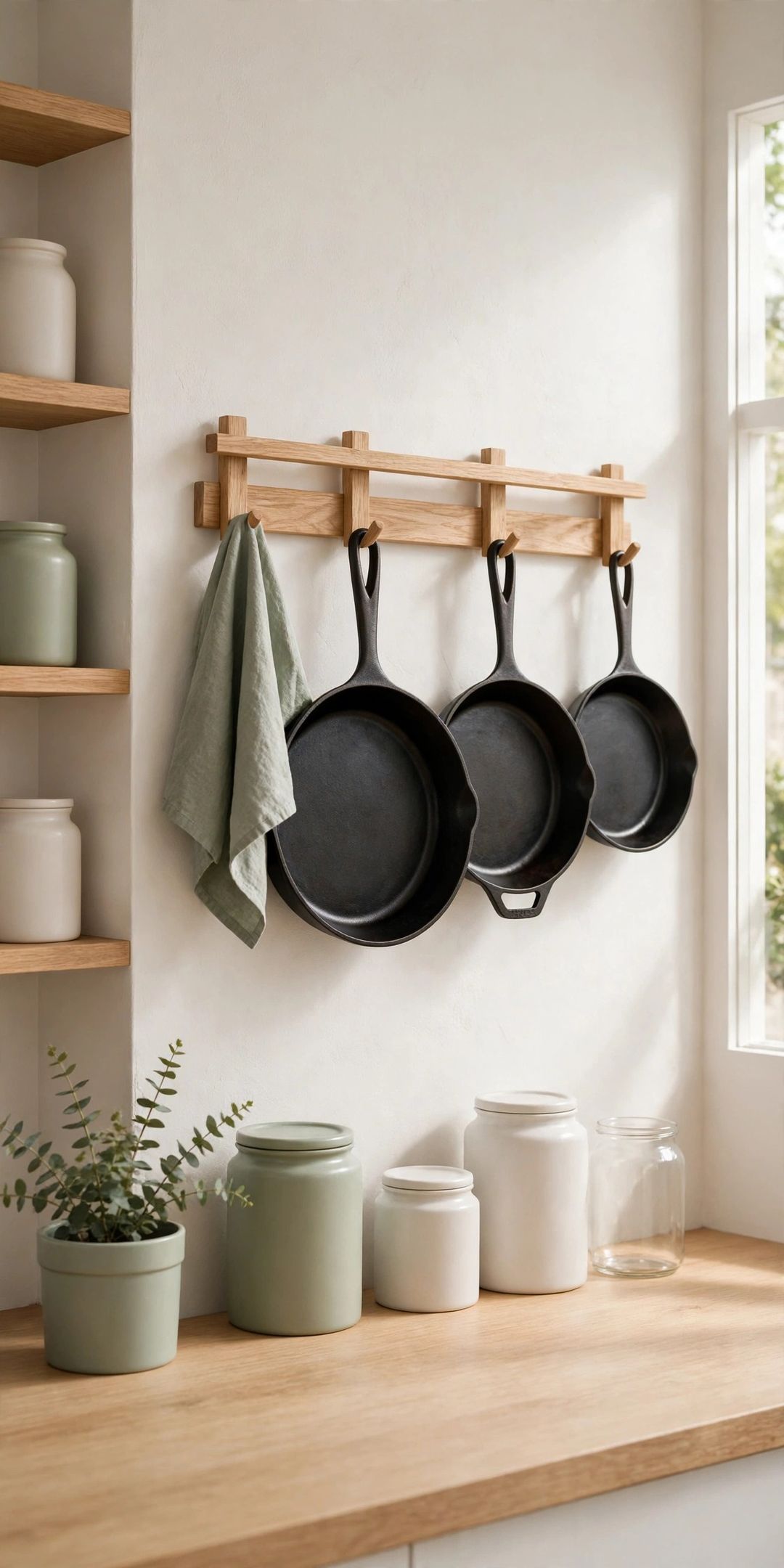
1. Hang Daily Skillets on a Wall-Mounted Rack
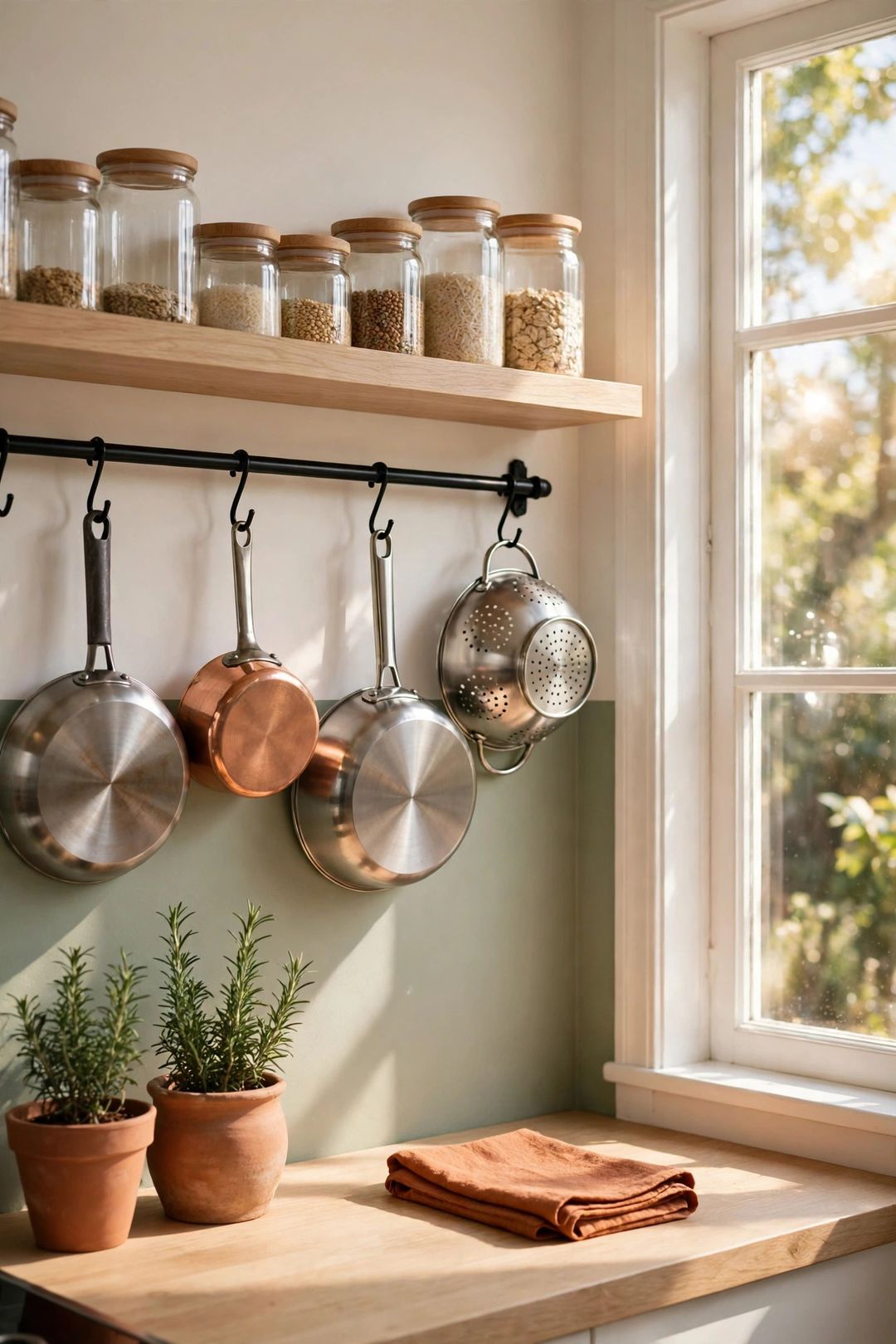
Best for skillets you use every day. A sturdy wall rack or rail with strong hooks gets your most-used pans off the cabinet floor and into easy reach. Hang them by the handle, spaced so rims do not bang together.
Mount the rack into studs or use anchors rated for heavy loads. Leave a small gap behind each pan so air can move and any last bit of moisture can dry.
2. Add Vertical Slots Inside a Cabinet
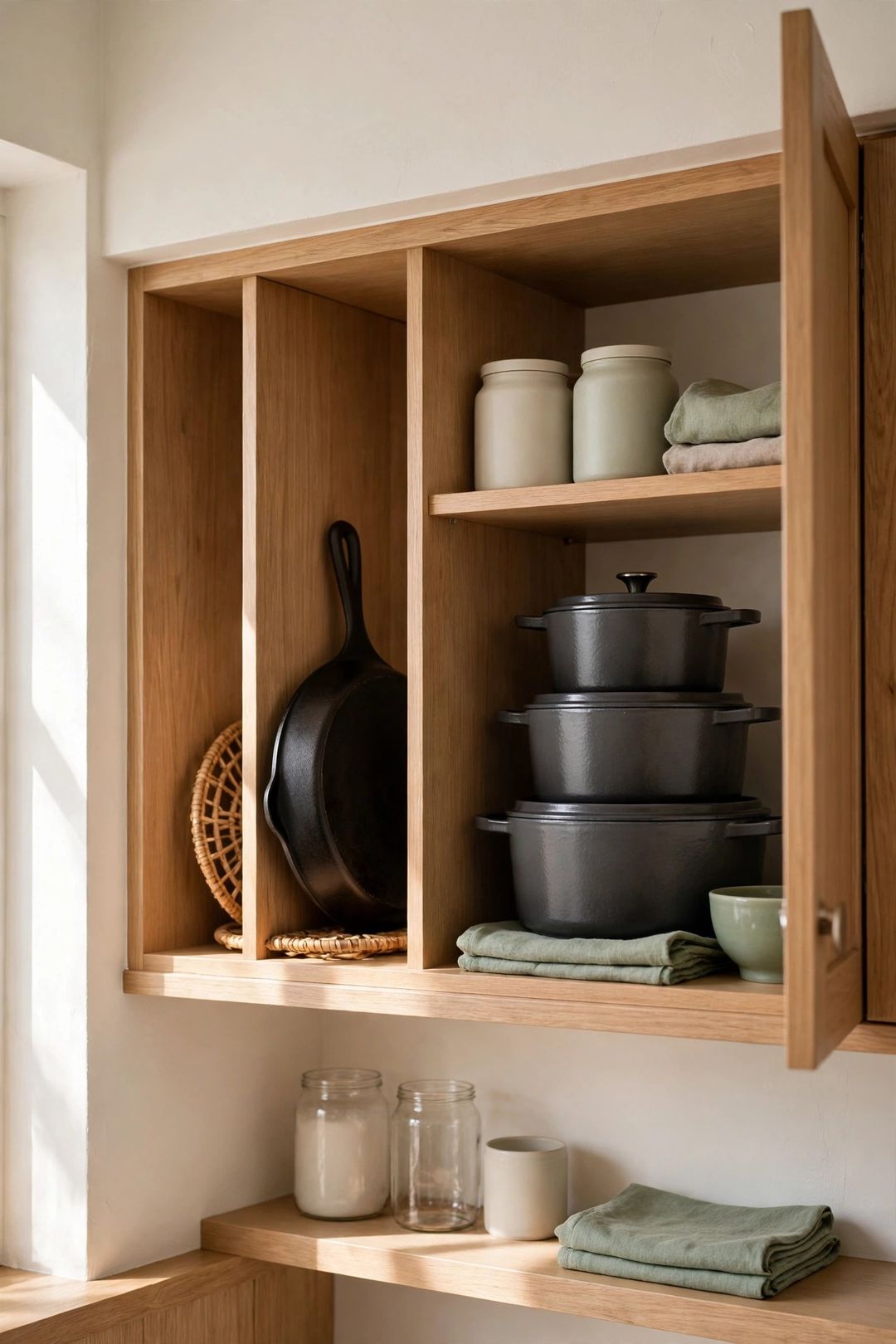
Best for flat skillets and griddles. A vertical divider, like the kind used for baking sheets, lets you file pans on their sides instead of stacking them flat. Each piece slides out on its own, so you never lift a whole pile to reach the bottom pan.
Choose metal or thick wood dividers that will not tip under weight. Stand only fully dry pans in the slots, and add a thin felt pad at the base if the cabinet floor is painted.
3. Use the Inside of a Cabinet Door or Side Wall
Best for lids and one light skillet. The flat inside of a cabinet side wall or a solid door can hold hooks for lids or a small skillet. This turns wasted flat space into storage without using another shelf.
Keep this spot light. Heavy Dutch ovens belong on a solid shelf, not on door hinges. Check that hooks and lids clear the shelves when the door closes.
4. Install a Stove-Adjacent Rail
Best for one or two everyday pans. A short rail on the wall beside the stove keeps your go-to skillet within arm's reach while you cook. It also gives a freshly washed pan a clear place to dry in the open air.
Keep the rail far enough from burners that handles do not sit over heat. One or two pans is plenty here; a crowded rail becomes hard to use.
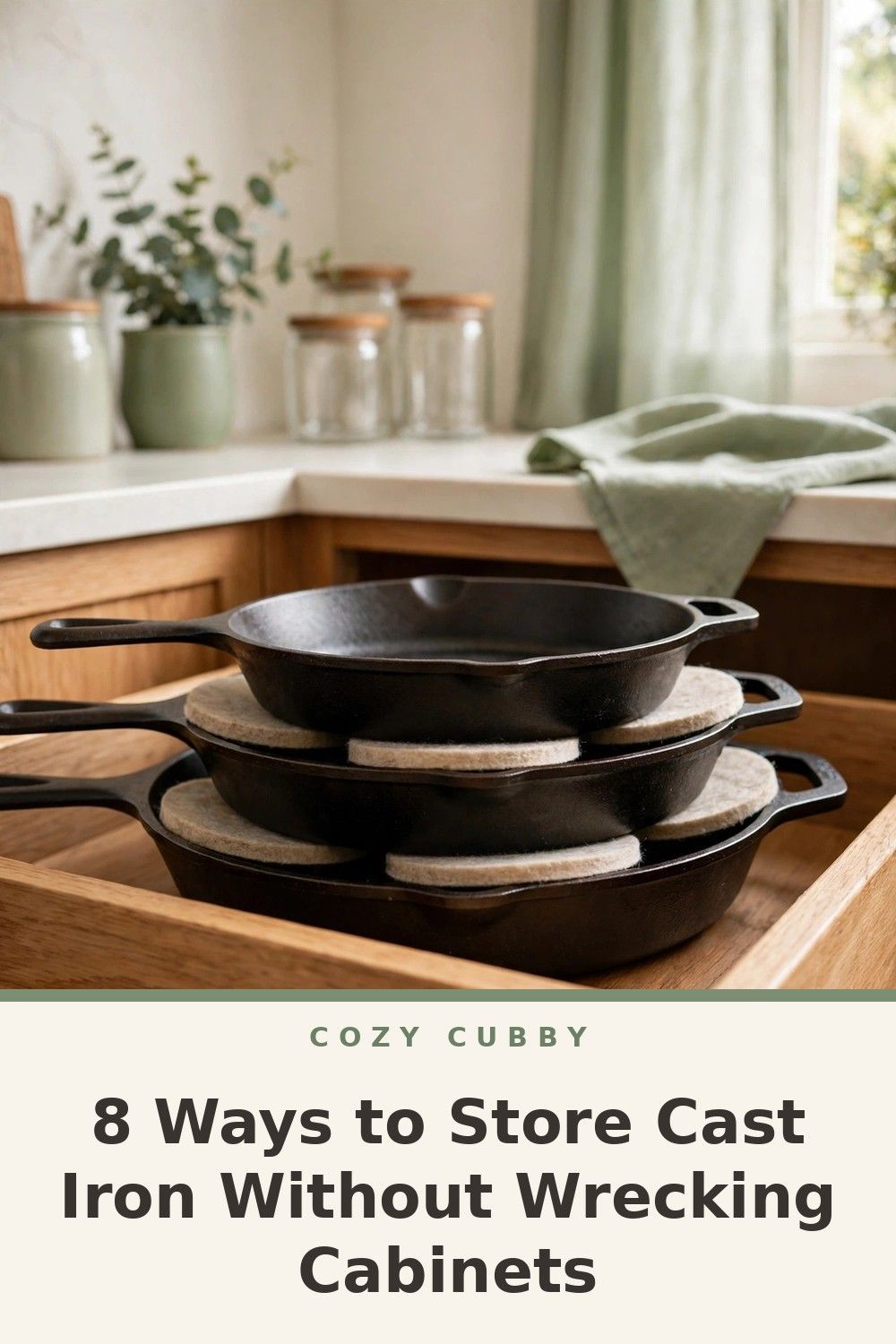
5. Stack With Trivets, Pads, or Towels Between Pans
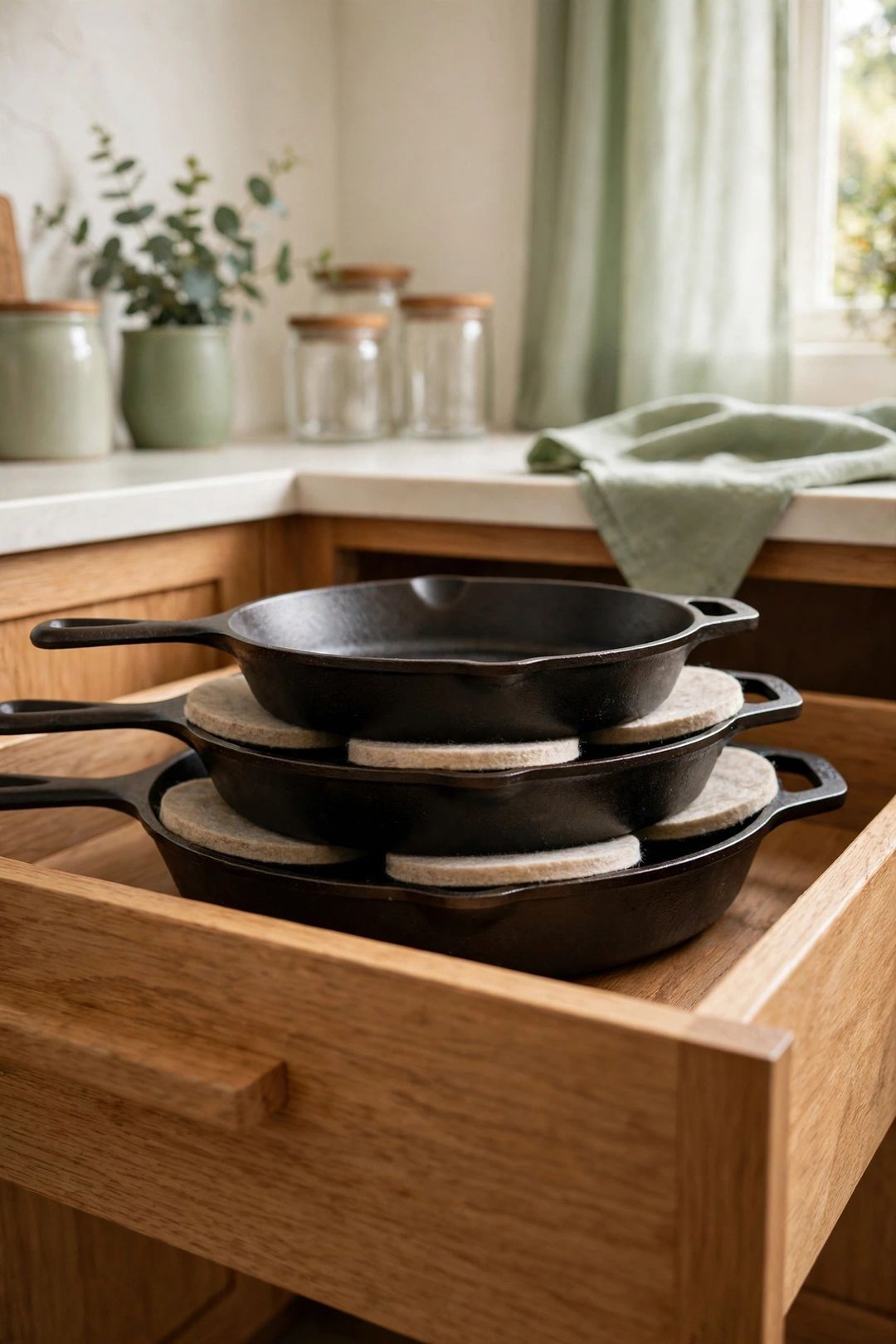
Best when stacking is your only option. If two pans must share a shelf, place a trivet, thick felt pad, or folded cotton towel between them. The layer stops bare metal from scraping a seasoned surface or chipping enamel.
Stack the heaviest piece on the bottom. Replace damp or torn pads right away, because trapped moisture against iron can lead to rust.
6. Give Dutch Ovens a Low, Solid Shelf of Their Own
Best for enameled and bare Dutch ovens. Heavy pots do best low, where you can slide them out with two hands instead of lifting them down from above your head. A low shelf or the sturdy floor of a base cabinet handles the weight well.
Store the lid slightly ajar or upside down with a pad underneath, so air moves inside and the rim does not chip.
7. Try a Countertop Stand or Small Pot Rack
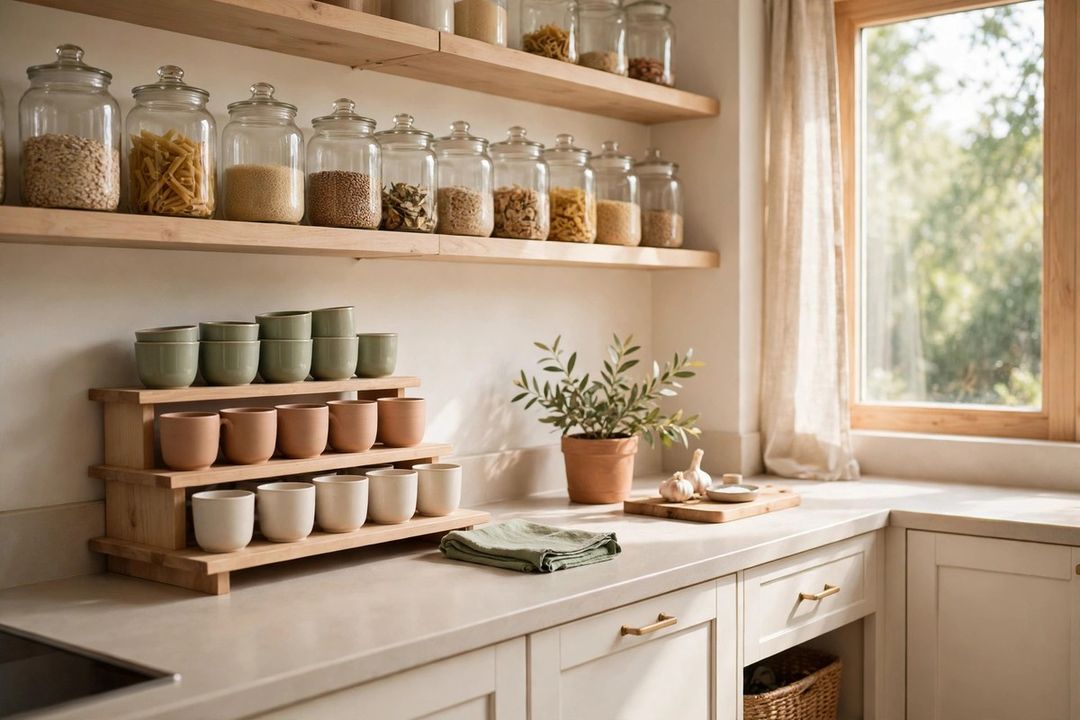
Best if you have a spare counter corner. A short stand or small hanging rack can hold two or three favorite pieces out in the open. Open storage makes it easy to grab a pan and to see if it needs drying.
Only choose this if the spot stays dry and out of the main prep path. Keep stands away from the sink splash zone, and do not overload the rack.
8. Store Occasional Pieces Outside the Main Cabinet
Best for camping skillets and extra-large pans. A rarely used pan does not need prime cabinet space. A lidded bin on a pantry shelf or a padded spot in a closet can hold it safely between uses.
Wash and dry the piece fully before you put it away, add a pad between it and anything stacked with it, and label the bin so you can find it fast.
What to Buy
Wall-mounted pot rail with hooks, typically $20–$45. Pro: Keeps daily skillets visible and off cabinet floors. Con: Needs solid mounting and wall space. Skip if: You rent and cannot drill, or your walls near the stove are tile you do not want to pierce.
Vertical pan divider rack, typically $15–$30. Pro: Lets you file skillets on their sides and pull one out at a time. Con: Very wide pans may not fit every slot. Skip if: Your cabinet is too short for pans standing on edge.
Felt pan protector pads, typically $8–$15. Pro: Cheap protection against scratches and chipped enamel when stacking. Con: Pads need replacing when they wear thin or get damp. Skip if: You never stack pans and hang everything instead.
Heavy-duty trivets, typically $12–$25. Pro: Work as stacking layers and as hot-pan rests on the counter. Con: Thick trivets add height to a stack. Skip if: Your cabinet height is already tight with two pans stacked.
Mistakes to Avoid
- Storing a pan while it is still damp. Water left in a skillet or under a lid can lead to rust. Dry on low heat or with a towel, then store.
- Stacking bare pan on bare pan. Metal on metal scrapes seasoning and chips enamel. Always add a pad, trivet, or towel between pieces.
- Hanging heavy pots from weak hooks. A large pot can pull out light anchors. Use studs and rated hardware, and keep the heaviest pieces low.
- Nesting a full set in one deep cabinet. A tall pile means lifting heavy pans to reach the one at the bottom and dragging rims across shelves.
- Putting cast iron next to the sink long term. Constant splashes and damp air work against dry storage. Pick a dry spot away from the splash zone.
Frequently Asked Questions
Is it okay to stack cast iron skillets?
Yes, if you keep the stack short and place a pad, trivet, or towel between every pan. Keep the heaviest piece on the bottom, make sure all pieces are fully dry, and lift pans straight up instead of dragging them.
Should cast iron be stored with the lid on?
You can store the lid on, but leave it slightly ajar or place a pad between the lid and the pot. That small gap lets air move, helps moisture escape, and protects the rim from chips.
How do you keep cast iron from rusting in storage?
Start with a clean, fully dry pan. A very light coat of cooking oil on bare cast iron can help during longer storage. Store it in a dry spot, and check rarely used pieces now and then.
Can you hang a Dutch oven?
It is usually better not to. A large Dutch oven is heavy and awkward on a hook. A low, solid shelf where you can lift it with two hands is safer for you, the pot, and the hardware.
Pick the spot that matches how often you cook with each pan, keep every piece dry and padded, and your cabinets will thank you. Save this post to your Kitchen Organization board on Pinterest so these storage ideas are handy before your next cabinet clean-out.