Formal dresses take up the most awkward space in a home. They are long, delicate, and worn only a few times a year, yet they need room to hang without crushing, folding, or picking up dust. With no spare closet, they often end up over a door or squashed between everyday clothes.
Learning how to store dresses and formal wear in a small home is mostly about protection plus placement. Choose clean, dry spots away from direct sun, keep heavy or beaded pieces supported, and give each dress a little breathing room. These nine ways use space most homes already have.
Before storing anything, check that each piece is clean and fully dry. A small stain can set over time, and damp fabric can smell musty in a closed bag or box.
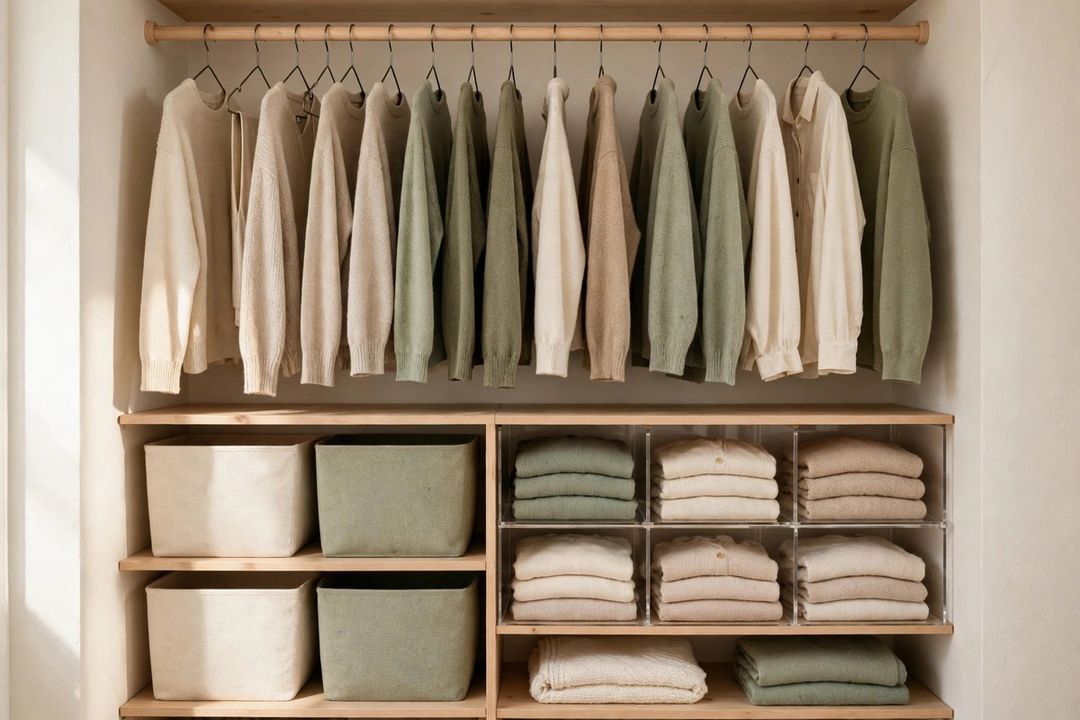
1. Hang the Best Pieces in Breathable Garment Bags in Your Main Closet
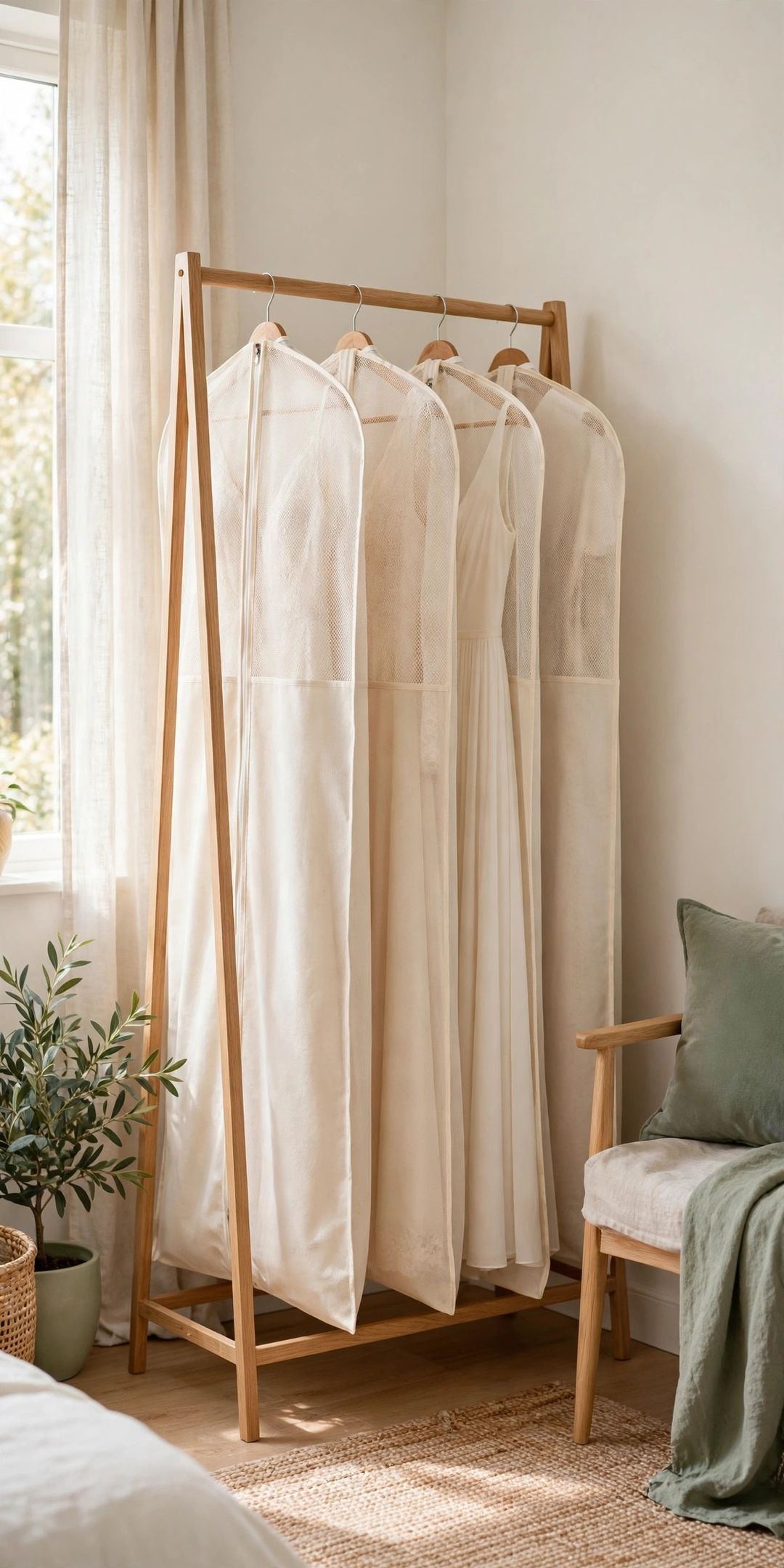
Give your most valuable dresses a small section at one end of your regular closet. Slip each one into a breathable fabric garment bag, not thin dry-cleaning plastic, which can trap moisture. Fabric bags block dust and still let air move. Hang heavy dresses by their hanging loops, so straps or shoulders do not carry all the weight.
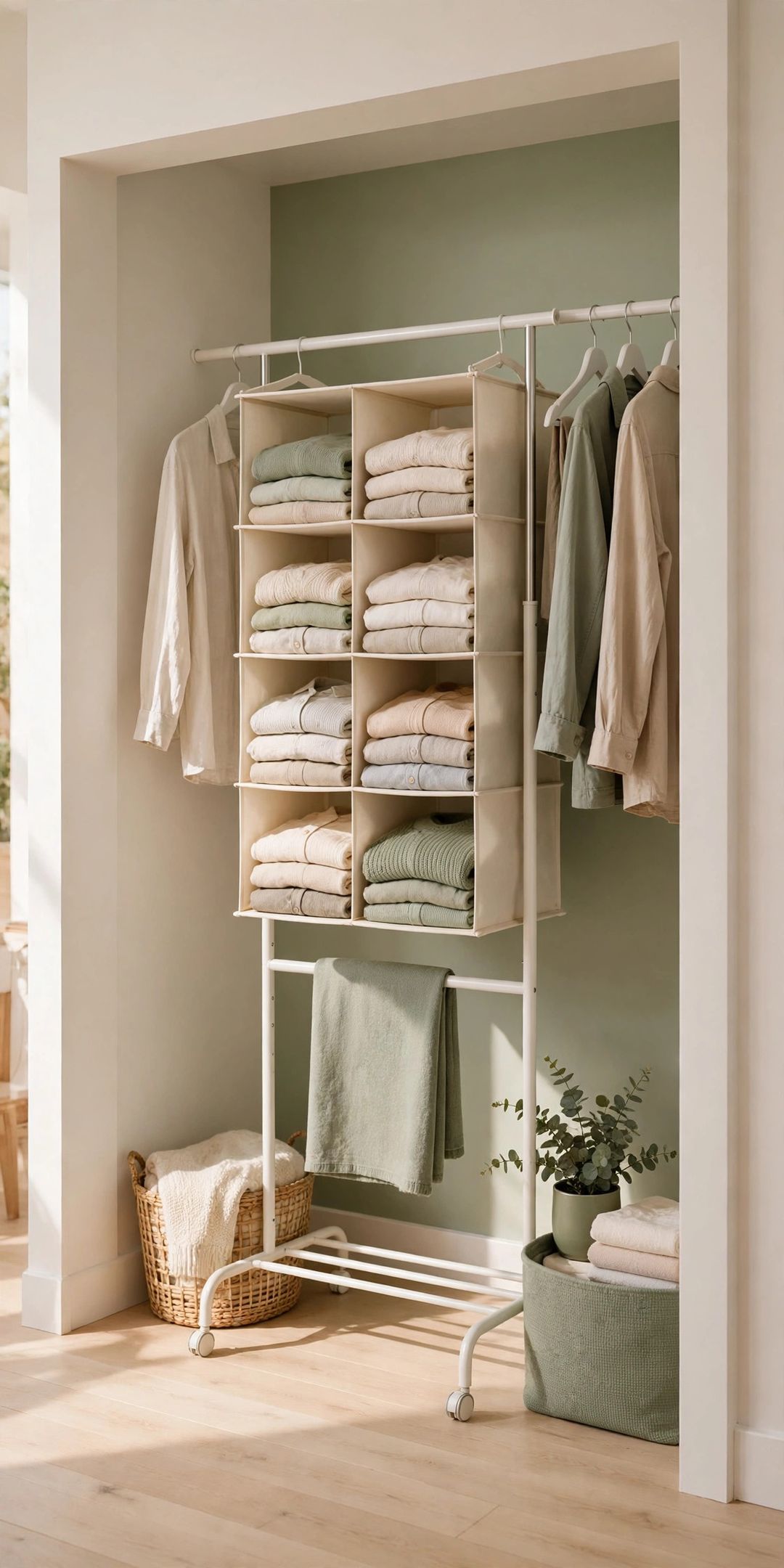
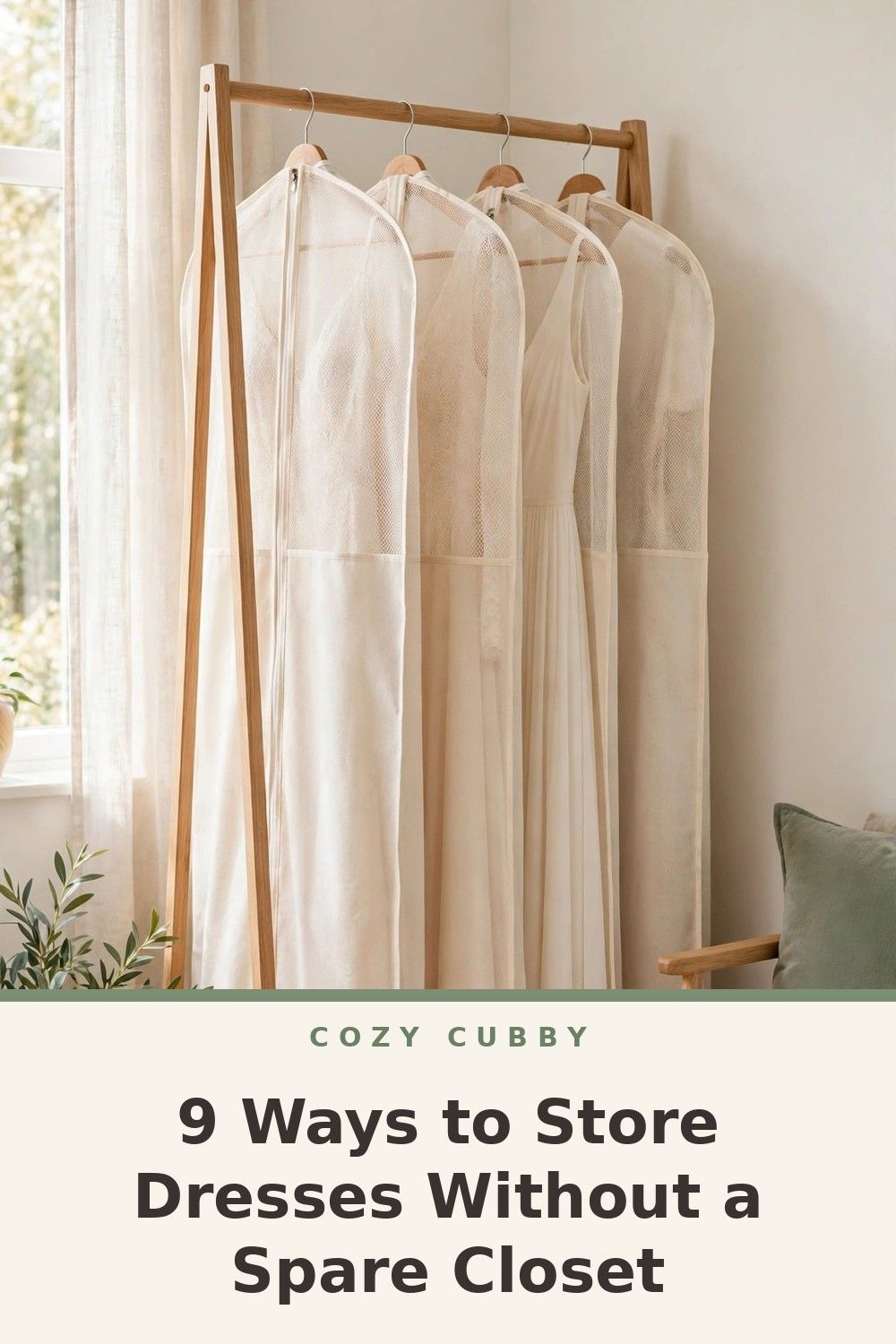
2. Use a Short Rolling Rack in a Bedroom Corner
A slim rolling garment rack can hold a small formal collection in a corner, behind a door, or along an unused wall. Keep it to dresses and suits only, so it does not become a catch-all for daily laundry. Garment bags keep dust off, and the rack can roll to another room when guests arrive. This option suits rentals because it needs no drilling.
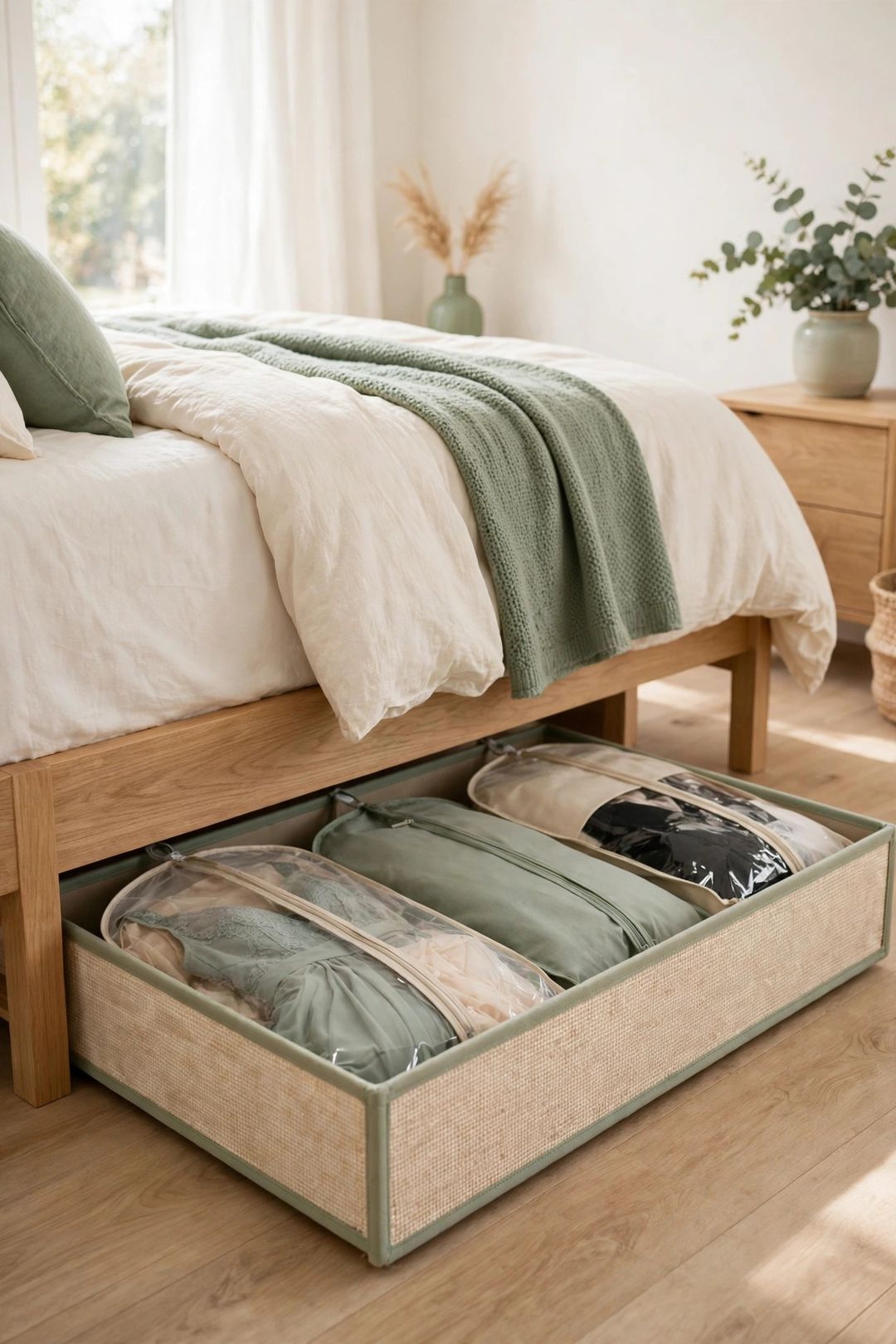
3. Store Off-Season Dresses Flat Under the Bed
Under-bed storage suits dresses that fold well, such as simple satin, jersey, or unlined styles. Lay each dress flat in a lidded fabric box, with tissue at the folds to soften creases. Skip this method for stiff, structured, or heavily beaded pieces, which need to hang or lie flat without weight on top of them.
4. Turn a Hallway Coat Closet Into Shared Formal Storage
A coat closet often has wasted space at one end. Move everyday coats to the center and reserve one end for long dresses in garment bags. Use a high shelf, if there is one, for boxed accessories like clutches and wraps. Label the section if the closet is shared, so formal pieces do not get pushed aside when someone grabs a jacket.
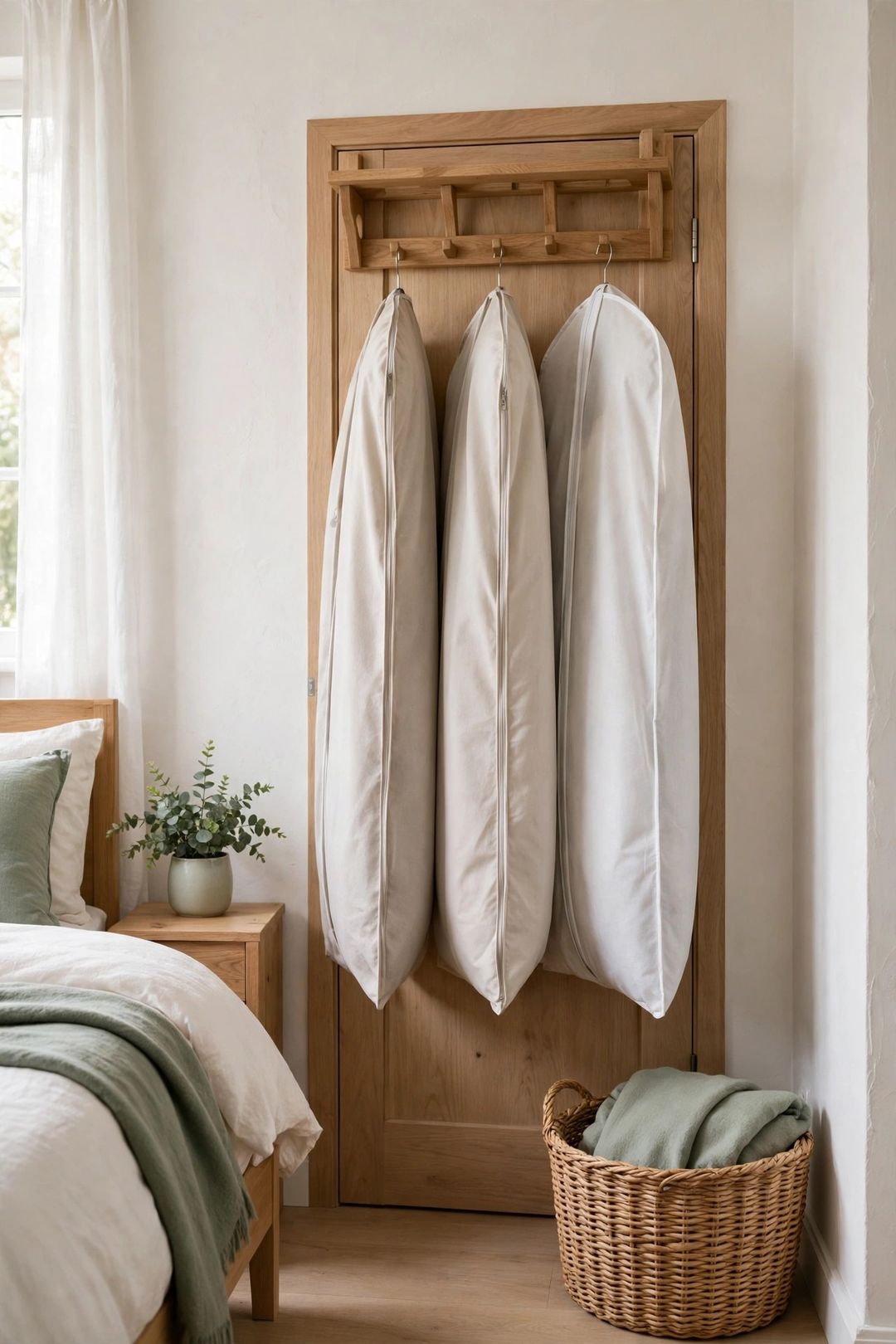
5. Hang Dresses on the Back of a Solid Door
A sturdy over-the-door hook row can hold two or three dresses in bags for short-term storage. This works best on a bedroom or closet door that opens fully. Keep bags away from a bathroom door, where steam can reach the fabric. For long-term storage, a calmer spot with less movement is kinder to delicate pieces.
6. Use Padded Hangers Inside a Wardrobe or Armoire
If you have a wardrobe cabinet, clear one tall section for formal wear. Swap thin hangers for padded or wide hangers, which support shoulders without leaving sharp marks. This matters most for beaded and sequined dresses — thin wire hangers can distort shoulders and snag delicate fabric. Button or zip each piece closed before hanging, so it keeps its shape.
7. Fold Knit and Jersey Dresses in a Dresser Drawer
Not every dress should hang. Knit, jersey, and stretchy dresses can grow longer under their own weight on a hanger. Fold these pieces in a deep dresser drawer, with tissue between layers if the fabric wrinkles easily. Keep the drawer to one or two loose layers, so air can move and each piece stays visible.
8. Keep One Event-Ready Dress in a Guest Room Closet
If a guest room closet holds mostly empty space or stored linens, borrow a short section of the rod for the dress you wear most often. Keep it bagged and separate from guest hangers, so it does not get moved around. Store its shoes and bag nearby in a small box, and getting ready becomes much faster.
9. Rotate Formal Pieces by Season
When space is truly tight, keep only the current season's formal pieces in your closet or on a rack. Pack the rest clean, dry, and loosely bagged or folded in a lidded bin on a high shelf. Rotate twice a year. Each swap is a good time to check for loose beads, broken zips, or stains that need care.
What to Buy
Breathable fabric garment bags, typically $12–$25 for a set. Pro: They block dust while letting air move around delicate fabric. Con: Long sizes can be hard to find. Skip if: Your dresses hang in a closed wardrobe that stays dust-free.
Padded or wide hangers, typically $10–$20 for a set. Pro: They support shoulders and help heavy dresses keep their shape. Con: They take more rod space than slim hangers. Skip if: You only store light dresses that fold well.
A slim rolling garment rack, typically $25–$50. Pro: It adds hanging space with no drilling and moves when needed. Con: An open rack collects dust without bags. Skip if: You have no floor corner wide enough for a rack.
Under-bed fabric storage boxes, typically $15–$30. Pro: They use dead space and keep folded dresses out of sight. Con: They do not suit stiff or beaded pieces. Skip if: Your bed frame sits too low for a box.
Acid-free tissue paper, typically $8–$15. Pro: It softens folds and helps limit crease lines. Con: It needs replacing when it tears. Skip if: You only hang dresses and never fold them.
Mistakes to Avoid
- Storing dresses in dry-cleaning plastic. Thin plastic traps moisture and can leave fabric smelling stale. Use breathable bags instead.
- Using wire hangers for beaded pieces. Wire can bend under weight, mark shoulders, and snag fine fabric. Use padded hangers for heavy dresses.
- Storing a dress before it is clean and dry. Hidden stains can set, and damp fabric can smell musty after weeks in storage.
- Crowding dresses tightly together. Crushed fabric wrinkles, and beads can catch on the dress beside them. Leave a little space.
- Choosing a damp or sunny spot. Steamy bathrooms and direct sun can damage fabric over time. Pick a cool, dry, shaded place.
Frequently Asked Questions
Should formal dresses be hung or folded?
Hang most structured, long, and beaded dresses so they keep their shape. Fold knit and jersey dresses, which can stretch out if they hang for months. If you fold a dress, use tissue at the folds and keep the box loose.
How long can a dress stay in a garment bag?
A clean, dry dress can stay in a breathable fabric bag for a season or longer. Open the bag now and then to let air move, and check for stains or loose trim well before a big event, not the night before.
Can dresses be stored in a garage or attic?
These spots are risky because heat, cold, and damp air change a lot through the year. An inside closet, wardrobe, or under-bed box gives fabric steadier conditions. If no indoor spot exists, use a lidded bin and check pieces often.
What should stay with each stored dress?
Store the matching wrap, bag, and shoes in a small labeled box nearby. Keeping the full outfit together saves time and stops accessories from being lost or stored in a damp place by mistake.
No spare closet does not mean formal dresses have to live in a crushed, dusty row. Pick two or three of these spots, and save this post to your Closet & Wardrobe board on Pinterest before event season.