Serving platters, gravy boats, and holiday dishes take up the most awkward space in the kitchen. They are big, breakable, and shaped in ways that never stack neatly with everyday plates.
Learning how to store serving platters and holiday dishes is mostly about moving them out of prime space without letting them get chipped, dusty, or forgotten. Keep each set padded, grouped, and easy to reach.
You do not need a bigger kitchen. Gather each set in one place, check for chips, and match every lid and serving spoon to its dish first.
1. Use Vertical Storage Inside Cabinets
Flat stacking wastes height and puts weight on the dish at the bottom. Storing pieces upright uses the full cabinet height and lets you slide one piece out alone.
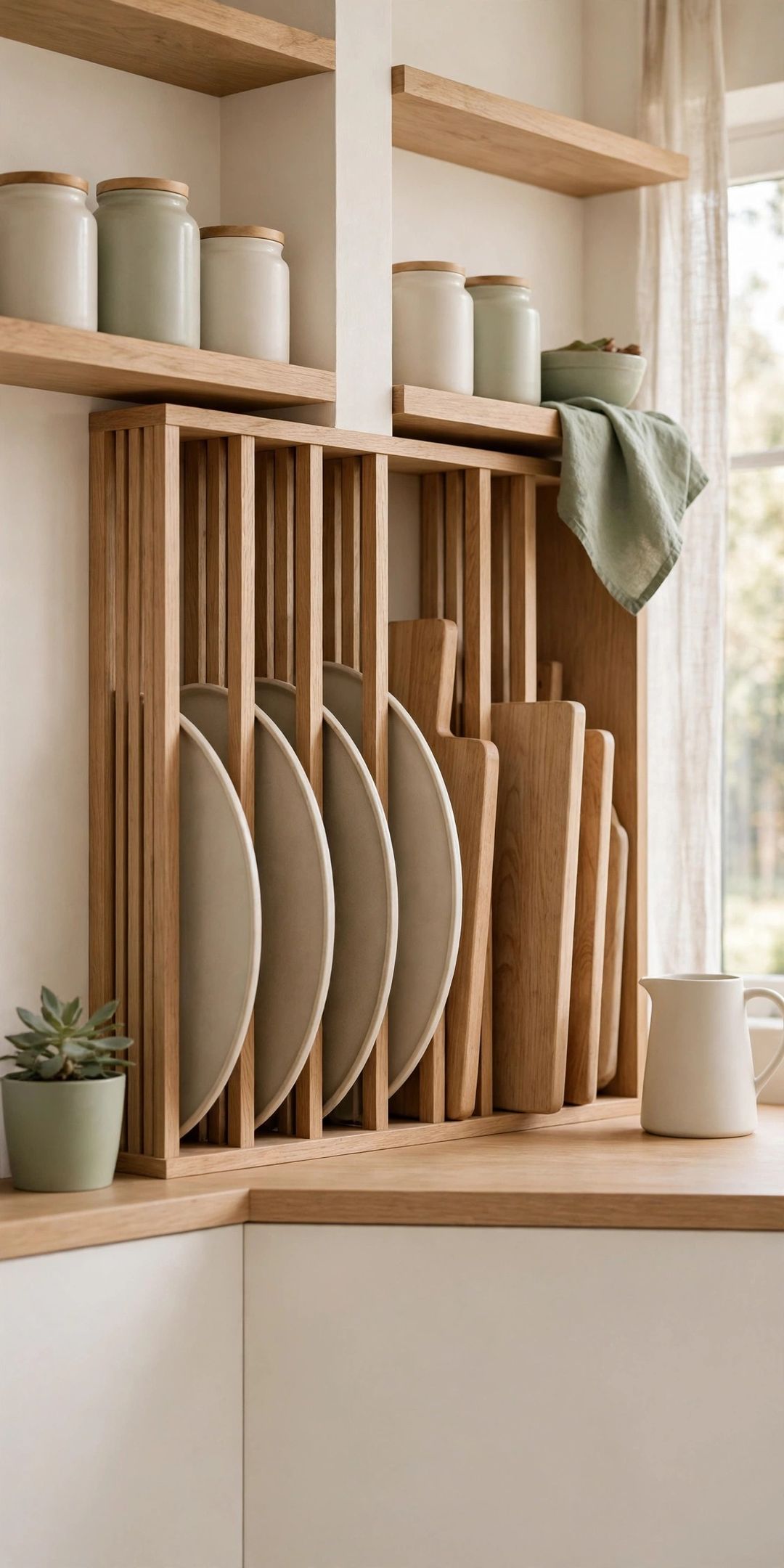
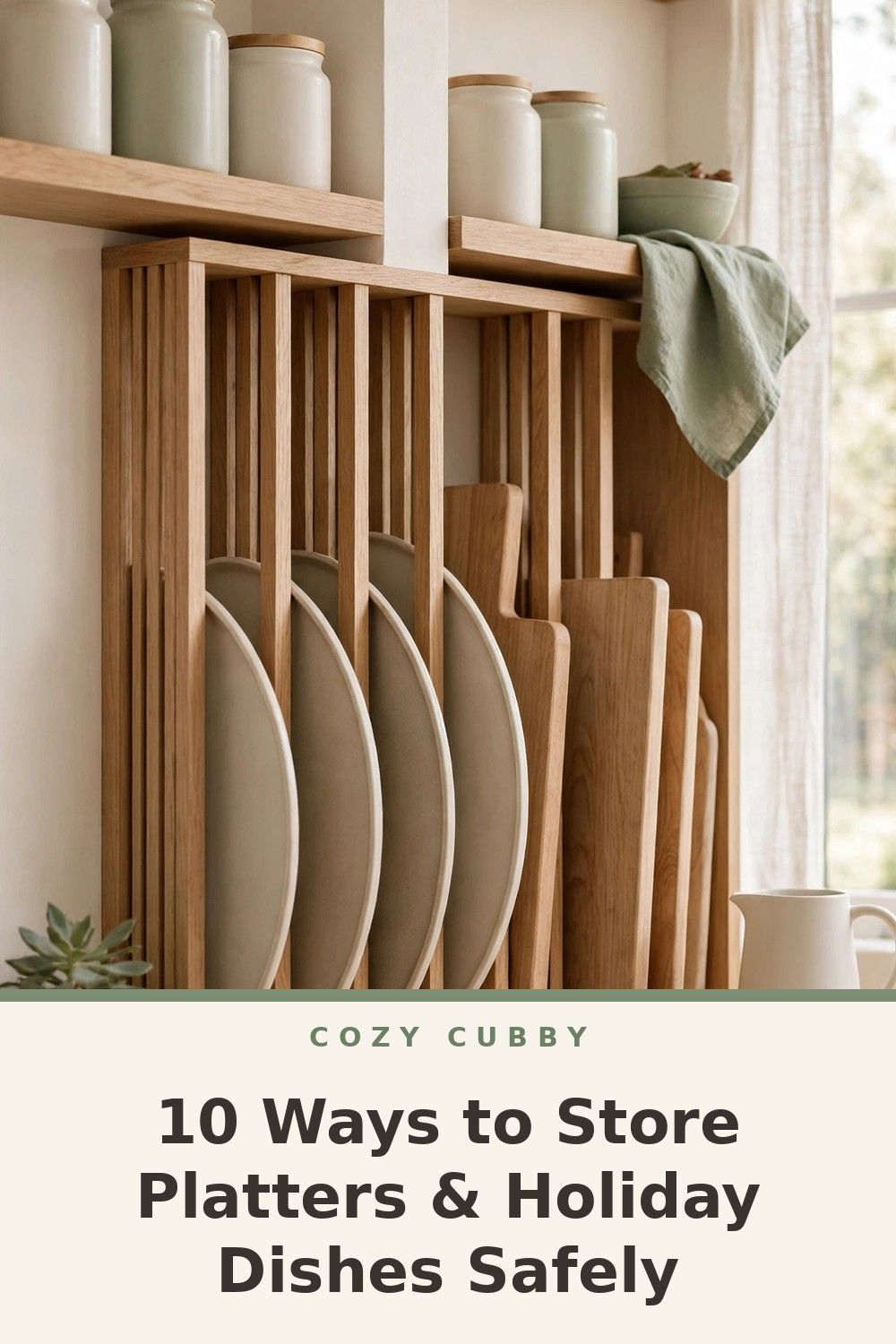
1. File platters upright with vertical dividers. Place a sturdy divider rack on a deep shelf and slot oval, round, and rectangular platters on their edges. Add a thin felt pad or foam sheet between pieces so rims do not knock together when you pull one out.
2. Stand board-style racks on a deep shelf. A rack made for boards and baking sheets works just as well for trays and shallow bowls. Keep the heaviest platter in the middle slots, and leave the front slot empty for grip room.
2. Protect and File With Padded Cases
Holiday pieces need protection from dust and bumps more than daily access. Soft cases turn a fragile set into one neat, stackable package.
3. Pack full sets in padded dish cases. Zip each plate or shallow dish into a quilted case with a felt separator between every piece. Label the outside with the set name and piece count, then stack cases flat where nothing heavy sits on top.
4. Wrap odd shapes on their own. Gravy boats, pitchers, and tureens do not fit standard cases. Wrap each one in a tea towel or packing paper, tuck padding inside hollow parts, and store it upright so handles carry no weight.
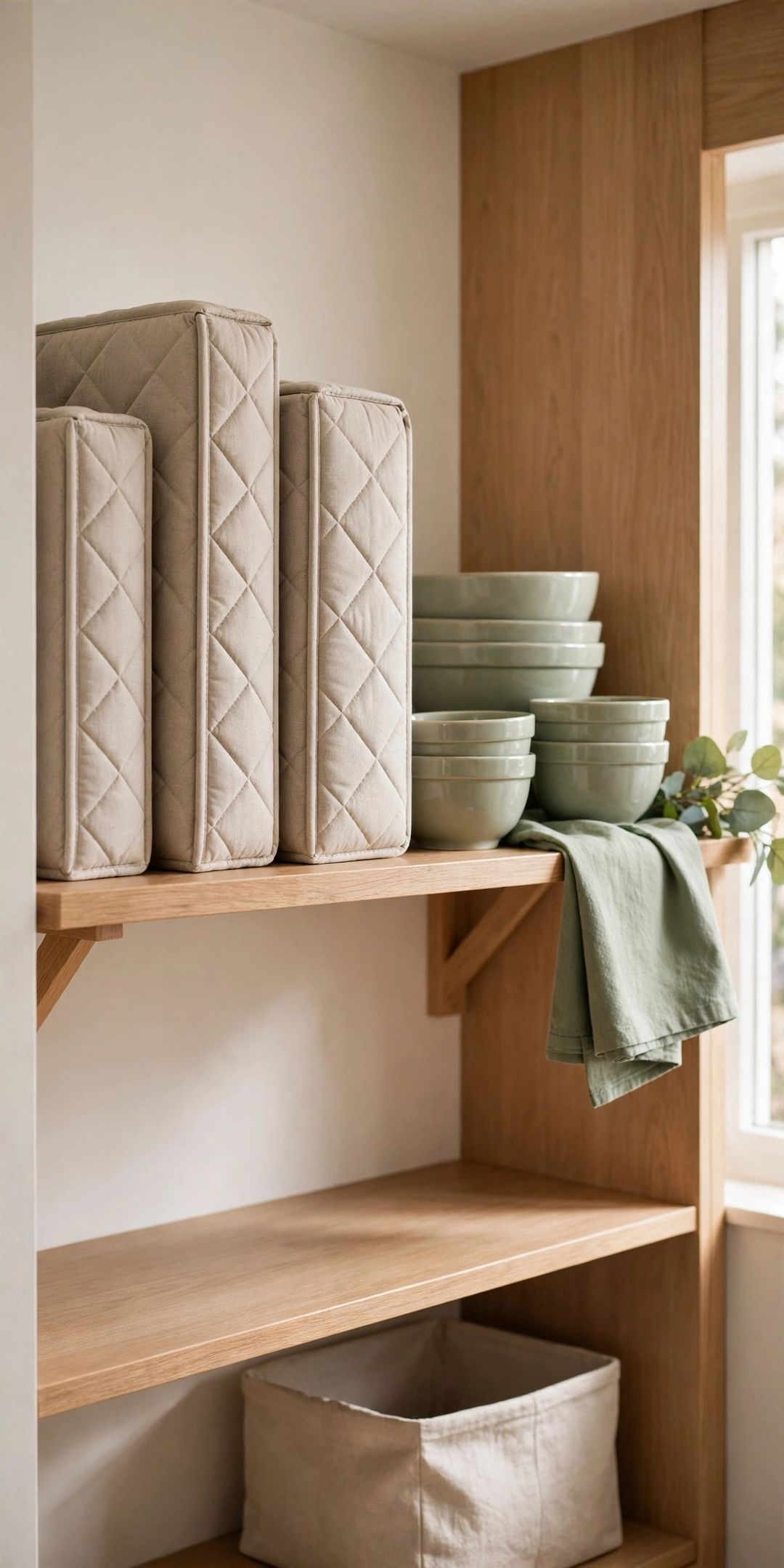
3. Claim High and Hard-to-Reach Space
Prime shelves at eye level belong to daily dishes. Rarely used pieces can live higher, as long as you can reach them safely with a step stool.
5. Move holiday sets to the highest cabinet shelf. Group one full set per shelf section so you never hunt across cabinets. Label the cabinet door with what lives up there, and bring pieces down before a gathering starts.
6. Use the space above cabinets with lidded bins. If there is open space above your cabinets, store padded cases inside a lidded bin that keeps dust off. Measure the gap first, choose a bin you can lift down safely, and skip this spot near heat or steam.
4. Use Low and Deep Spots You Already Have
Every kitchen has deep or low spots that everyday items do not suit. Flat platters and boxed sets often fit these spots better than daily dishes.
7. Slide flat platters into the drawer under the oven. Many ovens have a shallow lower drawer that suits flat trays and platters. Line it with a non-slip mat, lay felt between stacked pieces, and check your manual first, as some models use it as a warming drawer.
8. Store sets on top of the fridge or in a pantry gap. A flat, lidded bin on top of the fridge holds a padded case set out of the way. Narrow gaps beside the fridge can also hold one upright platter in a padded sleeve, as long as it slides out without forcing.
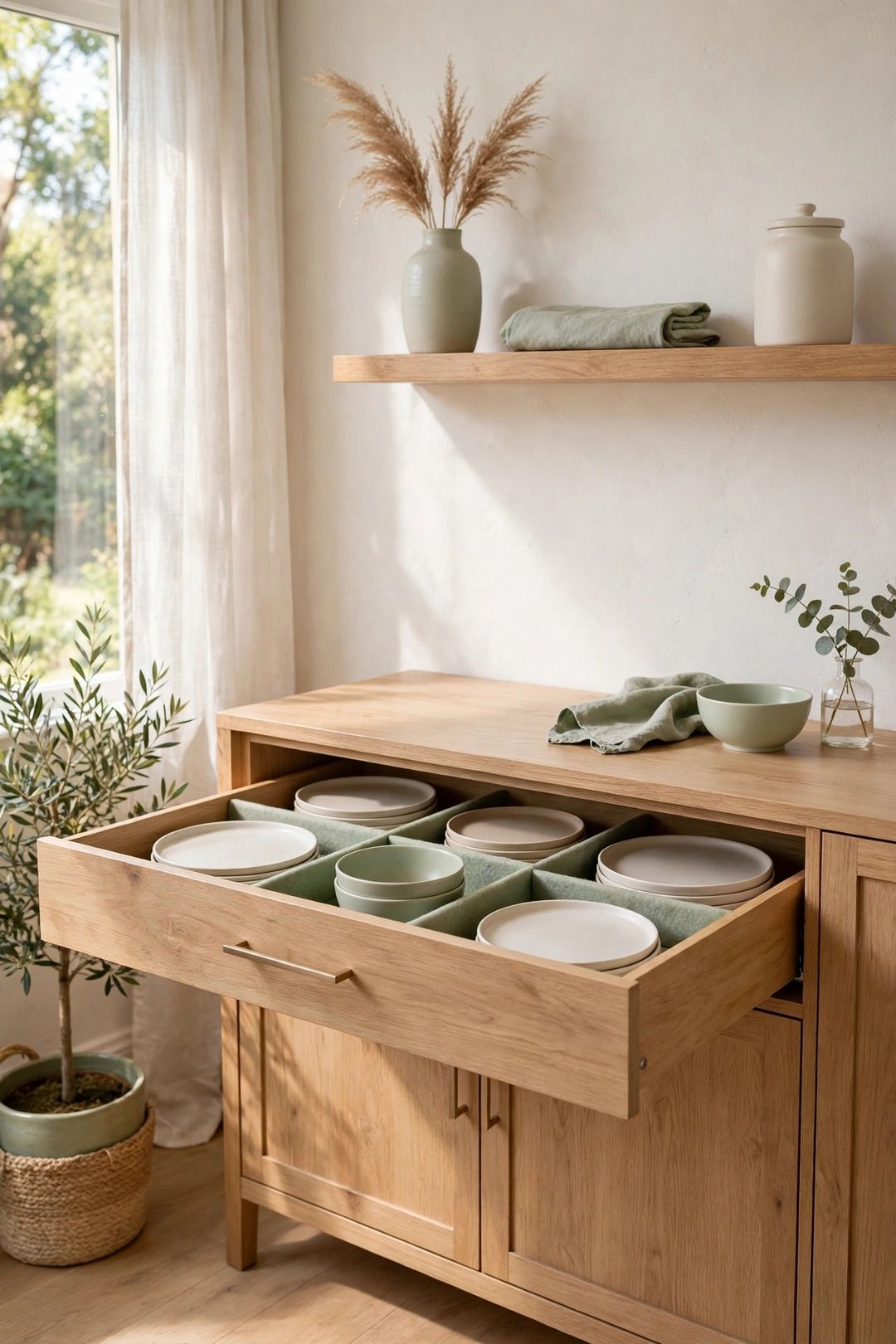
5. Label, Group and Make Retrieval Easy
The best spot fails if no one remembers what is in it. Simple habits stop the twice-a-year cabinet search.
9. Keep each holiday set together in one labeled bin. Store the platter, bowls, gravy boat, and serving spoons for one holiday in a single bin or case, with a card inside listing every piece. The list shows at a glance if anything is missing.
10. Keep one everyday platter in easy reach. Not every platter is a twice-a-year piece. Keep the one you use often on a low, vertical rack with daily dishes, and send only occasion pieces to high or deep storage.
What to Buy
A vertical divider rack, typically $12–$22. Pro: It files platters upright so you can pull one out without unstacking. Con: Very wide or heavy platters can tip a light rack. Skip if: Your sets already live safely in padded cases in a bin.
A padded dish storage case set, typically $18–$32. Pro: Quilted sides and felt separators protect a full set in one package. Con: Cases fit standard round plates best and suit odd shapes poorly. Skip if: You own only one or two loose platters and no full sets.
Felt plate separators, typically $8–$14. Pro: Thin pads stop rims and glaze from rubbing in any stack or rack. Con: Loose pads slide out and get lost if extras are stored apart. Skip if: Your cases already include enough separators for every piece.
A clear lidded storage bin, typically $10–$20. Pro: It keeps dust off cases stored above cabinets or on high shelves. Con: A large bin full of dishes gets heavy fast. Skip if: Your pieces fit inside closed cabinets where dust is not an issue.
A small step stool, typically $15–$28. Pro: It makes high shelves safe to use with both hands free. Con: It needs its own storage spot when folded. Skip if: All your storage is at or below shoulder height.
Mistakes to Avoid
- Stacking heavy platters with no padding. Weight plus bare contact chips rims and scratches glaze. Always place felt, foam, or a towel between pieces.
- Splitting one set across three cabinets. The platter in one spot and the gravy boat in another means pieces get missed or bought again.
- Storing dishes on top of the fridge with no bin. Unprotected pieces collect grease and dust and can slide when the door shuts hard.
- Putting the heaviest bin up high. A heavy bin overhead is hard to lift down safely. Keep weight low and save high spots for lighter cases.
- Skipping labels because you will remember. Twice a year is long enough to forget any spot. A door label or bin list takes a minute and saves the search.
Frequently Asked Questions
How do you store platters without chipping them?
Pad every contact point. Use felt or foam separators between stacked pieces, store platters upright in a divider rack when you can, and never slide one dish across another. Check rims before you pack a set away.
Where is the best place for holiday dishes in a small kitchen?
The highest cabinet shelf, the space above cabinets in a lidded bin, or a deep low drawer all work well. Pick a spot you can reach safely with a step stool, and keep the full set together there.
Can you store serving dishes in a garage or basement?
You can, if the space stays dry and the dishes are packed in padded cases inside a sealed, lidded bin. Avoid damp spots, and wash every piece before use, since storage dust builds up over months.
How do you store a platter that is too big for every cabinet?
Try it upright in a padded sleeve beside the fridge, flat in the oven drawer if your manual allows it, or in a lidded bin on top of a cabinet. Measure the platter first, including handles.
With every set padded, grouped, and labeled, holiday dishes stop crowding daily shelves and still come out ready when you need them. Save this post to your Kitchen Organization board on Pinterest so the 10 ideas are handy before your next gathering.