Winter clothes are the bulkiest things most apartments hold. Thick coats, heavy sweaters, scarves, gloves, and boots can fill a closet, even though they sit unused for half the year.
Learning how to store winter clothes in a small apartment is mostly about order: clean first, sort honestly, pack each item type the right way, and use hidden spots already available.
Work through the steps below in order, one category at a time. The full job fits into an afternoon.
Step 1: Wash and Dry Everything First
Never pack winter clothes away dirty. Body oils and food spots are invisible on a dark sweater, but they attract insects and can set into stains over several months.
1. Wash or clean according to the label. Machine-wash what the label allows, and clean wool coats and structured pieces as directed. Empty every pocket first — tissues and lip balm cause real damage in a sealed bag.
2. Dry completely before packing. Thick knits can feel dry outside while staying damp inside, so give heavy items extra time on a drying rack. Slight dampness, sealed away for months, turns into a musty smell that is hard to remove.
3. Make small repairs now. Sew on loose buttons, fix small holes, and check zips. Repairs take minutes now and feel like a much bigger job on the first cold morning.
Step 2: Sort Into Keep, Store, and Donate
Storing clothes that no longer get worn wastes the scarcest thing in a small apartment: space. Sort before packing.
1. Keep out a light layer. Set aside one mid-weight jacket and one sweater for cool evenings and travel. These stay in the closet, not in storage.
2. Store the true winter pieces. Heavy coats, thermals, thick knits, scarves, hats, gloves, and snow boots go into storage.
3. Donate or recycle the rest. Anything unworn for two winters, badly pilled, stretched out, or no longer fitting goes into a donation bag the same day.
Step 3: Use Vacuum Bags — Only for What Suits Them
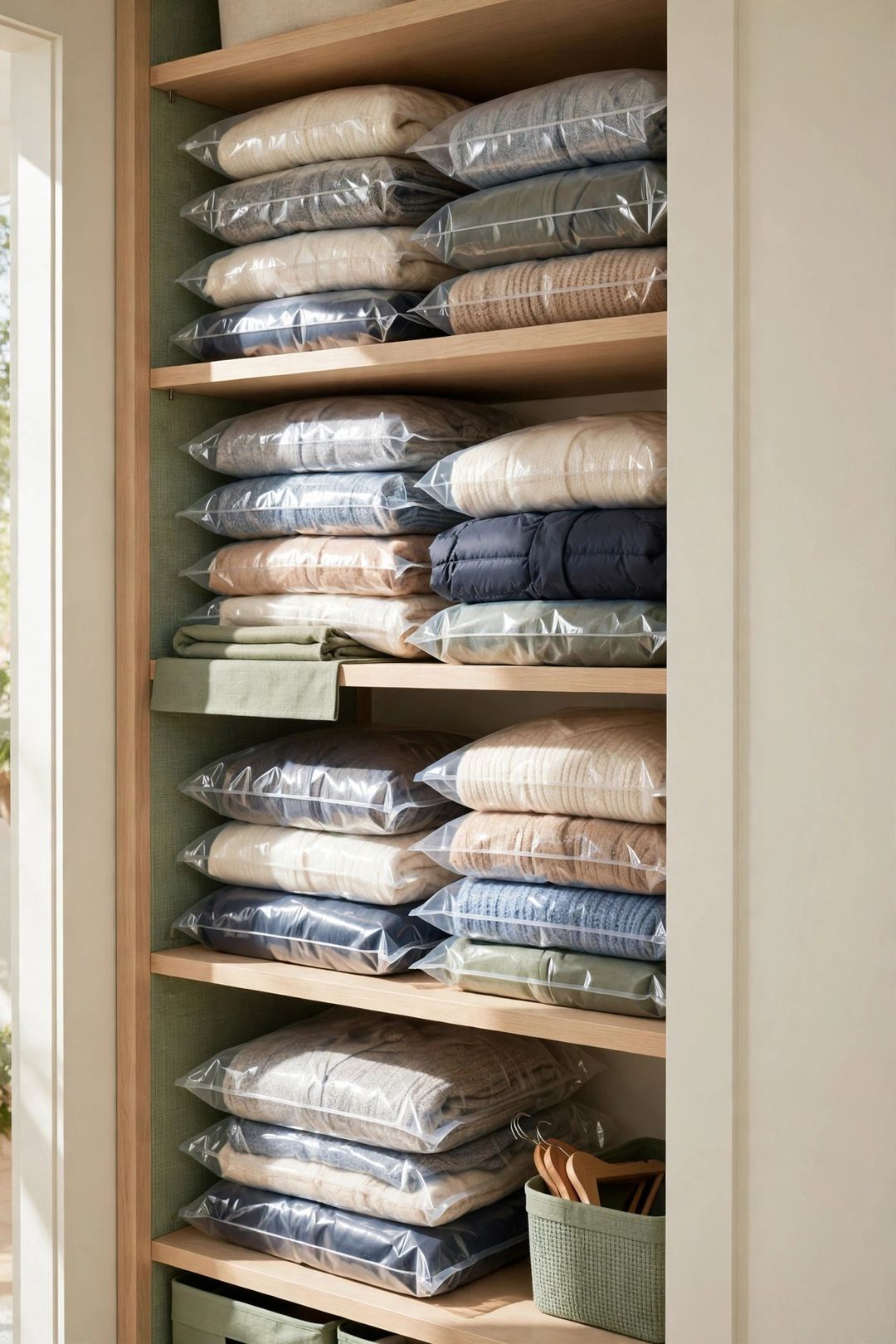
Vacuum bags shrink bulky soft items to a fraction of their size. They are not right for everything, so pack by fabric, not by pile.
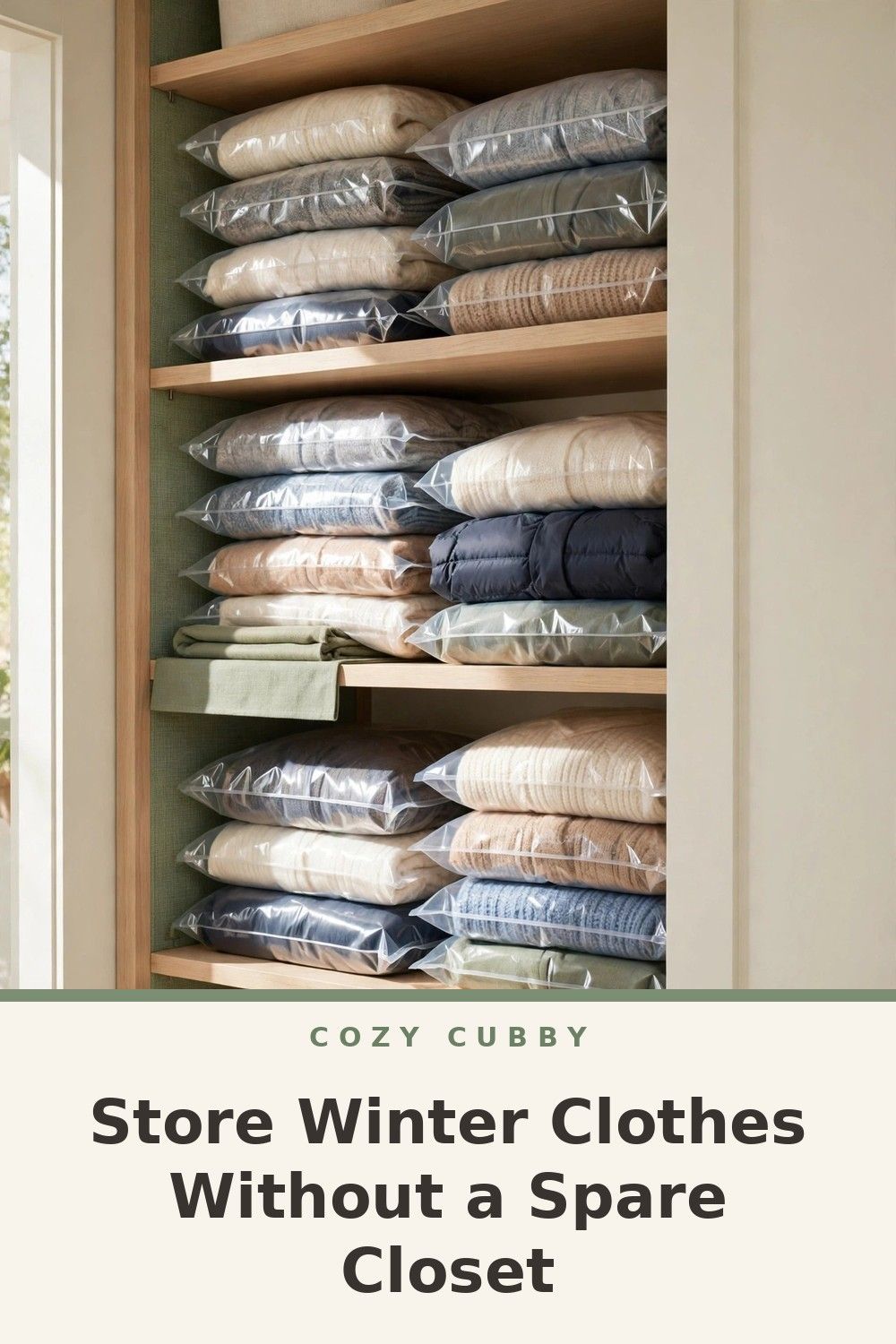
Best for vacuum bags: fleece, synthetic padded jackets for one season, cotton and everyday acrylic sweaters, thermals, scarves, gloves, and spare blankets. Fold flat and fill only to the marked line.
Not for vacuum bags: leather, which needs air flow and can crack when compressed; delicate knits such as fine cashmere or loose weaves, which can stretch and distort; and structured coats, which lose their shape.
Use caution with down: long, hard compression can crush down and reduce loft and warmth. A large breathable cotton bag, loosely packed, is safer. If a vacuum bag is the only option, remove only part of the air and store for the shortest time possible.
Step 4: Pack Boots and Accessories in Bins
Boots, hats, and gloves get damaged in one big bag. Simple bins keep pairs together and shapes intact.
1. Clean boots before storing. Brush off mud, wipe soles, and dry fully. Stuff tall boots with rolled paper or boot shapers so shafts stand upright instead of folding and creasing.
2. Give accessories one shared bin. Put glove pairs, hats, and scarves in a single clear or labeled bin. Small items stored loose are the first things lost.
3. Separate heavy from soft. Keep boots in their own sturdy bin, never on top of knits — soles and heels snag yarn and press marks into sweaters.
Step 5: Stash Everything in Small-Apartment Spots
Match each container type to the spot that fits it best.
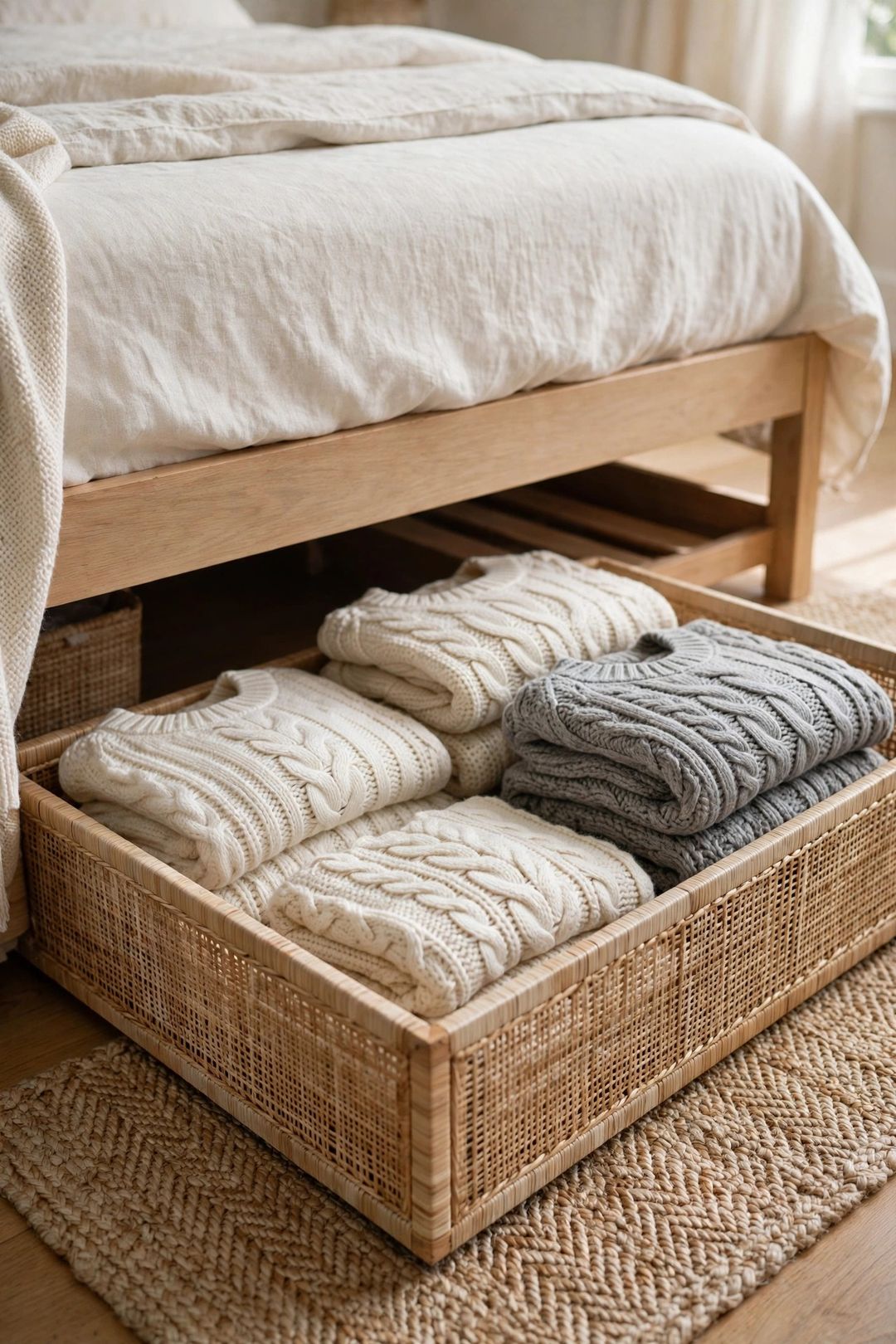
1. Under the bed. Flat vacuum bags and low, lidded bins slide under most frames. Measure clearance first — many frames allow only 6 to 8 inches. Best for bulky sweaters and blankets.
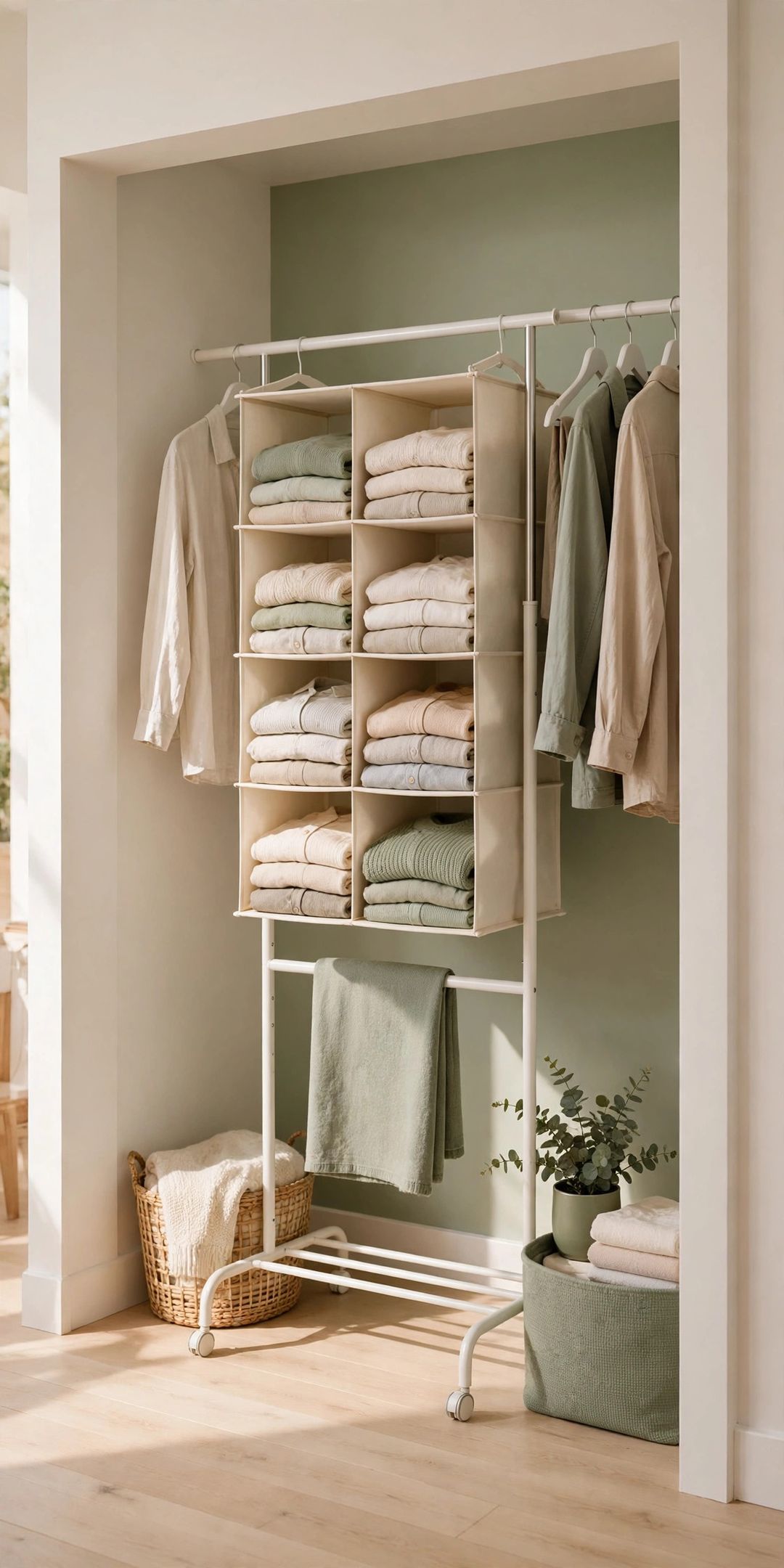
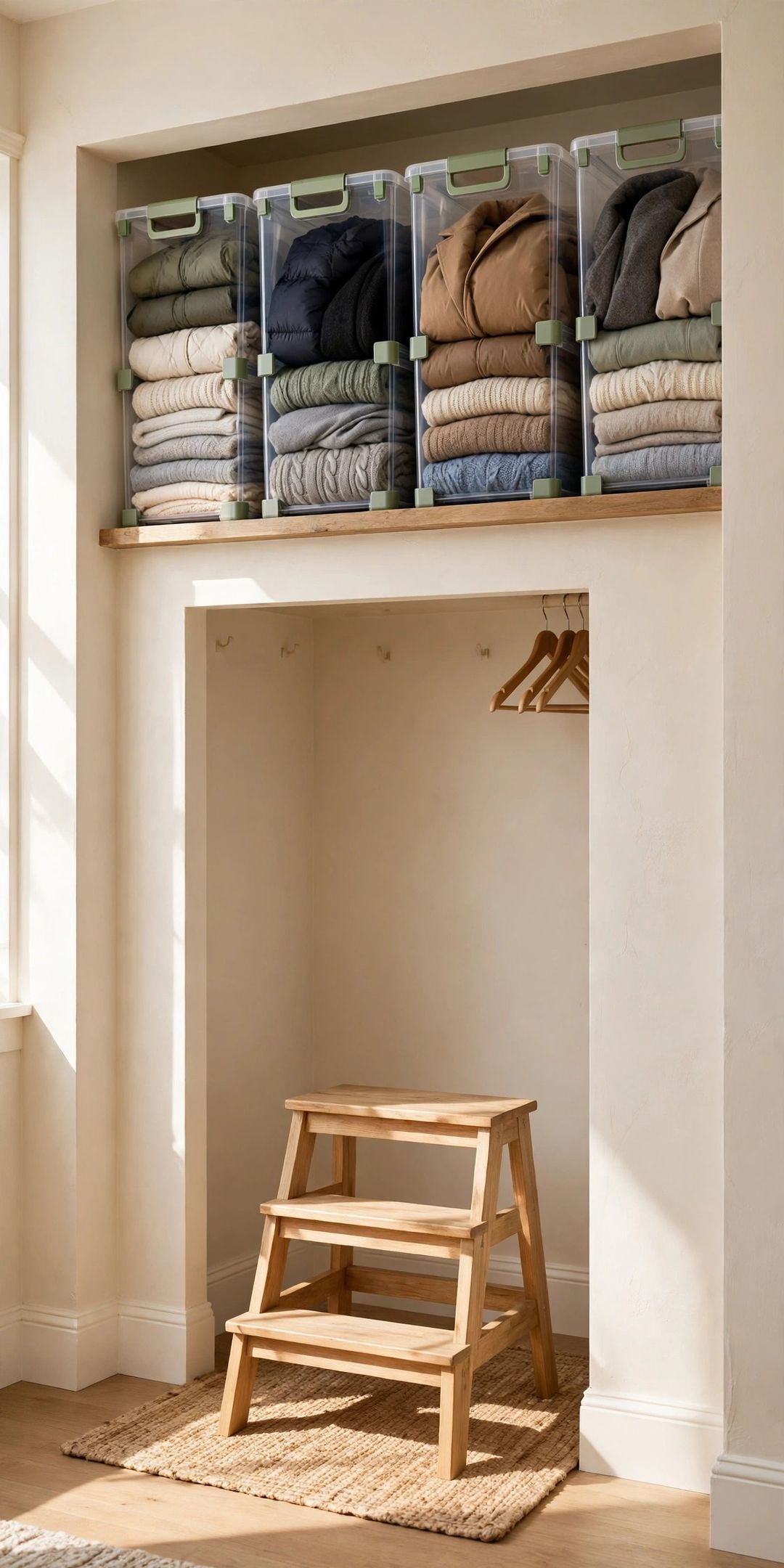
2. The closet top shelf. The high shelf that is awkward for daily use suits a labeled accessory bin and boots, needed only once or twice a year. Keep heavy bins at a safe lifting height.
3. Inside a suitcase. An empty suitcase is a ready-made storage box. Fill it with soft items such as scarves, thermals, and fleece.
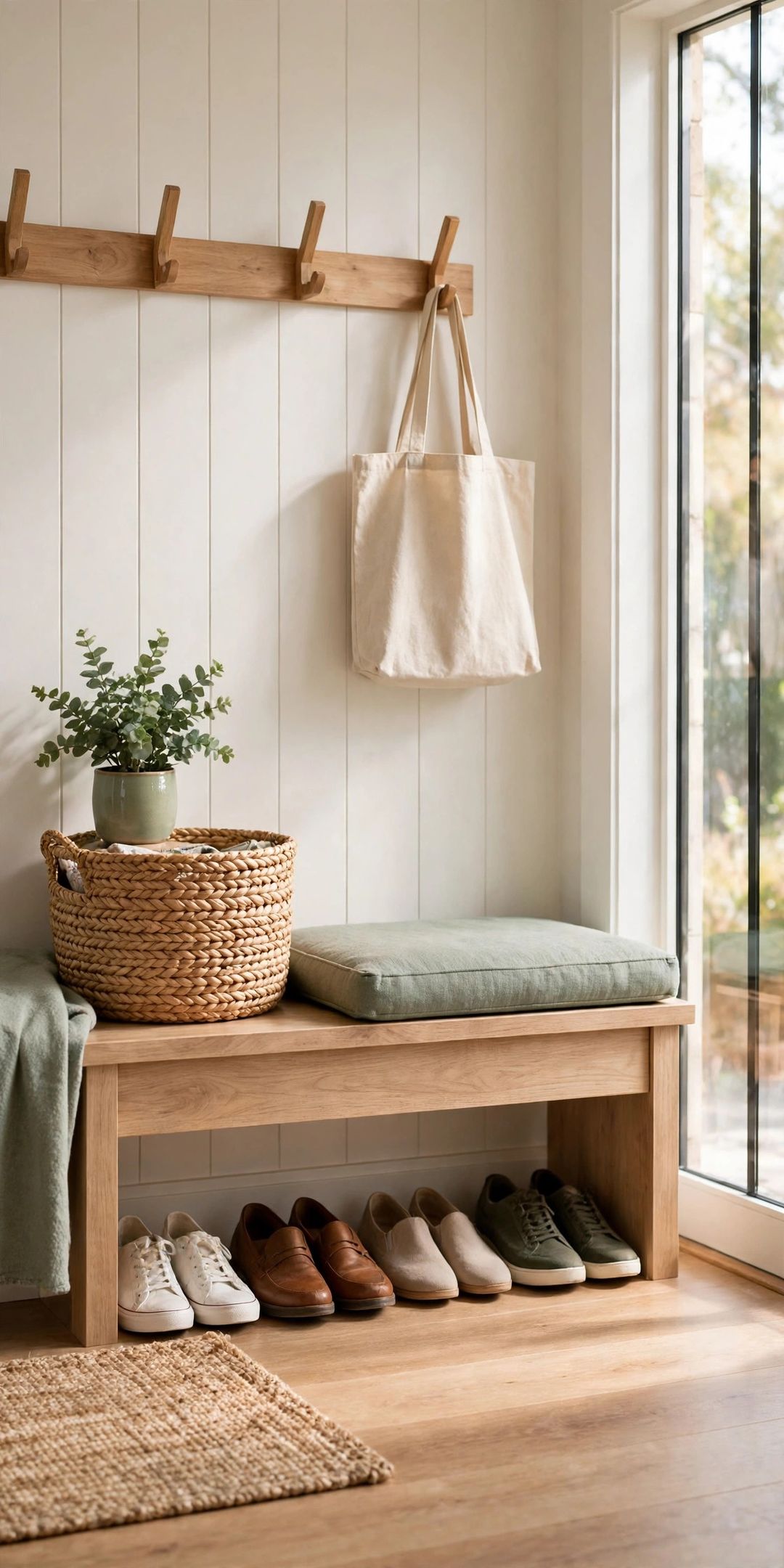
4. Behind or above doors. A slim over-door rack can hold hats and gloves. Keep it light, and check the door still closes fully.
Step 6: Label Everything and Keep an Inventory Note
Label each vacuum bag, bin, and suitcase with the category and size inside, for example “sweaters — medium” or “gloves and hats.”
Keep one short inventory note on a phone or taped inside the closet door: what went where, in plain lines — “Under bed: fleece and thermals. Closet top: boot bin, accessory bin.” That note saves a full search in autumn and stops duplicate buying.
What to Buy
Vacuum storage bags, typically $15–$30 for a multi-pack. Pro: They shrink bulky fleece, sweaters, and blankets for under-bed storage. Con: Seams and valves can leak slowly. Skip if: Most pieces are leather, delicate knit, or down.
Clear under-bed bins with lids, typically $12–$25 each. Pro: Contents stay visible and dust stays out. Con: Hard bins waste a little space compared with bags. Skip if: The frame has less than about 6 inches of clearance.
Breathable cotton storage bags, typically $10–$20 for a small set. Pro: Air flow protects down and better knits from crushing and trapped moisture. Con: They save far less space than vacuum bags. Skip if: Everything stored is sturdy fleece or synthetic.
Cedar blocks or rings, typically $8–$15 for a pack. Pro: They add a fresh scent to a closed bin. Con: The scent fades and blocks need light sanding to refresh. Skip if: Clothes are sealed inside vacuum bags.
Boot shapers or a sturdy boot box, typically $10–$20. Pro: Tall boots keep their shape instead of creasing at the ankle. Con: Shapers fit some shaft widths better than others. Skip if: Winter footwear is only ankle boots, which store fine with paper stuffing.
Mistakes to Avoid
- Packing clothes away dirty or damp. Hidden stains set, and slight dampness becomes mustiness inside a sealed bag.
- Vacuum-sealing everything. Leather can crack, delicate knits distort, and down loses loft under hard compression.
- Overfilling vacuum bags. Bags filled past the line strain the seal, leak air, and puff back up within weeks.
- Storing without labels. Identical flat bags under a bed are a guessing game in autumn; a 10-second label prevents it.
- Forgetting one warm layer. Packing away every jacket leaves nothing for an early cold snap.
Frequently Asked Questions
Can vacuum bags damage winter clothes?
Yes, for some types. Leather, delicate or loose knits, and structured coats should not be compressed, and down needs only light, short compression. Sturdy fleece, synthetic padding, cotton sweaters, and blankets handle them well for one season.
How long can clothes stay in vacuum bags?
One off-season is a sensible limit — roughly spring through autumn. For longer storage, breathable cotton bags or lidded bins are kinder to fabrics.
Where is the best storage spot in a very small apartment?
Under the bed is usually the largest unused space, followed by the closet top shelf and the inside of a suitcase. Measure each spot first, then buy bags or bins sized to fit it.
How can a musty smell be prevented in stored clothes?
Start with clothes that are fully clean and fully dry, and store them in a dry spot away from bathroom humidity. Airing items near an open window for an hour before wearing usually clears any light storage smell.
Clean, sorted, and packed by fabric, a winter wardrobe can fit under a bed and on one high shelf. Save this post to your Closet & Wardrobe board on Pinterest so the step order is handy on packing day.